Tue 8 Sep 2026
Archived Mystery Review: GEORGE BAGBY – Murder Calling “50”.
Posted by Steve under UncategorizedNo Comments
GEORGE BAGBY – Murder Calling “50”. Doubleday Crime Club, hardcover, 1942.
History books are fine, but they don’t tell the whole story. The same pieces of personal history may occur for millions of people everyday, events that affect their lives many times over, but if they make the history books (and almost none of them do), they’re squeezed into a short footnote (at best a small paragraph or two), so children a generation or so later hardly have a chance to know anything about it.
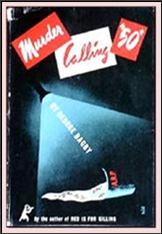
Personal diaries and mystery stories, that’s the only way some important things will ever remembered. A case in point: this book (of course) about the air raid drills and blackouts that took place in New York City (and probably all up and down the East Coast; California was looking another direction).
If you didn’t live through them, who remembers anything about them today? Even the title this book no longer has any significance to anyone any more. Air raid wardens and civil defense personnel had to spread the word when a drill (or actual attack) was coming, and they did it by phone and by code, each one called required to spread the word to three or four others. “50” is the code for “man your posts”. “52” is the code for “all clear”.
Who knows this today? Who remembers the routine of blackout curtains, heading for designated apartments in a building until the all clear was sounded, or even buckets of sand placed on every floor?
Or who would know, from a chapter in a history book, how uncertain and confusing the times were in those days? Even with CNN on the job today, rumors and speculation ran rampant during the Persian Gulf War. What must it have been like without?
And of course, all this makes an ideal background for a murder mystery, one that takes place in Bagby’s building while his friend Inspector Schmidt (he of the always aching feet) is visiting. There is a dead man, of course; his wealthy patron; a young couple in love but not quite sure of each other; a Russian princess (and faithful milkman); a playgirl and a Broadway sharpster. All involved in a mass of stairs in the dark, dog leashes, strange noises, family jewels, elevator boys and the above-mentioned buckets of sand (handy for showing footprints in bathrooms, if nothing else).
You probably know from this if this is the type of book for you, but if you like George Bagby / Aaron Marc Stein’s work (as I do), I should also tell you that I didn’t find it one of his better ones. For technical reasons, that is. The question not answered concerning the bombshell Schmitty reveals on p.257 is “When did he know, and how did he find out?” (I suspect it was the mysterious one-sided phone conversation he had on p.213, but I don’t think we’ll ever know for sure.)
There were a couple of other questions left unanswered at story’s end. I won’t go into any of these — they’re relatively minor, and they have no particular effect on events, and then only before the murder, not afterward. It would have taken Bagby a couple of extra pages, perhaps, to fill us in, and I realize that I’m a little late in saying that I wish he had.