Pulp Fiction


DASHIELL HAMMETT

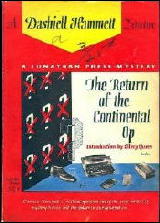
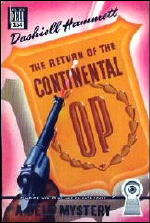
DASHIELL HAMMETT “The Tenth Clew.” Continental Op short story #6. First published in Black Mask, January 1, 1924. Reprinted in Ellery Queen’s Mystery Magazine, July 1945; revised ending. Also, among others: The Return of the Continental Op (Jonathan Press #J17, paperback, 1945; Dell #154, paperback, 1947); The Continental Op (Vintage V-2013, paperback; November 1975; edited by Steven Marcus); all with the original ending.

    “The Tenth Clew” (or “Clue,” as it is on the front cover of the magazine) is the lead story of the latter collection, which I happened to notice in a box of paperbacks I was going through and decided to read. It’s been a while since I read anything by Hammett, and long since time, I decided, that I should.

    I’d forgotten, though, that Mike Nevins had made a point of talking about this story in his June 2011 column for this blog. When I got to the end of what was otherwise a very enjoyable story, I was taken aback and asked myself what it was that I’d missed.

DASHIELL HAMMETT

    It turns out that it was a major mistake by Hammett and his editor way back in 1924, one that Fred Dannay fixed when he ran the story in EQMM some twenty years later, but then reverted back to the original ending most if not all of its appearances since.

    Since Mike did such a good job in discussing it, I won’t talk about it here, as I’d intended to. Go read about it in that old column of his, then by all means come back. Let me talk about this instead.

DASHIELL HAMMETT

    I don’t claim that the thought is original to me, and I’m sure it isn’t, but it’s worth bringing up again. It occurred to me that Hammett may have been having some fun with the readers of this story, which reads from the very beginning as a straight-forward detective mystery, complete with clues — nine of them, in fact, duly noted by the Op and O’Gar, the detective sergeant assigned to the case.

    Unfortunately the clues, very confusing in and of themselves, also do not lead anywhere, including the fact that the victim was killed by being hit over the head by a typewriter. The Op’s conclusion? The tenth clew? That the other nine clues do not mean anything, and he proceeds to solve the case by assuming exactly that.

    So much for the puzzle stories of Agatha Christie and the like. I’m no purist, and I enjoyed this one, even with the botched up ending.

EDMOND HAMILTON “What’s It Like Out There?” Thrilling Wonder Stories, December 1952. First anthologized in The Best from Startling Stories, edited by Samuel Mines (Henry Holt, hardcover, 1953). Reprinted elsewhere many times. The first Hamilton collection in which it appeared was What’s It Like Out There and Other Stories (Ace, paperback, 1974).

   I’m working my way through the latter collection, if reading only the first story so far qualifies as “working my through” it. Although he had an extraordinarily long writing career, “What’s It Like Out There?” is probably Hamilton’s most well remembered story, and it came along toward the beginning of what I consider the last third of it.

   In his early days — the 20s and 30s — Edmond Hamilton was an out and out “space opera” kind of guy, writing stories with titles such as Crashing Suns, The Star-Stealers and The Comet-Drivers, all appearing first in Weird Tales. In the 1940s his career took a nosedive (my opinion) when he spent most of writing time dreaming up new adventures for Captain Future, again for the pulp magazines.

   Whether “What’s It Like Out There?” was his first story written for readers at an adult level, I’m not sure, but from what I’ve read, it turned heads around in SF fandom almost immediately. It’s the story of a survivor of the second expedition to Mars, who before making his way home in Ohio from the hospital where he spent a number of weeks recovering, has to stop along the way to visit the families and loved ones of his friends who didn’t make it.

   He would like to tell them the truth — that their loved ones died in vain, perishing on a cruel and uncaring planet, with their only purpose for being there being the uranium people on Earth need to continue going about their merry and equally uncaring ways — but he finds that he can’t. People on Earth still need their heroes, he discovers, no matter how little they actually care, except when of course it’s personal, and even then, as he discovers, most are happier not knowing the truth.

   There are lots of nuances in this story that the preceding paragraph does not begin to go into. Last night was the first time I’d read this story in years, and it surprised me as to how much I read into it this time that I suspect I didn’t before. More than I remembered, at any rate.

HUGH PENTECOST – The Girl with Six Fingers. Dodd Mead, hardcover, 1969. Zebra, paperback, John Jericho series #5; 1st printing, June 1974.

   John Jericho is a massive bulk of a man, six feet six inches tall, and two hundred and forty pounds of solid bone and muscle. With a beard of flaming red, he looks like a Viking warrior. In reality he is an artist of some renown, based in Manhattan and fiercely dedicated to the cause of justice. All conservative causes beware!

   His stories are told by a much less impressive gent named Arthur Hallam, a writer with several novels to his credit but little acclaim. But the two are friends and had six book-length adventures together, plus a large number of novelettes and stories, all appearing in Ellery Queen’s Mystery Magazine between 1964 and 1987.

   It should also be pointed out that both Jericho and Hallam had a previous incarnation as long-standing members of The Park Avenue Hunt Club, with many recorded adventures appearing in the pulp magazine Detective Fiction Weekly in the 1930 and early 40s. Jericho was then a big game hunter, Hallam a bespectacled intellectual type, with the third member being actor Geoffrey Saville. They were on occasion assisted by their Oriental servant, Wu.

   While the title of this later adventure is intriguing — and so is the cover! — it has an easy, more or less mundane explanation. The girl is on an LSD trip and is only imagining the extra finger. The other girl, the one shown on the cover in multi-colored paint, is otherwise nude and is/was the star attraction to a Happening on an exclusive estate somewhere in the wilds of rural Connecticut.

   What brings the outraged Jericho and Hallam into the story is that the event was raided by a non-approving self-organized right-wing militia, and the girl dancing has disappeared. Pentecost pulls out none of the stops in the tale that follows, not really a detective story at all, but a wild and woolly pulp story updated to the Swinging Sixties.

   Unfortunately, and I cannot tell you why, but I think detective stories dealing with hippies, drugs and love-in’s have dated even more than tales written in the 1930s taking place in manor houses and rich people’s estates. It may also be that Pentecost (pen name of Judson Philips, 1903-1989) really wasn’t writing on the basis of personal experience, but perhaps second- or even third-hand knowledge only.

   Nevertheless, the story, previous caveat aside, kept me well occupied for the first leg of a cross-country flight from CA to CT earlier this week.

      The John Jericho series —

Sniper (1965)

Hide Her From Every Eye (1966)
The Creeping Hours (1966)
Dead Woman of the Year (1967)

The Girl With Six Fingers (1969)
A Plague of Violence (1970)

SELECTED BY JONATHAN LEWIS:


MORRIS HERSHMAN “Pressure.” First published in Manhunt, February 1958, as by Arnold English. Reprinted under his own name in Tales for a Rainy Night, edited by David Alexander (Holt Rinehart & Winston, hardcover; 1961; Crest d557, paperback, 1962).

   Sometimes all that a compelling crime story requires is a scenario, a mere vignette in which two characters face off in primarily one location. This works best in “short and taut” stories, those that focus on a single character’s dilemma and are of a length of no more than 2,000 words or so.

   Such is the case in Morris Hershman’s “Pressure,” a tense, albeit not overly memorable, tale about a gangster’s final confrontation with the police. Hershman conjures up the character of Dapper Phil Rand, an aging gangster from the Prohibition Era who has managed to survive well into the late 1950s. Rand’s gone to jail before and isn’t particularly afraid of going back. The one thing he simply won’t do is rat on the Syndicate.

   Enter “Coffee,” a cop who is willing to offer Rand a deal of a lifetime: protection and relocation to South America if he’s willing to name names. But Rand’s not willing to do that, so Coffee decides he is going to have to play hardball and apply some pressure, albeit not the physical kind. Rather, he tells the press that Rand’s singing like a canary, that Rand is spilling the beans on the Syndicate. Then he lets Rand out of the police station.

   What happens next tells us a lot about Dapper Phil Rand. Will he return to Coffee and catch a plane to South America or will he find a way to convince the Syndicate that it was all a ploy? What happens next is a portrait of a greying gangster under pressure.

MAX BRAND – Dogs of the Captain. Five Star, hardcover, March 2006. Leisure, paperback, 2007. First appeared as a six-part serial in Western Story Magazine, January 2 through February 6, 1932.

   There are moments in this book, especially in the first half, when you may have the feeling that Max Brand was writing the great American novel, Tom Sawyer or Huckleberry Finn style. The portrayal of a small 12-year-old boy in a small town finding his way among his peers by breaking into the universally feared Captain Slocum’s property to steal a watermelon, then on a later night, climbing the side of the house to the uppermost tower to investigate the general belief that a ghost is in permanent residence there — why that is the stuff that dreams are made of.

   What Don Grier, shaking in his — not boots, as he is barefoot — does not reckon on is that when he is caught, the captain will take a liking to him, and will eventually ask Don’s Aunt Lizzie if he may adopt him. All would be well, except that Aunt Lizzie, before letting go, lets slip that Don’s father was hanged — and for the offense of killing his brother.

   Don’s uncle, it seems, was shot to death several years before in a mining camp called Chalmer’s Creek, somewhere out in the untamed West. Don will hear of nothing but leaving at once to salvage the name of his father, and the captain agrees.

   Obviously this is a rite-of-passage story, and what Max Brand does is take the basic material and does his best to shape into a small epic of legendary proportions. While the resulting novel is not an easy one to put down, he doesn’t quite succeed. Characters and characterization seem to slip away from him more often than once, and when much is made of a surprising reappearance of Aunt Lizzie into the story, she just as quickly disappears, never to be heard of again.

COLLECTING PULPS: A Memoir, Part 18:
The Importance of Friends
by Walker Martin


   This series has been stressing the joy of collecting pulps and books, but also of great importance is surrounding yourself with like-minded friends. I cannot overstress the importance of this factor in collecting.

   The simple fact is that the great majority of the people that we come in contact with are not collectors at all and don’t really have any understanding or sympathy with our love of collecting books and pulps. They are non-collectors pure and simple, and when they see our collections, they may say that the collection is great or of interest, but usually what they are thinking is along the lines of why don’t you sell the books; why don’t you clean up this clutter; why don’t you see a therapist to address this problem of hoarding…

   Since they are non-collectors, they just about have to think these things and thus be unsympathetic to your collecting interests. So it is of great importance to have friends that collect also in order to preserve your sanity and keep enjoying your collection. And I’m not talking about just long distance friends that live far away in another city. I’m talking about friends that visit you and talk about book and pulp collecting. I’m just recovering from five days of intense interaction with such friends. The excuse for us gathering together was the Pulp Adventurecon pulp convention which was held in Bordentown NJ on November 5, 2016. This was the 17th year that this annual one-day show was held and I’ve attended all of them. Following is a summary of what happened each of the 5 days as the book collecting friends visited me in Trenton, NJ:

Wednesday, November 2 — Matt Moring of Altus Press and the owner of the rights to Popular Publications and Munsey drove down from the Boston area and spent all five days discussing future plans, pulps, original artwork, and his Altus Press pulp reprints which have now passed the 200 book mark. Several more collections in his Dime Detective Library have just been released and are available at the Altus Press website, Mike Chomko Books, and amazon.com. But the big news was about the second volume of the Race Williams BLACK MASK stories. Titled THE SNARL OF THE BEAST, it will be available at the end of November. It is a big book and looks like a black tombstone which is sort of suitable for a Carrol John Daly hard boiled book.

   While having dinner with long time friend and pulp collector Digges La Touche (hereafter referred to as The Major since he retired as a Major in the Air Force and his favorite pulp series is The Major by L. Patrick Greene) Matt showed us an amazing sight, one I never thought I’d see ever again. He is publishing three of the best pulp magazine titles, picking up the volume number where it was when the magazines ceased publication. The titles are BLACK MASK, ARGOSY, and FAMOUS FANTASTIC MYSTERIES. They are slightly larger than the pulp format and each issue has a new story in addition to reprints. Plans are for later issues to also have articles and interviews. And here I thought the pulps were dead!

Thursday, November 3 — An area collector has decided to reward his long time friends by inviting them to his storage areas (he has several) and letting them take their choice of books, no charge, subject to his final approval since there are some titles he cannot bear to let go. No pulps are included but many hardback and paperback books are available. This is by invitation only and only for his good friends. Sai Shanker, who is one of the very few pulp collectors from India joined Matt and me and we carried out several boxes of books. Now that is what I mean about the importance of friends!

   We all had breakfast, lunch, and dinner together while talking about books, pulps, movies, and artwork. I can’t name the non-collectors that I’d want to eat all three meals with during the day. But the passion of collecting books is a great feeling and one you want to share with other collectors. So I ate and drank too much but it was like being at an all day party. But a party unlike the usual parties because everyone was talking about books!

Friday, November 4 — The celebration continued as I hosted a pulp luncheon for around a dozen of my book collecting friends. Fellow collectors started to arrive at 11:00 am and the only non-collector present was my wife. After a few hours of hearing us talk about books, she had to leave because non-collectors can only take so much. Books, books, books…

   Among those present were Jack Seabrook, expert on Fred Brown and the TV show ALFRED HITCHCOCK PRESENTS; Jack Irwin, long time pulp collector who actually bought the magazines off the newsstands; Ed Hulse, publisher of BLOOD n THUNDER magazine; Paul Herman, art and BLACK MASK collector; Nick Certo, long time pulp dealer and art collector; Scott Hartshorn, another long time collector; and of course Matt Moring, Sai Shanker, and The Major.

   After several hours we then went to dinner at an Irish pub where we continued to talk about pulps and books. To a collector, this is like heaven, being with like minded book lovers, talking about that great subject, collecting books. Hell, we even read the things!

Saturday, November 5 — The Major picked me up at 7:30 am and by 8:00 am we were at the Bordentown convention which always is held at a Ramada Inn on route 206. The official opening time is 10:00, but dealers started to set up at 7:00 am. I had a table next to my good friends Scott Hartshorn and Mike Chomko. Sai, Matt, and The Major did not have tables but they were always nearby and ready to discuss literary subjects. Also close by with tables were Ed Hulse, Paul Herman, and Nick Certo.

   There were almost 50 dealers’ tables crammed into the room and all sorts of books and magazines were represented. Each Pulp Adventurecon gets better and better and this 17th edition was the largest yet. Well over 100 attendees and the room was busy until 4:00 when we started to pack up. I price things to sell and I sold several SF pulps which were all priced at only $5.00 each. Same with some DVDs, many still in shrink wrap. I also had nine SHADOW digests which I priced at only $10 each, maybe the bargain of the show. I sold seven of them, and then someone wanted a discount on the final two, like the 2 for $15 I guess. I told him they were priced at rock bottom and he walked away. Collectors!

   I found some bargains: 22 issues of my favorite SF fanzine, FANTASY COMMENTATOR. Price around $3.00 each. I have many of them already but at that price I might as well get them all. The same thing with SCREAM FACTORY, a great magazine which I have some copies of, but I don’t remember which ones. I bought a stack of them for $3.00 each. I also found a big bound copy of CHUMS, the British boy’s magazine. Unreadable crap of course, but the artwork was interesting and the price even more interesting at only $5.00.

   After the show closed, we all drove to the near-by Mastoris Diner, which is a famous landmark restaurant known for its large portions and baked pastry. About a dozen of us devoured as much as we could, but even then they give you so much it is difficult to finish.

   As usual I noticed I was the only one drinking. Only beer, true, but I’m a firm believer in the Mediterranean diet which consists of plenty of fruit, vegetables, nuts, fish, and not much meat. Also wine and beer each day. So far it’s working for me…

Sunday, November 6 — The fifth and final day. Several of us were invited back to the free book storage area, and we met for breakfast before devouring more books. Food may finally kill your appetite but my appetite for books never ends.

   So ends five intense days of friends discussing all sorts of bookish topics. Now I have to catch up on my reading!

A SPECIAL NOTE OF THANKS to Sai Shankar for the use of the photos you see above.
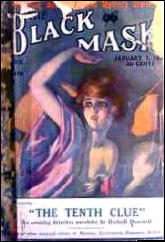
DASHIELL HAMMETT “The Gutting of Couffignal.” Black Mask, December 1925.   [+]   RAYMOND CHANDLER “Red Nevada.” Black Mask, June 1935. Both stories have been reprinted many times, including a joint appearance in Great Action Stories, edited by William Kittredge & Steven M,. Krauzer. Mentor Book, paperback original, May 1977.

   I came across the Kittredge & Krauzer paperback one day a short while ago, and I decided to bring it along on a recent cross-country flight I made. I’m glad I did. Other than the stories above, it also includes stories by Mickey Spillane (“I’ll Die Tomorrow”), Len Deighton, Fredric Brown, Robert L. Fish and a number of others, the names of most of whom I’m sure would be readily recognizable to everyone who visits this blog on a regular basis.

   But the two authors featured at the top of those listed on the front cover are Dashiell Hammett and Raymond Chandler, the two most famous proponents (if not out and out creators) of the “hard boiled” school of writing, bar none. And while the two stories the editors selected are alike in some way, in others they are as different as night and day.

   The plot of “The Gutting of Couffnignal” is the simpler and more straight forward of the two. The Continental Op has been hired to watch a table filled with wedding gifts overnight on a island in San Pablo Bay off the California shore, connected only by a single bridge.

   An easy job, or it would have been if a gang of robbers armed with machine guns and other weapons doesn’t attack the island, blowing up the bank and a jewelry store with dynamite, and killing scores of people in the process. With the help of a family of Russian expatriates, the Op assumes the responsibility of coming to the aid of the entire island, and that he does.

   The action is fast and furious, but the Op shows that all the while he’s on the move, he’s thinking too, and the ending is as hard boiled an ending as you imagine. It’s a story that once begun, you won’t put down until you’re done, with Hammett fully in charge with clear,clean prose.

   â€œNevada Gas,” Raymond Chandler’s tale of personal warfare between some top gangsters in the city of Los Angeles, is as hard boiled as Hammett’s, but the story is a lot more complicated and filled with some subtle nuances that can easily take you more than one reading before you decide you’ve caught them all.

   Two scenes in particular stand out. In the first a heavy set crooked lawyer named Hugo Candless is taken for a ride in a limousine mocked up to look like his own, but it is not, and what’s more, it’s rigged to delivered a dose of fatal gas to anyone who finds himself trapped in the back seat.

   The second, almost unnecessary to the plot finds a guy named Johnny De Ruse, who’s also the main protagonist, having escaped the same trap himself, going to a gambling place and faking his way into seeing the one responsible by making a scene in a crooked casino room.

   As opposed to the Hammett story, Chandler’s zigs and zags, giving the reader only brief glimpses of a connected tale, but connected it is. Chander’s prose is lot more ornate, and the ending is much more quiet, but to my mind, it’s equally effective.

   Question: If you’ve read both, which story did you like better? Which author tickles your fancy more?

A 1001 MIDNIGHTS Review
by Bill Pronzini
:


ROBERT LESLIE BELLEM – Dan Turner, Hollywood Detective. Bowling Green University Popular Press, softcover, 1983.

   Anyone whose sense of humor leans toward the ribald, the outrageous, the utterly absurd is liable to find himself convulsed by the antics and colloquialisms of Dan Turner, Robert Leslie Bellem’s immortal “private skulk,” who fought, shot, wenched, and wisecracked his way to the solutions of hundreds of pulp-magazine cases from 1934 to 1950.

   The list of Bellem admirers is long and distinguished and includes humorist S. J. Perelman, who in a New Yorker essay titled “Somewhere a Roscoe …” called Turner “the apotheosis of all private detectives” and said he was “out of Ma Barker by Dashiell Hammett’s Sam Spade.”

   Although Bellem wrote a handful of novels, none features Dan Turner. Turner, in fact, appeared only in a few scattered anthologies until the publication of this collection of seven of his vintage cases from Hollywood Detective, Spicy Detective, Speed Detective, and Private Detective Stories.

   All are set in Hollywood, most deal with the (highly romanticized and inaccurately portrayed) film community, and all are wild, woolly, quite terrible, and very funny. “Drunk, Disorderly and Dead,” for instance, contains such typical Bellem lines as “A hulking lug in chauffeur’s uniform … barged out of the limousine’s tonneau and planted his oversize brogan on my running board. He had an improvised handkerchief mask over the lower section of his pan and a blue-barreled automatic in his duke. He said: ‘Freeze, snoop, or I’ll perforate you like a canceled check.'”

   And from “Dump the Jackpot”: “A thunderous bellow flashed from Dave Donaldson’s service .38, full at the propman’s elly-bay. Welch gasped like a leaky flue, hugged his punctured tripes, and slowly doubled over, fell flat on his smeller.”

   This delightfully wacky collection also contains an introduction, headnotes, and a biographical sketch of Bellem by John Wooley.

   Bellem’s novels, for the most part, are forgettable. The only exception is his first, Blue Murder (1938), which features a Dan Turner-like private eye named Duke Pizzatello and contains some of the same slangy, campy mangling of the English language.

———
   Reprinted with permission from 1001 Midnights, edited by Bill Pronzini & Marcia Muller and published by The Battered Silicon Dispatch Box, 2007. Copyright © 1986, 2007 by the Pronzini-Muller Family Trust.

REVIEWED BY WALTER ALBERT:


PAUL MALMONT – The Chinatown Death Cloud Peril. Simon & Schuster, hardcover, 2006; softcover, June 2007.

   I picked up my copy of this novel, set in the pulp era and featuring as rival protagonists, Walter Gibson and Lester Dent, at the 2006 Pulpcon, where most of the feedback from readers was not encouraging.

   At 370 pages and managing the (I would have thought) almost unimaginable feat of making Gibson relatively unlikable, the novel crams in so many pulp writers and references that it finally collapses under their cumulative weight during an unwieldy and protracted climax.

   Dent’s wife Norma plays a major role in the developing plot and Gibson’s exotic lady friend adds a modicum of spicy but tame sexual nonsense. Otherwise this is for the boys, especially those who want to recapture the thrills and color of the pulps second-hand.

   My advice? If you really want to savor the elusive perfumes of the pulps, try the real thing. There are numerous anthologies and facsimile reprints of the magazines that will let you sample their multi-hued wares and, as cheesy and far-fetched as some of them may be, they have more flavor and drive than anything you will find in the pages of this clearly affectionate but tedious tribute.

Bibliographic Note:   The sequel to this, Paul Malmont’s first novel, was The Astounding, the Amazing, and the Unknown (2011) which features science-fiction authors Robert Heinlein and Isaac Asimov as its two primary protagonists.

SELECTED BY DAVID VINEYARD:


ARTHUR LEO ZAGAT “Bride of the Winged Terror.” First published in Dime Mystery Magazine, November 1936, writing as Grendon Alzee. (In the same issue is “Terror Beneath the Streets,” by Arthur Leo Zagat.) Also available online and in ebook form.

   â€œThese hillbillies hate furriners worse’n poison …” ex-mountain man Fred Harris warns his private detective buddy Dick Mervale as their roadster tackles the dangerous winding roads of Buzzard Mountain where a picture in a circular has led the two to believe bank embezzler Gorham Carstairs has been hiding lo these many years.

   Capturing Carstairs would not only me a big reward and much needed publicity for the low rent sleuths out of Louisville (presumably Kentucky, it is never made clear), but also the gratitude and business of the Bank Association, so they are willing to risk a great deal to capture Carstairs.

   And it becomes clear how much when a bullet from a high powered rifle punches a hole in Fred’s head.

   That doesn’t slow down Dick Mervale, who quickly covers up Fred’s body with rocks, spying a huge vulture as he does so, and makes his way up to the town of Winburg where he is met by armed citizens. They aren’t after Dick though. A child, a young girl has been murdered, horribly mangled by a “big black bird.”

   Dick manages to get out of Winburg and reach the top of Buzzard Mountain where he plans to wait until daylight, but he spies the giant black bird, and seconds later hears a woman’s cry. Racing to her rescue he encounters a leathery black winged monster with a “human face” attacking a young woman “… her gauzy frock … ripped in the struggle…” revealing “…white satiny skin seeming to glow from some inner light and the swelling firm curves of just budding womanhood.”

   And wouldn’t you know it, this is Elise Carstairs the mountain-raised daughter of the man he is after, who promptly shows up with a shotgun.

   From that point on the action literally races to its conclusion, piling horror on horror until the naked Elise is in Dick’s protective arms and the mystery of the winged terror (she isn’t its bride, in fact there is no bride — she’s the monsters niece and no hint of incest appears) and why Carstairs embezzled the money in the first place is laid to rest along with Carstairs and his brother.

   If you don’t recognize the basics of a typical Weird Menace story from what Robert Jonas labeled “The Shudder Pulps” in his excellent book on the subject then you likely don’t know you pulps. These were the ones with the gaudy covers of scantily clad women being tortured and murdered by looming madmen in the most suggestive way with a heroic male usually helplessly watching nearby.

   A variety of pulp authors contributed to the genre, which was one step up from the Spicy genre where the sex was a bit more obvious and the nudity considerably so, including some notable names like Norvel Page, Cornell Woolrich, and Richard Sale, but the genre had its own stars, and one of them was the prolific Arthur Leo Zagat, best known for his fantasy horror Drink We Deep.

   For all the nudity and strange psycho-sexual tortures out of de Sade by way of Kraft-Ebling featured on the covers and in the stories virtue prevailed as did virginity for both hero and heroine. In most cases, as here, a logical (if you can call it that) explanation was swiftly tacked on in the final paragraphs to assure the reader nothing supernatural had happened, though once in a while a whiff of sulfur and brimstone would linger.

   The stories vary in quality as you might expect, from say a minor Universal Horror film to one of those independent productions with the likes of George Zucco, Lionel Atwill, or Bela Lugosi where the sets look like someone’s three bedroom house.

   This one is absurd, even by the standard of the genre, but Zagat was a master of empurpled prose and swelling horrors (sounds like a bad diagnosis doesn’t it?) who could do better and did elsewhere, and this is actually quick fun to read with the caveat you don’t dare stop and think about it. If slavering mad monsters with foetid breath, reddened claws, and hideous eyes are your cuppa, this more than delivers.

   They don’t write ’em like this anymore — well, they do, , but now they are themselves swollen monsters of 500 plus pages and with considerably less virtuous characters, and what logic there once was has gone the way of the pulps themselves. There is something almost innocent about the Weird Menace genre, in a slightly disturbing way, but I wouldn’t suggest you delve too deep.

   Some things are better left alone.

« Previous PageNext Page »