TV mysteries


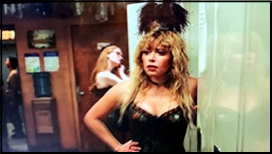
POKER FACE.“Dead Man’s Hand.” Peacock, 26 January 2023. (Season 1, Episode 1.) Natasha Lyonne (as Charlie Cale, a casino worker who goes on the run), Benjamin Brat (as Cliff LeGrand, the casino head of security, who is on the chase after her), Ron Perlman (as Sterling Frost Sr., the casino owner (voice only in this first episode)). Guest star: Adrien Brody (as Sterling Frost Jr.). Written, created and directed by Rian Johnson.

   The gimmick in this one, a new well-received streaming series that I think qualifies as a solid hit, is that casino cocktail waitress Charlie Cale has the unique ability to know when someone is lying to her face. Until things got too hot for her, she made a lot of money playing poker, where an ability would be hugely helpful.

   And of course knowing who is telling the truth and who is not would come in equally useful in solving crimes, including murder, which she does quite easily in this first episode, the only one I’ve seen so far. Invited in to a high stakes poker game by the manager of the casino where she’s working, she solves the killing of a maid she knows well, but in doing so, gets so far into hot water that by the end of the episode she’s forced to head out of town as fast as she can.

   The show is told in Colombo-type fashion, as we the viewer first she the killing and then flashing back to see exactly where Charlie manages to fit in. And as the last sentence of the previous paragraph suggests, each followup episode is a page out of The Fugitive’s notebook.

   Charlie is a brassy, self-identified “dumb ass” with wild hair type, and Natasha Lyonne is perfect for the part. (I think she had a great deal to do with the creation of the character.) The first season consists of ten episodes, with lots of well-known guest stars, and I’ve read that the series has already been renewed for a second season.

   The only drawback that I can see is that as a superpower, being a human lie detector could easily make solving crimes all too easy. Superman had Kryptonite to keep him in check. What’s Charlie’s Achilles heel?

   It’s too bad you have to sign up for Peacock (a subsidiary of NBC) to see this, but on the basis of this first episode, it’s well worth the money, given that there’s other stuff there to watch as well.

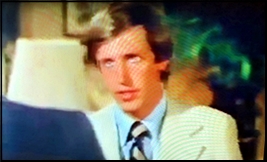
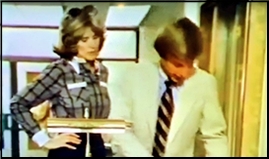
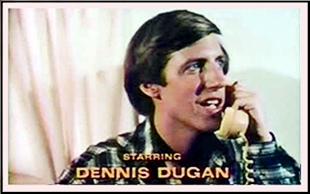
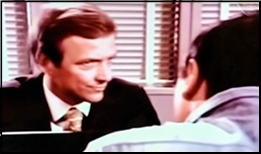
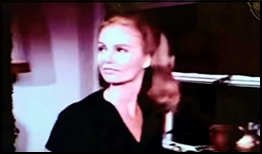
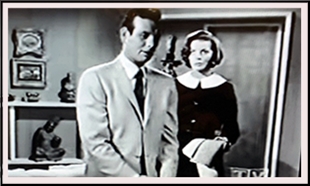
RICHIE BROCKELMAN, PRIVATE EYE. “A Title on the Door, and a Carpet on the Floor.” NBC, 31 March 1978 (Series 1, Episode 3). Dennis Dugan (Richie Brockelman), Barbara Bosson (Sharon Deterson), Robert Hogan (Sgt. Ted Coopersmith). Guest Cast: Carol Lynley, Charles Siebert, Rene Auberjonois, Jim McKrell. Screenplay: Steven Bochco & Stephen J. Cannell. Director: Arnold Laven. Available on YouTube here.

   Coming in at perhaps exactly the middle of this short-lived private eye series, it is difficult to explain what was the driving force behind it. It started out first a made-for-TV movie, then a two-hour episode of The Rockford Files. Following this it was picked up a short series episodes on NBC, then appearing once again as another two-hour episode of The Rockford Files. (If I have any of this wonrg, please so advise in the comments.)

   Suffice it to say, perhaps, that it was the apparent youthfulness of Richie Brockelman that was intended to be its appeal, at 22 the youngest PI in town, complete with a semi-dorky haircut and a somewhat funny name. Otherwise it was just another PI show taking place in LA with lots of scenes with cars driving from one place to another.

   In this particular episode, both Richie and his secretary are hired by a much bigger outfit to come work for them, even while Richie is still investigating the death of a client’s husband. Does the discerning viewer think that someone at the much bigger outfit has a nefarious reason behind this? The discerning viewer does, and the discerning viewer would be absolutely correct.

   I may have made this sound less interesting than it was, but in all seriousness it was no better nor worse than the standard TV PI fare at the time. In this case, at least, “no worse” was not enough, and the plug was pulled after only the five episodes.

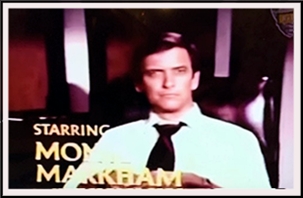
THE NEW PERRY MASON. “The Case of the Wistful Widower.” CBS, 07 October 1973 (Season 1, Episode 4.) Monte Markham (Perry Mason), Harry Guardino (Hamilton Burger), Sharon Acker (Della Street), Albert Stratton (Paul Drake), Dane Clark (Lt. Arthur Tragg). Guest Cast: Jacqueline Scott, Bruce Kirby, Donnelly Rhodes. Screenplay: Ernie Frankel & Orville H. Hampton), based on the characters created by Erle Stanley Gardner. Director: Leo Penn. Currently available on YouTube.

   When a milquetoast of a middle-aged yacht broker discovers that the girl he is about to marry has apparently absconded with $30,000 in cash meant to complete a sales transaction, he is convinced by a fast talking new acquaintance to switch identities with him. Duh. What he doesn’t know is that a hit man is on the trail of this so-called friend, and wow, does the case take off from there.

   There is a blown-up car with a body inside, a scattering of ashes over the sea, a stash of counterfeit money, or is it, a kidnapping at gun point, and yes, of course, a murder, and Perry’s client goes on trial for the deed.

   Even Perry Mason, whom he finally goes to for help, calls this the most confusing case he’s ever had. I gave up about half way through and decided to simply go along for a ride. It may even be more complicated than any of Erle Stanley Gardner’s own, and that’s saying a lot.

   This new series followed seven years after the original one ended, the one starring Raymond Burr, and it may have been a case of far too soon. These new upstarts couldn’t hope to compete with memories of the original cast, and the new series was cancelled halfway through a single season. Monte Markham was OK, but he was no Raymond Burr, and neither the new Della nor the all-but-invisible Paul Drake make any impression at all.

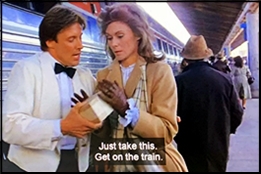
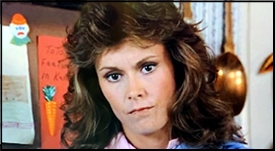
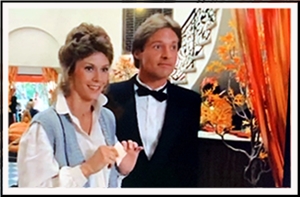
SCARECROW AND MRS. KING “The First Time.” CBS, 03 October 1983 (Season 1, Episode 1). Kate Jackson (Mrs. Amanda King), Bruce Boxleitner (Lee Stetson, aka “Scarecrow”), Beverly Garland, Mel Stewart, Martha Smith. Creators & co-screenwriters: Eugenie Ross-Leming & Brad Buckner. Directed by Burt Brinckerhoff & Rod Holcomb.

   When a young divorced housewife and the mother or two boys drops off her semi-boy friend at a train station, she has no idea how soon her world is going to be turned upside down. A federal agent, code name “Scarecrow,” is on the run from a man with a gun, and in desperation, he hands off a small package to Mrs. King so as to keep it from the hands of a gang of thugs, terrorists and thieves.

   Well, sure enough, things do not go smoothly. Dire straits? Not particularly. On the contrary, this is precisely where the fun begins. And so the viewers agreed. The series lasted for four years, with Amanda King (the eternally cute and perky Kate Jackson) becoming more and more involved with the agency and (ahem) romantically with Bruce Boxleitner’s character.

   Most of the time, Amanda’s secret had to be kept from her mother, played by Beverly Garland, who mostly stayed home and took care of the two boys while their mother was off playing spy games. I don’t think any of the stories that ensued had any more depth than in this, the first episode. Light and frothy, but the viewers loved it.

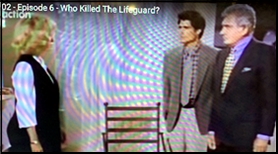
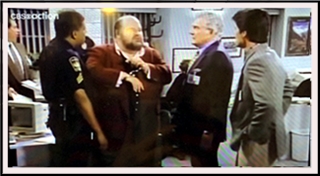
BURKE’S LAW “Who Killed the Lifeguard?” CBS, 25 May 1995 (New Season 2, Episode 6). Gene Barry (Chief Amos Burke), Peter Barton (Detective Peter Burke), Dom DeLuise. Guest Cast: Downtown Julie Brown, Samantha Eggar, Catherine Hicks. Director: Jefferson Kibbee. Currently available on YouTube.

   This is an episode from the second incarnation of the popular TV mystery show Burke’s Law, or maybe the third. After a successful two years on ABC from 1963 to 1965, it changed focus nearly 180 degrees and retitled itself to become Amos Burke Secret Agent, which had viewers across the entire country yawning with disinterest. The series was revived, literally brought back from the dead, for two seasons on CBS (1994-1995), with Gene Barry once again playing the role of the millionaire homicide detective with a tendency for quoting various “laws” as the cases he is investigating moved along.

   In this later version, a son played by Peter Barton was added. From the one episode I’ve seen, his presence was only minimally involved, but he was a young actor with a lot of “hunk” appeal, and maybe he helped boost the number of young teenyboppers watching the show.

   As this episode goes along, the number of suspects involved in the death of the titular lifeguard grows and grows. There are at least four, perhaps five. The Burkes’ method of investigation is to question each of them in turn, and each in turn accuses the next one, sometimes looping back to someone for another round of questions. This may be unique to only this episode, but perhaps it was a standard procedure for the entire series. This also may be true for the final scene in which all the suspects are gathered together, and … well, you know the drill.

   And perhaps only incidentally, whenever the action takes the Burkes to the beach, which is often, there are also quite a few bikini-clad beauties strolling back and forth across the screen. It sometimes made it difficult to follow the actual story line.

   Not essential viewing by any means, but still fun to watch. Quite a few episodes can be found currently on YouTube.


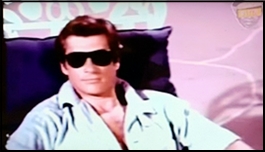
RICHARD DIAMOND. “The Sport.” CBS. 15 February 1959 (Season 3, Episode 1). David Janssen (Richard Diamond), Barbara Bain (Karen Wells), Mary Tyler Moore (Sam; uncredited). Guest Cast: Ross Martin, Ed Kemmer, Irene Hervey, Mort Sahl. Written by Richard Carr, based on the character created by Blake Edwards. Directed by Alvin Ganzer. Currently available on YouTube.

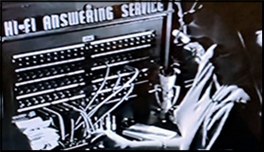
   After two years of PI Richard Diamond being based in New York, this first episode of the third season has him relocated to L.A., in all likelihood hoping to pick up some of the glamour if not (hopefully) the success of another TV show taking place there, namely 77 Sunset Strip, as a prime example. He also has a luxurious place on the beach, and a telephone messaging service, that service provided by the seductive voice of Sam, never quite seen, but what is seen hints at something quite special. And so is the byplay on the phone.

   Also introduced is a girl friend for Mr. Diamond, a lovely beauty in her own right by the name of Kitty Wells (Barbara Bain). As one of several players in the episode,, we the viewer do not know that she will turn up again, but she did, making five appearances in this third season in all. (And all to the good, I’d say.)

   Adding to the special flavor of this episode are guest appearances by Ross Martin (always welcome) and Mort Sahl (even though the portion of his night club act that we are allowed to see is rather lame). And of course, David Janssen’s portrayal of a wonderfully laconic PI is, as always, spot on perfect.

   As for the story itself, I have to say it isn’t much, having to do with a missing race car driver, later found dead it what is at first assumed to be a terribly unfortunate automobile accident. Oh, well. In a PI show only thirty minutes long, you can’t have everything.

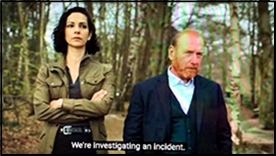
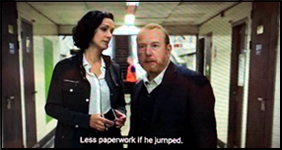
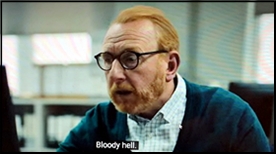
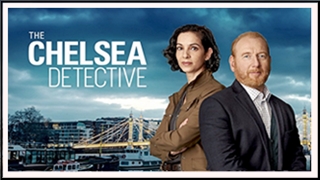
THE CHELSEA DETECTIVE.“The Wages of Sin.” Acorn TV original, 07 February 2022. (Series one, episode one). Adrian Scarborough (DI Max Arnold), Sonita Henry (DS Priya Shamsie). Writers: Peter Fincham, Glen Laker. Director: Richard Signy.

   TV producers and other executives, if their TV detectives aren’t buddies from episodes one on, then the next best thing is that they’re mismatched in almost every way possible. It may actually be the best thing, if you stop and think about it.

   DI Max Arnold is short, chunky-ish, and male. DS Priya Shamsie is tall, statuesque, and female. What they have in common, though, is a dedication to their jobs, and personal problems they’re working their way through. (TV producers and other executives like those too.)

   In the first episode of a new British series, the victim is a middle-aged stone mason who dies in front of an oncoming trade in a tube station. Did he fall? Did he jump? Was he pushed? When CCTV tapes establish the latter, the two policeman have a case on their hands.

   And as they gradually discover, the victim had been plagued with guilt, for what, not known, but spurred on by finding messages from the Bible written on his bathroom mirror when waking up in the morning.

   The case is solved by plodding but indispensable police work – which in today’s world means not only person-to-person interrogation, but sitting at the computer, with one person standing and looking over the shoulder of the other who is typing furiously away at the keyboard.

   I mentioned personal problems. Arnold is working his way through the death of his father as well as a messy divorce, and Shamsie has just returned from maternity leave, which leaves the baby at home with her father, who is not entirely happy about it. Perhaps we the viewer can hope these problems have been resolved by the time this first episode ends; it shouldn’t take a whole season!

   You should not take this last comment the wrong way. If it helps to show that your two TV detectives have their human sides too, I’m all for it, and given the overall rather light touch, I think they succeeded. Recommended.


J. J. STARBUCK “Pilot.” NBC, 26 September 1987. (The series itself of sixteen episodes began three evenings later, on September 29th.) Dale Robertson (Jerome Jeremiah ‘J.J.’ Starbuck), David Huddleston, Shawn Weatherly. Guest cast: Bill Bixby, Patty Duke. Co-creators/screenwriters: Stephen J. Cannell & Lawrence Hertzog. Director: Corey Allen. Episodes are currently available on YouTube.

   J. J. Starbuck (no relation to the coffee shop chain, as far as I know) was an eccentric billionaire who left the running to his several successful commercial enterprises to underlings to travel across the country solving murder cases in which he feels an underdog is getting a poor deal. (At the end of this, the pilot episode, it is revealed that the deaths of his wife and son were what changed his mind about his earlier philosophy that money is everything.)

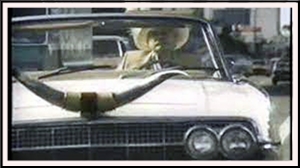
   His primary means of transportation is a Lincoln convertible enhanced by a hood ornament consisting of three foot span of steer horns. Over the top, yes, but it helped make many a killer think J. J. is nothing more than a corn pone cowboy prone to quoting appropriate homilies fitting the situation at hand.

   Example: “I like to keep an open mind, in case someone comes along and drops a good thought in it.”

   I don’t think anyone but Dale Robertson could get away with lines such as this. The part was almost surely made with him in mind.

   In this opening episode, the villain (Bill Bixby) is accused and arrested of killing his wife. Midway through the trial a pool boy (or the equivalent) confesses to the murder, and Bixby’s character is set free. Then the fellow who confessed retracts his confession, but can Bixby be arrested and tried again? Supposedly not, but I will allow the legal minds reading this have their say.

   The beneficiary of J. J. Starbuck investigation is Bill Bixby’s stepson, who also ends up as J. J.’s foster son halfway through the episode, but I don’t believe he ever showed up again.

   The series lasted only the one season, but it had to be fun for viewers to see Dale Robertson back in the saddle again, so the speak. (*) To me, he was a man totally at ease in any role he played, and he plays this one to the hilt.
   

(*) Robertson previously starred in two cowboy shows on TV: Tales of Wells Fargo (1957-62) and Iron Horse (1966-68)


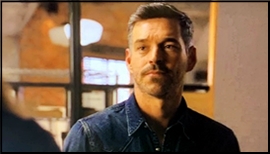
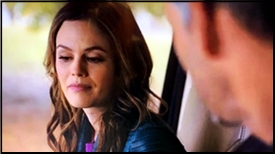
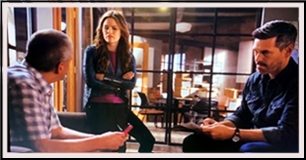
TAKE TWO. “Pilot.” ABC, 28 June 2018 (Season One, Episode One). Rachel Bilson (Sam Swift), Eddie Cibrian (Eddie Valetik). Created and written by Andrew W. Marlowe and Terri Edda Miller. Director: John Terlesky. Available for purchase on Amazon Prime Video.

   After her long-running cop show on TV (eight years) has been cancelled, and finished now with rehab (I didn’t catch the why), actress Sam Swift, still young and attractive, hopes to make a comeback in another series, one in which she would play a private eye. How to prepare for the role? Have her agent call in a favor and have real-life PI Eddie Valetik let her follow him around for a week to watch and learn.

   Eddie agrees, but only under protest. Who needs a washed up former TV star underfoot all day? Well, you know how that goes. Lots of sparks fly, but it is only inevitable that after they partner up like this for a while, Eddie grudgingly agrees that maybe, just maybe, she is more than a pretty face.

   Their first client? A man who thinks his daughter, on her own in L.A., may have been murdered.

   This first episode has all the depth, ambience, and wholesome charm of a Hallmark Channel TV mystery, and I doubt I need say a whole lot more than that. It isn’t bad, but that doesn’t mean that it’s going to be remembered, even by those who watched it. The series was apparently a summer replacement on ABC, and when the summer was over, so was the series, 13 episodes in all.


GROVER AVENUE BLUES:
The 87th Precinct TV Series, Part Two
by Matthew R. Bradley.


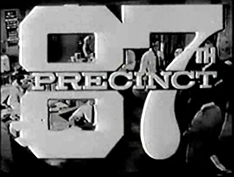
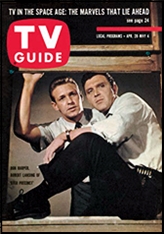
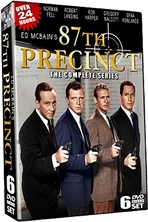
   In Part Two, I continue the episode-by-episode description of the 1961-62 television series, The 87th Precinct, based on the characters created by mystery writer Ed McBain in a long list of very popular police procedurals. If you missed Part One, you can find it here.
   â— Interestingly, two episodes were based on works by other authors, with Helen Nielsen adapting “The Very Hard Sell” (12/4/61) from her own story (Alfred Hitchcock’s Mystery Magazine, May 1959). An apparent suicide, a salesman is found shot dead in the car whose prospective buyer (Leonard Nimoy) duped him into transporting drugs during a test-drive; getting wind of this, he tried to make a citizen’s arrest with his own gun, which was then turned on him. Nimoy has little screen time, and his scam is convoluted and far-fetched, making this one of the less satisfying episodes.

   â— “Feel of the Trigger” (2/26/62) was adapted — again minus its initial article — from one of Donald E. Westlake’s Abe Levine stories (AHMM, October 1961), collected in Levine (1984); Hawkins gives Abe’s obsession with heart health to Meyer. During a confrontation with a youthful killer, Meyer faces him mano-a-mano and, after subduing him with judo — mentioned frequently in the novels, particularly as a defining characteristic of Det. Hal Willis — suddenly feels fine. Neither of McBain’s minority detectives, African-American Arthur Brown or Puerto Rican Frankie Hernandez, was seen on the show, but this episode gets points for matter-of-factly including black Officer Kendal (Bernie Hamilton) without making an issue of his race.
   The show’s original teleplays largely maintained the style and spirit of the books, periodically introducing a lighter tone, as did McBain. Obviously excepting Havilland 2.0, they captured both the personalities of and the dynamics among his characters, stressing the grindingly methodical, sometimes tedious nature of police work; the frequency with which luck and coincidence played an equally large role in the outcome; and the important contributions of the police lab, with which the detectives enjoy a pleasant raillery. Also like McBain, the scenarists populated the squadroom with colorful characters whose vignettes enlivened the proceedings.

   â— McBain contributed “Line of Duty” (10/23/61), which he later recycled for Ironside as “All in a Day’s Work” (2/15/68), and uses his character of stoolie Danny Gimp (Walter Burke). Bert sees a theater held up, then kills the perp who fires at him while the other drives away, described as a good boy by all who knew him; when Carella and Kling are given a lead by Danny, Bert freezes and is wounded before Steve shoots the fugitive, who reveals the “good boy” was his accomplice on 14 jobs. Unsurprisingly, McBain does an excellent job of focusing on Kling’s maturation as a detective, struggling to cope with the first time he is forced to kill.
   â— Cinematographer James Wong Howe directed Finlay McDermid’s “The Modus Man” (10/16/61), with Havilland and ex-detective Bill Brewster (John Anderson) — now a used-car salesman — recognizing the m.o. of a smash-grab as Maxie Greb’s … but he’s in prison. Carella’s investigating a second-story job, unmistakably the work of Blinky Smith…whose alibi checks; Roger and Kling raid the apartment of Greb’s former partner…who died a week ago. Brewster has microfilmed their m.o. cards, but slips up by telling a victim to shut up while impersonating a crook who can no longer speak.

   â— Winston Miller’s “Occupation, Citizen” (10/30/61) concerns a Hungarian refugee (Ross Martin) whose pregnant wife, fearing reprisals, stops him from identifying two mob killers, but after a second killing, he agrees to serve as bait. Immigrants feature prominently in McBain’s precinct, whose population, per Killer’s Wedge, “was composed almost entirely of third-generation Irish, Italians, and Jews, and first-generation Puerto Ricans.” This episode has a valuable lesson in citizenship applicable to all Americans, yet especially these aspiring citizens, with Steve reminding them of their civic duty to their unborn child’s adoptive country.

   â— The first of two teleplays by David Lang, “The Guilt” (11/13/61) finds Meyer clobbered by childhood friend Artie Sanford (Mike Kellin), who is bitten by a used-car salesman’s guard dog while trying to make a getaway. Dismissing news reports that it is rabid as a trick, he persuades sometime girlfriend Estelle Vernola (Norma Crane) to transport him in her uncle’s truck. Meyer records Blaney’s warning about the urgent need for treatment, and Estelle plays it for Artie in the back of the truck, prompting a spectacular, eye-rolling freak-out by Kellin before she drives him to the Emergency Hospital, where Meyer awaits.

   â— In Lang’s “Ramon” (4/9/62), the eponymous boy (Danny Bravo) can’t stop showing his appreciation after Havilland sends flowers to his mother’s grave, while his father, Villedo Morales (Edward Colmans), is conspiring to assassinate a visiting Central American prime minister, who plans to address his people in front of the precinct house. Roger collects $20 to send Ramon to camp, but Villedo, reconsidering when Havilland touts ballots over bullets in another of the show’s solid moral lessons, pulls Ramon from camp to leave town. Fearing he won’t see Roger again, the boy eludes him, his destination obviously the 87th, and Villedo, arriving just before the speech, fingers the conspirators.
   â— In Anne Howard Bailey’s “My Friend, My Enemy” (11/27/61), a woman lies to alibi her son, Andrew Mason (Dennis Hopper), who strangled a classmate in the park, and the suspicious Carella has an undercover Kling befriend him. Daniels urges caution when Bert risks the jealousy of Claire — killed off in Lady, Lady, I Did It! (1961) — to make a double date with two policewomen. With Hopper providing an early taste of the manic energy he brought to Apocalypse Now (1979), the unbalanced youth learns that Kling is a cop, and threatens him with his own gun before being disarmed.

   â— The first of four scripts by Donn Mullally, “Run, Rabbit, Run” (12/25/61) marks Paul Genge’s debut as Lt. Jim Burns (Peter Byrnes in the novels). The only surviving witness to testify against an executed mobster, Toots Brendan (Alfred Ryder) is betrayed when he tries to sell his interest in “the operation” to help finance his disappearance. Not above deception, Steve tells secretary Yvonne English (Barbara Stuart) — who is sweet on Toots — that he’s been killed, so she reveals her duplicitous boss’s address, enabling the detectives to intervene.

   â— Pete Rugolo and Jerry Goldsmith, respectively, pinch-hit on Mullally’s “Man in a Jam” (1/8/62) and Katkov’s “Step Forward” (3/26/62) — both directed by Twilight Zone vet James Sheldon — for Goldsmith’s protégé, Hawaii Five-O legend Morton Stevens; all three scored Thriller, another Hubbell Robinson Production. “Jam” concerns a man who claims he killed his fiancée during a drunken black-out, in reality a premeditated crime for which he forged I.O.U.’s from her to fictitious other men of whom he was supposedly jealous. Unfortunately, the Byzantine nature of his scheme threatens credulity.
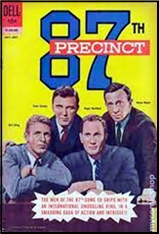
   â— A somewhat whimsical departure, “Step Forward” finds the underpaid Carella accepting a job as a bank’s security chief; he chafes at the symbolic post, humoring rich clients, but provides two of them with valued advice. Kling drops in as the Carellas and Meyers enjoy cocktails, nicely showing how the detectives remain friends off-duty, and when he gets a tip on a payroll robber, the three head out to pick him up. Despite the extra money and the prestige of his own staff, Steve admits policing is “more fun,” his new job obviously forgotten as they question the suspect.

   â— Kling asks local baseball hero Larry Brooks (Michael Dante) to start a baseball clinic to get the local kids on the right path in Mullally’s “Idol in the Dust” (4/2/62). Larry tries to extricate his parole-violating brother Joe (Al Ruscio) from a crooked poker game, and in the ensuing mêlée, Joe pushes one crook out the window to his death; for their mother’s sake, Larry confesses to involuntary manslaughter, upholding the code of silence. This makes him a hero to the local punks, but when Bert assembles them and the clinic kids to see Larry, Carella brings Joe, who agrees to take his own rap, advising them to avoid his fate — guidance that could also serve viewers well.

   â— In Mullally’s “The Last Stop” (4/23/62), Mike Power (Victor Jory) is scapegoated after being shot in a taxi by Stu Tobin (Bern Bassey) while the latter silences a squealer, then asked by long-ago partner Burns to run out the retirement clock at “the Eight-Seven.” In an effective performance by Jory, he rubs everyone the wrong way, but his hunch is borne out that a rash of crimes by a shotgun-wielding woman is a hoax. Correctly confident that he won’t be recognized, Stu brazenly sits beside Powers in a bar; as Mike accosts him to return a lighter left behind, a departing Stu misconstrues and shoots it out, but Powers survives again and is retired, effective immediately.
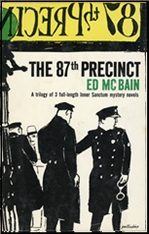
   â— Written by Alfred Hitchcock Presents mainstay William Fay, “Main Event” (1/1/62) has Meyer’s pal “Sonny” Fitzgerald (Brad Weston) beset by a booby-trapped punching bag and spiked rubbing solution. The culprit is revealed as gofer Bobo Felix (Arch Johnson), an ex-pug who was used up and thrown away by — and is trying to frame — a notoriously crooked rival manager, resenting Sonny’s success. But the subtleties of Bobo’s plan seem at odds with his punch-drunk persona, making this another problematic episode.

   â— In Jonathan Latimer’s “Out of Order” (1/22/62), ex-con Jerry Curtis (Charles Robinson) is suspected of bombing a phone booth when his construction foreman reports a dynamite theft, and although cleared when another blast goes off during questioning, he decides to cash in, believing it’s useless to try going straight and voicing a familiar complaint about persecuted parolees. Bombing a café and emptying its register, he adds theft to the m.o., but Meyer finds evidence in the phone company’s crank letter file that helps identify the original bomber, who denies the thefts. Jerry is apprehended after shooting a man with a gun concealed in his “bomb” while bluffing a betting parlor.

   â— Rik Vollaerts received a story and shared script credit (with Raphael Hayes) on “The Pigeon” (1/29/62), with Peter Falk well suited to the typical oddball role of Greg Brovane. Coincidentally, the 87th entries So Long as You Both Shall Live (1976) and Jigsaw (1970) were respectively repurposed into his Columbo episodes “No Time to Die” (3/15/92) and “Undercover” (5/2/94). Aspiring to the big time like his father, Greg has been hypnotized to think he made it, confessing to two killings in a supermarket heist he didn’t pull and fingering three nonexistent accomplices.
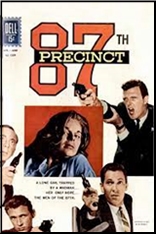
   â— James Bloodworth also had story and shared script credit (with Collins) on “A Bullet for Katie” (2/12/62), the new bride of cop Bill Miller (Ed Nelson). Gantry (Harold J. Stone) excoriated Bill when left by his wife while in prison, but a co-worker recants his alibi for Katie’s shooting after Gantry refuses to be blackmailed into concealing factory theft. Providing extra nuance, Bill is well portrayed as abrasive and hot-headed, gunning for vengeance when he learns that Gantry is about to be picked up, but just in time, a boy admits wounding Katie while playing with an “unloaded” gun borrowed from a friend.

   â— In Sheldon’s “Square Cop” (3/12/62), written by Robert Hardy Andrews, Otto Forman (Lee Tracy) is suspected after the weapon that killed his partner is identified as his, reported stolen, and the description of the wounded perp matches his estranged son. When Burns says, “he fell down, failed, right in his own family,” Steve replies, “that happens to a lot of fathers,” alluding to Larry Byrnes, revealed as an addict and murder suspect in The Pusher. Tracy brings a nice gravitas to the role, dramatizing the classic duty vs. family conflict, with the viewer uncertain which way he leans until he decks the youth, who had tried to force his father’s help.

   â— Collins wrote the last episode, “Girl in the Case” (4/30/62), in which a millionaire dies after dictating a will to stenographer Cheryl Anderson (Janis Paige), offered $100,000 to swear that he was not of sound mind. It’s revealed that an ex-member of his law firm had planned to split $3 million left to a family member in a previous will. Havilland wines and dines Cheryl, but is chagrined to learn that she plans to marry the man’s ne’er-do-well son, who might actually become something with her help; this makes her a nicely complex character, seeming far less like a mere gold-digger.
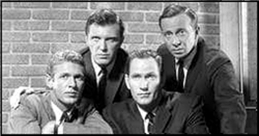
   The “conglomerate hero” device aided the scenarists in mixing and matching characters from any book after Killer’s Choice to circumvent Roger’s absence. A Casanova, McBain’s Hawes often bedded any babe he saw, an aspect that not only was downplayed on the show but also ruled out the married Carella and Meyer and engaged Kling, leaving Havilland his default stand-in, e.g., romancing Cheryl. Roger’s literary successor, Andy Parker, fought with Steve over racist remarks to Hernandez, who is slain in See Them Die (1960) while trying to prevent a besieged killer’s becoming a barrio martyr.

   The 87th has since had mixed success onscreen, although as with noir authors David Goodis and Cornell Woolrich, French filmmakers, e.g., Claude Chabrol, favored these romans policiers. With Burt Reynolds (Carella), Jack Weston (Meyer), and Tom Skerritt (Kling) relocated to Boston, Richard A. Colla’s Fuzz (1972) was a misfire, despite being adapted by McBain-as-Hunter. His 1968 novel had brought back the Deaf Man — Yul Brynner, like Vaughn one of The Magnificent Seven (1960) — and Det. Eileen Burke (aka McHenry; Raquel Welch); the latter, unseen since The Mugger, became a major character starting with Ice.

            — Copyright © 2023 by Matthew R. Bradley.
   

      Editions cited —

The Mugger: Warner (1996)
Killer’s Choice: Avon (1986)
All others: Signet (1974, 1975, 1976, 1977, 1989)
« Previous PageNext Page »