TV mysteries


GROVER AVENUE BLUES:
The 87th Precinct TV Series, Part One
by Matthew R. Bradley.


   Under the byline Evan Hunter, legally adopted in 1953, Salvatore Albert Lombino (1926-2005) was the original author and/or screenwriter of such films as The Blackboard Jungle (1955), adapted by director Richard Brooks; John Frankenheimer’s The Young Savages (1961); and Alfred Hitchcock’s The Birds (1963). His scripts and stories were seen on Alfred Hitchcock Presents, The Kaiser Aluminum Hour, and Bob Hope Presents the Chrysler Theatre.
   As Ed McBain, he was the acknowledged master of the police procedural, his 87th Precinct mysteries comprising 55 books over half a century, possibly inspiring Hill Street Blues. Cop Hater, The Mugger, and The Pusher (all 1956) were filmed between 1958 and 1960; the following year, NBC’s 87th Precinct debuted. Robert Lansing, carried over from The Pusher (1960), played Det. Steve Carella, and later Gary Seven in the Star Trek spin-off manqué “Assignment: Earth” (3/29/68).

   In a 1989 introduction to Cop Hater and afterword to The Pusher, McBain discussed his innovation of a “conglomerate hero in a mythical city…[that] was like New York but not quite New York,” with analogs for each borough. “[O]ne cop can step into the spotlight in one novel, another in the next novel [as when Carella is honeymooning in The Mugger], cops can get killed and disappear from the series, other cops can come in, all of them visible to varying extents…” The show standardized the duty roster to Carella and three colleagues, replacing “Isola” with its model, Manhattan.

   Ron Harper — later astronaut Alan Virdon on Planet of the Apes  —  co-starred as Bert Kling, promoted from patrolman after cracking a murder in The Mugger. The landlord on Three’s Company, Norman Fell played sardonic family man Meyer Meyer, per McBain “a Jew whose father had a hilarious sense of humor.” Immortalized in Ed Wood’s Plan 9 from Outer Space (1957), Gregory Walcott was the sanitized Roger Havilland, whose prose original tried to break up a street fight; broken in four places by a lead pipe, his arm had to be rebroken and reset, said ordeal rendering him a violent cynic.
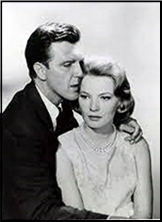
   â— Of the 30 episodes, 11 were based on McBain’s works, including all nine novels following The Pusher; “The Floater” (9/25/61) was adapted from The Con Man (1957), previously dramatized on Climax! as “The Deadly Tattoo” (5/1/58). The 87th Precinct premiere was written by Winston Miller, who went on to co-produce the series with Boris D. Kaplan, while Alfred Hitchcock Presents and Thriller workhorse Herschel Daugherty directed the first and last episodes. This introduced Carella’s deaf-mute spouse, Teddy (Gena Rowlands), and medical examiner Dr. Tom Blaney (Paul in the novels; Dal McKennon).

   Robert Culp guest-stars as serial killer Curt Donaldson, who selects prospective wives with personals ads, gains control of their money, and dispatches them with arsenic after “signing his work” with distinctive tattoos. Teddy plays a prominent role, following Curt and his latest victim from a tattoo parlor to Pier 7, where she is almost killed before the squad arrives to save both women. Havilland provides a vastly toned-down account of McBain’s transformative trauma, while the lethally affable Culp was followed by such up-and-comers as Dennis Hopper, Leonard Nimoy, Robert Vaughn, and Peter Falk.

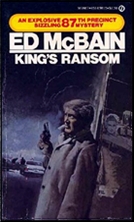
   â— McBain personally scripted “Lady in Waiting” (10/2/61) and “King’s Ransom” (2/19/62); adapted from Killer’s Wedge (1959), the former marked Rusty Lane’s debut as Desk Sergeant Dave Murchison. Virginia Colt (Constance Ford) holds the disarmed Meyer, Kling, and Havilland hostage at the station house — located, per McBain, on Grover Avenue, facing Grover Park — with a bottle of alleged nitroglycerine, vowing to kill Carella on arrival for sending her safecracker husband to prison, where he has died.
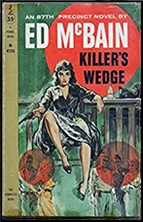
   Stumbling in, clerk Alf Miscolo (Miguel Landa) is shot, concealed, and denied a doctor as Roger turns off the fan, closes the windows, and cranks up the thermostat, prompting Virginia to remove the coat in which she pocketed his gun. Teddy arrives as Roger goes for his weapon, and Meyer pretends she is a complainant, but Virginia recalls reading of Mrs. Carella’s disability, and threatens her before being subdued in a scuffle by Roger and Bert. Delayed by a flat, Carella is baffled by the Bomb Squad’s call to say, “it was.”

   Dropping Teddy’s pregnancy and the B story of Steve’s locked-room “suicide,” McBain nicely depicts the squad’s ingenious efforts at extrication, defeated by stupidity. Bert slyly tries to summon help while answering a call from the precinct commander, who is oblivious to his hints; assuring a clueless Dave that the shot he heard was accidental, Meyer says he’ll see the sarge “forthwith,” police jargon for “report immediately”; Meyer is pistol-whipped by Virginia when she listens in on an imprudent call from Headquarters after two boys find a note he slipped out the window. McBain also retains his sympathetic portrayal of a Puerto Rican immigrant arrested for slitting the throat of a man who “got funny” with her.

   â— “King’s Ransom” was based on McBain’s 1959 novel, filmed by Akira Kurosawa as Tengoku to jigoku (Heaven and Hell, aka High and Low; 1963). Businessman Douglas King (Charles McGraw) faces an ethical dilemma when his chauffeur’s son, Jeff (Buzz Martin), is mistakenly kidnapped instead of his own, and Sy Barnard (Tony Carbone) demands that he pay regardless. Needing the money he has raised for a boardroom power struggle, King shocks his wife, Diane (Nancy Davis), by refusing to pay, but is advised to play for time by saying he will.

   With Carella on the floor in the back, King is given the runaround by Sy’s accomplice, Eddie Folsom (Charles Aidman), transmitting by radio to his car phone to direct him to a drop-off for Sy. But Eddie’s wife, who wants nothing more than a fresh start in Mexico, fears that Sy plans to kill Jeff either way, so she blurts both their location and his into the open mike, and when the hideout is raided, Jeff repays her kindness by insisting he’s been alone since Sy left. This exceptionally well-cast episode makes the boys 18, rather than 8, and when the Kings tell Carella that Doug’s power grab succeeded, we learn the Folsoms were caught, unlike in the book.
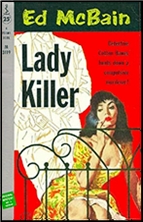
   â— Faithfully adapted by John Hawkins from the 1958 novel, “Lady Killer” (10/9/61) introduces department psychiatrist Ben Daniels (Harlan Warde); Sam Grossman (Michael Fox), who runs the police laboratory; and his technician, Joe Richards (Dennis McCarthy). Taking a complaint, Kling barely notices when Frankie Annuci (Billy Hughes) — paid $2 by an unknown man — delivers a pasted-up note reading, “I will kill The Lady tonight at 8. What can you do about it?” Carella sees binoculars glinting from a roof across the street, so Bert slips out back to investigate, but is clouted before getting a good look at the perp.

   Meyer learns that the purchaser of the dropped glasses may have lost them at the 708 Club, yet Frankie says he isn’t the man, and works with a sketch artist. Checking tenements, Meyer learns that the sketch may match tenant “Mr. Smith,” who fires on him and flees; he finds cards from the Jo-George diner, where George Ladonna (Peter Leeds) says partner Jo Cort (Lee Krieger) took a few days off. With George headed for drinks at 8:00 at the nearby 708, Carella remembers “la donna” is Italian for “the lady,” and they arrive just in time to save George, who loyally denied recognizing the sketch, thinking that Jo — jealous because his ex-girlfriend prefers George — was in routine trouble.
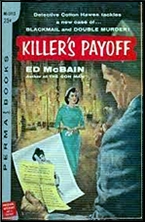
   â— The first of Norman Katkov’s two adaptations, “Killer’s Payoff” (11/6/61) was based on McBain’s 1958 novel and directed by John Brahm, like Daugherty a mainstay of the Hitchcock series and Thriller. Slain blackmailer Hank Richards paid for an apartment for dancer Nancy Johnson (Beverly Garland), from whom Havilland gets his “client list.” Kling overhears ex-model Lucy Mencken (Jeanne Cooper), shielding her husband from racy photos, make a rendezvous with Hank’s would-be successor, but following her, Roger is pistol-whipped.

   Havilland’s questioning provokes an angry visit in which Hank’s friend Marty Torr (Paul Richards) slaps Nancy around, admitting that he killed Hank and then followed the cops to identify his marks. He’s about to shoot Nancy when Roger calls to invite her to dinner, and her cleverly off-kilter reply cues him to go in with gun blazing. McBain’s far more convoluted solution involved a “conglomerate perp,” three hunters whom the blackmailer saw accidentally kill, and bury, a fourth; they joined forces to shoot him, and almost claim the life of the detective trying to trap them.
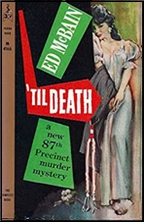
   â— Adapting “’Til Death” (12/11/61) from McBain’s 1959 novel, Katkov turns Steve from an expectant father (of twins born on the last page) and the brother of bride Angela (Judi Meredith) into a family friend. Tommy Palmer (Darryl Hickman) and Angela receive deliveries containing, respectively, a black widow and condolence card. Marty Kellogg (Johnny Seven), who blamed Tommy for a buddy’s death in Korea, was just released from a veterans’ hospital, so Kling agrees to attend with his fiancée, Claire Townsend (Margie Regan), in tow.

   Dancing with Angela at the reception, best man/long-ago beau Ben Darcy (Corey Allen) says it should have been theirs, and he’ll be there if anything happens to Tommy; overhearing, Steve confirms Ben’s handwriting on the delivery cards, which he says were jokes. Marty arrives, professing no hard feelings, but clocks Kling, who was searching for him, and attacks Tommy with a switchblade, stopped by Steve in the nick of time. Katkov streamlines McBain’s bizarre plot, putting commendable focus on emotions and relationships.
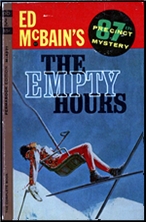
   â— Richard Collins wrote three adptations, starting with “Empty Hours” (11/20/61), which was shorn of the initial article from a novella published in Ed McBain’s Mystery Book #1 (1960) and the titular 1962 collection. Claudia Davis drowns when Eric Blau (William Schallert) fires at her canoe on Triangle Lake, while onshore companion Josie Thompson (Patricia Crowley) — oblivious to the silenced shots  — tries to save her. Penniless Josie, reported drowned, has her hair cut and dyed, telling fiancé George (Henry Brandt) that their uncanny resemblance will enable her to claim her best friend’s inheritance.

   Blau’s employer says “Claudia” is writing checks that lead Steve and Bert to a witness, recompensed for workdays the inquest cost him, and a passport photographer; records also reveal a traffic violation. The embezzling executor asks “Claudia,” unseen since childhood, to refrain from drawing interest, citing an investment tip, and has Blau try again, but questioning a cabbie hired to drive “Claudia” — who didn’t know how — back to town tips off Carella and Kling in time to stop him. Inventing Blau, George, and the executor, Collins here takes the greatest liberties with McBain’s source, which opens with “Claudia” found strangled by a panicked burglar.

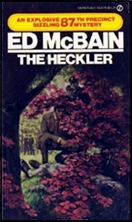
   â— In “The Heckler” (12/18/61), Collins masterfully distills the 1960 novel introducing the precinct’s Moriarty, the Deaf Man, aka Sordo; with the iciness he later showed in Bullitt (1968), Robert Vaughn is perfect as the ruthless, methodical villain. His complex scheme involves death threats to a man whose loft is above the soon-to-relocate Mercantile State Bank, and to others located near lucrative businesses. Distracting the police with those and bombs made by night watchman “Pop” Smith (Frank Albertson), he hopes to heist more than $1 million from the the vault in the new location, under which he has tunneled during construction.

   Learning that Pop concealed a fiancée, Sordo coldly shoots him, but a hotel matchbook found in his burned uniform leads to Lotte Constantine (Mary La Roche); Kling catches her retrieving love letters from his apartment and finds a bank floor plan before Sordo — who learned Pop copied it — bursts in to wound Bert. Sordo follows with the kidnapped Lotte while his henchmen take the loot to the ferry in an ice-cream truck. Disembarking after a family vacation, Meyer accosts the driver over a license-plate discrepancy, but timely warnings from his wife, Sarah (Ruth Storey), and Lotte allow him to disarm the thieves.
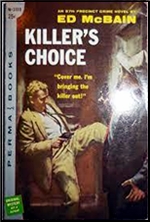
   â— Scripted by Luther Davis and Collins, “Killer’s Choice” (3/5/62) was based on McBain’s 1957 novel, previously an episode of Kraft [Mystery] Theatre (6/11/58). That and another live Kraft entry — Larry Cohen’s original teleplay “87th Precinct” (6/25/58) — were the first attempt at a series, with several cast members in common; Cohen later wrote the telefilms Ice (1996), based on McBain’s 1983 novel, and Heatwave (1997), another original. Amy Boone (Gloria Talbott) is found shot dead in the liquor store where she worked for Franklin Phelps (R.G. Armstrong), with whom she was having an affair.

   â€œIt sounds like we’re talking about three different people,” Kling says when the squad compares accounts by her mother, ex-husband, and other “friend”; Mrs. Phelps is tricked into admitting she killed Amy, having slipped away from a Miami party and taken a round-trip flight to New York. In the novel, McBain introduced Det. Cotton Hawes and killed Havilland with the shards of a plate-glass window through which a perp pushed him, a B story incorporated into “New Man in the Precinct” (4/16/62), supplanting Havilland. (McBain’s Pusher afterword reveals he wanted Carella to succumb to gunshots there, but was dissuaded by his agent and editor.)

   â— Written by Robert O’Brien and James Gunn, “New Man” finds Cotton (Fred Beir) filling in from the ritzier 30th for vacation-bound Det. Frank Kanin (Ray Montgomery), who meets the literary Havilland’s fate. He stops to help stricken Matt Murdock (Robert Colbert), winged by Dave Evans (Max Slaten) after breaking his jaw with a left hook in a liquor-store robbery; noticing the blood, Frank gets the same, hurled to his death. Carella checks out ex-pugs in trouble with the law, and Evans identifies Murdock, who persuades a doctor to remove the bullet, although daughter/nurse Linda Walters (Elizabeth Perry) warns it’s illegal not to report it.

   Social Security leads Carella and Hawes to Murdock’s hotel, but Cotton naively knocks on the door, eliciting a hail of bullets that nearly kills Steve. His wound reopened, Murdock blackmails Linda into coming to his new digs to patch it up, with a penicillin chaser, yet when the clerk spots his newspaper photo and drops a dime, the syringe is found. Bluffed to believe her father’s prints are on it, Linda recalls Murdock’s unusual phraseology regarding his getaway, a trucking company’s marketing slogan; the squad apprehends him at the depot, and Hawes learns that Steve is not one to hold a grudge.
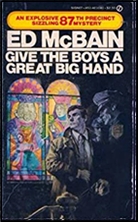
   â— In “Give the Boys a Great Big Hand” (1/15/62), adapted by Shimon Wincelberg from McBain’s 1960 novel, a severed hand in a flight bag from Las Vegas sends Bert to Missing Persons, where he’s offered the file on stripper Barbara “Bubbles” Caesar as a diversion. Kling and Carella investigate merchant seaman Karl Andrade (Michael Forest), who stormed out on learning of Milly’s (Suzi Carnell) pregnancy. He got drunk, and a previous flame — whose photo Bert recognizes as Bubbles — called to say he was there, asleep, but Karl claims it’s all over between them.

   Choreographer Warren Tudor (Barry Atwater) brought his “soul mate” from Vegas and hated the baser attentions she received at the club where drummer Mike is also missing; Karl wants her to convince Milly nothing happened, and sets up a meeting at Tudor’s, but it’s a trap. Carella and Kling arrive just in time to prevent Tudor from chopping off the hands that “defiled my love” with a sword, finding Barbara and a mutilated Mike, both killed when caught in flagrante delicto by Tudor, who deludes himself that she is still alive. Wincelberg ends on a more positive note with the Andrades reconciling, whereas McBain’s unsympathetic seaman, obsessed with Bubbles, planned to abscond with her.

            — Copyright © 2023 by Matthew R. Bradley.
   

         END OF PART ONE: TO BE CONTINUED …
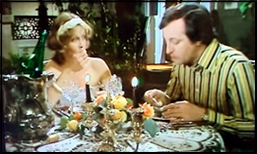
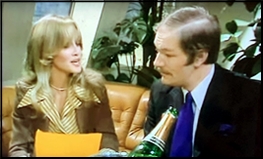
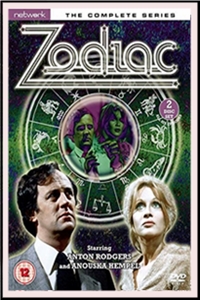
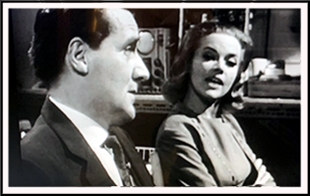
ZODIAC. “The Cool Aquarian.” Thames Television, UK, 04 March 1974. Anouska Hempel (Esther Jones), Anton Rodgers (David Gradley). Guest Cast: Michael Gambon, Trevor Baxter. Directed by Don Leaver. Currently available on YouTube here.

   The gimmick in this 1970s British mystery TV series, if one be needed, and there always is, is the teaming up of a stolid police inspector with a young lady astrologer, who is also quite pretty. The idea is that she is to use the horoscopes of the possible suspects to gauge their involvement, while he goes by traditional police work.

   The fellow who’s posted this one on YouTube has included five of the six episodes that comprise the entire series, but for some unknown reason the first one, which introduced the characters and the whole setup, is not one of them.

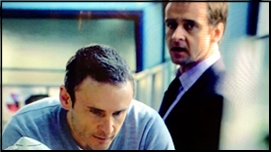
   In this, the second of the series, they’re already well settled in their roles, which a little surprisingly does not include a lot of conflict between them. The case consists of locating an elderly couple’s niece, a young woman who lives with them but who has gone missing. She is a secretary to a high-powered businessman, the kind of fellow who thinks (for example) of burning one of two extremely rare postage stamps he owns so that the remaining one is all that much more valuable. (See the second photo down.)

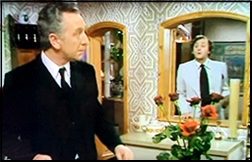
   It’s mostly a routine affair, one which plays out in a light almost-but-not-quite comedic fashion. In the latter vein, however, is the byplay between Grad (the inspector) and Esther’s new temporary butler Neville (Trevor Baxter) whose nose for what makes people tick comes in very useful. It’s too bad this was his only appearance in the show. (See the photo to the right.)

   The chemistry between the two stars is fine. More than fine. Based on this very small sample of size one, it’s a shame there were only the six episodes.


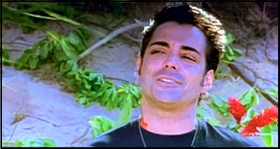
MARKER. “The Pilot.” UPN, 17 January 1995 (Season 1, Episode 1). Richard Grieco, Gates McFadden, Keone Young, Andy Burnaabel. Guest star: Nia Peeples. Created and written by Stephen J. Cannell. Director: Dennis Duggan. Currently streaming (with ads) on Freevee.

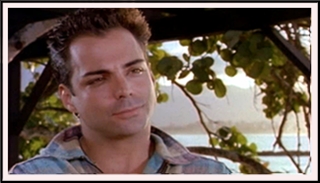
   It may be stretching things a bit to call Marker a Private Eye show, but on the basis of this first episode only, I don’t see any reason why not. When Richard DeMorra (Richard Grieco), a carpenter living in New Jersey who travels to Hawaii to attend the funeral of his estranged father, he clashes immediately with his stepmother over the estate, but he also learns that his father had a habit of passing out markers for people to use whenever they needed a helping hand.

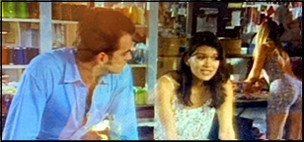
   And such a person is a championship surfer girl (Nia Peeples) whose sister has disappeared, and she is hoping that Richard will honor his father’s promise to help find her. It is strongly suggested that further episodes will center on other such “clients” holding similar markers.

   It doesn’t take a lot of effort to solve this first case. Most of its running time is taken up by establishing the basic setup and the rules of the game. Richard ruminates a lot about his father, but it is left to later episodes (perhaps) to explain the why of the estrangement, a serious omission, I thought, one which let me hanging.

   Richard Grieco (who attended Central Connecticut State University, where I taught for some 30 years) was at the time known as a “hunk” but is also moderately successful here as an actor. The story line does show some promise, but other than the promise, this first case is awfully dull. The series lasted for only half a season, or 13 episodes.


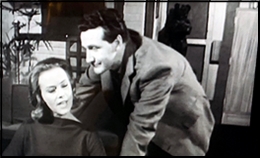
THE AVENGERS “Mr. Teddy Bear.” ABC (Associated British Corporation), UK, 29 September 1962 (Season 2, Episode 1). Patrick Macnee (John Steed), Honor Blackman (Mrs. Cathy Gale). Guest cast: Michael Robbins, John Ruddock, Michael Collins. Written by Martin Woodhouse. Director: Richmond Harding.

   This was the first appearance of Honor Blackman as John Steed’s new partner in crime-solving, Cathy Gale, and it’s a good one. The villain of the piece is a notorious assassin for hire with a penchant for the dramatic and flamboyance in carrying out his tasks. Prime example: the episode begins with the death of his latest victim by poisoning on live TV.

   Playing to the killer’s obvious ego, Steed comes up a plan. Set himself as bait in a plot which would have Mrs Gale as Mr. Teddy Bear’s latest client. (The name comes from the man’s communicating with his clients via a radio hidden in a stuffed “talking” teddy bear.)

   The most common way a new leading character is introduced in a TV series nowadays is to have him or her having just been hired and needing to be mentored by the old guy that’s been around a while. Not so here. It is as if Cathy Gale has always been there. No introduction takes place. The somewhat flirtatious banter between the two leads is exactly that: relaxed and friendly, and a trademark of series from Day One.

   To that end, one other reviewer of this episode wondered if the two leads spent their nights as well as days together. The characters I mean. Come on. Obviously some people want to know more than I do.

   I also read an interview with Honor Blackman that was conducted much later on in which she was asked about this episode. She said she didn’t remember it very much at all. It was just a job, was her reply. No more than that. Who knew then that The Avengers was going to become such a worldwide phenomenon?
   

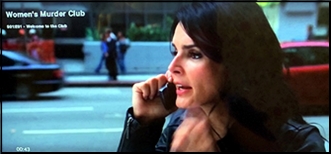
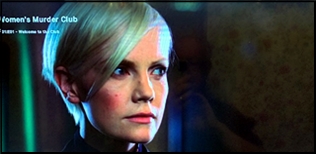
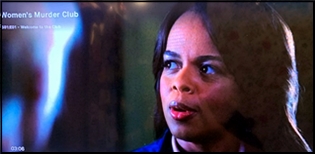
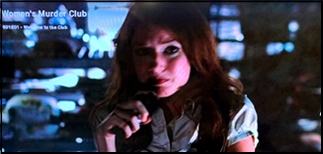
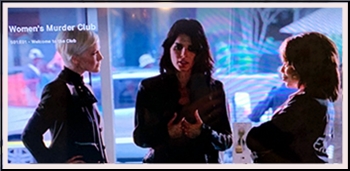
WOMEN’S MURDER CLUB “Welcome to the Club” ABC, 12 October 2007 (Season 1, Episode 1). Angie Harmon (Inspector Lindsay Boxer), Laura Harris (Deputy D.A. Jill Bernhardt), Paula Newsome (M.E. Claire Washburn), Aubrey Dollar (reporter Cindy Thomas). Based on the characters in a series of books by James Patterson. Director: Greg Yaitanes.

   This first episode was not the pilot for the series. That was a made-for-TV movie based on the first book in the series, 1st to Die, and which starred Tracy Pollan. (There are now 22 novels and two novellas in Patterson’s series, many of which were co-written by other authors.) The title of this episode is a bit misleading. It is assumed that reporter Cindy Thomas (for the fictional San Francisco Register) will be joining the other three in the “club,” but there is no club per se. In fact when she asks the others if there is a club, there is an immediate chorus of “no”s.

   No matter. A club it is.  Thomas introduced to the others as a fellow reporter to the woman who dies in front of Inspector Lindsay Boxer in dramatic fashion, falling from the top of a building where there are to meet and onto a car. As it turns out, she was also shot to death. The question is, what was the story she was working on, and what was she going to tell Lindsay about it?

   The case is tackled and solved in the usual TV businesslike fashion. Filling the rest of the hour is a lot of subplots involving the various characters’ love lives, including Lindsay’s news that her ex has been promoted over her partner on the force and is now her new boss. The episode ends with the discovery that a serial killer that the women thought had been put away is now back, a vicious psychopath whose M.O. includes sewing the lips of his victims together before leaving them to be found, hence his nickname, the “Kiss-Me-Not” killer. I assume this will form the underlying story arc for the remainder of the season.

   The series ran for just the one season, though, from October 12, 2007, to May 13, 2008. Of the four leading actors, I presume the primary focus was on Angie Harmon, whose striking brunette features make her the obvious choice for the role. Overall then, entertaining in a solid, workmanlike fashion, but without the extra “oomph” that would make the show must watching. (I have not read any of the books.)

HOLBY/BLUE “Episode One.” BBC, 08 May 2007. Cal Macaninch as DI John Keenan, Richard Harrington as DS Luke French, Elaine Glover as PC Lucy Slater, and large recurring ensemble cast. Created by Tony Jordan as a spin-off from the established TV medical drama Holby City; also screenwriter. Director: Martin Hutchings. Currently streaming on Amazon Prime Video.

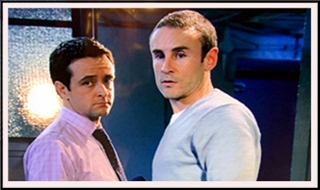
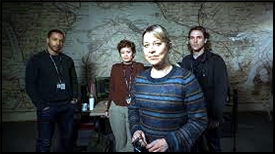
   This BBC series might be categorized as police procedural/soap opera drama. It takes place in a small overworked police station in the fictional town of Holby, somewhere in England. This, the first episode of the first of two seasons opens with the well-worn concept of a new copper arriving (DS Luke French) and being introduced (and learning to adjust to) his new partner (DI John Keenan). At the same time, it is also the first day that a crop of new recruits are on the job, including a PC Lucy Slater, a young eager-to-go but klutzy blonde.

   It’s a day like all others, or is it, the new guy wonders. A known pedophile is about to be released for lack of evidence; a husband with a compulsive disorder is convinced that his wife is cheating on him; and Keenan – a maverick who hates playing my the rules — smashes the tail light of the car of the new male friend of his soon to be ex-wife. French bears up to all this with calmness and remarkable composure; and Lucy Slater is able to redeem herself in the eyes of her colleagues.

   It’s done well and at the same time completely by the book. Very slick, in other words. I probably won’t watch another, but then again, I might.  On the other hand, I never watched but one episode of Hill Street Blues either.
   

ANNIKA “Captain Ahab’s Wife.” Alibi, UK, 17 August 17 2021 (series 1, episode 1). Nicola Walker as DI Annika Strandhed, Jamie Sives as DS Michael McAndrews, Katie Leung as DC Blair Ferguson, Ukweli Roach as DS Tyrone Clarke, Kate Dickie as DCI Diane Oban, Silvie Furneaux as Morgan, Annika’s teenage daughter. Based on the BBC Radio 4 drama Annika Strandhed, created by Nick Walker, who also developed it for TV and wrote this episode. Currently streaming on PBS.

   This episode begins with Annika beginning a new position as the lead detective for a new Marine Homicide Unit in Glasgow, and as usual, she as a single mother, has her teenage daughter in tow and starting at a new school.

   If the word “truculent” didn’t exist, it would have to be created just for the daughter. Or maybe “sullen,” but who can blame her? Dragged off to a new city with no friends, just like so many shows just like this one.

   What makes this one different is the “breaking of the fourth wall” aspect, as every so often Annika turns to the camera and starts telling the audience what she’s thinking at the time. This is while action is still going on, not by having her step off to the side to do so. Many of the reviewers on IMDb hate this.

   I admit being taken by surprise the first time it happened, but I think it’s, well, almost charming and (in my opinion) certainly well done.

   On Annika’s very first day not only does she have to get used to her new leadership role, but she and her team have a murder to solve: the death of a excursion boat captain who has  been fatally stabbed by a harpoon. The case is a bit of a challenge, but she’s up to the task, in spite of the several clichés involved in the basic setup. That’s probably her bigger job, as time goes on. Thus far there has been only the one season, consisting of six episodes.


TROPIQUES CRIMINELS (aka Deadly Tropics) “Les Anses d’Arlet.” French TV, 11 November 2019 (Season 1, Episode 1). Sonia Rolland (Mélissa Sainte-Rose), Béatrice de la Boulaye (Gaëlle Crivelli), and a large ensemble cast. Currently streaming on MHz.

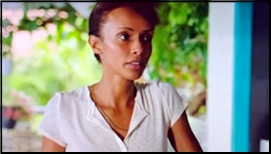
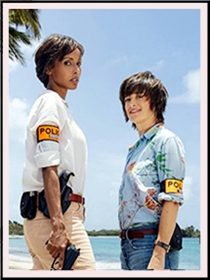
   Take a couple of mismatched male detectives in L.A. (forgive me if this sounds familiar), make them both female, move them to Martinique, and give them all sorts of quirks and other baggage, and what you get is a TV series very much along the lines of Tropiques Criminels. Sonia Rolland plays the thinner one (she looks very much like a runway model), while Béatrice de la Boulaye plays the chunkier one (short but peppery).

   Rolland’s character is by-the-books solid; de la Boulaye is wacky and often all but out of control, and every once in a while you can forget the “all but.” Rolland’s character arrives in Martinique from Paris under pressure (her ex-husband also on the force was also quite crooked), and she has two children who do not like having had to move. de la Boulaye has an ex-boy friend who has cheated on her.

   I’m sure you get the picture. This, their first case they are given to solve together, has to do with a dead man who apparently arrived home to find it in the process of being robbed. The case is solved rather easily, but the investigation is not really the point. What the focus is this time around is getting to know the two main characters, first of all, then the other members of the ensemble cast.

   The setting is of course beautiful, but I don’t think it’s likely that this series will follow the lead of Death in Paradise, another series taking place on an island in the middle of the Caribbean – the latter’s specialty consisting of formal clues and strange, usually impossible crimes taking place.

   That’s not where I expect this one to be headed. No matter. Clichés and all, everyone seems to be in well-synced accord with the roles they are playing, and I enjoyed this more than I expected to. It will be interesting to follow along and see what sorts of criminous escapades they get into next. (So far there have been two seasons of eight episodes each.)


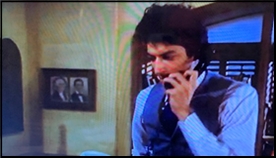
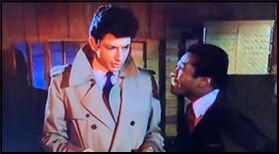
TENSPEED AND BROWN SHOE “The Robin Tucker’s Roseland Roof and Ballroom Murder.” ABC, 03 February 1980 (Season 1, Episode 3). Ben Vereen (E. L. “Tenspeed” Turner), Jeff Goldblum (Lionel Whitney). Guest Cast: Elayne Heilveil, John Pleshette, Leo Gordon. Created & written by Stephen J. Cannell. Director: Arnold Laven. Currently streaming  at the Shout Factory website

   As I recall, whenever I’ve found the series available, whether streaming online or on DVD, the first two episodes, comprising a two-part pilot, has not been included. And so, as a direct consequence, I’ve never been properly introduced to the two main characters in this quite enjoyable comedy slash mystery show – the main question being how these two quite opposite fellows got paired up in the first place. The second question I still have is how they got their nicknames, which are barely mentioned in this one, if at all.

   I could use a helping hand, in other words. And on this blog, that’s what the comments are for.

   Based only on this third episode then, Ben Vereen (Tenspeed) is a fast talking con man who ia apparently out on parole, while Jeff Goldblum (Brown Shoe) is a former accountant who has always dreamed of becoming a PI, and now here he is as one. He’s quite the opposite in personality to his new partner, being uptight and unwilling to be in any way shady in how he operates.

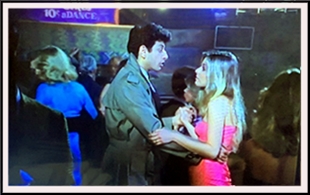
   This one begins with the latter receiving a thousand dollar bill by private courier, along with the halves of two others. He is promised the other two halves if the job he is offered is accomplished correctly: to find a young girl with only a photo and address to go on. As it so happens, she is a very naive dime-a-dance girl at a 1940s era dance hall, apparently with no adjustment for inflation, and the story goes on from there. Quite naturally as in stories such as this, bodies pile up more quickly than we the viewer even know who they are or were. It is equally obvious that more than one party wants to find the girl.

   It’s all done in solid tongue-in-cheek fashion, with full awareness of all the well-established tropes of the PI novel, with dialogue to match. One phrase that I remember was along the lines of “the fat man had more chins than the Hong Kong phone directory.” And the two stars appear to be having a good time with all the fun and games they are asked to play. I don’t know what reaction yours might be, but I had as much fun with this one as the two players seem to have had.


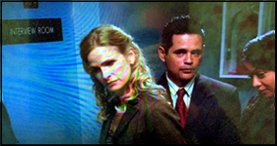
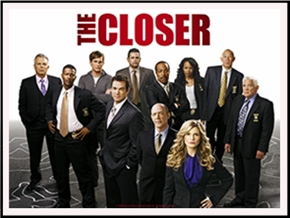
THE CLOSER. “Pilot.” TNT, 13 June 2005 (Season 1, Episode 1). Kyra Sedgwick (Brenda Leigh Johnson), J. K. Simmons (Will Pope), Corey Reynolds, Robert Gossett, and a large ensemble cast. Guest star: Allison Smith. Written by James Duff. Directed by Michael M. Robin. Currently streaming on HBOMax.

   One of the bigger hits on cable non-network TV, The Closer was on for seven summers on TNT before transforming itself into Major Crimes, a spinoff which continued on and lasted for another six years. You can’t tell me why I’m so slow, because I don’t know myself, but when I watched this, the pilot for the first season, it was the first episode I’ve ever seen of either series.

   And now I’m kicking myself, as I enjoyed this one immensely. As all good pilots do, it introduces the major players clearly and emphatically, while at the same time telling a good story, one with a bit of a twist at the end. Admittedly we do get to know the lesser members of the ensemble cast only in passing. To all intents and purposes, this is a one-woman show, Kyra Sedgwick as no-nonsense, ass-kicking Brenda Johnson, who is hired from outside to head up LAPD’s Priority Homicide Division.

   Her blunt personality wins her no friends on the force. Other than Brenda’s new boss, Will Pope, who hired her, all of the others turn in their resignations about 20 minutes into this first episode. I don’t know how long into the season it will take for her to win all of them over for good, but by the time she’s cracked her first case, it appears that she’s received at  a small modicum of respect, at least, grudgingly as it may be.

   And as far as the case is concerned, when the mutilated and burned body of a woman is found in the home of a high-tech millionaire, who has disappeared. Strangely, none of his fingerprints are in the house, only the victim’s. Brenda’s trademarked final closing scene is what it takes to induce a confession from the killer, an ending that clearly and forcefully delivered, the first of many to come.


« Previous PageNext Page »