Reviews


REVIEWED BY DAVID FRIEND:


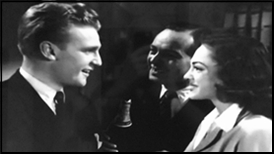
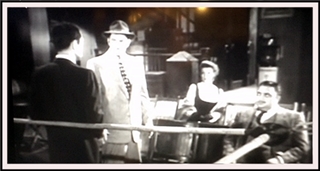
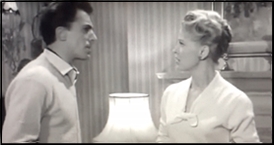
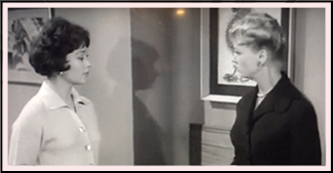
CROW HOLLOW. Eros Films, UK, 1952. Donald Houston, Natasha Parry, Pat Owens, Melissa Stribling, Esma Cannon, Nora Nicholson, Susan Richmond. Based on the novel by Dorothy Eden. Directed by Michael McCarthy. Currently available online here.

   Gothic thrillers usually see a young woman marry a man and move to a spooky old house where she begins to fear he may kill her. Many novels – from Mary Roberts Rinehart to Mary Higgins Clark – revolve around such portents, and Hitchcock made use of it too in Suspicion. It seems to happen also in this 1952 film in which newlyweds Ann and her doctor husband Robert move onto his family estate. However, the twist is that the danger does not stem from the new husband but, it seems, from the three eccentric old aunts who live with them.
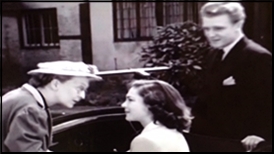
   There’s Aunt Judith, a bespectacled entomologist; the doting Aunt Opal and the tall and severe Aunt Hester. All the aunts seem to adore their nephew and they are friendly enough to Ann, but she senses something is wrong. Robert’s dying mother had anxiously warned her not to go to Crow Hollow and she feels lonely and listless there while Robert is at his surgery in the village.

   The crows have returned to roost for the first time in decades, and legend has it that they foretell tragedy. Ann is also puzzled by the way in which her husband’s aunts indulge their insolent maid, Willow, and even catches the girl trying on her clothes. Things get stranger still when Ann suffers a series of accidents…
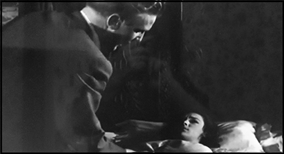
   This is one of the best B-movies I’ve seen yet. It may be rather languid – particularly for the first few minutes – but it’s one of those films in which the atmosphere takes precedent over plot. The aunts are suitably creepy, despite being polite, and we appreciate Ann’s trepidation as she is left alone with them. Played by actress Natasha Parry – whose career would be defined by her marriage to film director Peter Brook and the parts he gave her – Ann is a likeable, generous woman who is already in an unsettling situation before the danger starts.

   It does so about twenty five minutes in, and it is Parry’s engaging performance which holds the film until then. Husband Robert is a bit of a wet blanket who frustratingly – but, by the conventions of the genre, inevitably – dismisses his wife’s concerns. The film is only marred by its rushed ending and I was able to conjure a couple of better scenarios myself as, I think, would many others. Nevertheless, it’s well worth an hour and ten minutes of your time and – like so many excellent old films – is available for viewing online.

Rating: ***
A 1001 MIDNIGHTS Review
by Marcia Muller


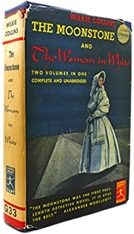
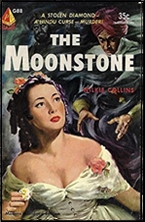
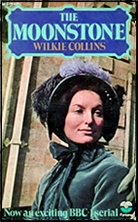
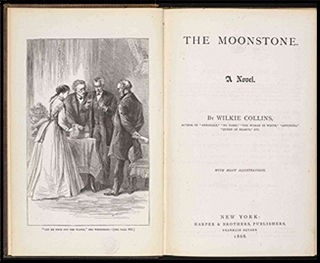
WILKIE COLLINS – The Moonstone. Tinsley, US, hardcover, 1868. Harper, US, hardcover 1868. Serialised in Charles Dickens’s magazine All the Year Round and in the US in Harper’s Weekly, circa 1868. Reprinted many times in both hardcover and soft. (The book has probably never been out of print.) Adapted many times for the stage, movies, radio, TV, comic books and (!) a podcast.

   (William) Wilkie Collins was one of the most popular and accomplished writers of the nineteenth century, and The Moonstone is an early classic of the suspense genre. Like Collins’ other criminous works, it contains elements that later became staples of mystery writing: a purloined gemstone, carefully secreted clues, obtrusive red herrings, sinister Indians who lurk threateningly in the background, a blighted love affair, several shakily constructed alibis, numerous cliff-hanging scenes, and a mysterious suicide. Although complicated, the plot is well constructed and the reader’s interest seldom flags.

   The yellow diamond known as the “moonstone” was stolen from an Indian religious idol by John Herncastle, a man who chose to ignore the story of bad luck following the diamond should it be removed from the possession of the worshipers of the moon god. Upon Herncastle’s death, the gem was willed to his niece, Rachel Verinder, and the young lady is about to receive it when the story opens (after a prologue and two tiresome chapters filled with background material).

   The diamond disappears, of course, on the night Rachel is presented it by solicitor Franklin Blake. And when Inspector Cuff of Scotland Yard appears on the scene, some clues point to Blake, while others indicate Rachel has secreted away her own diamond for some unknown and possibly unbalanced reason.

   The story proceeds, divided into two periods, respectively titled “The Loss of the Diamond” and “The Discovery of the Truth” (which in itself is divided into eight narratives), plus an epilogue. In spite of these numerous sections, each broken into various chapters narrated by different characters, the reader finds himself as determined as Cuff to learn the truth. Who are the Indians? Was this caused by the curse of the moonstone? Will Rachel find happiness? Such questions are ever in the forefront. And when the end is finally reached, all clues are tied up, all questions are answered, and — yes — Rachel does find happiness.

   Collins’ other works are not nearly as well known as The Moonstone, but a number are just as engrossing and stand the test of time equally well. These include The Woman in White (1860), which seems to have been Collins’ personal favorite; and The Queen of Hearts (1859), a collection that contains the cornerstone humorous detective story “The Biter Bit.”

     ———
   Reprinted with permission from 1001 Midnights, edited by Bill Pronzini & Marcia Muller and published by The Battered Silicon Dispatch Box, 2007.   Copyright © 1986, 2007 by the Pronzini-Muller Family Trust.


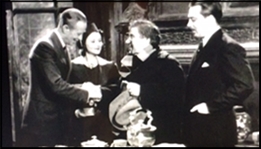
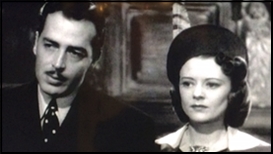
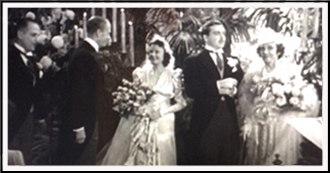
BULLDOG DRUMMOND’S SECRET POLICE. (1939) John Howard (Captain Hugh C. “Bulldog” Drummond), Heather Angel (Phyllis Clavering), H. B. Warner, Reginald Denny, E. E. Clive, Elizabeth Patterson, Leo G. Carroll. Screenplay by Garnett Weston, based on the book Temple Tower by Herman C. McNeile. Director: James P. Hogan. Currently available online at several sites, including YouTube and Amazon Prime.

   John Howard played man of adventure Bulldog Drummond seven times in the movies, this one being the sixth, and it was Heather Angel who played his girl friend and would-be bride Phyllis Clavering in the last four of them. (If I’m off on the count of either of these, please let me know.) This one begins with high hopes that their marriage would finally come off, but even Aunt Blanche knows that something is going to happen and that the two of them are going to be off on yet another venture.

   But this one starts and actually takes place for the full film at Temple Tower, Drummond’s ancestral mansion of a home, with the ring, the best men, and the minister  all ready and waiting. What they don’t know is that the next visitor through the front door will be a dotty old professor of history who claims that he has a book with a code in it that will guide them all to a treasure well hidden somewhere in the house.

   And where there’s a treasure, there’s a villain who has learned about it too, and who is all too willing to kill whoever gets in his way to get his way to get his own hands on it.

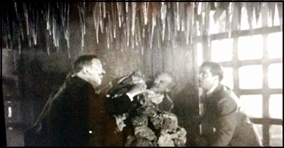
   Lots of fun and adventure ensues, what with hidden passages, underground rooms, including one booby-trapped with iron spikes in the ceiling that comes crushing down upon whoever is inside when someone outside the room pulls a certain lever.

   Lots of fun, as I say, but unfortunately the fun is awfully silly way way too often, starting with the dotty professor and continuing with the clumsy antics of Drummond’s faithful crew and Aunt Blanche’s continual warnings and fainting spells.

   I hope I’m not giving too much away by saying that [WARNING] Phyllis does not get her man this time around, but while I haven’t watched Bulldog Drummond’s Bride, the next in the series, I have my fingers crossed that she will then, given one last chance.


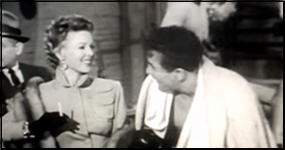
STAGE 7. “The Long Count.” CBS, 27 March 1955 (Season 1 Episode 9). Frank Lovejoy (McGraw), Joan Vohs, Ted de Corsia, Biff Elliot, Nestor Paiva, Mel Welles, Richard Deacon. Screenplay by Federic Brody, based on a story by John Roeburt. Director: Alvin Ganzer. Currently available on YouTube.

   Research on the early days of network TV is still spotty at best. There is an individual entry for this episode as being shown on Four Star Playhouse, but when you look at the episode list for that series, it is nowhere to be found. Yes, Frank Lovejoy played PI-for-hire McGraw (no known first name) at least twice on that series, but this particular episode (with all of the same stated crew and cast members) is also listed as the ninth episode of Stage 7 for its one and only season.

   These early episodes for both series preceded, of course, the series Meet McGraw, which ran on NBC during the 1957-58 season. For a more on that series, check out Michael Shonk’s overview of it for this blog several years ago. (Follow the link.)

   In “The Long Count,” McGraw is hired by a prizefighter’s behind-the-scenes manager to keep him away from dames before an upcoming bout, but the guy slips out on him and manages to get killed by a hit-and-run driver. The boxing business being what it is, there are a lot of suspects, but McGraw manages to name the killer well within the 30 minute running time.

   The dialogue is fine, the production values quite acceptable, especially for the era, but the plot is a little threadbare and to me, Frank Lovejoy seems a little tired of the whole thing. One bright spot is the suitably sexy Joan Vohs, who both narrates and plays the manager’s girl friend. Only problem with the latter, storywise, is that “Pretty Boy” Mendero (a well-cast Biff Elliot) has an eye out for her, too.

   In any case, there are a few other adventures of McGraw online, either from Four Star Playhouse or the Meet McGraw series itself. Given time, I enjoyed this one well enough to watch some of the others.


REVIEWED BY DAVID VINEYARD:


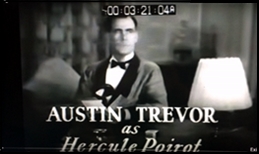
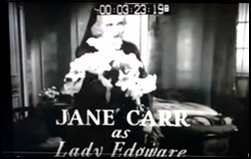
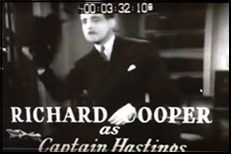
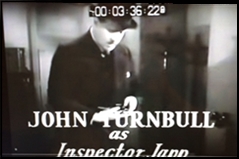
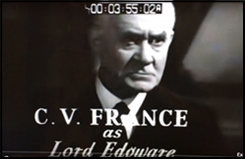
LORD EDGWARE DIES. RKO Radio Pictures, UK, 1934. Austin Trevor (Hercule Poirot), Jane Carr, Richard Cooper (Captain Hastings), John Turnbull (Inspector Japp), C. V. France Screenplay by H. Fowler Mear, based on the 1933 novel by Agatha Christie. Directed by Henry Edwards. Currently available on YouTube.

   â€œLady Edgware is a killer, but she isn’t like other people, she doesn’t know right from wrong.”

   
   Why is everyone trying to frame Lady Edgware for murder, including herself, even before anyone dies?

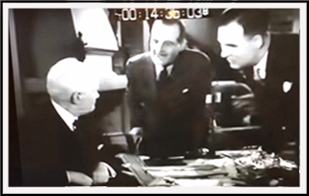
   At a charity ball Lady Edgware (Jane Carr), an American musical star who married into a peerage, tries to engage Hercule Poirot (Austin Trevor) and his friend Captain Hastings (Richard Cooper) to persuade her older husband Lord Edgware (C.V. France) to give her a divorce before she kills him. Not long after that a young actor friend of Lady Edgware from Hollywood goes to Poirot to beg him to help her before she kills her husband in desperation claiming she could do anything and does not understand right from wrong.

   Ironically when Poirot and Hastings call on Lord Edgware he informs them he agreed to the divorce in a letter six months earlier, and letter his wife claims to have never received.

   Then Lord Edgware is found murdered and Inspector Japp (John Turnbull) called in. Witnesses claim Lady Edgware appeared at the house, announced herself, entered the study, and murdered Lord Edgware, but then a quick investigation proves Lady Edgware was at a party, received a mysterious phone call, and could not have killed her husband.

   Just what is going on? Poirot proves someone could have impersonated Lady Edgware easily, but the suspect, an entertainer who did an imitation of Lady Edgware at the charity ball is found dead by her servant the next morning.

   There are suspects, Edgware’s daughter, a nephew Ronald Marsh who is something of a wastrel and needs the money and title he will inherit, a mysterious missing thirteenth guest at the party that provided Lady Edgware’s alibi, Lady Edgware’s servant who insisted she attend the party that provided her alibi, and any number of red herrings in the inimitable Christie style.

   Austin Trevor, who plays Poirot here, played more detectives in more British films than just about any other actor. In addition to Poirot he was Anthony Gethryn in The Nursemaid Who Disappeared and any number of British and French policemen on screen (he’s the policeman who tries to help Jean Simmons in So Long At the Fair some twenty years after this — Trevor played almost as many foreign as British detectives). Despite that he makes for an odd Poirot, tall, relatively handsome, with a full head of hair, no mustaches, a more reserved manner, and little eccentricity. Luckily with Christie involved in the screenplay Poirot’s keen mind is on full display if his eccentricity is not.

   As the case goes on it grows more complex. The Duke of Merton, a strongly religious man, who Lady Edgware wanted to marry it turns out would never marry her if she was divorced. He coolly dismisses Poirot and Hastings, but Poirot notes he is writing a love letter to her by reading it upside down on Merton’s desk.

   Carr plays Lady Edgware as a cross between Jean Harlow and Mae West, and quite effectively so there is more than some suspicion she could easily have murdered her husband, and might easily be as amoral as claimed, meanwhile that mysterious thirteenth guest features more importantly in the plot.

   Clues include a gold box holding sleeping powders, convex pence nez, and the torn page of a letter mailed by one victim to her sister in America.

   â€œAre you going to tell Japp about all of this?”

   â€œNo, not yet, he would but say it was another nest of the mare.”

   Another victim is murdered while on the phone to Poirot about to reveal the murderer.

   â€œOh, mon dieu, I’ve been blind, foolish. In an hour’s time we will all meet at the Barchester and I will tell you everything.”

   
   The solution is cleverly planned if hastily delivered.

   Poirot: “You tried to pull the wool over the eyes of Hercule Poirot.”

   Hastings: “And I’m hanged if we can have that.”

   The Killer: “Under the circumstances that’s a very tactless remark.”

   Nothing great here, but it is much better than reviews I’ve read and it moves interestingly at a clip. The mystery is fairly well done considering the limitations of the form, and Trevor and Carr overcome any drawbacks in the rest of the cast with energy and professionalism. If noting else it is worth seeing strictly from a historical point of view.


THE EDGE OF NIGHT. CBS, 16 October 1958. Cast and crew unknown.

   The recent HBO production of Perry Mason may be all the rage, but besides the books by Erle Stanley Gardner it was purportedly based on, most people are aware of the long-running TV series starring Raymond Burr. (There was a later and very short-lived series starring Monte Markham that no one remembers and even fewer saw.)

   Quite forgotten altogether was that Perry Mason was also a radio program that ran as a 15 minute soap opera on CBS radio from 1943 to 1955. When it became time to convert the radio serial to TV, Gardner did not care for the format and refused permission for the project.

   So some changes were made, and the producers of the would-be TV serial changed the title and all of the characters’ name and came up with The Edge of Night. As a soap opera with a harder edge than the competition at the time, it ended its 30 year run in 1984, there being over 7000 episodes before its finish.

   Being telecast live, most of the early episodes have vanished. Here’s one of the earliest ones I’ve discovered. You can watch it here.

   By watching it you can write your own review. Coming the middle of a couple of different stories, with no beginning or end to either, there’s little point in going over the story line, nor even to point out the fact that in the course of a 30 minute format, including commercials (not included), very little seems to happen. What are interesting are the quite inventive camera angles, the sometimes over-the-top acting (but not always) and the fact that everyone seems to smoke!

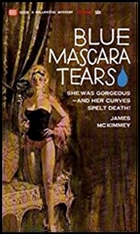
JAMES McKIMMEY – Blue Mascara Tears. Ballantine, paperback original, 1965.

   In Sam Spade, as everyone knows, we had the detective as conniving con-man; in Philip Marlowe and Lew Archer, the detective as Sir Galahad. In Mike Hammer, of course, we had the detective as one-man jury. Today we have Spenser in the role of detective as social worker, and Bill Pronzini’s nameless private eye as the winner of detective fiction’s hard-luck award of the year.

   As the hero of this rather obscure paperback original, Jack Cummings is a cop, not a private eye, but a cop of the lone-wolf variety. As such, not only is he definitely part of the multi-faceted PI tradition above, but he also extends it into directions never quite followed by any of the others in the field.

   In Jack Cummings, meet the detective as Christ figure.

   The similarity is in more than the initials, and no, it is not entirely coincidental, On page 42, for example, Cummings ponders what it is that he believes in, swimming as he does “through the sea, always working never to become a part of it, because the contamination would be fatal…. Was he only fooling himself, “being Christ-like within his own mind and heart, but deceiving himself…?”

   Or take this conversation on page 138: “The fix is cancer. Somebody’s got to cure it. Who else will, if I don’t?” “They’ll crucify you.” “It’s happened to others,”

   It’s a tough story. the terseness of the opening chapters is reminiscent of none other than Dashiell Hammett himself, and if the dialogue and the rest of the story tails off a bit in comparison – to the level of Erle Stanley Gardner, say (which is no great disparagement, to my mind, but it had to be said) – why, that’s no great surprise either. In spite of all the writers who’ve tried it, Hammett has seldom been equaled, and certainly not for longer stretches.

   Otherwise, here’s a book filled with good, viscerally involving scenes, and plotting that’s far more than merely adequate. It also features the most beautiful hooker in the world (briefly), and yet another victim (the girl with the tears) who did absolutely nothing to deserve her death.

   If you’re a lover of hard-boiled fiction. try to find this one if you can.

Rating: A

–Reprinted from The MYSTERY FANcier, Vol. 7, No. 5, Sept/Oct 1983.


REVIEWED BY DAN STUMPF:


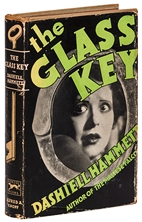
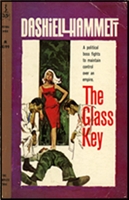
● DASHIELL HAMMETT – The Glass Key. Alfred A. Knopf, hardcover, 1931. First published as a series of four connected novelettes in Black Mask magazine, March through June 1930.

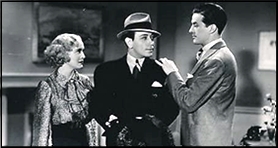
● THE GLASS KEY. Paramount, 1935. George Raft, Claire Dodd, Rosalind Keith, Edward Arnold, Guinn “Big Boy” Williams, Ray Milland and Tammany Young. Screenplay by Kathryn Scola, Kibec Glasmon, and Harry Ruskin. Directed by Frank Tuttle.

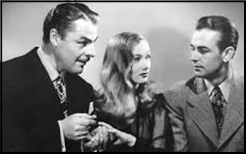
● THE GLASS KEY. Paramount, 1942. Alan Ladd, Veronica Lake, Brian Donlevy, Bonita Granville, William Bendix, Joseph Calliea and Donald MacBride. Screenplay by Jonathan Latimer. Directed by Stuart Heisler.

● MILLER’S CROSSING. Fox, 1990. Albert Finney, Gabriel Byrne, Marcia Gay Harden, John Turturro, Jon Polito, J.E. Freeman, Steve Buscemi, Sam Raimi and Frances McDormand. Written & directed by Joel & Ethan Coen.

   â€œHammett gave murder back to the kind of people that commit it for reasons, not just to provide a corpse; and with the means at hand, not hand-wrought dueling pistols, curare and tropical fish.”

   In its short arc, Dashiell Hammett’s fiction went from mysteries to mystery novels, and he seems (to me anyway) to have been on the brink of an actual novel-novel when he went to Hollywood and Hellman and burned himself out. Whatever the case, THE GLASS KEY is balanced nicely between the Mysteries (RED HARVEST, THE DAIN CURSE, THE MALTESE FALCON) and the near-novel that was THE THIN MAN.

   Set in some patently corrupt and nameless city, this is RED HARVEST writ for grown-ups, with gambler Ned Beaumont (Described as slim, mustached, well-dressed, hard-drinking — Hammett day-dreaming in the 3rd person) trying to protect the interests of his buddy, political boss Paul Madvig, and shield him from his own disastrous infatuation with a senator’s daughter, ambitious rivals, and from from taking the rap for a murder he may –or maybe not — have committed.

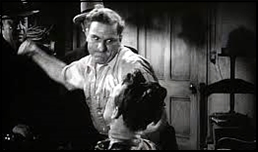
   Hammett is just as passionate a writer as Woolrich, but he holds his feelings close to the vest, like a card-player with an iffy hand. The strength of Beaumont’s personal honor, and his love for a friend, comes out in action, like the understated effort he takes to collect a gambling debt, and most memorably in the prolonged beating he endures at the hands of sadistic henchman Jeff, to protect Madvig.

   It’s a lengthy scene that becomes the emotional center of the book and lends a sense of uneasy tension to all the subsequent scenes where Jeff appears. Hammett sets up his characters nicely, then plays off our expectations like a real pro, and this finds him at the top of his game or pretty close to it.

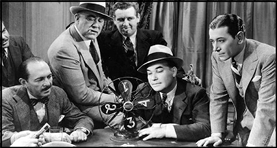
   Paramount filmed it twice, first in 1935, then again in ’42. I really want to prefer the earlier version; it has a rough-and-ready pace, some expressive photography, and George Raft is just as inexpressive as Alan Ladd, with a veneer of slickness that suits the character well. There’s a particularly fine moment where he watches a brutal murder without a flicker of emotion. Director Frank Tuttle keeps the camera on Raft, his face lit by a wildly swinging overhead light that slows as a life slowly ebbs away. But the later version boasts a screenplay adaptation superior in most respects, and overall better casting.

   Foremost is Joseph Calliea as Nick Varno (Shad O’Rory in the book and the ’35 film) the gangster angling to supplant Brian Donlevy’s political boss. Calliea projects an icy authority that completely outclasses tepid Robert Gleckler in the earlier film. When Calliea snarls “You talk too much with your mouth, Jeff,” to William Bendix, you feel it in your bones.

   Bendix plays Jeff, the sadistic, sub-normal goon who delights in beating up Alan Ladd, and he conveys all the coiled-spring tension of the character in the book—much better so than Guinn Williams in the ’36 version, who seems just too downright neighborly for the job.

   As for Ladd and Lake, they make the unlikely attraction between the gambler and the society dame believable by dint of type-casting, if nothing else.

   There’s a phrase in Hammett’s book, “little Miss Jesus,” that reappears in the movie MILLER’S CROSSING, but that’s not the only similarity in a film that features Gabriel Byrne as an unlucky gambler and hanger-on to political boss Albert Finney, who has unwisely antagonized gangster Sol Polito and Polito’s psychotic torpedo J.E. Freeman, all for the love of a woman who is playing him.

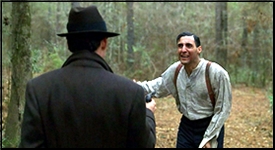
   MILLER’S CROSSING emerges as a loving homage to THE GLASS KEY, with all the beatings, gang wars, double-dealings and understated feeling of the book, evoked by apt casting (John Turturro’s scheming chiseler is memorably drawn.) and a real feel for atmosphere and action.

   And as if that weren’t enough, there’s a fleeting glimpse of a fight poster featuring “DROP JOHNSON vs LARS THORWALD.”


THE THIRD ALIBI. Grand National Pictures, UK, 1961. NBC, US, TV airing, 1961. Laurence Payne, Patricia Dainton, Jane Griffiths, Edward Underdown, John Arnatt, Cleo Laine. Director: Montgomery Tully. Available on YouTube here.

   A mildly interesting crime thriller that tries hard but doesn’t quite have the oomph to follow through. As the title I am sure suggests, it all revolves about a killer (musical composer Norman Martell whose wife Helen won’t give him a divorce) whose plan includes setting up alibis for both himself and his lover (Helen’s half-sister Peggy Hill) as the deed is done.

   As chance would have it, he can’t pull off the deed. Dead instead is his lover, and what good is an alibi when the wrong woman is dead? The pace is fine – the movie is both short and breezily told – but I’m not sure I understood one of the would-be alibis, and the ending is telegraphed well in advance, which is always a problem when there’s no enough time to pad the story a lot more.

   All of the players were new to me – other than singer Cleo Laine who has one nightclub scene on stage all to herself – but they were all fine in their roles. It was the story that let them down.  If I were to rate this one, I’d give it two stars out of four, but since I don’t do that any more, I won’t.


A 1001 MIDNIGHTS Review
by Bill Crider


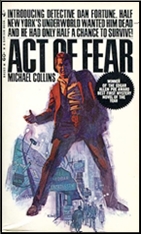
MICHAEL COLLINS – Act of Fear. PI Dan Fortune #1. Dodd Mead, hardcover, 1967. Bantam H4369, paperback, 1969. Playboy Press, paperback, 1980.

   Dennis Lynds, using the name Michael Collins, is writing one of the very best of the contemporary private-eye series. All the novels under the Collins name feature Dan Fortune, a one-armed detective who operates out of the Chelsea district of New York City. Fortune’s handicap sets him apart and makes him vulnerable; he is also introspective and compassionate, a believer in absolute truth, a man who is driven to find the answers. Act of Fear, Fortune’s first novel-length case, won an Edgar for Best First Mystery of the year.

   Act of Fear begins, like many mystery novels, with a missing person. Fortune is hired by a young man to find a missing friend. Apparently the friend has good reason to be missing, and Fortune soon discovers that he is not the only one looking. The elements of the case include the mugging of a cop, two murders, and the savage beating of Fortune’s client. The plotting, as in all the Collins books, is intricate, with Fortune following an the threads to their sometimes frayed ends. His fee for the entire case is $50; he spends much more than that in solving it, but once he is involved, he has to find out the truth.

   As usual in Collins’ work, the book has a serious theme, in this case the difficulty of being true to oneself no matter what the consequences. It would be difficult to say that the ending is satisfying, but it is “right” in the sense that it is the only ending appropriate for the story that Collins tells.

     ———
   Reprinted with permission from 1001 Midnights, edited by Bill Pronzini & Marcia Muller and published by The Battered Silicon Dispatch Box, 2007.   Copyright © 1986, 2007 by the Pronzini-Muller Family Trust.

« Previous PageNext Page »