Reviews


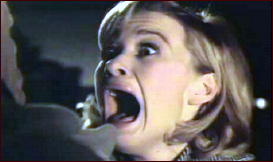
THE PHANTOM OF CRESTWOOD. RKO Radio Pictures, 1932. Ricardo Cortez, Karen Morley, Anita Louise, Pauline Frederick, H. B. Warner, Mary Duncan, Sam Hardy, Tom Douglas, Richard ‘Skeets’ Gallagher, Aileen Pringle. Director: J. Walter Ruben.

   There have been old “dark and stormy night” movies before and since, complete with spooky mansions with a group of assorted people trapped inside with an unknown killer, but Crestwood, I believe, is a benchmark for others to compare with, if not an out and out classic.

   This film has the added cachet of providing the solution to a series of radio programs that told the same story as dramatized here, but leaving the listeners to provide their own endings. There are plenty of suspects to choose from. The leading lady of the film is Jenny Wren, played by Karen Morley, beautiful and appropriately slinky. She is also a blackmailer, with the real goods on a number of gentlemen (married or about to be) with whom she has had brief but now profitable affairs, or so she hopes.

   She calls them all together, as well as their wives, to give them her demands. Planning on retiring from the gold digger business, she instead ends up dead. I don’t imagine that this will come as any surprise to anyone watching this film. Adding to the mystery, there are luminescent faces in the dark, passageways behind walls, plus plenty of thunder and lightning, a cliff at the edge of land behind the mansion, and of course at the appropriate time, the lights go out.

   Besides having plenty of suspects with obvious motives, there are those on hand with motives yet to come to light. Doing the detective work — and this is different — is Ricardo Cortez, a gangster who along with members of his gang knows full well they will be blamed for the killing if caught at the scene. (He is on hand to retrieve some letters in Jenny’s possession.)

   It’s difficult to go wrong in watching this type of movie, and when it’s done with a decent budget and some pizzazz, as this one is, it makes it a lot of fun to watch.
A 1001 MIDNIGHTS Review
by Bill Pronzini


NICHOLAS BLAKE – The Beast Must Die. Harper, hardcover, 1938. US paperback editions include: Crestwood / Black Cat Detective Series #7, digest-sized, 1943; Dell D227, Great Mystery Library #15, 1958; Berkley F971, 1964; Perennial Library, 1978. First published in the UK by Collins, hardcover, 1938.

   British Poet Laureate (1968-72) and novelist Cecil Day Lewis, writing as Nicholas Blake, published a score of popular detective and suspense novels from 1935 to 1968, all but four of which feature an urbane amateur sleuth named Nigel Strangeways. For the most part, the Blake novels are fair-play deductive mysteries in the classic mold and are chock-full of literary references and involved digressions, which makes for rather slow pacing. But they are also full of well-drawn characters and unusual incidents, and offer a wide variety of settings and information on such diverse topics as sailing, academia, the British publishing industry, and the cold war.

   The Beast Must Die is considered by some to be Blake’s finest work and a crime-fiction classic. When the young son of mystery novelist Felix Cairnes (a.k.a. Felix Lane) is killed by a hit-and-run driver, Lane, who doted on the boy, vows to track down and kill the man responsible. A trail of clues leads him to a film star named Lena Lawson, who was a passenger in the death car, and finally to its driver, George Rafferty, the obnoxious part owner of a Gloucestershire garage.

   Lane insinuates himself into Rafferty’s household as Lena’s new lover, and makes preparations to exact his revenge via a sailing “accident.” But things don’t quite go as he (or the reader) anticipates. And when murder finally does strike, it does so in a wholly unexpected fashion.

   The plot is tricky and ingeniously constructed: the first third is told first-person in the form of Felix Lane’s diary; there is a brief middle section, called “Set Piece on a River,” which is done third-person from Lane’s point of view; and the last half is a straightforward, third-person narrative that introduces Nigel Strangeways (and his wife, Georgia, and Inspector Blount of Scotland Yard) and follows Strangeways as he unravels a tangled web of hatreds and unpleasantries. Blake builds the suspense nicely in the first half, makes good use of a subplot involving Lane’s affection for Rafferty’s own son, Phil, and even spices his narrative with a little sex — an unusual ingredient for mystery novels during the Golden Age.

   But The Beast Must Die also has its share of flaws. The manner in which Lane tracks down Rafferty — and the ease with which he is able to meet and seduce a popular actress seem both convenient and contrived; once Strangeways (who is something of a colorless and priggish sort, at least in this novel) arrives on the scene, the narrative becomes talky and slow, diluting suspense; a physical attack on Strangeways is poorly motivated; and the final revelations, intended as a stunning surprise, are neither stunning nor particularly surprising.

   This is a good novel, certainly, one worth reading — but it’s not a mystery classic.

   A film version of The Beast Must Die was produced in France in 1969 under the title This Man Must Die. Directed by Claude Chabrol, it is faithful to the novel except in one major (and curious) point: It excludes Nigel Strangeways completely and tells the tale as a straightforward thriller.

         ———
   Reprinted with permission from 1001 Midnights, edited by Bill Pronzini & Marcia Muller and published by The Battered Silicon Dispatch Box, 2007.   Copyright © 1986, 2007 by the Pronzini-Muller Family Trust.

W. GLENN DUNCAN – Rafferty: Wrong Place, Wrong Time. Fawcett Gold Medal, paperback original; 1st printing, July 1989.

   This is the fourth of six recorded adventures of a Dallas-based PI named Rafferty, all published by Gold Medal in the late 80s and early 90s. There is some similarity in the stories to another PI based in Boston in that he is a rather macho guy, has a steady girl friend with whom he gets along very well, including lots of friendly banter, and a buddy named Cowboy (with all that that implies) whom he calls on whenever he gets himself into a jam and needs help.

   It is also a book that is fun to read for most of its way — until, that is, you start getting the “is that all there is?” feeling about two-thirds of the way through. Both of the cases Rafferty is working on turn out to be very light ones, even though the first results in a case of murder almost immediately: a guy posing as a bounty hunter hires Rafferty to distract his intended victim, and succeeds.

   The second, that of an elderly gentleman being harassed by neighbor kids, is amusing but nothing more, even if the older man, who starts out being a devout curmudgeon, turns out to have had a life well worth living, much to Rafferty’s pleasure.

   I mentioned earlier the existence of another PI working the Boston area, and the similarities between the two sets of characters. Echoes of the other series with this one are obvious, but to tell you the truth, I think I heard Robert Urich’s voice in the first person commentary than I did the other fellow’s. Not that that’s entirely a bad thing, you understand, but your mileage may vary.

       The Rafferty series —

1. Rafferty’s Rules (1987)
2. Last Seen Alive (1987)
3. Poor Dead Cricket (1988)
4. Wrong Place, Wrong Time (1989)
5. Cannon’s Mouth (1990)
6. Fatal Sisters (1990)

REVIEWED BY BARRY GARDNER:


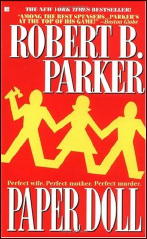
ROBERT B. PARKER – Paper Doll. Spenser #20. Putnam, hardcover, 1993. Berkley, paperback, 1994.

   Most of us bring a lot of baggage to the table when it comes to reviewing a new Spenser, probably to the reading of it as well, but certainly to reviewing. With the 20th, I’m going to do my damnedest to forget all the very good and egregiously bad about the first nineteen, and consider PD as though it were written by a brand-new author. And good luck to me.

   Spenser is hired by a wealthy Bostonian to investigate the murder of his wife, who has been bludgeoned to death on the street in what the police believe to have been a random act of violence. The grieving widower doesn’t necessarily doubt this, but feels he has to know.

   So Spenser, lacking any other avenue of approach, begins to look into the murdered woman’s past for clues to her demise in the present. All the rocks under which he peers furnish surprises, and before he can get off a bon mot he ends up in South Carolina among some fairly hostile inhabitants, being hassled by the local law and making the acquaintance of some local faded aristocrats. Parker’s South is … different.

   Remember what I said I as going to try to do? Couldn’t do it. If I could’ve, though, I would have said that this was an excellently written book with intriguing characters, a pretty light-weight plot, and not-too-believable end. Given that I couldn’t, I’ll tell you that it was the least violent Spenser in ages, maybe ever. Of course, that meant that Hawk was hardly around at all, and I missed his bad ass. Susan and Quirk were both present, however.

   Parker can’t write a book that isn’t almost compulsively readable, and this is no exception. If I could have believed in the ending a little more I might have given it an A. I’ll give it a solid B minus, anyway.

— Reprinted from Ah Sweet Mysteries #6, March 1993.

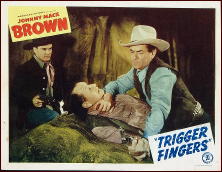
TRIGGER FINGERS. Monogram, 1946. Johnny Mack Brown, Raymond Hatton, Jennifer Holt, Riley Hill, Steve Clark, Eddie Parker. Director: Lambert Hillyer.

   For a former football player, Johnny Mack Brown was a pretty good actor. He appeared in a few straight dramas over a career of 40 years or so, but he found his niche in Hollywood as a western star, mostly of the “B” variety, and was always a favorite of mine, starting when I was 8 or 9 years old.

   You can forget the title of this one. “Trigger Fingers” could have applied to several hundred of these crank-em-out westerns, and it would have worked just the same. This one starts when a young cowboy shoots a man who has tried to cheat him at a game of cards, then has to make fast tracks out of town thinking he’d killed the fellow.

   It turns out that he only winged him, as he intended to do, but for reasons nefarious (blackmail), a plan is cooked up by a gang of local bad guys to make everyone think the gunman he shot is dead. Enter Johnny Mack Brown to the aid of the young man’s father (Raymond Hatton).

   This one starts out slow, but before the less than an hour’s running time has gone by, there have been enough twists in the story to satisfy any 8 or 9 year old boy’s wish for a stirring whiz bang of a Saturday afternoon at the movies. I think the lack of any time taken out for a song or some not very funny comedy routines may have had something to do with that.

REVIEWED BY JONATHAN LEWIS:


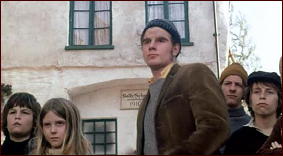
DOOMWATCH. Tigon Films, UK, 1972. Released in the US as Island of the Ghouls, AVCO Embassy Pictures, 1976. Ian Bannen, Judy Geeson, John Paul, Simon Oates, Jean Trend, George Sanders. Screenwriters: Kit Pedler & Gerry Davis. Director: Peter Sasdy.

   Based on the popular BBC television series of the same name, Doomwatch follows the work of the eponymous fictional British government scientific agency tasked with investigating environmental threats. In this feature length theatrical release from Tigon British Film Productions, actors John Paul and Simon Oates reprise their roles as Dr. Spencer Quist and Dr. John Ridge, respectively.

   But the star of the proceedings is Scottish actor Ian Bannen who portrays Dr. Del Shaw, an intense man who doesn’t easily take no for an answer when it comes to his investigations. The plot follows Dr. Shaw as he probes into strange goings on occurring on Balfe, an isolated island off Cornwall. Initially sent there by Doomwatch to investigate pollution, he soon discovers that the islanders are not only an odd, insular sort, but also that they are hiding something dark and disturbing. His suspicions are readily confirmed when he encounters a dog that is unusually violent and a child’s body buried in a local forest.

   But what is really happening on Balfe? The locals seem to believe that somehow they are the victims of a cosmic hex or divine judgment.

   Good scientist that he is, Shaw thinks this is just superstitious and religious hokum. So he enlists schoolteacher Victoria Brown (Judy Geeson), an outsider to the island community who has been working as an educator there, to find out why the townsfolk are so darn secretive.

   As it turns out, the mystery itself is more captivating than the ultimate revelation. [SPOILER ALERT.] Many of the islanders are suffering from a disease caused by exposure to a toxic stew of chemicals and radioactive waste dumped in the local fishing grounds by an unscrupulous waste disposal company and the British Navy. This is nothing remotely supernatural happening on Balfe. Just all too human behavior: fear in the face of human villainy and greed.

WADE CURTIS – Red Heroin. Berkley X1723, paperback original; 1st printing, August 1969. Reprinted as by Jerry Pournelle: Ace Charter, paperback, October 1985.

   Even when this book first came out, it was no secret that the author was SF writer and early computer technology expert Jerry Pournelle. The copyright was in his name, on the reverse of the title page. But his fame came later. This was his very first book, written when he was only 36. It was the first of two adventures of an amateur counterspy named Paul Crane; the second was Red Dragon (Berkley, 1971).

   Crane, a consulting engineer by profession, is contacted by the CIA and asked to infiltrate the various counter-cultural groups hanging out around the fringes of a local Seattle university. Object: to find out who’s responsible for the importation of heroin into the US, an effort sponsored by the Chinese government to help recruit (and pay for) a network of undercover agents in this country.

   This is all off the books, of course. The CIA has no legal authorization to work anywhere inside this country’s boundaries. And more, truth be told, this is a very minor work. The first half of the book is somewhat interesting, as Crane, once married, but on the job, finds a new girl friend, an event he didn’t expect to happen. Still, the question he has is this: Is she as innocent of nefarious activity as she seems, or is she one of the higher-ups of the plot he’s trying to uncover?

   Unfortunately, the tale Curtis/Pournelle tells tails off badly from there. The second half was of no interest to me, I’m sorry to say. The story is as straight as a string, and unless you’re interested in learning a lot about sailing a small yacht in Puget Sound and along the coast of the Pacific Northwest, you may not find anything out of the ordinary in the final 80 pages or so either.

   What bothered me the most, though, was that a couple of Crane’s close friends die in this book, and there is no evidence that he cares. He says he’s angry, but it never goes beyond that. A few pages on, all is forgotten, even as a motivating factor, and it shouldn’t have been.

   What the book may be most famous for, though, is this quote from Robert Heinlein on the front cover: “The most convincing and realistic counterespionage story I’ve read in a long, long time — and besides that, a hell of a good yarn.” I wish I could say the same, but I can’t.

REVIEWED BY JONATHAN LEWIS:


HE WALKED BY NIGHT. Eagle-Lion Films, 1948. Richard Basehart, Scott Brady, Roy Roberts, Whit Bissell, James Cardwell, Jack Webb. Director: Alfred L. Werker, with Anthony Mann (uncredited).

   He Walked by Night was one of those movies that I knew existed and had always intended to watch. But for some reason, I never seemed to get around to doing so. Until now, that is. The verdict is mixed. On the one hand, there’s some excellent staging and cinematography — particularly in the last 20 minutes or so — in this true crime-inspired police procedural/film noir.

   But the story, as far as it goes, is a particularly thin one, with far less character development than one would hope for in a movie so intently focused on the ways in which a criminal eluded the police for so long.

   Richard Basehart portrays Roy Martin (alias Roy Morgan), a loner with a penchant for electronics who commits a crime spree in the greater Los Angeles area in the late 1940s.

   Among his crimes is the cold-blooded murder of a LA police officer. It’s up to the LAPD to hunt him down and bring him to justice. Leading the effort is Sgt. Marty Brennan (Scott Brady) who gets some much-needed technical assistance from a police forensics expert (Jack Webb).

   You wouldn’t know it from watching the movie, which gives next to no explanation for the crimes depicted on screen, but the backstory to the criminal portrayed by Basehart in He Walked by Night helps shed some light as to his possible motivations in carrying out his reign of burglary, robbery, and murder.

   The character of Roy Martin was based on the real life criminal exploits of Erwin “Machine Gun” Walker, a former Glendale, California, police department employee who engaged in a crime spree in LA County in 1945-46. Walker, a Cal Tech drop out who witnessed Japanese atrocities during his service in World War II, was likely traumatized by his combat experiences and the subsequent guilt he felt for surviving an attack that killed many of his fellow soldiers.

   Because of this lack of character development, the film ends up being a middling police procedural that, with a little bit of tweaking, could have been a far more formidable crime film. Still, there are enough gritty moments, particularly during the final sequence in which the LAPD hunts down Roy Martin in tunnels under Los Angeles, which should please film noir fans.

THE BACKWARD REVIEWER
William F. Deeck


J. JEFFERSON FARJEON – Death in Fancy Dress. Bobbs-Merrill, US, hardcover, 1939. First published in the UK by Collins, hardcover, 1934, as The Fancy Dress Ball.

   New Year’s Eve brings with it the Chelsea Arts Ball at the Albert Hall, where “ten p.m. till five a.m. sober folk discard their sobriety, flinging themselves into queer costumes and queerer mental activities in an attempt to forget the humdrum of existence.”

   The reader follows here several characters who attend the Ball: Henry Brown, nondescript impecunious, timid; the Shannon family, at the head of which is a mutinous mogul; Sally, made up as Nell Gwynn and with the correct mental attitude; Sam, Sally’s stupid and incompetent confederate; and Warwick Hilling, who had given “protean” performances before All the Crowned Heads of the World, now down on his luck and preparing to appear for pay as a Balkan prince.

   Much takes place at the Ball, though Hilling misses most of it, in this thriller — not “murder mystery,” as the publisher would have it. Indeed, there is no detective, either amateur or professional. If you can put yourself in the thirties’ mood and be willing to accept what would be regarded today as odd mental attitudes, you should enjoy the unlikely carryings on.

— Reprinted from MYSTERY READERS JOURNAL, Vol. 7, No. 3, Fall 1991, “Holiday Murders.”

REVIEWED BY BARRY GARDNER:


LES ROBERTS – The Cleveland Connection. Milan Jacovich #4. St. Martin’s, hardcover, 1993; paperback, 1997.

   I think that over the last few years, Les Roberts has been quietly and unobtrusively become one of the best writers in the field. He now has nine books to his credit. five with the Californian Saxon, four featuring the Cleveland PI Milan Jacovich, and I think he’s gotten better with each book.

   Jacovich is asked by the now-husband of his ex-wife to help in locating an old man who had disappeared. While both he and the family he is to help are of Yugoslavian decent, they are Serbs, and he is a Slovene; a significant distinction, as readers of today’s newspapers will recognize.

   The old man, a survivor of a Nazi death camp, is eventually found, victim of an execution-style murder. Why was he killed? Do the answers lie in his present, or in his buried past? Ever the questing knight, Jacovich begins turning over the stones. At the same time, he must deal with a reporter friend’s being threatened by a local mobster.

   The Jacovich books seem the darker of Roberts’ series to me; reflective, somber, often grim, always infused with a sense if mortality and human frailty. Jacovich is the quintessential moral man, always bound by his own ideas of rightness regardless of the consequences to himself or anyone else. Roberts’ characterization is strong, and his creation stands out from the herd.

   I value a sense of place, and Cleveland is a palpable presence here. Roberts knows the city well, and if he doesn’t love it, he fakes it superbly. His prose is excellent, striking a balance between straightforward narrative and evocative description. The story came to a not unforeseen if not inevitable conclusion, but it was about journey as much as destination, anyway. This one is good.

— Reprinted from Ah Sweet Mysteries #6, March 1993.


Bibliographic Update:   There are now six books in Roberts’ Saxon series, and 19 in his books about Milan Jacovich, with two of the last three co-written with Dan S. Kennedy. The most recent was Speaking of Murder from 2016. Roberts has also written two books in a short series about Dominick Candiotti and one stand-alone novel.

« Previous PageNext Page »