Reviews


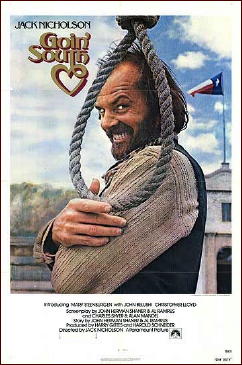
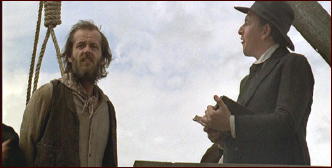
GOIN’ SOUTH. Paramount Pictures, 1978. Jack Nicholson, Mary Steenburgen, Christopher Lloyd, John Belushi, Danny DeVito, Veronica Cartwrighht, Ed Begley Jr. Director: Jack Nicholson.

GOING' SOUTH

   Even if I told you this was a Western, you’d still know it was a comedy, just by looking at the list of people in it. The only two cast members of any consequence, however, are Nicholson and Steenbergen — the first film appearance of the latter, at the very young age of 25.

   Nicholson is a horse thief, a former member of Quantrill’s Raiders, an outlaw through and through, and of no good to anyone to boot. Captured in Mexico and broght back (illegally) across the border to be hanged, he is saved from the noose at the last minute by Steenbergen’s speaking up at the last minute to say that she will parry him. (A local ordinance carried over from the Civil War, when men were scarce.)

   It’s not really a husband she’s looking for, however. She has a mine on her property that needs working, and she’s desperate to find the gold she’s sure that’s there before the railroad comes in and takes over the land.

   One look at Nicholson in this movie will show you just how desperate she is. He is the scruffiest looking star of a major motion picture that I can ever recall seeing. He is manical capering gnome of a man, leaping for the sheer joy of living, with a leer in every glance to sends his new wife’s way.

GOING' SOUTH

   And Mary Steenbergen, although still young, is a quintessential “old maid,” with fussy, virginal ways, but totally in charge of the situation, until, of course, it blushingly (and inevitably) goes out of control.

   The rest of the cast is there for background, nothing more, except for perhaps Veronica Cartwright, who plays the outlaw’s former love, he “first woman he ever had to pay for.” Sparks fly, misunderstandings abound, nefarious double-dealings run amuck. And for a Jack Nicholson movie, there are surprisingly few moments of enigmatic incomprehensibility. This is a funny movie, worth looking out for.

— Reprinted from Mystery*File 37, no date given, slightly revised.


GOING' SOUTH

Reviewed by DAVID VINEYARD:         


MILES BURTON (Charles John Cecil Street, MC, OBE, 1884-1965) — The Secret of High Eldersham. Mystery League, US, hardcover, 1931. First published in the UK by Collins, hardcover, 1930.
MILES BURTON The Secret of High Eldersham

   I can testify that the portrayal of East Anglia in this novel is fairly accurate, at least it still was in the 1970’s. It’s a somewhat insular part of England, friendly enough on the outside, but slow to accept strangers, and like many small communities prone to suspicion of anyone and anything new. You can spend thirty years of your life their and still be a foreigner, even if they like you. Simply living there does not make you one of them.

   There are certainly towns like that here as well, but it is pronounced in East Anglia — and in High Eldersham, a village of some three hundred people the insularity is particularly pronounced. A few families have intermarried until everyone is related to everyone else, and there is nothing but distrust for strangers. In High Eldersham newcomers tend to have ill fortune, they seldom stay long.

   But Mr. Thorold had a long experience of strangers as tenants in East Anglia. However hardworking and conscientious they might be, however keen to promote trade, the receipts of their houses had a way of falling off until they were perforce compelled to relinquish their tenancy. And this curious distrust of strangers, common throughout East Anglia, was particularly active in remote villages like High Eldersham. Yet Dunsford had said that no local man would take the Rose and Crown, and he knew every soul in the village and for miles around.

   Burton is good here showing the impact of the First World War on small English villages, both socially and economically. Still, murder is carrying it a bit far so far as local Constable Viney is concerned when he finds the publican of the Rose and Crown, Edward Whitehead, Mr. Thorold’s chosen outsider tenant, a retired sergeant of the Metropolitan Police force, stabbed to death in his chair.

   The Chief Constable is by no means sure of local Superintendent Bateman’s ability to handle a murder of this sort, so against the other man’s wishes he asks for help from New Scotland Yard (the detective branch of the London Metropolitan Police, not a national police as sometimes implied in detective stories — still well through the sixties small police forces did sometimes call on the Yard for help — as is done here, and Yard investigations may lead almost anywhere in England, or the world).

   Help arrives in the person of Inspector Young (whether as Burton, Waye or Rhode, his policemen tend to be efficient and capable), who enlists Constable Viney as a local expert, and handles himself quite well, but as his first few leads fail to pan out Young decides to call on a wartime friend for help.

   During the war (WWI) Young frequently had dealings with the Naval Intelligence branch of the Admiralty, and in the person of a bright fellow he quite admires, Desmond Merrion (Merrion usually works with the competent Inspector Arnold, who debuts in a later adventure).

   Merrion is strictly an amateur, not even classifying himself as a detective, but he’s an attractive sleuth along with his man, the capable Newbolt, and I always found him easier to take than the more stately Priestly (not to say anything against the best Priestly’s — I particularly enjoyed The Murders in Praed Street and The House on Tollard Ridge). This was the first outing for Merrion, and the best.

   Charles John Cecil Street was Miles Burton, Cecil Waye (author of husband and wife private investigators Christopher and Vivienne Perin in four titles between 1931 and 1933), and John Rhode, one of the staples of the Detection Club, and creator of another great detective, the scientific sleuth Dr. Priestly.

   Street was a proponent of the fair play mystery, and a spinner of solid puzzles that on occasion even developed a bit of suspense and action. Julian Symons qualifies him as being of the humdrum school. [FOOTNOTE] (Barzun and Taylor disagree in A Catalogue of Crime and review several books enthusiastically, including this one — I tend to lean toward their view), there is nothing humdrum about The Secret of High Eldersham, however.

   In later years (he was still penning Priestly and Merrion novels into the early 1960‘s) Street could be frightfully humdrum to the point of boredom, and unlike Marsh, Christie, Carr, Innes, or Allingham, who all lived and kept writing longer than him, he didn’t manage to modernize much past WWII or hold on to more than a few diehard fans. He is likely best known today for his collaboration with John Dickson Carr (writing as Carter Dickson) Fatal Descent (1939 UK title Drop to His Death), written as Rhode.

   Humdrum or not Street was never a bad writer, and some of the early books are highly collectable, but as I said the later books don’t offer much, and frankly for me, they read as if he was just churning it out without the inspiration or the enjoyment of his earlier work. Failing health may also have contributed to the decline. The kindest word I can think of for them is tired, but then having been prolific since the twenties (I count seventy-one Priestly novels and sixty-three Burtons between 1925 and 1961), he was entitled to tired at that point.

   In addition to his prolific mystery fiction he wrote non-fiction, often dealing with international politics, and short stories, theater (unproduced), and radio plays (featuring Priestly and Inspector Jimmy Waghorn from the Priestly series). He wrote at least one memoir of his service as a gunnery officer in the First War, and one of his service in Ireland as an Intelligence officer.

   That doesn’t matter here, because The Secret of High Eldersham is one of the highlights of his long career, and for my money the best of the Merrion novels. This one has a bit of everything all perfectly balanced between detection, action, and deeper mysteries than mere murder. Something old and evil is brewing in High Eldersham, and anyone who stands against it meets a terrible fate.

   When Constable Viney is struck down by a mysterious illness Merrion begins to suspect a broad conspiracy at work (many of Burton’s books feature large criminal enterprises — something a bit different than the more personal murders of many of his contemporaries — not to suggest the others didn’t deal with their fair share of criminal conspiracy and even international intrigue).

   It looks to me as though the High Eldersham people suspected, if they don’t actually know, that somebody about the place murdered Whitehead. If they thought it was a stranger, they’d be only too ready with information. As it is, they are convinced that the man met his death in consequence of the spell cast upon him, and the example of his fate is quite enough to induce them to hold their tongues.

   There is even an unobtrusive romance for Merrion that figures neatly into the plot causing him some real consternation and anxiety and introducing Merrion to his wife to be, Mavis Owerton, daughter of local landowner Sir William, one of the suspects to Merrion’s chagrin. Burton handles the romance quite well.

   Side by side they walked down through the park. The fog had descended thicker than ever, and without Mavis’s guidance Merrion would inevitably have taken the wrong path. She led him to where the dinghy was tied up, then suddenly, as he was about to step into it, she laid a hand upon his arm. “You’re not going to do anything dangerous are you?” she asked softly.

   He swung round and faced her. There was a note of solicitude in her voice which made the blood run madly through his veins. Obeying a sudden impulse he caught her in his arms. She lay there for an instant, then gently disengaged herself.

   Breathing one last word, “Mavis!” he stepped into the dinghy and picked up the oars. The girl’s figure faded from his eyes into the surrounding mist.

   It’s a grown up romance, and doesn’t get in the way for once. Merrion’s concerns for Mavis are genuine and justified, but never descend to the silly ass behavior of some other classic sleuths in love. The Detection Club rules frowned on romance, but just about all the original members broke the rule in one book or the other. It’s Burton’s turn here.

   In his early days as Rhode he was prone to the popular theme of the twenties, drug smuggling, especially cocaine. As Rhode, he even wrote a non series book more or less on thriller lines, The A.S.F. The Story of a Great Conspiracy (1924, US title The White Menace).

   The drug theme raised its head in his work once in a while after that as it does here, and a nastier lot of smugglers, secretive islanders, villains, devil worshipers, and at least one murderer more sinister than East Anglia ever saw, have seldom inhabited the pages of a mystery. Deviltry is the least of it, in a very real sense, and quietly evoked by Burton, a community’s soul is at risk.

   The stone was undoubtedly the altar behind which officiated the devil, the mysterious president of the coven. A glance at the sides of the stone confirmed this. It was carved with strange figures, the obscure symbols of an almost forgotten rite. A sudden horror seized him, the malign influence of this ill-omened grove.

   Action, atmosphere and suspense aren’t usually the virtues you tend to associate with Burton or Rhode, but in the early Priestly novels he managed some well staged suspenseful scenes revealing the murderer, and here, taking advantage of East Anglia’s remote dramatic countryside, and his well drawn portrait of High Eldersham and its environs, he provides atmosphere, action, a chase, even a coven, a close encounter with death for Merrion and his girl, a damn good piece of mystery and detection,and there is also some well done business handling small boats. It’s a very physical as well as intellectual and disturbing investigation for Merrion.

   The psychology of the thing seems fairly simple to me. The members of the coven derived a definite advantage from the ceremonies. Any one against whom they had a grudge suffered accordingly. But things were a good deal deeper than that. The real attraction was the drugs mixed in the bowl which was handed round, and the sensations they produced. It’s all pretty horrible, but there isn’t the slightest doubt that the meetings ended in an orgy of promiscuous lust, no doubt excited by some form of aphrodisiac. If you study some of the old records, you’ll find these things described in detail. H——–‘s (my annotation to save a spoiler alert) whole idea, of course, was to turn the village into a more or less criminal society …

   Granted that sounds more like Dennis Wheatley than Burton or Rhode, and violates all the Detection Club rules save for Chinese chicanery (frankly that drug he describes pretty much is a ‘drug unknown to science’), but you’d have to be a pretty narrow stickler or curmudgeon to care.

   This is not a tour de force, but it is perhaps the best book by one of the early masters of the form, highly entertaining, and certainly not the least dull. It is easily the fastest read by Burton or Street I know of.

   But Merrion acquired property in High Eldersham, even before he was married. He bought the island which had been the scene of so many strange ceremonies, and, on the night after the purchase was completed, he and Newport went there, armed with sledge hammers, and broke the altar into little pieces, which they threw into the river.

   â€œReminds me of that chap in the Old Testament, sir,” remarked Newport, as he mopped his brow after his labours. “What was his name, sir?”

   â€œGideon. ‘Throw down the altar of Baal that thy father hath, and cut down the grove that is by it.’ Yes, I think we’ll make a job of it, and have these trees down too. Things haven’t changed much since those days, have they?”

   The perfect end to what I consider an almost perfect book of its kind and a satisfying read both for the detective story lover and those that want a bit more accompanying it. If you read only one book by Burton or Rhode, this is the one I would suggest. I consider it one of the true highlights of the Golden Age, a masterpiece of its kind, by an old master.

[FOOTNOTE]  Symons defines the Humdrum School thusly for those of you unfamiliar with the term: “Most of them (the Humdrums) came late to writing fiction, and few had much talent for it. They had some skill in constructing puzzles, nothing more, and ironically they fulfilled much better than S. S. Van Dine his dictum that the detective story properly belonged in the category of riddles or crossword puzzles. Most of the Humdrums were British, and among the best known of them were Major John Street …”. — Julian Symons, Bloody Murder.

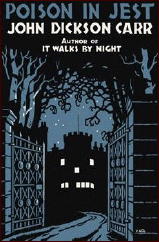
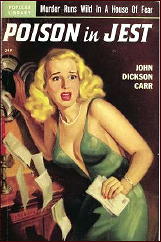
JOHN DICKSON CARR – Poison in Jest. Harper, US, hardcover, 1932. H. Hamilton, UK, hardcover, 1932. Reprinted many times in both hardcover and soft.

JOHN DICKSON CARR Poison in Jest

   The magic word in describing the prose of John Dickson Carr is “atmosphere.” His stories always seem to be taking place in dark and dreary locales even when the sun is shining brightly. Let me quote from pages 28-29 of the British Penguin paperback I’ve just read:

   I went into the library and stared about. It was filled with a hard brightness; one of the gas-mantles hissed slightly. Wind had begun to thrum the window-panes, so that reflections quivered in their black surfaces, and the gimcrack lace-and-velvet draperies twitched about. The plaster frescoes of the ceiling were very dirty, and the dull flowered carpet was worn in several places. […] A commonplace library. You felt, nevertheless, the presence of something leering and ugly. A vibration, a pale terror like the mist on a photographic plate.

   According to Hubin, this early novel is a non-series one, but the narrator is the same Jeff Marle who assisted Henri Bencolin, the head of the Paris police, in several earlier cases. (This one takes place somewhere in Pennsylvania, and Bencolin does not appear.)

JOHN DICKSON CARR Poison in Jest

   Even though Marle does his investigative best on the cae of domestic poisonings, he does not have the makings of a true Carr detective Neither does the county detective, Joe Sargent, who is called in. They see things too straight-forwardly, and the fail to see what things really mean.

   It falls upon a friend of the family’s youngest daughter Virginia, an eccentric chap named Rossiter, to come upon the scene and ferret out the truth. In the grand tradition of Gideon Fell and Sir Henry Merrivale, Rossiter’s appearance makes him seem nearly potty in his behavior — but as is finally revealed, there is method in his madness. (As the saying goes.)

   I don’t believe that this is one of Carr’s finer attempts at massive misdirection, as he is so prone to do, and the pace is rather stodgy and slow. I realized who had done it on page 154 of the Penguin edition (so that this won’t help you any), and there were still over 60 pages to go. (Which rather proves both points, doesn’t it?)

   On the other hand, second-rate John Dickson Carr (which I”m really implying) is still more interesting to read than 90% of the work produced by anyone else who attempts the rigorous challenge of the old-fashioned fair-play detective mystery.

— Reprinted from Mystery*File 37, no date given, very slightly revised.

Note:   In the most recent edition of Crime Fiction IV, Al Hubin now lists Jeff Marle as a series character. In the other five cases in which he takes part, it was always in tandem with Henri Bencolin.

REVIEWED BY GEOFF BRADLEY:         


HARRY STEPHEN KEELER The Affair of the Bottled Deuce

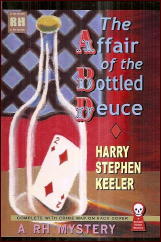
HARRY STEPHEN KEELER – The Affair of the Bottled Deuce. Ramble House, 2005.

   I’ve read half-a-dozen Keelers with generally pleasing results, but this is the first Ramble House original I’ve read. This was written in 1958 but was unable to find a publisher until Fender Tucker embarked on his project to release all the Keeler in existence.

   Reading it one can see why. This is particularly slow moving — a body found shot in a locked room is reported to the police on the first page of the book, but it’s not until some 50 pages later that the police arrive, and it’s even later when they realise that the gun in the supposed suicide victim’s hand is actually made of wax.

   So it’s a locked room mystery with several of Keeler’s trademarks — the usual will, the magic tricks — but ultimately the good bits — and there were several — didn’t quite outnumber the bad bits (as has been the case in other Keelers I have read). And even the locked room answer was a little disappointing, at least to readers who know their Sherlock Holmes.

   Will I be reading more Keeler after this? Of course I will.

THE BACKWARD REVIEWER
William F. Deeck


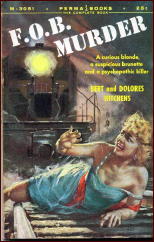
BERT & DOLORES HITCHENS – F. O. B. Murder. Doubleday Crime Club, hardcover, 1955. Permabook M-3051, paperback, 1956.

BERT & DOLORES HITCHEND F. O. B. Murder

   For those readers who enjoy police procedurals and others who just enjoy good books, this first novel by the combined Hitchens is recommended.

   David McKechnie and Collins (whose first name I missed, if it was ever mentioned) are investigators for an unnamed railroad. Collins is of mixed Irish and Mexican parentage. McKechnie is described as Black Irish, which, for those like me who might be baffled by the term — I went through a lot of books before I discovered its meaning — is an Irishman who has lost his Faith and is a solitary and brooding man. McKechnie, under that definition, would be more Grey Irish, in my opinion, but let it go.

   Collins specializes in stolen-or-missing-baggage cases. He is just beginning an investigation of the disappearance of two pieces of luggage belonging to a very strange woman when he discovers a terrified wetback locked In a reefer (refrigerator car) and near death.

   McKechnie meanwhile is checking on some whiskey stolen from a boxcar and then is drawn into the case of a man who everyone thought was a hobo who had died from, apparently, a fall from a boxcar. The death had been dismissed as an accident. The hobo, however, turns out to own half a uranium mine (backward reels the mind), and the FBI is also interesting itself in the incident. Another death, possibly in connection with the whiskey thefts, comes later.

   Not surprisingly, all of these cases tie in with each other, but the authors are skillful enough to make it sound reasonable. McKechnle and Collins work with the FBI and the Los Angeles police force and arrive at a satisfactory conclusion when the interconnectedness of the incidents has been pointed out to them by their supervisor. All they discuss with each other is horses and women.

— From The MYSTERY FANcier, Vol. 10, No. 1, Winter 1988.


Bibliographic Note: McKechnie and Collins appeared in one other novel by the Hitchens, that being The Man Who Followed Women (Doubleday, 1959).

Reviewed by DAVID VINEYARD:         


DAVID BISHOP Original Alibi

DAVID BISHOP – Original Alibi: A Matt Kyle Mystery. David Bishop/Telemachus Press, softcover, July 2012.

      Spoiler Warning:

   This is a great book, it is, in fact, one of the best books I’ve ever read. At least it was when Raymond Chandler penned it as The Big Sleep, the first Philip Marlowe novel. As the second Matt Kyle novel, it’s not so hot.

   David Bishop is a bestselling writer of e-books including two other mystery series. He’s a competent enough scribe, as such things go, but there isn’t an original idea in the book or an original line or an original character. If this is what the genre is like in electronic form then it shouldn’t be hard to gain grandmaster status, this is tired, borrowed, too often copied (I won’t say plagiarism, that would imply at some point it actually sounded like Chandler), terribly dated, and a bit silly.

   And those are the good points.

   Bestselling writer Matt Kyle was a cop who executed a rapist in cold blood and went to jail. On coming out he took up writing and got a PI ticket in California (you can’t get a PI ticket in California if you were in prison — The Outsider to the contrary — as any viewer of Rockford Files will recall — Rockford only got his because he was pardoned).

   Now he lives in a condo with a balcony and Axel, an ex-con he befriended acts as his valet — he can’t get rid of him, actually — and general errand boy and hacker. Save for the hacker part this is an entry in the Falcon B movie series — come to think of it one of those (The Falcon Takes Over) was based on a Chandler novel, different novel (Farewell My Lovely), but FYI, as if anyone reading this didn’t already know.

   Yes, he has a valet. I’m not sure I recall any other PI’s with valets other than Lee Thayer’s Peter Clancy. Lester Leith had one, but he was primarily a thief and gentleman crook. Radio’s The Fat Man, Brad Runyon had one, but not from Hammett. I recall the hero of Raoul Whitfield’s Killer’s Carnival having one, but he was a big game hunting playboy, not an eye. Erle Stanley Gardner’s Terry Clane had a valet, but he was a lawyer and soldier of fortune. I suppose we should be grateful it’s not Eric Blore or Mantan Moreland (though they were often the best part of those films).

   General Whittaker, formerly of the Joint Chiefs of Staff, is old and dying in his wheelchair and his private sanctuary and wants to know who murdered his pregnant granddaughter-to-be, Ileana Corrigan, and set up his no good son Eddie before he dies. Kyle likes the old man, and wants to help him so he takes the cold case. The General also has a daughter, Karen, who drops her scanties at the glance of a man — and Kyle does a lot of glancing. She doesn’t quite climb into Kyle’s lap standing up or have a slinky sister, but her name might as well be Carmen.

   Kyle, on the other hand, doesn’t throw her out of his bed and have a hissy fit tearing up the bedclothes, but then Karen’s not as perverse, crazy, or lethal as Carmen. She’s just a slut who would like to inherit a bigger chunk of daddy’s money, and doesn’t mind sleeping around to do it.

   At one point Bishop breaks away from Kyle’s narrative to show us Karen seducing the chauffeur to get him to beat up Kyle. There’s no reason to tell the reader this rather than let us discover it when Kyle does, other than a tame and rather dull seduction scene. It doesn’t generate suspense or deepen character. All it does is make the hero look like a bigger chump.

   Kyle also has a cop buddy called Fidge and then there’s the police captain Richard Dickson, Double Dick, who dislikes him, but all the cops hate Double Dick and like Matt …

   Every private eye has to have a cop buddy.

   Save for the parts borrowed from Chandler the rest of the book and the characters are series television quality plotting, not incompetent, but shallow and with no depth. This wouldn’t pass in a first semester writing course. It’s derivative and not felt. It’s precisely the kind of writing instructors try to beat out of students’ heads. You can’t reinvent the wheel, or rewrite a great book as your own.

   He could have at least have made it an Admiral instead of a General.

   He even uses the necktie bit.

   This is not crude, imaginative, violent, savage, or sexy enough to be good pulp — even bad pulp. Frank Kane’s Johnny Liddell and Carter Brown might have been generic private eye, but at least they were the real thing. This is authentic as a Cracker Jack police whistle, and about as shrill.

   There is a point when homage crosses the line. Original Alibi homages the hell out of The Big Sleep.

   And, just saying, but you really shouldn’t write about prison if your idea of it came out of James Cagney movies. Matt Kyle seems to have been sentenced to 1946 prison. You should at least watch an episode of Lockup, or Prison Break.

   This is prison a la Boston Blackie. He even mentions Boston Blackie, and I’m pretty sure its Kent Taylor, not Chester Morris since he goes on about the mustache. Apparently he isn’t aware of the term ‘pencil thin’ and never heard of David Niven, so its a Boston Blackie mustache for all ten of us who don’t have to look up Boston Blackie or Kent Taylor on Wikipedia or in IMDb.

   I know many writers don’t like research, and I don’t expect him to be Max Allan Collins or Loren D. Estleman, but you should have some idea of how the police and actual PI’s work and what they can and cannot do. You could at least watch some old PI movies and television series and pay attention. He’s watched them, but he didn’t pay attention. He can’t have.

   I don’t care how much you bribe him, no CSI can give you next day DNA results. That only happens on television because they have to telescope time. The television writers know better, their technical advisor told them. This book needs a technical advisor, and a writing course, and a class in ethics ….

   Your sole experience of life as you write about it cannot be second hand from books, movies, and television. You need to have experienced or observed something for yourself. You don’t have to be a private eye to write about one, or to have gone to go to prison to write about that. You do have to learn about those things then put yourself in those positions.

   You can’t write any book from the outside like this and expect it to be good. You have to believe it yourself. If you don’t why bother to write a mystery and expect a reader to read it? It isn’t just coming up with an unusual weapon, a few twists, a femme fatale, and hero. The unusual weapon has to figure in the plot as more than a weapon, the twists have to come from the plot, the femme fatale has to be more than just a slut, and the hero has to be a hero for a reason, not just because you chose him.

   Matt Kyle might have been more. The back story is dark enough, but Kyle is strictly light weight in voice and action. He reads something like a sixteen-year-old wanna-be Marlowe might write, not like a man who went to prison and still believes he was right. Donald Lam and Archie Goodwin are darker than this. They exist, Matt Kyle never does. You can’t even work up empathy when he is being beaten up (this scene was ‘borrowed’ from The Glass Key, he expanded from Chandler) or is in one dull improbable fight.

   At no point will you believe Matt Kyle is anything more than a voice, and not one you really want to listen to.

   Did I mention General Whittaker’s chauffeur is a lot like Rusty Regan from The Big Sleep? Just asking. He’s even involved with the general’s daughter with the revolving door to her bedroom.

   Most of the time you will have to fight to remember this is set now. If you keep thinking it’s 1946 you can be forgiven. I’m not sure the author has read a PI novel since 1946. I’m not sure he read any books but The Big Sleep, though he constantly references other movies and books; not Raymond Chandler of course. Under the circumstances you wouldn’t want to remind anyone of Raymond Chandler.

   A valet?

   Oh, there’s something else I have to mention.

   The butler did it.

   No kidding, and without so much as a hint of irony. I’m not sure he or his hero even get it. The butler did it.

   I should be fair, I downloaded this for free.

   You get what you pay for.

   The butler did it.

   I’m not exactly sure how many e-books you have to sell to achieve bestseller status. Bishop seems to have sold enough. He won’t be selling any to me, but so long as Amazon pays up he likely doesn’t care.

   I am a little angry though. There are readers out there who read this and think it represents the genre. They haven’t read Chandler or seen Hawks The Big Sleep so they don’t know they are reading re-warmed dreams and second hand metaphors. They don’t know who Ross Macdonald, Thomas Dewey, Brett Halliday are, and Mickey Spillane is a name from a beer commercial, not an experience.

   They are readers and we should care that this represents our genre. I don’t know what can be done, but surely we can at least speak out, rail against the night so to speak.

   But this was free, keep in mind.

   It’s just not quite worth what I paid for it.

Reviewed by
CAPTAIN FRANK CUNNINGHAM:


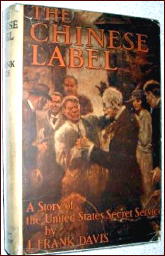
J. FRANK DAVIS The Chinese Label

J. FRANK DAVIS – The Chinese Label. Little Brown & Co., hardcover, 1920. A. L. Burt, hardcover reprint, no date. Also available in various Print on Demand editions; it can be read online here.

   When the United States Treasury learns from secret sources that two famous diamonds, stolen from the Sultan’s sash, will probably be smuggled into this country, it sets its machinery quickly to work.

   Napier, of the Secret Service, is the agent chosen, and San Antonio is selected as the likeliest place in which to unearth the plot. Napier’s task is a hard one, but with skill he picks up clue after clue from insignificant happenings, implicating Chinese and Mexicans, and American arms officer, and an international spy.

   All are linked with the two diamonds, which are supposed to be concealed in a can of opium bearing a Chinese label.

— Reprinted from Black Mask magazine, August 1920.


Bibliographic Note:   Accoring to Hubin, Davis worked for newspapers for 20 years as drama critic, special writer, managing editor, etc. This was the only crime novel to be published under his own name. As Nick Sherlock Collier, he also wrote Frenological Finance (Clark, 1907).

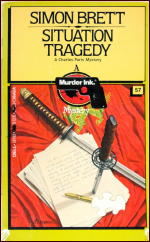
SIMON BRETT Situation Tragedy

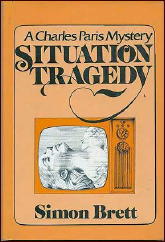
SIMON BRETT – Situation Tragedy. Scribner’s, hardcover, 1982. First published in the UK by Victor Gollancz, hardcover, 1981. Dell/Murder Ink #57, paperback, 1986. Warner, paperback, 1990.

   In case you’ve never come across one of these mystery adventures of actor-sleuth Charles Paris before, be forewarned: there will be times when you will be convinced that if there is any detection going on it is definitely taking second place to Simon Brett’s witty, caustic commentary on the world of show business, British style.

   In this, his seventh case, Paris tackles the world of commercial television. Somewhat to his own surprise, he has a bit part in a new sitcom. It’s a continuing part, at least — but so’s the series of fatal “accidents” that begin to plague the show, and even before the first episode is ever aired.

   Also be forewarned that Charles Paris is something of a tosspot and a womanizer, but he is certainly also one not to be overly impressed with the glamour of show-biz. There are also a couple of digs at the peculiarities of some mystery collectors. (Nobody who doesn’t deserve it!)

   The ending is tragic, scarcely believable, and yet, mostly a fitting one.

Rating: B

— Reprinted from The MYSTERY FANcier, Vol. 6, No. 3, May-June 1982 (very slightly revised).This review first appeared in the Hartford Courant.

The Charles Paris series —

1. Cast in Order of Disappearance (1975)
2. So Much Blood (1976)
3. Star Trap (1977)
4. An Amateur Corpse (1978)
5. A Comedian Dies (1979)
6. The Dead Side of the Mike (1980)
7. Situation Tragedy (1981)

SIMON BRETT Situation Tragedy

8. Murder Unprompted (1982)
9. Murder in the Title (1983)
10. Not Dead, Only Resting (1984)
11. Dead Giveaway (1985)
12. What Bloody Man is That (1987)
13. A Series of Murders (1989)
14. Corporate Bodies (1991)
15. A Reconstructed Corpse (1993)
16. Sicken and So Die (1995)
17. Dead Room Farce (1997)
18. A Decent Interval (2013)

REVIEWED BY DAN STUMPF:         


KONGO

KONGO. MGM, 1932. Walter Huston, Lupe Velez, Conrad Nagel, Virginia Bruce, C. Henry Gordon. Director: William J. Cowen.

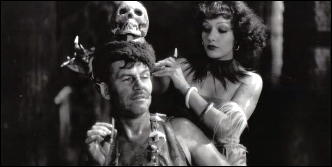
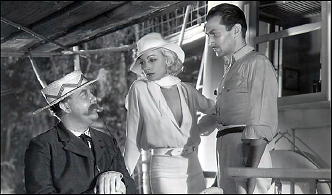
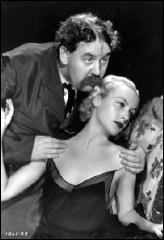
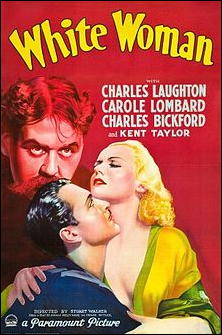
WHITE WOMAN. Paramount, 1933. Carole Lombard, Charles Laughton, Charles Bickford, Kent Taylor, Percy Kilbride. Director: Stuart Walker.

   Caught a couple of of lush tropical melodrama-cum-horror flcks a few weeks back; both are based on stage plays and both quite fun.

   Kongo is a sweaty, steamy, depraved-looking thing, with Walter Huston… well, I almost said he was in excellent form, but here he plays a paraplegic, confined to a wheelchair and determined to wreak baroque vengeance on the man who put him there (a role he played on Broadway before Lon Chaney took it up in the film west of Zanzibar).

   To this end, he has set up a trading post in the African jungle, where he cows the natives with stage magic, helped along by Lupe Velez, who radiates her own steam, thank you very much.

   Houston wriggles about the place like a grimy spider, moving his victims about like game-pieces, marking the days till he springs his trap on a calendar scrawled iver with the words “HE SNEERED!”

KONGO

   This could be corny stuff, all right, but everyone plays it to the edge without tripping over. Director William Cowen (who he?) keeps things moving right along and handles the crucial scene — a satisfying and improbable twist that reverses everything we thought was happening — without blinking at the old-fashioned melodrama, and Harold Rosson photographs with what looks like s sheen of sweat over it all.

   Even normally uninspired actors like Conrad Nagel and Virginia Bruce put it across quite well. In all, a movie to set aside your critical faculties and simply enjoy.

KONGO

   White Woman tiptoes through similar tropical tulips, and does it quite neatly, thanks mostly to a script by Frank Butler that keeps things edgy and unpredictable, pacey direction from Bluert (Werewolf of London) Walker, and the usual Paramount patina of soft-focus splendor.

   There’s moody acting from Carole Lombard as the eponymous “entertainer” who winds up in a remote rubber plantation, Charles Bickford, Kent Taylor, and Charles Middleton, as lost souls slaving away in the heat, but the film belongs to Charles Laughton, who plays the jungle tyrant, and plays it for laughs — which makes a nasty part somehow more disturbing.

KONGO

   Made up with frizzy hair and a silly moustache, Laughton gads about in a stripes, plaids and polka-dots, inflicting one deliberately sick joke after another on his unwilling workers, oblivious to the mounting tension until he sets off a tribal uprising (in hilarious fashion) and tries to deal with the bloody outcome.

   Where Kongo seems deliberately theatrical, Woman keeps undercutting the melodrama with surprising bits of business from characters who stubbornly refuse to play by the rules of the genre: Laughton in particular is constantly faced with dramatic outbursts, only to respond as if he wasn’t even in the same movie, kidding around with an unnerving humor about as funny as Richard Widmsrk’s laugh.

   The result is that rarity, an old-fashioned tale that keeps one wondering what’s coming next.

KONGO

THE BACKWARD REVIEWER
William F. Deeck


GEORGETTE HEYER Blunt INstrument

  GEORGETTE HEYER – A Blunt Instrument. E. P. Dutton, hardcover reprint, 1970. First UK edition: Hodder & Stoughton, hardcover, 1938. First US edition: Doubleday, hardcover, 1938. Also: Bantam, paperback, 1973; Berkley, paperback, 1987.

   Police Constable Glass, following his appointed rounds, discovers the bludgeoned body of Ernest Fletcher in his study. Fletcher was not a well-loved man, but his only major fault appears to have been womanizing.

   Superintendent Hannasyde and Sergeant Hemingway begin an investigation. No weapon is found on the scene, a woman’s footprints are in the garden, and apparently Fletcher had had a busy evening with people both known and unknown visiting him. After comparing the stories of the various participants, Hannasyde and Hemingway nearly conclude that Fletcher, despite the reality of his corpse, could not have been killed. There just wasn’t time for it.

GEORGETTE HEYER Blunt INstrument

   To add to their problems, P.C. G!ass, who aids in the investigation, is an inveterate quoter of the Bible, usually from the Old Testament and mostly of the unhappier sort.

   Who, how, and why do manage to get sorted out. The who and how I had, most uncommon for me, figured out; the why is not explained until the end. If Heyer didn’t fool me, she probably won’t fool anyone else, either.

   But don’t let that stop you from reading this one. It’s a good investigation, and there are some quite amusing characters in the monocled young lady mystery writer and Fletcher’s nephew, Neville, who would like to be thought of as a ne’er-do-well. Plus, Hannasyde and Hemingway are engaging investigators.

— From The MYSTERY FANcier, Vol. 10, No. 1, Winter 1988.


       The Supt. Hannasyde & Sgt. Hemingway series —

Death in the Stocks, Hodder, 1935
Behold, Here’s Poison!, Hodder, 1936
They Found Him Dead, Hodder, 1937
A Blunt Instrument, Hodder, 1938

GEORGETTE HEYER Blunt INstrument

       The Inspector Hemingway series

No Wind of Blame. Hodder 1939
Envious Casca. Hodder 1941
Duplicate Death. Heinemann 1951

   For more on Georgette Heyer and her detective fiction, the best place to start would be her page on the Golden Age of Detection Wiki here.

« Previous PageNext Page »