Reviews


A FESTIVAL OF CHARLEY CHASE SHORTS
by Walter Albert


   Just about everyone is familiar with the iconic greats of silent film comedy, but Charley Chase, a multi-talented comedian, a director, writer and actor, also an accomplished musician, who appeared in some of the best silent film two-reelers, is largely forgotten today.
CHARLEY CHASE

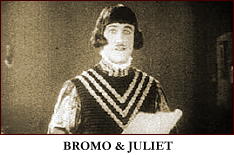
   Not however, by the programmers of film conventions, with Cinevent 40 [Columbus OH, May 2008] taking pride of place for its annual screening of selected comedies. Three of his shorts opened the Sunday evening program,with “Bromo and Juliet” (1926) one of his best, followed closely by the inspired antics of “Forgotten Sweeties” (1927) and “Movie Night” (1929).

   Charlie was an eternal optimist, striving to be successful in love and in business, and usually failing miserably at both. In “Bromo and Juliet,” directed by Leo McCarey, Charley is starring in an amateur production of Shakespeare (and just to see him, with his spindly legs in tights, is enough to justify the price of admission).

   He’s undercut by his fiance’s father, who has a weakness for the bottle, and constantly thwarted by Oliver Hardy as a taxi driver who just wants to get paid for his services. When the hapless Charley finally gets onstage, his histrionics catch the audience’s fancy, and his every misadventure feeds their delighted appreciation.
CHARLEY CHASE

    “Forgotten Sweeties,” directed by James Parrott (Charley’s younger brother), deals with a classic Chase situation, the husband who’s suspected by his wife of cheating on her with an attractive neighbor.

    It’s all a comedy of misunderstanding, but the misunderstandings result in some perilous marital moments for Charley, before it’s all resolved happily, if messily.

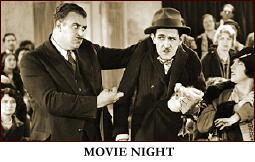
   The final short, “Movie Night,” with a story by Leo McCarey and directed by Lewis Foster and an uncredited James Parrott, has Charley, his wife and two kids (with the older played by the inimitable Spec O’Donnell) set off for an evening at the movies, where chaos eventually ensues.

   This reinforced my long-time conviction that the only place to sit in a movie theater is on the aisle.
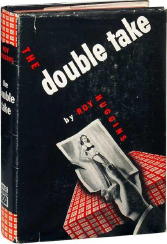
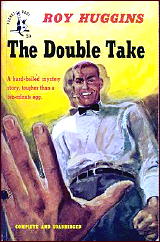
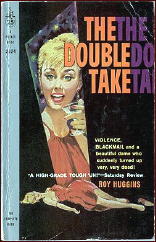
ROY HUGGINS The Double Take

THE DOUBLE TAKE – Roy Huggins. William Morrow & Co., hardcover, 1946. Hardcover reprint: Detective Book Club, 3-in-1 edition, January 1946. Pocket 524, paperback, June 1948; Pocket 2524, 2nd printing, 1959. Basis for the film I Love Trouble, 1947, reviewed here.

   Surprisingly enough, this is the only novel featuring PI Stu Bailey that Roy Huggins wrote. (The 1959 paperback 77 Sunset Strip was made up of three previously published novelettes, and it’s obvious that it came out only after the TV show became a hit.)

   I say “surprisingly” because I didn’t realize it myself until I just looked it up in Hubin’s book. Huggins wrote two other novels, but neither one has Stu Bailey as a character in it. And yet, because of the TV show, Stu Bailey still might be one of the country’s more famous private eyes.

ROY HUGGINS The Double Take

   The book is a retread of Chandler territory, though, while the Stu Bailey in the TV series was a much more “hip” character, light and breezy. The book is a murky, dark and drizzly sort of affair, complete with witty similes, spread like fertilizer, two or three to a page, and the ground it covers is a long way from the glitzy world of Hollywood and Sunset Strip. (Not that any of the above is a bad thing!)

   In the case covered by The Double Take, Bailey is hired to find out what secret lies in the past of the wife of a worried husband, a secret so dangerous she could be blackmailed about it. The deeper he digs, however, the more bewildering the trail becomes. She was a stripper at one time, he finds out, and then she may (or may not) have headed off to Brazil.

ROY HUGGINS The Double Take

   Then when someone who knew her back then dies, then someone who also knew her no longer recognizes her, the trail becomes even more confused. Except to veteran detective story readers, of course, who should be counted on to put two and two together just a little more quickly than Stu Bailey.

   The end result is a book that is interesting, but one that never becomes enthralling. Huggins soon left the world of book fiction, going into TV almost exclusively, writing, producing and directing.

   It’s hard to say he made the wrong choice. Speaking for myself, though, I think it would have been nice if there had been a second full-length appearance by the Stu Bailey who appears in this book. Or more!

Rating: B plus.

— This review was intended to appear in Mystery*File 35. It was first published in Deadly Pleasures, Vol. 1, No. 3, Fall 1993 (slightly revised).


[UPDATE] 10-05-11.   If you were to go read the review of the movie I wrote, and you should, of course, you may be amused as much as I was when I said that I thought I’d read the book, but after watching the movie, I decided I hadn’t! Didn’t recognize it at all.

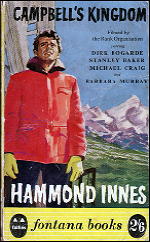
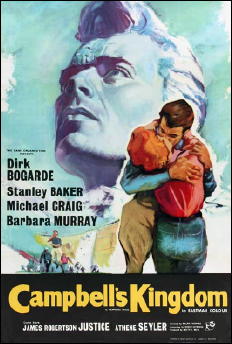
CAMPBELL'S KINGDOM

CAMPBELL’S KINGDOM. J. Arthur Rank, UK, 1957. Dirk Bogarde, Stanley Baker, Michael Craig, Barbara Murray, James Robertson Justice, Sid James. Based on the novel by Hammond Innes. Director: Ralph Thomas.

   I watched this movie about a week ago, without planning to write up any comments about it. Just too ordinary, I thought. But thinking about it again this afternoon, it occurred to me that calling a film ordinary is a review, of sorts. All I have to do is expand upon it, and so here I am.

   Not knowing enough about British film-making to say for sure, I don’t believe they ever went in for producing westerns. (Western novels are another matter. There are more westerns published in the UK today than there are in the US.) Campbell’s Kingdom is, I think, an exception. It takes place in Canada, though, somewhere in the western Rockies, so maybe it’s an almost-but-not-quite sort of exception.

CAMPBELL'S KINGDOM

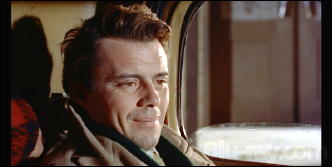
   Either way, the star of the film, Dirk Bogarde is no Alan Ladd (the closest American equivalent I have come up with) but as Bruce Campbell, the sickly heir who’s comes from Britain to claim his property high up in the mountains, he’s entirely believable. His grandfather died convinced there was oil on the land, and despite plans by the locals to build a dam and flood the property in the process, Bogarde refuses to sell and knuckles down to build a well to prove his grandfather was right.

   Of course there also is crooked business at work, with the number one villain being Stanley Baker, the foreman of the dam building project, so while the plot may be predictable, the going is not easy.

CAMPBELL'S KINGDOM

   Bogarde does find a few allies, chief of whom is a girl (Barbara Murray), but with only a few months to live (his doctor’s assessment), romance seems to be all but out of the question.

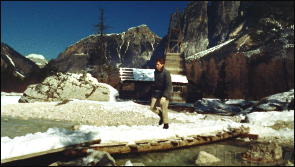
   The color photography is wonderful, and some the hazards of working in the isolated wilderness are shown to great effect (the outdoors scenes were filmed in the Italian Alps). Back in 1957, some of the closing scenes must have been spectacular to see on the screen. But there’s no “oomph” in the plotting to make me want to tell you that you have to go out and buy the just released DVD of this movie.

   Obviously I remember enough of the film to tell you as much as I have here about the film, but my initial assessment remains the same. Ordinary, just ordinary.

CAMPBELL'S KINGDOM

REVIEWED BY BARRY GARDNER:


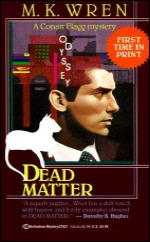
M. K. WREN – Dead Matter. Conan Flagg #7. Ballantine, paperback original, 1993.

M K WREN Conan Flagg

   I thought this series was dead, but after a nine year hiatus, it’s back. Conan Flagg, bookstore owner, private detective, and wealthy man, returns from a trip to his hometown in Oregon to find chaos.

   While he was gone, his store manager has arranged a book signing for a local boy made good, and the bookstore is swarmed. During the signing, a local logger, being a little put out with the author for bedding his wife, threatens him with a chain saw in the store, but is disarmed by Flagg.

   The next day, after a party which Flagg attended, the unpopular fellow is found with is throat ripped out — by a chain saw.

   I liked the Flagg series in its original incarnation. Wren, who has written in several fields, knew how to tell a story, and in Flagg had created a sympathetic if not outstanding character. The books were not designed to make any top 10 lists, but were decent examples of their craft.

   I see no reason to revise any of these judgments for this.

— Reprinted from Ah, Sweet Mysteries #8, July 1993.


    The Conan Flagg series —

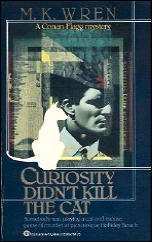
1. Curiosity Didn’t Kill the Cat (1973)

M K WREN Conan Flagg

2. A Multitude of Sins (1975)
3. Oh, Bury Me Not (1976)
4. Nothing’s Certain But Death (1978)
5. Seasons of Death (1981)
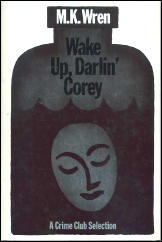
6. Wake Up, Darlin’ Corey (1984)

M K WREN Conan Flagg

7. Dead Matter (1993)
8. King of the Mountain (1994

REVIEWED BY DAN STUMPF:         


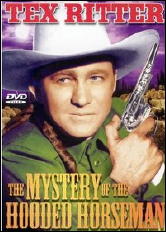
MYSTERY OF THE HOODED HORSEMEN

THE MYSTERY OF THE HOODED HORSEMEN. Grand National, 1937. Tex Ritter, White Flash, Iris Meredith, Horace Murphy, Charles King, Heber Snow, Ray Whitley and the Range Ramblers. Director: Ray Taylor.

   The Mystery of the Hooded Horsemen doesn’t have much Mystery, but it does have a lot of hooded horsemen, charging across the dusty trails of Gower Gulch with commendable energy.

   This is, in fact, a rather ambitious undertaking for a “B” Western, with some vigorous stunting and tricky camerawork in the many Chase scenes.

MYSTERY OF THE HOODED HORSEMEN

   It stars Tex Ritter, so it’s not much on subtlety, and anyone who’s seen more than one of these will spot the Secret Heavy as soon as he looks up from his card game and flashes his oily smile, but director Ray Taylor plays the familiar melody without a trace of contempt, and manages to wrap it up just like it was fresh goods.

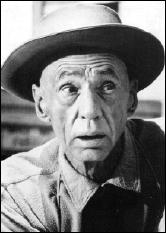
   I should add that Mystery features one of the earliest appearances of that ultimate Cult Actor, Hank Worden, here billed as Heber Snow, and playing a dumb deputy with the disarming quirkiness that would endear him to my generation.

    Editorial Comment:   Not only can this movie be found easily on DVD (see above), it can be seen for free in its entirety (60m) on www.archive.org. (For some reason, the title on the DVD has been subtly changed.)

REVIEWED BY MICHAEL SHONK:


DANGER MOUSE

DANGER MOUSE. Animated. Episodes of five to twenty five minutes each. UK: 1981 through 1992. US: Nickelodeon premiered June 4, 1984. Cosgrove Hall Films. Thames Television. Created by Brian Cosgrove and Mark Hall.   Voice Cast: Danger Mouse (David Jason), Penfold (Terry Scott), Colonel K (Edward Kelsey), Baron Silas Greenback (Edward Kelsey), Stiletto (Brian Trueman), Isambard Sinclair (David Jason), Nero (David Jason’s voice sped up). Available on DVD.   Recommended: The shorter episodes on YouTube over the longer ones available on Hulu.com and IMDB.com.

DANGER MOUSE

    “He’s the greatest. – He’s fantastic. – Wherever there is danger he’ll be there. – He’s the Ace. – He’s amazing. – He’s the strongest, he’s the quickest, he’s the best! Danger Mouse…” (Theme sung by Sheila Gott.)

    This action hero/spy comedy will appeal to all ages. The animation is limited, cheap, and guilty of reusing too much stock footage, but it also has a visually pleasing look and adds enough visual gags to be forgiven for its shortcomings.

DANGER MOUSE

    The writing is top notch British silly, not unlike Monty Python. Parody and satire is common and not limited to the obvious targets of Bond and John Drake (Danger Man). Bad jokes and silly puns are there as well for the kid in all of us, though I guess children could watch this cartoon as well.

    The character are well defined and funny. The narrator Isambard Sinclair introduces the story, explains things to the audience to keep the action moving, and occasionally asks questions at the end spoofing the narrators of old serials.

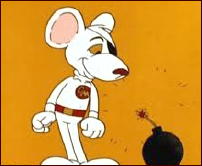
    The good guys are lead by Danger Mouse. DM is a white mouse with an eye patch that goes well with his white jumpsuit that has DM monogrammed over his left breast. He is everything his theme song claims he is and more. His sidekick Penfold is a daft, but loyal hamster, codenamed “Jigsaw” because he always falls to pieces.

DANGER MOUSE

    Colonel K is head of a secret organization and gives Danger Mouse his assignments. There is some question over what animal Colonel K is, a chinchilla or walrus (like it matters).

    The villains are lead by DM’s archenemy Blofeld … oops, I mean … Baron Silas Greenback, the fiendish frog, the terrible toad, whose only wish is to take over the world or kill Danger Mouse so he can take over the world. Filling the role of insane villain’s pet is Nero a fluffy white caterpillar. Stiletto is a crow, an idiot, and the Baron’s top henchman.

DANGER MOUSE

    DM and Penfold live in a red pillar-box near Sherlock Holmes on Baker Street. As any proper spy of that era, Danger Mouse has a special car. The Mark III can do a variety of things including fly.

    The plots the Baron creates to take over the world illustrates the series’ absurdist humor. In “Who Stole the Bagpipes?” bagpipes are sheep-like creatures grazing in Scotland. The Baron rustles ten thousand bagpipes to build a sonic weapon capable of destroying cities.

    “Lord of the Bungle” has the Baron turning elephants into sugar cubes so when heads of state all over the world put the sugar cubes into their tea the elephant will reappear and squash the government leader.

DANGER MOUSE

    My favorite is “The Dream Machine” when Danger Mouse and Pedfold are trapped in the Baron’s dream machine where surreal is reality, the impossible possible, and Penfold’s thoughts turn into visual puns.

    If you are willing to overcome the misguided prejudice that cartoons are just for kids, give this a try. Or find some child to watch it with. Neither of you will regret it.

   SOURCES:

        Wikipedia
        Cosgrove Hall Ate My Brain
        DangerMouse.org

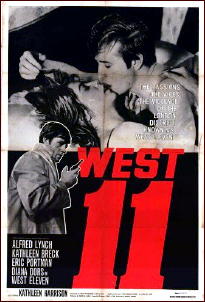
WEST 11. Warner-Pathé, UK, 1963. Alfred Lynch, Kathleen Breck, Eric Portman, Diana Dors, Kathleen Harrison, Finlay Currie. Director: Michael Winner.

   A minor, all-but-forgotten film, one that Leonard Maltin’s book (2009 edition) gives only one and a half stars to, but it’s far better than that. Filmed on location in London’s Notting Hill section, West 11 (named after the postal code) is a true noir film. If you’re ever able to see this film, you’re likely not to forget it for a while.

   That it’s filmed in black-and-white only adds to the mood: rundown post-war apartment complexes, seedy eating establishments and swinging basement level jazz clubs, rain-slicked streets, and members of both sexes searching for love and the meaning of life (with sex on sweat-stained sheets standing in as a poor substitute for companionship).

   The movie is slow in getting going, I admit that (which I’m sure explains Maltin’s use of the word “lumbering” to describe it). One might easily get frustrated in following Joe Beckett (Alfred Lynch) around – Beckett is an emotional cripple stumbling from job to job, from girl to girl (Kathleen Breck, and the slightly older Diana Dors), unable even to love his mother (Kathleen Harrison) – if one were not fully aware of the interest that the old soldier-type Richard Dyce (Eric Portman) has in him.

   The criminous portion of this film is confined to the final 20 minutes – Dyce has an aunt who he believes has lived long enough, and Beckett might be just the person to do something about it – but the slow build-up is worth the wait. And it should be noted that by the time the 60s had rolled around, noirish films like this one were no longer required to have “happy” endings, as most of them in the 40s and 50s needed to do.

Note:   Here’s an amusing two minute clip from YouTube. I think what’s happening is self-explanatory.

WEST 11

JOHN CREASEY Beauty Queen Killer

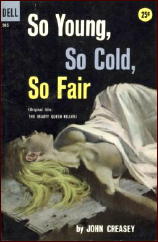
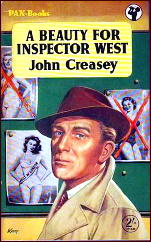
JOHN CREASEY – So Young, So Cold, So Fair. Dell #985, paperback, August 1958. Hardcover editions: Harper & Brothers, US, 1956, as Beauty Queen Killer; UK, Hodder & Stoughton, 1954, as A Beauty for Inspector West. Reprinted several other times in paperback, including Berkley F1095 (1965), and Pan-UK (1956).

   I think I like the British title best, but the one they came up with for the Dell paperback, which is the one I just read, has a certain poetic ring to it. (It comes from the ballad “St. James Infirmary,” if it sounded familiar to you and couldn’t quite place it.)

   I don’t usually read novels with serial killers in them, but this one sort of sneaked up on me, and I’d long since committed myself to it before I realized it.

JOHN CREASEY Beauty Queen Killer

   Being killed, in methodical but not identical fashion – the killer being content to use any method that works – are the local district winners of a beauty contest being sponsored by a London soap company. And when the papers find out about it, their banner headlines make Inspector Roger “Handsome” West wish that maybe he was in another line of work.

   There are a lot of clues to be followed up on, some of them straightforward, some of them contradictory, and it takes all of West’s efforts throughout the book to determine which is which. But this is no mere novel of detection. There are several action scenes every so often designed to pump up the reader’s interest, and very effectively, too.

JOHN CREASEY Beauty Queen Killer

   Complicating matters somewhat is that West has been assigned an assistant copper he doesn’t particularly like, but since it happens that DI Turnbull saves West’s life early on in the tale, he’s forced to keep him on the case. A roving eye for the ladies is one of Turnbull’s flaws, and in this case, it’s one of the beauty queens who attracts his immediate attention, which makes her present two suitors, both suspects, as it turns out, rather annoyed. (It is hard to say which one over the other.)

   So this is the story that Creasey does a fine job with, although in somehwat of a heavy-handed fashion. As a detective story, it is rather a straightforward one. It is difficult to say how he manages to keep his cards so well hidden that the killer comes as a surprise, and yet an obvious one, but he does.

   Or at least I think so. Now that the book is finished, I might want to go back and see if it all holds together. But I won’t, simply because maybe it won’t. Hold together, that is. I’m going to leave well enough alone.

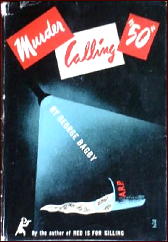
GEORGE BAGBY – Murder Calling “50”. Doubleday/Crime Club, hardcover, 1942.

   History books are fine, but they don’t tell the whole story. The same pieces of personal history may occur for millions of people everyday, small events that affect their lives many times over, but they hardly ever make it into the history books, and if they do, you’ll only find them in the footnotes. By the time the children of a generation or two later come along, pieces of their parents’ lives are gone, totally forgotten.

GEORGE BAGBY Murder Calling 50

   Personal diaries and mystery stories, that’s the only way some important things will ever be remembered. A case in point: this book (of course), which centers about the air raid drills and blackouts that took place in New York City (and probably all up and down the East Coast; California was looking in another direction).

   If you didn’t live through the days themselves, who remembers anything about them today? Even the title of this book has no significance any more. Air raid wardens and civil defense personnel had to spread the word when a drill (or actual attack) was coming, and they did it by phone and by code; everyone who was called was required to spread the word to three or four others. “50” is the code for “man your posts.” “52” is the code for “all clear.”

   Who knows this today? Who remembers the routine of blackout curtains, heading for designated apartments in a building until the all-clear was sounded, or even buckets of sand placed on every floor?

   Or who would know, from a chapter in a history book, how uncertain and confusing the times were in those days? Even with CNN on the job today, rumors and speculation ran rampant during the Persian Gulf War. What must it have been like without?

   And of course, all this makes an ideal background for a murder mystery, one that takes place in Bagby’s building while his friend Inspector Schmidt (he of the always aching feet) is visiting. There is a dead man, of course; his wealthy patron; a young couple in love but not quite sure of each other; a Russian princess (and faithful milkman); a playgirl and a Broadway sharpster.

   All of the above are characters in Murder Calling “50”, along with flights and flights of stairs in the dark, dog leashes, strange noises, family jewels, elevator boys and the above-mentioned buckets of sand (handy for showing footprints in bathrooms, if nothing else).

   You probably know from this if this is the type of book for you, but if you like George Bagby/Aaron Marc Stein’s work (as I do), I should also tell you that I didn’t find it one of his better ones.

   For technical reasons, that is. The question not answered concerning the bombshell Schmitty reveals on p.257 is “When did he know, and how did he find out?” I suspect it was the mysterious one-sided phone conversation he had on p.213, but I don’t think we’ll ever know for sure.

   There were a couple of other questions left unanswered at story’s end. I won’t go into any of these — they’re relatively minor, and they have no particular effect on events, and then only before the murder, not afterward. But it would have taken Bagby only a couple of extra pages, perhaps, to fill us in, and I realize that I’m a little late in saying that I wish he had.

Rating:   C Plus.

— This review was intended to appear in Mystery*File 35. It was first published in Deadly Pleasures, Vol. 1, No. 3, Fall 1993 (slightly revised).


REVIEWED BY WALTER ALBERT:         


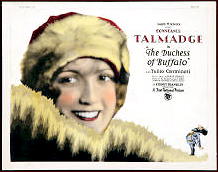
THE DUCHESS OF BUFFALO. First National Pictures, 1926. Constance Talmadge, Tullio Carminati, Edward Martindale, Rose Dione, Chester Conklin. Screenplay by Hans Kraly based on the play Sybil by Max Bordy and Franz Martos. Director: Sidney Franklin. Shown at Cinevent 40, Columbus OH, May 2008.

THE DUCHESS OF BUFFALO 1926

   The beautiful Constance Talmadge plays Marian Duncan, an American dancer who’s touring Russia and leaving broken hearts in her wake. She’s fallen in love with a young lieutenant (Tullio Carminati) but she’s caught the attention of an aging roué (Edward Martindale), a Grand Duke who’s also the commanding officer of the hapless lieutenant.

   This is a tightly constructed romantic comedy, highlighted by a lengthy climax in which the lieutenant, Marion, the Grand Duke, and the Grand Duchess play an elaborate game of musical chairs in a hotel suite, a classic drawing room comedy situation that brings this witty play to a resolution that pleases everyone except, perhaps, the Grand Duke.

« Previous PageNext Page »