Reviews


REVIEWED BY WALTER ALBERT:         


LORRAINE OF THE JUNGLE

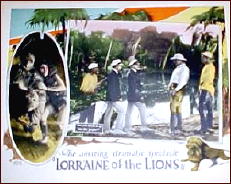
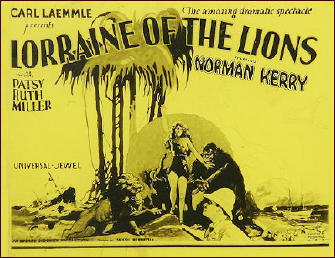
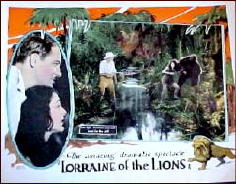
LORRAINE OF THE LIONS. Universal, 1925. Norman Kerry, Patsy Ruth Miller, Fred Humes, Doreen Turner, Harry Todd, Philo McCullugh, Joseph J. Dowling.

Scenario by Isadore Bernstein & Carl Krusada; screenplay by Isadore Bernstein. Director: Carl Krusada. Shown at Cinevent 42, Columbus OH, May 2010.

   Herewith a feminist Tarzan ripoff that I wouldn’t have missed for anything other than a screening of the sole surviving print of London After Midnight.

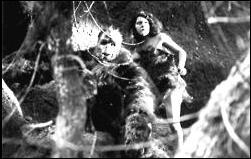
   After a storm demolishes the ship bringing Lorraine (Patsy Ruth Miller), her parents, and their jungle circus back from an Australian tour, Lorraine is washed up on a desert island, where she is raised by one of the surviving animals, a gorilla named “Bimi” (played by Fred Humes).

LORRAINE OF THE JUNGLE

   Years later, her wealthy grandfather; who’s been searching for survivors, enlists the aid of an itinerant psychic (Norman Kerry) who leads a rescue party to the island, returning the initially reluctant Lorraine, along with Bimi, to civilization, represented by her grandfather’s palatial San Francisco mansion.

   The print was excellent, and even though I kept telling myself that this was pure, unadulterated schlock, the kid in me didn’t believe a word of it.

LORRAINE OF THE JUNGLE

   I would give this an unconditional recommendation for the junior set if it were not for an unfortunate plot turn that involved Bimi and cast a pall over the traditional happy ending.

   Would Tarzan have treated Kala the way Lorraine treated Bimi? I think not.

   I was also bothered by the fact that Kerry and the lead villain both sported the same pencil-thin moustache, were slender in build, and tended to wear what appeared to be the same grey suit.

   Well, what do you expect of a film in which the only real emotional resonance comes from a man in a gorilla suit?

LORRAINE OF THE JUNGLE

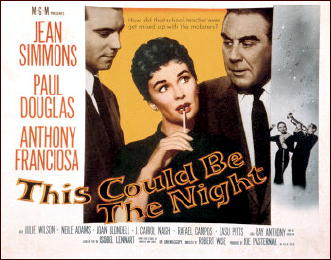
THIS COULD BE THE NIGHT Jean Simmons

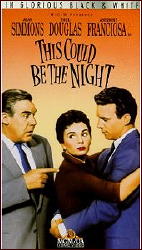
THIS COULD BE THE NIGHT. MGM, 1957. Jean Simmons, Paul Douglas, Anthony Franciosa, Julie Wilson, Neile Adams, Joan Blondell, Ray Anthony & His Orchestra. Screenplay: Isobel Lennart; based on short stories by Cornelia Baird Gross. Director: Robert Wise.

   Why, one wonders, did they film this charming comedy/musical in CinemaScope but shoot it in black and white? Anytime I can see Jean Simmons in color, I’d jump at the chance, but that’s me. And black and white, too, if that’s the only chance I get.

   I may be wrong about this, but I recall reading somewhere that This Could Be the Night was the last MGM musical to be filmed in black and white, and if so, it’s one fact it should be noted for. Another such fact, and this one I’m sure of, is that the movie marks the film debut of Tony Franciosa, a handsome as well as talented actor (in my opinion) whose charm seemed to show up more on TV than it did on the large screen – not that he became a huge star there, either.

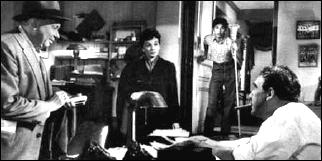
   He plays the co-owner of a New York City nightclub where Jean Simmons, a schoolteacher in the day, comes to work as a secretary at night. The other owner, the older one, is Paul Douglas, a gruff sort of guy who may have been a gangster in his day, takes a shine to her, while in the case of Tony Armatti (Franciosa), it’s dislike at first sight.

THIS COULD BE THE NIGHT Jean Simmons

   In the case of Anne Leeds (that’s Jean Simmons), nicknamed Baby almost immediately by the all of the dancers and staff as well as the two owners, it is a case of why should a recent graduate from Smith College (I hope I remember that correctly) find life in a nightclub so exciting? She is a virgin, as everyone wonders right off, although the word is never used (greenhorn, anyone? “nice girl”?) but no one (naturally) dares ask until the curvaceous singer Ivy Corlane (Julie Wilson’s character) does.

   She reports back: “No hits, no runs, no errors.”

   And of course Baby takes over the place, teaching the striptease dancer how to win a cooking contest and win a new stove, for example, and helping a busboy pass an algebra test so his father will allow him to change his name.

THIS COULD BE THE NIGHT Jean Simmons

   You also realize that in movies like this, what dislike at first sight eventually turns into, which of course complicates things. (Follow the link to a short but critical clip found on YouTube.)

   Misunderstandings ensue, Baby quits her job, and it’s all great fun. The ending is wrapped up all too quickly, but otherwise I found this admittedly shallow if not completely tall tale of a film rather charming, as I said in my opening remarks, and I shall repeat the word now.

   Even if as a former math teacher I have to point out that it’s cheating to have someone else do your algebra problems for you.

THIS COULD BE THE NIGHT Jean Simmons

Reviewed by MIKE GROST:

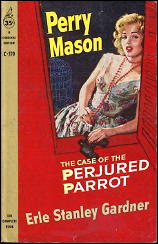
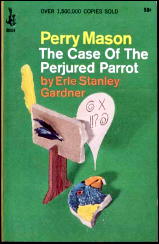
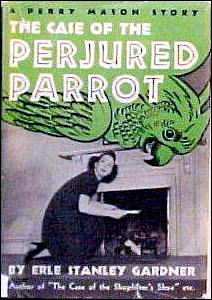
ERLE STANLEY GARDNER TCOT Perjured Parrot

ERLE STANLEY GARDNER – The Case of the Perjured Parrot. William Morrow & Co., hardcover, 1939. Pocket #378; 1st printing, August 1947. Reprinted many times, in both hardcover and soft.

   Gardner wrote a series of Western short tales set in desert locales for Argosy magazine (1930-1934). Some of these were collected in Whispering Sands (1981). “Law of the Rope” (1933) and “Carved in Sand” (1933) mix mystery puzzle plot elements, with the sleuth’s reconstruction of events during a crime by tracking trails left in the desert. This sort of reading of physical trails and evidence at a crime scene goes back to Gaboriau in mystery fiction.

ERLE STANLEY GARDNER TCOT Perjured Parrot

   The Case of the Perjured Parrot (1939) is a Perry Mason tale, set not in the desert, but in a mountain forest. But it has another hermit-like nature-lover, like several of the desert tales, and an emphasis on reading clues from a murder scene to reconstruct a crime.

   These clues are indoors at a fishing cabin, not outside, however, making a further difference from the desert tales. Some of this detection is done not by Perry Mason, but by a country sheriff whose good at “reading trail.”

   The long opening (Chapters 1-5) tells a pleasantly elaborate tale, with a great flow of story and several nice twists and turns. Gardner is especially good at spinning out plot.

ERLE STANLEY GARDNER TCOT Perjured Parrot

   The solution (Chapters 12-14) is none too surprising, and the novel does not excel therefore as a puzzle plot mystery. Still, the solution’s twists are decent, and continue both the deductions from crime scene clues and the book’s pleasing flood of story.

   The Case of the Perjured Parrot consists of one long murder investigation, of a single murder. It is more unified than many Gardner books. There is no preliminary mystery subplot in the opening chapters either: Perry Mason starts investigating the murder in the first chapter. Perry works less to defend a single client in this tale, and more purely as a detective, as well.

    The Case of the Perjured Parrot, like the desert-set The Case of the Drowsy Mosquito, has a bit of high technology in it. Gardner perhaps had some artistic association between nature settings and technology, in his story-creation process.

   Recommended.

— Very slightly revised from A Guide to Classic Mystery and Detection, by Michael E. Grost, with permission.


ERLE STANLEY GARDNER TCOT Perjured Parrot

Reviewed by DAVID L. VINEYARD:         


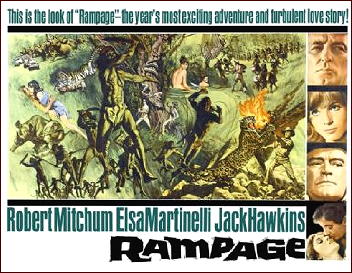
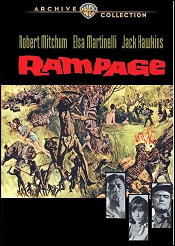
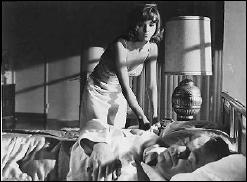
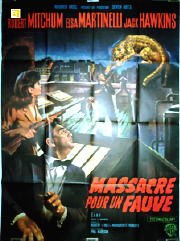
RAMPAGE. Seven Arts/Warner Brothers, 1963. Robert Mitchum, Elsa Martinelli, Jack Hawkins, Sabu. Screenplay: Robert Holt & Marguerite Roberts, based on the novel by Alan Caillou. Director: Phil Karlson.

    Anna (Elsa Martinelli) mistress of hunter Otto Abbott (Jack Hawkins) : What of the hunter, Otto? Is the hunter only satisfied when he makes of his prey a trophy, a thing to possess?
RAMPAGE Robert Mitchum

    Harry Stanton (Robert Mitchum) is the world’s greatest animal trapper. Otto Abbott is the world’s greatest hunter. The Munich Zoo has hired the two of them to go on Shikar (safari) in Malaya to bring back two tigers, and the prize of the expedition … the Enchantress, a legendary leopard with many kills to her name.   [NOTE: See Comment #1.]

    Harry: Anything can happen on Shikar. Some things you plan, some things you don’t.

   From the first, the laid back Harry is intrigued and repulsed by Otto Abbott. The charming German lives for the kill and for acquisition of trophies — including his beautiful young mistress Anna (Elsa Martinelli), who he displays her as another of his trophies.

    Anna is much younger than Otto. He took her out of an orphanage when she was only fourteen, and he takes some pride in her lovers, her faceless lovers, but Harry is something different — Harry promises to have a face.

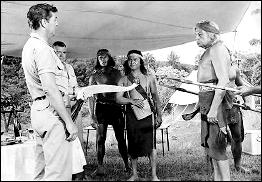
   Once in Malaya Otto finds himself playing second fiddle to Harry and he doesn’t like it. The local chief doesn’t like his arrogant ways, and Anna begins to see Harry more and more as a man with a face.
RAMPAGE Robert Mitchum

   They capture the first two tigers easily, but Otto alienates the chief and they lose the help of the locals so Harry has to trap the Enchantress with only the help of his trackers led by Sabu (in his next to last film).

   By the time Harry traps the Enchantress in a native temple Anna is in love with him and Otto has faced both his mortality and his courage — broken without a gun to back it up. Otto’s world has been turned upside down and Anna is planning to leave him. Worst of all is Anna’s pity.

    Otto: I had a talent for killing. Now it’s gone. Abbott the hunter is finished. What of Abbott the man?

   The train reaches Munich and the Enchantress escapes:

    Otto: What was it you said about the law in the jungle? Survival wasn’t it? Well, let’s see you survive.
RAMPAGE Robert Mitchum

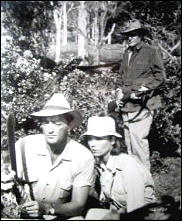
   Now Harry and Anna with the Munich police as beaters must stalk the rooftops of the city for the killer cat while Otto hunts them.

   Rampage is a fine old fashioned adventure film based on a novel by adventure writer Alan Caillou. Caillou, in addition to writing such books as Journey to Orassia, Assault on Agathon, and the “Cabot Cain” and “Col. Tobin” series, was a busy character actor whose extensive career included roles in too many television series to count and playing Inspector Lestrade in the 1972 made-for-television The Hound of the Baskervilles and uncredited in The List of Adrian Messenger (Inspector Seymour) and Journey to the Center of the Earth (the Rector). He was a regular on the science fiction comedy series Quark as “the Head” and appeared in the mini series Centennial, and as Fergus in four episodes of My Three Sons.

   Phil Karlson had a long and varied career, directing everything from Kane Richmond as The Shadow to Dean Martin as Matt Helm, but he also helmed fine adventure films like Rampage and the classic film noir Kansas City Confidential.
RAMPAGE Robert Mitchum

   Rampage also benefits from a terrific film score by Elmer Bernstein that ably enhances the action and mood and a great song written with Mack David. That and Karlson’s direction, a first rate cast, and literate script raise it far above the simple adventure film it actually is.

   The film ends memorably on an apartment rooftop with Harry trapped between the maddened Enchantress and murderous Otto with a gun.

    Otto: I should have killed you when I had the chance.

   This kind of film may seem old hat compared to today’s kinetic CGI ridden action films, but it is nice to watch it and notice the care taken to develop character and relationships.
RAMPAGE Robert Mitchum

   The three leads, and even Sabu and his wife and the old chief are deeper and more rounded than many of their contemporaries today in a similar type of film. It’s that level of writing and direction that give this film a little something missing in many modern films.

   The more leisurely style allows the actors room to show a little depth and dimensionality and adds to the tension so when the action does occur it is explosive.

   In short, it’s a movie and not a live action cartoon. Nothing wrong with live action cartoons, but films like Dark Knight, Inception, the Bourne films, and the Daniel Craig Bond’s show that modern audiences can appreciate the deeper characterization and more rounded characters.

   Rampage is a slick smart adventure film that will leave you well satisfied, and what more can you want from an adventure movie? It’s an old fashioned popcorn movie. Get the microwave ready, heat up the butter, and stock up on Junior Mints, this is old time movie making the way it used to be done with style and genuine storytelling skill.

   At the time it was just another good film, but now it is a reminder of the skills once common in movie making.
RAMPAGE Robert Mitchum

A 1001 MIDNIGHTS Review
by Bill Pronzini:


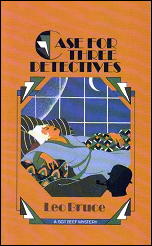
LEO BRUCE – Case for Three Detectives. Stokes, US, hardcover, 1937. Hardcover reprint: Academy Chicago, October 1980; trade paperback, 1985. British edition: Geoffrey Bles, hardcover, 1936.

   Case for Three Detectives is at once a locked room mystery worthy of John Dickson Carr and an affectionate spoof of the Golden Age detectives created by Sayers, Christie, and Chesterton.

LEO BRUCE Case for Three Detectives

   When Mary Thurston is found in her bedroom, dead of a slashed throat, during a weekend party at her Sussex country house, it seems to all concerned an impossible, almost supernatural crime:

   The bedroom door was double-bolted from the inside; there are no secret passages or other such claptrap; the only windows provide no means of entrance or exit; and the knife that did the job is found outside the house.

   The following morning, three of “those indefatigably brilliant private investigators who seem to be always handy when a murder has been committed” begin to arrive. The first is Lord Simon Plimsoll (Lord Peter Wimsey): “… the length of his chin, like most other things about him, was excessive,” the narrator, Townsend, observes.

   The second is the Frenchman Amer Picon (Hercule Poirot): “His physique was frail, and topped by a large egg-shaped head, a head so much and so often egg-shaped that I was surprised to find a nose and mouth in it at all, but half-expected its white surface to break and release a chick.”

   And the third is Monsignor Smith (Father Brown), “a small human pudding.” The three famous sleuths sniff around, unearth various clues, and arrive at separate (and elaborate) conclusions, each accusing a different member of the house party as Mary Thurston’s slayer.

   But of course none of them is right. The real solution is provided by Sergeant Beef of the local constabulary, “a big red-faced man of forty-eight or fifty, with a straggling ginger moustache, and a look of rather beery benevolence.”

   Along the way there is a good deal of gentle humor and some sharp observations on the methods of Wimsey, Poirot, and Father Brown. The prose is consistently above average, and the solution to the locked room murder is both simple and satisfying.

   Sergeant Beef is featured in seven other novels by Leo Bruce (a pseudonym of novelist, playwright, poet, and scholar Rupert Croft-Cooke), most of which have been reissued here by Academy Chicago in trade paperback. Among them are Case Without a Corpse (1937), Case with Four Clowns (1939), and Case with Ropes and Rings (1940). Each is likewise ingeniously plotted and diverting.

         ———
   Reprinted with permission from 1001 Midnights, edited by Bill Pronzini & Marcia Muller and published by The Battered Silicon Dispatch Box, 2007.   Copyright © 1986, 2007 by the Pronzini-Muller Family Trust.

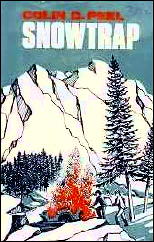
COLIN D. PEEL – Snowtrap. Doubleday Crime Club, US, hardcover, 1985. Hardcover reprint: Detective Book Club, 3-in-1 edition, no date. No paperback edition. First published in the UK: Robert Hale, hardcover, 1981.

COLIN D. PEEL

   A New Zealander by choice and an Englishman by birth, Colin Peel has written at least 15 spy/adventure thrillers since 1973. Of these, this is the only one I’ve read. And if it weren’t the third in this particular volume of a Detective Book Club three-in-one, it might have been a while before the opportunity arose again — of Peel’s sizable output, only two of his novels have been published in the US in paperback (neither one this one).

   I say this even though I once upon a time took it upon myself to collect all of the hardcover Doubleday Crime Club mysteries. That was a long time ago, and I probably had a copy at one time, but if I still do, I am embarrassed to say that I could not locate it if I had to.

   And as long as I am digressing, let me recommend the DBC editions as a source of (usually) inexpensive detective stories, mysteries and spy adventures like this one, books that never came out in paperback, like this one, and which almost always provide solid and non-negotiable amounts of entertainment, like this one.

   And sometimes even more, as the Mignon Warner book (Speak No Evil) reviewed here not so long ago proves, and the one by H. Paul Jeffers (Murder on Mike) as well. That this one’s the lesser of the three does not mean it’s not worth reading. Far from it!

   But as far as spy thrillers go, it’s short — only about 190 pages of medium to large-sized print — and even though former military flyer John Vega might have been a character worthy of further (um) characterization, the book’s simply too short to be more than event-oriented.

   Vega and Lynne Morrow, the girl (of course) who gets him involved with activities well over his head, are the only people in the story who are more than shadows, and if they were to step sideways, you probably wouldn’t see either one of them either.

COLIN D. PEEL

   It starts with Vega hijacking a Mirage jet at an Australian airport, bombing a nearby uranium mine, and blasting two freighters out of the open sea. It’s one heck of an opening act, that’s for sure, and the twist that quickly snaps back at him is a doozie as well.

   What the story needs, and doesn’t quite get, is a finale that’s worthy of these spectacular attention-grabbing devices. Restricted, I’m sure, by the limitations in wordage, set by the markets he was writing for, Peel does his best, but even in 1981 the ending’s one that had been done before, and with the characters so indifferently involved up to then, he simply comes up short, gasping and (figuratively) out of breath.

   When you’re competing in Ian Fleming territory, in other words, as an author, you can’t just let it slip away at the end.

— August 2003

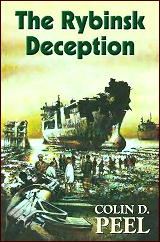
[UPDATE] 09-16-10. A better count of Colin Peel’s novels appears to be in the two dozen or so range, including two written under two different pen names. I have not yet determined if all are criminous, a category that includes spy and espionage fiction, but the good news is that as of last year, the author was still writing: The Rybinsk Deception (as seen above) came out in 2009.

REVIEWED BY BARRY GARDNER:


FRANK C. STRUNK Jordan

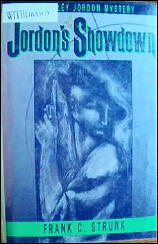
  FRANK C. STRUNK – Jordan’s Showdown. Berkley Jordan #2; Walker, hardcover, 1993.

   This is the second in a series set in Kentucky coal-mining country in the Depression era. I missed the first, Jordan’s Wager (Walker, 1991).

   Berkley Jordan is about 50, and after being defeated in a bid for the Sheriff’s office is working for a lady who runs a poolroom and gambling house. He broke up with his true love after events in the first book, and is feeling a bit down about it.

   The book opens with a hired assassin shooting a miner on his front porch. We don’t know who, or why. The stage is quickly set as we learn that the union is coming to the mining town where Jordan lives, or at least the miners hope it is.

   Jordan is determined to stay neutral, but it’s proving hard. Not only are the miners pressuring him, but the owner of the mining town calls him in and asks him to help in avoiding a possible bloodbath. Jordan remains stubborn, but then the assassin kills again. This time the victim is close to Jordan, and he can remain aloof no longer.

FRANK C. STRUNK Jordan

   This is both a regional and historical crime novel (not really a mystery) and Strunk handles both aspects well, evoking the atmosphere of both time and place. He switches viewpoints among Jordan, the killer, and the mine owners, and moves the story along effectively. Union boss John L. Lewis and Kentucky Lieutenant Governor “Happy” Chandler (baseball fans will remember him) make appearances toward the end.

   As I said, it really isn’t a mystery; we know who and why long before the end. It is, however, a well done story with believable characters and an appealing lead. I enjoyed it, and I’d like to read more of Strunk.

— Reprinted from Ah, Sweet Mysteries #10, November 1993.


Bibliographic Note:   Unfortunately there were no further appearances of Berkley Jordan, only the two books and that was all. Frank C. Strunk did write another novel, though, one that appears in the Revised Crime Fiction IV, and that’s Throwback (Harper, 1996). It also takes place in rural Appalachia, but in the present day. An interview with the author can be found here.

IT IS PURELY MY OPINION
Reviews by L. J. Roberts


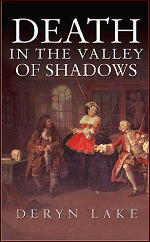
DERYN LAKE – Death in the Valley of Shadows. Allison & Busby, UK, hardcover, November 2003; softcover: November 2004.

Genre:   Historical mystery. Leading character:   John Rawlings; 9th in series. Setting:   England-Georgian period.

DERYN LAKE Death in the Valley of Shadows

First Sentence:   What a morning it had been.

    Apothecary John Rawlings is surprised when a man, Aidan Fenchurch, runs into his shop asking to be hidden from his former mistress. Once the very unpleasant woman is gone, Fenchurch is pleased to hear John also assists Sir John Fielding, magistrate of Bow Street and asks that John keep a document accusing the woman should he suddenly die.

   Fenchurch is murdered on his doorstep that night but his is only the first of many deaths with each new suspect dying before the killer can be identified by John and Bow Street.

   Ms Lake has a clear and wonderful voice and writes with delightful humour. Her descriptions are so visual, you want to pack and go, yet so filled with background information, such as the scene with the salesman for sheaths and cundums, as to make you an informed traveler.

   The details of social behavior and custom, as well as the syntax and cadence of dialogue define the story’s place and time. It is those extra details which enrich the story and add to the experience of reading it.

   John is a character who has grown with the series. No longer a somewhat callow, but talented young man, he is now a mature and very responsible man who has a remarkably understanding wife. I particularly like his honesty to his wife and to himself, as to why he works with Bow Street.

   Joe Jaco, first officer to Sir John Fielding (the Blind Beak), of Bow Street is an intriguing character, and one about whom we learn a bit more with each book. Although the author provides sufficient back story on the principal characters for readers new to the series, I recommend reading the series in order. There is an excellent balance to the story between John’s life with his family and friends, internal musings, medical knowledge and information, and the drama and suspense of the investigation.

   The pacing and flow are very well done, fluctuating between highs and lows. The level of suspense increases to a very dramatic ending. Even the characters comment on the case having a Shakespearean feel in the number of bodies that accumulates. Only toward the end did I begin to suspect the killer.

   I am an admitted fan of this series and this is another very good contribution to it. As I’m reading the series in order, it’s nice to know I’ve many more books ahead.

Rating:   Very Good Plus.

Editorial Comment:   Previously reviewed on this blog was The Mills of God, the first in author Deryn Lake’s contemporary Rev. Nicholas Lawrence/DI Dominic Tennant series.

   There are now 13 adventures in her series of historical mysteries with 18th century apothecary John Rawlings as the leading character. He teams up with Sir John Fielding, London’s famous blind Bow Street magistrate, in most if not all of them. Covers for these can be seen on the Fantastic Fiction website.

THE ARMCHAIR REVIEWER
Allen J. Hubin


TED ALLBEURY The Judas Factor

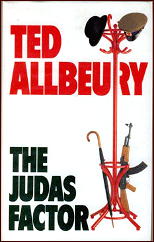
TED ALLBEURY – The Judas Factor. Mysterious Press, US, hardcover, 1987; reprint paperback, 1989. British edition: New English Library, hardcover, 1984.

   Each time I sample Ted Allbeury I am rewarded. The Judas Factor is no exception. Allbeury’s bag is international intrigue, and his view is not all black and white but mostly gray, of men and women doing what they do for their own reasons, with their own ignorances and insights and rationalizations.

   Tad Anders fell out of official favor with his masters in Britain’s S.LS., but they didn’t want to lose him altogether. So they set him up running a disreputable if successful London club, and ask him to take on the odd unofficial job.

   Like extracting a Russian assassin from East Germany. The job is poorly planned and goes awry. In the end, one of the difficulties with unofficial spies is they’re a bit hard to control .

   A solid, spare tale, and Tad and his women are particularly well met.

— From The MYSTERY FANcier, Vol. 11, No. 2, Spring 1989.


    Previously reviewed on this blog:

Shadow of Shadows (by George Kelley)
The Reaper (by Steve Lewis)

THE BACKWARD REVIEWER
William F. Deeck


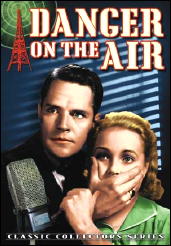
XANTIPPE – Death Catches Up with Mr. Kluck. Doubleday Crime Club, hardcover, 1935. Film: Universal/Crime Club, 1938, as Danger on the Air (with Nan Grey as Christina “Steenie” MacCorkle & Donald Woods as Benjamin Franklin Butts).

XANTIPPE Death Catches Up with Mr. Kluck

   The Mr. Kluck, inventor, owner, and manager of Kluck’s Korjul — “Feeling depressed? Headache? Nervous? Drink Kluck’s Korjul. Lack pep, vitality? How about the sparkle in your eyes? Do you attract the opposite sex? For vim, vitality and vigor, drink Kluck’s Korjul, America’s fastest selling drink. . . ” — is at Radio Forum, Consolidated Broadcasting Company’s new studios, to watch one of his radio programs being produced. Unfortunately, he is a much unloved man, and no one mourns him when he dies in a sponsor’s room.

   Kluck’s death is a complex one, first attributed to a heart attack, then to arsenic, and finally to carbon monoxide poisoning through the ventilating system. Doing the amateur investigating is Benjamin Franklin Butts, with the help of Finny McCorkle, of McCorkle, McCorkle, and Fish, radio productions. Butts has encyclopedic knowledge and Finny writes mystery scripts for radio.

   Xantippe’s view of early radio, its alleged talent, and its programs is delightful and illustrates the saying that the more things change the more they stay the same. Even the footnotes are amusing, as well as being informative. The predictions for what radio might do for good and for harm are especially fascinating.

— From The MYSTERY FANcier, Vol. 11, No. 2, Spring 1989.


Editorial Comments: Bill Deeck did not know, or I assume that he would have mentioned it, but the exotically named Xantippe was the pseudonym of Edith Meiser, 1898-1993, herself the writer and producer of many radio programs, including the long-running Sherlock Holmes series, including the one that starred Basil Rathbone and Nigel Bruce for many years. One online source states that she wrote over 300 radio scripts for the series, far more stories than Sir Arthur did himself!

   Xanthippe (meaning blonde horse in the Greek) was the wife of Socrates and the mother of their three sons. There may be some significance to this.

   A complete listing of the Crime Club movies can be found in this preceding post from not too long ago. Danger on the Air itself has been released on DVD by oldies.com.

« Previous PageNext Page »