Reviews


REVIEWED BY TINA KARELSON:         


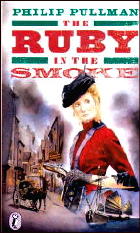
PHILIP PULLMAN The Ruby in the Smoke

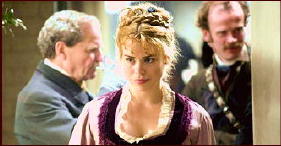
PHILIP PULLMAN – The Ruby in the Smoke: A Sally Lockhart Mystery. Oxford University Press, hardcover, 1985. Reprinted many times, in both hardcover and soft. TV movie: BBC, 2006 (with Billie Piper as Sally).

   First published in the U.K. in 1985, this was published in the U.S. in 2008, after the success of Pullman’s “His Dark Materials” trilogy. It’s more of an adventure story taking place in London, 1852, than a mystery, in the vein of the penny dreadfuls that the character Jim devours.

   In this first book in the series, 16-year-old Sally receives a mysterious note related to the death of her father, a shipping agent who drowned in the South China Sea. As she begins to investigate the note, Sally tumbles headlong into a mystery involving opium, pirates, Chinese secret societies, the seamiest areas of Victorian London, a legendary ruby and the truth about her own identity.

   It’s a quick read, awash in Pullman’s wonderful writing. Here’s the sailor Bedwell describing how the sea looked the night Sally’s father died:
PHILIP PULLMAN The Ruby in the Smoke

    “Our wake and our bowwave were great swirling tracks made up of billions of spots of white light, and all the sea on both sides was full of deep glowing movements — fishes darting through the depths, great shimmering clouds and veils of shadowy color, little surges and whirlpools of light far below — once or twice in your life you get a night like that, and it’s a sight to leave you breathless.”

   Recommended for craft and atmosphere.

    Bibliographic Data:

       The Sally Lockhart series —

    1. The Ruby in the Smoke (1985)
    2. The Shadow in the Plate (1986) aka The Shadow in the North (US)
    3. The Tiger in the Well (1990)
    4. The Tin Princess (1994)

REVIEWED BY GEOFF BRADLEY:         


BLUE MURDER. ITV, UK. Season Five: 7 September to 12 October 2009. Paul Loughran, Nicholas Murchie, Caroline Quentin, Ian Kelsey, Ceallach Spellman, Eden Garrity.

BLUE MURDER

   This series, with Caroline Quentin as D. C. I. Janine Lewis juggling her job and the needs of her children, usually to the detriment of the latter, has combined the occasional good plot with a lot of uninteresting family squabbles.

   This new series (6 one-hour parts, less adverts) was a big improvement with Lewis concentrating on her work and her team, whose deficiencies were previously well to the fore, actually seemed efficient.

   The series dipped a little with a two-part finale when Lewis’s family problems cropped up again and the team took so many liberties with police procedure (or what is shown as police procedure on other programmes) that disbelief had to be firmly suspended.

   Nevertheless this was a series I enjoyed.

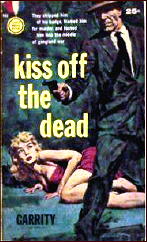
GARRITY – Kiss Off the Dead. Gold Medal #948, pb original, 1960.

   To get the unappealing taste of Brad Latham’s Hook book out of my head, I went to my collection of prime Gold Medal stock and more or less picked this one out at random.

GARRITY David J.

   I’ve read enough of these early paperback novels to be convinced that the booze-babes-and-bullets approach to detective/mystery fiction does not automatically have to mean that it’s a book that I found as disappointing as I did The Gilded Canary.

   To tell you the truth, I was a little worried. Could it be that I was wrong, that my memory had gone bad? After reading this, though, my doubts were gone. I was completely reassured. They just don’t write ’em the way they used to, that’s all there is to it.

   This is the story of Max Carey, an ex-cop who’s gone bad, on the trail of a woman — his wife, as it happens — who’s to blame. She’s a tramp, although he refuses to admit it, even to himself. Just as he finds her — in a smoke-filled bar on the way to Florida — she disappears again, and the very next day (naturally!) her body turns up in the ocean.

   Small-town police officers being what they are, Carey is blamed, and he spends the rest of the book one step ahead of the law — and the mob– desperately trying to find the killer before either one of them finds him. A hat-check girl named Sherry is the only person who’s on his side.

   Not a terrifically original plot, I have to admit, but Garrity’s roughly-hewed writing style saves the day, even to the point of being nearly poetically effective in papering over the cliches. The non-stop action includes the prerequisite bedroom scene, but here at least the camera pulls away before the X-rated warning lights go flashing on.

   The book is filled with as much action as the Warner book, if not more, but what Garrity does that Latham doesn’t is to make you feel it — as nearly a participant as reading a book can do, not as a voyeur.

– From The MYSTERY FANcier, Vol. 6, No. 2, March/April 1982
        (considerably revised)


[UPDATE] 03-10-10. The revisions I just mentioned were designed to make the review stand more on its own, though I think it’s fairly clear that you might want to read the preceding review anyway, just to make the context clearer. I’ve made no changes in what you read now from what my opinion was then.

Bibliographic Data:  [Taken from the Revised Crime Fiction IV, by Allen J. Hubin.]

   GARRITY.   Pseudonym of David J. Gerrity, 1923-1984.

        Kiss Off the Dead (n.) Gold Medal 1960
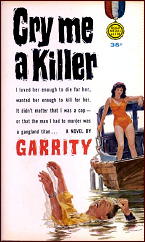
        Cry Me a Killer (n.) Gold Medal 1961

GARRITY David J.

        Dragon Hunt (n.) Signet 1967, as by Dave J. Garrity.   (PI Peter Braid)
        The Hot Mods (n.) Signet 1969, as by Dave J. Garrity.

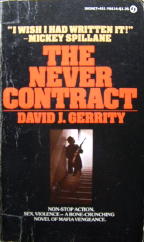
   GERRITY, DAVID J(ames).   Series character: Mafia hit man Frank Cardolini in all.

        The Never Contract (n.) Signet 1975

GARRITY David J.

        The Plastic Man (n.) Signet 1976
        The Numbers Man (n.) Signet 1977

NOTE: Some of Garrity/Gerrity’s books were either dedicated to Mickey Spillane or had a blurb by the latter on the cover (“I wish I had written it!”). They were friends, I believe, or Spillane acted in some way as a sponsor or mentor, but I haven’t tracked down any more specific information than this.

IT’S ABOUT CRIME
by Marvin Lachman

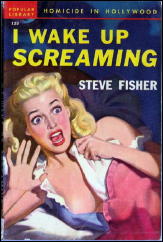
I WAKE UP SCREAMING

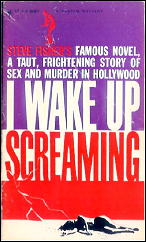
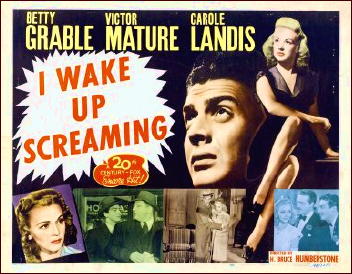
STEVE FISHER – I Wake Up Screaming. Dodd Mead & Co., hardcover, 1941. Paperback reprints: Handi-Book #27, 1944. Popular Library #129, no date stated [1947-48]. Bestseller Mystery B204, digest-sized, 1957. Bantam Books A2145, 1960. Black Lizard, 1988. Vintage, 1991. Film: 20th Century-Fox, 1941.

   Prior to this book, Fisher had written six mystery novels, under three different names, without any great success. For income he depended primarily upon being one of the best and most prolific pulp writers, one willing to write for almost every type of magazine, including Westerns, love stories, adventure, and war.

   After Screaming became a popular film noir from Twentieth Century Fox, despite the unusual casting of Betty Grable, along with Victor Mature and Laird Cregar, Fisher was able to pursue a career as a successful screen and television writer. He wrote dozens of films, including Lady in the Lake and Dead Reckoning. He also wrote hundreds of television scripts, including shows such as McMillan and Wife and Barnaby Jones.

I WAKE UP SCREAMING

   Fisher’s book is a Southern California mystery about a promoter suspected of murdering a starlet. Fisher’s friend and fellow mystery writer, Frank Gruber, once said of him, “Steve was never afraid to put his heart on a printed page,” and that is true of I Wake Up Screaming as he makes us identify with a protagonist on the run from a monomaniacal police detective who is determined to pin the murder on him.

   (Mike Nevins has claimed that the detective, named Cornell, was based in part on Woolrich, who had been a fellow pulp writer with whom Fisher and Gruber were acquainted when all lived and struggled in New York.)

   We get plenty of evidence here that Fisher had learned his pulp lessons well and was able to write crisp, fast-moving prose. We also get glimpses of the love affair Fisher had with Hollywood, one which, fortunately for him, the town’s major industry reciprocated.

— Reprinted from The MYSTERY FANcier, Vol. 10, No. 4, Fall 1988
         (slightly revised).


Editorial Comment:   This book was revised and updated several times over the years. See this earlier post and the comments that follow for some of the details.

I WAKE UP SCREAMING

REVIEWED BY WALTER ALBERT:         


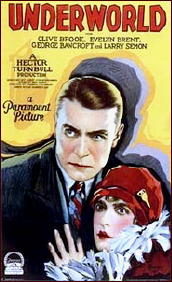
UNDERWORLD George Bancroft

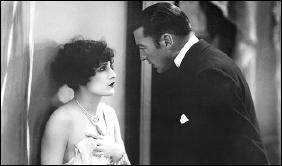
UNDERWORLD. Paramount Pictures, 1927. George Bancroft, Evelyn Brent, Clive Brook, Fred Kohler, Helen Lynch, Larry Semon, Jerry Mandy. Based on a story by Ben Hecht, adapted by Charles Furthmann. Director: Josef von Sternberg, who replaced the fired and uncredited Arthur Rosson.

   The relevation of Cinevent 1979 for me was the silent film classic, Underworld. George Bancroft plays a self-confident gangster lord with a beautiful mistress (Evelyn Brent) and an educated, alcoholic friend (Clive Brook) who try to smooth his rough edges and find themselves drawn to one another in the process.

   The action is blunt and swift, but the genius of this film is in the direction of the actors (“My God, but they had faces then!”) and the superb playing of this unlikely trio, the kind of ensemble performance that also contributed greatly to the success of The Glass Key and all those other melodramas we doted on before television pulped the genre.

   There’s a final shoot-out that makes similar scenes in 1930’s gangster films look like well-laundered exercises in politesse, and the old melodramatic device of the secret passage is revitalized and made a necessary and believable part of the action.

UNDERWORLD George Bancroft

   The camera work is remarkable (Sternberg was making great films long before he began to exploit Dietrich), with details that come from an older theatrical tradition that makes most recent melodramas look like uneducated exercises in bumbling.

   The film was meant to be shown with blue and yellow filters (for night and interior scenes), but this obscured the. photographic detail to such an extent that the projectionist abandoned the attempt after about twenty minutes.

   And anyone who thinks that silent films were primitive should be tied to a chair and forced to watch this and any number of other equally accomplished productions until he admits defeat.

– This review first appeared in The MYSTERY FANcier,
      Vol. 6, No. 2, March/April 1982.

LYLE BRANDT – Justice Gun. Berkley, paperback original; 1st printing, August 2003.

LYLE BRANDT

   Lyle Brandt is another in a long line of pseudonyms for Michael Newton, author of over 170 novels, including many of the men’s adventure “Executioner” series, as by Don Pendleton. This is a western, though, and once you start reading it, it’s one you won’t put down right away.

   The first 60 pages are intense. Gunman Matt Price is found by a migrating black family after being left for dead; is nursed back to a semblance of health; and then becomes the savior in turn when the small wagon is accosted by a gang of redneck outlaws taking exception to the color of the Carver family’s skin.

   Refuge is found in the town of New Harmony, founded on the principles of equality for all. The doctor, who has her work cut out for her in saving Price’s skin again, is indeed a woman, which makes for two largely unlikely happenings (historically speaking) in one short amount of time.

   New Harmony is, as it turns out, under attack, and Matt Price may or may not be their protector and their champion. Unevenly told — the middle section sags somewhat — and rather linear in terms of plot, but the story’s ending has all the gunsmoke and action you could ever hope for.

— Reprinted from Durn Tootin’ #3, October 2003.

Bibliographic Data Justice Gun is the second in a series of western paperbacks labeled “The Gun Series.” Matt Price, I believe, is the leading character in all of them.

    The Gun (2002)

LYLE BRANDT

    Justice Gun (2003)
    Vengeance Gun (2004)

LYLE BRANDT

    Rebel Gun (2005)
    Bounty Gun (2006)

   Also by Newton as by Lyle Brandt are the books in his “Lawman” series, the lawman referred to being US Deputy Marshal Slade:

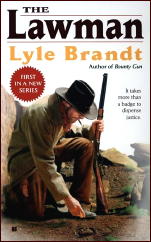
    The Lawman (2007)

LYLE BRANDT

    Slade’s Law (2008)
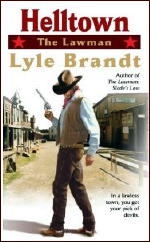
    Helltown (2008)

LYLE BRANDT

    Massacre Trail (2009)
    Hanging Judge (2009)
    Manhunt (2010)

A TV Review by MIKE TOONEY:


HITCHCOCK HOUR Black Curtain

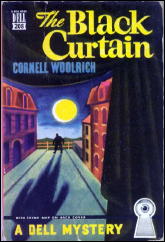
“The Black Curtain.” An episode of The Alfred Hitchcock Hour (Season 1, Episode 9). First air date: 15 November 1962. Richard Basehart, Lola Albright, Harold J. Stone, Gail Kobe, James Farentino, Lee Philips, Celia Lovsky. Teleplay: Joel Murcott. Based on the novel The Black Curtain (1941) by Cornell Woolrich. Director: Sydney Pollack.

   During the course of getting mugged by some street punks, Phillip Townsend (Richard Basehart) gets conked on the noggin; when he comes to, he has an entirely different identity. What he’s forgotten is his criminal past, which soon catches up with him when a man tries to kill him in the park ….

   You can hardly go wrong with a Cornell Woolrich story; just about everything he wrote had cinematic potential. This particular narrative had already been dramatized on radio and even filmed as Street of Chance (1942) with Burgess Meredith and Claire Trevor, except a building had to fall on the protagonist to induce his personality change.

   Richard Basehart made quite a splash with his psycho cop killer in He Walked by Night (1948). He also appeared in Tension (1949), Fourteen Hours (1951), The House on Telegraph Hill (1951), The Intimate Stranger (1956), Portrait in Black (1960), The Paradine Case (1962, live TV), The Satan Bug (1965), 110 episodes of Voyage to the Bottom of the Sea (1964-68), and The Great Bank Hoax (1978).

   Lola Albright appeared in The Good Humor Man (1950), The Killer That Stalked New York (1950), five appearances on Burke’s Law, one episode each of McMillan & Wife and Columbo, and 81 episodes of Peter Gunn (1958-61) as Pete’s girlfriend Edie.

Hulu:   http://www.imdb.com/video/hulu/vi836239385/

REVIEWED BY DAN STUMPF:         


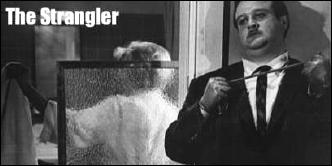
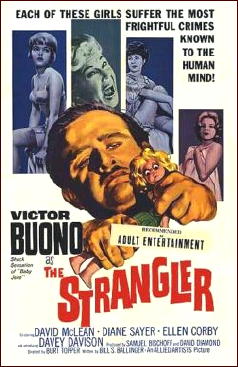
THE STRANGLER. Allied Artists, 1964. Victor Buono, David McLean, Diane Sayer, Davey Davison, Baynes Barron, Ellen Corby, Jeanne Bates. Screenplay: Bill S. Ballinger. Director: Burt Topper.

THE STRANGER Victor Buono

   Very much in the Zugsmith mold, but in fact directed by one Burt Topper, The Strangler is a wonderfully perverse and to-the-point bit of sickness put out when no one was looking.

   Victor Buono stars delightfully as an emotionally-constipated mama’s boy who gets off (and I mean that literally; the close-ups of his face leave no doubt about the sexual nature of his acts) strangling nurses and leaving broken dolls at the scene of his crimes.

   Nasty stuff, done with pleasing simplicity and not a bit of wasted time by a mostly-undistinguished director who seems here to have risen to the occasion. Credit must be shared with Bill S. Ballinger’s no-nonsense script, and art direction by Eugene Lourie, no less, but it’s primarily Victor Buono’s compelling performance that carries this thing off.

   Fauning over an arcade girl, fretting about his sick mama, or just flitting prissily amid the mid-60s decor of sterile hallways and plastic furniture, he commands our full attention, disgust and even a bit of sympathy, in a bit of great acting where no one looks to find it.

THE STRANGLER Victor Buono

A REVIEW BY MARYELL CLEARY:
   

DOROTHY GILMAN Mrs. Pollifox on the China Station

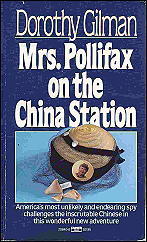
DOROTHY GILMAN – Mrs. Pollifax on the China Station. Doubleday, hardcover, 1983. Paperback reprint: Fawcett Crest, 1984.

   CIA operative Mrs. Pollifax is off to China to rescue an incarcerated Chinese who knows all the whereabouts of the Chinese defenses on its Russian border. She is with a small group of tourists, one of whom she knows to be a fellow operative.

   When the op is revealed, she’s amazed, but they work well together. There is danger and suspense; there is also a lot of China sightseeing, and there are encounters with individual Chinese people.

   Being Mrs. P., things happen that no other tourist in China should expect. We all know that Mrs. P. and friends will get home safely, but it’s exciting reading all the same.

   Gilman just about always gives us a good read, and this one definitely is.

– Reprinted from The Poisoned Pen, Vol. 6, No. 4, Fall 1986


Editorial Comments:   A bit of good news is that Dorothy Gilman has been announced as the recipient of this year’s Grand Master Award by the Mystery Writers of America.

   With a career as long as hers, and with her long list of fine crime and mystery fiction to serve as credentials, the honor and the congratulations that go with it are certainly more than due!

   Dorothy Gilman’s first book, Enchanted Caravan (not a mystery), was published in 1949. Since then she’s written three dozen or so other novels, including 14 in the Mrs. Pollifax series, the most recent being Mrs. Pollifax Unveiled (2000).

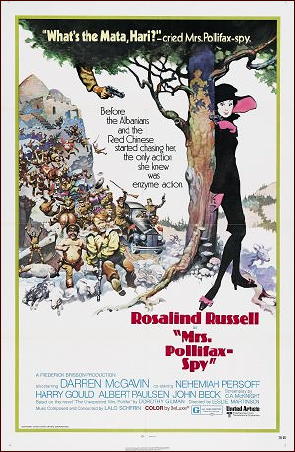
   The first book in the series, The Unexpected Mrs. Pollifax, was filmed (United Artists, 1970) as Mrs. Pollifax — Spy, starring the perfectly cast Rosalind Russell. It was filmed a second time as a made-for-TV movie in 1999, this time having the same title as the book. This second outing starred Angela Lansbury as Mrs. Pollifax, perhaps an obvious choice as one of the “coziest” spies in the business.

   Dorothy Gilman’s other series character, Madame Karitska, has appeared in two novels, separated by what may be a record number of years: The Clairvoyant Countess (1975) and Kaleidoscope (2002).

DOROTHY GILMAN Mrs. Pollifox on the China Station

REVIEWED BY WALTER ALBERT:         


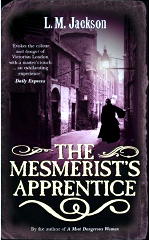
L. M. JACKSON – The Mesmerist’s Apprentice. Arrow Books, UK, paperback reprint, May 2009. Hardcover edition: William Heinemann, UK, May, 2008. No US edition.

L. M. JACKSON

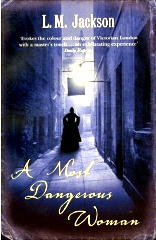
   This is the second in a series featuring Sarah Tanner, an enterprising Victorian businesswoman and amateur sleuth, first introduced in A Most Dangerous Woman (2007).

   Mrs. Tanner (as she is known in the London neighborhood where she runs Sarah Tanner’s New Dining and Coffee House) has reopened her establishment after a disastrous fire the preceding year.

   She’s attractive, soft-spoken, and not well known in Saffron Hill, where her aloofness (which is taken for an air of mystery by the gossips) makes her the object of some suspicion.

   When a gang of thieving boys begins to target Sarah’s shop and the near-by butcher’s, she begins a discreet inquiry that convinces her that something more significant than random thieving is involved.

   In the midst of this trouble, a letter arrives from her former lover, now married, asking for her help. She hesitates but eventually meets with him and learns that he is concerned that his mother is being victimized by a nurse who is taking care of her husband in the wake of a disabling stroke that has left him unresponsive.

L. M. JACKSON

   When Sarah reluctantly agrees to look into the matter and determine what the nurse’s motives may be, she soon discovers a network of crimes that involves the thieving band whose forays have turned more violent and a mesmerist under whose influence the nurse appears to be working.

   Sarah Tanner is a resourceful investigator who moves easily among the various strata of London society, from the most humble to the aristocratic circle to which her former lover belongs. Her affair with her former lover Arthur DeSalie is revived, but if the investigation may resolve some difficulties, Sarah’s estrangement from her past, momentarily resolved, may not be so easily settled.

   Jackson (who also writes under the name Lee Jackson) has written other books set in Victorian London, a setting in which he and his characters seem perfectly at home. Sarah Tanner is a worthy addition to the roster of female sleuths and the novel’s conclusion suggests that she will return to deal with both old and new concerns.

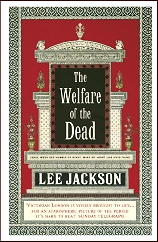
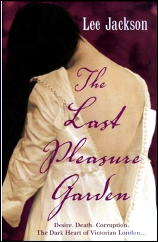
Bibliographic Data:   In spite of Walter’s closing comment, there appears so far to have been only the two books in the Sarah Tanner series. As by Lee Jackson, the author has written four earlier historical mysteries:

    • London Dust (2003)

The Inspector Decimus Webb, 1870s London series

    • A Metropolitan Murder (2004)
    • The Welfare of the Dead (2005)

L. M. JACKSON

    • The Last Pleasure Garden (2006)

L. M. JACKSON

   None of the above has had a US edition, and it is a mystery as to why that should be. Books of similar themes and settings have been gobbled up eagerly on this side of the Atlantic.

   Also by Lee Jackson is The Diary of a Murderer, another Victorian murder mystery novel, but it’s available only online and on Kindle.

« Previous PageNext Page »