Reviews


REVIEWED BY DAVID VINEYARD:


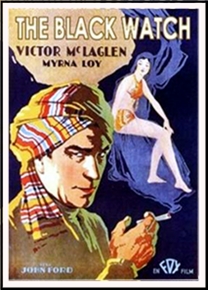
THE BLACK WATCH.  Fox Films, 1929. Victor McLaglen, Myrna Loy, Lumsden Hare, David Torrance, David Rollins, Roy D’Arcy, Mitchell Lewis, Walter Long, Francis Ford. Screenplay by James Kevin MacGuinnis & John Stone, based on the novel King of the Khyber Rifles by Talbot Mundy. Directed by John Ford.
   Whether you enjoy this early talkie or not may depend on your tolerance for Fordian sentimentality and the primitive technology of early sound. Stiff dialogue delivered stiffly doesn’t help a great deal either. Compare this to the superior Bulldog Drummond also from 1929 to see just how stiff it is.

   What does help is the stunning visuals true to Ford at his best ably abetted by Cinematographer Joseph H. August and some exciting moments thanks to the few times the film actually strays toward Talbot Mundy’s classic pulp novel.

   That said, the first twenty minutes of the film are a write off of Fordian sentimentality and unnecessary back story.
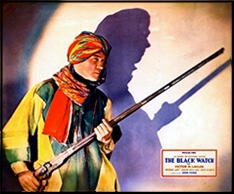
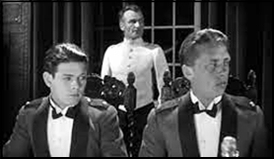
   Captain Donald (*) King (Victor McLaglen) of the famed Black Watch Highland Regiment is summoned to headquarters from the Regimental dinner on the eve of sailing for Europe and the early days of WW I.

   At headquarters Captain King is told he is needed in the Khyber Pass in India where he previously served in the Khyber Rifles. It seems the hillmen are rallying behind a mysterious woman known as Yasmani who they believe is a goddess. King is to find Yasmani and prevent the hillmen from falling on vulnerable India and sweeping the weakened British off the sub-continent.

   As part of his secret service work King cannot let his fellow officers know that he is being sent to India. They have to believe he is deserting the regiment as they march to war for safety in India. He can’t even tell his younger brother Malcolm (David Rollins) who worships him.
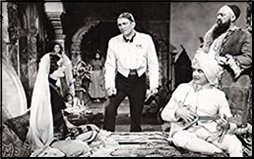
   That would be bad enough without a drawn-out scene of the regiment boarding the train for the ship to France and goodbyes to their family along with some much unneeded comedy relief.

   It’s twenty wasted minutes. Thankfully Ford will learn to better balance this sort of thing in later films and make a virtue of it (usually). He doesn’t here though there are more than enough Fordian touches.

   Things pick up a little in India where the Mundy novel begins in the first place. There King ties up with his old ally Major Mohammed Khan (Mitchell Lewis) who will help him in his mission which begins by attracting the attention of Yasmani (Myrna Loy) and her allies the ambitious Rewa Gunga (Roy D’Arcy) and the savage hillman Harim Bey (Walter Long) both with her longing glances at his manly presence and his heavy drinking and bad behavior leading Gunga to think King will be a good deserter.
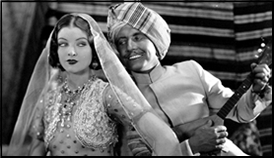
   Staging the accidental killing of a fellow officer King “escapes” and is taken in by Yasmani who offers to take him into the Khyber Pass and the infamous Cave of Terror where the hillmen are meeting before sweeping into India. Unlike the character in the book, no one tries to pass Victor McLaglen off as a native in disguise (thankfully) though he does get to don a turban and robes.

   The sets and staging for the Cave of Terror scenes are worth the whole film. Though the restraints of budget show Ford and August use imagination, shadow, and smoke to create a genuinely entertaining vision replete with McLaglen battling a native bare chested to prove his worth.

   Despite the stiff delivery of dialogue that would read better on a silent title card they actually keep some of the more fantastic elements of Mundy’s novel including Yasmani’s claim to be a descendant of Alexander the Great and suggestions of past lives between she and King.
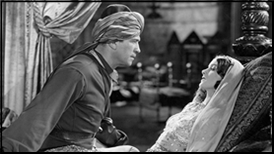
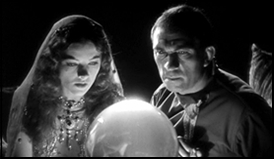
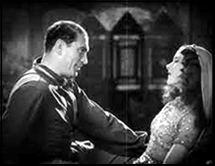
   And she almost wins him over to her vision of paradise in her arms as the king of India until she shows him his regiment in France in a crystal ball and he sees his brother Malcolm wounded in battle. Considering how Loy looks in those gauzy outfits, he proves a better man than me. This was from the era when she played exotic roles like the daughter of Fu Manchu and the murderous and vengeful Eurasian in Thirteen Women, gauzy suits her.

   A fairly exciting battle between the hillmen and King and Khan’s men armed with machine guns follows shot beautifully in smoke and shadows with captured and blinded Major MacGregor (Francis Ford) who King has freed from slavery leading the troops with King’s sword thrust into his hand.

   King doesn’t get the girl, but he does get his Regiment, a happy ending for any Ford film.
   Henry King ignored Mundy entirely for his version of King of the Khyber Rifles with Tyrone Power as a half Indian King. Despite having no relation to the book it was much more exciting even without Yasmani with a splendid set piece for the ending ironically mindful of a similar scene in John Ford’s The Searchers.

   McLaglen’s stiff delivery of his lines (Loy is no better) doesn’t help, but he looks great when he isn’t speaking and it is the visuals for this, often mindful of Joseph Clement Coll’s famous illustrations for the book, that make it worthwhile, and Loy is believably ethereal as Yasmani (though there is little ethereal about the vibrant wild child of Mundy’s novels).

   Mitchell Lewis and Walter Long fare best in the acting department, playing vibrant over the top characters with an energy you only wish McLaglen and Loy brought to their roles.
   This is an early example of the popular British Raj genre that reached its peak with films like Gunga Din, Lives of a Bengal Lancer, The Four Feathers, and Charge of the Light Brigade. The elements aren’t quite there, but even at this stage Ford hits most of the right notes.

(*) Just why King is named Donald in this is a mystery in itself. In the book his name is Athleston and in the Power version Alan. Donald seems a bit arbitrary.

   I’ve yet to spot them but supposedly John Wayne and Randolph Scott appear in this as Highlanders. Considering they are in uniform and shadow much of the film it may take some luck to find them, but the print on YouTube is pretty crisp.

   In addition you get a chance to see what McLaglen must have looked like a few years earlier when he was Governor General of Damascus after T. E. Lawrence captured the city.
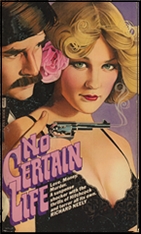
   

RICHARD NEELY – No Certain Life. Jove, paperback original, 1978.

   It begins as an idyllic Hollywood love affair. A handsome would-be screenwriter meets a promising young starlet, lonely and compulsively withdrawn, but a long weekend together seems to change all that. Then overnight their brief world of happiness crumbles to panic-stricken dust. She has a husband already, it turns out, a former prisoner of war not at all the same person since his release. An attempt at hospitalization fails, she flees, her new lover finds her, but back in Beverly Hills her mother-in-law is found, slashed to death.

   At this point one expects no more than a rather common chiller-thriller in the vein of Hitchcock or perhaps one of his bloodier imitators, but the pacing lags more than it seems it should, and the observant reader (aren’t we all?) will puzzle over certain inconsistencies in the behavior of some of the characters. Of course all is not what it seems, but the feeling begins to grow that Neely dashed this off on a bad day.

   Wrong! The ending is certain to make a shambles of all premature conclusions. Neely is not writing by the strict rules of classical deduction. and while the “locked room” aspect of the two lovers’ nightmare of terror is nearly lost to view, it can’t be missed the second time through.

   Beyond saying that this is indeed a book which has to be read a second time, I can’t give anything more away, but while this smashing knockout of a story was surely written with an eye for the movies, do read it now.

Rating: B plus.

– Reprinted from The MYSTERY FANcier, September/October 1978.

     
   Novels:

Death to My Beloved (1969)
The Plastic Nightmare (1969) aka Shattered. Filmed under the latter title in 1991. Reprinted by Stark House Press.
While Love Lay Sleeping (1969) Reprinted by Stark House Press.
The Walter Syndrome (1970)
The Damned Innocents (1971) aka Dirty Hands. Filmed under the latter title in 1975.
The Sexton Women (1972)
The Smith Conspiracy (1972) Finalist 1973 Edgar Award for Best Paperback.
The Japanese Mistress (1972)
The Ridgway Women (1975)
A Madness of the Heart (1976) Finalist 1977 Edgar Award for Best Mystery
No Certain Life (1978)
Lies (1978)
The Obligation (1979)
An Accidental Woman (1981)
Shadows from the Past (1983)
   

REVIEWED BY BARRY GARDNER:


ROBERT O. GREER – The Devil’s Hatband. CJ Floyd #1. Mysterious Press, hardcover, 1996; paperback, 1997.

   This is a first novel by an author described as “doctor,  scientist, cattle rancher, and editor.” I make the maybe unwarranted assumption that he’s black.

   His protagonist, CJ Floyd, is, anyway. CJ is in his forties, a Viet Nam vet who is now a bail bondsman and part-time bounty hunter in Denver. Two black corporate types want him to find the daughter of a black judge who happens to be on the board of a big-time biotech corporation — the one they work for — and in the process retrieve some unspecified but important papers she stole.

   He finds her easily enough, but she’s already a corpse. His search for the missing papers lands him in the middle of an environmentalist terrorist plot aimed at the cattle industry, and in danger from unexpected sources.

   This wasn’t a bad first novel, though it wasn’t exceptionally good, either. Greer tells his story third-person primarily from Floyd’s standpoint, and does an adequate job of moving it along. I thought the Colorado ambiance was well done, too. The plot seemed to me to have a thread or two too many to it, and they didn’t quite come together believably at the end.

   Floyd had his moments, but    never did come fully to life for me. Greer put a fair amount of black rhetoris in the narrative, but  it had a distinctly  upper-middle-class ring to it; he doesn’t doesn’t know how to talk the talk.  BarbaraNeely probably wouldn’t give him the time of day.

   Blurb to the contrary, I don’t think he’s quite ready to “take his place beside Walter Mosley” — too many “buts.” Maybe later.

— Reprinted from Ah Sweet Mysteries #24, March 1996.


      The CJ Floyd series

1. The Devil’s Hatband (1996)
2. The Devil’s Red Nickel (1997)
3. The Devil’s Backbone (1998)
4. Resurrecting Langston Blue (2005)
5. The Fourth Perspective (2006)
6. The Mongoose Deception (2007)
7. Blackbird, Farewell (2008)
8. First of State (2010)


IT IS PURELY MY OPINION
Reviews by L. J. Roberts


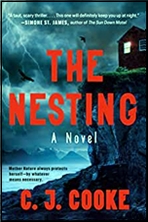
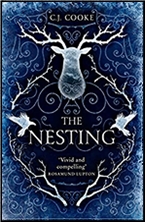
C. J. COOKE – The Nesting. HarperCollins, UK, hardcover, 2020. Berkley, US, paperback, 2020. Setting: Norway.

First Sentence: Aurelia sprints through the dark forest, her white nightdress billowing like a cloud, her strides long and swift across the carpet of bark and brambles.

   Lexi Ellis has a troubled past but grabs an opportunity. She becomes Sophie Hallerton, nanny to the daughters of architect Tom Faraday on an isolated property in Norway. Far from an idyllic situation, there are things that can’t be explained and the suspicion that Farraday’s late wife didn’t die by suicide after all.

   This is one of the rare times the prologue actually works. Cooke’s descriptions, metaphors, and inclusion of Norse folk tales add to the pleasure of the story. Tom is an annoying and perhaps inept architect, but his youngest daughter, Gaia is delightful. One appreciates how Lexi/Sophia grow through the story. She is strong; a survivor. When she commits an acts traditional thought of as “too stupid to live,” it makes sense and is in keeping with her personality.

   Cooke is very good at seeding doubt about the characters. I’m not at huge fan of unreliable characters, but it works perfectly here. The story alternates between two time periods but in a way that is clearly indicated and not at all confusing.

   For those who enjoy a bit of paranormal mixed with suspense, this is very well done. Norse folktales, elk, spectral figures are a few of the bump-in-the-night elements. The story sends shivers up the spine without crossing into horror. Best of all, it serves a purpose to the plot.

   There are inconsistencies and a questionable ending. There is quite a bit of foreshadowing, but it works. However, the twists, metaphors— “Grief is not a mere felling —it’s an isotropic space.”, pacing, characters, plot, concept and heart-pounding climax completely offset those issues. Her descriptions make both locations and emotions real.

   The Nesting is far from the typical Scandinavian noir. It’s a book one doesn’t put down, and an author to be read again.

Rating: Good Plus.

REVIEWED BY TONY BAER:


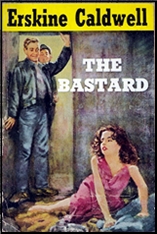
ERSKINE CALDWELL – The Bastard. Heron Press, hardcover, 1929. Novel Selections #51, paperback, 1953.

   In a review of Harold Q. Masur’s Bury Me Deep, the PaperbackWarrior blog criticized the protagonist’s supposed lack of virility, claiming “The problem is that American crime fiction really hadn’t grown a set of balls by 1947.” They go on to credit Mickey Spillane as the tonic.

   The claim is so false it makes me want to cry. But I won’t for fear they’d impugn my manhood or something.

   Anywho, no one reading The Bastard could accuse the protagonist of “lacking balls.”

   Gene, who I’ll refer to as “the bastard,” is a bastard. In all the senses.

   We’re introduced to him as he murders a patron of his whore (literally — I’d never use the word figuratively unless I was really really mad (which I am not at the moment)) of a mommy.

   Then, his mother either not knowing or not caring, the bastard decides to become a client.

   And that’s the light humor to begin the tale that only gets darker from there.

   It’s an episodic book that just goes from scene to scene of aimless, conscienceless rape and murder.

   Then, like Alex in Clockwork Orange’s final chapter (the one deleted from the film and American edition of the novel), he falls in love and decides to settle down.

   But karma’s a bitch. And his wife births a freak whose sheer hideousness destroys his wife, and sets the bastard once more adrift.

   If you like to rubberneck car wrecks, this one’s for you.

REVIEWED BY DAN STUMPF:


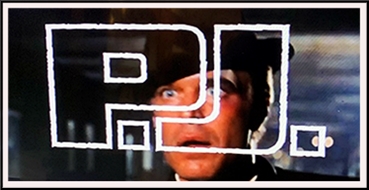
P.J. Universal, 1968. George Peppard, Raymond Burr, Gayle Hunnicutt, Brock Peters, Wilfrid Hyde-White, Jason Evers, Coleen Gray,Susan Saint James, Severn Darden, George Furth, Herb Edelman, John Qualen, Bert Freed, and Arte Johnson. Written by Philip Reisman and Edward Montagne. Directed by John Guillermin.

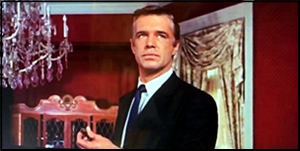
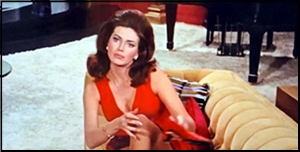
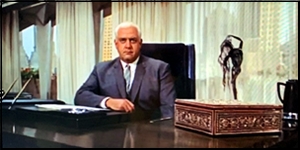
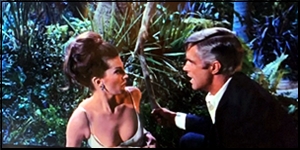
   Universal raised tastelessness to a high art in a B-movie I dearly love called P.J., with George Peppard surprisingly believable as a not-too-bright PI up against Raymond Burr as a nasty gazillionaire who hires him to protect his mistress (Gayle Hunnicutt) who’s been getting anonymous threats — or has she? The threats are understandable since Burr’s family (including Colleen Gray, Susan St James and George Furth, doing a Paul Lynde impression. Remember Paul Lynde?) don’t like the way Burr flaunts his girlfriend around.

   In fact, there isn’t much to like about him in this film; it’s one of his nastiest parts in a film career full of brutes, wife-killers and gorilla suits, leading Peppard to quip, “That’s what I like about you; you’re all arm-pit,” which is about the level of wit here.

   In fact, tackiness is the major charm of a film that loves to wallow in its own disrepute. PJ starts off in a seedy motel room and moves on to a run-down gym where worn-out pugs fight for a job. When it moves to the haunts of the very rich, we get garishly decorated apartments, sterile offices, and a nightclub where bikini-clad dancers swish their butts around in a giant martini. Real class.

   Later on, a studio jungle in a back-lot Caribbean island elevates the cheapness to something like epic scale, followed by a return to New York for some more engagingly crude violence, including a guy getting dragged to his death in a subway tunnel and a fight in a gay bar where our hero gets mauled.

   But like I say, these things are the backbone of a movie that returns the Private Eye to Chandler’s Mean Streets, updated to the 1960s and slashed with Technicolor, but meaner than ever, with an added layer of corporate greed that seems relevant today but may be merely timeless. Peppard stalks through it all like a once-promising leading man resigned to doing B-pictures, with added zing provided by John Guillermin’s punchy direction (he did Tarzan’s Greatest Adventure) and a script that tries for wit but settles for sarcasm.

   A few other points before I leave this charmer: I reviewed this movie about thirty years ago for DAPA-EM and at that time I reviewed it in the past tense because it didn’t exist anymore; when PJ was released to television (which was mainly where you saw old movies back then) they cut out all the sex and violence, toned down the unsavory elements and turned a crude movie into an insipid one. For decades, this was the only print available, but thanks to the internet and cheap DVD technology, the film has risen again, with all the ugly charm of a monster in an old movie.

   Secondly, I should caution prospective viewers that this film takes a very retro view of gays. The movies openly recognized homosexuals in the late 1960s, but they were almost invariably portrayed unsympathetically and even demeaningly. Like everything else in the movie, PJ turns this up a notch, with Severn Darden in a performance he should be heartily ashamed of as a lisping, mincing, quivering sissy. Add to this an extended fight in a gay bar that looks like one of the lesser circles of Hell, and you can see how gays — or those who believe they should be treated like human beings     — could get quite offended here.

   Finally, a word about Raymond Burr’s performance. In my youth I watched films like this in search of a role model. Well, Raymond Burr in this movie looks so eerily like a vice-president from earlier in this century that I wonder if someone else saw the film back in ’68 and fixated on him.

   The character enjoys nastiness for its own sake, relishing the humiliation and even torture he can inflict on others. He even goes to one of those clubs where birds with clipped wings are released on cue for “hunters” to blast away at. The similarities are positively unsettling, and I begin to wonder if the film was simply unavailable for so many years, or actually repressed by a previous administration.


A 1001 MIDNIGHTS Review
by Ellen Nehr & Bill Pronzini


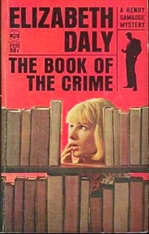
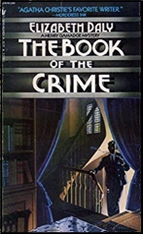
ELIZABETH DALY – The Book of the Crime. Henry Gamadge #16. Rinehart & Co., hardcover, 1951. Berkley F-959, paperback, date? Bantam, paperback, 1983. Felony & Mayhem, trade paperback, 2016.

   Elizabeth Daly was sixty-two years old when she published her first novel, Unexpected Night, in 1940. She wrote sixteen more over the next dozen years, all but one of them featuring a low-key, informal (and somewhat improbable) amateur sleuth named Henry Gamadge; The Book of the Crime is the last of her novels, although she lived another sixteen years after it was published.

   Daly’s mysteries are fair-play whodunits concerned with murder among the upper classes, and therefore very much in the British Golden Age tradition: in fact, Agatha Christie once said that Daly was her favorite American detective-story writer.

   Many of her books have integral bibliographic elements; Gamadge is at his best in these, owing to his position as an author and consulting expert on old books, manuscripts, and disputed documents. A man “so well bred as to make Lord Peter Wimsey seem a trifle coarse” (Anthony Boucher), Gamadge works out of his fashionable home in New York’s East Sixties, which he shares with his wife Clara; his young son; an assistant named Harold; and a cat named Martin that prefers petting to being petted.

   In The Book of the Crime, Gamadge undertakes to help young Rena Austen, the bride of an odd, secretive war veteran. For a year she has been living-unhappily with her husband, Gray, and his relatives in a musty old New York house he inherited; and for almost that long she has known that she “made a fearful mistake.”

   That mistake turned to real fear when Gray caught her looking at two apparently harmless old books in a little-used sitting room and, in a reaction both violent and inexplicable, grabbed the books and locked her inside the room. Rena managed to escape and, with the help of a young man named Ordway, ran off to the Gamadge household, where she has been protectively installed in the guise of the family nursemaid.

   To find out the truth behind her husband’s strange actions, Gamadge investigates Gray and his relatives-and soon finds himself enmeshed in a tangled web of murder and larceny on a grand scale . The identity of the two old books plays an important part in the solution to the mystery, as do Gamadge’s many New York connections, both social and official. Along the way there is much bookish talk, homey scenes with the Gamadges, and a new romance for Rena.

   Like all of Daly’s novels, this is a sedate, erudite puzzle that should please fans of Christie and fans of bibliomysteries alike.

     ———
   Reprinted with permission from 1001 Midnights, edited by Bill Pronzini & Marcia Muller and published by The Battered Silicon Dispatch Box, 2007.   Copyright © 1986, 2007 by the Pronzini-Muller Family Trust.

REVIEWED BY DAVID VINEYARD:


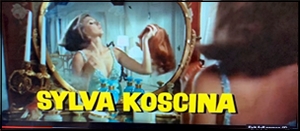
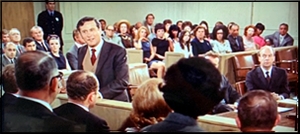
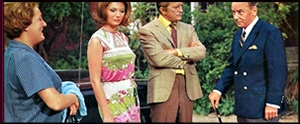
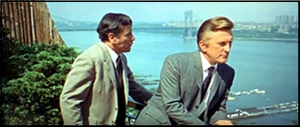
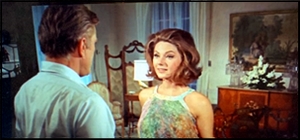
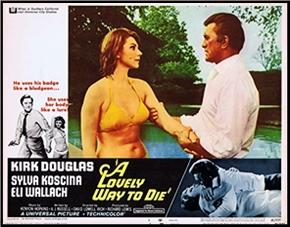
A LOVELY WAY TO DIE. Universal Pictures, 1968. Kirk Douglas, Sylvia Koscina, Eli Wallach, Kenneth Haigh, Sharon Farrell, Ralph Waite. Screenplay by A. J. Russell. Directed by David Lowell Rich. Currently available on YouTube.

   I confess I like this slightly smarmy, somewhat generic private eye tale more than it has any right to be liked.

   I hadn’t seen it since the mid-eighties, and then on television with commercials, so it was a pleasant surprise to find it on YouTube and discover it was pretty much the film I remembered, with all the caveats above including a few new ones about how quickly it veers from near comedy to melodrama like a leaf in the wind.

   Kirk Douglas is Jameson “Skye” Schuyler, a New York City cop who as the film opens resigns from the force after busting one too many heads. Schuyler is that staple of the movies, the tough cop whose methods are too direct for his own good.

   He’s no Dirty Harry or Popeye Doyle. He’s about as generic tough guy cop fed up with bureaucracy as you can imagine. That’s okay because it only takes up about three minutes of plot time anyway.

   He’s also a womanizer and a bit of a rat as the opening scene demonstrates, but this isn’t film noir by any stretch. His playboy lifestyle is played strictly for comedy up to the point he spots some made men in a bar and busts heads.

   To be honest I don’t think anyone involved with this other than Douglas or Wallach would know film noir if it bit them.

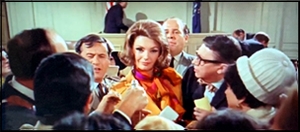
   No sooner is Douglas out of a job than he gets a call from Tennessee Fredericks (Eli Wallach), a smooth talking Southern Fried criminal defense lawyer who never lost a case and isn’t planning on doing so with his latest client, Rena Westabrook (Sylvia Koscina), whose husband took a bullet in their pool after they argued while she was out on the town with playboy Jonathan Fleming (Kenneth Haigh).

   Now Rena and Fleming are about to go on trial for murder and Fredericks wants Schuyler to baby sit her on her estate, keep Fleming away, and do a little private investigating into anything Fredericks can use, including the only witness he has, local tree trimmer Sean Maguire (Ralph Waite) who saw the couple outside a local bar when the murder happened.

   It’s pleasant work, pleasant wages, and pleasant scenery in the person of Rena and her maid (Sharon Farrell) who liked to wear her clothes and flirt with her husband. Farrell has nothing to do, but she fills out a maid’s uniform nicely.

   Rena is a bit of a kook, honest to a fault that she married her husband for his money and didn’t love him or even like him. Her nickname is Gypsy, and it fit her even if her in-laws meant it as an insult. She wears it as a badge of honor.

   And Fredericks is too slick by half: “Would you trust someone who hadn’t been south of Mason-Dixon since he was eight and talks with that accent?” Schuyler asks him.

   Things start going wrong almost as soon as Schuyler moves in. It’s hard to keep Fleming away and Rena doesn’t cooperate much. Then Maguire disappears, their only collaborating witness, and there is something going on at the neighboring mansion of a reclusive Englishman that has men with guns hanging around and a body in a freezer.

   Still, even with all that going on Schuyler and Rena start to flirt and play at the edges of things.

         Rena: You’re really a terrible man, did you know that?

         Schuyler: You’ve got some admirable qualities yourself.

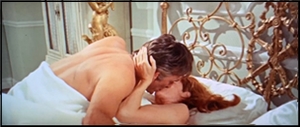
   You know they are going to end up horizontal, and true to the somewhat bi polar nature of the film there is a funny morning after scene when Schuyler does the walk of shame back to his room barefoot past the staff.

   As the trial goes on there is an attempt to kill Schuyler, then a body shows up and the police want to question him, but slowly he starts to put the pieces together, and finds a tie other than Rena and Fleming between her husband and the tree trimmer. Meanwhile Rena is lying about Fleming and sneaking out to see him. Did she murder her husband after all?

   The film is pretty to look at. New York seldom looked prettier outside of one of those glamorous Doris Day pictures from a decade before, though the sets are pretty generic. Douglas seems to be having fun in a much lighter mode than usual, and Koscina in a series of bikinis, sleek outfits, and negligees is more than worth looking at in widescreen technicolor as well as good on screen.

   She seldom got to act in American films, but she was certainly worth watching.

   Basically this is the film equivalent of a Frank Kane Johnny Liddell book or a lesser Peter Chambers novel by Henry Kane. There’s nothing special, but the mystery isn’t bad, there’s some action, only one really big slap up the head moment I won’t give away, pretty girls in various states of undress, and big name stars like Douglas and Wallach having fun without phoning it in.

   In the years since I first saw this in the theater it still holds up for me. I will not be shocked if it doesn’t for you. It’s not any kind of a classic, not special in any way, not overly witty, or exceptionally well directed or photographed (some of it looks like it was made for television as too many films of that era do).

   I just happen to like it, smarmy as it may be. It does its job for its running time, doesn’t embarrass itself, and says goodnight politely without leaving a bad taste, but I admit freely I might not like it half as well if I had first seen it at thirty and not eighteen.

   You might want to keep that last thought in mind if you seek it out.


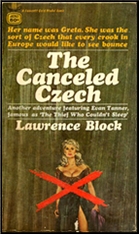
LAWRENCE BLOCK – The Canceled Czech. Evan Tanner #2. Gold Medal d1747, paperback original; 1st printing, 1966. Reprint editions include: Jove, paperback, 1984; Otto Penzler Books, hardcover, 1994; Berkley, paperback, 1999; Harper, paperback, 2007.

   The underlying gimmick in Lawrence Block’s “Evan Tanner” books is that he is also known as The Thief Who Couldn’t Sleep, or the title of the first book in the series. I have misplaced my notes as to how he got the injury to his head that caused the problem, but the fact is that he cannot fall asleep. I don’t know if it’s possible in the real worlds, but he is up and awake 24 hours a day.

   Which as gimmicks go, it’s quite a good one, or it would be if it ever came into play as this particular book goes on, but it doesn’t. For reasons that were probably gone into a lot more thoroughly in the first book, the head of some very hush-hush organization thinks Tanner works for him. His assignment: help the last of the high echelon non-German Nazis escape from his prison in Czechoslovakia where he’s about to go on trial and be executed.

   Tanner wonders why. It seems that the US has been secretly monitoring all of Janos Kotacek’s communications with the outside world from his lair in Portugal, and they have decided it would be more useful to keep him alive than to have him dead. The job won’t be easy, but Tanner agrees to give it a try.

   When he gets to Czechoslovakia, however, he has no plan. He’s the kind of fellow who takes his opportunities wherever he can get them. And thus enter Greta, the daughter of the man, a devout follower of the imprisoned man, who agrees to help Tanner get Kotacek free. To that end, Greta, who is not as political as her father, is sent along with Tanner to aid and assist him as best she can.

   And what she really does best she does in bed. Both buxom and blonde, she is everything men in the 1960s dreamed of in a woman – a nymphomaniac. Sometimes, Tanner realizes, it is better not to have a plan. Greta’s proclivities in this regard, as it so happens, is exactly what he needs to pull off the most wild and woolly escape possible.

   The story is basically serious, but Block tells with such a light touch that the pages fly by. Once the escape has taken place, though, and Greta is no longer needed, she disappears from the story completely, never to return, and it’s quite a slog to get Kotacek back to his home is Lisbon. I’m deliberately leaving out all of the details of both the first and second halves of the story, but I would like to say the first half is by far the better one.

FIRST YOU READ, THEN YOU WRITE
by Francis M. Nevins


   Several months ago I wrote a column discussing some of the pre-World War II Inspector Schmidt novels written by Aaron Marc Stein under the byline of George Bagby. The last of these, which I don’t have and for that reason didn’t discuss, was MURDER CALLING “50″ (1942). Aaron spent the years after Pearl Harbor first in the Office of War Information, then in the Army where he served as a cryptographer. His military specialty plays a large role in the first postwar Bagby novel.

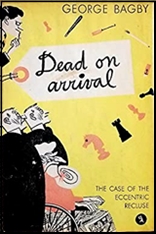
   DEAD ON ARRIVAL (1946) was published five or six months after the end of the war but is set and may have been written in its early years, with references to blackouts and the rubber shortage and all the male characters of military age waiting to be called into the service. For a novel the unities of time and place are extreme, with the action covering about twelve hours—between late on a Sunday afternoon in 1942 or ‘43 and before dawn the next morning—and mainly confined to a single building, an old brownstone worthy of Charles Addams in Manhattan’s East Fifties, occupied by a hyper-eccentric old cripple and his two all-but-deaf servants, who happen to be judo experts, with a female antique dealer and a young engineer living in the house next door.

   Schmitty and Bagby happen to be in Bellevue Hospital on business when a hysterical Western Union messenger boy is admitted, claiming he found a dead body in the house where he delivered a telegram. This makes Schmidt the first cop to arrive on the scene, and the crime quickly proves bizarre enough: a corpse with a broken neck and a pair of panties found inside his suit who is soon identified as the only living relative of the house’s owner, a wheelchair-bound old man with a long long beard in which he keeps various objects like chessmen.

   The panties prove to belong to the antique dealer next door, and both she and the young engineer living in the same building turn out to have a habit of visiting the house where the murder happened by climbing from the fire-escape balcony of the one brownstone onto that of the other. Before the end of the book’s twelve-hour time span there are three more murders.

   The synthetic rubber process that ultimately motivated the killings isn’t even mentioned till the seventh of the book’s ten chapters, and the cast is so small that the Least Likely Suspect is rather easy to spot even though Bagby can hardly be said to play fair with the reader. The long message in cipher which Schmidt discovers during the night leads to a fascinating lesson in cryptography even though it implausibly requires both Bagby and the guy who fashioned the message to be experts in that arcane science. Aaron’s addiction to super-lengthy sentences remains intact from the pre-war years, as witness this one example among many.

   Every move the inspector made in that investigation, he found himself hampered not by a lack of material on which he might work but by the way he was jostled and harried by clues and leads and suspects, all vying for his attention, all pressing their strong, if tacit, claims to guilt, all apparently of equal weight, but each existing as though it were the sole occupant of its own special vacuum, giving the bow to no other clues, betraying no connection with anything else relevant or irrelevant.

   
   These literary Dagwood sandwiches may not be to everyone’s taste but they’re okay by me and were also acceptable to Anthony Boucher, whose review for the San Francisco Chronicle (10 February 1946) simply capsulized the plot and welcomed Schmitty back into action “with a huzzah.” As who didn’t?

***

   Tony was especially fond of those whodunits that offered what he called a dividend, by which he meant a trove of reliable information on some off-trail subject. In DEAD ON ARRIVAL the subject was cryptography but the dividend had little to do with the plot. In the next Bagby novel the integration between those elements is near perfect. THE ORIGINAL CARCASE (1946) shares with its predecessor a very tight time frame, with events kicking off on the evening of Wednesday, September 4, about a year after the end of the war, and winding up less than 24 hours later.

   As in DEAD ON ARRIVAL, Schmitty is the first cop on the scene. He’s in Bagby’s apartment—a building with twin towers in whose upper stories are units with terraces—when the two men hear a horrible scream coming from the only terrace apartment in the tower opposite Bagby’s that is ablaze with light. In a few minutes they’ve discovered the cause of the scream: a young bride and her husband, returning from their honeymoon, were greeted by the bride’s friends and relatives (not the groom’s) with a surprise party which was cut short when the bride opened the cupboard doors of one of the wedding presents, a 7-foot-long Sheraton mahogany sideboard, and found a dead body inside.

   No one can identify the strangled corpse but Schmitty soon begins to wonder whether the murder has any connection with the social backgrounds of the newlyweds, the bride coming from an upper-crust family and her husband the younger brother of a notorious Prohibition-era gangster who, in a time of severe housing shortage, secured the apartment for them. During the small hours, after the police have left and the unit is deserted, someone manages to sneak in and throw the sideboard off the terrace into the street, smashing it to smithereens.

   Later in the night comes, as usual in Bagby, a second murder, the victim this time being a key employee of the antique dealer who provided the sideboard. Tony Boucher’s description of the novel in the Chronicle (20 October 1946) was nothing short of ecstatic. “To the average reader a delightfully told story; to the mystery technician a model of precisely how to integrate a love motif, an absorbing dividend and a perfectly plotted problem.”

***

   Just as THE ORIGINAL CARCASE shows us that Aaron must have spent a good deal of his spare time prowling around antique shops, the next Bagby novel indicates that he was equally fond of sports events. THE TWIN KILLING (1947) opens on a steamy summer night with Schmitty investigating the barber-shop murder of a big-time gambler with a habit of getting himself shaved and spruced up in that shop after it was closed to the public.

   According to the evidence the Inspector painstakingly accumulates in the first and most interesting chapters, the murderer might have come straight out of an Ellery Queen novel. First he broke into the gambler’s apartment and stole his .45 and a pair of his shoes, then he bought a ticket at a flea-pit theater which was showing a war flick with lots of shooting, changed into the stolen shoes, left the theater by the balcony fire door, crossed over to the roof of the adjacent barber shop, shot the gambler with the .45 through the shop’s open skylight during the movie’s loudest combat scene, crossed back to the theater, changed back into his own shoes and split.

   It’s only after this reconstruction that baseball enters the picture in the form of the dead man’s connections with four players, two old hands at the game and a pair of promising rookies. Aaron never mentions the name of the team nor what stadium they play in, but Schmidt and Bagby while on the case get to attend three games, the last of which provides the setting for what is all but inevitable in a Stein novel, a second murder, with all the suspects from the first murder conveniently in the ballpark.

   I wouldn’t call this one fair to the reader, but the baseball environment and players are vividly rendered—thanks perhaps to iconic sportscaster Red Barber, to whom the book is dedicated—and all in all Tony Boucher’s comment in the Chronicle (6 April 1947) can’t be improved on: “A trifle loose in solution but as fresh, lively and agreeable a sports whodunit as has turned up in years.”

« Previous PageNext Page »