1001 Midnights


A 1001 MIDNIGHTS Review
by Edward D. Hoch


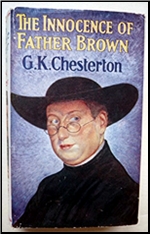
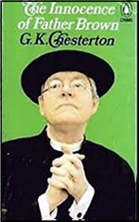
G. K. CHESTERTON. The Innocence of Father Brown. Cassell, UK, hardcover, 1911. Lane, US, hardcover, 1911. Many reprint editions exist.

   A cornerstone volume, Chesterton’s Innocence of Father Brown can lay claim to greatness on two counts: It introduced the priest detective whose adventures are still popular three-quarters of a century later, and it contains more classic short stories than almost any other mystery collection before or since.

   All twelve of its stories deserve special mention. The opening story, “The Blue Cross,” long an anthology and textbook favorite, tells of the first meeting of Father Brown and the master thief Flambeau, who would later become his friend and associate on many cases. “The Secret Garden” has a dual impossibility – the appearance of a beheaded corpse inside a locked and guarded garden, and the disappearance of another man from the same garden. “The Queer Feet” turns upon a brilliant bit of psychology and is a favorite of several critics.

   “The Flying Star” involves a diamond theft at a Christmas party, and is Flambcau’s last crime. “The Invisible Man” is probably the most famous Father Brown story of all — so famous, in fact, that its solution is known to people who have never read it. Whether Smythe really could have been murdered in his guarded apartment building without anyone seeing the killer is a matter of some dispute, but the story is memorable nonetheless.

   “The Honour of Israel Gow” presents Father Brown with a number of bizarre objects, seemingly unrelated, The solution, simple yet startling, reveals a strange sort of honesty rather than a crime. In “The Wrong Shape” a man is stabbed to death with a curved dagger in a locked room. leaving an oddly shaped suicide note. “The Sins of Prince Saradine” is about a murder plot and a duel with rapiers. “The Hammer of God,” one of the three or four best Father Brown stories, combines a seemingly superhuman murder beside a great Gothic church with a solution that is simple and sa1isfying.

   “The Eye of Apollo” deals with a cult of sun worshipers and a unique murder method. “The Sign of the Broken Sword,” perhaps the cleverest and most enjoyable story in the volume, full of paradox and allowing Father Brown to practice some pseudo-historical detection, offers Chesterton’s dazzling answer to the question “Where would a wise man hide a body?” The final story, “The Three Tools of Death,” is about an apparently brutal murder.

   All twelve. offer a nice feeling of life in Edwardian England, and if Father Brown lacks the colorful eccentricities of Sherlock Holmes, if his solutions are often more intuition than deduction, this book is still a masterpiece, the single volume by which G .K. Chesterton is most likely to be remembered.

   ———
Reprinted with permission from 1001 Midnights, edited by Bill Pronzini & Marcia Muller and published by The Battered Silicon Dispatch Box, 2007.   Copyright © 1986, 2007 by the Pronzini-Muller Family Trust.


NOTE: Ed Hoch’s review of The Incredulity of Father Brown was posted here earlier this month.

A 1001 MIDNIGHTS Review
by Edward D. Hoch


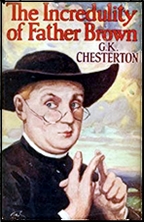
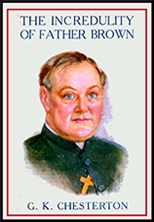
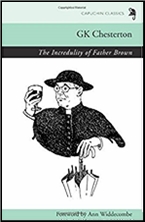
G. K. CHESTERTON – The Incredulity of Father Brown. Dodd Mead, US, hardcover, 1926. First published in the UK by Cassell, hardcover, 1926,. Many reprint editions exist.

   As several critics have observed, the Father Brown stories are small gems to be relished sparingly. If too many are read at one time, the effect is lessened and one might even begin to pick holes in their logic. But as detective stories, they are still masterpieces, and the most lasting of all the writing Chesterton produced in his prolific career. Their influence upon later mystery writers — especially John Dickson Carr – was enormous, and Carr’s major detective character, Dr. Gideon Fell, was patterned after Chesterton himself.

   The Incredulity of Father Brown is not the best of the five Brown collections, but it is unique in that seven of its eight stories contain locked rooms or impossible crimes as a part of their plot. One of these, “The Oracle of the Dog,” is perhaps the best of all Father Brown stories, and one of the best detective short stories ever written. The stabbing death of Colonel Druce while alone in .a summerhouse whose only entrance is under constant observation, together with a dog that seems to howl at the moment of the colonel’s death, sets up a classic situation in which the impossibility of the crime is linked to a seemingly supernatural event. It was a situation to be explored often by Carr and other writers that followed, but their solutions have rarely been us ingenious as the one Chesterton offers here.

   The other six impossible-crime stories in the book are “The Arrow of Heaven,” in which an American millionaire is killed by an arrow inside a guarded room; “The Miracle of Moon Crescent,” featuring the disappearance of a man from a guarded apartment; “The Curse of the Golden Cross,” about a curse on defilers of an ancient tomb; “The Dagger with Wings,” in which a strange cloaked figure is found dead in unmarked snow; “The Doom of the Darnaways,” involving a locked-room poisoning: and “The Ghost of Gideon Wise,” wherein Father Brown is confronted with a ghostly appearance. In all, the atmosphere of the inexplicable is brilliantly realized.

   ———
Reprinted with permission from 1001 Midnights, edited by Bill Pronzini & Marcia Muller and published by The Battered Silicon Dispatch Box, 2007.   Copyright © 1986, 2007 by the Pronzini-Muller Family Trust.

A 1001 MIDNIGHTS Review
by Francis M. Nevins

   
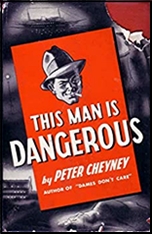
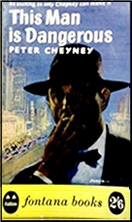
PETER CHEYNEY – This Man Is Dangerous. Lemmy Caution #1. Collins, UK, hardcover, 1936. Coward McCann, US, hardcover, 1938. Reprinted many times. Film: Sonofilm, France, 1954, as Cet Homme Est Dangeureux.

   Peter Cheyney (1896-1951) never visited the United States in his life and knew next to nothing about Americans, but in the late 1930s he became an instant success in his native England and in Europe, especially France, a writer or fake-American hard-boiled novels. In This Man Is Dangerous and ten subsequent titles, he chronicled the adventures of rootin’-tootin’-two-gun-shootin’ Lemmy Caution, an indestructible FBI agent who downs liquor by the quart, laughs at bullets flying his way, romances every dame in sight, and blasts away at greasy ethnic-named racketeers and (in thelater novels) Nazi spies.

   Americans, of course, saw these ridiculous exercises for what they were, and only the first few were ever published here.

   Certainly no one would read Lemmy Cautions for their plots, which are uniform from book to book — all 1hc nasties double-crossing each other over the McGuffin — nor for their characterizations, which are pure comic strip. But mystery fans with a taste for lunacy may be attracted by Cheyney’s self-created idiom. Lemmy narrates his cases in first person and present tense, a wild-and-crazy stylistic smorgasbord concocted from Grade Z western films, the stories of Ring Lardner and Damon Runyon, eyeball-poppers apparently of Cheyney’s own inventor (like “He blew the bczuzu” for “He spilled the beans”), and a steady stream of British spellings and locutions.

   Nothing but quotation can convey the Cheyney flavor. From This Man ls Dangerous:

   I says good night, and I nods lo the boys. I take my hat from the hall and walk down the stairs to the street. I’m .feeling pretty good because I reckon that muscling in on this racket of Siegella’s is going to be a good thing for me, and maybe if I use my brains and keep my eyes skinned, I can still find some means of double-crossing this wop.

   From Don’t Get Me Wrong (1939):

   Me — l am prejudiced. I would rather stick around with a bad-tempered tiger than get on the wrong bias of one of these knife-thrown’ palookas. I would rather four-flush a team of wild alligators outa their lunch pail than try an’ tell a Mexican momma that I was tired of her geography an’ did not wish to play any more.

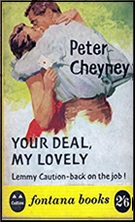
   From Your Deal, My Lovely (1941):

   Some mug by the name. of Confucius – who was a guy who was supposed to know his vegetables – once issued an edict that any time he saw a sap sittin’ around bein’ impervious to the weather an’ anything else that was goin’, an’ lookin’ like he had been hit in the kisser with a flat-iron, the said sap was suffering from woman trouble.

   Lemmy Caution became. so popular on the Continent that Eddie Constantine, an American. actor, portrayed him in a series of French films. These films were so successful that Jean Luc Godard used Constantine as Caution in his New Wave film Alphaville.

   Eventually Cheyney launched a second wave of novels, written in a spare ersatz-Hammett style and featuring Slim Callaghan, London’s toughest PI. But for those who love pure absurdity, and appreciate the wild stylistic flights of Robert Leslie Bellem and Henry Kane and Richard S. Prather, a treat of compatible dimensions is in store when they tackle the adventures of Lemmy Caution.

———
Reprinted with permission from 1001 Midnights, edited by Bill Pronzini & Marcia Muller and published by The Battered Silicon Dispatch Box, 2007.   Copyright © 1986, 2007 by the Pronzini-Muller Family Trust.

A 1001 MIDNIGHTS Review
by John Lutz


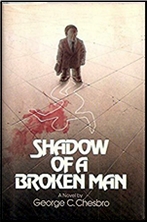
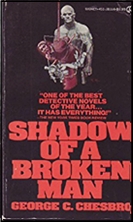
GEORGE CHESBRO – Shadow of a Broken Man. Mongo #1. Simon & Schuster, hardcover, 1977. Signet, paperback, 1978.

   This is the first Chesbro novel featuring Dr. Robert Fredrickson – a professor of criminology who doubles as a private detective, is a dwarf, and is known to his friends as Mongo. A onetime top circus performer, Mongo possesses some very useful skills for tight situations, among them tumbling and gymnastic ability and a black belt in karate.

   While preparing to leave for vacation in Acapulco, Mongo is approached by Mike Foster, who married the widow of’ famous architect Victor Rafferty. Foster’s wife. Elizabeth, happened to see a photograph of a new museum in an architectural magazine, and is convinced that the design is the work of her husband. But Victor died five years ago, and the museum’s design is listed as the work of a man named Richard Patera. Victor Rafferty died from a fall into an open melting furnace, so there was essentially no body to be recovered, and Elizabeth is haunted by the conviction that Rafferty is still alive. Mike Foster’s marriage is suffering; he wants Mon to clear up this matter so he and Elizabeth can get on with their lives.

   Mongo assumes there won’t be too much complication here, so he postpones his vacation and accepts the case. His first move is to consult professor of design Franklin Manning, resident architectural genius, who flatly tells Mongo that the museum is Rafferty’s design, without question. And suddenly Mongo is involved in something much more complex and dangerous than he imagined. Russian and French agents are part of the package, as are U.N. Secretary Rolfe Thaag and more than one victim of Communist brutality.

   The writing here is literate and fast-paced, the plot is intricate, the concept is bizarre yet entirely plausible. This is a well-spiced recipe that results in haute cuisine.

   Chesbro is also the author of City of Whispering Stone (1978), An Affair of Sorcerers (1979), and The Beasts of Valhalla (1985), which likewise feature Mongo.

      ———
Reprinted with permission from 1001 Midnights, edited by Bill Pronzini & Marcia Muller and published by The Battered Silicon Dispatch Box, 2007.   Copyright © 1986, 2007 by the Pronzini-Muller Family Trust.


Bibliographic Note: By the time his career in books was over, Mongo had appeared in a total of 13 novels and one story collection, most of which had previously been published in Alfred Hitchcock Mystery Magazine or Mike Shayne Mystery Magazine.

A 1001 MIDNIGHTS Review
by Max Allan Collins

ELLIOT CHAZE – Black Wings Has My Angel. Gold Medal #296, paperback original, 1953. Stark House Press, trade paperback, 2012 (published with One Is a Lonely Number by Bruce Elliott) New York Review of Books, trade paperback, 2016. Reprnited earlier as One for the Money (Berkley Y658, paperback, 1962).

   The reputation of Black Wings Has My Angel as the quintessential Gold Medal paperback is deserved. It has everything that made these originals so good: a fast-moving story, sex, and fine descriptive writing.

   Escaped con Tim Sunblade (an alias chosen after his jailbreak, “because it smells of the out of doors”) is resting up after rough-necking on a drilling rig.  In a small hotel in a little fishing village on the Atchafayala, he encounters Virginia, a beautiful prostitute whose $!0-a-night fee causes him to guess rightly that she, too, is keeping a low profile; soon he finds she is a high-priced call girl on the run. Virginia seems aloof, even cold, but the two pair off.

   When Tim tries to ditch her. only to discover she has anticipated him and stolen his money, they reteam and Virginia’s passion bubbles to the surface. Camping out in the mountains in Colorado, Tim decides Virginia has what it takes to help him pull off an armored-car job. They move to Denver and set up a respectable front,. renting a house, Tim working another hard labor job, as the robbery is meticulously planned, and then carried out.

   Bu1 Chaze’s antihero 1s too complex to be described simply as amoral; his immoral deeds haunt him in a manner an amoral individual would shrug off. A murder he’s committed calls at him as he and Virginia slide into a rich, decadent life-style in New Orleans. Soon Tim is pulled obsessively into his respectable past, for a brief, violent layover in his small hometown, before the couple ride out an even deeper, darker compulsion: to look into a certain abandoned mine shaft, to stare into the darkness that is death.

   Gold Medal originals were often James M. Cain pastiches, and Chaze’s novel is one of the best – far better than the novels Cain himself was writing at the time, Chaze’s bleak social satire – the working and upper classes arc shown to be equally venal – helps keep Tim’s actions understandable and even sympathetic. The swift, compelling, natural-sounding first-person narration is marked by quietly vivid images (“She was lying on the sleeping bag in the sun, as slim and bare as a sword”).

   Black Wings Has My Angel (reprinted as One for the Money, Berkley, 1962) is an early work, and would seem to promise a major career in the genre for Chaze. But Cbaze, a newspaperman, has published novels only occasionally, and not always in the suspense field, In Chaze’s recent mystery series about newsman Kiel St. James, the promise of his Gold Medal original is not kept: Mr. Yesterday (1984) is haphazardly plotted, an unconvincing structure that collapses upon its interesting characters and well-drawn southern setting.

———
Reprinted with permission from 1001 Midnights, edited by Bill Pronzini & Marcia Muller and published by The Battered Silicon Dispatch Box, 2007.   Copyright © 1986, 2007 by the Pronzini-Muller Family Trust.

A 1001 MIDNIGHTS Review
by Bill Pronzini


RAYMOND CHANDLER – The Simple Art of Murder. Houghton Mifflin, hardcover, 1950. Pocket #916, paperback, 1953. Reprinted many times since, in both hardcover and paperback.

   Eleven of the twelve stories in is collection are those that Chandler considered the best of his output for the pulps; the other story, “I’ll Be Waiting” was first published in the Saturday Evening Post (although Chandler admittedly felt uncomfortable and restricted writing for the slick-magazine medium). Also included here is Chandler’s famous and controversial essay on detective fiction, first published in the Atlantic Monthly, in which he lauds Hammett and the realistic school of crime writing, and takes a number of shots (some fair, some cheap) at such Golden Age luminaries as Christie, Sayers, and A. A. Milne.

   The stories here, as the dust jacket blurb says with typical publishers’ overstatement bur accurately nonetheless “hit you as hard as if [Chandler] were driving the last spike on the first continental railroad.” “Red Wind,” for instance, begins with one of the finest opening paragraphs in the history of the genre:

   There was a desert wind blowing that night. It was one of the hot dry Santa Anas that come down through the mountain passes and curl your hair and make your nerves jump and your skin itch. On nights like that every booze party ends in a fight. Meek little wives feel the edges of carving knives and study their husbands’ necks. Anything can happen. You can even get a full glass of beer at a cocktail lounge.

   In the original appearance of that story, the private-eye narrator was Johnny Dalmas; here he becomes Philip Marlowe. Similarly, the unnamed narrator in “Finger Man,“ Carmady in “Goldfish,” and Dalmas again in “Trouble 1s My Business” are also changed to Marlowe. Johnny Dalmas does get to keep his own name in “Smart-Aleck Kill,” no doubt because that novelette is told third-person.

   And the same is true of Carmady in “Guns at Cyrano’s.” The only other first person story in the collection, the lighter-toned and somewhat wacky “Pearls Are a Nuisance,” features a much more refined dick named Walter Gage whose antics in search of a string of forty-nine matched pink pearls provide chuckles as well as thrills. Also included arc the tough Black Mask novelettes “Nevada Gas” and “Spanish Blood,” “The King in Yellow” from Dime Detective and “‘Pick-Up on Noon Street” from Detective Fiction Weekly.

   All of these stories appear in several other collections, such the paperback originals Five Murderers (1944) and Finger Man and Other Stories (1946) and the Tower Books hardcover originals Red Wind (1946) and Spanish Blood (1946). Next to The Simple Art of Murder, the most interesting and important Chandler collection is Killer in the Rain (1964), which gathers the eight “cannibalized” stories that were used as the bases for The Big Sleep, Farewell. My Lovely, and The Lady in the Lake.

———
   Reprinted with permission from 1001 Midnights, edited by Bill Pronzini & Marcia Muller and published by The Battered Silicon Dispatch Box, 2007.   Copyright © 1986, 2007 by the Pronzini-Muller Family Trust.

A 1001 MIDNIGHTS Review
by Marcia Muller


RAYMOND CHANDLER – The Long Goodbye. Philip Marlowe #6. Houghton Mifflin, hardcover, 1954. Pocket #1044, paperback, 1955. Reprinted many time, both in paperback and hardcover. TV adaptation: “The Long Goodbye” on Climax, 07 Oct 1954. with Dick Powell as Philip Marlowe. Film: United Artists, 1973, with Elliott Gould as Philip Marlowe.

   The title of this novel is apt. It is a long book and a complex one, and its detractors say they wish Chandler had said goodbye two-thirds of the way through. What these critics fail to understand is that the novel is one of the most realistic looks into the day-to-day life of a private investigator, and the central plot element, that of Philip Marlowe’s friendship for the mostly undeserving Terry Lennox, is a compelling unifying element. In it we also see a different side of Marlowe than in Chandler’s other novels: the man who is as honorable in his personal relationships as he is in his professional ones.

   The story begins when Marlowe first sees Terry Lennox, dissolute man-about-town: he is “drunk in a Rolls-Royce Silver Wraith outside the terrace of the Dancers,” a ritzy L.A. nightspot, with a redheaded girl beside him whose blue mink “almost made the Rolls Royce look like just another automobile.” The girl leaves Terry, Good Samaritan Marlowe takes over, and a friendship begins.

   It is a friendship that Marlowe himself questions, but it persists nonetheless. Marlowe tells Lennox he has a feeling Terry will end up in worse trouble than Marlowe will be able to extricate him from. and in due course this proves true. The redhead, Terry’s ex-wife, whom he admittedly married for her money, is murdered in the guesthouse at their Encino spread and the trouble that Marlowe sensed begins.

   Lennox runs to Mexico, and it is reported that he made a written confession and shot himself in his hotel room. But something feels wrong: The Lennox case is being hushed up, and Marlowe begins to wonder if his friend really did kill his ex-wife. A letter that arrives with a “portrait of Madison” – a $5000 bill that Terry had once promised Marlowe – convinces him his suspicions are justified.

   He tells himself it is over and done with, but he isn’t able to forget. The matter plagues him while he is working a case involving an alcoholic writer of best sellers in wealthy Idle Valley (where, he says, “I belonged … like a pearl onion on a banana split”). It begins to plague him even more when Sylvia Lennox’s sister, Linda Loring, appears and plants additional suspicions in his mind. The suspicions spur him onward, and finally his current case and the Lennox case come together in a shattering climax.

   At the end Chandler neatly ties off all the strands of this complicated story, and provides more than a few surprises. An excellent novel with a moving ending.

———
   Reprinted with permission from 1001 Midnights, edited by Bill Pronzini & Marcia Muller and published by The Battered Silicon Dispatch Box, 2007.   Copyright © 1986, 2007 by the Pronzini-Muller Family Trust.


A 1001 MIDNIGHTS Review
by Bill Pronzini


RAYMOND CHANDLER – The Lady in the Lake. Alfred A. Knopf, hardcover, 1943. Pocket #389, paperback; 1st printing, September 1946.  Film: MGM, 1946, as Lady in the Lake (with Robert Montgomery as Philip Marlowe).

   Even though The Lady in the Lake is not Chandler’s best novel. it is this reviewer’s favorite. It too was “cannibalized” from three pulp novelettes: “Bay City Blues·” (Dime Detective, November 1937), “The Lady in the Lake” (Dime Detective, January 1939), “No Crime in the Mountains” (Detective Story, September 1941), but it is not as seamless as The Big Sleep or Farewell, My Lovely, nor as wholly credible. Nevertheless. there is an intangible quality about it, a kind of terrible and perfect inevitability that combines with such tangibles as Chandler’s usual fascinating assortment of characters and some unforgettable moments to make it extra satisfying.

   The novel opens with Marlowe hired by Derace Kjngsley, a foppish perfume company executive, to find his missing wife. Crystal (who he admits he hates and who may or may not have run off with one of his “friends,” Chris Lavery). Marlowe follows a tortuous and deadly trail that leads him from L.A. to the beach community of Bay City, to Little Fawn Lake high in the San Bernardino Mountains, to the towns of Puma Point and San Bernardino, and back to to L.A. and Bay City. And it involves him with a doctor named Almore, a tough cop named Degarmo, a half-crippled mountain caretaker, Bill Chess, whose wife is also missing, Kingsley’s secretary, Miss Adrienne Fromsett and the lady in the lake, among other victims.

   As the dust jacket or the original edition puts it, it is “a most extraordinary case, because … Marlowe understands that what is important is not a clue – not the neatly stacked dishes, not the strange telegram … but rather the character of [Crystal Kingsley]. When he began to find out what she was like, he took his initial steps into a world of evil, and only then did the idea of what she might have done and what might have been done to her take shape. So it was that not one crime but several were revealed, and a whole series of doors that hid cruel things were suddenly opened.

   “Again Chandler proves that he is one of the most brilliant craftsmen in the field, and that his Marlowe is one of the great detectives in fiction.”

   Amen.

   The Lady in the Lake was filmed in 1946. with Robert Montgomery (who also directed) as Marlowe. For its time, it was a radical experiment in film-making, in that it is entirely photographed as if through the eyes of Marlowe — a sort of cinematic version of the first-person narrator, with Montgomery himself never seen except in an occasional mirror reflection. The technique doesn’t quite work – it, not the story, becomes the focus of attention – but the film is an oddity worth seeing.

         ———
   Reprinted with permission from 1001 Midnights, edited by Bill Pronzini & Marcia Muller and published by The Battered Silicon Dispatch Box, 2007.   Copyright © 1986, 2007 by the Pronzini-Muller Family Trust.


A 1001 MIDNIGHTS Review
by Bill Pronzini


RAYMOND CHANDLER – Farewell My Lovely. Alfred A. Knopf, hardcover, 1940. Pocket Book #212, paperback, 1943. Reprinted many times.

   Many critics consider The Long Goodbye to be Chandler’s finest novel. This one disagrees. That distinction should probably go to Farewell, My Lovely – a more tightly plotted, less self-indulgent and overblown book, with characters, scenes, and prose of such artistry that it ranks as not only a cornerstone private-eye novel but a cornerstone work in the genre. Its near-flawless construction is all the more awesome when you consider that like The Big Sleep, it is a product of “canniballzation”: It makes extensive use of “The Man Who Liked Dogs” (Black Mask, March 1936); “Try the Girl” (Black Mask, January 1937); and “Mandarin’s Jade” (Dime Detective, November 1937).

   Marlowe’s client in this case is Moose Malloy, a giant ex-con with a one-track mind: All that matters to him is finding his former girlfriend, Velma, a redhead “cute as lace pants,” who disappeared after he was sent to prison. Marlowe is a reluctant detective, his first encounter with Malloy having ended in the wreckage of a bar, Florian’s, where Velma once worked and a black bouncer suffering a broken neck; but Malloy won’t take no for an answer.

   As Marlowe’s search for Velma develops, “the atmosphere becomes increasingly malevolent and charged with evil.” Among the characters he meets are a foppish blackmailer named Lindsay Marriott; a gin-drinking old lady with secrets and a fine new radio; a beautiful blonde with no morals and a rich husband who doesn’t give a damn; a Hollywood Indian named Second Planting who has “the shoulders of a blacksmith and the … legs of a chimpanzee”; a phony psychic, Jules Amthor: Dr. Sonderborg, who runs a private psychiatric clinic staffed with thugs; Laird Brunelle, the tough operator of a gambling ship called the Royal Crown; and L.A. and Bay City cops, some of whom are as crooked as a dog’s hind leg.

   The climax, in which Marlowe and Moose Malloy both come face-to-face with the elusive Velma, is a stunner. Like a number of other scenes — especially Marlowe’s drugged imprisonment in Sonderberg’s clinic, in a room “full of smoke [that] hung straight up in the air, in thin lines, straight up and down like a curtain of small clear beads”-it remains sharp in one’s memory long after reading.

    Farewell. My Lovely was filmed twice, once in 1944 as Murder, My Sweet, With Dick Powell as Marlowe, and once in 1975 under its original title, with Robert Mitchum in the starring role. The Powell version is the better of the two, even though Mitchum, aging and slightly seedy, better captures the essence of Marlowe. (Powell isn’t bad, though-a surprisingly gritty performance for an actor who began his career as a crooner in Busby Berkley musicals.) Mike Mazurki’s portrayal of Moose Malloy in Murder My Sweet is more memorable (and credible) than Jack O’Halloran’ s in Farewell. And the noir style of the earlier film better captures the flavor of Chandler’s work than the arty, full-color remake.

         ———
   Reprinted with permission from 1001 Midnights, edited by Bill Pronzini & Marcia Muller and published by The Battered Silicon Dispatch Box, 2007.   Copyright © 1986, 2007 by the Pronzini-Muller Family Trust.


A 1001 MIDNIGHTS Review
by Bill Pronzini


RAYMOND CHANDLER – The Big Sleep. Philip Marlowe #1. Alfred A. Knopf, hardcover, 1939. Avon Murder Mystery Monthly #7, digest paperback, 1942; New Avon Library [#38], paperback, 1943. Movie photoplay edition: World, hardcover, 1946. Reprinted many times since. Film: Warner Bros., 1946 (screenwriters William Faulkner, Leigh Brackett, Jules Furthman; director Howard Hawks; Humphrey Bogart as Marlowe). Also: United Artists, 1978 (screenwriter-director: Michael Winner; Robert Mitchum as Marlowe).

   It is difficult to imagine what the modern private eye story would be like if a forty-five-old ex-oil company executive named Raymond Chandler had not begun writing fiction for Black Mask in 1933. In his short stories and definitely in his novels, Chandler took the hardboiled prototype established by Dashiell Hammett, reshaped it to fit his own particular vision and the exigencies of life in southern California, smoothed off its rough edges, and made of it something more than a tale of realism and violence; he broadened it into a vehicle for social commentary, refined it with prose at once cynical and poetic, and elevated the character of the private eye to a mythical status — “down these mean streets a man must go who is not himself mean, who is neither tarnished nor afraid.”

   Chandler’s lean, tough, wisecracking style set the tone for all subsequent private-eye fiction, good and bad. He is certainly the most imitated writer in the genre, and next to Hemingway, perhaps the most imitated writer in the English language. (Howard Browne, the creator of PI Paul Pine, once made Chandler laugh at a New York publishing party by introducing himself and saying, “It’s an honor to meet you, Mr. Chandler. I’ve been making a living off your work for years.”

   Even Ross Macdonald, for all his literary intentions, was at the core a Chandler imitator: Lew Archer would not be Lew Archer, indeed might not have been born at all, if Chandler had not created Philip Marlowe.

   The Big Sleep , Chandler’s first novel, is a blending and expansion of two of his Black Mask novelettes, “Killer in the Rain” (January 1935) and “The Curtain” (September 1936) — a process Chandler used twice more, in creating Farewell, My Lovely and The Lady in the Lake, and which he candidly referred to as “cannibalizing.”

   It is Philip Marlowe’s first bow. Marlowe does not appear in any of Chandler’s pulp stories, at least not by name: the first person narrators of “Killer in the Rain” (unnamed) and “The Curtain” (Carmody) are embryonic Marlowes, with many of his attributes. The Big Sleep is also Chandler’s best-known title, by virtue of the well-made 1944 film version directed by Howard Hawks and starring Humphrey Bogart, Lauren Bacall, and Elisha Cook, Jr.

   On one level, this is a complex murder mystery with its fair share of clues and corpses. On another level, it is a serious novel concerned (as is much of Chandler’s work) with the corrupting influences of money and power. Marlowe is hired by General Sternwood, an old paralyzed ex-soldier who made a fortune in oil, to find out why a rare-book dealer named Arthur Gwynn Giger is holding his IOU signed by Sternwood’s youngest daughter, the wild and immoral Carmen, and where a blackmailing abler named Joe Brody fits into the picture.

   Marlowe’s investigation embroils him with Sternwood’s other daughter, Vivian, and her strangely missing husband, Rusty, a former bootlegger; a thriving pornography racket; a gaggle of gangsters, not the least of which is a nasty piece of work named Eddie Mars; hidden vices and family scandals; and several murders. The novel’s climax is more ambiguous and satisfying than the film’s rather pat one.

    The Big Sleep is not Chandler’s best work; its plot is convoluted and tends to be confusing, and there are loose ends that are never explained or tied off. Nevertheless, it is still a powerful and riveting novel, packed with fascinating characters and evocatively told. Just one small sample of Chandler’s marvelous prose:

   The air was thick, wet, steamy and larded with the cloying smell of tropical orchids in bloom. The glass walls and roof were heavily misted and big drops of moisture splashed down on the plants. The light had a unreal greenish color, like light filtered through an aquarium. The plants filled the place, a forest of them, with nasty meaty leaves and stalks like the newly washed fingers of dead men. They smelled as overpowering as boiling alcohol under a blanket.

   That passage is quintessential Chandler; if it doesn’t stir your blood and make you crave more, as it always does for this reviewer, he probably isn’t your cup of bourbon.

         ———
   Reprinted with permission from 1001 Midnights, edited by Bill Pronzini & Marcia Muller and published by The Battered Silicon Dispatch Box, 2007.   Copyright © 1986, 2007 by the Pronzini-Muller Family Trust.

« Previous PageNext Page »