1001 Midnights


A 1001 MIDNIGHTS Review
by Bill Pronzini:


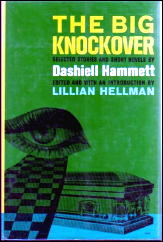
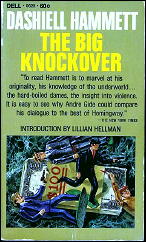
DASHIELL HAMMETT – The Big Knockover. Edited and with an Introduction by Lillian Hellman. Random House, 1966. Paperback reprint: Dell, 1967, in two volumes: The Big Knockover and The Continental Op: More Stories from The Big Knockover. Also: Vintage V829, 1972.

   Samuel Dashiell Hammett was the father of the American “hard-boiled” or realistic school of crime fiction.

DASHIELL HAMMETT The Big Knockover

   As Raymond Chandler says in his famous essay “The Simple Art of Murder,” Hammett “wrote at first (and almost to the end) for people with a sharp, aggressive attitude to life. They were not afraid of the seamy side of things; they lived there. Violence did not dismay them; it was right down their street. Hammett gave murder back to the kind of people that commit it for reasons, not just to provide a corpse; and with the means at hand, not hand-wrought dueling pistols, curare and tropical fish. He put these people down on paper as they were, and he made them talk and think in the language they customarily used for these purposes.”

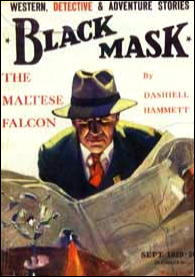
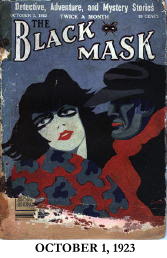
   Hammett’s first published short story, “The Road Home,” appeared in the December 1922 issue of the pioneering pulp magazine Black Mask under the pseudonym Peter Collinson. The first “Continental Op” story was “Arson Plus,” also published as by Collinson, in the October 1, 1923, issue; the October 15 number contained “Crooked Souls,” another Op novelette and Hammett’s first appearance in the magazine under his own name. (“Arson Plus” was not the first fully realized hard-boiled private-eye story; that distinction belongs to “Knights of the Open Palm,” by Carroll John Daly, which predated the Op’s debut by four months, appearing in the June 1, 1923, issue of Black Mask.)

DASHIELL HAMMETT The Big Knockover

   Two dozen Op stories followed over the ensuing eight years; the series ended with “Death and Company” in the November 1930 issue.

   The Op — fat, fortyish, and the Continental Detective Agency’s toughest and shrewdest investigator — was based on a man named James Wright, assistant superintendent of the Pinkerton Detective Agency in Baltimore, for whom Hammett had worked. And his methods, if not his cases, are based on real private-investigative procedures of the period.

   It was in these Op stories that Hammett honed his realistic style and plotting techniques, both of which would reach their zenith in The Maltese Falcon (1929).

DASHIELL HAMMETT The Big Knockover

   The Big Knockover contains thirteen of the best Op stories, among them such hard-boiled classics as “The Gutting of Couffignal,” about an attempted hoodlum takeover of an island in San Francisco Bay, during which corpses pile up in alarming numbers and a terrific atmosphere of menace and suspense is maintained throughout; “Dead Yellow Women,” which has a San Francisco Chinatown setting and colorfully if unfortunately perpetuates the myth that a rabbit warren of secret passageways exists beneath the streets of that district; “Fly Paper,” in which the Op undertakes “a wandering daughter job,” with startling results; “Corkscrew,” a case that takes the Op to the Arizona desert in an expert blend of the detective story and the western; and “$106,000 Blood Money,” a novella in which the Op sets out to find the gang that robbed the Seaman’s National Bank of several million dollars, and does battle with perhaps his most ruthless antagonist.

DASHIELL HAMMETT The Big Knockover

   Lillian Hellman’s introduction provides some interesting but manipulated and self-serving material on Hammett and his work.

   This is a cornerstone book for any library of American detective fiction, and an absolute must-read for anyone interested in the origins of the hard-boiled crime story.

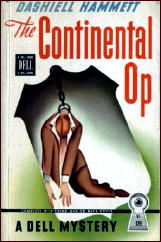
   The Continental Op appears in several other collections, most of which were edited by Ellery Queen and published first in digest-size paperbacks by Jonathan Press and then in standard paperbacks by Dell; among these are The Continental Op (1945), The Return of the Continental Op (1945), Hammett Homicides (1946), Dead Yellow Women (1947), Nightmare Town (1948), The Creeping Siamese (1950), and Woman in the Dark (1951).

   The most recent volume of Op stories, The Continental Op, a companion volume to The Big Knockover but edited and introduced by Stephen Marcus instead of Hellman, appeared in 1974.

         ———
   Reprinted with permission from 1001 Midnights, edited by Bill Pronzini & Marcia Muller and published by The Battered Silicon Dispatch Box, 2007.   Copyright © 1986, 2007 by the Pronzini-Muller Family Trust.
Editorial Comment:  Coming over the four days, spread out at a rate of one a day, will be reviews by Bill Pronzini and Mike Nevins of The Dain Curse, The Glass Key, The Maltese Falcon, and The Thin Man, all taken from 1001 Midnights.

A 1001 MIDNIGHTS Review
by Susan Dunlap:


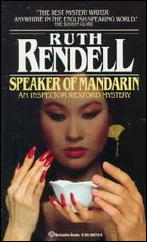
RUTH RENDELL – Speaker of Mandarin. Pantheon, US, hardcover, 1983. UK edition: Hutchinson, hc, 1983. Paperback reprint: Ballantine, 1984.

RUTH RENDELL Speaker of Mandarin

   This is the twelfth novel featuring Detective Chief Inspector Reginald Wexford and his subordinate, Mike Burden, of the English village of Kingsmarkham. By now they have developed into a competent, professional, and thoughtful pair who work comfortably together.

   It is their very decency and stability that give them the ability to spot the aberrations of the guilty. People trust the middle-aged, overweight Wexford, but frequently they underrate him. Wexford notes and makes use of this. The reader, too, can trust Wexford, accept his judgments, and enjoy the sense of immediacy that creates.

   In Speaker of Mandarin, we see Wexford away from the village that provides a closed environment for many of the books in this series. He is in China, where he has completed a police-related mission and joined a British tour group.

   In the few days he spends with them, he is haunted by an aged Chinese woman hobbling on her tiny bound feet, seemingly desperate to speak with him. She appears and disappears and turns up at the next stop, the next city, only to vanish again. Is she real, or is Wexford hallucinating? The inspector wonders and worries.

   The tour group takes a trip down the Li River, and a man — “Not one of us. A Chinese” — drowns and is forgotten. But months later, back in Kingsmarkham, one of the group is shot in the head, and the plot turns and turns again as Rendell teases the reader into thinking he has the solution — only to surprise him anew.

   Other enjoyable titles in this popular series are From Doon with Death (1965), Wolf to the Slaughter (1968), A Guilty Thing Surprised (1970), Shake Hands Forever (1975), and An Unkindness of Ravens (1985).

         ———
   Reprinted with permission from 1001 Midnights, edited by Bill Pronzini & Marcia Muller and published by The Battered Silicon Dispatch Box, 2007.   Copyright © 1986, 2007 by the Pronzini-Muller Family Trust.
A 1001 MIDNIGHTS Review
by Marcia Muller:


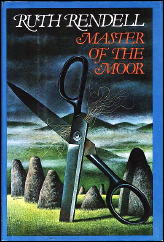
RUTH RENDELL – Master of the Moor. Pantheon, US, hardcover, 1982. UK edition: Hutchinson, hc, 1982. Paperback reprint: Ballantine, 1983.

RUTH RENDELL Master of the Moor

    The English moors, with their stark, eerie loneliness, have long fascinated writers of suspense fiction. In this excellent novel of psychological suspense, Rendell utilizes this setting as the scene for a series of murders of women, and the combination of the oppressive atmosphere and the killings takes a horrible emotional toll on those living nearby.

    Until he finds the first body, Stephen Walby thinks he knows Vangmoor — considers himself, in fact, “master of the moor.” Daily he traverses its crinkle-crankle paths, up the foins (hills) and past the abandoned soughs (mine shafts).

    But on the day he finds the strangled girl’s body, his life changes. The moor, once a popular place, becomes deserted — “known not as somewhere unique and beautiful but as the place where a young girl had been killed.”

    Not altogether displeased by this, Stephen begins to visit the moor more frequently. The murders continue, and Stephen often returns from his walks in a feverish state. Occasionally he is as low as his chronically depressed father; and his already stressed marriage begins to fall apart. On top of this, other events begin to make Stephen wonder about his parentage; at times he isn’t sure who he is — or what.

    This is one of Rendell’s best novels, and even if the reader begins to suspect what is going on, he can never be sure, up to the last terrifying revelation.

    Other equally gripping tales are One Across, Two Down (1971), The Face of Trespass (1974), and A Demon in My View (1976).

         ———
   Reprinted with permission from 1001 Midnights, edited by Bill Pronzini & Marcia Muller and published by The Battered Silicon Dispatch Box, 2007.   Copyright © 1986, 2007 by the Pronzini-Muller Family Trust.
A 1001 MIDNIGHTS Review
by Marcia Muller:


RUTH RENDELL – The Fever Tree and Other Stories of Suspense. Pantheon, US, hardcover, 1982. UK edition: Hutchinson, hc, 1982. Paperback reprint: Ballantine, 1984.

RUTH RENDELL

    One of the most impressive qualities of Ruth Rendell’s work is her grasp of the dark side of the human character and her ability to portray it in a dramatic and convincing fashion. Whether she is writing a short story, one of her compelling novels of psychological suspense, or an entry in her popular series featuring Chief Inspector Wexford of the British village of Kingsmarkham, she depicts fully fleshedout characters in all their complexity.

    The plots work, not so much because of neatly placed clues or clever twists (although these are present, too), but because the underlying motivations are logical and true to the participants’ inner natures.

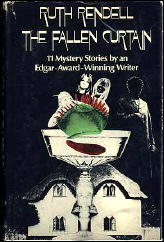
    The Fever Tree is Rendell’s third short-story collection. (The others are The Fallen Curtain and Other Stories, 1976; and Means of Evil and Other Stories, 1979.)

    The stories are varied, but all carry the Rendell trademark of evil lying just below the surface of ordinary, even mundane, events. In the title story, a man and his wife are on vacation in an African game preserve, a vacation that is also a reconciliation. The man has been unfaithful and only recently returned to his wife. And as the wife, a childlike woman who insists on breaking the preserve rules, gets out of the car time and time again to look at the animals, terrible thoughts begin to form in both of their minds-thoughts that do not lead to a predictable conclusion.

    Likewise, “Thornapple” is a plant, but nothing so exotic as Africa’s fever tree — merely the jimsonweed that appears in many English gardens. James, a young boy, is a bit of an amateur botanist, and poisonous plants particularly interest him.

RUTH RENDELL

    “Not that James had the least intention of putting these poisons of his to use.” But then the accepted order in James’s family is disrupted, causing a great many things to get out of hand.

    Things get out of hand quite frequently in the life of the protagonist of “A Needle for the Devil.” As a child, Alice Gibson’s personal devil often “led her to violence.” She learned to control her impulses by practicing handicrafts, but when she goes into nurse’s training, circumstances force her to abandon most of them, and knitting becomes her salvation. Knitting, with all those lovely sharp needles …

    This is a well-balanced collection, and the stories included are among Rendell’s best short fiction. (One of her short stories, “The Fallen Curtain,” won the Mystery Writers of America Edgar in 1974.)

         ———
   Reprinted with permission from 1001 Midnights, edited by Bill Pronzini & Marcia Muller and published by The Battered Silicon Dispatch Box, 2007.   Copyright © 1986, 2007 by the Pronzini-Muller Family Trust.
A 1001 MIDNIGHTS Review
by Marcia Muller:


JOEL TOWNSLEY ROGERS – The Red Right Hand. First published in New Detective Magazine, March 1945. Reprinted many times, in both hardcover and soft. Shown: Pocket 385, pb, 1946; Dell D203, pb, Great Mystery Library #9, 1957.

JOEL TOWNSLEY ROGERS Red Right Hand

   This classic suspense novel has the quality of a hallucination. From the opening paragraph, we are drawn into a strange world where eerie and seemingly impossible events are happening; and as we view them through the eyes of the narrator, Dr. Harry Riddle, we begin, as he does, to believe in their reality and to search desperately for some rational explanation for them.

   The story begins after most of the events have taken place, with Riddle trying desperately to puzzle them out as he sits in the study of Adam MacComereau, a professor emeritus of psychiatry at Harvard.

   The late Adam MacComereau, we learn. Murder has been done more than once. Various shadowy and frightening events are described, without their chronology or connections being given. There is a woman asleep on a nearby sofa toward whom Riddle feels protective, while also holding back fear of his own insanity. And as he sits there, thinking about the events that have passed, he begins to reconstruct what they really signify.

JOEL TOWNSLEY ROGERS Red Right Hand

   While driving from Vermont to New York City, Riddle had car trouble on a back road; when he finally got under way, he encountered the woman, Elinor Darrie, lost and fleeing through the underbrush. As Riddle tells us, “It was a simple enough incident.”

   Elinor and her fiance, Inis St. Erme, were driving to Vermont to be married. On the road they picked up a tramp-a little, twisted man whom Riddle comes to think of as Corkscrew — and when they stopped for a picnic, there was a fight between the tramp and St. Erme. Elinor heard a terrifying scream and fled. Riddle and Elinor investigated the spot and found a quantity of blood, but nothing else.

   As Riddle says, “It was such a damned ordinary and commonplace crime, on the face of it.” But other aspects surface — such as St. Erme’ s missing right hand; a mutilated blue hat that Riddle found on the road before he met with Elinor; the noise “like a great frog croaking in the weedy ditch” near where Riddle’s car broke down; and the ugly little man, Corkscrew — who is he and how has he gotten away after apparently doing murder?

JOEL TOWNSLEY ROGERS Red Right Hand

   This is a dizzying and confusing novel, but pleasurably so. And when the action has been unraveled, its apparent solution explained, confusion is initiated again, and more action occurs. And when that has been unraveled, its solution stands alone, and the result is stunning indeed.

   In thinking over the wonderful experience of reading The Red Right Hand, the reader can only marvel at how the author constructed such a baffling and complex plot without leaving a thread untied. And — corollary to that — how he did so without driving himself as mad as his narrator fears he is becoming.

   Rogers, however, did remain sane and capable of writing other memorable novels: Lady with the Dice (1946) and The Stopped Clock (1958). In addition, he wrote reams of fiction for both the pulp and slick magazines, and a first (but less memorable) novel, Once in a Red Moon (1923).

         ———
   Reprinted with permission from 1001 Midnights, edited by Bill Pronzini & Marcia Muller and published by The Battered Silicon Dispatch Box, 2007.   Copyright © 1986, 2007 by the Pronzini-Muller Family Trust.
Editorial Comment. As you might recall, I’d intended to post the three Ruth Rendell reviews from 1001M this weekend, but as usual, the real world interfered. I’ll get those uploaded in the next couple of days, I hope, but in the meantime, I thought this alternative choice might be appropriate.

   Geoff Bradley’s review of this book, which you can find here, has generated more comments than usual — including my own admission that I’ve yet to read it. Perhaps the book falls into a category that might called Classic Novels That Everyone’s Heard About But Relatively Few Have Read.

   If the combination of Geoff’s and Marcia Muller’s reviews don’t tempt you into reading it, if you haven’t already — and I doubt that anyone could say more about the story than Marcia without revealing everything — than nothing will!

   As for me, I know when I’ve run out of excuses. I also know where my copy of the Pocket paperback is, and I’ll start reading it this week. You can take that statement to the bank and cash it. It’s as good as gold.

A 1001 MIDNIGHTS Review
by Bill Pronzini & George Kelley:


RUFUS KING – Malice in Wonderland. Doubleday Crime Club, 1958. Queen’s Quorum 117.

RUFUS KING Malice in Wonderland

   Rufus King had two distinct “careers” in crime fiction. The first was as a writer of traditional Golden Age whodunits, beginning in 1927 and continuing until 1951. He produced twenty-two novels during this period, most of which are entertaining despite some stilted prose; they are marked by clever plotting, interesting backgrounds, and touches of gentle humor.

   King’s best work, however, is his short fiction, particularly that written during his second “career” in the 1950s and 1960s when he abandoned novels altogether and concentrated on stories for Ellery Queen’s Mystery Magazine.

   Malice in Wonderland, the second of King’s four collections, was so highly regarded by the Mssrs. Queen that they included it in their Supplement Number One (1951-59) to the Queen’s Quorum.

   The eight stories here expose the violence and corruption of the fictional town of Halcyon, Florida — after the fashion, if not in the style, of John D. MacDonald. Queen said that in these stories King “pungently, almost maliciously impale[s] … the Gold Coast, that fabulous neon strip between Miami Beach and Fort Lauderdale, with its cross section of natives and tourists, of greedy heirs and retired gangsters (alive and dead).”

   The best story in the collection, “The Body in the Pool,” traces the strange connection between the state of Florida’s electrocution of murderer Saul (“Stripe-Pants”) McSager and the selection of Mrs. Warburton Waverly as the county’s “Most Civic-Minded Woman of the Year.”

   Also excellent are the title story, in which a girl tries to decode a message from a long-dead playmate; and the long novelette “Let Her Kill Herself,” in which an unpleasant woman makes an extremely disturbing discovery.

   Some of King’s early short stories are collected in Diagnosis: Murder (1941). Two other collections of stories about Halcyon and the Florida Gold Coast, both of which rank with Malice in Wonderland, are The Steps to Murder (1960) and The Faces of Danger (1964).

         ———
   Reprinted with permission from 1001 Midnights, edited by Bill Pronzini & Marcia Muller and published by The Battered Silicon Dispatch Box, 2007.   Copyright © 1986, 2007 by the Pronzini-Muller Family Trust.

A 1001 MIDNIGHTS Review
by George Kelley:


RUFUS KING – Murder by Latitude. Doubleday Crime Club, hardcover, 1930. Reprint paperback: Popular Library #246, 1950. (Cover art: Rudolph Belarski.)

RUFUS KING Murder by Latitude

    Rufus King’s sole series character was a New York police detective, Lieutenant Valcour. A proper gentleman detective, Valcour’ s only unusual characteristic is that he is a French Canadian.

    Murder by Latitude is one of Valcour’ s more exotic cases. The Eastern Bay is a cheap passenger-carrying freighter making a Bermuda-to-Halifax run. Lieutenant Valcour boards the ship with the news that one of the passengers is a murderer.

    One of the victims is dead of strangulation, the other is in a New York City hospital; police are hoping this victim will recover to give a description of the killer. The murderer sabotages radio communication so police can not send the description of the guilty party, but Valcour has clues that indicate the murderer is aboard the Eastern Bay and he starts his investigation on his own among the bizarre menage of passengers.

RUFUS KING Murder by Latitude

    As the degrees of latitude sail by, the murderer strikes again, leaving such cryptic clues as a lump of wax, a stolen thimble, and a pair of scissors. Valcour achieves some impressive feats of detection to tie the clues to the culprit in classic fashion.

    Another recommended Valcour sea mystery is the fine Murder on the Yacht (1932). Valcour made an impressive debut with Murder by the Clock (1929) and went on to detective fame in a half-dozen novels, concluding with Murder Masks Miami (1939).

    Notable among King’s nonseries novels are A Variety of Weapons (1943), The Case of the Dowager’s Etchings (1944), and Museum Piece No. 13 (1946).

         ———
   Reprinted with permission from 1001 Midnights, edited by Bill Pronzini & Marcia Muller and published by The Battered Silicon Dispatch Box, 2007.   Copyright © 1986, 2007 by the Pronzini-Muller Family Trust.
A 1001 MIDNIGHTS Review by Bill Crider:


JAMES HADLEY CHASE No Orchids

  JAMES HADLEY CHASE – No Orchids for Miss Blandish. Howell Soskin, US, hardcover, 1942. UK edition: Jarrolds, hardcover, 1939. Revised edition: Panther, UK, pb, 1961; Avon, US, pb, 1961. Reprinted many times, in both hardcover and paperback. Film: Alliance, 1948. Also: Cinerama, 1971, as The Grissom Gang.

   Since the publication of No Orchids for Miss Blandish, James Hadley Chase has sold millions of copies of his more than eighty novels. A British writer who uses mostly American characters and settings in his works, Chase has a fast-paced, hard-boiled style perfectly suited to his violent, action-filled novels.

   The title character of Miss Blandish is a young socialite who is kidnapped by small-time hoods and then kidnapped from them by the members of the Grisson gang, a group based on the notorious Ma Barker and her sons.

JAMES HADLEY CHASE No Orchids

    Ma Grisson’s favorite son, Slim, a vicious, perverted killer, takes a special interest in Miss Blandish; so instead of killing her when the ransom is paid, Ma gives her to Slim—

   She is kept in a narcotic haze by Doc, another of the gang, so that she will submit to Slim’s debased desires. Eventually, Miss Blandish’s father hires Fenner, a former crime reporter turned private eye, to find his daughter.

   There is a bloody shoot-out between the gang and the police, but Slim escapes with Miss Blandish. He is finally cornered, but this is not the sort of story in which everyone can live happily ever after.

   Chase does a fine job in Miss Blandish (even in the revised edition of 1961) of understating the sex and violence, which become more effective than if they had been spelled out.

JAMES HADLEY CHASE No Orchids

   The pace never lags, and the ending is very well handled. Miss Blandish is no longer as shocking as its reputation might suggest, but it remains a powerful crime novel.

   Chase’s novels were well suited to the needs of the early paperback market, and many of them are highly sought after by collectors, as much for their colorful titles and gaudy covers as for their contents.

   Examples include Twelve Chinks and a Woman (Avon, 1952) and Kiss My Fist! (Eton,1952).

         ———
   Reprinted with permission from 1001 Midnights, edited by Bill Pronzini & Marcia Muller and published by The Battered Silicon Dispatch Box, 2007.   Copyright © 1986, 2007 by the Pronzini-Muller Family Trust.
A 1001 MIDNIGHTS Review by Marcia Muller:


CELIA FREMLIN – The Hours Before Dawn. Victor Gollancz, UK, hardcover, 1958. J. B. Lippincott, US hardcover, 1958. Reprint US paperbacks: Dell D422, 1961; Dell 3770, Great Mystery Library, 1966.

CELIA FREMLIN The Hours Before Dawn

   Celia Fremlin has the unusual ability to take a perfectly normal, if not mundane, situation and create an atmosphere of sheer terror. The Hours Before Dawn, which won an Edgar for Best Novel of its year, introduces us to Louise Henderson, a sleep-starved young housewife with a fretful new infant that is causing complaints from both her family and neighbors.

   The only person who doesn’t complain is Miss Vera Brandon, the boarder the Hendersons have recently taken in. In fact, Miss Brandon is so self-effacing and quiet that at times the Hendersons don’t even know she is in the house.

   Soon the boarder’s actions begin to arouse Louise’s suspicions, and she finds herself doing all sorts of things she has never done before — attempting to search the woman’s room, contacting total strangers for information about her, and finally taking the baby for a nocturnal stroll in his pram, only to fall asleep and lose him in a park.

CELIA FREMLIN The Hours Before Dawn

   The author skillfully weaves truly frightening events into Louise’s daily routine of meals, housecleaning, and childcare, and her superb characterization has the reader thoroughly on Louise’s side — and just as terrified as she is — by the time the story reaches its surprising conclusion.

   Other Fremlin titles of note: Uncle Paul (1960), Prisoner’s Base (1967), The Spider-Orchid (1978), With No Crying (1981).

         ———
   Reprinted with permission from 1001 Midnights, edited by Bill Pronzini & Marcia Muller and published by The Battered Silicon Dispatch Box, 2007.   Copyright © 1986, 2007 by the Pronzini-Muller Family Trust.
CELIA FREMLIN, R.I.P. It was Martin Edwards who first made known the news of mystery writer Celia Fremlin’s passing, announcing it on his blog three days ago.

    She died this past summer in a nursing home in Bournemouth, on June 16th, with very few in the world of mystery fandom knowing about her passing until now.

    Besides Martin’s appreciative tribute to her work, plus a long array of followup comments, a longer obituary by Rebecca Tope can be found online here. She says in part, in one poignant paragraph:

    “Her personal life was, in fact, full of tragedy. From the death of her mother when she was seventeen, she went on to lose three children and two husbands, before going blind and slowly sinking into a twilight world that lasted for several years. Her books are light and humorous at first glance, but just below the surface is an acknowledgment of the truly terrible things that can happen to a person. Her style is distinctive and the books immensely enjoyable.”

   BIBLIOGRAPHY: Taken from the Revised Crime Fiction IV, by Allen J. Hubin:

FREMLIN, CELIA. Pseudonym of Celia Margaret Goller, 1914-2009. UK publishers only, except for one case of a US retitling:
      The Hours Before Dawn (n.) Gollancz 1958.

CELIA FREMLIN

      Uncle Paul (n.) Gollancz 1959.
      Seven Lean Years (n.) Gollancz 1961. US title: Wait for the Wedding, Lippincott 1961.
      The Trouble Makers (n.) Gollancz 1963.
      The Jealous One (n.) Gollancz 1965.

CELIA FREMLIN

      Prisoner’s Base (n.) Gollancz 1967.
      Possession (n.) Gollancz 1969.
      Don’t Go to Sleep in the Dark (co) Gollancz 1970.
      Appointment with Yesterday (n.) Gollancz 1972. No US edition.

CELIA FREMLIN

      By Horror Haunted (co) Gollancz 1974. No US edition.

CELIA FREMLIN

      The Long Shadow (n.) Gollancz 1975.
      The Spider-Orchid (n.) Gollancz 1977.

CELIA FREMLIN

      With No Crying (n.) Gollancz 1980.

CELIA FREMLIN

      The Parasite Person (n.) Gollancz 1982.
      A Lovely Day to Die, and other stories (co) Gollancz 1984.
      Listening in the Dusk (n.) Gollancz 1990.
      Dangerous Thoughts (n.) Gollancz 1991.
       Echoing Stones (n.) Severn 1993.
      King of the World (n.) Severn 1994.

A 1001 MIDNIGHTS Review
by Marcia Muller:


LAWRENCE BLOCK – Burglars Can’t Be Choosers. Random House, hardcover, 1977. Paperback reprints include: Jove, 1978; Pocket, 1983; Onyx, 1995; Harper Torch, 2004.

LAWRENCE BLOCK Burglars Can't Be Choosers

   Bernie Rhodenbarr is no ordinary burglar; he is a professional of finesse, charm, and good common sense. At least that is what he tells himself when he enters an apartment on Manhattan’s Upper East Side, where he has been commissioned to find a blue leather box — a box he has been advised not to open.

   Unfortunately, the box isn’t where it should be, nor is there anything else of interest, and Bernie is about to depart when the cops arrive. No novice at such problems, he successfully bribes the officers with his advance on the burglary commission, and is about to take his leave once more when one of them turns up a body in the bedroom.

   The officer has the grace to faint on the Bokhara carpet; the other is distracted; and Bernie flees.

   From here on out, Mr. Rhodenbarr is engaged in a flight to keep himself free, and a quest to find out just who attempted to frame him for the murder of entrepreneur J. Francis Flaxford-tenant of the apartment he was set up to burgle. There are a lot of amusing moments, a surprise roommate for Bernie, and a good amount of burglar lore.

   Also entertaining are The Burglar in the Closet (1978), The Burglar Who Liked to Quote Kipling (1979), The Burglar Who Studied Spinoza (1980), and The Burglar Who Painted Like Mondrian (1983).

         ———
   Reprinted with permission from 1001 Midnights, edited by Bill Pronzini & Marcia Muller and published by The Battered Silicon Dispatch Box, 2007.   Copyright © 1986, 2007 by the Pronzini-Muller Family Trust.

« Previous PageNext Page »