Characters


A 1001 MIDNIGHTS Review
by Ed Gorman:


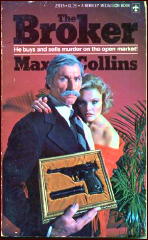
MAX COLLINS – The Broker. Berkley, paperback original, 1976. Paperback reprint: Foul Play Press, 1985, as Quarry.

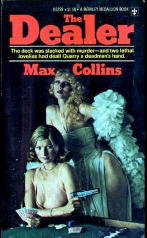
   In the mid-1970s, the multi-talented Max Collins (who also writes as Max Allan Collins) produced a series of four paperback originals about a Vietnam vet turned hired killer, known only as Quarry. The Quarry series has so often been referred to as a Richard Stark pastiche that its own tone and morality are often overlooked.

MAX ALLAN COLLINS Quarry

   In The Broker, the first in the series, we meet Quarry shooting a man in an airport men’s room. Quarry’s assignment is to bring what the man is holding (heroin) back to his employer, an icy sort called the Broker. Quarry complies.

   After complaining that he does not like to deal in drug killings, he reluctantly takes another Broker assignment, this one working with a homosexual killer named Boyd. In the rest of the novel, Collins shows us an abundantly unpleasant world peopled with all sorts of characters, from cuckolded husbands to porno-crazed geezers who look like Gabby Hayes.

   What gives the Quarry books their style is the detached voice of the narrator: Quarry has no compunctions about killing people, because he feels most of them are rather foolish beings anyway. Unlike Stark’s Parker, who is human only when it serves his ends, Quarry is subject to feelings other than anger-melancholy, amusement, contempt-feelings he notes, nonetheless, with the kind of removed observation one would expect from a man in his profession.

   The Broker and the other three novels in the series — The Broker’s Wife (1976), The Dealer (1976), and The Slasher (1977) — are successful for another reason: They depict the waning hippie/flower-power days with a great deal of historical accuracy. The Quarry books are therefore an important part of the crime fiction of the Seventies — a quirky, idiosyncratic look at the Midwest during the Gerald Ford regime.

         ———
   Reprinted with permission from 1001 Midnights, edited by Bill Pronzini & Marcia Muller and published by The Battered Silicon Dispatch Box, 2007.   Copyright © 1986, 2007 by the Pronzini-Muller Family Trust.

         Bibliographic data: The Quarry series [Updated].

   The Broker. Berkley, pbo, 1976; aka Quarry, Foul Play, 1985.

   The Broker’s Wife. Berkley, pbo, 1976; aka Quarry’s List, Foul Play, 1985.

   The Dealer, Berkley, pbo, 1976; aka Quarry’s Deal, Foul Play, 1986.

MAX ALLAN COLLINS Quarry

   The Slasher, Berkley, , pbo, 1977; aka Quarry’s Cut, Foul Play, 1986.

   Primary Target. Foul Play, hardcover, 1987.

   Quarry’s Greatest Hits. Five Star, hc, 2003. Contents:
       ● Primary Target (novel)
       ● “A Matter of Principle” (short story, reprinted from Stalkers, Roc/Penguin, 1992, Ed Gorman, ed., and the basis for a short film included in the DVD boxed set Max Allan Collins Black Box Collection: Shades of Neo-Noir, 2006.)
       ● “Quarry’s Luck” (short story reprinted from Narrow Houses: Blue Motel, Volume 3, Little Brown, UK, 1994, Peter Crowther, ed.)
       ● “Guest Services” (short story reprinted from Murder Is My Business, Signet, 1994, Mickey Spillane & Max Allan Collins, eds.)

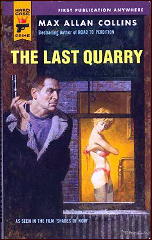
   The Last Quarry. Hard Case Crime, pbo, 2006. Expansion of “A Matter of Principle,” and the basis for the feature length film, The Last Lullaby (2008).

MAX ALLAN COLLINS Quarry

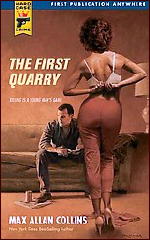
   The First Quarry. Hard Case Crime, pbo, 2008.

MAX ALLAN COLLINS Quarry

   Quarry In The Middle. Hard Case Crime, pbo, 2009. (Forthcoming, November.)

WENDI LEE – Habeas Campus. Worldwide; paperback reprint, February 2003. Hardcover edition: St.Martin’s Press, 2002.

   This one was a disappointment, to put it as mildly as I can. Wendi Lee, also a writer of westerns, is the author of four other mysteries about her Boston-based private eye Angela Matelli, so this drab and unbelievable outing came as quite a surprise, if not an out-and-out shocker.

WENDI LEE

   It might be the subject matter. Here’s the first line: “If my family had known that I was going up to Vermont to fight zombies, they would have slapped me in an institution so fast it would have made my head spin.”

   There’s a lot of scientific talk in the book about Haitian poisons and antidotes to back up the premise that zombies (the walking undead) indeed do exist, but if you were to check it out on Google, you’d soon discover that the evidence is largely anecdotal and (to say the least) extremely controversial.

   In any case, Lee’s job was to convince me that people can be transformed into zombies, and that they could be put to work in sweatshops or behind the counters at McDonalds. (You’re kidding me, right?) She also wanted me to believe that a body could somehow go missing from a college town’s morgue without a huge outcry being made. Just a prank by some fraternity kids? I don’t think so.

   I also thought that the plan for Angela Matelli, an ex-Marine and nearly 30, to go undercover as a student at Hartmore College, living in an undergraduate dorm, registering just before midterm, was, well, rather uninspired (if not highly unlikely).

   The writing is hardly better. Two paragraphs on page 16 say exactly the same thing. The dialogue is bad. From page 31: “This is why I didn’t tell you everything over the phone. I knew you would jump to the conclusion that this is some sort of weird situation.” On page 40, another two paragraphs (concerning Matelli’s phoney registration as a student) repeat themselves.

   Back in her own stomping grounds, surrounded by family and friends, Angie Matelli’s basic perkiness and good nature might come off to greater advantage. They don’t here, I’m sorry to say.

— March 2003


[UPDATE] 03-30-09.   For more on Angela Matelli and some more on the other books by her creator, Wendi Lee, you might check out the former’s data page on the Thrilling Detective website. Habeas Corpus was her last appearance in print.

   Based on both the Revised Crime Fiction IV, by Allen J. Hubin, and her dossier on Kevin Burton Smith’s website (above), here’s her complete bibliography:

ANGELA MATELLI. [Wendi Lee]

    Novels:

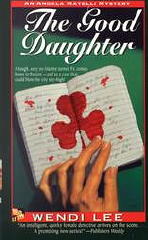
      The Good Daughter. St. Martin’s 1995.

WENDI LEE

      Missing Eden. St. Martin’s 1996.
      Deadbeat. St. Martin’s 1999.
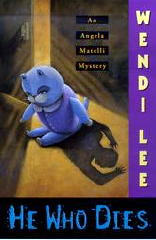
      He Who Dies. St. Martin’s 2000.

WENDI LEE

      Habeas Campus. St. Martin’s 2002.

   Short stories:

       “Salad Days” (Noir, Winter 1994)
       “The Disappearance of Edna Guberman” (Murder For Mother, 1994)
       “Check Up” (Lethal Ladies, 1996)
       “The Other Woman” (Vengeance Is Hers, 1997)

ANTHONY ARMSTRONG and the JIMMIE REZAIRE Novels
by David L. Vineyard.


   Anthony George Armstrong Willis (1897-1972) was a Canadian novelist and playwright best remembered today for his play Ten Minute Alibi and the novels The Room at the Hotel Ambre (also a play) and The Strange Case of Mr. Pelham (adapted for Alfred Hitchcock on television, and as the 1970 film The Man Who Haunted Himself, directed by Basil Deardon).
ANTHONY ARMSTRONG Jimmie Rezaire

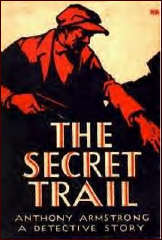
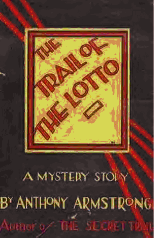
   From 1927 to 1932, however, he penned five of the best thrillers from the heyday of the form about gentleman crook Jimmie Rezaire and his ‘secret service’ adventures in The Trail of Fear (1927), The Secret Trail (1929), The Trail of the Lotto (1930), The Trail of the Black King (1931), and The Poison Trail (1932).

   In their A Catalogue of Crime Jacques Barzun and Wendell Hertzig Taylor said of The Trail of Fear, the first Jimmie Rezaire novel:

    “Not strictly a detective story, but a good example of the chase after dope smugglers of the type popular in the late twenties … the chase goes on continuously for 275 pages, and it holds the attention surprisingly well … the hero is not a superman, and his strengths and weaknesses are well matched.” (page 37)

    What sets the Rezaire novels apart from the adventures of Bulldog Drummond, Sydney Horler’s Tiger Standish, Wyndham Martin’s Anthony Trent, and the other colorful adventurers of the era was both Armstrong’s sense of drama and literacy and Jimmie’s character.

   The slight, attractive Rezaire was no steel-thewed six-footer laying the enemy about him with a single blow, no brighter buccaneer or durable desperado, but a clever criminal who enjoyed the game of pitting his brains against the police until he allowed himself to be caught and served a term in the pen.

   In The Trail of Fear he’s still a criminal and drawn into a bit of secret service work which suits his nature. In The Secret Trail, just out of prison, he teams up with his one time girl friend Vivienne and Harry Hyslop (aka H.H.), down from Oxford after a forgery scandal, who have been running a shop lifting scam. Jimmie opens a Private Inquiry agency and almost immediately gets drawn into yet another bit of secret service trying to rout a spy ring that has stolen the Murchison bomb sight and plans to smuggle it out of the country to Russia.

   The books are primarily chase and pursuit, aided by Armstrong’s understanding of plot construction and the line of suspense. Unlike many writers of the period Armstrong doesn’t indulge in tiresome blathering and the silly ass dialogue that mars the Drummond books and others from this time frame.

   The Rezaire books are a modern read, with Jimmie a more complex hero than most. Though he loves the game and plays to win he is also attractively human and given to doubts and concerns. He’s also apt to rely on his wits too much, which is where H.H. comes in as a good man with his fists and a gun. H.H. would be the hero of any other series of the era, but Armstrong is careful to show us the limit of the brawn-over-brains type when pitted against the kind of super criminals Jimmie and company cross swords with on a regular basis.
ANTHONY ARMSTRONG Jimmie Rezaire

   That said, the books are very much of the period they were written, with the usual foreign spies and drug smugglers (cocaine rings feature in many books of the era, from thrillers to classical detection like Sayers’ Murder Must Advertise), but all done with Armstrong’s superior writing and Rezaire’s more intelligent hero:

    “He settled down to his food, but his brain was busy marshalling his information about the sighter. What had he definitely learned from the dead man’s shorthand note? A certain amount at any rate. He knew that there were three if not four men concerned. He knew that the bomb sighter was somewhere in London. He knew that because it was so complicated the secret was safe, and would remain so till it left the country for Paris, where the man Siminski would arrive on the 19th to take it to Russia. He knew that therefore he presumably had six days — for today was the 13th — six days during which the spies apparently had to make some arrangements for ensuring a departure without a hitch by the Calais route. Of course they might try to smuggle it out by means of a motor-boat or airplane, but the boldest way was always the best; a passport, a suitcase, and an innocent appearance would do the trick easily.”

   That’s more reasoning and deductive work than in the entire Bulldog Drummond oeuvre. In fact, the fun is watching Jimmie as he thinks and fights his way out the various deadly traps set by the opposition and the chases in fast low slung cars, motor boats, airplanes, and on trains, across rooftops, down foggy roads, through busy London streets, and across the Channel in France.

   Armstrong’s understanding of drama keep the books moving swiftly, while the plot unfolds in snappy dialogue and exposition. Here Jimmie’s ex-partner Long Sam is back from America and out to get Jimmie:

    They stayed chatting with Viv in her sitting room for nearly an hour. Then the bell rang.

    “Sam,” whispered Viv, and the pair were hustled into hiding. They found themselves concealed by a thick curtain which hung across a corner behind the sofa. The one big window of the room was just on the left.

    “Don’t come out Jimmie, unless I call you,” pleaded Viv. “Honestly Sam won’t hurt me, but he might go for you if …”

    “What about nice little me?” put in Hyslop humorously. “Don’t nobody love me too?”

    “And you, H.H.,” added Viv, but something in her eyes told him he didn’t count beside Jimmie — that strange little man with so much ingenuity and so little physical courage.

    It should be pointed out that Jimmie is hardly a coward, but having the wit and common sense to know when he’s in danger and the imagination to see what the consequences of his actions might be he’s no steely nerved ice man either. He’s cool and leveled headed in action, but has the good grace to at least sweat the details when he’s bound up in a rug being carried to meet his maker in the trunk of the villain’s speeding salon car.

    For anyone interested in the thrillers of the era, the Armstrong books about Jimmie Rezaire offer a better than usual entry point forgoing the blather of the Drummond books, the bullying of Horler’s various heroes, and the gloating Berkeley Gray’s Norman Conquest was prone to.

   While they don’t have the sheer spirit and joy of the early Saint adventures by Leslie Charteris, they are clever and fast-paced, and cinematic in the best sense. The jingoism, snobbery, casual racism, and other drawbacks of books of the time are played down, and the writing is crisp and literate without the endless false bon homme of so many of Armstrong’s contemporaries.

   Jimmie Rezaire is a complex and interesting protagonist, and one who deserves to be better remembered. Among the armies of Blackshirts, Picaraoons, Gray Phantoms and the like, Jimmie was a breath of fresh air with well-conceived action and a fast pace that modern readers will appreciate, along with a more human and interesting set of heroes than the usual breed of supermen.

— All quotes from The Secret Trail (Macrae Smith, US, 1929).


Bibliographic data:   [Taken from the Revised Crime Fiction IV, by Allen J. Hubin.]

REZAIRE, JIMMIE    [Anthony Armstrong]
      Jimmie Rezaire (n.) Paul, 1927. US title: The Trail of Fear. Macrae-Smith, 1927.
      The Secret Trail (n.) Methuen, 1928. Macrae-Smith, 1929.
      The Trail of the Lotto (n.) Methuen, 1929. Macrae-Smith, 1930.
      The Trail of the Black King (n.) Methuen, 1931. Macrae-Smith, 1931.
      The Poison Trail (n.) Benn, 1932. No US edition.
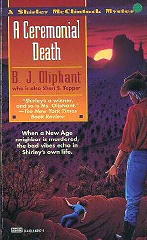
B. J. OLIPHANT – A Ceremonial Death.   Fawcett Gold Medal; paperback original; first printing, January 1996.

AJ ORDE

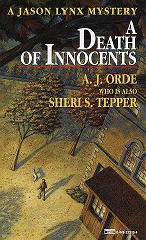
   It was common knowledge, even while the books were being published, that science fiction writer Sheri S. Tepper was also the author of two series of mystery stories, each under a different pen name. The ones she wrote as A. J. Orde featured a Denver CO interior designer and antique dealer named Jason Lynx. There were six of those, starting with A Little Neighborhood Murder in 1989, and ending with A Death of Innocents in 1997.

   In between the Orde books, Tepper was also busily writing six Shirley McClintock mysteries. For these she used the name B. J. Oliphant. This is the fifth of these, with one more to follow, Here’s to the Newly Dead, which came out in 1997. Now in her 70s, Tepper is still actively writing science fiction and fantasy. All of her books in that genre appear to be highly regarded, but I think she’s left the mystery field behind her.

   In Ceremonial Death Shirley McClintock is living in New Mexico, but references to previous adventures suggest that the earlier mysteries under her belt occurred while making her home in Colorado. She’s tall, in her 60s, has a live-in male friend named J.Q. — I have no other details on what their domestic arrangement is precisely — and together they’re the guardian of a very pretty high school girl named Allison. Shirley seems to have been a rancher lady in her past , but they have only a few animals now and accommodations for tourists.

BK OLIPHANT

   First to die in this book is a naive sort of woman who’d made a living as a New Age mystic, complete with Native American trimmings. When Shirley finds the body, she discovered that the dead woman had been mutilated in much the same way as some recent slaughtered cattle.

   Being close to Santa Fe — and the nest of ultra-believers living there — the all-but-brain-dead (elected) sheriff is convinced that men (if not creatures) from outer space are responsible. Obviously too many people have been watching too many episodes of The X Files.

   The next girl to die is a classmate of Allison’s, but she was certainly no friend — rich family, too precocious by far — but with Allison in the mix, Shirley has even more reason to get involved, and involved she gets.

   If using this book as a sample of size one can be acceptable practice, Tepper’s prose (as a mystery writer) seems more than a little uneven. Long stretches of strong storytelling are interrupted every so often by a page or two of bad (stilted) dialogue, but then it continues on with looks (much more convincing) into Shirley’s relationships with J.Q. and her surrogate daughter — all combined with a heady brew of western-style philosophies and opinions on popularity, politics, creationists and everything else in the world, and what’s right in it, and what’s not.

   That the mystery seems to get short-shrifted should not seem too remarkable. Whatever a shrift is. But when, say, something like someone’s brake lines are found cut on page 120, shouldn’t warning flares go off right then and there, and not over 100 pages later?

   In spite of the gory opening, categorize this one as a cozy, an agreeable one, and read it for the good parts, of which there are many — especially if you agree with Shirley.

— March 2003


         Bibliographic data:   [Taken from the Revised Crime Fiction IV, by Allen J. Hubin.]

OLIPHANT, B. J. Pseudonym of Sheri S. Tepper, 1929- ; other pseudonym A. J. Orde. Series character: Shirley McClintock, in all.

      Dead in the Scrub (n.) Gold Medal, 1990.
      The Unexpected Corpse (n.) Gold Medal, 1990.
      Deservedly Dead (n.) Gold Medal, 1992.
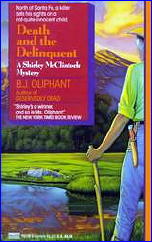
      Death and the Delinquent (n.) Gold Medal, 1993.

bj oliphant

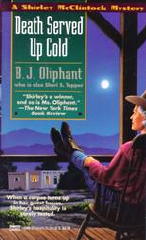
      Death Served Up Cold (n.) Gold Medal, 1994.

bj oliphant

      A Ceremonial Death (n.) Gold Medal, 1996.
      Here’s to the Newly Dead (n.) Gold Medal, 1997.

THE CURMUDGEON IN THE CORNER
by William R. Loeser


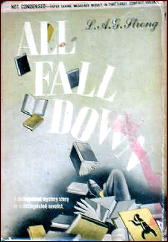
L. A. G. STRONG – All Fall Down. Collins Crime Club, UK, hc, 1944. Doubleday Crime Club, US, hc, 1944 (shown). Canadian paperback: White Circle #221, 1945.

L. A. G. STRONG

    All Fall Down is much the same kind of book [as Death and the Night Watches, by Vicars Bell, reviewed here earlier] and even better.

    [That book was described, in part, as “another of that enjoyable sub-genre, the English village murder, chock-a-block with well-distinguished local characters.”]

    Inspector Ellis McKay has just finished a difficult case, so his friend, used-bookseller Paul Gilkison, takes him with him to appraise the library of Matthew Baildon, bibliophile and domestic tyrant.

    Unfortunately, before they are well-started, someone assists Baildon’s overloaded bookshelves in collapsing on his head. McKay takes over the investigation and proves himself to be, in addition to a bookworm, a trencherman, happy napper, and composer, as well as a shrewd judge of human nature.

    Here the brow-beaten woman is the wife and the daughter’s hope for escape the university, not marriage. But these two have a wonderful auntie to comfort them, and the girl has two tutors competing for the chance to improve her mind — an excessively-healthy male with an invalid wife and a female with the need to dramatize her humdrum life. Turns out [deleted] did it, but the unlikeliness of this after years of abjection did not spoil my pleasure in what went before.

    In this case, McKay becomes friends with his local counterpart, Inspector Broadstreet, with whom he has later adventures that I’m looking forward to reading.

– From The MYSTERY FANcier, Vol. 3, No. 4, July-Aug 1979       (slightly bowdlerized).


   Bibliographic data. Strong’s entry in the Revised Crime Fiction IV, by Allen J. Hubin, includes five novels and five short story collections. Inspector McKay appears in four of the novels. Of these, the ones in which Inspector Broadstreet also appears, as Bill suggests, is unfortunately not noted. Of the author himself, L. A. G. Strong was born in 1896, and he passed away in 1958. Al Hubin also says: “Born in Plympton; educated at Brighton College and Oxford; author, editor, journalist, and reviewer; Assistant Master at Oxford.”

McKAY, INSP. (Chief Insp.) ELLIS     [L. A. G. Strong]
      All Fall Down (n.) Collins, 1944.
      Othello’s Occupation (n.) Collins, 1945. US title: Murder Plays an Ugly Scene. Doubleday, 1945.
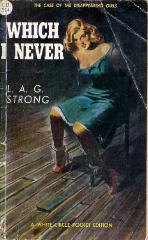
      Which I Never (n.) Collins, 1950.

L. A. G. STRONG

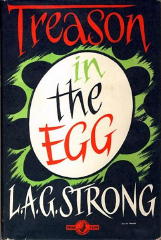
      Treason in the Egg (n.) Collins, 1958.

L. A. G. STRONG

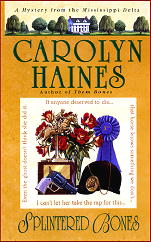
CAROLYN HAINES – Splintered Bones. Dell, paperback reprint: February 2003. Hardcover edition: Delacorte, February 2002.

   There’s a huge difference between mysteries like the recent pair of “Golden Age” novels by G. D. H. and Margaret Cole I reviewed recently, especially the latter, and this one, and that’s the amount of personal life of the detective we get to become a part of.

CAROLYN HAINES

   Sarah Booth Delaney is trying to make a go of it as a private investigator, and as a former pampered Daddy’s Girl, southern-belle Mississippi-Delta style, she hasn’t quite succeeded in getting her own life on track — and she has a ghost in her house who keeps telling her that. (Sarah Booth is on the wrong side of thirty, not married, and she has no viable prospects in sight.)

   This, her third major case, seems to come straight from a Dixie Chicks’ country song. You may know the one. The dead man was a wife abuser, a lousy father, and has been compulsively piling up gambling debts. He’s all-around No Good. No one has a decent word to say about him. His wife Lee has confessed. Her only defense is that Kemper Fuquar deserved to die, and she hires Sarah Booth to help her prove it.

   Part of the deal is taking in Lee’s sullen 14-year-old daughter Kip, who proves to be the heart of the matter, in more ways than one. A teenager in her home? It proves to be just what Sarah Booth’s heritage and home, Dahlia House, needs.

   Kip may also be the reason for her mother’s confession, which serves to complicate matters, and she’s just one of the fine characters Carolyn Haines gives us a sharp, keen insight into. But the over 350 pages of small print are also filled with a meandering investigation, and the facts seem awfully mushy. (If the right questions were asked at the right time, and of the right people, the book could easily have been 100 pages shorter.)

   And when tragedy strikes again, Sarah Booth’s reactions are surprisingly flat, along with everyone else’s. Are they suddenly all on Prozac? For all but these few pages, the inhabitants of the small southern town of Zinnia are filled with a zingy zest for life, and the singular lack of a more emotional response to this remarkable night of misadventure just doesn’t ring true.

   The book’s well worth reading, in other words, but the recommendation comes with some small little warning flags as well. Adjust to your own tastes and preferences.

— February 2003


Bibliographic Data: The Sarah Booth Delaney Mysteries. For full coverage of all of Carolyn Haines’ work, both fiction and non-fiction, visit both her website and a very good external one, located here.

Them Bones. Bantam, pb, Nov 1999.

CAROLYN HAINES

Buried Bones. Bantam, pb, Oct 2000.
Splintered Bones. Delacorte, hc, Feb 2002; Dell, pb, Feb 2003.
Crossed Bones. Delacorte, hc, April 2003; Dell, pb, Feb 2004.
Hallowed Bones. Delacorte, hc, March 2004; Dell, pb, Jan 2005.

CAROLYN HAINES

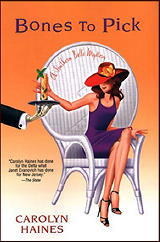
Bones to Pick. Kensington, hc, July 2006; pb, June 2007.
Ham Bones. Kensington, hc, July 2007; pb, June 2008.
Wishbones. St. Martin’s, hc, June 2008; pb, June 2009.
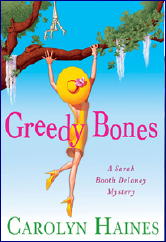
Greedy Bones. St. Martin’s, hc, July 2009.

CAROLYN HAINES

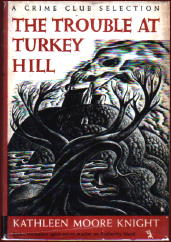
KATHLEEN MOORE KNIGHT – The Trouble at Turkey Hill.

Doubleday Crime Club, hardcover, 1946. Hardcover reprint: Detective Book Club [3-in-1 edition], June 1946.

KATHLEEN MOORE KNIGHT Turkey Hill

   My wife Judy and I moved to Connecticut in 1969. I’m a transplant from Michigan and not a native New Englander at all. I don’t know if there really is a Penberthy Island, where many of Kathleen Moore Knight’s books take place, and if there isn’t, while I can’t tell you which one she may have used as a model, Martha’s Vineyard certainly suggests itself.

   No matter. There has to be plenty of communities all along the Cape Cod coast that are just like it, and all of them are ideal places to live, too, if you don’t mind tourists. I count a total of sixteen Elisha Macomber murder mysteries, he being her most commonly used series character. On a per capita basis, I think you’d have to admit, Penberthy would have to be a terribly dangerous place to hang your hat.

   What Elisha Macomber does is operate the village fish market, but besides that, he’s also the chairman of the local Board of Selectmen. So in addition to being considered an autocratic father figure by the entire island, he’s also the investigative officer whenever another murder occurs.

   In this case he’s in charge of tracking down the killer of the wife of a recently returned war veteran.

   Telling the story is Miss Marcella Tracy, librarian and former school teacher. A lot of strange things happen to confuse matters, and even though everyone already has a sharp eye out into everyone else’s affairs, I got the feeling that calling all the suspects together into one big room to be confronted with all the evidence all at once might not have been such a bad idea. It’s that kind of story.

   I’m too embarrassed to say that I mucked the solution up something fierce, so I won’t.

— Reprinted from The MYSTERY FANcier, Vol. 3, No. 4, July-Aug 1979 (revised).


[UPDATE] 02-28-09.   One of the corrections I made in the review was the number of Elisha Macomber books there were. The number above is now the right one. Kathleen Moore Knight also wrote four books between 1940 and 1944 with Margot Blair as the leading character. According to the Golden Age of Detection Wiki, Blair was a partner in a public relations firm called Norman and Blair.

   I don’t think I’ve read any of the latter’s adventures, but I have read (and as I recall, enjoyed) three or four of Elisha Macombers, which appeared over a long period of time, from 1935 to 1959. That’s a long run for a fellow who’s probably next to unknown to most mystery readers today. It is a shame.

   From the Revised Crime Fiction IV, by Allen J. Hubin, here’s a list of all sixteen. Note that a couple of pre-war cases took place in Panama. Macomber then disappeared for six years while the war was going on. I wonder what that was all about.

MACOMBER, ELISHA    [Kathleen Moore Knight]

      Death Blew Out the Match (n.) Doubleday 1935 [Massachusetts]
      The Clue of the Poor Man’s Shilling (n.) Doubleday 1936 [Massachusetts]
      The Wheel That Turned (n.) Doubleday 1936 [Massachusetts]
      Seven Were Veiled (n.) Doubleday 1937 [Massachusetts]
      Acts of Black Night (n.) Doubleday 1938 [Massachusetts]
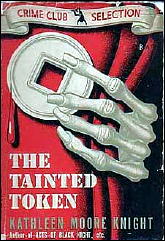
      The Tainted Token (n.) Doubleday 1938 [Panama]

KATHLEEN MOORE KNIGHT

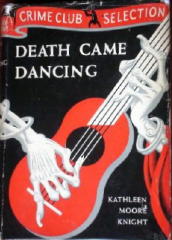
      Death Came Dancing (n.) Doubleday 1940 [Panama]

KATHLEEN MOORE KNIGHT

      The Trouble at Turkey Hill (n.) Doubleday 1946 [Martha’s Vineyard]
      Footbridge to Death (n.) Doubleday 1947 [Martha’s Vineyard]
      Bait for Murder (n.) Doubleday 1948 [Martha’s Vineyard]
      The Bass Derby Murder (n.) Doubleday 1949 [Martha�s Vineyard]
      Death Goes to a Reunion (n.) Doubleday 1952 [Massachusetts]
      Valse Macabre (n.) Doubleday 1952 [Martha’s Vineyard]
      Akin to Murder (n.) Doubleday 1953 [Massachusetts]
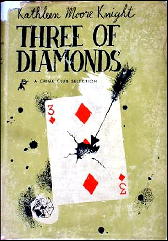
      Three of Diamonds (n.) Doubleday 1953 [Martha’s Vineyard]

KATHLEEN MOORE KNIGHT

      Beauty Is a Beast (n.) Doubleday 1959 [Martha’s Vineyard]

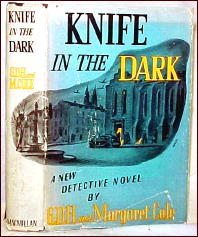
G. D. H. & MARGARET COLE – Knife in the Dark.

Collins Crime Club, UK, hardcover; Dec 1941. The Macmillan Co., US, hardcover, 1942 (shown).

GDH & M COLE Knife in the Dark

   More than usual, there are a couple of remarkable aspects to this wartime mystery. The first is the identity of the primary sleuth, and it is definitely not private detective James Warrender, as I carelessly (and rather chauvinistically) assumed when I picked the book up to read. Unh-uh. Not at all. It’s Mrs. Elizabeth Warrender instead. His mother.

   Belatedly checking with Hubin’s Crime Fiction IV, I found that this was the only full length novel in which Mrs. Warrender was in. Altogether the Coles wrote more than thirty mysteries, and the detective in most of them was Scotland Yard’s Superintendent Wilson. While James Warrender’s mother appeared in an earlier collection of novelettes and short stories called Mrs. Warrender’s Profession, 1939, this was the only novel.

   Someone else will have to tell me, because I can’t come up with any — what other private eye character ever found himself upstaged in a detective story by his mother?

   The other aspect that I found remarkable — and so, therefore, I’m obliged to remark on it, aren’t I? — was the identity of the murder victim. Up until her death, I thought she had the most vibrant, most interesting personality of anyone else in the book, and it was difficult to see her go.

   Not that she was without faults. Check the date of the novel again. As the wife of a dull academic in a university town, the woman was well known for her intolerance and for speaking out against the aliens being resettled in the city — refugees from a Europe suffering from a war we here in which the United States had not yet become involved. The lady was also a bright flame in the town’s small community of scholars, drawing unattached students to her like the proverbial moths, not to mention the occasional faculty member.

   She, in fact, is at one point described in a word I doubt that Agatha Christie ever used, a nymphomaniac. (Erle Stanley Gardner might have called this book The Case of the Unscrupulous Siren.)

   The murder takes place at a public dance for which she was the hostess, and there are many suspects, many opportunities, a coincidence or two, and — it’s just the kind of mystery the Golden Age of Detective Stories is known for, even if the details of the plot aren’t quite as sharp as they should be. (Fuzzy around the fringes, you might say.)

   Mrs. Warrender, approaching 70 in this book, is perhaps of a little higher class standing than the aforementioned Mrs Christie’s Miss Marple, but she has the right instincts, and I humbly apologize to her for wondering why on earth the private eye’s mother is tagging along with him.

— February 2003


[UPDATE] 02-25-09. Quite remarkably, when I fished this review of out of the “archives,” the only two things that I remembered about the book were the two things that I wrote about it in my commentary. Either I was spot on in writing it up the first time, or in the process of writing it up, it reinforced in my mind the two aspects of it that I would find again remarkable at a later date; that is to say, now.

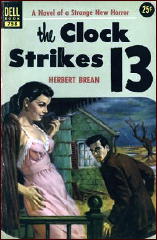
HERBERT BREAN – The Clock Strikes Thirteen.

William Morrow, hardcover, 1952. Paperback reprint: Dell 758, [1954]. A shorter version first appeared in Cosmopolitan magazine, June 1952.

HERBERT BREAN

   I’ll tell you this, I’ve never read a mystery quite like this one. It takes place on a desolate island, off the coast of Maine. There’s no animal life and no vegetation. It’s completely dead and abandoned, all except for a small group of dedicated research biologists, busily working away on more, even more deadly concoctions for the Defense Department.

   But soon after journalist-photographer Reynold Frame arrives, summoned by a soon-to-be announced discovery, the scientist in charge (not quite mad) is clubbed to death, and several trays of germ culture are overturned. With all contact with the mainland cut off, and with the threat of sudden death constantly in the air, the murder investigation perforce goes on.

   In spite of the bizarre, even grotesque setting, Frame does a more than passable job of detection. However, after recently reading any number of newspaper articles of sheep, nerve gas and the like; and considering what we know now about how easily science can be used to kill effectively and indiscriminately, reading Brean today, he’s not half as frightening as he could have been.

   I’m sure he used all the information about bacteriological warfare that he was allowed access to, but looking back, I think that 25 years ago we were all probably quite naive.

PostScript: This was the last of the four mystery novels that Reynold Frame appeared in. He seems to have walked from the rescue boat onto the Maine shoreline, and into oblivion.

— Reprinted from The MYSTERY FANcier, Vol. 3, No. 4, July-Aug 1979 (slightly revised).


[UPDATE] 02-23-09.   I can’t remember reading this book at all, so I can’t expand on what I said back then. Nor do I know very much about Herbert Brean, I’m sorry to say, only the list of seven titles that are listed under his name in the Revised Crime Fiction IV, by Allen J. Hubin.

   He was well enough regarded as a mystery writer, though, using Google as a guide, that at one time “he was a director and executive vice president of the Mystery Writers of America, a group for which he also taught a class in mystery writing.” (Wikipedia)

   A series detective named William Deacon (described in several places as a “crack magazine writer”) appears in his last two mysteries, both published in the 1960s. But taken from CFIV, here’s the list of all four in which Reynold Frame did the detecting.

FRAME, REYNOLD     [Herbert Brean]
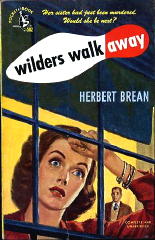
      Wilders Walk Away (n.) Morrow 1948.   [An impossible crime mystery.]

HERBERT BREAN

      The Darker the Night (n.) Morrow 1949.
      Hardly a Man Is Now Alive (n.) Morrow 1950.
      The Clock Strikes Thirteen (n.) Morrow 1952.

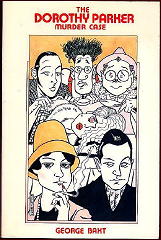
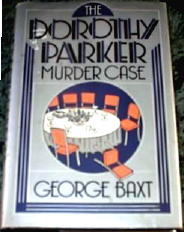
GEORGE BAXT – The Dorothy Parker Murder Case.

International Polygonics; reprint paperback; 1st printing, April 1986. Hardcover edition: St. Martin’s Press, 1984. Trade paperback reprint: IPL, November 1989.

GEORGE BAXT

   I’ve been struggling to remember, but I think this is the first book by George Baxt that I’ve ever read. The Dorothy Parker Murder Case is the first of three series of detective novels he wrote, along with five stand-alone works of crime fiction. His series charcaters were:

      1. Pharaoh Love: New York City homicide detective in New York, both black and gay.
      2. Sylvia Plotkin and Max van Larsen: New York City author and police detective.
      3. Jacob Singer: New York City homicide detective, later a 1940s LA private eye, or so I’ve been told.

   While I was reading it, I didn’t realize that Dorothy Parker was Singer’s first recorded case. He and the celebrated Mrs. Parker had met previously when this case begins – that of the mysterious deaths of several Manhattan-based show girls — but when, how, and on what basis it happened they met was never the subject of a mystery novel of its own.

   When Baxt, who died in 2003, was writing the Jacob Singer books, I was going through a phase in which I paid no attention to mystery fiction that had “real people” in them. I had no idea until yesterday that Baxt had written so many of them. (See the complete list at the end of this review.)

   I can’t tell you why I had that particular prejudice. If I had a bad experience with a novel with a real person in it, it’s possible, but I simply don’t remember. Sometimes otherwise normal people do silly things.

GEORGE BAXT

   I also have never done any reading about Dorothy Parker and the famed Algonquin Round Table, nor read any but the briefest poems among her huge accumulation of literary work. I suppose there’s enough time left in my life to make up for various deficiencies like this, and instead of writing reviews, I sometimes think maybe I really ought to be doing something about it.

   In this book, which takes place immediately following the tragic death of Rudolph Valentino in 1926, the following real people appear, and I know I’m omitting some: Dorothy Parker, of course; her sleuthing partner, Alexander Woolcott; George S. Kauffman, in whose apartment the first dead girl is found; Robert Benchley; Marc Connelly; Judge Crater; Polly Adler; Edna Ferber; George Raft; Harold Ross; Flo Ziegfeld; Neysa McMein; Horace Liveright; Marie Dressler; Elsa Maxwell; Jeanne Eagels; and more.

   Not that all of these have big parts, but if what George Baxt says about them and their whoring and drinking, it’s remarkable that any of them grew up to be famous. There are puns, zingers and witticisms in this book galore, nearly one on every page.

   Picking a page at random, here’s a long passage that begins by describing Jacob Singer as he walks into Kauffman’s apartment to see the dead girl there in the bed:

    He [Singer] spent money on clothes and general good grooming and forced himself to read Dickens, Henry James, and on one brief depressing occasion, Tolstoy. He attended the theater and concerts as often as possible, but the opera only under the threat of death. Mrs. Parker’s admiration for the man was honest and limitless. “Okay, Mr. Kaufman, what’s the problem?”

    “I’ve got a dead woman in the bedroom.”

    “I’ve had lots of those, but usually they get dressed and go home.”

    They followed him into the bedroom. “Oh boy, oh boy. That is one ugly stiff.”

    “She used to be quite beautiful,” said Kaufman. “Ilona Mercury.”

    Singer pierced the air with a shrill whistle of astonishment. “I’d never guess. Would you believe just the other night I saw her in Ziegfeld’s revue, No Foolin’.”

    “We believe you,” said Mrs. Parker.

    Singer shot her a look. “No Foolin’ is the name of the show. It’s at the Globe.”

    “Oh. I’ve been away.”

    “Let’s get back to the other room. This is too depressing. Imagine a beautiful broad like that turning into such an ugly slab of meat. That’s life.”

    “That’s death,” corrected Mrs. Parker.

GEORGE BAXT

    Here’s another:

   [Harold] Ross leaned forward and aimed his mouth at Mrs. Parker. “How come you’re so privy to all this inside dope?”

   A puckish look spread across Benchley’s face. “Oh, tell me privy maiden, are there any more at home like you?”

    He was ignored. Mrs. Parker was struggling with her gloves. “Last night when dining with Mr. Singer, I told him Alec and I were seriously considering collaborating on a series of articles about contemporary murders.”

    Ross looked dubious. “You and Alec collaborating? That’s like crossing a lynx with a mastodon.”

    “And why not?” interjected Woollcott. “Might be fun. Where are you off to, Dottie?”

    “Where are we off to, sweetheart. Why, we’re off to Mrs. Adler’s house of ill repute as Mr. Singer’s companions. He’s picking us up in a squad car in a few minutes. If you’re a good boy, he’ll let you stand on the running board with the wind in your hair.”

    The less said about the mystery the better, and you will have noticed that I’ve already done so. That’s not what you’re paying your money for this time around. For what it’s worth, of the real people above, George Raft fares the worst at the hands of Mr. Baxt’s typewriter. Of the people who weren’t real until Mr. Baxt came along, though, you may be sure that many of them fare much worse.

    In summary, then, in case you’re wondering, do I intend to track down and read the rest of Jacob Singer’s adventures? Yes, indeed I do, and here’s a complete list of them, based on his entry on the Thrilling Detective website. (Not all of these are listed in the Revised Crime Fiction IV. I will pass the information along to Al Hubin.)

* The Dorothy Parker Murder Case (1984)
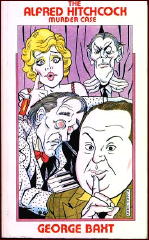
* The Alfred Hitchcock Murder Case (1986)

GEORGE BAXT

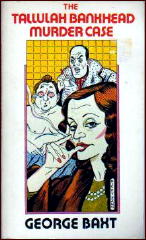
* The Tallulah Bankhead Murder Case (1987)

GEORGE BAXT

* The Talking Pictures Murder Case (1990)
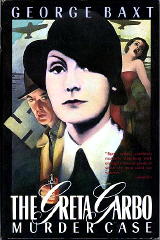
* The Greta Garbo Murder Case (1992)

GEORGE BAXT

* The Noel Coward Murder Case (1992)
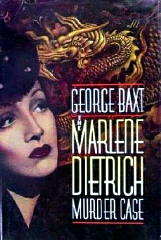
* The Marlene Dietrich Murder Case (1993)

GEORGE BAXT

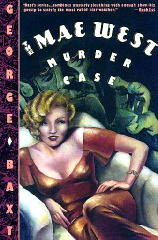
* The Mae West Murder Case (1993)

GEORGE BAXT

* The Bette Davis Murder Case (1994)
* The Humphrey Bogart Murder Case (1995)
* The William Powell & Myrna Loy Murder Case (1996)
* The Fred Astaire & Ginger Rogers Murder (1997)
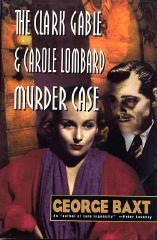
* The Clark Gable & Carole Lombard Murder (1997)

GEORGE BAXT

« Previous PageNext Page »