Characters


A 1001 MIDNIGHTS Review by Ellen Nehr:


THE CASE BOOK OF JIMMIE LAVENDER

VINCENT STARRETT – The Case Book of Jimmie Lavender. Gold Label, hardcover, 1944. Hardcover reprint: Bookfinger, 1973.

   Comprising about a fourth of the published cases of Jimmie Lavender, the only sleuth in mystery fiction named for a major-league baseball player, these twelve tales from the Twenties and Thirties are representative examples of the now mostly forgotten detective short stories of Vincent Starrett, better known today as the biographer of Lavender’ s inspiration, Sherlock Holmes.

   By modern standards, none is of the first rank, but most are well-plotted puzzles cast in the classic mold, with a nice blend of cerebral deduction and physical action, and even fifty years and more later they have their attractions.

   Several of the victims in the ten episodes concerned with murder are dispatched in picturesque ways and in a variety of interesting settings. Among the latter: a nightclub, a cruise ship, a golf course, a hospital, a university campus not far from the grounds of the 1933 Chicago World’s Fair, and even an airplane cockpit.

   In one of the tales, a house “vanishes”; in another, the scene of the crime itself disappears; in a third — a locked-room homicide — the case is solved twenty years before it occurs. And every so often the proceedings are enlivened with some typical Chicago-style gunplay.

   Though not as fully realized or memorably limned as some of his more celebrated Golden Age contemporaries, Lavender himself is an engaging protagonist, warm and whimsical throughout, though perhaps a bit too omniscient at times. He is aided in his investigations by his equally likable companion and chronicler, “Gilly” Gilruth, a refreshingly able Watson.

   Taken in small doses, their adventures are still fun to read, both for their own sake and as pleasantly nostalgic reminders of a more innocent era in the history of the crime-fiction genre.

Vincent Starrett

   Starrett also published a number of mystery novels, none of which is particularly distinguished. Three of these feature a detective with the unlikely name of Walter Ghost: Murder on “B” Deck (1929), Dead Man Inside (1931), and The End of Mr. Garment (1932).

   Starrett’s best novel, however, is probably Murder in Peking (1946), which has a nicely evoked Chinese background. Other of Starrett’s criminous short stories can be found in Coffins for Two (1924) and The Blue Door (1930); two of the stories in the later volume feature Jimmie Lavender.

         ———
   Reprinted with permission from 1001 Midnights, edited by Bill Pronzini & Marcia Muller and published by The Battered Silicon Dispatch Box, 2007.   Copyright © 1986, 2007 by the Pronzini-Muller Family Trust.

CHARLES G. BOOTH – Murder at High Tide.

Charles Booth, Murder at High Tide

William Morrow & Co., hardcover, 1930. UK edition: Hodder & Stoughton, 1930.

   This story of a domestic tyrant who’s found murdered in his library has a lot of what attracted me to mysteries in the first place.

   Even so, while fun to read, an honest appraisal would have to rank it only a notch or so above the Hardy Boys. And as in a vintage Charlie Chan movie, the dead man’s mansion is full of suspects at each other’s throats, with wild accusations and amazing discoveries coming at every moment.

   The hero is a young antiques dealer, in his own words, an ass with women. (No further comment.) The detective is Anatole Flique, a comically suave French policeman, although the murder does take place on an island just off the California coast. In his own words, he’s the cleverest on the Paris Surete. He’s also greatly given to twirling his mustaches and busily polishing the top of his head, all the while contemplating life’s little mysteries.

   There are tons of false evidence, most of it leading to dead ends, but I think that the killer, in spite of his or her alibi, should be spotted at once. The style is not John Dickson Carr’s, but it is his kind of story. If there’s no locked room, it’s only because then there wouldn’t have been quite so much fun with alibi-breaking, which in Murder at High Tide is the name of this particular game.

— Reprinted from The MYSTERY FANcier, Vol. 3, No. 4, July-Aug 1979 (slightly revised).


[UPDATE] 01-14-09.  One of the revisions I made was to add the name of the French detective who worked on this case. Obviously I had no idea that he appeared in more than one book, but he did. From the Revised Crime Fiction IV, by Allen J. Hubin, here’s his complete dossier:

FLIQUE, ANATOLE [Charles G. Booth]
       o Murder at High Tide (n.) Morrow 1930 [California]
       o The Cat and the Clock (n.) Doubleday 1935 [Los Angeles, CA]
       o Kings Die Hard (n.) Hammond 1949 [California; 1929]

   This last book never had a US edition. It came out in 1949, the same year that the author died. According to Wikipedia, Charles G. Booth was “a British-born writer who settled in America and wrote several classic Hollywood stories, including The General Died at Dawn (1936) and Sundown (1941). He won an Academy Award for Best Story for The House on 92nd Street in 1945. […] He also penned the source story for Paul Mazursky’s 1988 film Moon Over Parador.”

HARD BOILED OMNIBUS

   I’d never realized until now that Booth was originally from England. Besides the fiction he wrote in novel form, I know his name from many stories he wrote for Black Mask, the quintessential hard-boiled American detective pulp magazine.

   In fact, he has the unfortunate distinction of being one of the three authors whose stories were deleted from the paperback edition of The Hard-Boiled Omnibus (Simon & Schuster, 1946), edited by Joseph T. Shaw. This is a great reason why you should own the hardcover edition, not just the one reprinted by Pocket (1952).


A 1001 MIDNIGHTS Review by Max Allan Collins:


RICHARD STARK – Butcher’s Moon.

RICHARD STARK

Random House, hardcover, 1974. Paperback reprint: Avon, 1985. UK edition: Coronet, pb, 1977.

   To date [1986] there have been sixteen novels about hard-bitten professional thief Parker, and Butcher’s Moon is the sixteenth. Nearly twice as long as any single previous entry in the series, it represents a culmination of themes and a summation of events, but leaves the eager reader afraid that Richard Stark (Donald E. Westlake) may have nothing left to say about his enigmatic antihero. Since at this writing it has been ten years since the publication of Butcher’s Moon, that conclusion seems warranted.

   Parker and his sometime partner, actor Alan Grofield, return to Tyler, the scene of a botched armored-car robbery of several years previous, the take of which was abandoned out of necessity. At the time Parker had said, “I know where it is. Someday I’ll go back and get it.”

RICHARD STARK

   That day is now, and Parker sets out to retrieve the money from Lonzini, the mobster Parker figures found the money. When Lonzini fails to cooperate, Parker and Grofield begin pulling jobs — hitting a gambling casino, drug dealer, numbers operation, etc. Much like the Continental Op in Hammett’s Red Harvest, Parker’s activities trigger power plays within the local mob, while the level of violence escalates.

   When Grofield is captured, Parker assembles a string of thieves (characters from previous Stark novels) to pull a simultaneous series of capers he has carefully worked out. From the grand haul these jobs will realize, Parker plans to take no share — he merely asks his fellow thieves to repay him for his work by helping him afterward: “I want Grofield back, and I want my money. And I want those people dead.”

   The twelve men are to hit the mob “safe house” where Grofield is being held, and kill all his captors. Stark builds climax upon climax as the various capers play out and as bullets fly and bodies pile up.

RICHARD STARK

   Butcher’s Moon brings Parker full circle: Taking on the mob in order to retrieve “his” money (never mind that it was stolen from somebody else to begin with) was where Parker began in the trilogy of The Hunter (1962), The Man with the Getaway Face (1963), and The Outfit (1963).

   Significantly, Butcher’s Moon reveals Parker a changed man. While neither he nor Stark would likely admit it, Parker has “mellowed” — he gathers his friends together to rescue a friend. And as one of those friends, father figure Handy McKay, tells him, “That’s not like you … going to all this trouble for somebody else ”

   Handy also questions Parker’s seeking revenge: “I’ve never seen you do anything but play the hand you were dealt.”

RICHARD STARK

   Parker’s association with Grofield and his attachment to his live-in love, Claire (begun in The Rare Coin Score, 1967), have ever so subtly humanized him. This seems to make him, and Stark, uneasy. And that may explain the long silence from Stark since Butcher’s Moon.

    If Butcher’s Moon is indeed the final Parker, crime fiction’s greatest antihero certainly goes out with a bang, with all the cast brought back on stage for one last supercaper. And while he may indeed be turning into a human being, Parker is no less capable of his usual coldblooded violence.

   Nor is Stark shy about depicting such shocking scenes as the one in which Parker is delivered a severed finger that once belonged to Grofield (not only a continuing character in this series but the hero of four of his own Stark novels). When the mob bearer of these bloody tidings says “I’m only the messenger,” Parker shoots and kills him, saying, “Now you’re the message.”

         ———
   Reprinted with permission from 1001 Midnights, edited by Bill Pronzini & Marcia Muller and published by The Battered Silicon Dispatch Box, 2007.   Copyright © 1986, 2007 by the Pronzini-Muller Family Trust.

LEONARD R. GRIBBLE – The Grand Modena Murder.

LEONARD GRIBBLE The Grand Modena Murder

Doubleday Doran/Crime Club, hardcover, [1931]. Prior UK edition: George G. Harrap, hc, 1930. Paperback reprint: Cherry Tree, UK, ca.1944.

   The earliest books that were published under Doubleday’s Crime Club imprint showed decidedly English overtones. Like this one, a great many of their selections between 1929 and 1933 first appeared on the other side of the Atlantic.

   This one was written by Leonard Gribble when he was still very young, only 23, and perhaps as a result it nicely shows a grand youthful passion for melodrama and determined, awkward telling. Over a long career, Gribble wrote well over 50 other mysteries, both under his own name and others. Crime Club published only two or three of them, however, and most of his work has never appeared in this country.

   The Grand Modena that gives the book its name is a hotel, one of London’s finest. The opening scene is a confrontation that takes place in the ballroom, between a young man and the father of the girl he loves.

LEONARD GRIBBLE The Grand Modena Murder

   Apparently the older man is something less than a completely trustworthy business associate as well. Not altogether to our surprise, he’s found the next morning murdered in his room upstairs. Detective Inspector Anthony Slade is immediately called in as the representative of Scotland Yard’s famed Criminal Investigation Department.

   Slade lives and breathes the entire investigation that follows. He eats it, he sleeps it, and over and over again he reasons his way through the treacherously tangled skein that the past has made of numerous intertwined secrets.

   If the internal workings of a detective’s mind is what you find yourself yearning for in a story, without the noisome clutter of a troubled domestic home life, this is a story built for you.

   But even so, if details like watching Slade look through a lens for fingerprints upon a dagger already cleaned by the doctor bother you, and if you believe that detectives, even policemen, are only human too, you may begin to have doubts.

— Reprinted from Mystery*File 33, Sept 1991 (slightly revised).


[UPDATE] 01-06-09.   In spite of my rather lukewarm comments, Inspector Slade went on to have one the longer careers in the annals of Scotland Yard. I’ll add a complete listing of all his full-length novel appearances below. Gribble wrote a few other works of crime fiction in which Slade did not appear, and these are not included in this list.

   I also mentioned that Gribble used other pen names. There’s a fellow named John Creasey who used more, but Gribble is right up there as a leader in this particular category. The following information comes from the Revised Crime Fiction IV, by Allen J. Hubin:

GRIBBLE, LEONARD R(eginald). 1908-1985. Pseudonyms: Sterry Browning, James Gannett, Leo Grex, Louis Grey, Piers Marlowe, Dexter Muir & Bruce Sanders.

SLADE, SUPT. ANTHONY

o The Case of the Marsden Rubies (n.) Harrap 1929 [England]
o The Gillespie Suicide Mystery (n.) Harrap 1929 [England]
o The Grand Modena Murder (n.) Harrap 1930 [England]
o Is This Revenge? (n.) Harrap 1931 [England]
o The Stolen Home Secretary (n.) Harrap 1932 [England]
o The Secret of Tangles (n.) Harrap 1933 [England]

LEONARD GRIBBLE

o The Yellow Bungalow Mystery (n.) Harrap 1933 [England]
o The Death Chime (n.) Harrap 1934 [England]
o The Riddle of the Ravens (n.) Harrap 1934 [England]

LEONARD GRIBBLE

o Mystery at Tudor Arches (n.) Harrap 1935 [England]
o The Case of the Malverne Diamonds (n.) Harrap 1936 [England]
o Riley of the Special Branch (n.) Harrap 1936 [England]
o The Case-Book of Anthony Slade (co) Quality 1937 [England]
o Who Killed Oliver Cromwell? (n.) Harrap 1937 [England]
o Tragedy in E Flat (n.) Harrap 1938 [England]
o The Arsenal Stadium Mystery (n.) Harrap 1939 [England]
o Murder First Class (n.) Burke 1946 [England; Train]
o Atomic Murder (n.) Harrap 1947 [England]
o Hangman’s Moon (n.) Allen 1950 [England]
o They Kidnapped Stanley Matthews (n.) Jenkins 1950 [England]
o The Frightened Chameleon (n.) Jenkins 1951 [England]
o The Glass Alibi (n.) Jenkins 1952 [England]
o Murder Out of Season (n.) Jenkins 1952 [England]
o She Died Laughing (n.) Jenkins 1953 [France]
o The Inverted Crime (n.) Jenkins 1954 [England]

LEONARD GRIBBLE

o Death Pays the Piper (n.) Jenkins 1956 [England]
o Superintendent Slade Investigates (co) Jenkins 1956 [England]
o Stand-In for Murder (n.) Jenkins 1957 [England]
o Don’t Argue with Death (n.) Jenkins 1959 [England]

LEONARD GRIBBLE

o Wantons Die Hard (n.) Jenkins 1961 [England]
o Heads You Die (n.) Jenkins 1964 [England]
o The Violent Dark (n.) Jenkins 1965 [England]
o Strip-Tease Macabre (n.) Jenkins 1967 [England]
o A Diplomat Dies (n.) Jenkins 1969 [England]
o Alias the Victim (n.) Hale 1971 [England]
o Programmed for Death (n.) Hale 1973 [England]
o You Can’t Die Tomorrow (n.) Hale 1975 [England]
o Midsummer Slay Ride (n.) Hale 1976 [England]
o Crime on Her Hands (n.) Hale 1977 [England]
o Death Needs No Alibi (n.) Hale 1979 [England]
o Dead End in Mayfair (n.) Hale 1981 [England]
o The Dead Don’t Scream (n.) Hale 1983 [England]
o Violent Midnight (n.) Hale 1986 [England]

A 1001 MIDNIGHTS Review by Bill Pronzini:


DONALD E. WESTLAKE – Levine.

DONALD WESTLAKE Levine

Mysterious Press, hardcover, 1984. Paperback reprint: Tor, 1985. No UK edition.

   In the late Fifties and early Sixties, Westlake was a frequent contributor to the digest-size mystery magazines. Included among his output were five novelettes — four published in Alfred Hitchcock’s Mystery Magazine between 1959 and 1962 and one in Mike Shayne Mystery Magazine in 1965 — about Abraham Levine, a detective with Brooklyn’s Forty-Third Precinct.

   Levine is no ordinary cop; he is fifty-three years old and lives on the edge of his emotions, constantly worrying about his aged heart, constantly taking his pulse; a man who is “so tensely aware of his own inevitable death that he wound up hating people who took the idea of death frivolously,” as Westlake writes in his introduction to this collection of the five early Levine stories plus one brand-new novelette.

   Each of Levine’s cases ties in with his relationship with death, “his virtual romance with death,” for “death fascinated Levine, it summoned him and yet repelled him.”

    “The Best-Friend Murder” involves him in a complicated psychological case of murder and suicide whose principals are both young, healthy males.

DONALD WESTLAKE Levine

    In “‘Come Back, Come Back … ’” it is Levine versus a man on a ledge, a man who wants to take his own life.

    In “The Feel of the Trigger,” perhaps the best of the four AHMM novelettes, it is Levine versus Levine when he is forced into a kill-or-be-killed showdown with a teenage murderer.

    “The Sound of Murder” takes Levine “farther down the same road, and when I finished it,” Westlake says, “I wondered if I hadn’t gone too far … made him someone no longer relevant to his theme.”

    Not so. He brought Levine back for one more appearance, albeit three years later, in “Death of a Bum” — a story that was rejected by AHMM and other markets because it has no resolution, because it has instead one of the most painfully emotional endings of any story in the genre. It was and is the ultimate Levine story; Westlake knew it and retired the character.

    Until 1984, that is, when the idea for this collection was broached to him. The early stories weren’t sufficient to make a complete book; he would have to write a sixth Levine novelette for that purpose.

   On the one hand, it is fortunate he agreed to do so, for now the early stories have been made available in book form. On the other hand, it is unfortunate that Westlake chose to write “After I’m Gone.”

DONALD WESTLAKE Levine

    Not because it is a bad story; it isn’t — it is Westlake at his most facile, with an up-to-the-minute plot involving high-tech gangsters and a perfectly fitting and proper resolution, both of the story and of the miniseries.

    No, the problem is that the intense feeling that makes the early works so poignant — the very core of the Levine series — is missing here. There is a detachment, a truncation of emotional content — as if Westlake, after twenty long years, has lost touch with the essence of his character.

   That one slick, somewhat superficial (and therefore frivolous) story keeps this collection from being what it should be: a wholly suitable monument to a man named Abraham Levine, a man who hated people who take the idea of death frivolously.

         ———
   Reprinted with permission from 1001 Midnights, edited by Bill Pronzini & Marcia Muller and published by The Battered Silicon Dispatch Box, 2007.   Copyright © 1986, 2007 by the Pronzini-Muller Family Trust.

REVIEWED BY WALTER ALBERT:         


ROBERT B. PARKER – Stone Cold. Putnam, hardcover, September 2003. Reprint paperback: Berkley, September 2004.

   The fourth in Parker’s series featuring transplanted L.A. cop Jesse Stone finds Jesse faced with a pair of cold-blooded serial killers (is there any other kind?) in Paradise, a small New England town where Stone is the police chief, and which has the promise (at least since his arrival) of developing into a typical Murder Town, U.S.A.

   Jesse is still in love with his ex-wife and seeing other women, trying to sort out his conflicting emotions with the help of a laconic psychiatrist, and committed to his job that offers a fresh challenge in each novel.

   I had thought the thrill-killer as a subject of mystery novels was pretty well worn out, but Parker gives it a good run, although I didn’t read this as carefully as I have some Parker novels.
   

VAL McDERMID – The Torment of Others. St. Martin’s, hardcover, April 2005; paperback, August 2006.

   McDermid’s series featuring criminal psychologist Tony Hill and DCI Carol Jordan has generated a BBC series that is inferior to the novels, and I just realized that three episodes from the most recent series on BBCAmerica are sitting unwatched on my DVD-R hard drive.

   I have to admit that Tony Hill wears less well as a character than Carol Jordan (and I find this true of the TV series as well). However, McDermid seems to have found a pattern that pleases many readers as a brilliant, psychotic serial killer tests the skills of the police and consultant Hill.

   I only wish that each successive novel didn’t seem less fresh than the preceding one.
   

JANET EVANOVICH – Ten Big Ones. St. Martin’s, hardcover, June 2004; paperback, June 2005.

   In her tenth appearance, Stephanie Plum becomes the target of a hit man when she antagonizes a Trenton NJ street gang.

   She spends a fair amount of time hiding out in the plush hideaway of her would-be boyfriend and super bounty hunter Ranger, getting turned on by sleeping in his bed and feeling guilty because she’s “unfaithful” to her other would-be (and more often than not her actual) boy-friend, Vice Cop Joe Morelli.

   Usual loony bunch of characters, and a now-you-see-it, now-you-don’t plot line that more or less keeps things afloat.

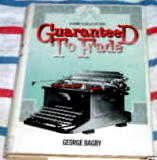
GEORGE BAGBY – Guaranteed to Fade.

GEORGE BAGBY Guaranteed to Fade

Doubleday Crime Club, hardcover, 1978. Hardcover reprint: Detective Book Club [3-in-1 edition], February 1979.

   The first time that George Bagby, himself a character in his own novels, told us about one of the mystery cases solved by his friend, Inspector Schmidt of the N.Y.P.D., was in 1935. This is his latest, the 44th in the series so far.

   As always, Schmitty complains a great deal about his aching feet, but he makes quick work of the murder of the many-times married Tommy Thomas, a prime example of how the rich find divorce so convenient a convention. To tell the truth, however, this one doesn’t take a lot of brain-power to figure out. The entertainment may be lighter than usual, but then again, I’m a confirmed addict.

— From The MYSTERY FANcier, Vol. 3, No. 4, July-Aug 1979.  This review also appeared earlier in the Hartford Courant.


[UPDATE] 12-31-08.   One thing that struck me when reading this review is that when I wrote them for the Courant, I generally had to keep them short, something I seem to have difficulty doing any more. Not that there’s anything wrong with that.

   The other thing that caught my attention was the very last word I used. George Bagby, in real life Aaron Marc Stein, aka Hampton Stone was one of my favorite writers, under all three names. I cringe at having to use the word “was,” since (once again) he’s an author I haven’t read in an awfully long time. Going through these old fanzines is bringing back lots of memories.

   In Mr. Bagby’s honor, and Inspector Schmidt’s as well, why not go for a long list of all of the latter’s adventures? Thanks to the Revised Crime Fiction IV, by Allen J. Hubin, here it is:

SCHMIDT, INSPECTOR [GEORGE BAGBY]

o Murder at the Piano (n.) Covici Friede 1935 [New York City, NY]
o Ring Around a Murder (n.) Covici Friede 1936 [New York]
o Murder Half Baked (n.) Covici Friede 1937 [New York City, NY]

GEORGE BAGBY

o Murder on the Nose (n.) Doubleday 1938 [New York City, NY]
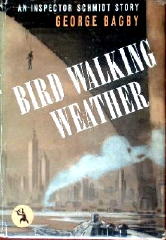
o Bird Walking Weather (n.) Doubleday 1939 [New York City, NY]

GEORGE BAGBY

o The Corpse with the Purple Thighs (n.) Doubleday 1939 [New Jersey; Academia]
o The Corpse Wore a Wig (n.) Doubleday 1940 [New York City, NY]
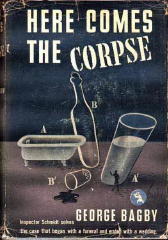
o Here Comes the Corpse (n.) Doubleday 1941 [New York City, NY]

GEORGE BAGBY

o Red Is for Killing (n.) Doubleday 1941 [New York City, NY]
o Murder Calling �50� (n.) Doubleday 1942 [New York City, NY]
o Dead on Arrival (n.) Doubleday 1946 [New York City, NY]
o The Original Carcase (n.) Doubleday 1946 [New York City, NY]
o The Twin Killing (n.) Doubleday 1947 [New York City, NY]
o In Cold Blood (n.) Doubleday 1948 [New York City, NY]
o The Starting Gun (n.) Doubleday 1948 [New York City, NY]
o Coffin Corner (n.) Doubleday 1949 [New York City, NY]
o Drop Dead (n.) Doubleday 1949 [New York City, NY]
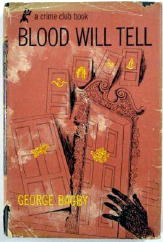
o Blood Will Tell (n.) Doubleday 1950 [New York City, NY]

GEORGE BAGBY

o Death Ain�t Commercial (n.) Doubleday 1951 [New York City, NY]
o The Corpse with the Sticky Fingers (n.) Doubleday 1952 [New York City, NY]
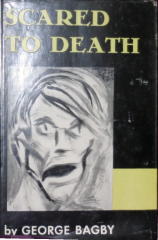
o Scared to Death (n.) Doubleday 1952 [New York City, NY]

GEORGE BAGBY

o Dead Drunk (n.) Doubleday 1953 [New York City, NY]
o Give the Little Corpse a Great Big Hand (n.) Doubleday 1953 [New York City, NY]
o The Body in the Basket (n.) Doubleday 1954 [Madrid]
o A Dirty Way to Die (n.) Doubleday 1955 [New York City, NY]
o Cop Killer (n.) Doubleday 1956 [New York City, NY]
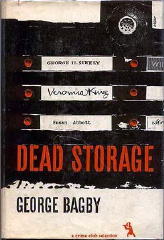
o Dead Storage (n.) Doubleday 1957 [New York City, NY]

GEORGE BAGBY

o Dead Wrong (n.) Doubleday 1957 [New York City, NY]
o The Three-Time Losers (n.) Doubleday 1958 [New York City, NY]
o The Real Gone Goose (n.) Doubleday 1959 [New York City, NY]
o Evil Genius (n.) Doubleday 1961 [New York City, NY]
o Murder�s Little Helper (n.) Doubleday 1963 [New York City, NY]
o Mysteriouser and Mysteriouser (n.) Doubleday 1965 [New York City, NY]
o Dirty Pool (n.) Doubleday 1966 [New York City, NY]
o Corpse Candle (n.) Doubleday 1967 [Maine]
o Another Day-Another Death (n.) Doubleday 1968 [New York City, NY]
o Honest Reliable Corpse (n.) Doubleday 1969 [New York City, NY]
o Killer Boy Was Here (n.) Doubleday 1970 [New York City, NY]
o My Dead Body (n.) Doubleday 1976 [New York]
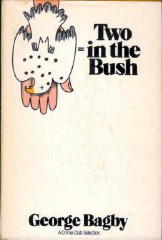
o Two in the Bush (n.) Doubleday 1976 [New York City, NY]

GEORGE BAGBY

o Innocent Bystander (n.) Doubleday 1977 [New York City, NY]
o The Tough Get Going (n.) Doubleday 1977 [New York City, NY]
o Better Dead (n.) Doubleday 1978 [New York City, NY]
o Guaranteed to Fade (n.) Doubleday 1978 [New York City, NY]
o I Could Have Died (n.) Doubleday 1979 [New York City, NY]
o Mugger�s Day (n.) Doubleday 1979 [New York City, NY]
o Country and Fatal (n.) Doubleday 1980 [New York City, NY]
o A Question of Quarry (n.) Doubleday 1981
o The Sitting Duck (n.) Doubleday 1981
o The Golden Creep (n.) Doubleday 1982 [New York City, NY]
o The Most Wanted (n.) Doubleday 1983 [New York City, NY]

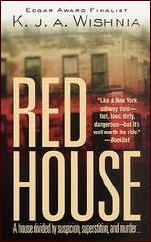
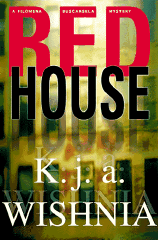
K. j. a. WISHNIA – Red House.

St. Martin’s; paperback reprint, December 2002. Hardcover edition: St. Martin’s, November 2001.

WISHNIA Red House

   This is the fourth in the series of mysteries solved by Ecuadorian ex-revolutionary and now fledgling private eye Filomena Buscarsela, single mom and philosopher slash social critic. Quoting from page 67: “And thus we see the dangers of post-Heideggerian rejection of history.”

   Since I haven’t read the previous three books, I don’t know exactly what career paths she may have been following up to now. She seems to have spent some time on the New York City police force — a police detective for only one day, as she puts it — but in this book, she’s a first year trainee at the PI firm of Davis and Brown, trying to work her way up to getting her own license.

   And rather than focusing on only one case, we get bits and pieces of a number of them — more of a private eye procedural, a la Joe Gores, street style, as Filomena tries to build up the Latino clientele for the firm.

   The mugging (murder?) of a local housing advocate is the main item on her agenda, however, with the plight of the illegal squatters in an abandoned tenement they refurbished themselves a close second.

   The pace is fast-moving, told in first person, present tense, and Filomena certainly knows her way around. The problem with the book is a subtle one, as I found it. According to the back cover, Wishnia (male) has a Ph.D. in comparative literature, and book reads as though it was written by someone having a Ph.D. in comparative literature.

WISHNIA Red House

   It does not read as though it was being told by a real-life Filomena Buscarsela, whose depth of knowledge seemingly knows no bounds, running the gamut from Heidegger (see above) to Marx (Groucho, waggle-waggle) to pulp novel covers (page 131) to nineteenth-century German chemist Friedrich Kekulé (page 226).

   I’m not saying that Filomena Buscarsela is not the person she says she is. What I’m saying is that K. j. a. Wishnia did not succeed in convincing me that she is. It’s his job, and so far (I’ve read only the one book) he hasn’t done it, at least not for me.

   The street scenes are fine, perhaps even more than fine. Otherwise? I’m skeptical, but I’ll leave myself open to opposing argument. (Even better, I’ll read the first three books.)

— December 2002 (revised)


[UPDATE] 12-29-08.   That’s another promise I haven’t kept, I’m sorry to say. Not yet, I haven’t, but I will. For the record, expanded upon from her entry in the Revised Crime Fiction IV, by Allen J. Hubin, here’s a list of all of Filomena’s appearances in book form:

   BUSCARSELA, FILOMENA

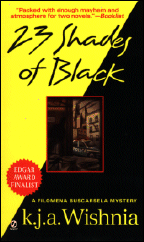
      23 Shades of Black. The Imaginary Press, trade pb, 1997. Signet, pb, Nov 1998; Point Blank, trade pb, 2004.    [Edgar Award finalist for Best First Novel.]

WISHNIA Red House

      Soft Money. Dutton, hc, 1999; Signet, pb, May 2000.
      The Glass Factory. Dutton, hc, 2000; Signet, pb, Mar 2001.
      Red House. St. Martin’s, hc, Nov 2001; St. Martin’s, pb, Dec 2002.
      Blood Lake. St. Martin’s, hc, Dec 2002.

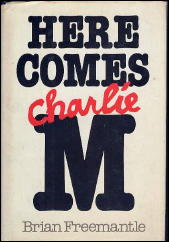
BRIAN FREEMANTLE Charlie MuffinBRIAN FREEMANTLE – Here Comes Charlie M. Doubleday, US, hardcover, 1978; ppbk reprint: Ballantine, 1980. Published in the U.K. as Clap Hands, Here Comes Charlie; Jonathan Cape, 1978; ppbk reprint: Arrow, 1987.
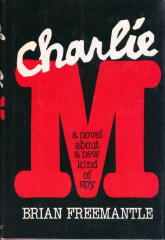
   Spies can easily outlive their usefulness. The new brooms of equally new administrations have moved in on both sides of the Atlantic, and Charlie Muffin, who proved to be so embarrassing a non-willing pawn in the preceding book in this series (a book called Charlie Muffin, or simply Charlie M. in the US) is the dirt that has to be swept out. Guilt-ridden and on the defensive as he is, however, it is his nature to fight back.

   And the nature of sequels being what it is, the keen edge of cutting commentary concerning the spy business is lost, or at least it takes a while for it to be sharpened up again. This time it seems almost too easy — the top minds of two huge intelligence organizations pose very little challenge to the intrepid Charlie M.

– From The MYSTERY FANcier, Vol. 3, No. 4, July-Aug 1979  (slightly revised).This review also appeared earlier in the Hartford Courant.


[UPDATE] 12-27-08. I had no idea at the time, but Charlie Muffin has turned out to be one of the most durable spy characters in hardcover spy fiction. He’s appeared in 14 books, listed below. Guys like Matt Helm, Joe Gall and Nick Carter have lasted longer in paperback, to be sure, and maybe you can think of others who might rival him in hardcover, but it’s quite a record.

   And one that’s passed below my own personal radar. Until coming across this review, I hadn’t thought of Charlie M. in ages, perhaps because so few of his adventures have come out in paperback. Expanded from the Revised Crime Fiction IV, by Allen J. Hubin, here’s the list:

   MUFFIN, CHARLIE

o Charlie Muffin. Cape 1977. [US: Charlie M.]

BRIAN FREEMANTLE Charlie Muffin

o Clap Hands, Here Comes Charlie. Cape 1978. [US: Here Comes Charlie M.]
o The Inscrutable Charlie Muffin. Cape 1979. [US: same]
o Charlie Muffin’s Uncle Sam. Cape 1980. [US: Charlie Muffin, U.S.A.]
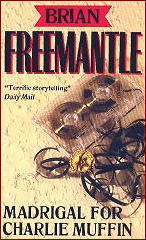
o Madrigal for Charlie Muffin. Hutchinson 1981. [No US edition]

BRIAN FREEMANTLE Charlie Muffin

o Charlie Muffin and Russian Rose. Century 1985. [US? The Blind Run]
o Charlie Muffin San. Century 1987. [US: See Charlie Run]
o The Bearpit. Century 1988. [No US edition]
o The Runaround. Century 1988. [US: same]
o Comrade Charlie. Century 1989. [US: same]
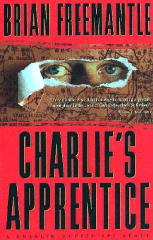
o Charlie’s Apprentice. Century 1993. [US: same]

BRIAN FREEMANTLE Charlie Muffin

o Charlie’s Chance. Orion 1996. [US: Bomb Grade]
o Dead Men Living. Severn 2000. [US: same]
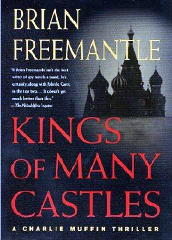
o Kings of Many Castles. Severn 2001. [US: same]

BRIAN FREEMANTLE Charlie Muffin

   As for author Brian Freemantle, he doesn’t seem to have stopped writing, unless it’s been very recently. He’s been averaging a book or two a year over the past 30 years, either under his own name or as by one of his four pseudonyms: Harry Asher, Jonathan Evans, John Maxwell or Jack Winchester. For a long list of all the books he’s written, along with a large assortment of covers, see the UK Fantastic Fiction website.

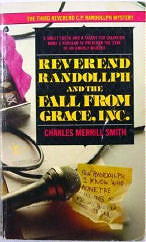
CHARLES MERRILL SMITH RandollphCHARLES MERRILL SMITH – Reverend Randollph and the Fall from Grace, Inc.
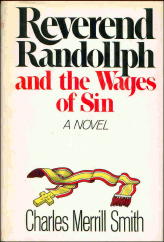
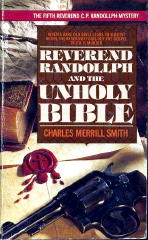
G. P. Putnam’s Sons, hardcover, 1978. Paperback reprint: Avon, 1982.

   This third mystery adventure of C. P. Randollph, a one-time pro quarterback now turned minister, continues to learn the ins and outs of his new profession, and in this case more specifically, how he finds that a clergyman’s responsibilities entail more than just his presence at Sunday morning services.

   In addition, there are often affairs of a political nature to contend with, both within the church and out. In this case, as an extreme example, being murdered are the close associates of a television evangelist who hopes to join Randollph’s denomination before announcing his bid for the U. S. Senate.

   Without a doubt, organized religion can always use such engagingly down-to-earth men of the cloth as Reverend Randollph. Reporting fairly on the mystery, however, I reluctantly have to admit that the motive for murder is an unlikely one.

– From The MYSTERY FANcier, Vol. 3, No. 4, July-Aug 1979  (slightly revised).This review also appeared earlier in the Hartford Courant.


[UPDATE] 12-24-08.  The Reverend Randollph books, concerned with everyday church life as they were, remain among my favorite mysteries in which clergymen do double-up duty as sleuths and detectives.

   Charles Merrill Smith wrote five of them before a relatively early death, with a sixth almost finished at the time of his passing. The book was completed by his son Terrance Lore Smith, also a mystery novelist. Phil Grosset, on his webpage for the character, says that Terrance intended to continue the Reverend Randollph stories on his own, but two years later he was killed himself in an automobile accident.

   From the Revised Crime Fiction IV, by Allen J. Hubin, here’s a list of all six Reverend Randollph mysteries:

SMITH, CHARLES MERRILL. 1918-1985.
      Reverend Randollph and the Wages of Sin. Putnam, 1974.

CHARLES MERRILL SMITH Randollph

      Reverend Randollph and the Avenging Angel. Putnam 1977.
      Reverend Randollph and the Fall from Grace, Inc. Putnam, 1978.
      Reverend Randollph and the Holy Terror. Putnam, 1980.
      Reverend Randollph and the Unholy Bible. Putnam, 1983.

CHARLES MERRILL SMITH Randollph

      Reverend Randollph and the Splendid Samaritan (completed by the author’s son, Terrance Lore Smith). Putnam, 1986.

« Previous PageNext Page »