Before beginning the interview below, you may want to go back and read a previous post entitled The Compleat Cases of MORGAN TAYLOR. Morgan Taylor was the actress-sleuth created by Susan Sussman and Sarajane Avidon who appeared in two well-regarded mystery novels before the death of Sarajane in 2006.
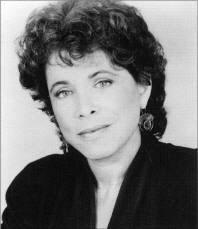
Susan Sussman

   After the profile of the Morgan Taylor the detective had been completed, I got in touch with Susan Sussman, who quickly agreed to answer a few questions for me:

Q. Can you say something about your friendship and collaborative work with Sarajane Avidon, especially the Morgan Taylor books? And my most sincere condolences on the loss of someone who appears to have been a best friend.

A. I met Sarajane many years back, between our junior and senior year of high school, when we were both enrolled in the Cherub Program at Northwestern University — Sarajane was in theater, and I was in Radio/TV/Film. I was from Chicago and she was from Parkersburg, West Virginia.

   The books came about when Sarajane was battling cancer, unable to act for a while. She was feeling depressed and I suggested that, since she was sprawled on the sofa not doing much of anything, perhaps she’d like to write a book with me about a Chicago actress. It was the perfect creative outlet for her at the perfect time.

Q. As I understand it, her input was largely, but not limited to, that of providing and describing the background of being an actor and the world of the stage, would that be correct?
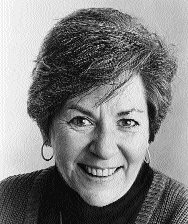
Sarajane Avidon

A. How we worked was, I’d write a scene or chapter, and Sarajane would read it. Then we’d discuss it over refreshments (there was always food involved) and she would say something like “You didn’t mention theater dust. You must mention theater dust.” Then she’d arrange for us to go backstage someplace so I could smell and experience theater dust and describe it in the book.

   She was a brilliant and careful reader and brought a richness to the theatrical and angst-riddled world of Morgan Taylor.

Q. Are you a long-time mystery reader yourself?

A. I’ve been reading mysteries since I was very little. Cut my teeth on Nancy Drew mysteries. (The original old ones. She was much more independent and inventive in those years.) I love mysteries, always have, although the books on my nightstand run a wide gambit.

Q. What authors from the past or present are and have been your favorites?

A. For true-to-life characters, Stephen King; for humanity, Ray Bradbury; for humor, Susan Isaacs and Elaine Viets; for razor-sharp political commentary, Carl Hiaasen; for scary stuff, Tess Garritsen…. the list goes on and on. My nightstand is piled high with fiction and non-fiction, screenplays, plays and some sheet music I keep promising myself I’ll learn to play.

Q. Was Morgan Taylor based on any real life person? If so, was this person aware of this?

A. Morgan was entirely a figment of my imagination. As a writer, I much prefer life behind the scenes. Sarajane, the consummate actress, was all about finding the brightest spotlight in which to stand. Sarajane told me that, after the first book was published, she received calls from friends of hers who were convinced they were one character or another in the book. She never told them otherwise. But this happens with many books. Friends think they are my heroes and heroines and are certain they know the villains.

Joan Cusak

Q. If the Morgan Taylor stories were to be picked up by Hollywood for movies or TV, what actress would you most enjoy see playing her in the role?

A. I would love to see Joan Cusack in the role. In fact, I think she’d be knock-out in a weekly series based on Morgan Taylor (…sort of a Murder, She Wrote for the younger set.) Joan has the humor, the vulnerability and the talent to bring Morgan alive and make us care what happens to her.

Q. The books were received quite well, from the excerpts from the reviews. Would you agree?

A. We were blessed with wonderful and lively reviews, and our appearances in bookstores were always a great hit. What we did was act a scene from the book. Sarajane was a gifted actress and I was a superb straightman.

Q. A third book was mentioned as being in progress. Is there a chance that it will be completed?

A. At the moment, a play Sarajane and I wrote — Woman Standing — is in the hands of a Chicago theater. It was a labor of love for us both and was based on the life of Chicago artist Shelly Canton. I’m waiting to hear from the theater on that. Meanwhile, I’ve just published a children’s book and am under contract for another. I have all the research for the next Morgan Taylor book, and have outlined two others.

   But at this moment I can’t honestly say what will happen. I’m just taking things as they seem to be ready for me to do. The play was a really big push — Sarajane died soon after our second reading done with professional actors — and I’ve just recently finished incorporating her ‘notes’ from the reading into the final play. So these children’s books are like a breather for me before I gear up for the next novel.

Q. Is there anything you’d like to say or add in closing?

A. I haven’t yet been able to access your blog, so I hope my angle of response is what you were looking for. Sarajane Avidon was a fabulous actress and friend and those of us who knew her are richer for it.

Q. Your responses were exactly what I was looking for. Thanks very much for taking the time to reply.

A. You’re welcome!
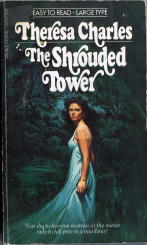
Donna Frey left a comment on my blog entry about gothic romance mystery paperbacks a while back, and I thought it might be more useful if posted my reply as a new blog entry, instead of leaving it hidden where no one would find it.

Here’s what Donna asked:

    “I have a 1953 copy of Theresa Charles’ Fairer Than She, and I’ve always loved it. The heroine is psychic, and TC is such a good writer. Would like to buy her other books but there is never a plot description on Amazon or eBay so it’s buying blind. I don’t like the Nurse in love with Doctor books. How do I get a description before I buy? And does anyone know of a bio of Ms. Charles? Would like to read about her. Thanks.”

Theresa Charles

Donna, you’re not alone in liking the gothics that Theresa Charles wrote. I’ve been asked a few times before to be on the lookout for her books by people trying to find them. (They’re not all that difficult to come across, but again there must be a demand for them. The asking prices online start around $4.00, which as the low end price for a gothic, is rather high.)

As far as a biography is concerned, technically speaking, there is or was no “Theresa Charles.” That was the joint pen name of two British authors, Irene Maude Swatridge and Charles John Swatridge, neither no longer living. Other than their names, though, I’ve never found much of anything more about them. I assume they are were a married couple, but of course this doesn’t mean that they were. Irene also wrote a few books on her own, using a pair of other pen names. I’ll list the titles below.

You’re right in being wary of buying any books by Theresa Charles without knowing more about them. A lot of the books under her name appear to have been straight romance novels, including (yes) Doctor-Nurse affairs. The list of titles below are from Crime Fiction IV, by Allen J. Hubin. With one possible (and obvious) exception, these would be your best bets as books to start hunting down. [UK = British edition.]

CHARLES, THERESA; pseudonym of Irene Maude Swatridge & Charles John Swatridge; other pseudonyms: Leslie Lance & Jan Tempest
* The Burning Beacon (Cassell, UK, 1956, hc) Lancer, 1966.
* Fairer Than She (Cassell, UK, 1953, hc) Dell, 1968.
* Happy Now I Go (Longman[s], UK, 1947, hc) U.S. title: Dark Legacy. Dell, 1968.
* House on the Rocks (Hale, UK, 1962, hc) Paperback Library, 1966.
* The Man for Me (Hale, UK, 1965, hc) U.S. title: The Shrouded Tower. Ace, 1966.
* Nurse Alice in Love (Hale, UK, 1964, hc) U.S. title: Lady in the Mist. Ace, 1966.
* Proud Citadel (Hale, UK, 1967, hc) Dell, 1967.
* Widower’s Wife (Hale, UK, 1963, hc) U.S. title: Return to Terror. Paperback Library, 1966.

LANCE, LESLIE; pseudonym of Irene Maude Swatridge; other pseudonyms: Theresa Charles & Jan Tempest
* The Bride of Emersham (Pyramid, 1967, pb) British title?
* Dark Stranger (Low, UK, 1946, hc)
* The Girl in the Mauve Mini (Hale, UK, 1979, hc)
* The House in the Woods (Ace, 1973, pb) British title?

TEMPEST, JAN; pseudonym of Irene Maude Swatridge; other pseudonyms: Theresa Charles & Leslie Lance
* House of the Pines (Mills, UK, 1946, hc) Ace, 1968.

I hope this helps!

   Even though acting was what she did for a living, Morgan Taylor somehow also managed to find herself solving two cases of murder in her short-lived career as a detective fiction character. She was the creation of two longtime friends who lived in Chicago, Susan Sussman and Sarajane Avidon.

   A former journalist, Susan Sussman is the more prolific writer of the pair, as a visit to her website will show. A third book in the series, A Voice for Murder, is mentioned as being in preparation, but alas, it appears it was never completed.

   Sarajane Avidon, a professional actress and award-winning artist, was born in 1941 as Sara Jane Levey, and died in 2006 after a long struggle with cancer. See a photo of her here, along with a brief account of her battle with the disease.

   Their combined entry in Crime Fiction IV, by Allen J. Hubin, reads as follows, slightly revised and expanded:

      SUSSMAN, SUSAN with AVIDON, SARAJANE
         * Audition for Murder. St. Martin’s, hc, January 1999. Worldwide, pb, June 2000. SC: Morgan Taylor. Setting: Chicago, IL; Theatre
         * Cruising for Murder. St. Martin’s, hc, July 2000. Worldwide, pb, May 2002. SC: Morgan Taylor. Setting: Ship

AUDITION FOR MURDER

      Book Description:

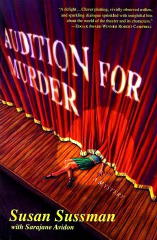
Audition for Murder

   Welcome to the world of Morgan Taylor, a thirty-something struggling actress who is dying for a juicy role in a prestigious revival on the Chicago stage. She hasn’t had a role in months, and the chance to work with the esteemed director Martin Wexler has her practically salivating.

   Though Morgan shows up right on time for the audition, Lily London, her assigned auditioning partner and a cantankerous older woman Morgan has never really liked, seems to have forgotten. Morgan gets more and more anxious until it seems that nothing can salvage this chance. Her mood is shot, her nerves are frazzled, she’s got the stage manager for an auditioning partner. When it’s all over, of course, Morgan finally comes across Lily–dead, lying cold on the floor of the theater bathroom….

   The character of Morgan Taylor is fresh and thoroughly entertaining; she’s as dramatic as the most talented actresses and as shrewd as the most calculating investigator–in short, a perfect amateur sleuth. Her debut, Audition for Murder, peopled by a delightful supporting cast, including Morgan’s best friend, Beth, who suffers from MS, and Beth’s finicky dog, Hamlet, is one of those rare mysteries that delivers a wonderfully written story and an engaging, suspenseful puzzle.

      Review Excerpts:

Publishers Weekly: “From novelist Sussman […] and actress Avidon comes a sparkling first mystery, told in the present tense, that displays no opening night jitters as Chicago actress Morgan Taylor makes her memorable sleuthing debut. […] Even the bit players make notable contributions in Sussman’s entertaining and witty romp, which will have readers applauding for an encore.”

Booklist: “Anyone interested in the theater will especially appreciate this hilarious look at the mounting of a 40-year-old play in Chicago. Playing the lead in both the novel and the play is Morgan Taylor, a funny, smart-mouthed, totally endearing character who never forgets to thank the “theater gods” for her successes. […] Although this is Morgan’s first outing, one strongly hopes that Sussman and Avidon will give her an encore.”

Audition for Murder


CRUISING FOR MURDER

      Book Description:

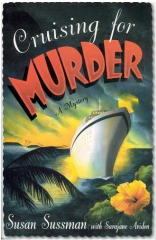
Cruising for Murder

   Now that the touring production of Rent has just closed and a Chicago winter has descended, dancer/singer Morgan Taylor impulsively accepts a gig on a Caribbean cruise ship, anticipating three weeks of show tunes and suntans — not a stage set for murder.

   Her friend Kathy, the show’s production director, neglected to tell Morgan that the entertainer she’s replacing died under mysterious circumstances. And when Morgan’s beautiful, backstabbing roommate is found floating in the turquoise waters of the Bahamas — neatly zipped into a garment bag — things look ominous indeed.

   Neatly sidestepping a stalker, dangerous threats and a sinister shipboard mystery, Morgan remains, as always, a seasoned performer. She may be in a killer’s spotlight, but the show must go on. Morgan just hopes it continues to be a live performance.

      Review Excerpts:

Publishers Weekly: “In her second appearance […] as an amateur sleuth, wisecracking Chicago actress Morgan Taylor grabs center stage and never lets go in this frothy, high seas murder mystery. […] The solution to the two murders that the authors conjure up hardly registers, since their heroine’s overwhelming personality has upstaged even the plot long before the end. A subplot involving Morgan’s Uncle Leo, who turns up on the cruise accompanied not by his wife, Bertha, but by a gorgeous blonde, presumably will be resolved another time Morgan hits the boards.”

Kirkus Reviews: “A bouncy, self-deprecating heroine holds the plot together with wisecracks. Not quite up to Stephanie Plum’s high jinks but still, like Audition for Murder, very cute.”

School Library Journal: “The first-person narration, lively and contemporary, quickly draws readers into the mind and world of the funny, feisty protagonist. Some unlikely plot devices and a rather complicated solution won’t detract from most readers’ enjoyment of this light and finely rendered diversion, and teens will probably come hurrying back for the first Morgan Taylor adventure, Audition for Murder.”

Cruising for Murder


[UPDATE] 08-14-07. An interview with Susan Sussman, including her answers to several of my questions about Morgan Taylor and Sarajane Avidon, appears in this later post on the M*F blog.

   On July 14th I received an email from Al Hubin, author of Crime Fiction IV, about a new discovery that he had made:

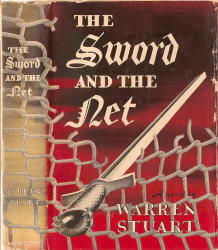
    “FYI…to my considerable surprise, I found in Philip MacDonald’s CA [Contemporary Authors] entry the listing of The Sword and the Net as by Warren Stuart. I don’t think anyone’s made this observation before…”

   Here’s the Warren Stuart entry as it is (or was) in CFIV:

The Sword and the Net.

      STUART, WARREN
         * The Sword and the Net (Morrow, 1941, hc) Joseph, 1942.

   There’s nothing remarkable about the entry. There are many, many authors with only a single title included in CFIV, about whom nothing is known, neither the author nor the book.

   Al, of course, did the sensible thing. He ordered a copy of the book immediately. As soon as he received it, he read through it and send me a copy of the dust jacket cover and the blurbs that describe the book on the inside flaps of the dust jacket:

   Very occasionally a publisher presents a novel with a story so packed with exciting action and dramatic suspense that he hesitates to reveal any significant part of the plot for fear of spoiling the enjoyment of the reader.

The Sword and the Net

By WARREN STUART

is just that kind of book – so thrilling and unexpected that we are deliberately withholding all description beyond the bare essentials.

THE TIME of the story is 1940-41.

THE PLACE – Berlin and Sweden briefly, then New York and California

      THE CHIEF CHARACTERS:

OTTO FALKEN: Aristocratic young German, war ace and hero …

CAROLYN VAN TELLER: The rich, beautiful widow of a New York banker …

      [continued on back flap]

RUDOLPH ALTINGER: Ostensibly successful head of a large construction firm in San Francisco …

GUNNAR BJORNSTROM: A withered, kindly, cheerful old gentleman originally from Sweden …

WALDEMAR INGOLLS: A German officer in the last war, but for years resident of California and an American citizen in the highest sense of the word …

CLARE, his daughter: A courageous, lovely girl as bitterly anti-Nazi as her father …

Other Characters: Nazi officials and officers, Swedish peasants, secret agents; seamen; Americans of every type; Nazi saboteurs and spies.

   A spy story? Well, perhaps; but much more than that, for the author has blended a subtle development of character and the poignant love story of two people into a tale so packed with action that the pages almost turn themselves.

Two Complete Detective Books

   Before getting to Al’s first-glance opinion of the book, I’ll point out the story also appeared in Two Complete Detective Books, Number 15 (Fall, 1942). The lead novel in that issue was Death Turns the Table, by John Dickson Carr, and of course I have a cover image to show you, one found on eBay at some time in the past.

   Here’s Al’s initial reaction: “The story is quite unlike anything I recall of MacDonald’s work … slow moving, interesting but not compelling or fully persuasive. If MacDonald actually wrote it (and we have no other candidates), I’m certainly not surprised it was published under a pseudonym — and one which, so far as I know, was not publicly acknowledged during his lifetime.”

   Truthfully, though, Al and I have been scooped on this rather unexpected find. In the latest issue of CADS, #52, which arrived just days ago, is a short announcement of the discovery by Tony Medawar, and more, a short synopsis and review of the book by that noted scholar of mystery fiction himself.

   Since I can do no more than a few excerpts from his comments, a few excerpts are all you are going to get. Otto Falken, the hero (or rather anti-hero) whose actions the book follows, is selected by Hitler for a secret mission. Eventually he is required to assist a team of saboteurs in this country. From here, I quote:

    “… a thriller rather than a detective story, and something of a Hitchcockian thriller at that. […] It is possible that the plot was first conceived for the cinema.

    “… the story […] is not unpredictable but […] is compelling and the novel builds to an exciting climax in the hills outside San Francisco. A fascinating addition to the canon of a fascinating writer and well worth the search.”

   As the news becomes more widely disseminated, the search is going to be much harder. A word to the wise may already be too late.

PostScript: Tony also mentions in a footnote to his review something else I didn’t know. As “W. J. Stuart,” MacDonald did the novelization of the 1950s science fiction novel, Forbidden Planet (Farrar Straus & Cudahy, hc, 1956; Bantam A1443, pb, 1956).

Also please note: The link to information for CADS is for issue #51,but #52 can be ordered from Geoff Bradley at the same address, but the price has gone up from $11 to $12. Tell him I sent you.

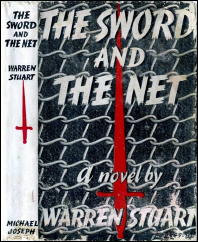
[UPDATE.] 07-28-09. British bookseller Jamie Sturgeon has come across a copy of the first UK edition (Michael Joseph, 1942), and he’s sent me a scan of the dust jacket. He also adds: “Interestingly apart from a ‘puff’ from James Hilton there’s no other blurb or anything else about the plot/author anywhere.”

                  WARREN STUART The Sword and the Net

  Steve,

   Your blog entry on John Creasey and the Toff served as a pleasant reminder of the madly-prolific yet now almost-forgotten Creasey. There seemed a time (1960s/1970s) when the shelves on London bookshops were weighed down with Creasey’s Hodder & Stoughton paperbacks.

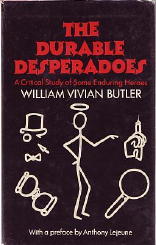
   I was very interesting to read that William Vivian Butler penned the post-1973 Creasey novels. I reached for Butler’s ‘critical study of some enduring heroes’, The Durable Desperadoes (Macmillan, 1973), a warmly nostalgic overview of British gentleman-adventurer literature from the early part of the last century, and discovered the following special note at the beginning of this work:

Durable Desperados

    “John Creasey’s sad death took place while this book was in production. This gives me an additional opportunity to express my gratitude for all his help, and to emphasise that both the book and its preface were shown to him, and met with his warm approval.

    “Nothing that I have written about the Toff and the Baron is invalidated by their creator’s death — not even the statement that, while so many similar heroes have fallen by the wayside, they still “stroll nonchalantly on”. John Creasey has left so much posthumous material that new novels in both the Toff and the Baron series will continue to appear until at least 1975, and possibly 1977.”

June 1973

   W.V.B.

   It is indeed unfortunate that while the Toff books seemed destined to trail in the shadow of Charteris’s The Saint novels (a little unfairly, I always thought), so have two little-known (of course) cinematic adventures featuring Creasey’s calm and daring character.

   Released to cinemas merely months apart in 1952 (in the UK), Salute the Toff and Hammer the Toff (both directed by Maclean Rogers for producer Ernest G. Roy at Nettlefold Films), starring the seemingly ever-resilient John Bentley as the Hon. Richard Rollison, seem to have disappeared into B-movie limbo. But during their short existence, Valentine Dyall’s Inspector Grice observed as the Toff traced a missing person (in Salute the Toff) and became involved with a stolen metal formula (in Hammer the Toff). Of course, there is the likelihood that the word ‘dreadful’ is primed for reactivation here.

   However, the truly fascinating aspect to these two rarely-seen films is that Creasey himself is credited with adapting the screenplays from his own novels (the 1941 Salute, the 1947 Hammer).

   Much like the still-elusive Paul Temple films of the same period (from works by Francis Durbridge), one hopes that the continual scraping of the bottom of barrels for new DVD movie properties may unearth the Toff duo for viewing evaluation in the near future.

   Thanks again for an interesting and informative Toff/Creasey piece.

Regards,

   Tise


   From Crime Fiction IV, by Allen J. Hubin:

BUTLER, WILLIAM VIVIAN (1927-1987); see pseudonym Vivian Butler.

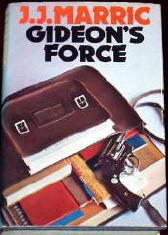
Gideon's Force   * Clampdown (London: Macmillan, 1971, hc) [England]
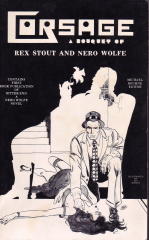
   * Gideon’s Fear (Hodder, 1990, hc) [Commander George Gideon; England]
   * Gideon’s Force (Hodder, 1978, hc) [Commander George Gideon; England] Stein, 1985.
   * Gideon’s Law (Hodder, 1981, hc) [Commander George Gideon; England] Stein, 1985.
   * Gideon’s Raid (Hodder, 1986, hc) [Commander George Gideon; England] Stein, 1986.
   * Gideon’s Way (Hodder, 1983, hc) [Commander George Gideon; England] Stein, 1986.
   * The Lie Witnesses (London: Macmillan, 1971, hc) [England]
   * Scare Power (London: Macmillan, 1969, hc) [England]
   * The Toff and the Dead Man’s Finger (Hodder, 1978, hc) [Richard Rollison (The Toff); England]

BUTLER, VIVIAN; pseudonym of William Vivian Butler
   * Guy for Trouble (Crowther, 1945, hc)

   A character-driven detective novel is one in which the plot develops entirely from the people who inhabit it, protagonists and secondary characters both — their psychological makeup, strengths, weaknesses, vulnerabilities, etc. The plot is not created first and the characters inserted to fit the prearranged storyline.

   Whodunit, howdunit, detection are all less important than what happens to the people themselves; the impact on them of the crime(s) in which they’re involved; how they and/or the world they live in are altered by these crimes and by other external events, some within their control, some beyond it.

   In a character-driven series, the protagonists and those close to them have personal as well as professional lives. And they do not remain the same from book to book; they evolve, change, make mistakes, better their lives, screw up their lives, love, marry, grieve, suffer, rejoice, you name it, the same as everybody else.

Nero Wolfe & Archie

   A plot-driven detective novel is just the opposite. Characters are subordinate to plot; the mystery, the gathering and interpretation of clues, the solving of the puzzle are of primary focus and importance. If the detectives have personal lives, they’re generally mentioned only in passing and treated as irrelevent.

   This is not to suggest that this type is inferior to the character-driven variety; far from it. I’m a great admirer of the Golden Age writers — Carr (particularly), Queen, Christie, Stout — but their books mostly fall into the plot-first category.

   The puzzle, the game is everything. Sir Henry Merrivale, Dr. Fell, EQ, Poirot, Nero Wolfe are all superb and memorable creations, but each remains essentially the same from first book to last. There is no evolution, no significant change. The crimes they solve have no real effect on them, or in other than a superficial fashion on the people good and bad whom they encounter.

   One reads their adventures mainly for the cleverness of the gimmicks and the brilliance of the deductions (and in the cases of Wolfe and Archie for the witty byplay, and of H-M for the broad and farcical humor). With the exception of Wolfe and Archie, we never really get to know any of them all that well; and even with that inimitable pair, there are no significant changes in their lives or their relationship with each other.

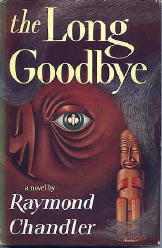
The Long Goodbye

   The private eye fiction of Hammett and Chandler is likewise plot-driven (remember Chandler’s oft-quoted remark that when he was stuck for something to happen, he brought in a man with a gun?). The mystery is dominant. As memorable as Sam Spade and the Continental Op and Philip Marlowe are, they’re larger-than-life heroes who remain pretty much the same over the course of their careers.

   This is true even in The Long Goodbye, which many consider to be Chandler’s magnum opus (I don’t, but that’s another story); Marlowe’s complex relationship with Terry Lennox and its results, while a powerful motivating force, has no lasting or altering effect on Marlowe’s life.

   Ross Macdonald’s novels, on the other hand, are character-driven to the extent that the convoluted storylines devolve directly from the actions past and present of the large casts of characters; but Lew Archer is merely an “I” camera recording events. His life and career remain unaltered by the crimes he solves or any other influences. We hardly know him; he hardly seems real.

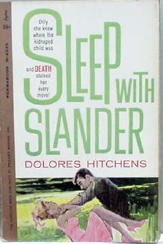
Sleep with Slander

   Contemporary private eye fiction tends to be primarily character-driven, in the sense that I used the term above. The cases undertaken by Thomas B. Dewey’s Mac, for instance, evolve from the complexities and eccentricities of the individuals he encounters; crime and violence have a profound effect on him as well as on those individuals, in subtle as well as obvious ways.

   The same is true of Hitchens’ Long Beach private eye Jim Sader in Sleep with Slander, a book I’ve called “the best traditional male private eye novel written by a woman.” And of Lawrence Block’s Matt Scudder. And of Marcia’s Sharon McCone (see Wolf in the Shadows, her Shamus-nominated Vanishing Point). And of my “Nameless” series (Shackles, Mourners). All, for better or worse, character-driven and character-oriented. Which is why our readers continue to read us.

   The latest batch of covers uploaded to Bill Deeck’s Murder at 3 Cents a Day website are those for the William Godwin, Inc., 1933-1936.

   Here’s Bill Pronzini’s introduction to the page containing the publisher’s line of mystery fiction:

   William Godwin, Inc. was best known for the softcore sex novels they published from 1931-38, by such well-known practitioners as Jack Woodford and Fan Nichols; these had provocative cover art and were considered pretty steamy for their time, though they are tame today.

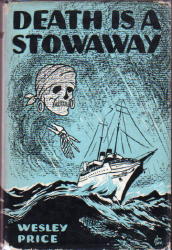
Death Is a Stowaway

   The first mystery to carry the Godwin imprint was Wesley Price’s Death Is a Stowaway (1933), a title inadvertently left out of the Godwin listing in Murder at 3c a Day. The three Timothy Trent (Carl Malmberg) titles are excellent hardboiled tales, as is Alan Williams’ Cainesque Room Service.

   In 1935 Godwin published several British mysteries on a cooperative deal with the king of the U.K. lending library publishers, Wright & Brown; these all used the original W&B dust jacket art, most of it by Micklewright. The Godwin editions had very poor sales, as evidenced by the fact that copies are extremely difficult to find today, and the arrangement with W&B was abandoned after only a single year.

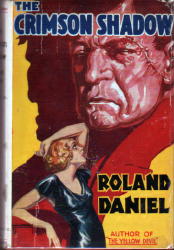
Roland Daniel

   As part of Al Hubin’s ongoing Addenda to the Revised Crime Fiction IV, I uploaded Part 17 yesterday morning. I’ve not had a chance to add many of my usual enhancements, links, covers and other annotations, but this latest installment is online and ready for viewing.

   Of perhaps of major interest are (a) the discovery of a hitherto unknown book by Philip MacDonald, under an equally hitherto unknown pen name, and (b) the true identity of thriller writer Wyndham Martyn, whose life was as much a mystery as his books.

   Lots of other information, too!

   While technically speaking this blog is still on its August break, the garage is far too hot for me to spend as much time as I should be in getting it organized and “cleaned out.” So I’m doing what I can do inside instead, and that includes working on the Addenda for the Revised edition of Allen J. Hubin’s Crime Fiction IV.

   At the moment I’m working on the S’s in Part 3. The following caught my eye a couple of evenings ago, and as a result I spent some time making sure that I had all of the relationships identified and untangled for the four authors who were:

STRANGE, MARK. Joint pseudonym of Adrian Leslie Stephen, Karin Costelloe Stephen, Marjorie Colville Strachey, & Rachel Costelloe Strachey, q.q.v. Under this pen name, the author of one novel in the (Revised) Crime Fiction IV; see below:
         Midnight. Faber, hc, 1927. [Academia; England]

   Taking the co-authors one at a time, in alphabetical order:

STEPHEN, ADRIAN LESLIE. 1883-1948. Add both dates. Noted psychoanalyst; brother of author Virginia Woolf. Both were members of the Bloomsbury group. Married to Karin Costelloe Stephen, also a physician and psychiatrist. Joint pseudonym with Marjorie Colville Strachey, Rachel Costelloe Strachey & Karin Costelloe Stephen, qq.v.: Mark Strange, q.v.

STEPHEN, KARIN COSTELLOE. 1889-1953. Add both dates. A physician and psychiatrist; married to Adrian Leslie Stephen. Sister of Rachel Costelloe Strachey. Joint pseudonym with Adrian Leslie Stephen, Marjorie Colville Strachey, & Rachel Costelloe Strachey, qq.v.: Mark Strange, q.v.

STRACHEY, MARJORIE COLVILLE. 1882–1964. Add both dates. Sister of British writer & critic Lytton Strachey. Joint pseudonym with Adrian Leslie Stephen, Karen Costelloe Stephen & Rachel Costelloe Strachey, qq.v. : Mark Strange, q.v.

STRACHEY, RACHEL [“RAY”] (PEARSALL CONN), née COSTELLOE. 1887-1940. Add full name. Studied mathematics and electrical engineering before becoming actively involved with the British women’s suffrage movement. Sister of Karen Costelloe Stephen; married Oliver Strachey, a mathematician and cryptographer in the Foreign Office, and brother of Lytton Strachey. Joint pseudonym with Adrian Leslie Stephen, Karen Costelloe Stephen & Marjorie Colville Strachey, qq.v. : Mark Strange, q.v.

   If you’re interested in learning more about these jointly related and collaborating authors, the links will get you started, and Google will lead you to more. It has occurred to me to wonder what sort of book they might have written. Was it a spoof of the British thriller novel, with academic overtones, or did they take their story and plot completely seriously?

   I can’t answer the question, nor can I provide a color image of the cover. Not a single copy is offered for sale on the Internet; in fact, other than the CFIV page, there’s no mention of the book at all.

   For now, it’s yet another mystery.

[UPDATE] 08-20-07. Thanks to Jamie Sturgeon, some information on the book has come to light. Check out this later blog entry.

   In an article entitled “Mysteries That Bloom in Spring,” Time Magazine April 17, 1978, Michael Demarest reported on the Second International Congress of Crime Writers. The conference took place in Manhattan in March and was sponsored by the Mystery Writers of America. You can follow the link to read the entire piece, which is a “state of the art” report on the field of mystery fiction as it was nearly 30 years ago. Of major interest, though, at least to me, is the list of “ten current and compelling exemplars” of the crime fiction novel that’s included at the end.

   It is not clear who chose these titles. The implication is that the Congress of Crime Writers had some input, or it may have been Mr. Demarest alone, as he appears to have been fairly knowledgeable of the field. How well the choices stand up I leave for you to decide.

   [Thanks to Gonzalo Baeza for pointing the article out to me and the other members of the online rara-avis Yahoo group. Gonzalo’s own blog, Sweet Home Alameda, is in Spanish but is definitely recommended.]

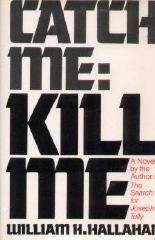
Catch Me: Kill Me, by William H. Hallahan (Bobbs-Merrill; $7.95). New Jersey-based Hallahan, 52, a former adman, won his Edgar with a thriller that scurries from the lower depths of Manhattan to the higher reaches of Washington, D.C., and Moscow, with a side trip to the underside of Rome. Its main sleuths, a burnt-out CIA agent and a doughty Immigration official, set out separately to solve the mystery of the disappearance of a minor Russian poet whose scattered dactyls are the clues to a major East-West confrontation. A masterpiece of bamboozlement, Catch Me is a kind of catch-22 between rival and riven U.S. agencies, written in a style that ranges from hardest-boiled yegg to soufflé, with nothing poached.

Catch Me, Kill Me

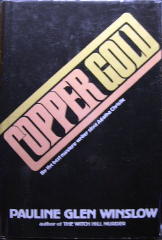
Copper Gold, by Pauline Glen Winslow (St. Martin’s; $8.95). A former Fleet Street court reporter who now lives in Greenwich Village, Winslow, fortyish, focuses on swingin’ London’s demimonde with Hogarthian relish. Her world of pushers, prossies, punks and rotting Establishment pillars is counterpointed by the decent, diligent coppers who come a cropper. What might otherwise have been a merely expert Scotland Yard procedural is elevated by Soho low jinks and, believe it or not, a pervasive and finally persuasive romanticism.

Copper Gold

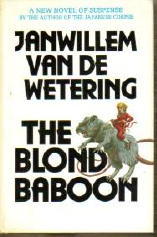
The Blond Baboon, by Janwillem van de Wetering (Houghton Mifflin; $7.95). The Dutch-born author, 47, who has sojourned in many exotic places and once lived in a Buddhist monastery in Japan, now inhabits Maine and writes cleaner English prose than many a Yankee aspirant. However, his stories are still set, with occasional departures (The Japanese Corpse), in Amsterdam, where his sleuths have taken over the turf once occupied by Nicolas Freeling’s late, lamented Inspector Van der Valk. Van de Wetering’s latest Dutch treat, starring the familiar trio of Detectives Grijpstra and de Gier and their commissaris, is cerebral, comradely and sensual, within the generous Hollander dollops that make KLM a perennially popular airline.

The Blond Baboon

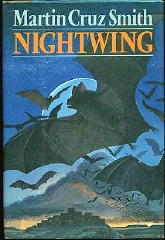
Nightwing, by Martin Cruz Smith (Norton; $8.95). In a tour de non-force suspense novel that mixes virology and American Indian mythology, Hopi hopes and bureaucratic horrors, Author Smith, 35, weaves an all too believable parable of tribal endangerment. His unlikely detectives, a flaky young Indian deputy and an obsessed paleface scientist, encounter a mass killer of a different sort: a vast horde of plague-spreading vampire bats. Smith, who is one-half Pueblo, explicates the Indian psyche and bat pathology as deftly as he creates blood-filled characters.

Nightwing

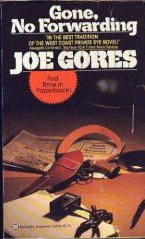
Gone, No Forwarding, by Joe Gores (Random House; $6.95). Gores, 46, who was a card-carrying private eye in California before switching to literary license, dissects a Mob-connected conspiracy to sue, harass and murder the Bay Area-based Dan Kearny Associates detective agency out of business. DKA, as in two previous novels, survives – after an adrenaline-pumping, nationwide search for a missing witness, conducted in large part by the niftiest black op in the literature.

Gone, No Forwarding

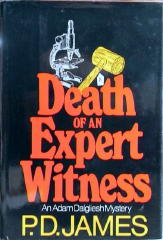
Death of an Expert Witness, by P.D. James (Scribner’s; $8.95). Since James, 57, is English and a woman, she is frequently hailed as a worthy successor to Christie, Sayers, Margery Allingham and Ngaio Marsh. James’ knowledge of locale (in this case, East Anglia’s murky, misty fen country) and contemporary mores (some pretty kinky), her familiarity with forensic science (which is what Expert’s plot is mostly about) and keen psychological insight, all mark her as an original. Her seventh and best mystery novel brings back Scotland Yard’s Adam Dalgliesh, who writes offbeat poetry.

Death of an Expert Witness

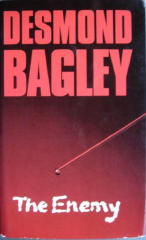
The Enemy, by Desmond Bagley (Doubleday; $7.95). One of Europe’s bestselling suspense writers concocts drama of genetic manipulation, incidental assassination, government machination and Russian marination. Bagley, 54, who knows his computers and test tubes, is equally at home with his locales (England and Sweden, in this book) and his personae, who can be both touching and tough. The Bagleyan denouement raises his novel from mere artifice to the artful.

The Enemy

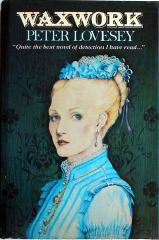
Waxwork, by Peter Lovesey (Pantheon; $7.95). Lovesey’s mysteries are set in late 19th century London, which in too many other authors’ hands now seems exclusively Sherlockian. He writes with accurate verbal and social perception about the upper and lower reaches of Victorian sanctimony and contrivance. Waxwork, 41-year-old Lovesey’s eighth novel, is at once charming, chilling and as convincing as if his tale had unfolded in the “Police Intelligence” column of April 1888.

Waxwork

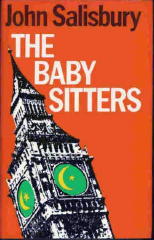
The Baby Sitters, by John Salisbury (Atheneum; $9.95). John Salisbury is the well-guarded nom de plume of a fortyish British historian, political writer and playwright – which adds spice to his first political thriller right from page 1. It is the story of an Orwellian attempt (in 1981) to turn Britain into a fascist state, led by a fanatical Muslim group riding high on Arab oil and abetted by some of England’s leading politicians. The conspiracy is defused by Bill Ellison, a brilliant Fleet Street digger whose investigative team resembles the London Sunday Times’s muckraking groups. Salisbury gives his improbable tale crackling credibility — and is already working on a sequel.

The Baby Sitters

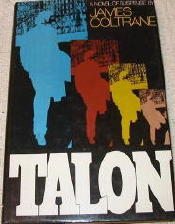
Talon, by James Coltrane (Bobbs-Merrill; $8.95). In his first suspense novel, James Coltrane – in real life a Hawaii-based lawyer named James P. Wohl, 41 – shows himself a young master of the medium. His antihero, Joe Talon, is a superefficient analyst of satellite photos for the CIA in Manhattan. He is also an unrepentantly laid-back hankerer for the surf-and-grass California scene. When Talon detects a curious and erroneous – or doctored? – cloud cover masking a remote area of Nepal, he bucks the Establishment to prove his suspicions, survives sundry assassination attempts and blows open a nasty conspiracy within the Company. He also manages a rather touching love affair and some motorcycle exploits worthy of Evel Knievel.

Talon

« Previous PageNext Page »