October 2011
Monthly Archive
Fri 7 Oct 2011
REVIEWED BY STAN BURNS:
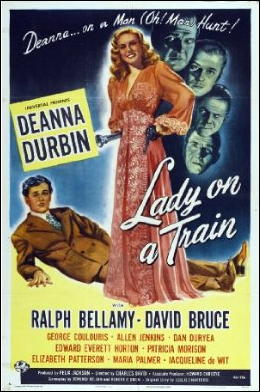
LADY ON A TRAIN. Universal Pictures, 1945. Deanna Durbin, Ralph Bellamy, David Bruce, George Coulouris, Allen Jenkins, Dan Duryea, Edward Everett Horton, Jacqueline deWit, Patricia Morison. Original story: Leslie Charteris. Director: Charles David.
This is a fun little comedy with noir elements, made late in Deanna Durbin’s career when she was trying to escape from the girl next door roles she apparently felt trapped in. After only a few more films she pulled a Garbo and retired from public life. (Durbin later married the film’s director and they retired to live on a farm outside Paris.)
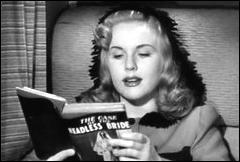
Debutante Nicki Collins (Durbin) is on a train from San Francisco, on a visit to her aunt. When the train is about to pull into Grand Central Station in New York she glances up from the mystery she is reading and out the window of the train. She sees into the window of the building opposite and watches as a man with his back to her strikes another man in the head with a blunt object.
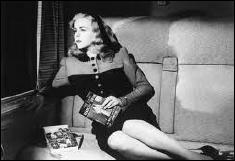
When she reaches New York she goes to the police (William Frawley as the desk sergeant) to report a murder but he thinks she is a crank. She contacts Wayne Morgan (David Bruce), the writer of the mystery she was reading, but he doesn’t want to help her either.
So she decides to investigate on her own. Here she becomes Nancy Drew — she discovers the identity of the victim, and goes to his house, where during the reading of the will she is mistaken for a night club singer who was having an affair with the victim and who also is his major heir.
She gets to meet the victim’s nutty family and his sinister servants, one of whom may be the killer. This mistake allows her to assume the identity of the singer at the nightclub The Circus and seamlessly sing several numbers including “Night and Day.”
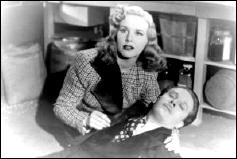
What is very rare for a movie of the period, she is not the companion of the male writer; she leads the investigation, and shows no fear even when she gets herself into dangerous situations. It doesn’t hurt the story any that she is also very pretty and has a terrific voice.
The black and white photography is very good, with major noir overtones featuring scenes of dark shadows, unlit rooms, and sections filmed outside at night. About the only drawback to the movie is some very mild racial stereotyping of the writer’s black servant. If you have never seen this before, give it a try.
Rating: B Plus.
Thu 6 Oct 2011
A FESTIVAL OF CHARLEY CHASE SHORTS
by Walter Albert
Just about everyone is familiar with the iconic greats of silent film comedy, but Charley Chase, a multi-talented comedian, a director, writer and actor, also an accomplished musician, who appeared in some of the best silent film two-reelers, is largely forgotten today.
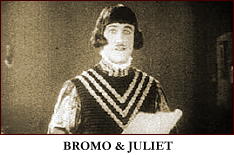
Not however, by the programmers of film conventions, with Cinevent 40 [Columbus OH, May 2008] taking pride of place for its annual screening of selected comedies. Three of his shorts opened the Sunday evening program,with “Bromo and Juliet” (1926) one of his best, followed closely by the inspired antics of “Forgotten Sweeties” (1927) and “Movie Night” (1929).
Charlie was an eternal optimist, striving to be successful in love and in business, and usually failing miserably at both. In “Bromo and Juliet,” directed by Leo McCarey, Charley is starring in an amateur production of Shakespeare (and just to see him, with his spindly legs in tights, is enough to justify the price of admission).
He’s undercut by his fiance’s father, who has a weakness for the bottle, and constantly thwarted by Oliver Hardy as a taxi driver who just wants to get paid for his services. When the hapless Charley finally gets onstage, his histrionics catch the audience’s fancy, and his every misadventure feeds their delighted appreciation.
“Forgotten Sweeties,” directed by James Parrott (Charley’s younger brother), deals with a classic Chase situation, the husband who’s suspected by his wife of cheating on her with an attractive neighbor.
It’s all a comedy of misunderstanding, but the misunderstandings result in some perilous marital moments for Charley, before it’s all resolved happily, if messily.
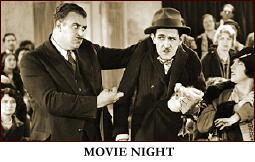
The final short, “Movie Night,” with a story by Leo McCarey and directed by Lewis Foster and an uncredited James Parrott, has Charley, his wife and two kids (with the older played by the inimitable Spec O’Donnell) set off for an evening at the movies, where chaos eventually ensues.
This reinforced my long-time conviction that the only place to sit in a movie theater is on the aisle.
Wed 5 Oct 2011
THE FIRST ANNUAL MYSTERY*FILE
TOP TEN TEC POLL, May 1980.
I am reprinting this from Fatal Kiss #13, which was the name that my mystery fanzine was going by at the time, but no matter the name, it was still Mystery*File.
Forty-three voters participated in all. Each voter was to supply me a listing of his or her top ten television shows of the detective, mystery, crime, or suspense genre. Not everyone did. Some obvious misunderstandings such as votes for Mary Tyler Moore, no matter how well intended, were discarded. I otherwise left it up to the individual voter’s discretion as to how far the limits of the category could be stretched, at least in all situations in which a case of any kind could be made for the marginal show in doubt.
Point totals were assigned as follows: A show rated as a Number One was given 10 points; shows listed as a Number Two, 9 points; and so on. If a voter did not rank his or her choices, or in cases of ties, the corresponding point totals were split equally.
If a person voted for 5 or fewer shows, that person’s Number One show was given only 5 points, and so on, on the grounds that someone voting for only one program could thus skew the voting point totals disproportionately. And, I’m sorry, all honorable mentions were likewise honorably ignored.
Votes for the Sunday Mystery Movie were, rightly or wrongly, split between Columbo, McCloud, and McMillan & Wife, the most well-known and longest-lasting of that multi-part feature. This incorrectly ignores the lesser-known shows that appeared as part of that series, shows such as Hec Ramsey and Amy Prentiss. Sorry, Hec. In the point totals that follow, the NBC Sunday Mystery Movie did receive one first place vote which was not otherwise tabulated.
Here then, finally, are the results:
SHOW POINTS VOTERS NUMBER OF FIRST PLACE VOTES
COLUMBO 132 23 7
THE ROCKFORD FILES 123.5 23 2
THE AVENGERS (1) 119.5 17 5
ELLERY QUEEN (2) 102 17 2
PETER GUNN 72.5 13 3
(1) Six voters specified only the version that starred Diana Rigg.
(2) The version with Jim Hutton was either specified or assumed.
PERRY MASON 71 13 0
DRAGNET (3) 68 10 2
PETER WIMSEY (PBS) 60.5 10 1
THE OUTSIDER 53 7 2
QUINCY 46 9 1
(3) Four voters specified only the Webb/Alexander version.
McCLOUD 41.5 9 0
POLICE STORY 41.5 7 0
BARNEY MILLER 40.5 7 0
HARRY O 38.5 8 0
THE UNTOUCHABLES 38 6 1
THE SAINT (4) 35 6 0
IRONSIDE 33.5 7 2
MISSION: IMPOSSIBLE 30.5 5 0
ALFRED HITCHCOCK 30 5 1
NAKED CITY 30 5 0
(4) Four voters specified only the version with Roger Moore.
NOTE: Now that we’re out of the top twenty, I will no longer include the number of voters, and the number of First Place votes, if any, will follow the total points in parentheses.
I SPY 29
KOJAK 26
McMILLAN AND WIFE 26 (1)
THE MAN FROM U.N.C.L.E. 26 (1)
THE EDDIE CAPRA MYSTERIES 25 (1)
THE DEFENDERS 24.5 (1)
THE PRISONER 23
THE SNOOP SISTERS 23
MYSTERY! (PBS) 22.5
M SQUAD 21
BANACEK 20
T.H.E. CAT 19.5
MANNIX 18
THE ROGUES 18 (1)
DANGER MAN / SECRET AGENT 18
MR. AND MRS. NORTH 17 (1)
BURKE’S LAW 17
KAZ 16.5
THE RIVALS OF SHERLOCK HOLMES 15 (1)
MAVERICK 14.5
CITY OF ANGELS 13
HAVE GUN, WILL TRAVEL 12.5
DIAGNOSIS: UNKNOWN 12
ELLERY QUEEN [with George Nader] 12
THE FUGITIVE 11.5
CHECKMATE 11
HAWAII FIVE-O 11 (1)
KOLCHAK: THE NIGHT STALKER 11
THE THIN MAN 10
BARETTA 10
HIGHWAY PATROL 10
CHARLIE’S ANGELS 10 (1)
HEC RAMSEY 9
BARNABY JONES 9
COLONEL MARCH OF SCOTLAND YARD 9
KRAFT MYSTERY THEATER 9
THE NAME OF THE GAME 9
77 SUNSET STRIP 8
THE LINEUP 8
MAN AGAINST CRIME 8
TOMA 8
IT TAKES A THIEF 7
HAWK 7
ADAM-12 7
THE BIONIC WOMAN 7
THE BOLD ONES 7
DEAR DETECTIVE 7
THE LONE WOLF 7
MADIGAN 7
STARSKY AND HUTCH 6.5
TENSPEED AND BROWNSHOE 6.5
CANNON 6
DRAGNET [the later version] 6
THRILLER 6
TIGHTROPE 6
MARK SABER 6
DELVECCHIO 5.5
THE MOONSTONE 5.5
WHIRLYBIRDS 5.5
GET SMART 5
RICHARD DIAMOND 5
LOU GRANT 5 (1)
JOHNNY STACCATO 5
MIKE HAMMER 5
MR. LUCKY 5
REX STOUT’S “THE DOORBELL RANG” 5
WILD WILD WEST 5
STREETS OF SAN FRANCISCO 4.5
BANYON 4
THE EDGE OF NIGHT 4
FOREIGN INTRIGUE 4
JOURNEY TO THE UNKNOWN 4
WONDER WOMAN 4
AMY PRENTISS 3
ELLERY QUEEN [with Hugh Marlowe] 3
ESPIONAGE 3
MRS. COLOMBO / KATE LOVES A MYSTERY 3
OWEN MARSHALL 3
THE SIX MILLION DOLLAR MAN 3
THE TWILIGHT ZONE 3
ADAMS OF EAGLE LAKE 2
87TH PRECINCT 2
THE MAN CALLED X 2
THE NBC TUESDAY NIGHT MOVIE 2
NIGHT GALLERY 2
THE PERSUADERS 2
SWITCH 2
YANCY DERRINGER 2
CAIN’S 100 1
McCOY 1
NANCY DREW 1
WHO DONE IT? 1
WIDE WORLD MYSTERY 1
[UPDATE] 10-05-11. In the original presentation of these poll results, I included the names of all the voters. I’ve decided not to at this later date, but if there’s a consensus that suggests they’d be relevant, then I will.
Otherwise, you may take this as a small snapshot in time, with an insignificant number of voters, but nonetheless with a number of surprising and interesting results. I hope you agree!
Wed 5 Oct 2011
Posted by Steve under
Reviews[10] Comments
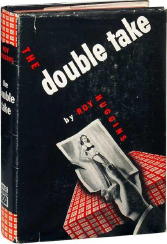
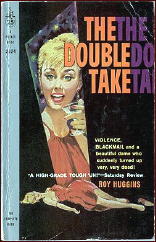
THE DOUBLE TAKE – Roy Huggins. William Morrow & Co., hardcover, 1946. Hardcover reprint: Detective Book Club, 3-in-1 edition, January 1946. Pocket 524, paperback, June 1948; Pocket 2524, 2nd printing, 1959. Basis for the film I Love Trouble, 1947, reviewed here.
Surprisingly enough, this is the only novel featuring PI Stu Bailey that Roy Huggins wrote. (The 1959 paperback 77 Sunset Strip was made up of three previously published novelettes, and it’s obvious that it came out only after the TV show became a hit.)
I say “surprisingly” because I didn’t realize it myself until I just looked it up in Hubin’s book. Huggins wrote two other novels, but neither one has Stu Bailey as a character in it. And yet, because of the TV show, Stu Bailey still might be one of the country’s more famous private eyes.
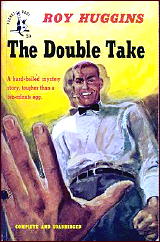
The book is a retread of Chandler territory, though, while the Stu Bailey in the TV series was a much more “hip” character, light and breezy. The book is a murky, dark and drizzly sort of affair, complete with witty similes, spread like fertilizer, two or three to a page, and the ground it covers is a long way from the glitzy world of Hollywood and Sunset Strip. (Not that any of the above is a bad thing!)
In the case covered by The Double Take, Bailey is hired to find out what secret lies in the past of the wife of a worried husband, a secret so dangerous she could be blackmailed about it. The deeper he digs, however, the more bewildering the trail becomes. She was a stripper at one time, he finds out, and then she may (or may not) have headed off to Brazil.
Then when someone who knew her back then dies, then someone who also knew her no longer recognizes her, the trail becomes even more confused. Except to veteran detective story readers, of course, who should be counted on to put two and two together just a little more quickly than Stu Bailey.
The end result is a book that is interesting, but one that never becomes enthralling. Huggins soon left the world of book fiction, going into TV almost exclusively, writing, producing and directing.
It’s hard to say he made the wrong choice. Speaking for myself, though, I think it would have been nice if there had been a second full-length appearance by the Stu Bailey who appears in this book. Or more!
Rating: B plus.
— This review was intended to appear in
Mystery*File 35. It was first published in
Deadly Pleasures, Vol. 1, No. 3, Fall 1993 (slightly revised).
[UPDATE] 10-05-11. If you were to go read the review of the movie I wrote, and you should, of course, you may be amused as much as I was when I said that I thought I’d read the book, but after watching the movie, I decided I hadn’t! Didn’t recognize it at all.
Wed 5 Oct 2011
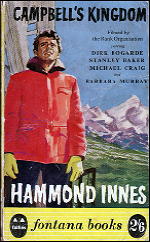
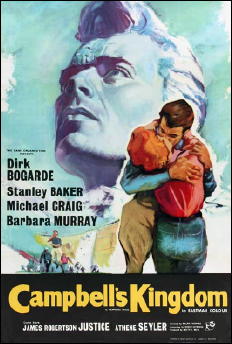
CAMPBELL’S KINGDOM. J. Arthur Rank, UK, 1957. Dirk Bogarde, Stanley Baker, Michael Craig, Barbara Murray, James Robertson Justice, Sid James. Based on the novel by Hammond Innes. Director: Ralph Thomas.
I watched this movie about a week ago, without planning to write up any comments about it. Just too ordinary, I thought. But thinking about it again this afternoon, it occurred to me that calling a film ordinary is a review, of sorts. All I have to do is expand upon it, and so here I am.
Not knowing enough about British film-making to say for sure, I don’t believe they ever went in for producing westerns. (Western novels are another matter. There are more westerns published in the UK today than there are in the US.) Campbell’s Kingdom is, I think, an exception. It takes place in Canada, though, somewhere in the western Rockies, so maybe it’s an almost-but-not-quite sort of exception.
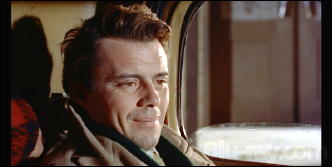
Either way, the star of the film, Dirk Bogarde is no Alan Ladd (the closest American equivalent I have come up with) but as Bruce Campbell, the sickly heir who’s comes from Britain to claim his property high up in the mountains, he’s entirely believable. His grandfather died convinced there was oil on the land, and despite plans by the locals to build a dam and flood the property in the process, Bogarde refuses to sell and knuckles down to build a well to prove his grandfather was right.
Of course there also is crooked business at work, with the number one villain being Stanley Baker, the foreman of the dam building project, so while the plot may be predictable, the going is not easy.
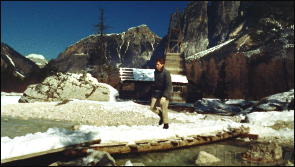
Bogarde does find a few allies, chief of whom is a girl (Barbara Murray), but with only a few months to live (his doctor’s assessment), romance seems to be all but out of the question.
The color photography is wonderful, and some the hazards of working in the isolated wilderness are shown to great effect (the outdoors scenes were filmed in the Italian Alps). Back in 1957, some of the closing scenes must have been spectacular to see on the screen. But there’s no “oomph†in the plotting to make me want to tell you that you have to go out and buy the just released DVD of this movie.
Obviously I remember enough of the film to tell you as much as I have here about the film, but my initial assessment remains the same. Ordinary, just ordinary.
Tue 4 Oct 2011
REVIEWED BY BARRY GARDNER:
M. K. WREN – Dead Matter. Conan Flagg #7. Ballantine, paperback original, 1993.
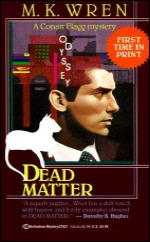
I thought this series was dead, but after a nine year hiatus, it’s back. Conan Flagg, bookstore owner, private detective, and wealthy man, returns from a trip to his hometown in Oregon to find chaos.
While he was gone, his store manager has arranged a book signing for a local boy made good, and the bookstore is swarmed. During the signing, a local logger, being a little put out with the author for bedding his wife, threatens him with a chain saw in the store, but is disarmed by Flagg.
The next day, after a party which Flagg attended, the unpopular fellow is found with is throat ripped out — by a chain saw.
I liked the Flagg series in its original incarnation. Wren, who has written in several fields, knew how to tell a story, and in Flagg had created a sympathetic if not outstanding character. The books were not designed to make any top 10 lists, but were decent examples of their craft.
I see no reason to revise any of these judgments for this.
— Reprinted from Ah, Sweet Mysteries #8, July 1993.
The Conan Flagg series —
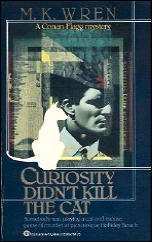
1. Curiosity Didn’t Kill the Cat (1973)
2. A Multitude of Sins (1975)
3. Oh, Bury Me Not (1976)
4. Nothing’s Certain But Death (1978)
5. Seasons of Death (1981)
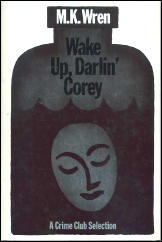
6. Wake Up, Darlin’ Corey (1984)
7. Dead Matter (1993)
8. King of the Mountain (1994
Tue 4 Oct 2011
REVIEWED BY DAN STUMPF:
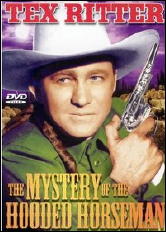
THE MYSTERY OF THE HOODED HORSEMEN. Grand National, 1937. Tex Ritter, White Flash, Iris Meredith, Horace Murphy, Charles King, Heber Snow, Ray Whitley and the Range Ramblers. Director: Ray Taylor.
The Mystery of the Hooded Horsemen doesn’t have much Mystery, but it does have a lot of hooded horsemen, charging across the dusty trails of Gower Gulch with commendable energy.
This is, in fact, a rather ambitious undertaking for a “B” Western, with some vigorous stunting and tricky camerawork in the many Chase scenes.
It stars Tex Ritter, so it’s not much on subtlety, and anyone who’s seen more than one of these will spot the Secret Heavy as soon as he looks up from his card game and flashes his oily smile, but director Ray Taylor plays the familiar melody without a trace of contempt, and manages to wrap it up just like it was fresh goods.
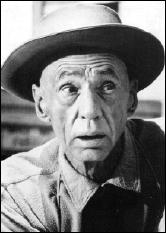
I should add that Mystery features one of the earliest appearances of that ultimate Cult Actor, Hank Worden, here billed as Heber Snow, and playing a dumb deputy with the disarming quirkiness that would endear him to my generation.
Editorial Comment: Not only can this movie be found easily on DVD (see above), it can be seen for free in its entirety (60m) on www.archive.org. (For some reason, the title on the DVD has been subtly changed.)
Mon 3 Oct 2011
THE SERIES CHARACTERS FROM
DETECTIVE FICTION WEEKLY
by MONTE HERRIDGE
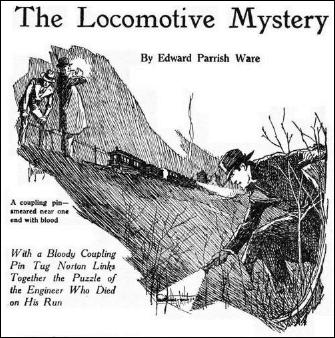
#7. TUG NORTON, by Edward Parrish Ware.
Tug Norton is a private detective and creation of prolific author Edward Parrish Ware (1884-1967?). These stories are told first hand by Tug Norton:
“… case of record in the archives of the Kaw Valley Detective Bureau, of which I, Tug Norton, am founder, owner and chief operative …†(The Queen’s Patteran)
Norton notes that when business is dull, he entertains and instructs himself by studying his casebook (The Devil Winks). This is how some of the Norton stories begin, with him reliving the case he has looked up in his files.
Tug Norton is a former cowboy and policeman. He formerly served in the police department in Kansas City, but lost his position there when new police commissioners came into office and fired “all those politically off-colored,†including him. (Lost Lake)
His past as a cowboy is brought out in the story “The Sow’s Earâ€, in which Lafe Spear, a friend of his from Oklahoma, shows up at the agency to hire him. Lafe Spear and Norton had worked together as cowboys some twelve years previously. This story is written as a contemporary Western: horses are used, and the principals dress as cowboys (including Tug Norton). The setting is rural Oklahoma.
The Kaw Valley Detective Bureau is based in Kansas City, Missouri, but the cases are also spread out in numerous other locations. Norton states in one story that he was not interested in out-of-town cases, and that he was “confining my practice—what there is of it—to the city.†(The Tomahawk)
However, contrary to this declaration, Norton does take cases outside Kansas City. In the Norton series there are some stories in an urban setting, but the series is a wide-ranging one and has quite a few stories in rural settings. For example, one story, “The Silent Partnerâ€, begins in Kansas City but most of the action takes place in the wilds of Arkansas.
“Empty Pouches†takes place in Arkansas, “The Trackless Trail†and “The Tomahawk†cases are in Kansas, “The Queen’s Patteran†in and around Joplin, Missouri, and so forth for many other cases. “The Devil Winks†is mostly in Kansas City, but the climax and finish take place in rural Arkansas.
In “A Dead Man in the Cast,†Norton discusses an early case in his career, before he had any assistants. At that time the agency consisted of just himself and his secretary-receptionist Mary Malloy. The offices at that time were in suite 606 (sixth floor), Gateway Building.
Norton never used the front entrance to his offices, instead using as the entrance another door along the hall that showed the words: Andrew Harper, Stocks & Bonds, Private. This suite masked an entrance to his real offices next door.
In another early story from his career as a private detective, “The Wheels Turn,†shows a client hiring him at his hotel. Norton mentions that a year after this case his offices were in the Sandstone Building. In his early cases Norton seems to have been aided by having cases referred to him by Chief Enger, his former boss at the Kansas City Police Department.
He does use other operatives in his work, and they show up in the stories from time to time. As of the early 1927 stories, Jim Steel was his chief assistant, and worked with him on “The Queen’s Patteran†case among others. Other unnamed detective operatives also show up in stories such as “When Fate Wants a Man.â€
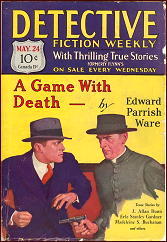
Norton has an office boy named Spec, who announces visitors and would-be clients. Spec is noted as being “something of a mimic.†(A Game With Death) No doubt he is also a detective in training.
Norton on occasion is called in to help various law enforcement officials in Missouri. The story “A Game With Death†features one of those cases. A sheriff named Hap Craker calls on Tug Norton in his Kansas City office and asks for help against a gang of criminals infesting his county.
In another case, Sheriff Sam Sneed from Arkansas, an old acquaintance of Norton’s, comes to him for help in solving a series of robberies and murders. (Empty Pouches) In a third case, Sheriff Rube Wallace of Cold Springs County called for Norton’s assistance in a multiple arson and murder case. So it appears that Tug Norton had gained a good reputation for solving difficult cases.
The Kaw Valley Detective Bureau is also on retainer with various clients, or in other words paid at regular intervals in case their services are needed. “The Dumb Spot†is an example where one of these clients calls them in to help solve a bank robbery and murder.
The agency has connections with other detective agencies around the country, and they could call in for help on a case if necessary. This is the case in “Dynamite and Six-Guns,†where a friend from a Chicago detective agency has a case that is taking him to Kansas City. He calls Norton and asks for his agency’s assistance in the matter. It turns out to be an exceedingly violent case for Norton, but he wins a big fee.
Some of his cases are just downright offbeat and strange. The first is “The Seven Coffins”, a story late in the series. Norton’s agency is hired to guard six empty coffins in a deceased millionaire’s mansion, but the mystery of the seventh coffin causes murder. The mortician and his assistant are involved, and one scene takes place at the funeral home.
In another case, “The Tomahawk,†a rich man has suddenly become a hermit in his own mansion, and Norton has to find out why. In this case, an old Gypsy curse from a nearby tribe is the reason for the man’s behavior.
Even though there is plenty of violence in the series, with numerous gunfights, Norton is not a big believer in using guns to solve every problem. In the story “Hell’s Backyard,†he puts forth his philosophy upon the use of guns. He says that any sleuth, either police or private detective, who is overly fond of using guns to solve problems is asking for trouble. He either gets shot or fired for using his gun.
Never, since I founded and began operating the Kaw Valley Detective Bureau, have I kept an operative one minute after he betrayed a tendency to throw his gun upon any and all occasions where gun-throwing could possibly be done and got away with.
I assert that this business of detecting crime and tracing criminals is better done with the head than the gun—and I invite proof to the contrary. (Hell’s Backyard)
This attitude is interesting for that time, considering that the pulps are filled with violence, and gunfights are common in this series. In fact, Ware’s own Ranger Calhoun series are probably some of the most violent in the magazine, and rarely does a story end without the criminal being shot. However, even this series couldn’t compete with Judson Philips’ series about the Park Avenue Hunt Club when it comes to violence.
Norton is a bit of a philosopher, and begins many of the stories with some of his philosophy (based on experience and observation). Here is an example:
I take issue with the blasé boys who see everything through smoked glasses. Life is never drab. That drab stuff is a state of mind. To me, life is full of color—a field of gorgeous poppies. Flame! Multicolored, magnificent! Devastating, too. Well, what would you? In order to build, we must destroy. In order to live, we must die. (The Devil’s Pocket)
Norton’s idea of a vacation from work is to go fishing. In “Trouble Up the Stream,†he and his assistant Jim Steel go on a week-long fishing trip. However, as expected, they run into trouble and have to solve a murder.
This series was begun during the formative period of the hard-boiled private detective type of story, but still uses features of the more formal detective story, such as the use of logic and deduction to solve crimes. It does have some features of the hard-boiled story; the stories are still very violent in the private detective way, with the conclusion often resolved with gunshots.
Tug Norton is definitely a tough, hard-boiled detective with plenty of experience, and his speech and behavior show this. He doesn’t act like the stereotypical lone wolf private detective. He is more of a descendant of the older detective characters of the dime novels type. Many, but not all, of the new private detective stories are primarily urban in setting.
Ware had many stories published in Flynn’s/Detective Fiction Weekly in the 1920s-1930s. The Tug Norton series numbered 40 stories from 1926-1934, including two in Dime Detective. The Ranger Jack Calhoun series, also by Ware, numbered at least 59 stories from 1926-1936.
A third series by Ware was the Buck Harris series of 12 stories 1930-1934. Battle McKim was another series by Ware, counting 12 stories 1934-1935. Ware’s character Sheriff Bob Stratton appeared in 2 stories in 1929.
So Ware was very busy writing for this one pulp title. His Calhoun stories seemed to be the most popular, and the character appeared on the magazine’s cover a number of times. Tug Norton, although seemingly not as popular, was in my opinion the better written series.
The Tug Norton series by Edward Parrish Ware:
From Detective Fiction Weekly:
The Tree-Top Trail January 30, 1926
The Fifth Gate March 13, 1926
The Queen’s Patteran January 1, 1927
Hell’s Backyard March 26, 1927
The Silent Partner April 2, 1927
Lost Lake May 14, 1927
The Hole in the Hill October 1, 1927
Empty Pouches December 3, 1927
The Tomahawk February 18, 1928
The Devil’s Pocket February 25, 1928
The Devil Winks March 3, 1928
Hitched to the Wind April 14, 1928
The Wheels Turn April 28, 1928
When Fate Wants a Man October 20, 1928
When Thief Catches Thief December 1, 1928
Signed With Lead December 15, 1928
The Death Stone November 2, 1929
The Trackless Trail November 30, 1929
The Locomotive Mystery February 22, 1930
Hot Eyes July 5, 1930
A Game With Death May 24, 1930
The Sow’s Ear October 18, 1930
Prison Shoes November 22, 1930
The Jade Boomerang December 6, 1930
Snow Camp December 13, 1930
A Background of Vendetta April 11, 1931
Consider the Sphinx October 24, 1931
Trouble Up the Stream November 28, 1931
The Yellow Demon July 16, 1932
The Devil’s Do-All July 23, 1932
The Pole-Axe Problem October 1, 1932
Behind the Green Mask November 12, 1932
Monkey Blood February 25, 1933
Red Skies May 27, 1933
A Dead Man in the Cast August 12, 1933
Dynamite and Six-Guns January 20, 1934
The Seven Coffins February 17, 1934
The Dumb Spot June 9, 1934
From Dime Detective Magazine:
The Skull of Judgment March, 1932
The Gallows Clue July 15, 1933
Previously in this series:
1. SHAMUS MAGUIRE, by Stanley Day.
2. HAPPY McGONIGLE, by Paul Allenby.
3. ARTY BEELE, by Ruth & Alexander Wilson.
4. COLIN HAIG, by H. Bedford-Jones.
5. SECRET AGENT GEORGE DEVRITE, by Tom Curry.
6. BATTLE McKIM, by Edward Parrish Ware.
Mon 3 Oct 2011
REVIEWED BY MICHAEL SHONK:
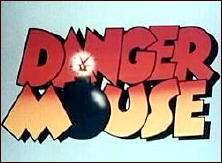
DANGER MOUSE. Animated. Episodes of five to twenty five minutes each. UK: 1981 through 1992. US: Nickelodeon premiered June 4, 1984. Cosgrove Hall Films. Thames Television. Created by Brian Cosgrove and Mark Hall. Voice Cast: Danger Mouse (David Jason), Penfold (Terry Scott), Colonel K (Edward Kelsey), Baron Silas Greenback (Edward Kelsey), Stiletto (Brian Trueman), Isambard Sinclair (David Jason), Nero (David Jason’s voice sped up). Available on DVD. Recommended: The shorter episodes on YouTube over the longer ones available on Hulu.com and IMDB.com.

“He’s the greatest. – He’s fantastic. – Wherever there is danger he’ll be there. – He’s the Ace. – He’s amazing. – He’s the strongest, he’s the quickest, he’s the best! Danger Mouse…” (Theme sung by Sheila Gott.)
This action hero/spy comedy will appeal to all ages. The animation is limited, cheap, and guilty of reusing too much stock footage, but it also has a visually pleasing look and adds enough visual gags to be forgiven for its shortcomings.

The writing is top notch British silly, not unlike Monty Python. Parody and satire is common and not limited to the obvious targets of Bond and John Drake (Danger Man). Bad jokes and silly puns are there as well for the kid in all of us, though I guess children could watch this cartoon as well.
The character are well defined and funny. The narrator Isambard Sinclair introduces the story, explains things to the audience to keep the action moving, and occasionally asks questions at the end spoofing the narrators of old serials.
The good guys are lead by Danger Mouse. DM is a white mouse with an eye patch that goes well with his white jumpsuit that has DM monogrammed over his left breast. He is everything his theme song claims he is and more. His sidekick Penfold is a daft, but loyal hamster, codenamed “Jigsaw” because he always falls to pieces.

Colonel K is head of a secret organization and gives Danger Mouse his assignments. There is some question over what animal Colonel K is, a chinchilla or walrus (like it matters).
The villains are lead by DM’s archenemy Blofeld … oops, I mean … Baron Silas Greenback, the fiendish frog, the terrible toad, whose only wish is to take over the world or kill Danger Mouse so he can take over the world. Filling the role of insane villain’s pet is Nero a fluffy white caterpillar. Stiletto is a crow, an idiot, and the Baron’s top henchman.
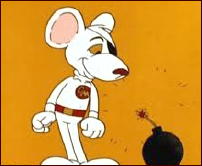
DM and Penfold live in a red pillar-box near Sherlock Holmes on Baker Street. As any proper spy of that era, Danger Mouse has a special car. The Mark III can do a variety of things including fly.
The plots the Baron creates to take over the world illustrates the series’ absurdist humor. In “Who Stole the Bagpipes?” bagpipes are sheep-like creatures grazing in Scotland. The Baron rustles ten thousand bagpipes to build a sonic weapon capable of destroying cities.
“Lord of the Bungle” has the Baron turning elephants into sugar cubes so when heads of state all over the world put the sugar cubes into their tea the elephant will reappear and squash the government leader.

My favorite is “The Dream Machine” when Danger Mouse and Pedfold are trapped in the Baron’s dream machine where surreal is reality, the impossible possible, and Penfold’s thoughts turn into visual puns.
If you are willing to overcome the misguided prejudice that cartoons are just for kids, give this a try. Or find some child to watch it with. Neither of you will regret it.
SOURCES:
Wikipedia
Cosgrove Hall Ate My Brain
DangerMouse.org
« Previous Page