FRANK GRUBER – The Limping Goose. Johnny Fletcher & Sam Cragg #12. Rinehart, hardcover, September 1954. Detective Book Club, hardcover 3-in-1 edition, December 1954. Bantam 1488, paperback, August 1956.

   It is not easy to write a detective novel that’s truly funny and at the same time populate it with all of the clues, alibis and red herrings that make a true detective novel, much less a entire series of them, all with the same characters. One time pulp writer Frank Gruber doesn’t always succeed in this series, but he comes as close as anybody.

   The comedy in the Johnny Fletcher and Sam Cragg books comes primarily from the pair themselves, and to a lesser extent, the situations they find themselves in. From the cover of the Bantam paperback, illustrated above:

   “The little guy is Johnny Fletcher — he can talk his way out of anything. The big lug is Sam Cragg, ‘strangest man in the world,’ with a muscle-bound brain.” The disparity between the brain power of the two is the basis for most of the humor in their adventures.

   Johnny Fletcher is close enough to being a private eye that he might as well be one, but the true profession of both he and Sam Cragg is that of traveling book salesmen, even though they are so broke at the beginning of The Limping Goose, they have no money to even buy books for sale — usually encyclopedias, as I recall.

   Eating being a very habitual habit of theirs, especially Sam’s, Johnny decides to hire himself out as a skip-tracer. Soon enough, though, he gets himself mixed up in a case of murder, and the story is off and running. The limping goose of the title is a “piggy bank” in the form of a goose with one leg longer than the other, and even though it is filled only with old coins with no particular value, there are plenty of people who seem to want it.

   The explanation of who they are who want it, and why, is, unfortunately, less interesting than the byplay not only between Johnny and Cragg, but also between the pair and the rest of the world. If they ever made any money on the successful outcome of any of their adventures, I’d be surprised to know about it.

   On balance, I’d rate this one as a “C plus” for the detective work, and an “A minus” for the funny stuff, which continues on throughout the book. I need to read more of these.


      The Johnny Fletcher & Sam Cragg series —

The French Key (1940)
The Hungry Dog Murders (1941)
The Navy Colt (1941)
The Gift Horse (1942)
The Laughing Fox (1943)
The Talking Clock (1944)
The Mighty Blockhead (1945)
The Honest Dealer (1947)
The Scarlet Feather (1948)
The Silver Tombstone Mystery (1948)
The Leather Duke (1950)
The Limping Goose (1954)
The Whispering Master (1956)
The Corpse Moved Upstairs (1964)
Swing Low, Swing Dead (1964)
REVIEWED BY DAN STUMPF:         


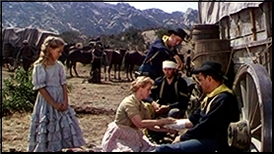
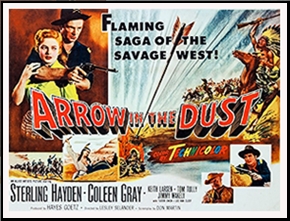
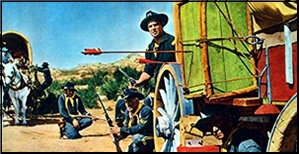
ARROW IN THE DUST. Allied Artists, 1954. Sterling Hayden, Colleen Gray, Keith Larsen, Tom Tully, Jimmy Wakely and Lee Van Cleef. Screenplay by Don Martin (No, not that Don Martin). Based on the novel by L. L. Foreman. Directed by Lesley Selander.

   By 1954, Allied Artists was still trying to shake off its Monogram roots, but not trying too hard. That was the year they released Two Guns and a Badge, the last series Western, but they were still churning out Bowery Boys pictures and “A-Minus” westerns like this, directed by B-Western stalwart Leslie Selander with his usual flair for action and a surprising feel for the quieter moments.

   Hayden is a deserter who masquerades in a major’s uniform and rallies a decimated cavalry unit to help get a wagon train past the injuns. And that’s pretty much it. Arrow incorporates lots of stock footage from Arizona (1940) but someone thought to take the cast out to Sedona and Red Rock, so it matches well, and photographer Ellis Carter blends it seamlessly.

   There’s also a literate screenplay. Hayden’s character matures convincingly, acting and reacting off a rounded cast of supporting players who talk like actual people. Screenwriter Martin even includes the familiar quotation: “A mule is unapproachable in devilment, fathomless in cunning, born old in crime, of disreputable paternity, and incapable of posterity, stolid, imperturbable, with no love for anything but the perpetration of tricks and its daily rations,” and it fits right in.

   There’s a genuine movie moment here where they’re burying dead soldiers while the wagon train pushes on, composed like a Ford film, the wagons rolling endlessly in the background while Hayden recites the 23rd psalm over the fresh graves. No overacting, no arty camera angles, just letting the scene speak for itself and find fitting context in “He leadeth me beside the still waters.”

   But my favorite part (I know you were burning to find out) is a quick-draw like I’ve never seen before: Hayden lays down the law to Van Cleef, and when another owlhoot goes to draw, Hayden pulls his own gun out of his belt, raises it overhead with both hands to cock it, sweeps down, levels and fires faster’n you could say “Sh-t, what was that?” I had to run it over three times just to see if I saw it right.

    Arrow in the Dust is little remembered today, but for fans of the cast and solidly-built Westerns, it’s a must-see.
   

POWDERSMOKE RANGE. RKO Radio Pictures, 1936. Harry Carey (Tucson Smith), Hoot Gibson (Stony Brooke), ‘Boots’ Mallory, Guinn ‘Big Boy’ Williams (Lullaby Joslin), Bob Steele, Tom Tyler. Based on the novel by William Colt MacDonald. Director: Wallace Fox.

   Three roving cowboys (not yet called The Three Mesquiteers) come to the aid of a friend (Bob Steele) who’s been thrown in jail on trumped up charges. Tom Tyler is the fast gun hired by the gambler who’s trying to take over Steele’s ranch, and it’s eventually up to Harry Carey to face him down.

   In spite of what was probably an all-star cast in 1935, this is not a very good movie today. It has a lot of the right ingredients, but the art of acting has changed dramatically. I’m no expert on such things, but I think it’s the extra beat everybody takes to react to the line just before.

— Reprinted and very slightly revised from Movie.File.8, January 1990.


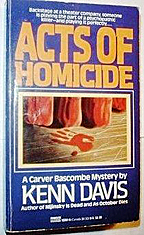
KENN DAVIS – Acts of Homicide. Carver Bascombe #7. Fawcett Gold Medal, paperback original; 1st printing, October 1989.

   What makes this adventure of black PI Carver Bascombe a bit different is that he’s introduced into the case as a suspect, not as the detective of record. Dead — in gruesome fashion — is a girl who loved the theater, working for a stage company in her spare time.

   Bascombe also gets involved with the (female) police detective in charge, a first for them both. Unfortunately none of the other people involved in the case are a pleasure to know, and every once in a while Davis lapses into a “gosh-wow” pulpish way of telling the tale.

— Very slightly revised from Mystery*File #20, March 1990.

       The Carver Bascombe series —

The Dark Side. Avon, 1976 [with John Stanley].
The Forza Trap. Avon, 1979.
Words Can Kill. Gold Medal, 1984.
Melting Point.Gold Medal, 1986.
As October Dies. Gold Medal, 1987.
Nijinsky Is Dead. Gold Medal, 1987.
Acts of Homicide. Gold Medal, 1989.
Blood of Poets. Gold Medal, 1990.

      Previously on this blog:

The Compleat Kenn Davis.

My review of The Dark Side (CB #1) by Davis & John Shirley.

A later review of mine of Acts of Homicide, written without remembering I’d done this one earlier.

   A rare instance of this song being sung as an actual lullaby:

REVIEWED BY BARRY GARDNER:


ELLIS PETERS – Brother Cadfael’s Penance. Brother Cadfael #20. Mysterious Press, hardcover, 1994; paperback, 1996.

   Does this series need any introduction? If not the first, it’s certainly the best known of the the histo-mysteries, and its fans are legion.

   King Stephen and Queen Maud (as each would have it for themselves but not the other) are still quarreling bloodily over who is to rule England in 1146 AD. As a byproduct of one of the frequent pieces of treachery involved in the conflict, a young man in Maud’s service is handed over to the enemy, and no one seems to know who has him, or to what end.

   Longtime readers of the series will recognize him immediately; others will have to wait for the text to explain why Brother Cadfael feels compelled to go in search for him, along with his friend Sheriff Hugh Berenger. The first step is to attend a gathering at Coventry to bring the two factions to peace, but peace isn’t what Brother Cadfael finds there.

   Given my predilection for historical mysteries, British fiction, and the Middle Ages, it’s no surprise that I liked this a great deal. Cadfael is an enduring and endearing character, and Peters writes a brand of cadenced prose that goes down very easily. The historical background is authentic and worked seamlessly into the text; indeed is an integral part of it.

   I don’t find anything to dislike in the Cadfael books. As with any series there are similarities from book to book, but somehow Peters to mu eye has avoided any hint of staleness in the 20 books so far. Fine stuff.


— Reprinted from Ah Sweet Mysteries #16, November 1994.
REVIEWED BY JONATHAN LEWIS:


REPORT TO THE COMMISSIONER. United Artists, 1975. Michael Moriarty, Yaphet Kotto, Susan Blakely, Hector Elizondo, Tony King. Screenplay by Abby Mann and Ernest Tidyman, based on the novel by James Mills. Director: Milton Katselas.

   For fans of gritty 1970s urban cinema, Report to the Commissioner has a lot to offer. Filmed on location in and around Times Square, this police procedural also features a lot of the great character actors from that era: Yaphet Kotto, William Devane, Vic Tayback, Bob Balaban, as well as a young Richard Gere as a pimp.

   But the star of the film is a youngish, occasionally overacting Michael Moriarty who portrays a green NYC cop who is way too much of an idealist for an increasingly embittered and cynical police force. His character, Bo Lockley, is the son of a NYPD cop who always wanted his son to join the force. The other son that is, the one who got killed in Vietnam. So Bo joins the force in place of his dead brother. Problem is: Bo is at heart a lefty and a hippie who simply doesn’t belong as a boy in blue. His partner, Crunch Blackstone (Kotto) knows this from the get go and does his absolute best to make sure that Bo doesn’t get himself in trouble with his superiors.

   It’s too little too late. For we get the sense that Bo was doomed from the start, from the moment he walked into the precinct. The movie, which unfolds in flashbacks, begins with Blackstone finding the body of a dead junkie in the apartment of a known heroin pusher named Stick Henderson (Tony King). His main suspect: Bo.

   Report to the Commissioner proceeds to tell the story of how Bo was set up by his superiors to go on a wild goose chase in the search for a runaway named Chicklet. What he isn’t told is that Chicklet is really an undercover cop named Patty Butler (Susan Blakely) who has gone deep undercover on an unauthorized mission to bring down Stick, the heroin dealer who also doubles as a black militant. Note: Abby Mann was one of the screenwriters, so there’s a great deal of social justice messaging afoot here.

   Although Moriarity puts in a good performance, it’s really the city that’s the star here. You can just feel the oppressive, sensory overwhelming nature of Times Square circa 1972. It’s a land of sleazy movie theaters, overwhelming crowds, and strange characters.

   Report to the Commissioner isn’t a great film, but it’s better than average and from what I can tell, has largely been forgotten. I watched it on a Kino Lorber Blu Ray. It looks great and if the story appeals to you, this version is definitely worth seeking out.

REVIEWED BY WALTER ALBERT:


BROADWAY BILL. Columbia Pictures, 1934. Warner Baxter, Myrna Loy, Walter Connolly, Helen Vinson, Douglass Dumbrille, Raymond Walburn, Lynne Overman, Clarence Muse, Margaret Hamilton, Frankie Darro. Director: Frank Capra. Shown at Cinevent 22, Columbus OH, May 1990.

   What a wonderful cast. A racetrack comedy/drama, not a genre I am particularly fond of, but easy to take here. The climax astonished us and broke our hearts. Even the upbeat ending didn’t do much to improve the mood of the audience that quietly filed out.

   [PLOT WARNING.] I don’t want to tease you, so I am going to reveal the climax. The film is about a race horse that is trained by Baxter to win the big race against all odds. The horse, running valiantly wins, and then drops dead; its generous heart, weakened by an earlier bout with a virus, burst.


REVIEWED BY DAN STUMPF:         


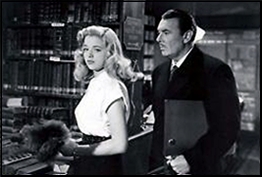
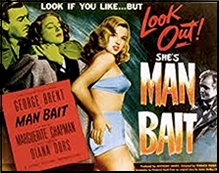
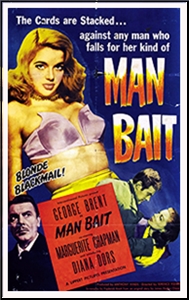
MAN BAIT. Hammer Films-UK / Lippert Pictures-US, 1952. George Brent, Marguerite Chapman, Diana Dors, Raymond Huntley. Peter Reynolds, and Meredith Edwards. Screenplay by Frederick Knott, based on The Last Page, a play by James Hadley Chase. Directed by Terence Fisher.

   A Pleasant surprise with the unlikely title Man Bait showed up on the bottom half of a double bill DVD billed as “Hammer Noir,” one of a series of co-productions between Hammer Studios and producer Robert Lippert.

BORING BACKGROUND – SKIP THIS PART: Robert Lippert was a producer of legendary cheapness and dubious ethics who churned out a slew of low-budget movies in the 1950s & 60s, mostly aimed at rural audiences and double bills. His favorite actors were Sid Melton, who didn’t need a script, and Margia Dean, whom he was sleeping with. When he hired bigger “name” actors (heavyweights like Cesar Romero or Rod Cameron) it was usually on a profit-sharing deal where the profits never materialized. As far as I can tell, the only ones who ever got a fair shake from Lippert were Sam Fuller, who carried a gun, and George Raft, who had Mob connections.

   In the early 50s, Lippert discovered that the British government was subsidizing film production in England, and he could actually make movies cheaper there in partnership with a British studio. He hit upon the ploy of casting fading second-rank Hollywood “stars” (Raft, Romero, Scott Brady, Zachary Scott, and the like) for dubious box office power in the states, and a whole new sub-genre was born: the Anglo-American B-movie, which flourished, after a fashion, until the moguls at Hammer got a grasp on Lippert’s slippery bookkeeping.

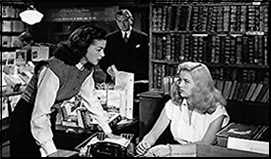
AND NOW BACK TO THE MOVIE: This one stars audience-magnet George Brent and a very capable cast of Brits, including Raymond Huntley, playing his usual nasty martinet, Diana Dors as a sensuous not-quite-innocent, and Peter Reynolds, perfectly slimy as the small-time spiv who tempts our Diana into blackmail and murder — in a bookstore.

   The plot has some surprising twists in it, but the strength of Man Bait is in the characterizations and atmosphere. Director Terence Fisher perfectly evokes the feel of a little book shop — all nooks and crannies and crowded shelves — and the writers people it with real bookstore-types if you know what I mean.

   Which leads me to speculate on where they came from. I have read some of James Hadley Chase’s novels, and I’ll be charitable by saying characterization is not his strong suit. Man Bait is based on a stage play apparently by Chase, The Last Page. I can find no more about it, but the presence of Frederick Knott, just before he hit it big with Dial M for Murder leads me to suspect he played a strong hand in fashioning this film, and perhaps the play as well.

   Whatever the case, Man Bait zips along suspensefully, with Brent framed for murder and the police oh-so-slowly figuring things out as another killing looms just ahead. Terence Fisher makes an impressive directorial debut, and even George Brent, never terribly exciting, lends a surprising inner strength to his quiet role. This one’s a winner.


KIERAN ABBEY – Beyond the Dark. Dell #93, mapback edition, no date stated [1945]. First published by Charles Scribner’s Sons, hardcover, 1944.

   This one begins at Inspiration Point, overlooking the Hudson River at the uppermost tip of the island of Manhattan. A man and a woman, strangers to each other, are watching the boats on the water below. He offers her a cigarette. She accepts. Three men come walking up from the parkway below, deep in conversation. When they see the pair of them at the top, they stop talking and pull out their guns. Shots ring out.

   The couple, still strangers, flee together, making their way downtown by means of a police car they steal, having found it left unmanned nearby. Thus begins one of the most Woolrichian tale of constant capture. escape and chase — up and down and across the entire city — that I’ve had the pleasure of reading in a good long while. Not only are the police after them, but the FBI, and of course the gang of conspirators the men who shot at them are a part of.

   Both of them has a reason, not revealed, for not wanting to go to the police. Neither has anyone in the entire city they can turn to for help. Worse, when they return to the apartment the girl has borrowed for the duration of her stay, they find the body of one of then men who shot at them, recently and definitely deceased.

   If you could stop reading at this point, you’re a better person than I. Of course the explanation of how these two people got into a fix like this is not nearly as interesting as the story of how they find their way out of it. No matter. This one was a pleasure to read.

   Kieran Abbey was a pseudonym for Helen Reilly, who was, as you may already know, the author of several dozen Inspector McKee police procedural novels. This is the third of only three she wrote under this name, all during the 40s. It’s a book filled with the sights and sounds of late wartime New York City, showing another side of the author I wasn’t aware of before.

« Previous PageNext Page »