REVIEWED BY MICHAEL SHONK:


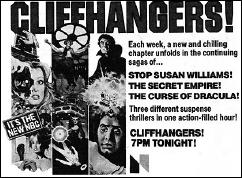
CLIFFHANGERS! NBC-TV. February 27, 1979 through May 1, 1979. Created by Kenneth Johnson. (I was unable to visually confirm other on-screen credits.)

      THIS WEEK’S REVIEW:
CLIFFHANGERS Susan Anton

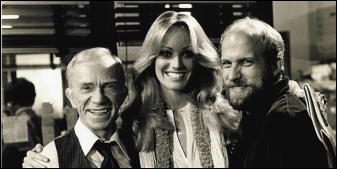
STOP SUSAN WILLIAMS. 20 minute Chapters. Cast: Susan Anton as Susan Williams, Michael Swan as Jack Schoengarth, Ray Walston as Bob Richards, Albert Paulsen as Anthony Korf.

   Could the old movie serials succeed on network television in 1979? Can you do three different series for one hour program on one budget? What about Cliffhangers’ other two serials? Will science fiction western The Secret Empire, and horror Curse of Dracula remain forgotten? And what truly evil deed was NBC responsible for that left millions searching for answers? For the answer to some of these questions and more, keep reading!

   Stop Susan Williams was a “twelve” chapter serial, that started with Chapter Two (there was no Chapter One). Susan was a talented photographer for the New York “Dispatch”. Convinced her brother’s death was murder, she travels the globe in search of his killer. Susan stumbles across the evil conspiracy behind her brother’s death. It is up to Susan and her friends to save the world before May 15th.
CLIFFHANGERS Susan Anton

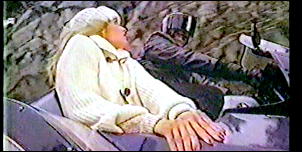
   The series recreated the old cliffhanger style and successfully captured the appeal of the old serials. Susan would weekly escape from such dangers as being pushed out a high-rise apartment window, a snake in the bath, trapped in a pit with a lion and piranhas nipping at her heels.

   But the attempts to update the old movie serial to 1970s failed. The mercenary “hero” was more a weak Sam Spade than the popular true blue serial good guy with his strong yet simple moral code. The 1970s style dialog was cluttered with lame banter that was more irritating than fun.

   Susan Anton did well as the likable heroine. The announcer (probably Paul Frees) was perfect. But the rest of the cast was trapped in one-dimensional characters and a plot more interested in the cliffhangers than the story. Just like the old movie serials.
CLIFFHANGERS Susan Anton

   It is no spoiler that Susan saves the world, but she failed to stop one evil villain’s plans. NBC scheduled Cliffhangers, with its nostalgic appeal, opposite ratings powerhouses with nostalgic appeal, Happy Days and Laverne & Shirley.

   But evil NBC was not done. The network (boo! hiss!) canceled Cliffhangers and took Stop Susan Williams off the air before the final Chapter could air. NBC not only stopped Susan Williams, it ended the adventure with the good guys trapped in a mine, the villains celebrating, and the world facing certain doom!

   But all was not lost! Stop Susan Williams, including the unseen final chapter, was edited into a TV-Movie titled The Girl Who Saved the World (1979). Finally the happy ending was revealed, leaving NBC foiled again.

   For this review, I watched all of the chapters including the final chapter at YouTube. The picture quality is poor and the credits have been edited out, but if you enjoy the old movie serials, the YouTube copy is worth watching. Watch for a graphics blooper, when they lose count and number Chapter 6 as Chapter 7. The chapter titles follow:

CLIFFHANGERS Susan Anton

Chapter 2 “The Silent Enemy”
Chapter 3 “Jungle Death Trap”
Chapter 4 “Thundering Doom”
Chapter 5 “Deadly Descent”
Chapter 6 “Watery Grave”
Chapter 7 “Cauldron of Fire”
Chapter 8 “River of Blood”
Chapter 9 “Wheels of Destruction”
Chapter 10 “Terror From the Sky”
Chapter 11 “The Villain Revealed”
Chapter 12 “Crypt of Disaster”
THE END

IT IS PURELY MY OPINION
Reviews by L. J. Roberts


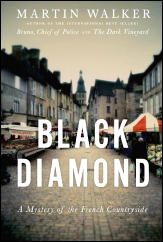
MARTIN WALKER – Black Diamond. Quercus, UK, hardcover, 2010. Alfred A. Knopf, US, hardcover, August 2011.

Genre:  Police Procedural. Leading character:  Bruno Courréges; 3rd in series. Setting:   France.

MARTIN WALKER - Black Diamond

First Sentence:   There weren’t many times that Bruno Courréges disliked his job, but today was one of them.

   Truffles are big business in France. When it is suspected that someone is replacing high-quality truffles with cheaper Chinese truffles, Bruno is asked to do an informal investigation. With a heinous murder and attacks on Vietnamese merchants, things become serious, and dangerous, very quickly.

   Any impression that this was is light, cozy series, is completely dispelled by this book. It is, in fact, a strong, complex, compelling police procedural with a protagonist who has become one of my favorites.

   Although Bruno is the focal character, it is his relationships with friends and associates that add layers and texture. Bruno is his town’s only policeman. This makes him an integral part of the community while helping maintain its structure.

   He is intelligent,analytical and a by-the book policeman without being rigid. He has a history, doesn’t shy from violence, dresses as Pare Noel and teaches rugby and tennis to the kids. In other words, he is well rounded, interesting and realistic.

   Walker, with a deft hand, starts with bucolic descriptions which set the scene and provide sense of place. Throughout there are mouth-watering descriptions of food and its part in a tradition which touches the heart. The use of French expressions lends veracity while their translation prevents readers from feeling excluded.

   The plot builds and weaves in a way that kept me going. It started off seemingly simple, yet escalated quickly as does the motive behind the crimes. Again, anything but a cozy; yet an interesting look into the politics and issues of France; one of the reasons I am attracted to books set outside the US.

   As always, I recommend starting the series at the beginning and not being put off by either the title or cover of the first book, Bruno, Chief of Police. Walker is a very good writer; Bruno a very good policeman in a series that improves with each entry.

Rating:   Very Good.

    Previously reviewed by LJ on this blog:

MARTIN WALKER – The Dark Vineyard.

A REVIEW BY RAY O’LEARY:
   

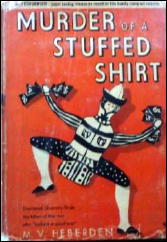
M. V. HEBERDEN – Murder of a Stuffed Shirt. Doubleday Crime Club, hardcover, 1944.

M. V. HEBERDEN Murder of a Stuffed Shirt

   Desmond Shannon, a big redheaded PI in the Mike Shayne mode, gets back to his New York office after doing some Intelligence Work during World War II and suddenly finds himself a very popular fellow: Wealthy Theodore Armisted has just been murdered, after tipping the FBI off about an organized Draft Evasion Ring. The FBI and local Police want Shannon in on the case, and so do Armisted’s surviving relatives, who hire him to investigate.

   Problem is, one of the suspects saved Shannon’s life years ago in South America, and Shannon is determined that, guilty or innocent, he will not be charged with the crime… Which is gonna call for some astute detective work on his part or some tricky writing on Heberden’s.

   Due to the wartime paper shortage, this was published in a hardback edition barely larger than a paperback, and though the title sounds like a Classical Puzzle Novel, this is actually a Hard-Boiled PI yarn. And — thanks to some snappy dialogue — a passable read.

       Previously on this blog:

Mystery Woman.
Reviewed by William F. Deeck:   CHARLES L. LEONARD – Deadline for Destruction.
Archived Review by Steve Lewis:   CHARLES L. LEONARD – Sinister Shelter.

REVIEWED BY BARRY GARDNER:


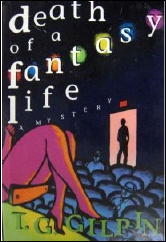
T. G. GILPIN – Death of a Fantasy Life. St. Martin’s, US, hardcover, 1993. First published in the UK: Quartet, hardcover, 1988.

T. G. GILPIN

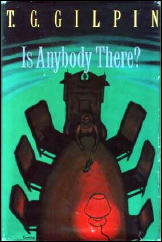
   I reviewed what I thought was Gilpin’s first novel, Is Anybody There?, for Mystery News, and thought it was a very good and off-beat story. But it turns out that this was his first, published in England in 1988 and only now appearing here.

   Speaking of unlikely teams, how about a professor of theoretical linguistics and a Soho stripper? The professor comes to town seeking an erratic and unlovable nephew of whom he is the guardian, and while having a pint in a pub meets a stripper when she mistakes him for someone else.

   One of her friends has been murdered a short time before, and it turns out that the erratic nephew knew her; as is true of the next stripper who is murdered, very quickly.

   The prof and the stripper get their heads together, he out of concern for the nephew, she for the sorority of strippers, but they come to no conclusions, and the alliance dies aborning when the somewhat sexless prof rebuffs her friendly (no more, surely) advances.

   He is unable to settle back into his routine, however, and when certain events occur he is drawn back in to the world well lost.

   This is one of those books of a peculiarly British type; not farcical, but with a cast of characters just slightly askew. It’s not humorous in a thigh-slapping sense, but somehow the overall tone is one of gentle humor.

   Gilpin is a literate and enjoyable stylist who seems to like the people about whom he writes, and I think you will, too. This doesn’t have the depth of Is Anyone There?, but it’s defintely worth reading. I particularly liked the ending.

— Reprinted from Ah, Sweet Mysteries #7, May 1993.


  Bibliography: Adapted from the Revised Crime Fiction IV, by Allen J. Hubin —

GILPIN, T(imothy) G., 1946- .

      Death of a Fantasy Life (n.) Quartet 1988; St. Martin’s, 1993.
      Is Anybody There? (n.) Constable 1991; St. Martin’s, 1992.

T. G. GILPIN

      Missing Daisy (n.) Constable 1995; St. Martin’s, 1995

REVIEWED BY DAN STUMPF:         


A. MERRITT Seven Footprints to Satan

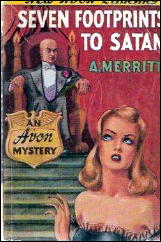
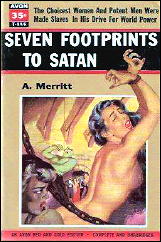
A. MERRITT – Seven Footprints to Satan. Boni & Liveright, US, hardcover, 1928. Richards, UK, hardcover, 1928. First serialized in Argosy All-Story Weekly, June-July 1927. Reprinted many times, in both hardcover and soft. Film: First National, 1929

   Speaking of scary books, I recently picked up a copy of A. Merritt’s Seven Footprints to Satan. Seems to me like Merritt divided his time between creepy contemporary chillers like Burn Witch Burn and ancient-empire fantasies like Dwellers in the Mirage.

A. MERRITT Seven Footprints to Satan

   Footprints is somewhere in the middle, a fast-moving adventure with a modern (1920s) hero pitted against a criminal mastermind who styles himself as Satan, ensconced in a labyrinthine palace of preposterous proportions, staffed with mindless slaves, distressed damsels and assorted thralls.

   It’s all fast-moving and purple, with chases, fights, torture… everything you pick up a thriller for. Not believable for a moment, but I didn’t put it down, either.

REVIEWED BY WALTER ALBERT:         


RUTH ROLAND

THE DEVIL’S BAIT. Balbao-General Film, 1917. Ruth Roland, William Conklin, Henry King, Ed Brady, Myrtle Reeves, Lucy Blake, Gordon Sackville. Scenario by Will M. Ritchey. Director: Harry Harvey. Shown at Cinecon 44, Hollywood CA, Aug-Sept 2008.

   Another of those sentimental morality plays that I have an almost inordinate fondness for, which could be a lingering effect of my upbringing in a Southern Baptist church.

   I was initially drawn to this film by the presence of Ruth Roland, a major chapter play star in the 1920s whom my mother still remembered with pleasure when I was a child. Here she was not required to exhibit any athletic prowess, but showed some skill at portraying an attractive young woman, brought up by a strict but loving father, whose checkered past almost helps bring about the downfall of his virtuous daughter, lured by an unscrupulous letch with jewels that captivate the eye and destroy the soul.

   This agent of the devil is, of course, foiled and punished, but there’s some splendid melodrama along the way, with intermittent appearances by an actor clothed in a tight-fitting devil’s suit who should have spent more time working out before he took on the role.

SUSPENSE — WITH A HITCH
Cornell Woolrich’s Rear Window and Other Stories
A Review by Curt J. Evans


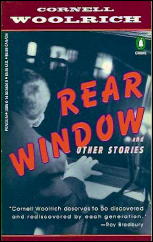
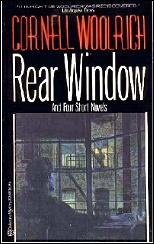
CORNELL WOOLRICH – Rear Window and Other Stories. Penguin, paperback, 1994. First published as Rear Window and Four Short Novels: Ballantine, paperback original, 1984.

CORNELL WOOLRICH Rear Window

    There have been so many Cornell Woolrich short story collections collected over the years that one can enter into an agonizing state of suspense just trying to decide which of these collections to buy. Fortunately I can assure you — if you do not know it already — that this particular collection is a corker.

    Interestingly, not only is the title short story (“Rear Window,” 1942) associated with that cinematic master of suspense, Alfred Hitchcock, so are the collection’s additional four tales: “Post-Mortem” (1940), “Three O’Clock” (1938), “Change of Murder” (1936) and “Momentum” (1940). Indeed, I strongly suspect this is why they are collected here in this volume.

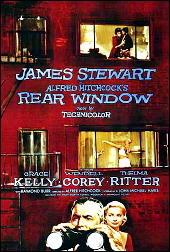
    Rear Window of course, is one of Hitchcock’s great films, while “Post-Mortem,” “Change of Murder” and “Momentum” all were filmed for the memorable television series Alfred Hitchcock Presents (“Change of Murder” as “the Big Switch”) and “Three O’Clock” was directed by Hitchcock himself for the fifties television series Suspicion.

CORNELL WOOLRICH Rear Window

    I have seen all of these adaptations bar “Three O’Clock” and all are first class mystery entertainment. (“Three O’Clock” was retitled “Four O’Clock” and shown as the first episode of Suspicion on 30 September 1957. I have never seen an episode of this series.)

    Woolrich’s “Rear Window” is an excellent story, but for me it has been rather upstaged by the film. Not so the rest, however. Of the remaining four stories the most minor is the early Woolrich tale “Change of Murder,” though it a clever little piece with a nice twist in the tail (it also is the shortest of the five by far).

    “Momentum” is a strong work (again with a fine twist), but my absolute favorites in this collection are “Post-Mortem” and “Three O’Clock.” Though I have great admiration for the droll television adaptation of the former (with its excellent performances by Joanna Moore, Tatum O’Neal’s mother, and Steve Forrest, a brother of Dana Andrews), I found the story easily stands on its own as a biting and ironic domestic suspense classic rather on the order of Dorothy L. Sayers’ brilliant “Suspicion.” Quite a bit of plot complexity is packed into this tale (which was streamlined in the adaptation).

CORNELL WOOLRICH Rear Window

    As indicated above, “Three O’Clock” was completely new to me, and I found it a powerful screw turner of tension. Again the tale has a domestic setting, but where “Post-Mortem” is black comedy, “Three O’Clock” is just blackly grim — and powerfully and memorably so.

    Suspense is remorselessly (if at times improbably) drawn out and the twist, when it came, took me totally by surprise. I hesitate to say anything in detail about the plot for those who have not read the tale or seen the television adaptation. To those people: just read it!

    Rear Window and Other Stories seems to me a great place to start a literary relationship with the great master of suspense Cornell Woolrich. It is also one to return to again and again … if you dare. Unpleasant dreams!

REVIEWED BY MICHAEL SHONK:


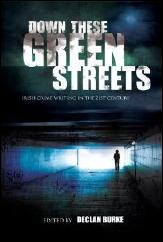
DECLAN BURKE – Down These Green Streets — Irish Crime Writing in the 21st Century. Liberties Press, trade paperback; available for pre-order, July 28, 2011. Released in Ireland June 7, 2011.

   As a daily visitor to Declan Burke’s must read website, “Crime Always Pays,” I requested and received an ARC of this book for review purposes (and because I wanted to read it).

DECLAN BURKE Down These Green Streets

   Down These Green Streets is a collection of essays, interviews, and short fiction exploring Irish crime fiction by the writers, critics, and academics involved in the genre. Aimed at the casual reader and the devoted fan, there is much for all to enjoy. This is not a book you read in one night unable to stop, though it is about such books. Instead this is a book to savor slowly, a chapter at a time.

   The book begins with editor Declan Burke comments on the recent increase in the public’s interest in the Irish crime genre, followed by Michael Connelly’s Foreword, in which he discusses how American crime writers and Irish crime writers are connected.

   The Introduction by Professor Ian Campbell Ross examines the role the Irish has played in history of crime fiction. Writers who share personal stories about their life, writing and the genre include John Connolly, Cormac Millar, Declan Hughes, Colin Bateman, Gerry O’Carroll, Arlene Hunt, Andrew Nugent, and Neville Thompson.

   Several writers and critics did essays on various subjects: Ruth Dudley Edwards and the life and work of Liam O’Flaherty, Cora Harrison and early Irish law called the Brehon’s Laws, Adrian McKinty and North Ireland crime fiction, Alan Glynn and Irish literary crime novels, Eoin McNamee and the noir aspects of true Irish crimes, Paul Charles and characters in exile, Niamh O’Connor and the public’s interest in true crime.

   More. Gerard Brennan and crime fiction after the IRA and DUP formed a government, Ingrid Black questions Irish pride, Gene Kerrigan and the appeal of crime fiction and the real misery it is based on, Sara Keating and Irish crime theatre, Brian McGilloway and the role the border between North and South plays in the genre, and Tara Brady looks at Irish crime cinema.

   The book includes two interviews: John Banville by Declan Burke and Tana French with Claire Coughlan. The short stories are “Twenty-Five and Out” by Kevin McCarthy, “Inheritance by Jane Casey, “Taken Home” by Alex Barclay, “The Craftsman” by Stuart Neville, and “The Houston Room” by Ken Bruen.

   In the Afterword, Fintan O’Toole discusses Irish crime fiction during the time of Raymond Chandler’s childhood in Waterford and London, and how recent changes in Ireland has given birth to the new Irish crime genre. Further Reading by Professor Ross and Shane Mawe is a short bibliography of Irish crime fiction from 1829 through 2011.

   The people who are creating the new genre of Irish crime fiction are too many and too diverse to contain in just one book, but this book is the perfect beginning. The views here are as varied as the genre itself. Down These Green Streets greatest value is revealing the new Irish crime genre is as much about being Irish as it is about crime.

   Here you will learn about Irish phrases such as “The Troubles” and “Celtic Tiger,” as well as the Irish meaning of the word “ride.” But you will understand more, you will realize the genre may get Americanized, but it will always have the soul of the Irish.

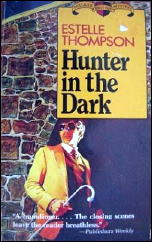
ESTELLE THOMPSON Hunter in the Dark

ESTELLE THOMPSON – Hunter in the Dark. Walker, hardcover, first US edition, 1979; paperback, 1984. Robert Hale, UK, hardcover, 1978.

   Philip Blair is blind, and his ego is deeply wounded when a young girl picked up from the bus stop where they both had been waiting is later found murdered.

   With the assistance of his former fiancee, he takes it upon himself to investigate a link to the death of another small girl a short time earlier; he has a theory that he feels the police are too slow in following up on.

   There seems to be a special attraction that mystery readers have toward blind detectives, and Hunter in the Dark is no exception. The story is quiet, low-key, and gently sentimental, laced with a whopping dose of coincidence, but now that Blair’s life is back on the right track, might it not be that amateur private eye work is in his blood?

Rating:   B.

— Reprinted from The MYSTERY FANcier, Vol. 3, No. 6, Nov/Dec 1979 (very slightly revised). This review also appeared earlier in the Hartford Courant.


ESTELLE THOMPSON Hunter in the Dark

  [UPDATE] 06-14-11.   I wish I could say that I remember this one, but I don’t — only the title is familiar. I believe I was right, though, to say that mystery readers are fond of blind detectives, since (speaking personally) if I had this beside me right now, I’d pick it up to read again without a moment’s hesitation.

   There were, alas, no other tales in which Philip Blair appeared as the detective. Of Estelle Thompson’s output of 16 crime novels between 1961 and 2000 (two of them designated by Hubin as having only marginal crime content), there isn’t a recurring series character to be found. Most were never published in the US, making her work essentially unknown in this country.

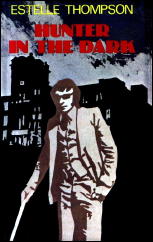
[UPDATE #2] 06-15-11.   Thanks to Jamie Sturgeon for providing the cover of the British edition of Hunter in the Dark — the one you see immediately here above and to the right.

[UPDATE #3] 06-16-11.   More from Jamie:

   Here’s a photo of Estelle Thompson, on the back of the UK edition of The Substitute (Hale 1991). The biog on the DW states:

ESTELLE THOMPSON Hunter in the Dark

    “Estelle Thompson lives with her family on a dairy farm in Nambour, Nr Brisbane, Australia. Her special interests are badminton, listening to music, omnivorous reading and animals of all kinds. She calls her writing a spare-time occupation.

    “She has more than eight novels to her credit, translations of which have been published in Denmark, France, Germany, Holland, Italy, Sweden and the USA. Her first novel A Twig is Bent was serialised in Woman and on BBC radio and film rights were sold. Her fourth novel The Edge of Nowhere was serialised in Women’s Realm.”

   Of course she had written more than eight novels when The Substitute was published and The Edge of Nowhere was in fact her third novel. I found on the internet a more recent Hale book (Come Home to Danger) which states on the DW more briefly that:

    “Estelle Thompson has written fifteen novels. She currently lives with her brother on a farm in Queensland, Australia.”

IT IS PURELY MY OPINION
Reviews by L. J. Roberts


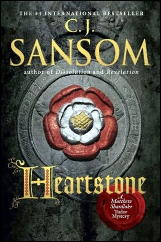
C. J. SANSOM – Heartstone. Mantle, UK, hardcover, 2010. Viking, US, hardcover, January 2011.

Genre:   Historical Mystery. Leading character:  Matthew Shardlake; 5th in series. Setting:   England; 1545.

First Sentence:   The churchyard was peaceful in the summer afternoon.

C. J. SANSOM

   Lawyer Matthew Shardlake has been summoned to Queen Catherine Parr, last wife on Henry VIII. A former servant of hers has asked for help investigating claims by her son that his former student, Hugh Curtey, has been mistreated by Hugh’s guardian, Sir Nicholas Hobbey.

   Traveling to Portsmouth with his assistant, Barak, allows Matthew to also investigate the past of Ellen Fettiplace, a young woman committed to Bedlam, but by whom?

   Sansom has gifted his readers with yet another wonderful book filled with historical details. The themes of politics, greed, poverty, conscription, injustice to the less powerful and the cost of war caused by those in power on those who have no choice but must live with the consequences have been repeated through time but here are set in the middle 1500s.

   One of my pleasures in reading historical mysteries is to learn. The Council of Wards was something with which I was not familiar. Most particularly, however, was learning that, but for the stubborn conviction of one woman, England might never have split from Rome.

   I also wish to applaud the UK publisher, Mantle, for a physically beautiful book, from the dust cover and embossed Tudor rose on the hard cover, to the inclusion of color maps, a sewn-in bookmark and, as always, the author notes at the end. In this day of ebooks, such details are greatly appreciated.

   I very much enjoy Sansom’s, and thus his character’s, voice. It has a very conversational tone which immediately drew me into the story, along with the lack of prologue. His characters are somewhat atypical in that Matthew is by no means heroic. He is an interesting, appealing character who can be stubborn, intrusive and somewhat naïve in his trust of others.

   Yet he is also caring and determined in his pursuit of justice. In other words, he is human and fallible. As balance, you have his assistant, Barak, now married and about to be a father. It is nice to see how both characters, individually and in relationship to one another, have grown and developed through the series.

   The plot is interesting and well done, but does get bogged down at times. There is so much history; the story itself becomes a bit lost, although certainly never to a point where I was tempted to stop reading. I was torn between feeling it would have been a much tighter, more compelling story had it been trimmed down, yet knowing I’d have learned and understood much less about the world in which the characters lived.

   Sansom has taken several story lines and woven them together into a fascinating, very good whole. As ever, I am eagerly looking forward to his next book.

Rating:   Very Good.

      The Matthew Shardlake series —

1. Dissolution (2003)

C. J. SANSOM

2. Dark Fire (2004)
3. Sovereign (2006)
4. Revelation (2008)
5. Heartstone (2010)

« Previous PageNext Page »