20,000 LEAGUES UNDER THE SEA. Walt Disney / Buena Vista, 1954. Kirk Douglas, James Mason, Paul Lukas, Peter Lorre. Based on the novel by Jules Verne. Director: Richard Fleischer.
Although this 1954 Walt Disney production, 20,000 Leagues Under the Sea doesn’t quite hit the mark as a cinematic adaptation of a literary text, it nevertheless succeeds wildly as an auditory and visual spectacle. As the first science fiction film to be shot in CinemaScope, this Technicolor film resonates with some absolutely lavish color schemes, beautiful underwater photography, and crisp portraits of the main characters.
Add to that the wonderful score by Paul Smith, and you have yourself a borderline operatic experience in which repetitive leitmotifs guide the viewer off the California coast, into the vast Pacific, and underneath the ocean in Captain Nemo’s proto-steampunk submarine, the Nautilus.
Based on the eponymous Jules Verne novel, this Richard Fleischer directed movie features James Mason as Captain Nemo, a mysterious man who is a renegade madman/visionary. He and his crew have been sailing underneath the Pacific in a (for its time) technologically advanced submarine, destroying warships in its wake. On board are his three captives, all survivors of an American naval vessel that he ordered destroyed. The three men could not be more different, in both personality and temperament. There’s the brawny Ned Land (Kirk Douglas); the erudite scientist, Professor Pierre Aronnax (Paul Lukas); and his neurotic, stout assistant, Conseil (Peter Lorre). Of all three four leads, it is Mason and Lorre who steal the show.
Unfortunately, the film takes its slow time in revealing the thrust of the story; namely, that Captain Nemo was once enslaved on a penal colony and is now seeking revenge against the “hated nation†that persecuted him and was responsible for the death of his family. He’s learned to love life underneath the sea, finding it a palatable alternative to man’s humanity to man on the surface. Problem is: Nemo has become so filled with bitterness and hatred that he doesn’t realize that he’s not all that different from the warmongers he so dramatically opposes.
But it’s not really the slow moving and predictable plot that makes 20,000 Leagues Under the Sea an enjoyable moving watching experience. Instead, it’s the spectacle of it all. This is a movie in which special effects really are indeed quite special. Case in point is the famous sequence in which Ned Land (Douglas) battles a giant squid. As a Disney film, there are naturally some family friendly moments, such as when Ned sings a seafaring ditty, “A Whale of a Tale,†and a few lighthearted moments with a seal.
All told, 20,000 Leagues Under the Sea is a work of movie magic, one that I am sure is a completely different experience watched in a theater.
MATT & BONNIE TAYLOR – Neon Flamingo. Dodd Mean, hardcover, 1987. St. Martin’s, paperback, June 1990.
This is the first in the series of three Palmer Kingston novels. I posted Barry Gardner’s review of the third, Neon Dancers, a couple of weeks ago. He liked it well enough that when I had the chance to read this one, I couldn’t turn it down.
To save myself of thinking up the same words to describe the two main series characters, both newspaper reporters, I’ve decided to use Barry’s instead: “Kingston is something of an eccentric, living in a garish mansion surrounded by neon signs and antique cars. [His lover and rival, A. J.] Egan is a tenant in the mansion. If it all sounds a little strange, well, it is.”
This novel chronicles the first time they met, with A. J. moving in and their working on the same case together, but from opposite sides of the fence, working as they do for two directly competing newspapers.
They make for a compatible if somewhat lightweight couple who somehow drift into sharing the same bed, on occasion, but I didn’t find the case they’re working on to be of much interest. The killing of a retired police captain seems to Palmer to be directly connected to a kidnapping that took place some 20 years when he was the new kid in town. I didn’t make the same jump in logic as quickly as he did. I found myself continually playing catch-up and never feeling as filled in as I thought I should.
Most of the characters are only there. None stand out, not even the two leading ones. The book’s not bad, the setting is fine — a mid-sized town on the Florida coast — but the story is weak, and it’s tough to get over that. All in all, it’s a book that could have been a whole lot better.
STUART WOODS – Santa Fe Rules. Harper Collins, hardcover, 1992. Harper Torch, paperback, 1993.
A lot of people, including a number whose judgement I respect, really like Woods’ books. I’ve thought them good to so-so, but have never been a raving fan.
In this one, producer Wolf Willett leaves Santa Fe for LA one morning in his plane, and has to land at Grand Canyon with electrical problems. While there he reads a newspaper account of bis, his wife’s, and his director’s deaths at his home in Santa Fe, by shotgun. Naturally, this gives him somewhat of a turn.
The situation is acerbated by the fact that he has completely lost a day, and can’t remember the night of the last day he remembers. What to do, what to do. Well, that’s what it’s all about, innit?
Smoothly and slickly written, and entertaining enough. Standard best-seller stuff.
— Reprinted from Fireman, Fireman, Save My Books #4, November 1992.
Bibliographic Update: A synopsis of this book I found online says: “Learning that his wife and partner have died suspiciously while he was away, successful Hollywood producer Wolf Willett returns home and hires ace criminal defense lawyer Ed Eagle to clear his name of the murder charge.” I then discovered that Ed Eagle has appeared in three more books by Woods, all between 2006 and 2010, making him a series character that of course Barry could not know about or foresee.
ULRIC DAUBENY “The Sumach.” First appeared in The Elemental: Tales of the Supernormal and the Inexplicable (George Routledge & Sons, 1919; Ash-Tree Press, August 2006, out of print). Story online here.
Ulric Daubeny (1888-1922), a British scholar of church architecture, published one original volume of supernatural fiction. Entitled The Elemental (1919), the volume isn’t particularly easy to come by these days. After reading “The Sumach,†I can attest that that’s probably something that should be rectified. I had an opportunity to read this particular Daubeny short story in the recently published anthology, The Rivals of Dracula (No Exit Press, 2015).
Although this work of weird fiction isn’t in the same league as say Arthur Conan Doyle or H.P. Lovecraft’s output, it’s certainly on par with the short fiction penned by other somewhat contemporaneous writers in the supernatural genre, authors such as Frank Belknap Long and E. Hoffmann Price, both of whom wrote for Weird Tales.
“The Sumach†is notable for two reasons. First, it is the tale’s reliance on two female protagonists and the concomitant lack of a male character central to the outcome of the story that makes it a bit unique. Second, and more importantly, Daubeny’s “The Sumach†successfully merges the weird biological/plant story with that of the vampire tale. Indeed, the eponymous sumach, as presented in the story, is both an artifact of nature and an agent of the supernatural. It is, for the lack of a better term, a vampire plant.
With a premise as uncanny such as this, it’s notable that Daubeny is able to weave a tale that never descends into camp or parody. “The Sumach†remains a story in which a woman, in her quest to solve the mystery of her cousin’s tragic demise, comes face to face with a plant that has taken on the characteristics of a vampire that once haunted the English countryside.
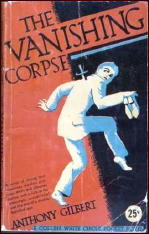
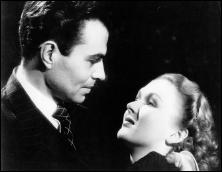
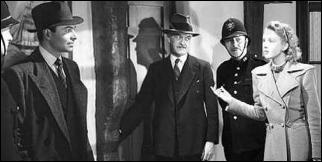
THEY MET IN THE DARK. General Films, UK, 1943. James Mason, Joyce Howard, Tom Walls, Phyllis Stanley, Edward Rigby, Ronald Ward, David Farrar, Karel Stepanek, Patricia Medina. Based on the novel The Vanished Corpse, by Anthony Gilbert (US title: She Vanished in the Dawn). Director: Carl Lamac.
A very minor wartime British spy film cum murder mystery that has only a couple of points worthy of notice, in my opinion. The first is that it is based on an Arthur Crook detective novel by Anthony Gilbert, Crook being a low-life London lawyer who had over 50 recorded adventures from the good lady’s pen (or typewriter, as the case may be).
There is no Mr. Crook in the movie, though, and even though I’m not sure where he would have fit in, I’d have liked to have seen who they might have picked to play him. It wouldn’t have been the utterly handsome but oh so brooding James Mason — the second reason for you to see this movie, should you ever have the opportunity.
In the film Mason plays a Royal Navy commander who is given his walking papers after allowing the Nazis to blow up a ship under his watch. Knowing he has been given faked orders, he tracks down a manicurist who may have switched them on him first to a bar then to an old deserted house which (of course) is not really deserted. From another direction comes Laura Verity (Joyce Howard) who expects to find her uncles living there but instead finds the manicurist’s dead body.
Which quickly enough disappears à la the title of Anthony Gilbert’s novel. She suspects the commander, and to clear her name from providing the police false information, she decides to solve the case. He, of course, wishes to clear his name from more serious charges and is constantly annoyed to find the girl’s path continually crossing and interfering with his.
Which means, of course, they soon find themselves falling in love, all the while eluding the Navy, a gang of Nazi spies, an oh-so-British police inspector, all against a backdrop of a music hall complete with many songs and a harmonica player who is… Well, I shouldn’t tell you, should I?
The story’s rather a sorry mess, but the two leading players make it fun. Minor league fun, but still fun. But if James Mason hadn’t been in it, it never would have turned up again years later, in of all things, a DVD boxed set of British noir films. But noir? Not on your life.
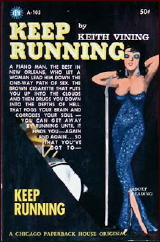
Jack Norton starts out the story as a hot jazz piano player in New Orleans, and in the first few chapters he gets mixed up with gangsters and a shady lady, commits a murder, is framed for a murder he didn’t do, and gets shot up and left for dead in a swamp.
This sort of thing is so common as to go unnoticed in paperbacks, but Vining writes in a fervid, emotionally charged style reminiscent of Woolrich, Goodis or Jim Thompson, and the opening chapters create a sensation of genuine unease.
Later on, Norton crawls out of the swamp, bums his way to Mobile where he gets work as a laborer, and eventually ends up working as a handyman/watchman at a modest nightclub on Florida’s Gulf Coast, where he strikes up a relationship with the beautiful owner… only to find his old gangster associates have moved into the area. And not only that, but there’s also a mystery player in the game, trying to kill him for reasons all his own.
The writing in these later chapters settles down to something on the order of John D. MacDonald or Dan J. Marlowe – still not a bad thing — full of the pungent detail of all that Manly stuff: dock-walloping, fist-fights, construction work, babes and bad guys, all evoked with the kind of easy-reading economy you just don’t see any more. The Mystery Figure is fairly obvious; in fact you can see him coming like the Macy’s Parade, but that doesn’t spoil the pleasure of a fast-moving, well-done read that I probably won’t remember by next week.
Keith Vining writes like someone who’s been around the pulps and paperbacks, and he made history of sorts with Too Hot for Hell — the first Ace Double. But that book and this one are all I can find out about a writer who shoulda been a contender….
I came across Peter Cheyney when I was somewhere between twelve and thirteen. A church bazaar or second hand bookshop, the memory is blurred. What remains clear is that being basically stupid and already with the propensity to read what I wanted to read, I assumed at first the book was a western ‘Peter Cheyenne’ being some kind of cowboy. When it became clear that it wasn’t a western, I put the book down convinced Peter Cheyenne was an American thriller writer.
I forgot all about him (well almost, the name having some kind of magic) for almost forty years. And this ‘forgetting’ is key to the whole story. Peter Cheyney was the most popular and prolific British author of his day. He was also the most highly paid. His curse perhaps is that he undoubtedly influenced Ian Fleming, for Bond is nothing more than a glamorous composite of the Cheyney ‘hero’. Cheyney created the template that Fleming developed, and the rest is history. Bond got Chubby Broccoli and celluloid fame, Peter Cheyney obscurity and critical censure.
John le Carre, when asked about spy books that might have influenced him as a child, gave the following response. He duly bowed his head to Kipling, Conrad, Buchan and Greene, and then referred to the: ‘…awful, mercifully-forgotten chauvinistic writers like Peter Cheyney and Co.’
John Sutherland made a similar point, referring to Cheyney’s Dark Series as the ‘high point of a resolutely low flying career.’ These two, wonderfully pithy, assessments are true to a point. They are also skewed by the cultural background and literary talent of both men.
Cheyney was chauvinistic, and no great shakes in terms of vocabulary and style, but he shouldn’t be forgotten ‘mercifully’ or otherwise. Cheyney’s success as the most highly paid writer of his time does not necessarily qualify him as a literary giant, but it does show that his work reflected the attitudes and mood of a huge swathe of the population, amplified it and played it back to them. Cheyney talked to the popular mood rather than the concerns of an educated elite. It was ‘everyman’ who bought his work in droves.
During the dark years of World War II and the austerity that followed, Cheyney’s novels were taken into battlefields, were exchanged for ten cigarettes in POW camps, and at a time when fabric was rationed, women fantasised about the glamorous Cheyney femme fatales in their satin and silks, sheer stockings, ruffles and bows. Read Cheyney and you’re reading violence and brutality set in a fashion catalogue.
For those jaded by pilgrimages to Baker Street, Cheyney provides a welcome alternative. Most of his many heroes, villains and victims live in a very small area of London. Some are unwitting neighbours, and all jostle each other on the same roads and streets, ghosts in parallel worlds. These are mapped, allowing the reader to go on his or her own ‘Cheyney walk.’
Cheyney, Behave recaptures a lost world and provides an eye-opening analysis of a popular culture we might prefer to forget. The book examines the importance of cigarettes and alcohol in Cheyney’s world, his attitude to ‘pansies’, racism, women, and the unconscious but jaw-dropping sexism of his age. It analyses the significance of Cheyney’s ‘Dark’ series in terms of war propaganda and how Cheyney accurately captured the effects of war on prevailing morality.
In his books you will find misogyny, homophobia, racism, sexism and chauvinism and, at their core, idealism and a deep vulnerability. In terms of market forces they reflect a world long past, one far different from ours but fascinating and worth understanding. Read Cheyney, Behave and judge for yourself.
Most TV junkies claim Fall premiere week as their favorite time of the year, but mine has always been the May upfronts. Upfronts are parties the networks throw for major advertisers, ad agencies and the media in attempt to get them drunk enough to believe next Fall’s TV series will be the best ever and hope they forget the lies the networks told about the quality of last season’s shows.
In the past, May was the most dramatic month for the TV fanatic. TV viewers embraced hope of the new, relief when their favorites survived, and the devastation when they didn’t. But it is just not the same anymore.
The broadcast networks (ABC, CBS, FOX, NBC, and CW) have joined cable networks in the effort to supply original programming all year round. New television series never stop coming. The Big Four and-a-Half networks just announced their fall lineup with huge fan fare ignoring that September is no longer the best month of TV.
Pushing the limits of space here, let’s check out the highlights of what is coming this week, this Summer, this Fall, and in 2017.
Just because the main season is over, it doesn’t mean the broadcast networks abandon original programming. WAYWARD PINES is back on FOX. CW has the final season of BEAUTY & THE BEAST. CBS has the return of ZOO and two new series starting in June that sound better than any of CBS new fall shows. AMERICAN GOTHIC tells the story of a family that has discovered one of them is a serial killer. From the creators of THE GOOD WIFE, BRAINDEAD is a comedy thriller about a young woman who discovers aliens are eating the brains of politicians and government workers. NBC has the Olympics this summer but also airs AQUARIUS.
NBC medical drama NIGHT SHIFT returns for its third season:
Cable networks offer original scripted programs in May and June including AMC’s new crime drama set in a restaurant, FEED THE BEAST, and the last season of HELL ON WHEELS, HBO’s GAME OF THRONES, TNT’s LAST SHIP, MAJOR CRIMES, MURDER IN THE FIRST, and RIZZOLI & ISLES (final season), TBS’s ANGIE TRIBECA, Cinemax’s OUTCAST, Netflix’s ORANGE IS THE NEW BLACK, ADULT SWIM’s DECKER: UNCLASSIFIED, and SYFY’s 12 MONKEYS.
The heck with Marvel and DC, give me an IDW comic book like the fun horror/western WYNONNA EARP.
Cable original scripted programs continue through the summer with returning series such as SYFY’s KILLJOYS and DARK MATTER, FX’s TYRANT and THE STRAIN, STARZ’s POWER, USA’s SUITS and last year’s hit MR. ROBOT.
New series include Netflix’s STRANGER THINGS set in the 1980s, a supernatural series centered on a missing boy, SYFY’s post-apocalyptic drama AFTERMATH, and TNT’s GOOD BEHAVIOR based on the Letty Dobesh books by Blake Crouch.
Based on Stephen Hunter’s book POINT OF IMPACT, USA network new series SHOOTER premieres in July.
This fall live television, especially sports such as the NFL and World Series, will distract the viewing public. Cable lead by one of the most watched TV series in all television, AMC’s WALKING DEAD will hold its own. TNT reboots TALES FROM THE CRYPT, this time from M. Night Shyamalan.
Netflix starts another series featuring a Marvel comic character – LUKE CAGE.
Midseason 2017 promises to offer some entertaining new series on cable networks. USA’s FALLING WATER is a supernatural thriller about three strangers who find they can share dreams. SYFY’s horror anthology CHANNEL ZERO,
Syfy’s THE EXPANSE, the best TV series I watched in 2015-16, will return for its second season in January 2017.
Top network CBS will add three new dramas this Fall. BULL starring NCIS Michael Weatherly as Dr Phil back when he was a consultant specializing in manipulating… uh, I mean analyzing juries. Medicine meets technology in the new drama PURE GENUIS.
The pilot of MACGYVER had many behind the scenes problems. Let’s hope Macgyver can find the right knick knack to save the show.
Two new CBS series wait for their turn and midseason. DOUBT a lawyer show starring Katherine Heigl, and TRAINING DAY, based on the film. But more important are two series that CBS hopes to premiere in 2017 on CBS ALL ACCESS, its streaming service. First original new series will be the sequel to THE GOOD WIFE. The second is perhaps TV most famous franchise in history. It began on NBC, cancelled and resurfaces as a successful film series. It was used to establish Paramount in the syndicated market. It began UPN (now CW) and tried to save the network before the merger with WB. As Paramount continues to pump out theatrical films, CBS will use STAR TREK to jumpstart its streaming service.
Without a title or any idea what it is about, the new STAR TREK series is the most anticiated television series of next season.
Among the CBS series returning in the fall are BLUE BLOODS, CODE BLACK, CRIMINAL MINDS, ELEMENTARY, HAWAII FIVE-O, MADAM SECRETARY, NCIS, NCIS: LOS ANGELES, NCIS: NEW ORLEANS, and SCORPION. While CRIMINAL MINDS – BEYOND BORDERS will be back in 2017.
SUPERGIRL reminded CBS what its TV audience likes, so the new shows look like the old shows and SUPERGIRL flew off to CBS little sister CW. The comic book superhero will feel comfortable with the rest of DC comic superheroes, ARROW, LEGENDS OF TOMORROW, and CW’s top show FLASH. CW continues to specialize in comic books, horror and the weird.
New this fall to the mini-me of broadcast networks is FREQUENCY based on the film.
Returning during midseason will be THE 100, iZOMBIE, THE ORIGINALS, SUPERNATURAL, and THE VAMPIRE DIARIES.
Midseason, CW will add FOX reject RIVERDALE, based on the characters from Archie comics focused on a murder mystery. But this is not Scooby Doo or your old Archie (even the comic books are not your old Archie), this Archie deals with “adult issues†such as him sleeping with his teacher.
While CBS remains the top network, NBC is close behind. Its two biggest hits are SUNDAY NIGHT FOOTBALL and THE VOICE, each hogging up much of NBC’s fall schedule. This fall NBC adds five games of Thursday night football (CBS shows the first five, NBC has the last five). Without any major holes in its fall schedule, NBC saved its most promising new series for midseason, adding only three to the fall lineup.
NBC’s only new drama this fall is TIMELESS, the most promising series of the many this season featuring time travel.
Some of the series returning this fall are BLACKLIST, BLINDSPOT, CHICAGO FIRE, CHICAGO MED, CHICAGO PD, GRIMM, LAW AND ORDER SVU. SHADES OF BLUE will have to wait for SUNDAY NIGHT FOOTBALL to end.
Other new shows waiting for their turn include comedies POWERLESS (insurance office comedy set in the world of superheroes), TRAIL & ERROR (court comedy). New dramas are BLACKLIST – REDEMPTION (spinoff), EMERALD CITY (based on Baum’s Land of Oz books), MIDNIGHT, TEXAS (based on a series of books by Charlaine Harris (TRUE BLOOD)), TAKEN (prequel to film series) and what would any NBC list be without another Dick Wolf CHICAGO series, in this case CHICAGO JUSTICE.
There is hope at FOX. This year they have the Super Bowl guaranteeing better numbers at the end of the season. Ratings are changing, and FOX is pushing the hardest to find a way to count those of us who no longer watch TV live or on a TV set.
TV is about to enter an era of MONEYBALL. For those not familiar with baseball or the movie or the book, sabermetrics uses an endless amount of numbers to measure performance. Networks like FOX are all ready there, someday the media will catch up.
Speaking of baseball, FOX will have the World Series this fall as well as new series PITCH (story of first woman to play in Major League Baseball). Other new series of interest coming this fall are THE EXORIST (based on William Blatty’s novel), and LETHAL WEAPON (based on the film).
My pick for first fall show cancelled is FOX’s SON OF ZORN, an animated barbarian tries to cope in live action modern world.
Shows returning in fall include BROOKLYN NINE-NINE, insane GOTHAM, LUCIFER, ROSEWOOD, SCREAM QUEENS, and QUINTCO. Series returning in midseason include SLEEPY HOLLOW and the final season of BONES.
Among the new series waiting for 2017 are APB (rich man buys a police precinct), MAKING HISTORY (time travel comedy), SHOTS FIRED (racially charged shooting involving a cop), and PRISON BREAK (sequel to 2005 TV series).
FOX is hoping 24 – LEGACY will be as successful as the original 24.
ABC did not have a good year. Its president of programming was sacrificed to the Nielsen Ratings Gods in prayers for better numbers in the demo.There was not enough time to change the fall offerings, but it is expected ABC will copy CBS and NBC with less soap operas and more procedurals.
ABC’s new fall dramas of interest to us begins with DESIGNATED SURVIVOR starring Kiefer Sutherland as Tom Kirkman, Secretary of Housing and Urban Development ends up President after a terrorist attack takes out most of the leaders of the American government. CONVICTION with Hayley Atwell (AGENT CARTER) as a spoiled former first daughter who is forced under threat of jail to lead a small group investigating cases where the convicted might be innocent.
NOTORIOUS is about the seduction between law and the media.
Returning this fall are HOW TO GET AWAY WITH MURDER, MARVEL’S AGENTS OF S.H.I.E.L.D., and ONCE UPON A TIME. While these returning series have to wait until midseason their turn – AMERICAN CRIME, THE CATCH, SCANDAL and SECRETS & LIES.
Among the new ABC shows waiting for midseason is TIME AFTER TIME, based on the movie and stars Freddie Stroma as H.G. Wells.
Over one hundred TV series in the 2015-16 season were cancelled or ended. RIP.
ELLERY QUEEN – Beware the Young Stranger. Pocket, paperback original; 1st printing, May 1965.
Back in 1961, when the first of the bogus Ellery Queen paperbacks like this one came out, in my total lack of sophisticated way, as I recall it, I said something to myself along the lines of, Gee those guys must really need the money. I bought them all, though, or most of them, but I don’t think I got around to reading many of them, no more than two or three. I don’t think I missed much, but as you and I both know full well, some must have been better than others.
This one was written by Talmage Powell, a long-time pulp writer and the creator of the better than average PI Ed Rivers paperback series. And so he was an author I was therefore familiar with at the time, but how was I or anyone else to know?
This one’s not bad — as a sample I decided to give myself earlier this past weekend — and in fact, it’s better written than most of the paperback original mysteries that were coming out around the same time. But it’s also straight as a string, with no particular surprise in the telling; even worse, it has an awfully low page count of only 156 pages, with a slightly larger than usual font size.
There’s a large back story to go along with the cast of characters in the upper middle class, or country club setting of this novel, but what it boils down to is this: distinguished diplomat John Vallancourt’s daughter is 21 and in love with a boy whose background is somewhat shady. He was questioned but released in the investigation of a young girl’s death while on spring break, for example, so Vallancourt takes it upon himself to discover a lot more about him.
But when the boy’s aunt is murdered, and he is seen leaving the scene and soon after disappearing, on the run with the daughter in tow, Vallancourt’s task takes on much more serious tones. Is the boy guilty? Or is he innocent? And will Vallancourt find the two of them in time?
PANIC IN YEAR ZERO! American International Pictures, 1962. Re-released as End of the World. Ray Milland, Jean Hagen, Frankie Avalon, Mary Mitchell, Joan Freeman, Richard Bakalayan, Rex Holman, Willis Bouchy (as Buchet). Screenwriters: Jay Simms (story), John Morton, based on the short stories “Lot” and “Lot’s Daughter” by Ward Moore (uncredited). Director: Ray Milland.
It’s not that often a really low budget film over-performs as much as this one does. Maybe it’s the cast, maybe it’s the time it was written in, maybe it was sheer luck, but this little post-apocalyptic thriller is relatively smart, thoughtful, and even insightful.
Milland and family, wife Hagen, son and daughter Avalon and Mitchell, are off on a weekend fishing trip when Los Angeles is obliterated by a sneak nuclear attack. Mom is in shock, the kids are in panic mode, and Milland, the ultimate fifties early-sixties father figure, goes into full survival mode, willing to do whatever it takes for his family to survive.
There are no mutants, no invaders, the threat is other people trying to survive and lowlife types willing to kill, rape, and revert to animals in the subsequent chaos. As the father, Milland holds up a store for supplies as they race just ahead of the flood of refugees fleeing devastated L.A., and heads for a cave to wait out the fallout. Along the way he becomes more than a little ruthless and severe and gets little help from Mom, who is in shock, or the children who don’t understand what he does about human nature.
The tension in the film is as much from character development as incident.
Hagen and Milland raise the level of this, a solid little post holocaust film in the tradition of Pat Frank’s Alas Babylon, Philip Wylie’s Tomorrow, or, minus the polemical arguments and nasty bits Heinlien’s Farnham’s Freehold. In fact it poses a lot of the same questions as the Heinlien novel while coming to altogether different conclusions.
There is a novelization of this by Dean Owen (Brides of Dracula) under the title End of the World, the one which was used when the film was re-released (Ace, 1962).
This is probably the best of the films Milland directed. It has flaws, low budget, likely too quick shooting schedule, but it stays with you, and you may be impressed how logically the film develops considering other movies of the genre. I first saw it in a theater at age twelve and was surprisingly not disappointed when I saw it again as an adult. Not many low budget films of this sort survive that test.
I’m not sure, but this may be the last film where Milland played the leading man and the hero.
Devoted to mystery and detective fiction — the books, the films, the authors, and those who read, watch, collect and make annotated lists of them. All uncredited posts are by me, Steve Lewis.