REVIEWED BY STAN BURNS:


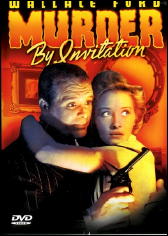
MURDER BY INVITATION. Monogram, 1941. Wallace Ford, Marian Marsh, Sarah Padden, Gavin Gordon, George Guhl, Wallis Clark, Minerva Urecal, J. Arthur Young, Herbert Vigran. Director: Phil Rosen.

MURDER BY INVITATION

   This Monogram mystery (calling it a B movie would be kind) is another entry in the “dark old house” genre. Reporter Bob White (Wallace Ford) investigates a series of murders at a spooky old house full of secret passages, sliding pictures, greedy relatives, and eyes looking secretly into the room.

   I kept expecting to see Abbot and Costello walk through the door at any moment. Rich Aunt Cassandra’s relatives dragged her into court and tried to have her declared incompetent so that they could gain control of her fortune, but the judge found in her favor even though she likes vinegar on her apple pie.

   So she invites all her relatives spend a week with her at her country mansion so she can decide which one will get the bulk of her estate. But no sooner do they arrive at midnight than one of them is stabbed to death (“She must have seen The Cat and the Canary,” quips White’s secretary when she hears about the midnight invitation).

   When reporter White arrives with his secretary and photographer he is welcomed into the murder scene (yes, a fantasy film…). No sooner does he arrive than the body disappears and another one appears in its place, and then that one disappears also.

   (In an aside Wallace Ford addresses the audience and says that you know you are past the halfway point in a mystery movie when the bodies have disappeared — and this movie is more than half over).

   This is a really goofy movie, not to be taken seriously, but fun to watch. At the end as Bob White starts a long, long kiss with his secretary, the camera pans over to Eddie the photographer and he says something like “The Hays Office isn’t going to like this…”

Rating:   C minus.

REVIEWED BY WALTER ALBERT:         


THE STOLEN VOICE. World Film Corp., 1915. Robert Warwick, Frances Nelson, Giorgio Majeroni, Violet Horner, Bertram Marburgh. Screenwriter/director: Frank Hall Crane. Shown at Cinefest 28, Syracuse NY, March 2008.

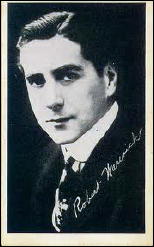
THE STOLEN VOICE Robert Warwick

   When society matron Belle Borden (Violet Horner) is entranced with the world-famous tenor Gerald D’Orvilie (Robert Warwick) her jealous suitor, the sinister mesmerist Dr. Von Gahl (Giorgio Majeroni) renders D’Orville mute.

   Belle immediately loses interest in the silenced tenor, who travels abroad, exhausting all of his fortune in an attempt to recover his voice. Reduced to utter penury, Gerald is rescued by someone he once salvaged from the refuse heap of humanity, rising to new heights as a silent screen star. When Dr. Van Gahl sees Gerald in his new-found glory on the screen he has a fatal heart attack, which immediately restores Gerald’s voice.

   I’ve skipped over several interesting features of which the most striking is the rescue by Gerald of his co-star from the raging rapids which are pulling her to a violent death. But you’ll get no more details from me. I’ve whetted your appetite enough already. (By the way, I loved the film. Or hadn’t you guessed that already?)

Editorial Note:   Robert Warwick’s movie and television career began in 1914 and did not end until 1962, two years before his death, with a substantial combined 242 total credits on bot screens. Moviewise, his roles seem largely to have consisted of minor roles in bigger films, and bigger roles in B-movies.

   Catching my eye, though, looking down through the list of movies he appeared in, are several he made for Preston Sturges in the early 1940s: The Great McGinty (1940), Christmas in July (1940), The Lady Eve (1941), and Sullivan’s Travels (1941). He was third-listed in the latter, after Joel McCrea and Veronica Lake.

The Murder of Mystery Genre History:
A Review of The Cambridge Companion to American Crime Fiction
by Curt J. Evans
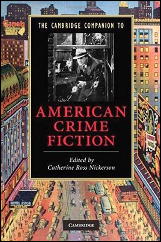

Cambridge Companion to American Crime Fiction

   On the back cover of The Cambridge Companion to American Crime Fiction (Cambridge University Press, 2010; Catherine Ross Nickerson, editor), the blurb tells us that the fourteen essays contained therein represent the “very best in contemporary scholarship.” If so, this should be a matter of grave concern to people interested in the history of the American mystery genre before World War Two.

   As the Companion is a skimpy book of less than 200 pages and it has fourteen essays, potential readers should be immediately clued in to the fact that the essays tend to be rather cursory. A listing of the essays further reveals that the book’s coverage is esoteric, leaving noticeable gaps:

Introduction (4 pages)
Early American Crime Writing (10 pages, excluding footnotes)
Poe and the Origins of Detective Fiction (8 pages)
Women Writers Before 1960 (12 pages)
The Hard-Boiled Novel (15 pages)
American Roman Noir (12 pages)
Teenage Detective and Teenage Delinquents (13 pages)
American Spy Fiction (9 pages)
The Police Procedural on Literature and on Television (13 pages)
Mafia Stories and the American Gangster (10 pages)
True Crime (12 pages)
Race and American Crime Fiction (12 pages)
Feminist Crime Fiction (14 pages)
Crime in Postmodernist Fiction (12 pages)

   Further evidence of highly selective coverage can be found in the “American Crime Fiction Chronology” at the beginning of the book. Here are its milestones in crime fiction from 1841 to 1939:

1841 Edgar Allan Poe, “The Murders in the Rue Morgue”
1866 Metta Fuller Victor, The Dead Letter
1878 Anna Katharine Green, The Leavenworth Case
1908 Mary Roberts Rinehart, The Circular Staircase
1923 Carroll John Daly, “Three Gun Terry”
1925 Earl Derr Biggers, The House Without a Key
1927 S. S. Van Dine, The Benson Murder Case
1927 Franklin Dixon, The Tower Treasure
1929 Dashiell Hammett, Red Harvest
1929 Mignon Eberhart, The Patient in Room 18
1930 Carolyn Keene, The Secret of the Old Clock
1934 James M. Cain, The Postman Always Rings Twice
1934 Leslie Ford, The Strangled Witness
1938 Mabel Seeley, The Listening House
1939 Raymond Chandler, The Big Sleep

   A pretty obvious pattern can be constructed from these fifteen fictional milestones:

The Distant Founder: Poe
The Women: Victor, Green, Rinehart, Eberhart, Ford, Seeley
The Hardboiled Men: Daly, Hammett, Cain, Chandler
The Non-hardboiled Men: Biggers, Van Dine
The Children’s Authors: “Dixon” and “Keene”

   One would conclude from this list that American men donated practically nothing to the detective fiction genre after 1841 (Poe), outside of the hardboiled variant and juvenile mystery (the authors of the Hardy Boys tales). Apparently the only significant male producers in the nearly 100 years between Poe’s first story and Chandler’s first novel were the creators of Philo Vance and Charlie Chan.

   But it gets even worse when we look at the actual text. S. S. Van Dine gets four mentions, all cursory, some problematic:

   On page 1 his rules for writing detective fiction are mentioned, dismissively.

   On page 29, he is dismissed as an imitator of Agatha Christie.

   On page 43, he is called an imitator of Arthur Conan Doyle and used as the usual hardboiled punching bag for not writing about “reality” (though he interestingly is deemed “the era’s most popular writer”).

   On page 136, it is claimed that The Benson Murder Case is “widely acknowledged as the first American clue-puzzle mystery”

   Earl Derr Biggers gets one line, solely for having created an ethnic detective (see “Race and American Crime Fiction”).

   At least these non-hardboiled make writers are mentioned! The hugely popular and admired genre author Rex Stout is another lucky lad. Though he missed the list of milestones, Stout nevertheless in mentioned in the text:

   On page 47 he is noted for having merged hardboiled and classic styles.

   On page 136, he is criticized, along with Van Dine, for ignoring race and gesturing “more toward Europe than actual American cities” and writing about rich white bankers, stockbrokers and attorneys (yup, “Race and American Crime Fiction” again).

   On the other hand, if you are looking for anything on Melville Davisson Post, Arthur B. Reeve or Ellery Queen, forget it! They did not exist apparently; we only imagined them all these years.

   Meanwhile, Anna Katharine Green gets two pages, Mary Roberts Rinehart three and Mignon Eberhart, Leslie Ford and Mabel Seeley together as a trio another two. (Heck, even the lovably loopy Carolyn Wells gets a line in this book.)

   The editor of the Companion, Catherine Ross Nickerson (author of The Web of Iniquity — a book, you may not be surprised to learn, about Anna Katharine Green and Mary Roberts Rinehart — and, in the Companion, of “Women Writers Before 1960”) lectures in her Introduction that:

    “It is only fairly recently that the multiple genres of crime writing have been taken up as subjects of academic study; before that, they were entirely in the hands of connoisseurs and collectors, with their endless taxonomies, lists and value judgments. What Chandler opened up was a new way of looking at crime narratives, or rather looking through them, as lenses on the culture and history of the United States.”

   This is an interesting idea indeed, but unfortunately Professor Nickerson’s own selective coverage gives us an inaccurate view of the genre and, thereby, surely, of American cultural history.

   According to Nickerson, there were two indigenous creative strains in American mystery: the female domestic novel/female Gothic (the Brontes and Mary Elizabeth Braddon are admitted as influences here but not Wilkie Collins or Sheridan Le Fanu); and the hardboiled.

   It seems that despite the existence of Poe, what we think of as the Golden Age detective novel was an artificially transplanted English import, about as American as scones and crumpets. Nickerson dismissively notes these “Golden Age” works for their “tightly woven puzzles and country houses full of amusing guests” and declares that they were “presided over by Agatha Christie and imitated by Americans like S. S. Van Dine.”

   So if you were an American male writing mysteries that emphasized puzzles and had upper middle class/wealthy milieus, you were part of a British tradition and thus not worthy of inclusion in a historical survey of American mystery fiction. But if you were an American woman writing mysteries with puzzles and upper middle class/wealthy milieus, you were part of the American female domestic novel/Female Gothic tradition (even though some of this tradition is British and male) and you make it into the genre survey.

   Make sense to you? It doesn’t to me. Personally I think Professor Nickerson should take another look at those “connoisseurs and collectors, with their endless taxonomies, lists and value judgments” who she dismisses so casually. There are still things that an academic scholar writing about the mystery genre can learn from them.

   Granted, they often were men who tended to be overly dismissive of women’s mystery fiction — or at least the suspense strain in it that they mockingly termed “HIBK” (Had I But Known) — but writing important men out of the history of the genre is no way to redress the balance.

   Crime literature may be about violence, but scholars of crime literature should not practice “an eye for an eye.” Doing so does not make for good scholarship.
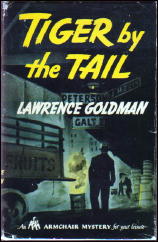
LAWRENCE GOLDMAN – Tiger by the Tail.   David McKay, hardcover, 1946. Hardcover reprint: Unicorn Mystery Book Club, 4-in-1 edition, October 1946. Also: Detective Book Magazine, Summer 1949.

LAWRENCE GOLDMAN Tiger by the Tail

    The detective in this tale, following closely in the footsteps of private eye Max Thursday and police sergeant Joe Friday, is (you guessed it) named Johnny Saturday, top trouble-shooting investigator for a west coast insurance outfit.

    According to Hubin, Saturday was also the leading character in Fall Guy for Murder (Dutton, 1943), a book which I have not seen [but which at long last, thanks to the Internet, I now have on its way to me].

    The scene is Los Angeles, more specifically the Market, the hub of the city’s fresh produce business; the time is right after the war, just as the country is beginning to show signs of getting itself back on its feet again.

    At first the crimes are minor ones, such as sabotage and the hijacking of commodities like grapefruit and lettuce, but what has Saturday worried is a $20,000 policy on a dead man.

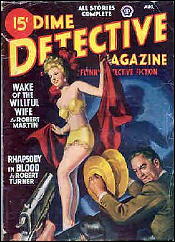
    The writing is strictly pulpbound, evoking a period and flavor unmatchable outside the brittle pages of an aging Dime Detective Magazine, say (which, incidentally, cost 15 cents in 1946).

    The plot is complicated, and perhaps it doesn’t make a lot of sense, but in its way I found it wholly representative of an entire era of mystery fiction writing, one that’ll never return.

— Reprinted from The MYSTERY FANcier, Vol. 3, No. 5, Sept-Oct 1979 (slightly revised).


IT IS PURELY MY OPINION
Reviews by L. J. Roberts


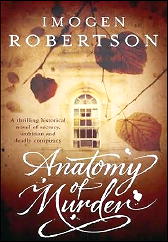
IMOGEN ROBERTSON – Anatomy of Murder. Headline, UK, hardcover, 2010.

Genre:   Historical mystery. Leading characters:   Harriet Westerman & Gabriel
Crowther; 2nd in series. Setting:   England-Georgian era/1781.

First Sentence:   Captain Westerman was in his cabin reading the letter from his wife for the fourth time when he heard the officer of the morning watch ring Six Bells.

IMOGEN ROBERTSON

    Mrs. Harriet Westerman and her friend, anatomist Gabriel Crowther, are once again embroiled in solving a murder. However, the stakes are even higher as they deal with treason against England during the Revolutionary War.

    In a much less elegant part of London, a Tarot-card reader sees the impending murder of one of her clients. Although she fails in preventing the murder, she is determined to bring the woman’s killers to justice.

    Beginning with an exciting and dramatic scene, this is one of those can’t-stop-until-I-finish-it books. Ms. Robertson’s writing is atmospheric and insightful with a strong sense of time and place, subtle, wry humor, a marvelous voice and style which evoke the period and the emotions of the characters.

    I found it fascinating to see the Revolution from the English perspective. Harriet, intuitive and more able to relate to others, and Crowther, the cold, analytic scientist, balance each other well.

    Harriet is someone who, as a real person, I should like very much. We learn more of Crowther and his past, which hints of much more to come. I am enjoying the evolution of their relationship despite the differences in the ages and natures.

    All the characters are alive and wonderful. It’s nice to see the characters from the first book, including Molloy, and meet the delightful new characters Jocasta, Sam and Boyo. (I did feel a cast of characters would have been helpful.)

    The captivating plot, good twist, the way in which the threads were brought together was wonderful. Set in 1781 during the Revolution, the story deals with traitors, murder and opera with a touch of the metaphysical. It takes you from the Opera house and salons of the wealthy to the meanest slums of London revealing the apathy and cruelty which resides in each.

    Ms. Robertson is one of the best new-to-me-authors I’ve found this year. Her writing is insightful with interesting observations on celebrity worship, and encourages one to look at things from a different perspective. It is not often that events in a book make me truly cry, but it speaks to speaks to an author’s skill that her writing evokes strong emotion.

    Anatomy of Murder was an excellent read but I recommend starting with her first book. I can’t wait for her next book.

Rating:   Excellent.

    The Harriet Westerman & Gabriel Crowther series —

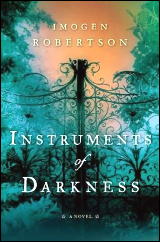
1. Instruments of Darkness (2009)

IMOGEN ROBERTSON

2. Anatomy of Murder (2010)
3. Island of Bones (2011)

REVIEWED BY GEOFF BRADLEY:         


ACCUSED. BBC-TV, UK. 15 November through 20 December 2010. Featured players, left to right: Mackenzie Crook, Marc Warren, Juliet Stevenson, Naomie Harris, Christopher Eccleston, Andy Serkis, Benjamin Smith & Peter Capaldi. Creator: Jimmy McGovern.

ACCUSED BBC TV

   This was a series of six separate plays (one hour each, no adverts) in which the central character is on trial and we see the story build up by a series of flashbacks of events leading up to the trial.

   We see little of the trial itself until the final verdict which comes just before the conclusion of each story.

   The series seemed promising since the writer was the much respected Jimmy McGovern, the man behind Cracker. It fact it turned out to be a series of unremitting and absolute tosh. I carried on watching story after story thinking that at least one of them must turn out well, but they were all deplorable.

   The stories were designed, I think, to enlist sympathy for the defendant but in that respect (as in all others) they failed in this household. One problem, for this rosy-eyed watcher, was that it was difficult to find a likeable character in the whole series but, even worse, is that the actions of so many of the characters were just unbelievable on so many levels.

   A series to be avoided.

SINNING WITH LAWRENCE SANDERS
by George Kelley


LAWRENCE SANDERS

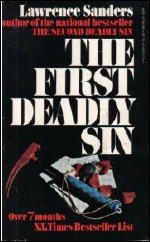
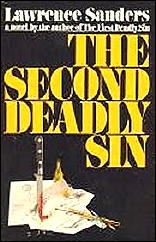
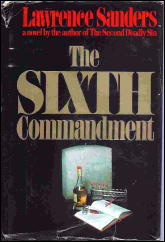
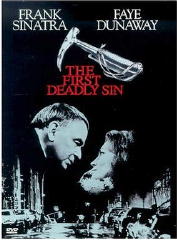
   Lawrence Sanders is an inconsistent writer: he can turn out crud like The Pleasures of Helen and Love Songs, then startle readers with powerful novels like The First Deadly Sin (Putnam, 1973; Berkley, 1974), The Second Deadly Sin (Putnam, 1977; Berkley, 1978), and The Sixth Commandment (Putnam, 1979; Berkley 1980).

   The First Deadly Sin is a one-on-one contest between a psycho named Daniel Blank and Captain Edward X. Delaney of the New York Police Department. Daniel Blank is obviously named by Sanders to represent a person reaching his limit; here’s how Blank sees the city he lives in:

    “It was a city sprung and lurching. It throbbed to a crippled rhythm, celebrated death with insensate glee. Filth pimpled its nightmare streets. The air smelled of ashes. In the schools young children craftily slid heroin into their veins.” (Page10.)

   Blank, divorced and alone, meets the fabulously wealthy Celia Montfort. A strange, sick relationship develops to the point where Blank decides he must prove his love to Celia. He does: Blank randomly picks a victim and kills him.

   Blank returns to Celia and describes his feelings: “It really was pure. I swear it. It was religious. I was God’s will. I know that sounds insane. But that’s how I felt. Maybe it is mad. A sweet madness. I was God on earth. When I looked at people on shadowed streets Is he the one? Is he the one? My God, the power!” (Page 168.)

   The man Blank murdered was Frank Lombard, a Brooklyn city councilman. The politicians of New York scream for vengeance and the inter-departmental maneuvers begin, first to solve the case quickly and reap the glory, later to scapegoat when the random killings continue.

LAWRENCE SANDERS

   Delaney, asked by a cabal of police officers to quietly investigate the killings while he’s on leave, quickly comes up with important leads. Sanders plays fair with the reader: The First Deadly Sin is a near 600 page book, but the realistic frustration of following leads that turn out to be dead ends, the frustration of developing evidence, produces a long and involved narrative.

   The character of Delaney, affectionately called “Iron Balls” by his fellow police officers, is interesting because of his toughness and his passion for order. His method consists of building a mental picture of the murderer, piece by piece:

    “Delaney told his men-things like a man’s job, religion, politics, and the way he talked at cocktail parties-these were a facade he created to hold back a hostile world. Hidden were the vital things. The duty of the cops, when necessary, was to peek around the front at the secret urges and driven acts.” (Pages 60-61.)

   Blank kills again. And again. Delaney’s mental pictures are still fuzzy. But Blank is slowly losing control: on his job he is aloof and distant. With Celia, with Celia’s brother, Blank’s sex acts become more bizarre. The killings inflame him:

    “But when you kill, the gap disappears, the division is gone, you are one with the victim. I don’t suppose you will believe me, but it is so. I assure you it is. The act of killing is an act of love, ultimate love, and though there is no orgasm, no sexual feeling at all-at least in my case-you do, you really do, enter into all humans, all animals, all vegetables, all minerals. In fact, you become one with everything: stars, planets, galaxies, the great darkness beyond, and…” (Page 292).

   The eerie picture of Daniel Blank is Sanders’ best writing: convincing and frightening at the same time. If The First Deadly Sin has a major weakness it is its ending. The one-on-one confrontation between Delaney and Blank breaks down and we are left with a drawn-out, frustrating ending.

LAWRENCE SANDERS

   The Second Deadly Sin again features Delaney, but this time he’s drawn out of retirement to track down a murderer of a great painter.

   Victor Maitland is stabbed to death and Delaney discovers a dozen suspects who’d like him dead. This is a whodunit, suspenseful and cleverly plotted.

   Through the course of the book, it is Delaney, the character of an experienced and ruthless defender of justice, which overshadows the Maitland murder:

    “But a cop had to go by Yes or No. Because… well, because there had to be a rock standard, an iron law. A cop went by that and couldn’t allow himself to murmur comfort, pat shoulders, and shake tears from his eyes. This was important, because all those other people — the ruth-givers (sic) — they modified the standard, smoothed the rock, melted the law. But if there was no standard at all, if cops surrendered their task, there would be nothing but modifying, smoothing, melting. All sweet reasonableness. Then society would dissolve into a kind of warm mush: no rock, no iron, and who could live in a world like that. Anarchy. Jungle. (Pages 143-144).

   And, in the conclusion, Delaney forces the one-on-one confrontation and dishes out his own kind of justice.

   The Sixth Commandment is a strange book. The story is told in the first person by Samuel Todd, an investigator for a philanthropic organization. Dr. Thorndecker, a Nobel Prize winner, asks the organization Todd works for for a million dollar grant to support his research.

LAWRENCE SANDERS

   The organization has Todd investigate the Thorndecker proposal. Almost immediately, Todd receives an anonymous note: “Thorndecker kills.” Todd visits the site of the Thorndecker facility near the town of Coburn, north of New York City on the Hudson River. Initially he thinks the note is a con:

    “In the groves of academe there’s just as much envy, spite, deceit, connivery, and backbiting as in Hackensack politics. The upper echelons of scientific research are as snaky a pit. The competition for private and federal funding is ruthless. Research scientists rush to publication, sometimes on the strength of palsied evidence. There’s no substitute for being first. Either you’re a discoverer, and your name goes into textbooks, or you’re a plodding replicator, and the Nobel Committee couldn’t care less. (Page 32.)

   But Todd finds this isn’t a simple case of jealousy; there’s murder and madness and horror in Coburn beyond Todd’s wildest nightmares.

   I recommend all three of Sanders’ books I’ve reviewed here. Sometimes the writing is wooden and dull, sometimes the characters are dull and superficial. But whatever Sanders’ faults, the books move with a power and intensity you should experience.

— Reprinted from The MYSTERY FANcier, Vol. 3, No. 5, Sept-Oct 1979.


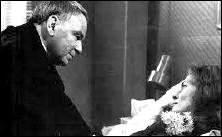
Editorial Notes:  This article appeared before the film version of The First Deadly Sin was released in 1980. The movie’s two leading co-stars were Frank Sinatra and Faye Dunaway, with David Dukes as Daniel Blank. Other books in the series were The Third Deadly Sin (1981) and The Fourth Deadly Sin (1985).

LAWRENCE SANDERS

   Other books in the “Commandment” series: Seventh (1991), Eighth (1986), and Tenth (1980). Sanders eventually turned his attention to series character Palm Beach PI Archie McNally, beginning with McNally’s Luck in 1992, although some if not all of the writing is said to have been done by ghostwriter Vincent Gardo.

   There were seven in this lighthearted series under Sanders’ byline. When the latter died in 1998, Gardo wrote another five under his own name.

    George Kelley’s blog can be found online here, where he finds something interesting to review and talk almost every day.

THE STORY OF ALLEN HYMSON, MYSTERY WRITER
by
Victor A. Berch and Allen J. Hubin


THEO DURRANT

   Since we spend quite a bit of time researching biographical details such as birth and death dates of various crime and mystery writers, my co-author queried me one day about the writer Allen Hymson.

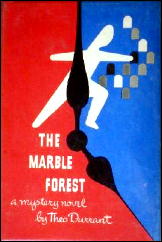
   Hymson’s claim to fame was his inclusion as one of the authors of the book The Marble Forest, published by the Alfred A. Knopf Co. of New York and copyrighted for publication on January 10, 1951. It was a collaborative effort on the part of twelve members of the California chapter of the Mystery Writers of America and published under the byline of Theo Durrant. [See also below.]

   I quickly set to work to check through my various genealogical databases to see what might. be there of value concerning Allen Hymson.

   Much to my surprise, the name Allen Hymson was nowhere to be found in any of the census records or birth and death records. I relayed that message back to Allen with the suggestion that perhaps he should contact the office of the Mystery Writers of America in order to learn just who was this Allen Hymson.

THEO DURRANT

   It didn’t take more than a few minutes for Allen to agree that this was a good suggestion and he sent off an e-mail to the office of the Mystery Writers of America. Within a day, an answer came back with the information that Allen Hymson was actually a pseudonym for Alma Hymson, a San Francisco writer. Along with that information came the revelations that Alma Hymson also used the pseudonyms Allen S. Jacobs and Edgar C. Nicholas, as well as Sylvia Blair.

   Armed with that information, I quickly ran the names through the WorldCat database to see what books she may have written. Alas! Nothing turned up. What next? I took a stab at the Fictionmags database and there I hit a bit of pay dirt.

   For there were entries for the pseudonyms Allen S. Jacobs, Allen Hymson and Edgar C Nicholas. But nothing for Sylvia Blair. Perhaps that had been used for newspaper publications at one time or another.

   Taking another look at the pseudonyms, I thought “If Allen Hymson represented Alma Hymson, could the pseudonym Allen S. Jacobs represent Alma S. Jacobs?”

THEO DURRANT

   This opened a new avenue to explore and the answer to that puzzle lay in the fruits of a family tree on Ancestry.com labeled The Aaron and Jennie (Cohn) Jacobs Tree.

   Here the complete story unfolded. An Albert J Hymson, born July 8, 1904 in Jefferson, KY and had died in San Francisco, CA on Oct. 25, 1950. His spouse was listed as Alma S. Jacobs. She was the offspring of Aaron and Jennie (Cohn) Jacobs. Her record revealed that she was born January 14, 1899 in California and had died in San Francisco April 12, 1995.

   There were some family photographs and documents attached to the tree. One of particular interest was a document composed by Alma Hymson wherein she had traced some of her ancestors back to Spain and who were later expelled during the Spanish Inquisition and ended up in Eastern Europe. Anyone having access to Ancestry. com can examine the tree for whatever reason.

A Chronological Listing of the Writings of Alma Sylvia (Jacobs) Hymson:

  Writing as Allen Hymson —

A Grave Mistake (ss) Dime Detective Magazine August 1947

THEO DURRANT

  Writing as Allen S. Jacobs —

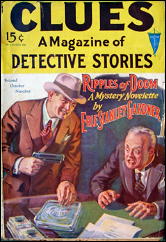
Scented (ss) Clues Apr. 1927
Square Up (ss) Clues June 1927
The Dagger of Mahaputi (ss) Clues July 1927
The Trouble Cruiser (ss) Clues Oct. 1927
Foxiest Crook Living (ss) Clues Feb 25, 1928
Another Perfect Crime (ss) Clues Mar. 25, 1928
Three Gats (ss) Short Stories Mar. 25, 1928
   — Short Stories (UK) Aug. 1928
Hard-Boiled Soft (ss) Clues Sep. 25, 1928
Easy Mark (ss) Clues Oct. 25, 1928

THEO DURRANT

A Cinch Lay (ss) Clues Nov. 10, 1928
One Minute More (ss) Clues Jan 10, 1929
A Tight Squeeze (ss) Clues Feb. 10, 1929
The Menacing Garment (ss) Clues May 10, 1929
On An Even Draw (ss) Clues May 25, 1929
A Fraud In Pictures (ss) Clues June 10, 1929
Dead Partners (ss) Clues July 25, 1929
Sharpshooter (ss) Clues Aug. 10, 1929
The Machine Gun Racket (ss) Clues Sep. 10, 1929
Every Man For Himself (ss) Clues Dec. 25, 1929
Catspaw (ss) Clues Jan. 25, 1930

THEO DURRANT

The Boasted Boomerang (ss) Clues Apr. 25, 1930
One Man’s Jinx (ss) Clues May 10, 1930
Reverse Luck (ss) Clues June 10, 1930
Convicting Evidence (ss) Clues Sep. 10, 1930
Chicken Feed (ss) All-Fiction Nov. 1930
Double Decoy (ss) Clues.Nov. 25, 1930
Better Dead Than Alive (ss) Clues Mar. 25, 1931
Nemesis (ss) Clues Apr. 25, 1931
The Dead Past (ss) Clues Feb. 1932
Coppered Bet (ss) Clues Apr. 1932
The Sinister Sap (ss) Clues May 1932

THEO DURRANT

The Secret Address (ss) Clues Aug. 1932
Under The Gun (ss) Rapid-Fire Detective Stories Oct. 1932
Trial By Gunfire (ss) World Stories Feb. 1933

  Writing as Edgar C Nicholas —

Queer Business (ss) Clues Oct. 1927
Taken For A Ride (ss) Clues Oct. 25, 1928
Which Way The Cat Jumps (ss) Clues Feb. 10, 1929

   It has yet to be determined which part of The Marble Forest Alma Hymson had written.

   The authors would like to express their sincere thanks to Ms. Margery Flax of The Mystery Writers of America office in New York for her able assistance in helping to put the pieces of this puzzle together.

THEO DURRANT

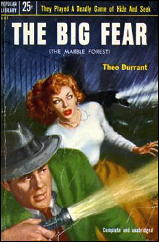
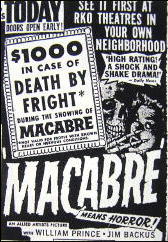
THE MARBLE FOREST, by Theo Durrant, a joint pseudonym of William A. P. White (Anthony Boucher), Terry Adler, Eunice Mays Boyd, Florence Faulkner, Allen Hymson, Cary Lucas, Dana Lyon, Lenore Glen Offord, Virginia Rath, Richard Shattuck, Darwin L. Teilhet & William Worley.    Alfred A. Knopf, hardcover, 1951. Popular Library #507, paperback reprint, 1953 as The Big Fear. Filmed as Macabre (Allied Artists, 1958; director: William Castle).

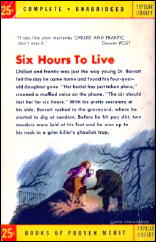
   From Jeffrey Marks’ recent biobibliography of Anthony Boucher, The Marble Forest was far less a detective novel than it was a thriller in which a young girl is buried in a coffin with only five or six hours to live. The Northern California chapter of the MWA held a contest challenging readers to determine which author wrote which chapters.

   From TCM.com: “For $5,000, he [William Castle] purchased an insurance policy from Lloyds of London guaranteeing a $1,000 payout to the beneficiaries of anyone felled by fright while watching Macabre.”

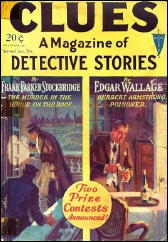
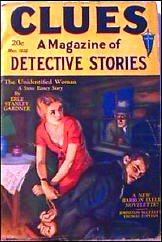
A Special Note:   The pulp cover images used in this post came from Phil Stephensen-Payne’s Galactic Central website. Follow, for example, the link to Pulp Magazines, then to Clues, then to Issue Checklist. The result will take your breath away.

   We’re still in the process of going through some of the typos and other small errors that always creep into a project like this, but Part 40 of the online Addenda to the Revised Crime Fiction IV, by Allen J. Hubin, is now online. (Follow the links.)

   There are the usual additions: newly discovered series characters and settings for the novels, a few new authors and novels, dates of birth and death added or corrected. A whole gamut of facts and additional information about our favorite hobby: reading and collecting detective and mystery fiction, some of it generated by the reviews and other discussions that have recently taken place on this blog.

   The corrections to Part 40 of the online Addenda will be made in the next couple of days, but one of the highlights of this particular installment deserves a post here on this blog all to itself, the discovery of a female identity to a masculine byline that occurred frequently in the heyday of the hard-boiled detective pulp magazines.

   I’ll let Victor Berch tell you all about it in the very next post.

Reviewed by DAVID L. VINEYARD:         


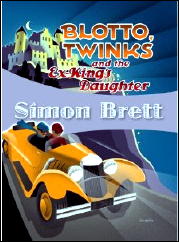
SIMON BRETT – Blotto, Twinks and the Ex-King’s Daughter. Felony & Mayhem, softcover, February 2011. British edition: Constable, hardcover, May 2009.

   The name Simon Brett should be no stranger to anyone on these pages. His Charles Paris series about a bibulous actor is held in the highest esteem by lovers of humorous well written mysteries, and for the past decade he has been penning less humorous but well received British cozies set in Fethering, a small English town out of Miss Marple by way of The Last of the Summer Wine.

SIMON BRETT Blotto & Twinks

   Blotto, Twinks and the Ex King’s Daughter is yet another venue for Mr. Brett, and one that shows a different side both to his humor and English village life. Indeed, his new series lies somewhere in that vague country inhabited by P.G. Wodehouse’s Jeeves and Wooster, Dornford Yate’s Berry and Company, some of the more playful Agatha Christie’s, the early Albert Campion, the more extravagant adventures of Michael Innes Sir John Appleby, and Leonard Wibberly’s Duchy of Grand Fenwick.

   The time is somewhere between the two world wars in an England of stately homes, dizzy aristocrats, loyal retainers, dastardly villains, and vintage automobiles.

   The setting is Tawcester Towers, where the Dowager Duchess of Tawcester (the Duke, her son — known as Loofah and Rupert the Dull, descendant of Rupert the Fiend and Black Rupert — having passed on five years earlier) is entertaining the exiled king of Mittleuropa, Sigismund, when her youngest son, the Right Honorable Devereaux Lyminster, known as Blotto (and with good reason) announces he’s found a body in the library, one Captain Schtoltz.

    “It’s frightfully awkward, Mater, but there’s a dead body in the library.”

   In very short order Chief Inspector Trumbull and Sergeant Knatchbull arrive, none too impressed by the body or the Duchess and her royal guest, and then to add to the trouble the Princess Ethelinde is kidnapped.

   Well, naturally Blotto can’t allow that kind of thing to happen in Tawcester Towers without doing something, but considering his limited capacity in the brains department, it is just as well his beautiful sister Lady Honoria, known as Twinks, has a first rate mind and nose for murder (“– what a brainbox that girl had”).

   And the chase is on — in vintage open automobiles of course — and with Grimshaw, Blotto’s valet, in tow (a gentleman never travels without his valet) all the way to Mittleuropa, where they stumble on intrigue supplied by nearby Transcarpathia, ruled by King Anatol and Princess Ethlinde’s betrothed, Prince Fritz-Ludwig among others.

   Before you can say Zenda…, Blotto and Twinks (Grimshaw in tow) are on the trail of the murderer in the capital Zling and over the battlements of the Castle Berkenziepenkatzen … assuming you actually can say any of that.

   Of course Blotto will rescue the Princess and nobly renounce said princess in true Rassendyl style (he has to get out of it somehow) while Twinks will hunt down the kidnapper and murderer displaying both brains and spunk, but it is all a near run thing — especially for Blotto, who might have ended up king of Mittleuropa, or in the arms of the dangerously attractive Svetlana Lubachev (“as a femme fatale she did have some standards”). All before Blotto confronts the killer back in England at jolly old Tawcester Towers in Rupert the Antisocial’s billiard room.

   This is a very funny book, inventively, and splendidly, silly, bright, clever, and outrageous. There isn’t a serious bone in its head. I’m not really sure a mere reviewer can convey the exact spirit and voice of the book, but if you want to escape from reality into a world of smiles, chuckles, and undignified guffaws, this is your chance. Wodehousian, yes, but with a few left turns reminiscent of the Marx Brothers or Mel Brooks, and all bundled up as an attractive new series we can only hope to see more of.

   If you want a few laughs you’d be blotto not to read it.

       The Blotto & Twinks series —

1. Blotto, Twinks, and the Ex-King’s Daughter (2009)
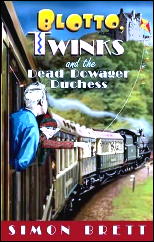
2. Blotto, Twinks and the Dead Dowager Duchess (2009)

SIMON BRETT Blotto & Twinks

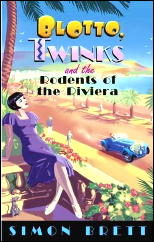
3. Blotto, Twinks and the Rodents of the Riviera (2011)

SIMON BRETT Blotto & Twinks

« Previous PageNext Page »