Bibliographies, Lists & Checklists


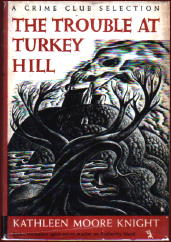
KATHLEEN MOORE KNIGHT – The Trouble at Turkey Hill.

Doubleday Crime Club, hardcover, 1946. Hardcover reprint: Detective Book Club [3-in-1 edition], June 1946.

KATHLEEN MOORE KNIGHT Turkey Hill

   My wife Judy and I moved to Connecticut in 1969. I’m a transplant from Michigan and not a native New Englander at all. I don’t know if there really is a Penberthy Island, where many of Kathleen Moore Knight’s books take place, and if there isn’t, while I can’t tell you which one she may have used as a model, Martha’s Vineyard certainly suggests itself.

   No matter. There has to be plenty of communities all along the Cape Cod coast that are just like it, and all of them are ideal places to live, too, if you don’t mind tourists. I count a total of sixteen Elisha Macomber murder mysteries, he being her most commonly used series character. On a per capita basis, I think you’d have to admit, Penberthy would have to be a terribly dangerous place to hang your hat.

   What Elisha Macomber does is operate the village fish market, but besides that, he’s also the chairman of the local Board of Selectmen. So in addition to being considered an autocratic father figure by the entire island, he’s also the investigative officer whenever another murder occurs.

   In this case he’s in charge of tracking down the killer of the wife of a recently returned war veteran.

   Telling the story is Miss Marcella Tracy, librarian and former school teacher. A lot of strange things happen to confuse matters, and even though everyone already has a sharp eye out into everyone else’s affairs, I got the feeling that calling all the suspects together into one big room to be confronted with all the evidence all at once might not have been such a bad idea. It’s that kind of story.

   I’m too embarrassed to say that I mucked the solution up something fierce, so I won’t.

— Reprinted from The MYSTERY FANcier, Vol. 3, No. 4, July-Aug 1979 (revised).


[UPDATE] 02-28-09.   One of the corrections I made in the review was the number of Elisha Macomber books there were. The number above is now the right one. Kathleen Moore Knight also wrote four books between 1940 and 1944 with Margot Blair as the leading character. According to the Golden Age of Detection Wiki, Blair was a partner in a public relations firm called Norman and Blair.

   I don’t think I’ve read any of the latter’s adventures, but I have read (and as I recall, enjoyed) three or four of Elisha Macombers, which appeared over a long period of time, from 1935 to 1959. That’s a long run for a fellow who’s probably next to unknown to most mystery readers today. It is a shame.

   From the Revised Crime Fiction IV, by Allen J. Hubin, here’s a list of all sixteen. Note that a couple of pre-war cases took place in Panama. Macomber then disappeared for six years while the war was going on. I wonder what that was all about.

MACOMBER, ELISHA    [Kathleen Moore Knight]

      Death Blew Out the Match (n.) Doubleday 1935 [Massachusetts]
      The Clue of the Poor Man’s Shilling (n.) Doubleday 1936 [Massachusetts]
      The Wheel That Turned (n.) Doubleday 1936 [Massachusetts]
      Seven Were Veiled (n.) Doubleday 1937 [Massachusetts]
      Acts of Black Night (n.) Doubleday 1938 [Massachusetts]
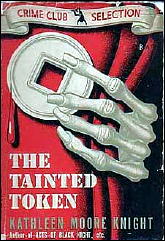
      The Tainted Token (n.) Doubleday 1938 [Panama]

KATHLEEN MOORE KNIGHT

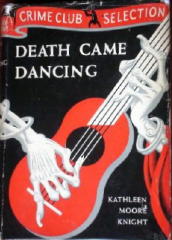
      Death Came Dancing (n.) Doubleday 1940 [Panama]

KATHLEEN MOORE KNIGHT

      The Trouble at Turkey Hill (n.) Doubleday 1946 [Martha’s Vineyard]
      Footbridge to Death (n.) Doubleday 1947 [Martha’s Vineyard]
      Bait for Murder (n.) Doubleday 1948 [Martha’s Vineyard]
      The Bass Derby Murder (n.) Doubleday 1949 [Martha�s Vineyard]
      Death Goes to a Reunion (n.) Doubleday 1952 [Massachusetts]
      Valse Macabre (n.) Doubleday 1952 [Martha’s Vineyard]
      Akin to Murder (n.) Doubleday 1953 [Massachusetts]
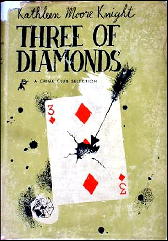
      Three of Diamonds (n.) Doubleday 1953 [Martha’s Vineyard]

KATHLEEN MOORE KNIGHT

      Beauty Is a Beast (n.) Doubleday 1959 [Martha’s Vineyard]

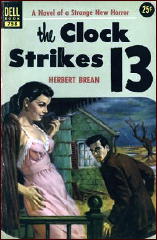
HERBERT BREAN – The Clock Strikes Thirteen.

William Morrow, hardcover, 1952. Paperback reprint: Dell 758, [1954]. A shorter version first appeared in Cosmopolitan magazine, June 1952.

HERBERT BREAN

   I’ll tell you this, I’ve never read a mystery quite like this one. It takes place on a desolate island, off the coast of Maine. There’s no animal life and no vegetation. It’s completely dead and abandoned, all except for a small group of dedicated research biologists, busily working away on more, even more deadly concoctions for the Defense Department.

   But soon after journalist-photographer Reynold Frame arrives, summoned by a soon-to-be announced discovery, the scientist in charge (not quite mad) is clubbed to death, and several trays of germ culture are overturned. With all contact with the mainland cut off, and with the threat of sudden death constantly in the air, the murder investigation perforce goes on.

   In spite of the bizarre, even grotesque setting, Frame does a more than passable job of detection. However, after recently reading any number of newspaper articles of sheep, nerve gas and the like; and considering what we know now about how easily science can be used to kill effectively and indiscriminately, reading Brean today, he’s not half as frightening as he could have been.

   I’m sure he used all the information about bacteriological warfare that he was allowed access to, but looking back, I think that 25 years ago we were all probably quite naive.

PostScript: This was the last of the four mystery novels that Reynold Frame appeared in. He seems to have walked from the rescue boat onto the Maine shoreline, and into oblivion.

— Reprinted from The MYSTERY FANcier, Vol. 3, No. 4, July-Aug 1979 (slightly revised).


[UPDATE] 02-23-09.   I can’t remember reading this book at all, so I can’t expand on what I said back then. Nor do I know very much about Herbert Brean, I’m sorry to say, only the list of seven titles that are listed under his name in the Revised Crime Fiction IV, by Allen J. Hubin.

   He was well enough regarded as a mystery writer, though, using Google as a guide, that at one time “he was a director and executive vice president of the Mystery Writers of America, a group for which he also taught a class in mystery writing.” (Wikipedia)

   A series detective named William Deacon (described in several places as a “crack magazine writer”) appears in his last two mysteries, both published in the 1960s. But taken from CFIV, here’s the list of all four in which Reynold Frame did the detecting.

FRAME, REYNOLD     [Herbert Brean]
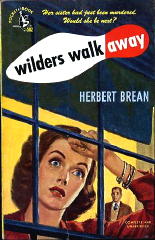
      Wilders Walk Away (n.) Morrow 1948.   [An impossible crime mystery.]

HERBERT BREAN

      The Darker the Night (n.) Morrow 1949.
      Hardly a Man Is Now Alive (n.) Morrow 1950.
      The Clock Strikes Thirteen (n.) Morrow 1952.

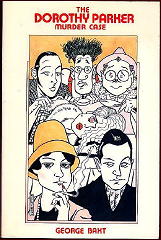
GEORGE BAXT – The Dorothy Parker Murder Case.

International Polygonics; reprint paperback; 1st printing, April 1986. Hardcover edition: St. Martin’s Press, 1984. Trade paperback reprint: IPL, November 1989.

GEORGE BAXT

   I’ve been struggling to remember, but I think this is the first book by George Baxt that I’ve ever read. The Dorothy Parker Murder Case is the first of three series of detective novels he wrote, along with five stand-alone works of crime fiction. His series charcaters were:

      1. Pharaoh Love: New York City homicide detective in New York, both black and gay.
      2. Sylvia Plotkin and Max van Larsen: New York City author and police detective.
      3. Jacob Singer: New York City homicide detective, later a 1940s LA private eye, or so I’ve been told.

   While I was reading it, I didn’t realize that Dorothy Parker was Singer’s first recorded case. He and the celebrated Mrs. Parker had met previously when this case begins – that of the mysterious deaths of several Manhattan-based show girls — but when, how, and on what basis it happened they met was never the subject of a mystery novel of its own.

   When Baxt, who died in 2003, was writing the Jacob Singer books, I was going through a phase in which I paid no attention to mystery fiction that had “real people” in them. I had no idea until yesterday that Baxt had written so many of them. (See the complete list at the end of this review.)

   I can’t tell you why I had that particular prejudice. If I had a bad experience with a novel with a real person in it, it’s possible, but I simply don’t remember. Sometimes otherwise normal people do silly things.

GEORGE BAXT

   I also have never done any reading about Dorothy Parker and the famed Algonquin Round Table, nor read any but the briefest poems among her huge accumulation of literary work. I suppose there’s enough time left in my life to make up for various deficiencies like this, and instead of writing reviews, I sometimes think maybe I really ought to be doing something about it.

   In this book, which takes place immediately following the tragic death of Rudolph Valentino in 1926, the following real people appear, and I know I’m omitting some: Dorothy Parker, of course; her sleuthing partner, Alexander Woolcott; George S. Kauffman, in whose apartment the first dead girl is found; Robert Benchley; Marc Connelly; Judge Crater; Polly Adler; Edna Ferber; George Raft; Harold Ross; Flo Ziegfeld; Neysa McMein; Horace Liveright; Marie Dressler; Elsa Maxwell; Jeanne Eagels; and more.

   Not that all of these have big parts, but if what George Baxt says about them and their whoring and drinking, it’s remarkable that any of them grew up to be famous. There are puns, zingers and witticisms in this book galore, nearly one on every page.

   Picking a page at random, here’s a long passage that begins by describing Jacob Singer as he walks into Kauffman’s apartment to see the dead girl there in the bed:

    He [Singer] spent money on clothes and general good grooming and forced himself to read Dickens, Henry James, and on one brief depressing occasion, Tolstoy. He attended the theater and concerts as often as possible, but the opera only under the threat of death. Mrs. Parker’s admiration for the man was honest and limitless. “Okay, Mr. Kaufman, what’s the problem?”

    “I’ve got a dead woman in the bedroom.”

    “I’ve had lots of those, but usually they get dressed and go home.”

    They followed him into the bedroom. “Oh boy, oh boy. That is one ugly stiff.”

    “She used to be quite beautiful,” said Kaufman. “Ilona Mercury.”

    Singer pierced the air with a shrill whistle of astonishment. “I’d never guess. Would you believe just the other night I saw her in Ziegfeld’s revue, No Foolin’.”

    “We believe you,” said Mrs. Parker.

    Singer shot her a look. “No Foolin’ is the name of the show. It’s at the Globe.”

    “Oh. I’ve been away.”

    “Let’s get back to the other room. This is too depressing. Imagine a beautiful broad like that turning into such an ugly slab of meat. That’s life.”

    “That’s death,” corrected Mrs. Parker.

GEORGE BAXT

    Here’s another:

   [Harold] Ross leaned forward and aimed his mouth at Mrs. Parker. “How come you’re so privy to all this inside dope?”

   A puckish look spread across Benchley’s face. “Oh, tell me privy maiden, are there any more at home like you?”

    He was ignored. Mrs. Parker was struggling with her gloves. “Last night when dining with Mr. Singer, I told him Alec and I were seriously considering collaborating on a series of articles about contemporary murders.”

    Ross looked dubious. “You and Alec collaborating? That’s like crossing a lynx with a mastodon.”

    “And why not?” interjected Woollcott. “Might be fun. Where are you off to, Dottie?”

    “Where are we off to, sweetheart. Why, we’re off to Mrs. Adler’s house of ill repute as Mr. Singer’s companions. He’s picking us up in a squad car in a few minutes. If you’re a good boy, he’ll let you stand on the running board with the wind in your hair.”

    The less said about the mystery the better, and you will have noticed that I’ve already done so. That’s not what you’re paying your money for this time around. For what it’s worth, of the real people above, George Raft fares the worst at the hands of Mr. Baxt’s typewriter. Of the people who weren’t real until Mr. Baxt came along, though, you may be sure that many of them fare much worse.

    In summary, then, in case you’re wondering, do I intend to track down and read the rest of Jacob Singer’s adventures? Yes, indeed I do, and here’s a complete list of them, based on his entry on the Thrilling Detective website. (Not all of these are listed in the Revised Crime Fiction IV. I will pass the information along to Al Hubin.)

* The Dorothy Parker Murder Case (1984)
* The Alfred Hitchcock Murder Case (1986)

GEORGE BAXT

* The Tallulah Bankhead Murder Case (1987)

GEORGE BAXT

* The Talking Pictures Murder Case (1990)
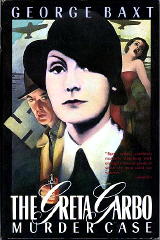
* The Greta Garbo Murder Case (1992)

GEORGE BAXT

* The Noel Coward Murder Case (1992)
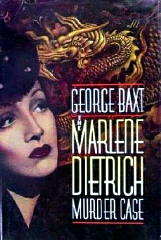
* The Marlene Dietrich Murder Case (1993)

GEORGE BAXT

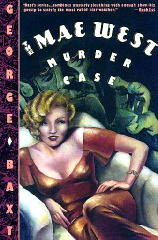
* The Mae West Murder Case (1993)

GEORGE BAXT

* The Bette Davis Murder Case (1994)
* The Humphrey Bogart Murder Case (1995)
* The William Powell & Myrna Loy Murder Case (1996)
* The Fred Astaire & Ginger Rogers Murder (1997)
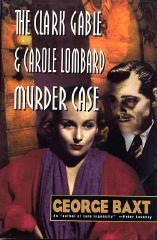
* The Clark Gable & Carole Lombard Murder (1997)

GEORGE BAXT

EDGAR WALLACE AT MERTON PARK
by Tise Vahimagi.


   Afforded only a footling footnote in the history of British cinema, the Merton Park Edgar Wallace films remain consistently enjoyable as a series of hectic penny dreadfuls, at times complication piles upon complication bewilderingly, but more often moving at a cracking pace. While not quite film noir, in true observation of the term, there is a grimy pleasure to be derived from these modest little dramas.
EDGAR WALLACE MYSTERY THEATRE

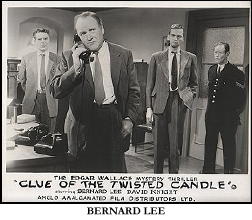
   Though never entirely convincing, they do unfold with a quiet slickness, arousing curiosity, delivering a few plot-twist surprises, and displaying some competent performances. A pre-Bond Bernard Lee, for instance, shows up a few times as various Detective Superintendent types; and Hazel Court amuses herself as a very well-bred private eye in The Man Who Was Nobody (1960).

   Merton Park Studios (1937 to 1967) was the prolific producer of the Edgar Wallace series of supporting features (released between 1960 and 1964), along with the similar Scotland Yard (1953-1961) and Scales of Justice (1962-1967) films.

   This was the low-budget production world of a film-per-week schedule (up to 14 camera set-ups a day); the first Edgar Wallace film was released in November 1960 (in the UK); the 25th Wallace film went into production at the end of September 1962.

   In 1960, Nat Cohen and Stuart Levy, managing directors of distributor Anglo Amalgamated (UK), acquired the film rights for world-wide distribution of the entire Wallace library. They gave the go-ahead to Merton producer Jack Greenwood (1919-2004) to make a �series’ of supporting features for their distribution circuit.
EDGAR WALLACE MYSTERY THEATRE

   In his professional capacity, Greenwood may have been Britain’s Sam Katzman, keeping a firm hand on the purse strings and pushing cast and crew to the last penny’s worth. He was, thankfully, also producer of the realistic 1960 prison drama The Criminal (US: The Concrete Jungle), starring Stanley Baker, and, in 1967, became production controller on The Avengers series at ABPC Elstree Studios.

   Merton Park Studios was based in a modest-size house in suburban south west London, employing a roll-call of British character actors, hired by-the-day (as well as some affordable European players), and utilizing the neighbouring streets and sites as economic locations.

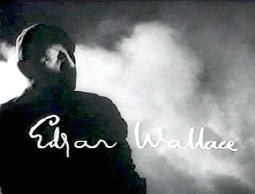
   Some 40 titles make up the run of Edgar Wallace films. Less than half were based on actual Wallace material, the rest consisting of original screenplays to supplement a saleable package under the Wallace introductory logo (a revolving bust of Wallace, sometimes tinted a bilious green, accompanied by twangy electric guitar music performed by The Shadows).

   A list of the Edgar Wallace/Merton Park titles will follow this overview.

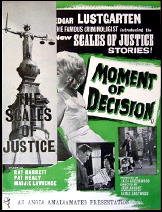
   By the time the Wallace films started, Greenwood/Merton Park had already been producing a similar series of supporting programmers. Introduced by grim-faced journalist/criminologist Edgar Lustgarten (1907-1978) since 1953, the Scotland Yard series (produced until 1961) were sufficiently suspenseful police investigation dramas based on real-life cases (apparently).
EDGAR WALLACE MYSTERY THEATRE

   The early films directed by Ken Hughes are interesting for their imaginative application of catchpenny production values. Since all the Wallace stories were updated to the 1960s, there is little to distinguish between the series; except perhaps that the Scotland Yard films often featured deadpan Russell Napier as the coldly businesslike detective.

   Following on, the Scales of Justice series (released 1962 to 1967) added to Anglo’s distribution titles between Wallace productions. Lustgarten, again, introduced dark and dire case-file stories of crime-and-comeuppance with his customary solemnity.

   The basic form and content of the three series was pretty much interchangeable, leading the later TV packages to often confuse the films’ origins. The UK experience remains that these films were originally produced for the cinema screen.

   The US viewing experience, via TV presentations, has led many to believe that they were made for television. The Wallace films went to US TV as The Edgar Wallace Mystery Hour (or Theatre), usually trimmed to accommodate an hour slot (syndicated from c.1963).

   Scotland Yard (39 x 26-34 min. films) was syndicated from 1955, and later shown via ABC from 1957 to 1958 in half-hour form. Scales of Justice (originally 13 x 26-33 min. films) probably supplemented the above TV packages.

      Edgar Wallace films:

(The following are presented in order of production date, by year). I have also tried to give story source, where known.)

      1960:

1. The Clue of the Twisted Candle. Bernard Lee, David Knight, Frances De Wolff. Screenplay: Philip Mackie; from the 1916 novel. Director: Allan Davis.

2. Marriage of Convenience. John Cairney, Harry H. Corbett, Jennifer Daniel. Scr: Robert Stewart; based on The Three Oak Mystery (1924). Dir: Clive Donner. [Follow the link for the first eight minutes on YouTube.]

3. The Man Who Was Nobody. Hazel Court, John Crawford, Lisa Daniely. Scr: James Eastwood; from the 1927 novel. Dir: Montgomery Tully.

4. The Malpas Mystery. Maureen Swanson, Allan Cuthbertson, Geoffrey Keene. Scr: Paul Tabori, Gordon Wellesley; based on The Face in the Night (1924). Dir: Sidney Hayers. [See NOTES below.]

5. The Clue of the New Pin. Paul Daneman, Bernard Archard, James Villiers. Scr: Philip Mackie; from the 1923 novel. Dir: Allan Davis.

      1961:

6. The Fourth Square. Conrad Phillips, Natasha Parry, Delphi Lawrence. Scr: James Eastwood; based on Four Square Jane (1929). Dir: Allan Davis.

7. Partners in Crime. Bernard Lee, John Van Eyssen, Moira Redmond. Scr: Robert Stewart; based on The Man Who Knew (1918). Dir: Peter Duffell.

8. The Clue of the Silver Key. Bernard Lee, Lyndon Brook, Finlay Currie. Scr: Philip Mackie; from the 1930 novel (aka The Silver Key). Dir: Gerard Glaister.

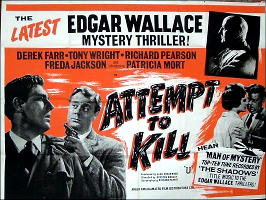
9. Attempt To Kill. Derek Farr, Tony Wright, Richard Pearson. Scr: Richard Harris; based on the short story The Lone House Mystery (1929). Dir: Royston Morley.

EDGAR WALLACE MYSTERY THEATRE

10. The Man at the Carlton Tower. Maxine Audley, Lee Montague, Allan Cuthbertson. Scr: Philip Mackie; based on The Man at the Carlton (1931). Dir: Robert Tronson.

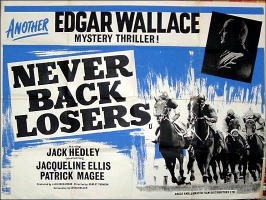
11. Never Back Losers. Jack Hedley, Jacqueline Ellis, Patrick Magee. Scr: Lukas Heller; based on The Green Ribbon (1929). Dir: Robert Tronson.

EDGAR WALLACE MYSTERY THEATRE

12. The Sinister Man. John Bentley, Patrick Allen, Jacqueline Ellis. Scr: Robert Stewart; from the 1924 novel. Dir: Clive Donner.

13. Man Detained. Bernard Archard, Elvi Hale, Paul Stassino. Scr: Richard Harris; based on A Debt Discharged (1916). Dir: Robert Tronson.

14. Backfire. Alfred Burke, Zena Marshall, Oliver Johnston. Scr: Robert Stewart. Dir: Paul Almond.

      1962:

15. Candidate for Murder. Michael Gough, Erika Remberg, Hans Borsody. Scr: Lukas Heller; based on “The Best Laid Plans of a Man in Love” [publication date?]. Dir: David Villiers.

16. Flat Two. John Le Mesurier, Jack Watling, Barry Keegan. Scr: Lindsay Galloway; based Flat 2 (1924). Dir: Alan Cooke.

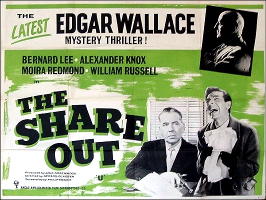
17. The Share Out. Bernard Lee, Alexander Knox, Moira Redmond. Scr: Philip Mackie; based on Jack o’ Judgment (1920). Dir: Gerard Glaister.

EDGAR WALLACE MYSTERY THEATRE

18. Time to Remember. Harry H. Corbett, Yvonne Monlaur, Robert Rietty. Scr: Arthur La Bern; based on The Man Who Bought London (1915). Dir: Charles Jarrott.

19. Number Six. Nadja Regin, Ivan Desny, Brian Bedford. Scr: Philip Mackie; from the 1922 novel. Dir: Robert Tronson.

20. Solo for Sparrow. Anthony Newlands, Glyn Houston, Nadja Regin. Scr: Roger Marshall; based on The Gunner (1928; aka Gunman’s Bluff). Dir: Gordon Flemyng.

21. Death Trap. Albert Lieven, Barbara Shelley, John Meillon. Scr: John Roddick. Dir: John Moxey.

22. Playback. Margit Saad, Barry Foster, Victor Platt. Scr: Robert Stewart. Dir: Quentin Lawrence.

23. Locker Sixty-Nine. Eddie Byrne, Paul Daneman, Walter Brown. Scr: Richard Harris. Dir: Norman Harrison.

24. The Set Up. Maurice Denham, John Carson, Maria Corvin. Scr: Roger Marshall. Dir: Gerard Glaister.

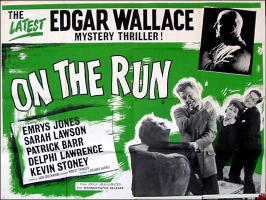
25. On the Run. Emrys Jones, Sarah Lawson, Patrick Barr. Scr: Richard Harris. Dir: Robert Tronson.

EDGAR WALLACE MYSTERY THEATRE

      1963:

26. Incident at Midnight. Anton Diffring, William Sylvester, Justine Lord. Scr: Arthur La Bern. Dir: Norman Harrison.

27. Return to Sender. Nigel Davenport, Yvonne Romain, Geoffrey Keen. Scr: John Roddick. Dir: Gordon Hales.

28. Ricochet. Maxine Audley, Richard Leech, Alex Scott. Scr: Roger Marshall, based on The Angel of Terror (1922, aka The Destroying Angel). Dir: John Moxey.

29. The �20,000 Kiss. Dawn Addams, Michael Goodliffe, Richard Thorp. Scr: Philip Mackie. Dir: John Moxey.

30. The Double. Jeannette Sterke, Alan MacNaughtan, Robert Brown. Scr: Lindsay Galloway; from the 1928 novel. Dir: Lionel Harris.

31. The Partner. Yoko Tani, Guy Doleman, Ewan Roberts. Scr: John Roddick; based on A Million Dollar Story (1926). Dir: Gerard Glaister.

32. To Have and To Hold. Ray Barrett, Katharine Blake, Nigel Stock. Scr: John Sansom; from the short story “The Breaking Point” (1927) collected in Lieutenant Bones (1918). Dir: Herbert Wise.

33. The Rivals. Jack Gwillim, Erica Rogers, Brian Smith. Scr: John Roddick; based on the short story collection Elegant Edward (1928). Dir: Max Varnel.

34. Five To One. Lee Montague, Ingrid Hafner, John Thaw. Scr: Roger Marshall; based on The Thief in the Night (1928). Dir: Gordon Flemyng.

35. Accidental Death. John Carson, Jacqueline Ellis, Derrick Sherwin. Scr: Arthur La Bern; based on the novel Jack O’Judgment (1920). Dir: Geoffrey Nethercott.

36. Downfall. Maurice Denham, Nadja Regin, T.P. McKenna. Scr: Robert Stewart. Dir: John Moxey.

      1964:

37. The Verdict. Cec Linder, Zena Marshall, Nigel Davenport. Scr: Arthur La Bern; based on The Big Four (1929). Dir: David Eady.

38. We Shall See. Maurice Kaufmann, Faith Brook, Alec Mango. Scr: Donal Giltinan; based on We Shall See! (1926; aka The Gaol Breaker). Dir: Quentin Lawrence.

39. Who Was Maddox?. Bernard Lee, Jack Watling, Suzanne Lloyd. Scr: Roger Marshall; based on the short story “The Undisclosed Client” (1926) collected in Forty-Eight Short Stories (1929). Dir: Geoffrey Nethercott.

40. Face of a Stranger. Jeremy Kemp, Bernard Archard, Rosemary Leach. Scr: John Sansom. Dir: John Moxey.

NOTES: Many sources say that there are 47 films in the series, including the Classic TV Archive. I have looked at the latter’s file and decided not to follow their lead because they combined two companies (Merton and Independent Artists). My list includes only those produced by Merton Park.

   When the films in the British Edgar Wallace series were shown as part of a syndicated televised series in the US, the package was very likely boosted to 47 (or even more) with other, non-related titles. The EW title logo can be edited on to the opening of anything that looks similar (or fits the programme slot).

   A good example is NBC’s Kraft Mystery Theatre (1961-63), where the first season (June-Sept, 1961) consisted of even more British B-movies re-edited for a one-hour TV slot. See this page for more details. One film I can remember (shown as a part of this group) is the non-mystery House of Mystery, which is actually a very effective, rather spooky supernatural/ghost story.

   In the instance of the Merton Park-Edgar Wallace series, since 47 is often given as the number of films, I’ll use the Classic TV Archive list to describe the differences.

   Independent Artists, set up by producer Julian Wintle, started in 1948; he was joined by Leslie Parkyn in 1958, locating the company at Beaconsfield Studios, England. Their only connection with Merton, apparently, was the distributor Anglo Amalgamated, who handled films for both companies. (Perhaps it was Anglo who made the sale of packages to US television?)

   The Man in the Back Seat (1961), which was the subject of the original enquiry, was an IA film, distributed by Anglo (released in the UK in August 1961). British trade journal reviews (Kine Weekly, 15 June 1961; Daily Cinema, 21 June 1961), as well as Anglo�s original publicity releases, reveal nothing to suggest that this film had a Wallace connection/origin. Neither TV Archive nor I include it in the Merton EW series.

   The Malpas Mystery (1960), listed by TV Archive in its list of IA films, was a Merton Park Studios-Langton production, according to the reviews in Monthly Film Bulletin [UK] (February 1961) and Variety (21 May 1969 for the US release). Kine Weekly (15 December 1960), however, confirms that it was indeed produced by Wintle & Parkyn at Beaconsfield Studios. It is, nevertheless, an EW entry.

   Urge to Kill (1960) is included as an early Merton film by TV Archive, but, it seems, it was not produced as a part of their Edgar Wallace or Scotland Yard series, and I have excluded it.

   There are seven other films cited by TV Archive which are all Merton productions (1963-1965) but, to all appearances, these are not related to any of their �series,’ including Scotland Yard and Scales of Justice.

   Thus of the 47 films in the Classic TV Archive count, I add one (Malpas) and delete eight others. This takes the “Edgar Wallace” count to the 40 titles I have listed above.

   Incidentally, Game for Three Losers (1965) — part of the TV Archive “seven” — was based on a novel by Edgar Lustgarten (screenplay by Roger Marshall; directed by Gerry O’Hara), but does not appear to be part of the Scales of Justice or any other series.
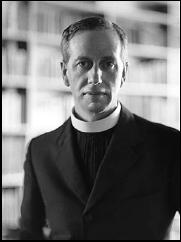
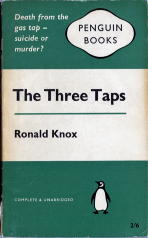
RONALD KNOX – The Three Taps.   Penguin 1451, UK, paperback, 1960. Hardcover editions: Methuen, UK, 1927; Simon & Schuster, US, 1927.

RONALD KNOX The Three Taps

    Born in Knibworth, Leicestershire, Ronald Knox was ordained a Roman Catholic priest in 1918, and with The Belief of Catholics in 1927 he became one of the UK’s foremost spokespersons for the religion. As most fans of early detective fiction know, he also dabbled in more mundane matters of more interest to us here. In fact was a prominent member of the exclusive Detection Club for many years, until he was requested by his bishop to cease and desist writing mere mysteries.

    He is known perhaps in our circles more for his Ten Commandments for Detective Fiction than for his novels, here they are in short form, as stated in his introduction to The Best English Detective Stories of 1928:

  I. The criminal must be someone mentioned in the early part of the story, but must not be anyone whose thoughts the reader has been allowed to follow.

II.   All supernatural or preternatural agencies are ruled out as a matter of course.

III.   Not more than one secret room or passage is allowable..

IV.   No hitherto undiscovered poisons may be used, nor any appliance which will need a long scientific explanation at the end.

V.   No Chinaman must figure in the story.

VI.   No accident must ever help the detective, nor must he ever have an unaccountable intuition which proves to be right.

VII.  The detective must not himself commit the crime.

VIII. The detective must not light on any clues are not instantly produced for the inspection of the reader.

IX.   The stupid friend of the detective, the Watson, must not conceal any thoughts which pass through his mind; his intelligence must be slightly, but very slightly, below that of the average reader.

X.  Twin brothers, and doubles generally, must not appear unless we have been duly prepared for them.

    The longer version with commentaries and suggested exclusions, et cetera, can be found here.

RONALD KNOX The Three Taps

    Ronald Knox produced only six detective novels of his own, all but the first solved by one Miles Bredon, an insurance investigator for the Indescribable Company. This makes him a sleuth very much like a private eye in nature, but he’s no mean streets kind of guy. Small village life is the setting of The Three Taps, and along with him is his wife Angela, and I have to admit, she’s no slouch as a detective either.

    Slowing the book down in the beginning is a long rambling preamble that assumes, first of all, that the reader knows what an Euthanasia policy is. I couldn’t find a single reference to such an agreement on the Internet, but I probably ran out of patience before I should have. From the context, though, I finally gathered that it was an insurance contract that before the policy holder reached the age of 65 paid off on the his or her death in the usual fashion, but then turned into an annuity making regular payment to the survivor, if he did.

    Of course if the policyholder commits suicide before the age of 65, the heirs get nothing. This is the crux of the story. A man named Mottram, the holder of such a policy, is found dead of gas poisoning in the room in the inn which he was staying while on a vacation fishing trip. He’s under 65, but recently he’d tried to buy out his policy from Bredon’s insurance company, telling them that a doctor had given him only a few months to live.

    Bredon makes a bet with his friend Inspector Leyland. Breton says his death was suicide (so his company doesn’t have to pay off), and Leyland says it was murder. And with the wager in mind, each looks for clues to back his version of what really happened.

RONALD KNOX The Three Taps

    It’s a complicated matter, and a beautifully constructed one, with lots of clues mixed in with the red herrings, double bluffs, hidden motives and of course no one tells (all) the truth. The denouement is even more complicated, so far as to be unreal, but truth (and fate) certainly does fall in strange and unexpected ways, so who am I to argue?

    Besides the Euthanasia policy to confound the present-day reader, the matter also depends greatly (and quite naturally) on the gas taps in the dead man’s room: which of the three were on, and which were off, and when and why. For all except the last, or “why,” it would take a mathematician to follow the logic, but I plead guilty and admit that I fell asleep at the switch.

    Overall then: this tale is definitely dated — much of the current crowd of mystery readers isn’t going get very far into this one — but it’s their loss. This is a beautifully and wonderfully constructed detective story.

      Bibliographic data:

  [Taken from the Revised Crime Fiction IV, by Allen J. Hubin.]

KNOX, [Monsignor] RONALD A(rbuthnott). 1888-1957. Series character: Miles Bredon, in all but the first.

      The Viaduct Murder (n.) Methuen 1925.
      The Three Taps (n.) Methuen 1927.
      The Footsteps at the Lock (n.) Methuen 1928.
      The Body in the Silo (n.) Hodder 1933.
      Still Dead (n.) Hodder 1934.

RONALD KNOX The Three Taps

      Double Cross Purposes (n.) Hodder 1937.

THE CURMUDGEON IN THE CORNER
by William R. Loeser

   
VICARS BELL – Death and the Night Watches. Douglas Baynes #5. Faber & Faber, UK, hardcover, 1955. British Book Centre, US, hardcover, 1962

VICARS BELL Death and the Night Watches

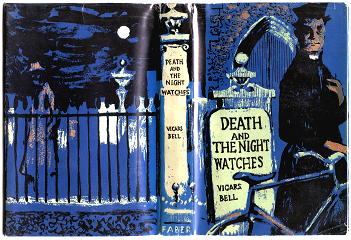
    Death and the Night Watches by Vicars Bell is another of that enjoyable sub-genre, the English village murder, chock-a-block with well-distinguished local characters, much like The Nine Tailors without Wimsey.

    Here the detective is Douglas Baynes, an entomologist who lost a leg in World War II, assisting a couple of interesting members of the official staff, and the problem: who shot a local farmer and bully, beat his head to a pulp, and left his body in the churchyard? His death is the greatest relief to his sister, a member of the walking dead, and her daughter, still hopeful and in love.

    The vicar, a believer in the militant church, thinks her boyfriend did it and tries to cook the evidence. Baynes sees through this and puts the romance back on the tracks, but he and the author can’t figure out who did do the crime.

    At last, a portion of the cast reveal themselves as villains and, against their best interests, kidnap Baynes, so there can be a smash ending, complete with a boat race and a helicopter.

? From The MYSTERY FANcier, Vol. 3, No. 4, July-Aug 1979       (slightly revised).

   
[Editorial PostScript.] This a scarce book. After reading Bill’s review, I went hunting for a copy, and I found one, the cover of which you see above. At the moment I am typing this, there are now none.

VICARS BELL Death and the Night Watches

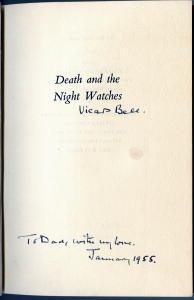
    I’m sure I was the lucky recipient of a bookseller’s error. I paid less than $10. Of Vicars Bell’s six mysteries (see below), only two of them are available online, and one is offered in the $200 range. And not only does mine have the dust jacket, it turns out that it is inscribed by the author to his father in 1955.

   For more about Vicars Bell, Contemporary Authors describes his career thusly: “Spaldwick Council School, Huntingdon, England, headmaster, 1927-29; Little Gaddesden Church of England School, Little Gaddesden, Berkhamsted, England, headmaster, 1929-62. Lecturer at University of London, University of Birmingham, Oxford University, and Cambridge University; also lecturer in Isreal and public lecturer in England. Founder of Little Gaddesden Parish Council, lay reader for Diocese of St. Albans.”

   Fifteen books are listed in CA as having been written by Vicars Bell, which sounds like a pseudonym but is not, including the six detective novels previously mentioned. Other work includes such titles as Little Gaddesden: The Story of an English Parish, 1949, and On Learning the English Tongue, 1953.

    Bibliographic Data —   

         [Taken from the Revised Crime Fiction IV, by Allen J. Hubin]

BELL, VICARS (Walker). 1904-1988. Series character, in all titles: Douglas Baynes.
      Death Under the Stars (n.) Faber 1949.
      Death Has Two Doors (n.) Faber 1950.
      Two by Day and One by Night (n.) Faber 1950.
      Death Darkens Council (n.) Faber 1952.
      Death and the Night Watches (n.) Faber 1955.
      Death Walks by the River (n.) Faber 1959.

Hi Steve,

   I wonder if you can help me. I need to get hold of an obituary for novelist and screenwriter Roy Chanslor who died in September 1964. It seems the only one appeared in an issue of Variety sometime that fall. I don’t know if you know anyone who might be able to help, or if you could ‘advertise’ on your blog. I would be most grateful if you could. Variety does have a sort of archive, but it’s only for old film reviews,

Thanks,

   John Herrington


ROY CHANSLOR Hazard

       Bibliographic data [crime fiction only]:

CHANSLOR, ROY. 1899-1964.
       Lowdown. Farrar & Rinehart, hc, 1931.
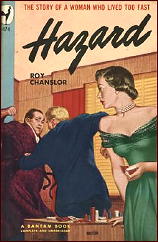
       Hazard. Simon & Schuster, hc, 1947; Bantam #474, pb, 1949. Film: Paramount, 1948 (scw: Arthur Sheekman, Roy Chanslor; dir: George Marshall).

[Expanded from the Revised Crime Fiction IV, by Allen J. Hubin.]

   Chanslor also has a long list of writing credits on IMDB, including Tarzan Triumphs, The House of Fear, Black Angel and Cat Ballou.

   Bill Crider had an interesting post about him last year on his blog. Follow the link.

   More? His wife, Torrey Chanslor, was both a well-known illustrator of children’s books and a two-time mystery writer. Where or when she died is apparently unknown, but her two detective novels have recently been reprinted by Rue Morgue Press. Follow this second link for a long biographical essay about her.

CHANSLOR, (Marjorie) TORREY (Hood). 1899-?
      Our First Murder (Stokes, 1940, hc) [Lutie and Amanda Beagle; New York City, NY]
      Our Second Murder (Stokes, 1941, hc) [Lutie and Amanda Beagle; New York City, NY]

AMBER DEAN – Snipe Hunt .

Doubleday Crime Club, hardcover, 1949. Reprinted in The Standard as the “Book of the Week” feature, September 30, 1950.

   This one surprised me a bit. It starts out with a couple of G-men who are stuck in the basement of a New York City tenement on a stake-out, trying to stay alert in order to spot any of the members of a notorious gang of counterfeiters they’ve been tipped off about.

   Just another dull procedural, I thought. The only noticeable complications concern the unlucky love life of one of the agents, undone by some typical Woolrichian vicissitudes of fate.

   Then suddenly the scene shifts. To upstate New York, the Finger Lakes region, where a commandeered customs agent named Max, his wife whom he calls Mommie, and a pretty girl named Danny combine forces to show the federal men the local lay of the land.

   What a snipe hunt is is a wild goose chase; there is also a humorously nosy neighbor who thinks that Max is just pulling her leg. But comedy, even such an incongruous concoction such as this, does not mix well with sudden spurts of nearly devastating disaster.

   Maybe I’m just chagrined at being caught off stride like this.

— Reprinted from The MYSTERY FANcier, Vol. 3, No. 4, July-Aug 1979 (mildly revised).


[UPDATE] 01-29-09. I messed up big time when I wrote this review. It turns out that one of Amber Dean’s standard series characters is in the book, and she didn’t make enough impression on me even to note her name: Abbie Harris. Checking the blurb for the book from Ellen Nehr’s Doubleday Crime Club Compendium, Abbie almost assuredly is Max Johnson’s nosy neighbor.

   Most of Amber Dean’s 17 mystery novels take place in upstate New York, not too surprisingly, since she herself lived in the Rochester area for most of her life, 1902-1985.

   Abbie Harris was in eight of those books. From the Revised Crime Fiction IV, by Allen J. Hubin, here’s a complete list:

         HARRIS, ABBIE    [Amber Dean]

      Dead Man’s Float (n.) Doubleday 1944.
      Chanticleer’s Muffled Crow (n.) Doubleday 1945.
      Call Me Pandora (n.) Doubleday 1946.
      Wrap It Up (n.) Doubleday 1946.
      No Traveller Returns (n.) Doubleday 1948.
      Snipe Hunt (n.) Doubleday 1949.
      August Incident (n.) Doubleday 1951.

AMBER DEAN

      The Devil Threw Dice (n.) Doubleday 1954.

SIMON HAWKE – Much Ado About Murder.

SIMON HAWKE

Forge, hardcover; First Edition, December 2002; reprint paperback: January 2004.

   There’s a period (1585-1592) in the life of William Shakespeare that’s called the Lost Years, in which nothing is known — where he was, what he was doing, and who he was hanging out with.

    Filling in the gap — pure speculation on Hawke’s part, not to mention audacity — here’s the third in a series of detective adventures of the most famous poet and playwright the world has ever known. Assisting him is his good friend and hanger-on with the Queen’s Men, Symington “Tuck” Smythe.

   Hard times have hit the traveling group of players. Plague has struck London, and all of the city’s playhouses have been closed down. (Not so incidentally, Hawke describes the horrible condition of the unsanitary streets in more than adequate detail. Ghastly.) Will has sold some sonnets, though, so he and Tuck are not starving, yet.

   They also run athwart the Steady Boys, a gang of young ruffians who feel that the country is being done under by too many immigrants: England for Englishmen in Shakespeare’s day!

   But while the events in Will and Tuck’s day-to-day life are interesting, after 130 pages, they’re no longer entirely riveting, so for the mystery fans perched in the front row, when the murder of Master Leonardo occurs, it’s with (dare I say) a certain amount of relief and “at last.” It’s a relatively minor case to be solved, but it’s Will’s sense of what makes people do what they do that saves the day.

   Bawdy at times, extremely funny at others, this is an entirely enjoyable lark, a remarkable flight of fancy, and I think you’ll like it, too.

— February 2003


SIMON HAWKE[UPDATE] 01-26-09. It turns out that Simon Hawke is (or was) an SF writer named Nicholas Yermakov, before he changed his named legally to Hawke.

   He’s most noted, perhaps, for a long series of books in his “TimeWars” series, the first of which you see here to the left. He’s also written Battlestar Galactica, Batman, and Star Trek novels, as well as novelizations of “Friday the Thirteenth” movies.

   There were only four books in his series of Shakespeare movies, I’m sorry to say. Perhaps the funny bones of a wider audience weren’t tickled as much as mine was. The fourth one was never even released in paperback:

     The Shakespeare & Smythe mysteries —

    A Mystery of Errors. Forge, hc, 2000; pb, 2001.
    The Slaying of the Shrew. Forge, hc, 2001; pb, 2002.
    Much Ado About Murder. Forge, hc, 2002; pb, 2004.
    The Merchant of Vengeance. Forge, hc, 2003.

[LATER THE SAME DAY.] I was looking at the two cover images I included in this post, and I think I can see one reason why there were 12 books in the TimeWars series, and only four in Hawke’s Shakespeare series, even though they were desgned for two entirely different audiences.

   You probably can, too. Look at the cover of Much Ado. It’s perfectly designed to show that it has something to do with a mystery (from the title) and something to do with Shakespeare (also from the title). Other than that? Dullsville.

JOHN BUXTON HILTON – Holiday for Murder. Diamond, reprint paperback; 1st printing, July 1991. Originally published as Passion in the Peak. US hardcover edition: St. Martin’s Press, 1985. Originally published in the UK by Collins Crime Club, hc, 1985.

JOHN BUXTON HILTON

   This is another in the author’s Inspector Kenworthy series, the fifth in the series published by Diamond. There have been seventeen in all, and they have all been published in the US, surprisingly enough. (For most British mystery writers, there’s always at least one book that doesn’t make the cut with publishers over here — or so it seems.)

   Of the ones they’re doing, Diamond is not publishing them in order. One that I read not too long ago was Hangman’s Tide, which originally came out in 1975. In Holiday for Murder, which was written ten years later, Inspector Kenworthy has already retired, but his ability as a detective has spread throughout England so greatly that he’s regarded as very nearly omniscient.

   In this book he investigates a strange sort of murder, a hillside automobile accident in the driver disappears, only to show up later, very much dead, some distance away. The dead man is a notorious womanizing rock musician (all of which are (to some degree) very much synonymous) who has the leading role (that of Christ) in a non-denominational/ecumenical Passion play now in the stages of rehearsal in the small village of Peak Low.

   Practical jokes at the expense of two different Mary Magdalene’s have preceded the accident, but the murder was apparently committed for other reasons. The villagers, various policemen, and the many actors, singers, electricians and so on involved in putting on the extravaganza are all precisely and individually depicted — Hilton’ s primary strength as a writer.

   The solution to the murder is presented in very anti-climactic fashion, strangely enough, as if Hilton felt that the mystery itself wasn’t strong enough to stand on its own.

   There is also a red herring — the matter of the match from Doncaster — that is poorly done. Kenworthy seems to know all about before he’s informed, and its significance in the story is none at all. It’s never mentioned again.

   But if you enjoy mysteries with small English village settings, read this one anyway. You’ll like it.

— Reprinted from Mystery*File 33, Sept 1991 (revised).


[UPDATE] 01-25-09. Strangely enough, while I don’t remember any of the details of this book’s plot, much less whatever flaws I may have found in it, I do remember enjoying reading it, which makes that last sentence pretty much of a guarantee.

JOHN BUXTON HILTON

   One thing that I didn’t change in the review is Kenworthy’s rank. I called him an Inspector, but in Al Hubin refers to him as a Superintendent. (See below.) The easiest explanation is, of course, that he was promoted sometime during his career.

   When Hilton wasn’t writing about Kenworthy, he used Inspector Thomas Brunt as his detective on the case. What really distinguished them from the Kenworthy mysteries, though, is that the six Brunt books took place in England in the late 1800s through the year 1911 or so.

   And, for the sake of completeness, Hilton also wrote another six mysteries as by John Greenwood. Inspector Jack Mosley was in all of these. I remember the Mosley books as being somewhat lighter in tone, though I may be in error about that.

   Expanded from the Revised Crime Fiction IV, by Allen J. Hubin, here’s a list of all the Kenworthy books —

         KENWORTHY, SUPT. SIMON     [John Buxton Hilton, 1921-1986.]

       Death of an Alderman (n.) Cassell, UK, 1968. Walker, US, 1968. Also published as: Dead Man’s Path, Diamond, pb, 1992.
       Death in Midwinter (n.) Cassell, UK, 1969. Walker, US, 1969. (Diamond, pb, 1994.)
       Hangman’s Tide (n.) Macmillan, UK, 1975. St. Martin’s, US, 1975. (Diamond/Charter, pb, 1990.)
       No Birds Sang (n.) Macmillan, UK, 1975. St. Martin’s, US, 1978. Also published as: Target of Suspicion, Diamond, pb, 1994.
       Some Run Crooked (n.) Macmillan, UK, 1978. St. Martin’s, US, 1978.
       The Anathema Stone (n.) Collins, UK, 1980. St. Martin’s, US, 1980. Also published as: Fatal Curtain, Diamond, pb, 1990.

JOHN BUXTON HILTON

       Playground of Death (n.) Collins, UK, 1981. St. Martin’s, US, 1981. (Diamond/Charter, pb, 1991.)
       Surrender Value (n.) Collins, UK, 1981. St. Martin’s, US, 1981. Also published as: Twice Dead, Diamond, pb, 1992.

JOHN BUXTON HILTON

       The Green Frontier (n.) Collins, UK. 1982. St. Martin’s, US, 1982. Also published as: Focus on Crime , Diamond, pb, 1993.
       The Sunset Law (n.) Collins, UK, 1982. St. Martin’s, US, 1982.

JOHN BUXTON HILTON

       The Asking Price (n.) Collins, UK, 1983. St. Martin’s, US, 1983. Also published as: Ransom Game, Diamond, pb, 1992.
       Corridors of Guilt (n.) Collins, UK, 1984. St. Martin’s, US, 1984. (Diamond, pb, 1993.)

JOHN BUXTON HILTON

       The Hobbema Prospect (n.) Collins, UK, 1984. St. Martin’s, US, 1984. Also published as: Cradle of Crime, Diamond, 1991.
       Passion in the Peak (n.) Collins, UK, 1985. St. Martin’s, US, 1985. Also published as: Holiday for Murder, Diamond, 1991.
       The Innocents at Home (n.) Collins, UK, 1986. St. Martin’s, US, 1987. Also published as: Lesson in Murder, Diamond, 1991.
       Moondrop to Murder (n.) Collins, UK, 1986. St. Martin’s, US, 1986.
       Displaced Person (n.) Collins, UK, 1987. St. Martin’s, US, 1988.

« Previous PageNext Page »