Mystery movies


REVIEWED BY DAVID VINEYARD:


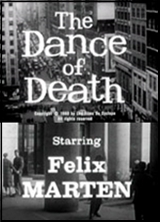
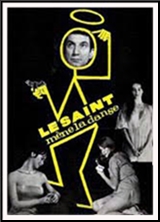
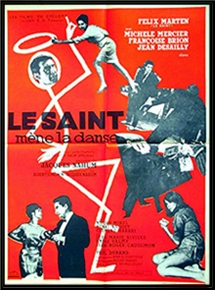
THE DANCE OF DEATH. 1960. Originally released as Le Saint mène la danse (The Saint leads the Dance); also known as  Le Saint conduit le bal (The Saint leads the Ball). Felix Marten, Michèle Mercier, Jean Desailly Screenplay. Albert Simonin, Jacques Nahum, Yvon Auduard. Based on the story “Palm Springs” by Leslie Charteris. Directed by Jacques Nahum.

   It will come as a surprise to no one that actor Felix Marten (Elevator to the Gallows), a singer and composer, capable as he was at playing action heroes and suave tough guys, is exactly no one’s idea of Leslie Charteris’s Brighter Buccaneer Simon Templar, the Saint. It will come as a greater surprise that he is damn good at it and easy to see as the Saint even in the English language version under another name.

   This unauthorized 1960 film, was the first Saint film since the Louis Hayward The Saint’s Girl Friday, was filmed, but after author and creator Leslie Charteris went to court to have any reference to Simon Templar expunged outside of France, the hero was given a new name.

   Ironically the film is a better adaptation of the original story than the George Sanders outing The Saint in Palm Springs previously filmed in the RKO series, and Marten’s much closer in style to Charteris’s hero than Sanders had been, at least to the tougher Post-War Saint.

   Curiously Marten does look a bit like the John Spangler/Doug Wildey version of the Saint in the long running comic strip though minus the spade beard.

   Marten is at least not diffident to women or violence in the Sanders manner and has a positively saintly smile in action. He even breaks the fourth wall and addresses the audience at the end of the film,and whistles what I am willing to bet was the original Saint theme written by Charteris in the French version.

   Despite being unauthorized this is an expensive and well made production. It clearly wasn’t made hurriedly or on the cheap.

   A scene in a restaurant where he disposes of two punks bothering Gina (a sub-plot that complicates the action) is mindful of the well-staged fights from the Moore series and shows off Marten’s physicality. (I can find no reference to it at IMDb but I seem to recall he had served in the French Paratroops, the old Foreign Legion, before coming to the screen.)

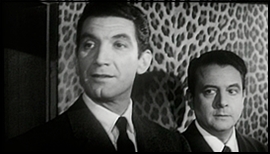
   Stuart Thompson (Felix Marten who in some movies plays a character simply called Felix Marten), is a private eye hired in Paris by Fred Pellman, an avid hunter and millionaire who a year earlier helped in the capture of a public enemy in Boston. Now he’s receiving death threats and afraid the police can’t handle them. At a $1,000 a day Thompson agrees to take the job protecting Pellman at his villa where he lives with three beautiful women, his secretaries (late in the film it comes to light one of them may have a motive for killing their boss).

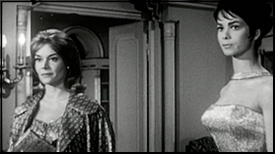
   And when the women are Norma (Françoise Brion), Gina (Nicole Mirel), and Dany (Michèle Mercier star of the five “Angelique” historical epics with Robert Hossein and one of the notable beauties of the era in an early role and a brunette here) that is pretty good company, even if the cat claws are out and any and all of them might be involved in the plot to kill Pellman which Thompson isn’t sure is tied to the Boston incident after all, at least not gangland revenge.

   Ten million dollars is a lot of motive for murder, even the servants are suspicious.

   A guard dog dies, a knife (meant for Pellman) nearly misses Dany (who proves to be a crack shot) while Gina is putting moves on Thompson, and Commissar Richard of the Surete supplies information casting doubt on Pellman’s chauffeur who ends up killed by the fan blades of a car.

   It is a solid Euro-Thriller, as much gothic horror as mystery, replete with Marten finding himself entombed, and more than worth catching. Handsomely and atmospherically shot it is a small gem of a mystery with more than enough horror if not supernatural elements to make it interesting, with the caveat that Euro-thrillers can be something of an acquired taste, and the dubbing is standard.

   The ending, a car chase through spooky woods and final reckoning in a hunting lodge puts a final and satisfying twist on the proceedings.

   This ranks with The Saint in New York and The Saint’s Girl Friday as probably one of the best Saint outings on film before the advent of the Roger Moore series. Like The Steel Key, another non Saint outing of the Saint, it is better than most of the previous Saint films with Sanders and Hugh Williams. Leslie Charteris could have done worse than to let this one be released in English as an exploit of the Saint, and if you want to watch the dubbed version and just ignore Marten’s new name you might enjoy it as a different kind of Saint movie.

   But enjoy it you likely will with an attractive cast, intelligent script, good direction, a jazzy score, and handsome cinematography it is a tasty mix of mystery and horror, and certainly one of the most offbeat interpretations of a Saint adventure ever attempted.

   You can usually find it on YouTube, and it is available from Sinister Cinema.
   

MURDER AT THE WINDMILL. Grand National Pictures, UK, 1949. Released in the US as Murder at the Burlesque by Monogram Pictures (1950). Garry Marsh (Detective Inspector), Jon Pertwee (Detective Sergeant), Jack Livesey, Eliot Makeham, Jimmy Edwards, Diana Decker, Donald Clive. Screenwriter/director: Val Guest.

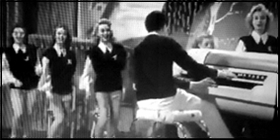
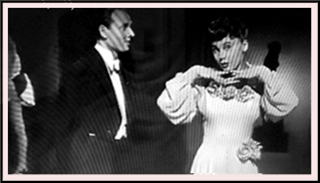
   The Windmill Theater, that is, a real life performance hall in London, known at one time for a nude girls revue, permitted by the authorities as long as the girls did not move. This being a movie, the closest it comes to anything as risque as that is the inclusion of a fan dancer as one of the acts, with very large feathery fans.

   The movie begins as the theater is closing down for the night, and the cleanup crew finds a dead man sitting in the front row, killed by a bullet shot by someone on the stage, or so the inspector from the Yard quickly deduces.

   His method of finding the killer? Have all of the acts from that night’s program recreated onstage, even if it takes all night.

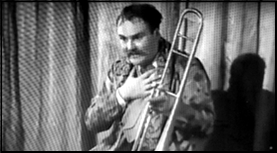
   And as an immediate result, most of the movie’s 65 odd minutes are taken up by singers, dancers, one lone comedian, complete with trombone, and the aforementioned fan dancer. This is not a bad thing, mind you, as many of the performers on stage are members of the actual singers and dancers at the Windmill at the time of the movie’s making. Finding the killer – for of course this really is a mystery movie – doesn’t happen until the end of the very last repeated number.

   Of some note, perhaps, is seeing Jon Pertwee, a future Doctor Who, as the rather diffident police sergeant on the case, or at least he is in comparison to Garry Marsh as the blustery inspector in charge. It all makes for very light family entertainment, especially resonant to those who still remember the era, now long gone by. You needn’t go out of your way for this one, but on the other hand, it’s easily found on YouTube.


REVIEWED BY DAN STUMPF:


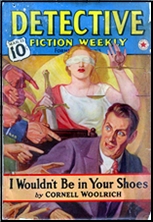
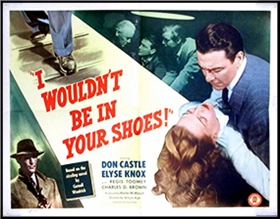
● CORNELL WOOLRICH “I Wouldn’t be in Your Shoes.” Novelette. First published in Detective Fiction Weekly, 12 March 1938. Collected in I Wouldn’t Be in Your Shoes (Lippincott, hardcover, 1943), as by William Irish. Reprinted many times.

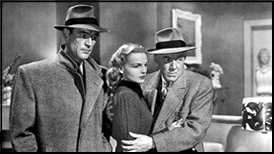
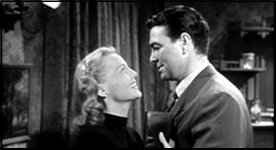
● I WOULDN’T BE IN YOUR SHOES. Monogram, 1948. Don Castle, Elyse Knox, Regis Toomey, and Robert Lowell. Screenplay by Steve Fisher. Produced by Walter Mirisch. Directed by William Nigh.

   At his worst, Woolrich could be wordy, verbose, prolix, repetitive, redundant, tiring and tedious. He could take a metaphor, strap it to the rack, and stretch it till the reader screamed for mercy. But at his best, he could wring poetry out of plot twists and make the pages sing with strange, melancholy music.

   This is Woolrich at his best.

   Tom Quinn starts out on a hot August night as a working stiff, married, and living on the ragged edge of poverty. By the story’s end, it will be Christmas, and he’ll sit on Death Row, framed by circumstances that could only occur in Woolrich’s dark Universe. It begins with him throwing his shoes out the window at noisy cats, builds as the shoes disappear and are mysteriously returned, then twists when he finds money on the street — money taken in a robbery-and-murder committed by someone wearing his shoes. Even his wife begins to doubt his innocence.

   Whereupon Woolrich picks up a familiar theme: The Cop who pinched him begins to doubt his guilt and sets out to find the real killer, a feat achieved with fast-moving prose and a bit of genuine pathos. So Tom is free again. But fate and Woolrich have one last surprise for him….

   In 1948, a producer named Walter Mirisch at Monogram foresaw the end of B-Movies as second-features and began the lengthy and sporadic process of transforming the runty little studio into the less-runty Allied Artists. Mirisch went on to things like West Side Story, Allied Artists gave us Cabaret, but in the meantime, there were still a lot of B’s to churn out, and I Wouldn’t Be in Your Shoes was one of them.

   The thing is, Shoes shows some of the extra care and attention of a producer and studio aiming just a little bit higher. Don Castle and Elyse Knox take the leads as married dancers whose careers have stalled out — not unlike the careers of Castle and Knox themselves — and when he finds the money, they react believably. Screenwriter Steve Fisher wisely keeps in as many of the characters and as much of the Woolrich dialogue as the budget will allow, and he even rings in a familiar twist of his own to skew things a bit more.

   What impressed me most about this, though, was the acting. Everyone involved, down to Second Detective, sounds convincing. And Robert Lowell (who he?) makes a lasting impression as the unlucky guy ultimately tracked down by gumshoe Regis Toomey.

   Don’t get me wrong. This is still a B-Movie programmer, with most of the faults attendant on that art form. But it’s interesting and entertaining to see everyone giving it so much.


REVIEWED BY DAVID VINEYARD:


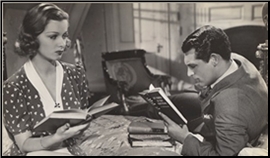
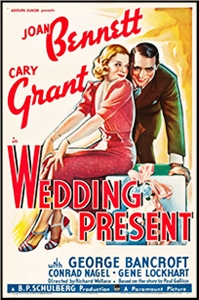
● WEDDING PRESENT. Paramount Pictures, 1936. Cary Grant, Joan Bennett, George Bancroft, Conrad Nagel, William Demarest, Gene Lockhart, Edward Brophy. Screenplay: Joseph Anthony, based on a story by Paul Gallico. Directed by Richard Wallace.

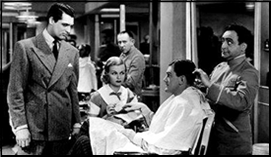
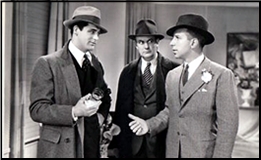
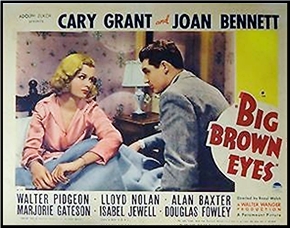
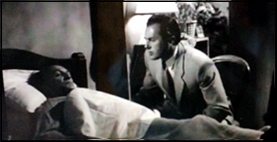
● BIG BROWN EYES. Paramount Pictures, 1936. Cary Grant, Joan Bennett, Walter Pidgeon, Lloyd Nolan, Alan Baxter, Marjorie Gateson, Isabel Jewel, Douglas Fowley, Henry Brandon, Joe Sawyer. Screenplay by Raoul Walsh, Bert Hanlon, based on the stories “Big Brown Eyes” and “Hahsit Babe” by James Edward Grant. Directed by Raoul Walsh.

   These two early Cary Grant starring vehicles are both bright genre films mixing screwball comedy, crime, and adventure and both co-starring Joan Bennett still a blonde, just before dying her hair dark in Tay Garnett’s Trade Winds would change her career forever.

   Wedding Present is a screwball comedy about Chicago reporters Charlie Mason and Monica “Rusty” Fleming who as the film opens are flirting with marriage, but cold feet on both their parts as well as an addiction to elaborate practical jokes are the bane of their long suffering City Editor George Bancroft, who would fire them if they weren’t such good reporters.

   Which they prove in short order by angling an interview with a visiting Archduke (Gene Lockhart), taking him on a monumental toot where they end up at the lake house of aviator George Meeker. Not only do they get an exclusive interview with the Archduke, they rescue New York gangster Smiley Benson from drowning earning his eternal gratitude, and learning a ship is lost in a storm on the lake hijack Meeker and his plane managing to find the missing ship and get a double headline before the noon edition.

   When Bancroft can no longer put up with either of them he retires and Grant finds himself promoted to City Editor which infuriates Bennett when she comes back from a vacation. She heads off to New York where she meets obnoxiously obvious self-help author Roger Dodacker (Conrad Nagel) and gets engaged to him so Grant quits and heads to New York to win her back with the help of Smiley and a bit of kidnapping, false fire alarms, and a renewed sense of insanity.

   Appropriately the films ends as they are carried away on top of a firetruck headed for Hillview Sanitarium.

   It’s almost, but not quite a prequel to His Girl Friday as you can easily see Charlie and Rusty maturing to become Walter and Hildy.

   
   Crime is central rather than incidental to Big Brown Eyes.

   In this one Bennett is Eve Fallon, a manicurist who becomes a hot shot reporter and teams with her cop boyfriend Danny Barr (Grant) to solve the murder of a child after their bickering gets her fired from her job as a manicurist.

   Walter Pidgeon is Richard Morey a slick lawyer who gets Lloyd Nolan’s gangster Russ Cortig off when a stray shot results in the death of a woman’s baby (Marjorie Gateson). The bickering Eve and Danny reunite when a disgusted Danny quits the force to get Nolan and crooked lawyer Pidgeon and the result is a fast moving, fast talking, surprisingly tough little film in a minor hard-boiled key — the kind of thing George Harmon Coxe, Dwight Babcock, and Richard Sale used to write — with Grant surprisingly good as a tough smart cop operating mostly like a private eye.

   Raoul Walsh was one of the most capable action directors of all time and no mean hand at comedy, so this one moves hardly pausing for a breath as the action gallops by. Maybe it wouldn’t make the pages of Black Mask, but I can imagine it in Dime Detective  or Detective Fiction Weekly.

   The interest here is in seeing two major stars both on the cusp of breaking big in a pair of fast acting genre films and backed with first rate co-stars in the kind of thing the studios used to turn out seemingly effortlessly.

   Wedding Present recently showed up streaming on Classic Reels and Big Brown Eyes can still be found on DVD from its 2014 release. Neither movie is a classic by any means, but both stars are well represented in these films that are fast, funny, and smart full of bright dialogue, wit, and movement.
   

REVIEWED BY DAVID FRIEND:


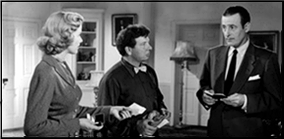
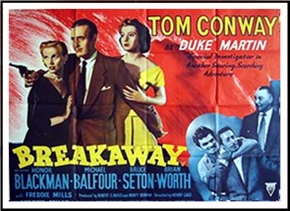
BREAKAWAY. RKO Radio Pictures, UK, 1956. Associated Artists Productions, US, 1957. Tom Conway (Tom ‘Duke’ Martin), Michael Balfour, Honor Blackman, Brian Worth, Bruce Seton, John Horsley, Paddy Webster. Director: Henry Cass. Available on DVD (Region 2) and currently streaming on Fandor via Amazon Prime.

   In West Berlin, a German scientist named Professor Dohlman has been working on a formula which may reduce metal fatigue. He is, however, dying and gives the formula to Johnny Matlock (Brian Worth) with the instruction that it should be passed on to the young man’s brother Michael Matlock (John Horsley). Johnny is in a relationship with Michael’s secretary Diane (Paddy Webster) and meets her at the airport on his return to England.

   Also entering the country is the suave, unflappable private detective Tom ‘Duke’ Martin (Tom Conway) who is welcomed by his friend, the former petty criminal Barney Wilson (Michael Balfour). Soon, Matlock and the girl are kidnapped with only Diane’s abandoned handbag remaining. ‘Duke’ investigates and learns that Diane was due to meet someone the following evening at a nightclub. He makes the appointment himself and meets the glamorous Paula (Honor Blackman), who turns out to be Diane’s sister.

   Determined to return Diane’s possessions personally, ‘Duke’ discovers that everyone else wants to steal them. It seems that the formula is contained somewhere in the bag and he must find it before the bad guys kill Diane.

   This routine B-film was produced by Robert S. Baker and Monty Berman, who would later have such tremendous success on television with The Saint. It is a sequel to Barbados Quest, made the same year (and reviewed here), and again stars Tom Conway in a role identical to ‘The Falcon,’ a character he played in ten B-films for RKO in the 1940s. The plot is a little more straightforward this time, albeit less interesting with its focus on corporate espionage.

   Confusingly, two actors reappear from the first film in different roles, which is jarring if one sees these back to back. John Horsley’s Inspector Taylor is nowhere to be seen and the actor instead plays the sensible scientist at odds with his scheming brother, who played the bad guy last time out. There is a welcome appearance from the always excellent Alexander Gauge and a cameo from future Dad’s Army star Arthur Lowe, while real-life boxer Freddie Mills is stunt-cast as a two-fisted barman.

   Both films are reasonably entertaining, but less pacey than The Falcon films and seem to have a lower budget too. They are basically a couple of pilots for a television series which never materialised, but are efficient timewasters all the same. Conway is always watchable and was born to play such suave and darkly handsome characters. More so, I believe, than his brother George Sanders, who seemed ever so slightly lecherous when in similar roles.

   Conway was passed fifty here, and was beginning to show it, but proved nonetheless that he could have played the Falcon for a lot longer had RKO allowed it.
   

REVIEWED BY DAVID VINEYARD:


● THE STEEL KEY. Eros Films, UK, 1953. Terence Morgan, Joan Rice, Raymond Lovell, Diane Foster, Esmond Knight. Screenplay: John Gilling & Roy Chanslor. Directed by Robert S. Baker.

● SALUTE THE TOFF. Nettlefold Studios, 1952. John Bentley, Carol Marsh, Roddy Hughes, Wally Patch, Valentine Dyall, Arthur Hill, Peter Bull, Tony Britton, Sheilagh Fraser. Screenplay John Creasey, based on his novel of the same title. Directed by Maclean Rogers.

   As The Steel Key begins, Inspector Forsythe (Raymond Lovell) of the Yard is waiting at Heathrow when Johnny O’Flynn (Terence Morgan) arrives and none too happy to see him. O’Flynn is what used to be known as a “Gentleman Adventurer” and has a history of playing fast and loose with the law. In fact Forsythe isn’t entirely sure O’Flynn hasn’t stolen and then “recovered” and collected the reward on a few items in the past.

   This time he’s on the trail of the “steel key,” a process for hardening metals that is not only vital to industry but also national security. The formula is held by two scientists, Professor Newman in England, and Dr. Metcalfe in the States, and O’Flynn has shown up pretending to be Metcalfe.
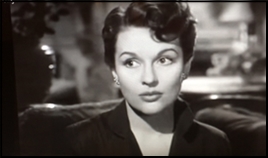
   Things get more complicated when O’Flynn manages to avoid Forsythe and shows up at Newman’s home in time for the Professor’s funeral where his attractive widow Sylvia (Diane Foster) is obviously not in mourning and obviously attracted to O’Flynn.

   O’Flynn wants Newman’s formula and Sylvia wants Metcalfe’s, and there is a lot of obvious conspirators surrounding the dangerous black widow.

   Pretty Doreen Wilson (Joan Rice) gets involved and soon it turns up Newman may not be as dead as advertised, while the real Metcalfe shows up complicating things for O’Flynn who finds himself hunted by Scotland Yard for a murder he didn’t commit (not that it ever bothers him much, he eludes the Yard with the skill of Houdini).

   It’s a pretty standard British crime film, attractively played by Morgan as the charming roguish O’Flynn, and works up to a fairly well done chase and a pretty good climax at sea.
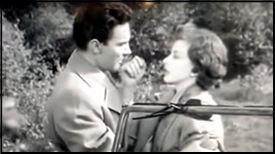
   Nothing special, save for one thing.

   Without ever saying it, without trying too hard, it’s the Saint. It is so obviously the Saint I’m shocked Leslie Charteris didn’t sue. In fact it is so much the Saint Morgan behaves exactly like Simon Templar, replete with his witty repartee with Inspector Teal — I mean Forsythe — and even down to Morgan having the same bouffant hair-do as Roger Moore nine years later.

   And there is the fact of the director, Robert S. Baker (The Siege of Sydney Street, The Hellfire Club, Jack the Ripper), who only directed ten films, but was rather better known as the producer of the Saint television series with Roger Moore.

   Granted it was nine years before Baker succeeded in putting the Saint on television, but it is hard to see this as anything but a pilot, albeit a nine year old one, as it plays almost exactly as an episode of the series, only missing the signature theme and Morgan glancing bemusedly at his halo a la Moore.
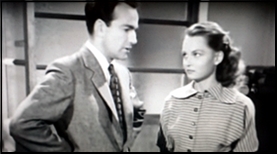
   Salute the Toff, starring John Bentley, who was also Paul Temple, is the first entry in the two film series with a screenplay by Creasey based on his novel with the entire cast, Jolly (Hughes), Bert Ebbutts (Patch), and Inspector Grice (Dyall) in an even better and faster moving adventure than Hammer the Toff which I reviewed earlier.

   Secretary Fay Gretton is concerned her boss John Draucott is missing and despite being dismissed by Canadian crime reporter Ted Harrison (Arthur Hill, very young, very tall, and very thin pre-Owen Marshall days) who never-the-less points out Richard Rollinson, the Toff, to her at a club.
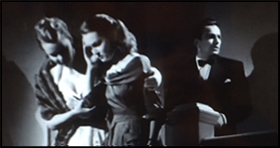
   She calls on Rolly and in short order he finds a body in Draycott’s flat, but it isn’t Draycott, instead it is the son of wealthy Mortimer Harvey whose daughter Draycott is engaged to.

   Lorne (Peter Bull) and his cut-throats killed the younger Harvey and are after paper’s Draycott has that might incriminate the elder Harvey. Rolly puts Jolly on the trail of Draycott as he foils a trap set for Fay to get the papers involved, and it all comes to a head with a chase, a kidnapping, and a pair of twists in a fast moving film that like its sequel, does do justice to Creasey’s gentleman sleuth.

   Both films are currently on YouTube (here and here, along with Hammer the Toff), and depending on your tolerance for such things an entertaining way to spend an evening with two of the best of the gentleman adventurers. All the Paul Temple films are available too, so if you plan a weekend of British thrillers, you are set.
REVIEWED BY DAVID FRIEND:


CROW HOLLOW. Eros Films, UK, 1952. Donald Houston, Natasha Parry, Pat Owens, Melissa Stribling, Esma Cannon, Nora Nicholson, Susan Richmond. Based on the novel by Dorothy Eden. Directed by Michael McCarthy. Currently available online here.

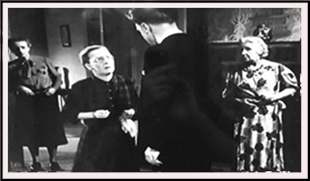
   Gothic thrillers usually see a young woman marry a man and move to a spooky old house where she begins to fear he may kill her. Many novels – from Mary Roberts Rinehart to Mary Higgins Clark – revolve around such portents, and Hitchcock made use of it too in Suspicion. It seems to happen also in this 1952 film in which newlyweds Ann and her doctor husband Robert move onto his family estate. However, the twist is that the danger does not stem from the new husband but, it seems, from the three eccentric old aunts who live with them.

   There’s Aunt Judith, a bespectacled entomologist; the doting Aunt Opal and the tall and severe Aunt Hester. All the aunts seem to adore their nephew and they are friendly enough to Ann, but she senses something is wrong. Robert’s dying mother had anxiously warned her not to go to Crow Hollow and she feels lonely and listless there while Robert is at his surgery in the village.

   The crows have returned to roost for the first time in decades, and legend has it that they foretell tragedy. Ann is also puzzled by the way in which her husband’s aunts indulge their insolent maid, Willow, and even catches the girl trying on her clothes. Things get stranger still when Ann suffers a series of accidents…

   This is one of the best B-movies I’ve seen yet. It may be rather languid – particularly for the first few minutes – but it’s one of those films in which the atmosphere takes precedent over plot. The aunts are suitably creepy, despite being polite, and we appreciate Ann’s trepidation as she is left alone with them. Played by actress Natasha Parry – whose career would be defined by her marriage to film director Peter Brook and the parts he gave her – Ann is a likeable, generous woman who is already in an unsettling situation before the danger starts.
   It does so about twenty five minutes in, and it is Parry’s engaging performance which holds the film until then. Husband Robert is a bit of a wet blanket who frustratingly – but, by the conventions of the genre, inevitably – dismisses his wife’s concerns. The film is only marred by its rushed ending and I was able to conjure a couple of better scenarios myself as, I think, would many others. Nevertheless, it’s well worth an hour and ten minutes of your time and – like so many excellent old films – is available for viewing online.

Rating: ***

BULLDOG DRUMMOND’S SECRET POLICE. (1939) John Howard (Captain Hugh C. “Bulldog” Drummond), Heather Angel (Phyllis Clavering), H. B. Warner, Reginald Denny, E. E. Clive, Elizabeth Patterson, Leo G. Carroll. Screenplay by Garnett Weston, based on the book Temple Tower by Herman C. McNeile. Director: James P. Hogan. Currently available online at several sites, including YouTube and Amazon Prime.

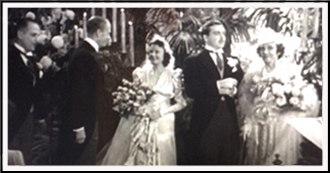
   John Howard played man of adventure Bulldog Drummond seven times in the movies, this one being the sixth, and it was Heather Angel who played his girl friend and would-be bride Phyllis Clavering in the last four of them. (If I’m off on the count of either of these, please let me know.) This one begins with high hopes that their marriage would finally come off, but even Aunt Blanche knows that something is going to happen and that the two of them are going to be off on yet another venture.

   But this one starts and actually takes place for the full film at Temple Tower, Drummond’s ancestral mansion of a home, with the ring, the best men, and the minister  all ready and waiting. What they don’t know is that the next visitor through the front door will be a dotty old professor of history who claims that he has a book with a code in it that will guide them all to a treasure well hidden somewhere in the house.

   And where there’s a treasure, there’s a villain who has learned about it too, and who is all too willing to kill whoever gets in his way to get his way to get his own hands on it.

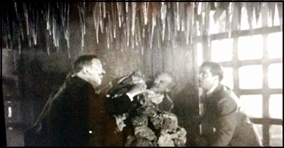
   Lots of fun and adventure ensues, what with hidden passages, underground rooms, including one booby-trapped with iron spikes in the ceiling that comes crushing down upon whoever is inside when someone outside the room pulls a certain lever.

   Lots of fun, as I say, but unfortunately the fun is awfully silly way way too often, starting with the dotty professor and continuing with the clumsy antics of Drummond’s faithful crew and Aunt Blanche’s continual warnings and fainting spells.

   I hope I’m not giving too much away by saying that [WARNING] Phyllis does not get her man this time around, but while I haven’t watched Bulldog Drummond’s Bride, the next in the series, I have my fingers crossed that she will then, given one last chance.


REVIEWED BY DAVID VINEYARD:


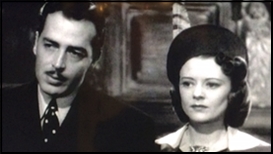
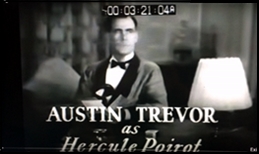
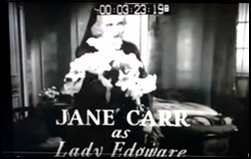
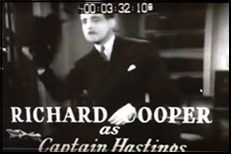
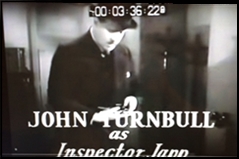
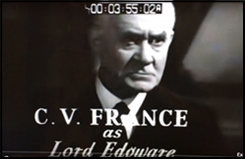
LORD EDGWARE DIES. RKO Radio Pictures, UK, 1934. Austin Trevor (Hercule Poirot), Jane Carr, Richard Cooper (Captain Hastings), John Turnbull (Inspector Japp), C. V. France Screenplay by H. Fowler Mear, based on the 1933 novel by Agatha Christie. Directed by Henry Edwards. Currently available on YouTube.

   â€œLady Edgware is a killer, but she isn’t like other people, she doesn’t know right from wrong.”

   
   Why is everyone trying to frame Lady Edgware for murder, including herself, even before anyone dies?

   At a charity ball Lady Edgware (Jane Carr), an American musical star who married into a peerage, tries to engage Hercule Poirot (Austin Trevor) and his friend Captain Hastings (Richard Cooper) to persuade her older husband Lord Edgware (C.V. France) to give her a divorce before she kills him. Not long after that a young actor friend of Lady Edgware from Hollywood goes to Poirot to beg him to help her before she kills her husband in desperation claiming she could do anything and does not understand right from wrong.

   Ironically when Poirot and Hastings call on Lord Edgware he informs them he agreed to the divorce in a letter six months earlier, and letter his wife claims to have never received.

   Then Lord Edgware is found murdered and Inspector Japp (John Turnbull) called in. Witnesses claim Lady Edgware appeared at the house, announced herself, entered the study, and murdered Lord Edgware, but then a quick investigation proves Lady Edgware was at a party, received a mysterious phone call, and could not have killed her husband.

   Just what is going on? Poirot proves someone could have impersonated Lady Edgware easily, but the suspect, an entertainer who did an imitation of Lady Edgware at the charity ball is found dead by her servant the next morning.

   There are suspects, Edgware’s daughter, a nephew Ronald Marsh who is something of a wastrel and needs the money and title he will inherit, a mysterious missing thirteenth guest at the party that provided Lady Edgware’s alibi, Lady Edgware’s servant who insisted she attend the party that provided her alibi, and any number of red herrings in the inimitable Christie style.

   Austin Trevor, who plays Poirot here, played more detectives in more British films than just about any other actor. In addition to Poirot he was Anthony Gethryn in The Nursemaid Who Disappeared and any number of British and French policemen on screen (he’s the policeman who tries to help Jean Simmons in So Long At the Fair some twenty years after this — Trevor played almost as many foreign as British detectives). Despite that he makes for an odd Poirot, tall, relatively handsome, with a full head of hair, no mustaches, a more reserved manner, and little eccentricity. Luckily with Christie involved in the screenplay Poirot’s keen mind is on full display if his eccentricity is not.

   As the case goes on it grows more complex. The Duke of Merton, a strongly religious man, who Lady Edgware wanted to marry it turns out would never marry her if she was divorced. He coolly dismisses Poirot and Hastings, but Poirot notes he is writing a love letter to her by reading it upside down on Merton’s desk.

   Carr plays Lady Edgware as a cross between Jean Harlow and Mae West, and quite effectively so there is more than some suspicion she could easily have murdered her husband, and might easily be as amoral as claimed, meanwhile that mysterious thirteenth guest features more importantly in the plot.

   Clues include a gold box holding sleeping powders, convex pence nez, and the torn page of a letter mailed by one victim to her sister in America.

   â€œAre you going to tell Japp about all of this?”

   â€œNo, not yet, he would but say it was another nest of the mare.”

   Another victim is murdered while on the phone to Poirot about to reveal the murderer.

   â€œOh, mon dieu, I’ve been blind, foolish. In an hour’s time we will all meet at the Barchester and I will tell you everything.”

   
   The solution is cleverly planned if hastily delivered.

   Poirot: “You tried to pull the wool over the eyes of Hercule Poirot.”

   Hastings: “And I’m hanged if we can have that.”

   The Killer: “Under the circumstances that’s a very tactless remark.”

   Nothing great here, but it is much better than reviews I’ve read and it moves interestingly at a clip. The mystery is fairly well done considering the limitations of the form, and Trevor and Carr overcome any drawbacks in the rest of the cast with energy and professionalism. If noting else it is worth seeing strictly from a historical point of view.


THE THIRD ALIBI. Grand National Pictures, UK, 1961. NBC, US, TV airing, 1961. Laurence Payne, Patricia Dainton, Jane Griffiths, Edward Underdown, John Arnatt, Cleo Laine. Director: Montgomery Tully. Available on YouTube here.

   A mildly interesting crime thriller that tries hard but doesn’t quite have the oomph to follow through. As the title I am sure suggests, it all revolves about a killer (musical composer Norman Martell whose wife Helen won’t give him a divorce) whose plan includes setting up alibis for both himself and his lover (Helen’s half-sister Peggy Hill) as the deed is done.

   As chance would have it, he can’t pull off the deed. Dead instead is his lover, and what good is an alibi when the wrong woman is dead? The pace is fine – the movie is both short and breezily told – but I’m not sure I understood one of the would-be alibis, and the ending is telegraphed well in advance, which is always a problem when there’s no enough time to pad the story a lot more.

   All of the players were new to me – other than singer Cleo Laine who has one nightclub scene on stage all to herself – but they were all fine in their roles. It was the story that let them down.  If I were to rate this one, I’d give it two stars out of four, but since I don’t do that any more, I won’t.


« Previous PageNext Page »