Reviews


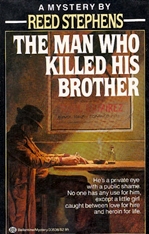
REED STEPHENS – The Man Who Killed His Brother. Mick Axbrewder #1. Ballantine, paperback original, 1980. Forge, hardcover, 2002; Tor, paperback, 2003, the latter as by Stephen R. Donaldson.

   Introducing a new private eye, Mick “Brew” Axbrewder, a non-licensed alcoholic who scrapes out a living doing legwork for Ginny Fistoulari, owner and operator of Fistoulari Investigations. The reasons for the title and for his unusual non-employed state of drunken stupor are one and the same – five years ago he accidentally shot and killed his brother, a cop named Rick.

   Since he tells his own story, there is a distinct note of whininess that permeates the opening introductions. His brother’s thirteen-year-old daughter has mysteriously disappeared, however, and when he discovers it and the action picks up, he seems for a while to feel less sorry for himself.

   Together, he and Ginny discover there has been an epidemic of missing young girls, although the police department has quietly kept a lid on the news. Axbrewder’s presence on the case promises to change all that, not to everyone’s delight.

   While in general the characters are shallow and predictable, the events that follow are tough and gritty. When Axbrewder is not engulfed in self-pity, he functions with rough-hewn directness and urgency. He’s not a great thinker, though. Maybe it’s the effect of being forced to sober up so quickly, but it takes a long while before he puts the clues he finds together.

   Will he be a new series character? He could be, but a sequel of any sort at all would have to be built on a new motivation. If not, there is no way possible it could have some of the impact built into this one. It is as if all of Stephens’ eggs were in but one basket.

      Rating: B

A LATER NOTE: I’ve since been informed that the author is also Stephen R. Donaldson, a new writer who has done a trilogy of well-regarded fantasy novels reprinted by this same publisher.

–Very slightly revised from The MYSTERY FANcier, Vol. 5, No. 2, March/April 1981.


      The Brewster & Fistoulari series —

1. The Man Who Killed His Brother (1980)
2. The Man Who Risked His Partner (1984)
3. The Man Who Tried to Get Away (1990)
4. The Man Who Fought Alone (2001)

REVIEWED BY RAY O’LEARY:


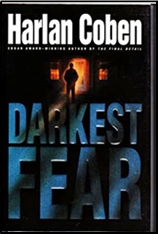
HARLAN COBEN – Darkest Fear. Myron Bolitar #7. Delacorte, hardcover, 2000. Dell, paperback, 2001.

   Myron Bolitar – one-time All-American basketball player who became a Sports Agent after his knee was wrecked during a game – is asked by an ex-girl friend, Emily, estranged wife of his arch rival Greg Downing (who went on to a long pro career) to help her critically ill son Jeremy. Myron’s career-ending injury was apparently (this is the first book I’ve read in the series, so I’m coming in mid-stream) arranged by Greg out of jealousy. Emily even went so far as to sleep with Myron the night before her wedding.

   Jeremy suffers from Fanconi anemia, a disease that will prove fatal unless he receives a bone marrow transplant. The National Registry of donors has found a match, but the possible donor has apparently disappeared. Emily wants Myron to find him. Myron is reluctant until Emily supplies the kicker: Jeremy is actually his son. When Myron begins his search, with the help of the various regular characters in the series, he soon discovers that the missing donor just might be the man suspected of being a notorious serial killer.

   This one was pretty good even if it read like Jerry Maguire, Private Eye. The characters were interesting, the search suspenseful and there were enough twists and turns to satisfy the most fastidious pretzel lover.

— Reprinted from The Hound of Dr. Johnson #18, March 2002.

REVIEWED BY MIKE TOONEY:

(Give Me That) OLD-TIME DETECTION. Summer 2020. Issue #54. Editor: Arthur Vidro. Old-Time Detection Special Interest Group of American Mensa, Ltd. 36 pages (including covers). Cover image: Unusual Suspects.

   The latest issue of OLD-TIME DETECTION (OTD) continues to maintain the high quality it has always enjoyed. Editor Arthur Vidro’s choices of material are, as usual, excellent; the world of classic detective fiction, long neglected, gets a new lease on life with every number.

   Indeed, nothing says “classic detective fiction” like commentary from Edward D. Hoch, an expert on the subject as well as a shining example of how to write it. Vidro reproduces two introductions by Hoch to mystery story collections.

   Ed Hoch’s fiction output is the envy of many writers, almost always matching quantity with quality. In his review of Crippen & Landru’s latest themed collection of Hoch’s stories, Hoch’s Ladies, Michael Dirda says it well: “His fair-play stories emphasize a clean, uncluttered narrative line, just a handful of characters, and solutions that are logical and satisfying. Each one sparks joy.”

   Next we have a valuable history lesson by Dr. John Curran concerning the earliest periods of the genre, “‘landmark’ titles in the development of crime fiction between 1841 and the dawn, eighty years later, of the Golden Age,” especially as reflected in the publications of the Collins Crime Club.

   Following Dr. Curran is a collection of perceptive reviews by Charles Shibuk of some pretty obscure crime fiction titles; for instance, have you ever heard of Brian Flynn’s The Orange Axe (“highly readable, steadily engrossing, well-plotted, and very deceptively clued”) or James Ronald’s Murder in the Family (“an absolute pleasure to read from first page to last”)?

   Cornell Woolrich was definitely not ignored by Hollywood, as Francis M. Nevins shows us in his continuing series of articles about cinema adaptations. The year 1947 was a rich one for films derived from Woolrich’s works — Fall Guy, The Guilty, and Fear in the Night — but, as Nevins indicates, the quality of these movies is highly variable.

   William Brittain is a detective fiction author who has been undeservedly “forgotten” of late, but a reprinting of one his stories (“The Second Sign in the Melon Patch”, EQMM, January 1969) shows why he should be remembered: “She wondered if anyone in Brackton held anything but the highest opinion of her would-be murderer.”

   Charles Shibuk returns with concise reviews of (then) recently reprinted books by John Dickson Carr, Agatha Christie, Anthony Dekker, Ngaio Marsh, Ellery Queen, Dorothy L. Sayers, and Josephine Tey.

   Dr. John Curran also returns. The world’s leading expert on Agatha Christie tips us off as to developments in Christieworld: a new short story collection, the closure of the long-running play The Mousetrap as well as the cancellation of the in-person Agatha Christie Festival and uncertainty about the release date for Kenneth Branagh’s version of Death on the Nile due to the beerbug, the publication of a new non-fiction book focusing on Hercule Poirot, and a radio play version of a previously unperformed non-criminous production by Dame Agatha dating from nearly a century ago.

   This is followed by a collection of smart reviews by Jon L. Breen (The Glass Highway by Loren D. Estleman), Amnon Kabatchnik (The Man in the Shadows by Carroll John Daily), Les Blatt (The Chinese Parrot by Earl Derr Biggers), Ruth Ordivar (The World’s Fair Murders by John Ashenhurst), Arthur Vidro (The Kettle Mill Mystery by Inez Oellrichs), and Thor Dirravu (The Ten Faces of Cornell Woolrich, a collection).

   Next we have Martin Edwards’s foreword to Joseph Goodrich’s collection of essays entitled Unusual Suspects (2020), which, Edwards is delighted to relate, “benefits from a quirky unpredictability and from being a mine of intriguing nuggets of information.”

   Rounding out this issue are the readers’ reactions and a puzzle page, the latter a snap only if you’re thoroughly familiar with the life and career of Hercule Poirot.

   Altogether this is a most satisfying issue of OLD-TIME DETECTION.

If you’re interested in subscribing: – Published three times a year: spring, summer, and autumn. – Sample copy: $6.00 in U.S.; $10.00 anywhere else. – One-year U.S.: $18.00 ($15.00 for Mensans). – One-year overseas: $40.00 (or 25 pounds sterling or 30 euros).

Payment: Checks payable to Arthur Vidro, or cash from any nation, or U.S. postage stamps or PayPal.

Mailing address: Arthur Vidro, editor, Old-Time Detection, 2 Ellery Street, Claremont, New Hampshire 03743.

Web address: vidro@myfairpoint.net
REVIEWED BY DAVID VINEYARD:

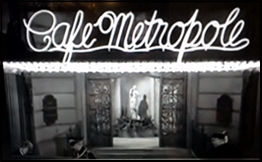
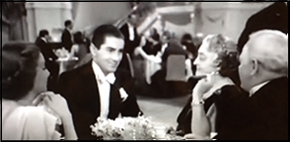
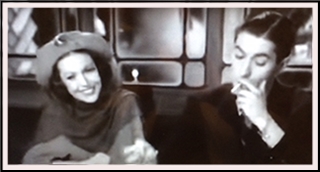
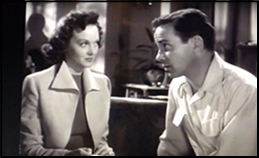
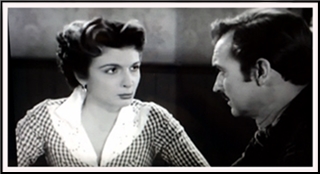
CAFÉ METROPOLE. 20th Century Fox, 1937 Loretta Young, Tyrone Power, Adolphe Menjou, Charles Winninger, Helen Westley, Gregory Ratoff, Christian Rub. Screenpla: Jacques Deval. Story: Gregory Ratoff Directed by Edward H. Griffith.

   This Hollywood take on French farce written by character actor Gregory Ratoff could use a bit less romance and a bit more farce, but thanks to the cast and an intelligent screenplay has more than enough charm to get by.

   There are no real crimes here, though the police are certainly involved. It’s the sort of film where everyone is conning everyone else, sometimes even themselves.

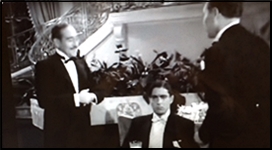
   Monsieur Victor (Adolphe Menjou) owns the Café Metropole and his accountant Maxl (Christain Rub) has just informed him he is in the red and the auditors are coming. He needs to think and act fast, but luckily for Victor things are already falling in place in the person of an American millionaire Joseph Ridgeway (Charles Winninger), his sister Margaret (Helen Westley) and his daughter Laura (Loretta Young) who are arriving soon and hoping to meet celebrities and royalty. If Victor can arrange a royal romance, he might get the money he needs from Winninger.

   All he needs to arrange that is the right man, and who should show up but flat broke American heir Alexander Brown (Tyrone Power), who manages to fall in debt at the gaming tables to Victor with a rubber check bouncing around signed by him.

   But everything will be just fine if Alexander Brown becomes the Russian Prince Alexi Paneiev and charms the beautiful Laura.

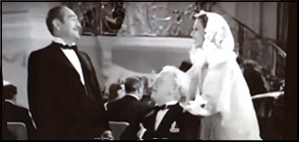
   And almost immediately things get complicated. Alexander and Laura meet before they know who the other is (or is supposed to be) and actually start to fall in love, Daddy Ridgeway smells a rat (though the wrong one), and Paul the waiter (Gregory Ratoff) proves to be the real Prince Alexi more than a little incensed by the impostor.

   Power and Young, who were virtually a screen team, play their parts with effortless charm, their combined beauty and screen presence, even as male and female ingenues, enough to carry any film, but this one doesn’t have to rely on that alone, with Menjou as the suave continental con man Victor, Winninger the slightly befuddled comical American millionaire, Westley his sharp witted sister and advocate for Laura, and Ratoff a proud, haughty, but for sale Russian prince.

   Menjou specialized in variations on this jaded but still romantic charmer no more honest than was required by the circumstances. What energy the film has comes mostly from him, Ratoff, and Westley, though Young gets her turn at the end.

   Power bridled at these sort of roles eventually and welcomed a chance after the War to play something with a bit more depth.

   Young proves smarter and tougher than anyone expects when Alexander wants out of the con game and gets framed by Victor to get money from Ridgeway, and this being American and not quite French farce, there is little edge and no sex considering the model here is known for both.

   This isn’t Lubitch, Billy Wlder, Preston Sturges, or Mitchell Leisen, and their deft hand at this sort of material is sorely missed, but it is still fun in a low key, all white tie and tails, elegant settings, good food, great wine, beautiful young people in beautiful clothes quoting François Villon in charming cafes and gorgeous suites, and charming con artists.

   The best way to describe how this material is done in the grand Hollywood style is effortless. Café Metropole is a souffle and not a meal, light, charming, romantic, and with just enough spice to keep it from being boring. Of course it is almost impossible to make this kind of film today, which may or may not be a good thing, but we will always have Paris, at least the Hollywood one.

   The sharpest bite is saved for the great last line with Westley and Ratoff getting the fade out and the laugh.

         â€œGet your checkbook out. Here we go again.”

   It’s almost enough to redeem the whole film on its own.


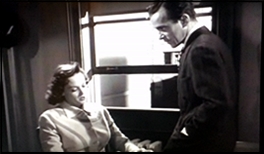
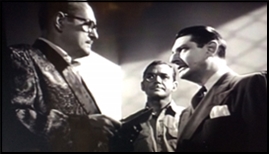
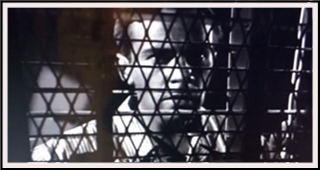
BEHIND LOCKED DOORS. Eagle-Lion Films, 1948. Lucille Bremer, Richard Carlson (PI Ross Stewart), Douglas Fowley, Ralf Harolde, Tom Brown Henry, Herbert Heyes, Tor Johnson. Director: Oscar Boetticher. Available on DVD and currently now on YouTube.

   When the movie opens, newly minted PI Ross Stewart is admiring the work of the painter who has just put his name on the door of his office. It takes a while for the first client of most newly minted PI’s to walk in, but not in this movie. She – and of course she is a she – shows up even before the painter leaves. And he immediately falls in amorous lust for her. (I guess he has been reading too many pulp PI stories.)

   She does not reciprocate his advances, but neither does she seem all that put out by them. What she does have is a proposition for him, and strictly a business one. She thinks she know where a certain judge whom the district attorney and the police would love to get their hands on is hiding out.

   She has been following the judge’s girl friend, and ever night at a certain time she is admitted through a side entrance to a local mental institution. What she wants Stewart to do is to get himself admitted to said mental institution to see what he can learn on the inside. Stewart demurs until she mentions a $10,000 reward for the judge, which she is willing to split with him.

   Now you very well may be thinking to yourself that you have seen or read this story somewhere else before, and if you have watching or reading a lot of pulp fiction or B-movies from the 30s or 40s, I am sure you have. But with a director like Oscar Boetticher, sometimes known as Budd, at the helm, the 60 plus minutes (barely over) goes by very quickly.

   In any case, mental institutions in the 30s and 40s were no place to find yourself shut up in, and the one in Behind Closed Doors is no exception. But Lucille Bremer playing Richard Carlson’s partner in this particular plan does hold up her end of it, and all ends well, eventually.


REVIEWED BY DAN STUMPF:


  DR WHO AND THE DALEKS. Amicus, 1965. Peter Cushing, (Dr Who) Roy Castle, Jennie Linden, and Roberta Tovey. Screenplay by Terry Nation and Milton Subotsky, from the BBC Television Serial. Directed by Gordon Flemyng.

   I’ve kind of wanted to give this a look, ever since I saw the previews at the old Southern Theater back in the late 1960s, and I’m glad I got around to it at last.

   It’s Kid’s Stuff, with paper-thin characters, contrived plot, and labored pratfalls from Roy Castle, but I shall remember it fondly, long after better films lie lost in my fading memory, thanks to the gaudy photography of John Wilcox (whose credits include The Third Man and Outcast of the Islands) and the splendid sets, courtesy of Bill Constable, known for… well, not for much, really.

   But once the principals get into the City of the Daleks, this thing takes on the look of a child’s dream, with labyrinthine corridors of shiny plastic, sheer cliffs, bottomless pits, walls that spin like the numbers on slot machines, and the Daleks themselves, rolling about like lethal gumball machines.

   And all at once, this tatty, cliché’d thing takes on a dream-life of its own, actually building up considerable suspense as it barrels toward a lively donnybrook played out like a child’s ballet.
   

REVIEWED BY JONATHAN LEWIS:

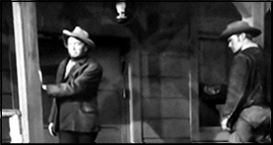
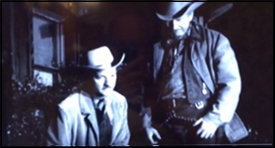
THE RIFLEMAN “The Marshal.” ABC, 21 October 1958 (Season 1, Episode 4). Chuck Connors (Lucas McCain), Johnny Crawford (Mark McCain). Guest Cast: Paul Fix, James Drury, R.G. Armstrong, Robert Wilke, Warren Oates, Abby Dalton, Bill Quinn. Written & directed by Sam Peckinpah.

   It doesn’t really get any more western than this. Written and directed by Sam Peckinpah, “The Marshal,” a first season episode of The Rifleman has it all. A once respected lawman gone to seed and now a drunk who refuses to even carry a gun. A pair of brothers terrorizing a town. A scheming outlaw willing to murder without hesitation. A redemption arc for the aforementioned drunken former marshal. And some terrific character actors.

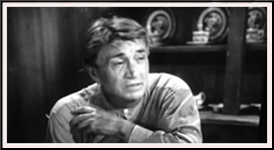
   Although Chuck Connors is the star, this episode really belongs to Paul Fix. He portrays Micah Torrance, a once fearless marshal who is first seen stumbling drunk outside of a saloon. Lucas McCain (Connors) takes him under his wing and offers him good hard work on the ranch. It’s there that both he and his son Mark (Johnny Crawford) realize how much damage whiskey has gone to Micah’s body and soul.

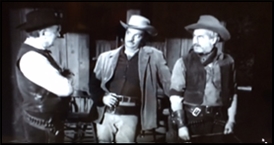
   At more or less the same time that Micah is trying to put his life back together, outlaws ride into town. Leading the group is the handsome, but devious Lloyd Carpenter (James Drury before he starred in The Virginian). There are also two brothers. Flory Sheltin (Robert Wilke) and his brother Andrew (Warren Oates).

   Without giving away too much of the story, let’s just say that something happens to the current sheriff of North Fork (R. G. Armstrong) that allows for Micah to take his place as the chief lawman of the fictional New Mexico town. Fix would go on to appear in some 150 or so episodes of The Rifleman.
   

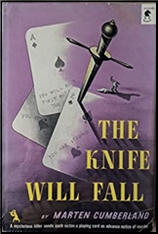
MARTEN CUMBERLAND – The Knife Will Fall. Doubleday/Crime Club, US, hardcover, 1943.

   In most of the mysteries written by Cumberland under his own name, the detective was the formidable Commisaire Saturnin Dax of the French Surete , so it came as a bit of a surprise to me when I recently discovered that Cumberland was an accomplished English journalist for most of his life and was apparently as British as they come.

   (Even less known than Cumberland is today, is the fact that under the pseudonym of Kevin O’Hara he also wrote of the adventures of a London private eye named Chico Brett. None of these books seems ever to have been published in this country.)

   In this novel, my own first introduction to the gentleman, the phlegmatic Dax is described as a great bulk of a man; otherwise, our picture of him is reduced and restricted by seeing only his brain at work . If in personality he seems imaginatively dull, his assistant, the English-loving Felix Norman, in strong contrast, does more and reacts more.

The case itself is a peculiarly disjointed one. The connection between a series of victims who seem never to have met or known each other before is the playing card each of them received as an advance warning. One aspect of the case, that of a wife who strangely disappears after being observed reading about the murders in the papers, is even more tenuously tied in.

   False clues – red herrings – abound, many of them deliberately set by the gang of killers, led by a mysterious mastermind, or so Dax hypothesizes. The central part of the story sags rather badly. There is no sparkle, no real verve to keep our interest alive. Not until a wholly unexpected killing takes place, taking us by total surprise, are we jolted out of our apathy. The ending is a hodgepodge, but I have to admit that the facts do fit what seemed till then a nearly unexplainable series of events.

   A very strange book. Very much out of the ordinary, as if Cumberland had caught the pattern of French thought as well as he sees to have aught the rhythm of the French tongue, (Take this observation with a grain of salt. I’m no expert on either one.)

Rating: C plus.

–Very slightly revised from The MYSTERY FANcier, Vol. 5, No. 2, March/April 1981.


Bibliographic Update: There were in all 34 adventures of Comissaire Dax, not all of which were ever  published in this country, along with a sizable number of standalone mysteries. As for Chico Brett, whom I mentioned in the review, there were 16 of those, and as I said, none have been published over here. As for the author himself, he has a very short entry on Wikipedia, which you may find here.

REVIEWED BY DAN STUMPF:


TREASURE OF RUBY HILLS. Allied Artists, 1955. Zachary Scott, Carole Mathews, Dick Foran, Barton MacLane, Lola Albright, Raymond Hatton, Lee Van Cleef, Stanley Andrews and Steve Darrell. Screenplay by Tom Hubbard and Fred Eggers, based on the pulp story “The Rider of the Ruby Hills” by Louis L’Amour, written under the pen-name Jim Mayo (West, September 1949), later expanded to the novel Where the Long Grass Blows (1976). Directed by Frank McDonald. Currently available on YouTube here.

   There’s no treasure, and we never actually get to the Ruby Hills, but here’s an intelligent Western, well-played, with some interesting noirish angles.

   Things kick off fast, with Zachary Scott and his aging outlaw buddy waiting nervously for their partner to return with his end of a land-grab they’re plotting. He gets back, mission accomplished, and in a voice like a dead man’s, tells his friends who killed him.

   It’s obvious from here that the game’s afoot, as they say in shoe stores, but things pause for a short word from an aging sheriff to the effect that Darrell’s past is catching up with him, and Scott would be wise to part ways before it does. It’s a thoughtful moment that turns moving when Darrell opts to send Scott on alone while he lingers in a ghost town to “see some old friends.”

   Then it’s back to the plot: quarreling cattle barons, and a third party keeping things stirred up for his own ends. Scott has grabbed the water rights to the whole valley, but there’s so much going on around him, that detail seems to get lost in the shuffle. What we get is a vigorous shoot-out, a desperate escape through dark alleys and shadowy stables, a showdown between Scott and Lee Van Cleef, and a final set-to back in the old ghost town where it all started.

   Along the way we get some finely-etched characters. Zachary Scott, a native-born Texan and a figure of moral ambiguity in the movies, combines both aspects quite effectively. He really does look like a man who’s been mixing in low company a little too long. And he comes up against tough Carole Mathews (one of Corman’s Swamp Women) as a gal who clearly has her own plans. Gordon Jones vacillates quite well as her double-dealing brother, Lee Van Cleef struts his razor-sharp villainy, and Dick Foran, on his way to becoming a fine character actor, does an excellent turn as a contemplative, pipe-smoking schemer.

   Writers Hubbard & Eggars make the story a little too convoluted, and director Frank McDonald lets the reins slacken now and again, but for the most part things move swiftly and agreeably here, and the result is a solid B-western I can highly recommend.


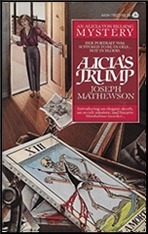
JOSEPH MATHEWSON – Alicia’s Trump. Avon, paperback original, 1980.

   My good friend Ellen Nehr recently mentioned that she was looking for this book on the off chance it had something to do with bridge. Sorry, Ellen. It doesn’t, as you’ve probably already found out. Not at all.

   I personally happen to feel (as long as you’re asking) that bridge is a hopeless waste of time. It isn’t however, nearly the waste of good intellect as what this book is actually about. Tarot cards.

   Ugh. The occult, spiritualism, astrology, Satanism, or any combination thereof – I’ve said it before, and I’m saying it again: It’s all crap. It’s pseudo-scientific mumbo-jumbo, the pablum of weak minds incapable of getting through a day and using an ounce of independent thought at the same time. It’s organized brain rot, on a million dollar scale.

   Can you think of a greater contradiction in thought processes than to have the members of a “sort of occult underground” as the leading characters in a detective novel? You can’t begin to imagine how hard it was to force myself to finish this book.

   I did, though, and that’s only because Mathewson’s new sleuth, the elegant Alicia Von Helsing, does not specifically endorse such simple-minded activities herself. The victim, her godson Ronnie, does, or did, and so do most of the suspects in his death.

   So, all right. The background is one a detective might face. I agree there’s no reason why it shouldn’t be an appropriate one for a mystery story. But the fact remains, the world of the occult is one that’s totally alien to me. I don’t understand it, and I just couldn’t wait to get out of it.

   First in a series, or so it seems. Why a male author (apparently – I won’t trap myself completely and say “obviously”) would chose to tell a story from the first-person viewpoint of a hip middle-aged married lady from Manhattan is beyond me. The style is fragile and rather brittle, and in Mathewson’s hands, it tends toward the arch and pretentious.

   Maybe you’ll like it anyway. It isn’t bad. I just didn’t find it very good.

Rating: C

–Very slightly revised from The MYSTERY FANcier, Vol. 5, No. 2, March/April 1981.


Bibliographic Update: The author’s real name was Joseph Mathewson, and there was one additional book in his Alicia Von Helsing series, that being Death Turns Right (Avon, 1982). These were the only two mysteries he wrote.

« Previous PageNext Page »