Reviews


MICHAEL GILBERT – The Killing of Katie Steelstock. Harper & Row, US, hardcover, 1980. Penguin, US, paperback, 1981. Published previously in the UK as Death of a Favourite Girl (Hodder & Stoughton, hardcover, 1980).

   As a kind of bonus, we get two stories in one. Katie’s death is the obvious reason for the rather dry murder investigation that follows. What we also get, and what fans of legal manipulations and maneuverings like myself will find of much greater interest, is an inside look at how the defense for the accused goes about making plans for the ensuing trial.

   Part of their strategy has little to do with the case itself, consisting instead of weighing and working on the personal stranegths and idiosyncrasies of the man from Scotland Yard placed in charge of the investigation.

   Katie herself was a TV star. After her death, and then only, we discover the two sides of her. For the most part, the village folk of Hannington saw her as their fair-headed girl. In London they knew her as an ambitious conniver with little she was unwilling to do to maintain her drive to the top.

   That this is a mystery novel with some emphasis on character should be abundantly clear. Even so, the ending is one that may come as something of a surprise. A goodly number of loose ends are left undone, and unmitigated coincidence looms large in the overall scheme of things.

–Reprinted in slightly revised form from The MYSTERY FANcier, Vol. 4, No. 5, Sept-Oct 1980. Previously published in the Hartford Courant.


FIRST YOU READ, THEN YOU WRITE
by Francis M. Nevins


   This month I deal with the second and third of Lawrence Block’s novels about unlicensed PI Matt Scudder, but where I should begin presents a quandary because the print and Web sources I’ve consulted disagree as to which book is which. Apparently the one Block wrote right after THE SINS OF THE FATHERS was published a few months after the third book in the series. Decisions, decisions. I choose to cover them in the order in which they were written.

***

   The source of the title TIME TO MURDER AND CREATE (Dell #8701, paperback original, 1977) is a line from T.S. Eliot’s “The Love Song of J. Alfred Prufrock,” which makes it the only one of the first three Scudders with a title not derived from a religious text. But it’s also the only one of the trio which is introduced by a motto, and this comes from a religious source.

   The version Block uses is too long to quote here, but it comes from the Talmud, specifically from the tractate SANHEDRIN, 4:5. A more succinct version of the first half of the passage — “Who kills one man kills the whole world” — -is found in a diary Cornell Woolrich left behind after his death. The second half of the quotation is also Talmudic — “Who saves one life saves the whole world” or, as it’s given in SCHINDLER’S LIST, “He who saves the life of one man saves the entire world” — but no one in Block’s novel brings up that line which, as we’ll see, is supremely relevant.

   If we know that this third Scudder novel in order of publication was the second in order of writing, its connections with THE SINS OF THE FATHERS stand out. Scudder of course still tithes, and visits churches when he needs to think, and keeps a Lives of the Saints book in his hotel room, although this time he doesn’t tell us any stories from it. Looking forward to the novel that in fact was published before this one, we find briefly mentioned a special prosecutor looking into police corruption, a subject that would be (was?) central in the third Scudder, which appeared on newsstands before the second.

   As usual in the novels from the time where Block’s protagonist is a practicing alcoholic, we begin in a bar. Scudder is approached by a small-time information peddler known as the Spinner who has come into big money thanks to blackmailing several wealthy people with dark pasts but has also become afraid that one of his marks is out to kill him.

   For a $320 fee (the price of the elegant suit the blackmailer is wearing) Scudder agrees to hold the envelope containing Spinner’s evidence against his victims and, if his client is indeed rubbed out, to open the envelope and identify and punish the murderer without exposing the victims who had meekly submitted to extortion. About two months later the Spinner is found dead in the East River with his skull crushed.

   Scudder opens the envelope, finds out who his suspects are and what they did, and comes into each of their lives, claiming to be carrying on Spinner’s blackmail, hoping that one of them will try to kill him as Spinner was killed. Unlike THE SINS OF THE FATHERS, the situation this time is filled with suspense and menace and violence that are integral to the plot.

   In due course Scudder identifies the person responsible for Spinner’s murder but again exacts his own form of punishment rather than turning the person over to the law. Perhaps he would have accomplished nothing if he had gone to the police since, as Block specifically mentions, the morally responsible party had done no more than what Henry II did when, at the height of his feud with Thomas à Becket, he is said to have cried out: “Will no one rid me of this meddlesome priest?” (The line doesn’t come from T.S. Eliot’s 1932 play MURDER IN THE CATHEDRAL, in which Henry doesn’t even appear as a character, but it is found in Jean Anouilh’s 1959 play BECKET which was the basis of the 1964 movie of the same name starring Richard Burton and Peter O’Toole.)

   What compounds the irony is that Scudder himself earlier in the novel has done something similar, inadvertently driving an innocent suspect to suicide by demanding more blackmail money. “His finger had pulled the trigger, but I’d put the gun in his hand by playing my game a little too well.”

   Scudder also killed a hit man — in self-defense, in a vividly described mano a mano — but in the final chapter, admittedly employing guesswork, he shows another of the innocent suspects that his killing the man probably saved two other lives. Now we see the relevance of the part of the Talmudic passage Block did not quote. Could he have thought that bringing it up would have made the book too morally ambivalent? “Who takes a life saves two whole worlds” doesn’t sound terribly Talmudic.

   The part of the Talmud passage Block does quote carries forward the theme in THE SINS OF THE FATHERS that the worst deed of all is murder.

   But there is a difference between murder and other crimes, and the world is a worse place for the murderers it allows to walk unpunished.

   â€œYou think human life is sacred, then?”

   â€œI don’t know if I believe that anything is sacred….I don’t know if human life is sacred. I just don’t like murder….”

***

   IN THE MIDST OF DEATH (Dell #4037, paperback, 1976) has no introductory motto but resembles THE SINS OF THE FATHERS in that the source of its title is religious, specifically a line from the burial service of the Book of Common Prayer: “In the midst of life we are in death.”

   In the body of this novel, however. there are very few religious allusions. Scudder becomes involved when a plainclothes cop unaccountably decides to turn Serpico and reveal everything he knows about corruption in the NYPD to the special prosecutor who was mentioned casually in TIME TO MURDER AND CREATE. Then a high-priced hooker comes forward and publicly accuses the cop of having extorted $100 a week from her for a long time. Soon after Scudder enters the case on the cop’s side, the hooker is found murdered in the whistleblower’s secret apartment in Greenwich Village, with the police determined to pin the crime on the traitor who was exposing their dirty secrets.

   This time there’s no onstage violence, and Scudder stays pretty much within the law except for a brief scene where, after having sex with his client’s wife, he breaks into the secret apartment and spends the night sleeping in the cop’s pajamas.

   As in THE SINS OF THE FATHERS, Scudder is asked about his drinking, and his answer this time is more ambivalent.

   â€œAre you an alcoholic?”

   â€œWell, what is an alcoholic? I suppose I drink enough to qualify. It doesn’t keep me from functioning. Yet. I suppose it will eventually.”

   But in this novel we get to see Scudder too drunk to function, and at the end he at least is thinking about cutting back on the booze. But his view of murder remains, shall we say, Talmudic.

   â€œ[M]urder is different. Taking a human life, that’s something completely different….Nobody should ever be allowed to get away with that.”

   And his view of human nature is as bleak as ever.

   â€œEverybody’s weird….Sometimes it’s a sexual thing, sometimes it’s a different kind of weirdness, but one way or another everybody’s nuts. You, me, the whole world.”

   That’s not Scudder speaking but it surely represents his thinking.

***

   TIME TO MURDER AND CREATE, my favorite among the first three Scudders, was nominated for an Edgar award as best paperback mystery of the year. In light of that fact plus Block’s towering reputation today, it’s hard to believe that the three did not sell well. But they didn’t, and Scudder lay dormant until early in the presidency of Ronald Reagan, when Block resurrected him in two more novels, this time for a hardcover publisher (Arbor House), after which he again let his character lapse. The fourth and fifth Scudders will be covered next month.
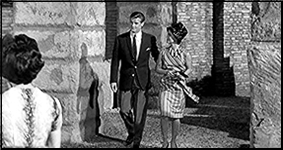
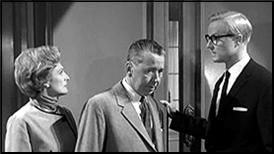
HOUSE BY THE RIVER. Republic Pictures, 1950. Louis Hayward, Lee Bowman, Jane Wyatt, Dorothy Patrick, Ann Shoemaker, Jody Gilbert. Based on the book by A. P. Herbert (Methuen, UK, 1920; Knopf, US, 1921). Director: Fritz Lang.

   House by the River is a prime example of a Victorian melodrama and/or Gothic noir. It has its flaws, but with an outstanding cast and Fritz Lang at the helm, it overcomes its lack of a substantial budget to become a movie that more than holds its own today. (Maybe even more so. Bosley Crowther of the The New York Times panned it, quite oblivious to what most moviegoers see in it today.)

   I do not know much about Fritz Lang’s career, and why he was working for the less than stellar Republic Pictures at the time (1950), but the moody atmosphere of death by misfortune (“accidental” strangulation) of a young housemaid by her employer (Louis Hayward) when she refuses his advances — and the aftermath — is remarkably well done, especially the scenes in which Hayward is frantically looking up and down the river in a small rowboat for the wood kindling bag in which he and his partially lame brother (Lee Bowman) disposed of her body makes this, in my opinion, a must-see for any devoted fan of film noir.

   Whew. Let me take a breath. I didn’t realize that that came out as one long sentence until just now. Louis Hayward at first plays his character, a mostly failed writer, as an urbane cad, and gradually works his way up (or down) to showing his true colors as an unmitigated cad. Lee Bowman had been forced into aiding and abetting him for the sake of Hayward’s wife (Jane Wyatt), only to find most of the suspicion of the crime falling on him.

   That’s the story. You can imagine what happens from this point on, or if not, the movie itself is easily available. Do watch it. I couldn’t give it an “A,” I don’t think, but it’s far better than average.


REVIEWED BY DAN STUMPF:


WHIRLPOOL. 20th Century Fox, 1949. Gene Tierney, Richard Conte, Jose Ferrer, Charles Bickford, Barbara O’Neil, Eduard Franz, Constance Collier. Screenplay by Ben Hecht and Andrew Solt, based on the novel Methinks the Lady by Guy Endore (Duell Sloan & Pearce, 1945).

   Editor’s Note: Before continuing on to read Dan’s review of this film, I strongly advise you go back nine years or so on this blog and read his review of Methinks the Lady, the book by Guy Endore the movie was based upon. You can find it here. Use the reverse arrow on your browser to find your way back, and I hope you will.

               —

   Methinks the Lady was filmed in 1949 as Whirlpool, with a screenplay by Ben Hecht, produced and directed by Otto Preminger as yet another attempt to cash in on the success of Laura (1945), Obce again we get Gene Tierney as the innocent re-shaped by a loquacious Svengali — in this case Jose Ferrar as a quack doctor — and implicated in murder.

   But where Endore’s novel was a Mystery (and so was Laura) we know from the outset that Ferrar is up to something, and we catch on very quickly that he means to frame Gene Tierney for murder. The suspense is in figuring out just how he means to get away with it, and seeing how Tierney will slip out of the web … or if she will…

   Writer Ben Hecht thus turns the book completely inside-out, and he does it to good effect, with neatly-drawn characters and mounting suspense building to an ending that’s plaindamn silly but still lots of fun. Preminger’s direction is elegant as ever, and as for the acting…

   Well, Gene Tierney is surprisingly effective in the more emotional stretches, and there’s Ricard Conte, a strong actor too often wasted in bland parts, here wasted in a bland part. But the show really belongs to Jose Ferrar as the talkative quack, and he makes the story the slimy most of it, exuding an unpleasantness that seems compelling at times without ever engaging audience sympathy. Which I think just the effect they were trying for.


FEMALE JUNGLE. American International, 1955. John Carradine. Lawrence Tierney, Jayne Mansfield, Kathleen Crowley, Burt Kaiser, Bruno Ve Sota, Eve Brent (billed as Jean Lewis). Screenplay by Burt Kaiser and Bruno Ve Sota, based on a story by the former. Produced by Burt Kaiser. Directed by Bruno Ve Sota.

   No matter if it’s only a second- or third-rate movie, you can’t go very far wrong if it begins with a wailing saxophone playing over a darkened street scene, followed by a woman coming rushing out out a neon-lit bar, only to be seen strangled to death, her body left lying in the street.

   This doesn’t leave Eve Brent, in her first movie role, very much screen time, but that fact is mitigated by the presence of Jayne Mansfield in this film, also in her first movie role. Even more significant is the strong performance by Lawrence Tierney in a leading role, that of a drunken police sergeant who’d been in the bar that evening, but who has no memory of what he did for long periods of time while he was there.

   He may even have committed the crime himself. He is not sure, and not knowing is eating away at him. Even though he’s not on duty and has officially been told to go home and sleep it off, he takes it upon himself to do some investigating on his own. The primary suspect is John Carradine, who plays a cultivated but somehow creepy looking newspaper columnist who had escorted the dead woman, an actress, to the premiere of a movie and party afterward earlier that night.

   The story line of the movie is even more complicated than that, however. There is a night club caricaturist involved, and his wife, with whom he has had a fight. And then there’s Candy Price, played by Jayne Mansfield, who appears to be a woman of easy virtue and who lives in the apartment below them. The movie is in black and white, with a lot more black than white, which adds immensely to the pervading atmosphere of hidden motives and underlying menace.

   If this sounds like your kind of movie, it probably is, but I have to add one big warning. The script is not up to tidying up any loose ends that are seemingly tossed aside, even after the movie’s over. The film doesn’t work as a detective story, in other words, which it pretends to be, but as a top notch film noir, it’s aces high.


PHILLIPS LORE – The Looking Glass Murders. Leo Roi #3. Playboy Press, paperback original, 1980.

   The first Leo Roi detective mystery, Who Killed the Pie Man [reviewed here by fellow blogger J. F. Norris], was published in hardcover in 1975 by Saturday Review Books. Nothing further was heard about him until earlier this year when Playboy Press reprinted the book in paperback. It is now fairly obvious that Lore has had a few more Roi stories stored away in a trunk somewhere since then, for two more in the series have suddenly appeared in rapid succession, both as Playboy paperback originals. (So fast, in fact, that I still haven’t seen a copy of what apparently is the second in the series, Murder Behind Closed Doors.)

   Leo Roi is not a private eye, in the strictest meaning of the term, as he himself would gladly tell you. He is an investigative attorney. But as with Perry Mason, there is very little difference. He is also, excuse the expression, filthy rich. I do not mind this. I am only a little jealous, but the continuing details of his home furnishings, his wardrobe, his fleet of automobiles, these I find boring. You know?

   He is married. Happily so, and his wife Christina actively helps him with his cases, They are also actively trying to start a family. This is boring too.

   The case itself is not without interest. A male middle-aged professor has been living with a student, a coed, also very happily. She is murdered (her name is Alice…), and he (his name is Charles Dodo) is accused.

   Leo Roi is slick, and the D.A. is dumb. And I hate books in which the culprit is known by everyone but the reader and he is caught by he simple expedient of placing some human bait in a trap.

   However, any detective who has the theory Leo Roi has about the reasons behind the decline of American society that he expresses on pages 44 and 45 should definitely not stay unread. It’s just unfortunate that the author who wrote that passage doesn’t write very good mysteries.

–Reprinted in slightly revised form from The MYSTERY FANcier, Vol. 4, No. 5, Sept-Oct 1980.


Bibliographic Note:   I did not know this at the time I wrote this review, or I’m sure I would have mentioned it. Phillips Lore was a pen name of Terrence Lore Smith, (1942-1988), who has four books in Hubin under his own name, two with a series character named Webster Daniels, one of which, The Thief Who Came to Dinner, was the basis for the movie of the same title.

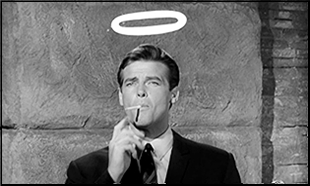
THE SAINT “The Latin Touch.” ITV, UK, 60m, 11 October 1962 (Season 1, Episode 2). Black and white. First shown in the US in first-run syndication, dates unknown, then per Wikipedia, it was picked up by NBC as a summer replacement series in 1967 (in color). Roger Moore (Simon Templar, aka The Saint), Alexander Knox, Doris Nolan, Bill Nagy, Warren Mitchell, Peter Illing, Marie Burke, Suzan Farmer, Robert Easton. Screenplay: Gerald Kelsey and Dick Sharples, based on the character created by Leslie Charteris. Director: John Gilling.

   Wherever Simon Templar goes, he always seems to find someone in trouble to help. In this case, he’s in Rome wandering around the outside the ruins of the Coliseum, when he overhears a young woman arguing with an aggressively over-shady taxi driver about the amount he would like to overcharge her. Solving that problem quickly, he walks off with her, only to be slugged over the head and then waking up to discover she has been kidnapped.

   It turns out that she is the daughter of the governor of Indiana, who is in Rome with his wife on a combination of vacation and trade mission. It is not money the kidnappers want, however, but a reprieve of a deported Mafia boss’s brother about to executed back in the states. Templar, of course, offers to help the distraught parents, but time is not on their side.

   Besides the more than satisfactory performance of Roger Moore, who was still very youthful looking at this early stage of his career, Alexander Knox’s well-defined role as the worried father, caught in a serious bind — choosing between his daughter’s life against that of a hardened criminal — is of special note, as is that of Warren Mitchell as the street savvy cabdriver, the first of three such appearances. And with veteran director John Gilling at the helm, the 60 minutes of running time (less commercials) goes by very quickly.

   With that said, I should also point out the only flaw I saw: I was able to pick up on the final twist a lot faster than The Saint did. That shouldn’t have happened!
   

C. S. CHALLINOR – Phi Beta Murder. Rex Graves #3. Midnight Ink, trade paperback; 1st printing, 2010.

   This one had the allure of featuring a well grounded albeit amateur detective, by which I mean one who’s not a gourmet cookie shop owner first, and a solver of mysteries only as the occasion arises — the case being a locked room mystery to boot. Neither promise was quite fulfilled, but the story was interesting enough for me to stay with it through to the end.

   The detective is Scottish barrister Rex Graves, whose previous two adventures I have not read. (There are now eleven novels and two novellas.) He’s in Florida where his son Campbell is in college, and in whose dormitory another student is found hanged to death in the room directly above.

   The school authorities want this incident chalked up as a suicide — the doors and windows were all locked from the inside — but the boy’s parents ask Graves to learn more, if he can. [Plot Alert] The locked room aspect is not played up, and is eliminated very quickly when Rex obtains some plans of the building and sends Campbell up through the duct work to obtain the dead boy’s computer.

   There is a little bit of hand-waving going on here. How would a visiting father have the clout to obtain such building plans so quickly to be of any use to him? The relationship that exists between father and son is a lot more interesting, and so are the problem Rex has with his love life. His current girl friend is upset that his former lover has followed him to Florida, and when the latter is rejected, she tries to commit suicide herself.

   But I don’t read mysteries in which the love triangles therein are more key to the story than the mystery. Challiner’s writing style is smooth and breezy, but I didn’t find enough at the core of this one to be tempted to read another.

FINGER MAN. Allied Artists, 1955. Frank Lovejoy, Forrest Tucker, Peggie Castle, Timothy Carey. Director: Harold D. Schuster.

   The opening voiceover narration took me back right away to the old time radio show Night Beat, which Frank Lovejoy starred in for two years between 1950 and 1952. His voice was unmistakable: strong, no-nonsense and gritty, perfect for radio and not a bad choice, either, for this full notch better than average crime drama.

   In Night Beat, he played Randy Stone, a Chicago newspaperman who spent his evenings out on the streets looking for human interest stories, and always finding them. He’s on the other side of the law in Finger Man, a three-time loser named Casey Martin who’s caught hijacking a truck one time too many. His only way out of a long prison sentence is to work on the inside to help the cops bring down a multi-state racketeer named Dutch Baker (Forrest Tucker).

   Helping him make a solid contact with Dutch is a girl (a very pretty Peggie Castle) who used to work for him. (Doing what is left unsaid.) Casey thinks the only way to get in solid with Dutch is to act as tough as he can, and that’s exactly what he does. Dutch’s second-in-command, Lou Terpe, played in his usual over the top fashion by Tim Carey, doesn’t convince so easily, with devastating consequences.

   With Casey as solidly caught between the law and the head of the underworld as he is, Finger Man is a late but very solid entry in the category now known as film noir. In spite of budget limitations, it’s well directed and it packs quite a punch. There’s a lot going on in this one, and in my opinion, it’s well worth your time — less than 90 minutes — to sit down, make yourself comfortable, and enjoy it to the hilt.

REVIEWED BY BARRY GARDNER:


W. L. RIPLEY – Storme Front. Wyatt Storme #2. Henry Holt, hardcover, 1995. Brash Books, paperback, 2005.

   As I recall, my comment on the first of this series was “pretty good for what it is” — and what it was, was a typical Spenser/Hawk, Cole/Pike, etc., cowboy story. I seem to like the breed a little less each year, but I’ll still read ’em if they’re decently written, so —

   Wyatt Storme, ex-Dallas Cowboy, Viet Nam vet, and semi-recluse, comes down off his Colorado mountain when an old college acquaintance inveigles him into acting as bodyguard on an illegal weapons deal by hinting at some danger to another old friend of Storme’s.

   The deal goes bad and people are killed, but that’s just the start. Wyatt and his badass friend Chick Easton start looking for answers and find some that threaten not only them but Storme’s relaionship with his lover.

   Well, Ripley still writes cowboy stories, and he still writes them well enough, and there’s not much more to say. He’s quite good on banter and one-liners, but that’s not really enough to carry a whole book. The wisecracking. brooding, semi-tragic hero and his lethal sidekick tak eon the bad guys, kick some righteous ass, kill a few people, and leave the world a better place for us all while the law watches admiringly and from a respectful distance.

   It’s the masculine-machoequivalent of a good cozy, decently done, basically silly, utterly forgettable.

— Reprinted from Ah Sweet Mysteries #18, February-March 1995.


       The Wyatt Storme series —

Dreamsicle (1993) Reprinted as Hail Storme (2015)
Storme Front (1994)
Electric Country Roulette (1996) Reprinted as Eye of the Storme (2016)
Storme Warning (2015)

« Previous PageNext Page »