Reviews


REVIEWED BY DAVID VINEYARD:         


HOLLYWOOD STORY. Universal Pictures, 1951. Richard Conte, Julie Adams, Richard Egan, Jim Backus, Fred Clark, Henry Hull, Paul Cavanagh. Screenplay and story by Frederick Kohener (story as by Frederick Brady). Directed by William Castle.

   A surprisingly good mystery that is a bit plot heavy and would have benefited without Jim Backus’s jovial press agent narration, but otherwise posits a fair Hollywood mystery. Richard Conte plays Larry O’Brien, a successful New York film producer, lured West by money-man and friend Sam Collier (Fred Clark).

   When he goes to visit his new studio, once home of silent films, he discovers it is where famed silent film director Franklin Ferrera was murdered in 1929 in his cabana in an unsolved mystery. Despite being warned off, O’Brien decides to look into the old murder as the subject of his first film and begins nosing around.

   He even hires washed-up screenwriter Vincent St. Clair (Henry Hull) who worked with Ferrara to write the screenplay, and attracts the attention of Lt. Lennox (Richard Egan) who reminds him there is no statute of limitations on murder, and cops might come in handy.

   Not everyone is happy about the case being reopened. Sally Rosseau (Julie Adams) is the daughter of silent star Amanda Rosseau (Adams appears in a dual role but is billed as Julia Adams in it) who was involved with Ferrara and would as soon leave the whole thing in the past with her late mother’s memory. So would O’Brien’s friend Sam Collier, and former male lead Roland Paul (Paul Cavanagh), the latter the suspect whose career was ruined because everyone believed he murdered the director over Amanda. And when someone takes a shot at O’Brien at the studio late at night it seems as if someone is willing to kill to keep the past silent.

   Of course O’Brien and Sally will become romantically involved and secrets that hurt the innocent and the guilty will emerge, including a missing male secretary named Rodale who shows up willing to sell information and turns up murdered in his cheap hotel room.

   Despite the setting, direction by William Castle, Richard Conte in the lead playing at amateur private eye, and black and white photography, this is in no way film noir. Instead it’s a fair mystery with suspects and clues that unfolds more like the kind of thing done later on television on shows like Burke’s Law or Ellery Queen than what you might expect on the big screen from this era.

   There are lulls, the Jim Backus narration is a pointless distraction, and while it is nice to see them, brief cameos by silent film stars like Francis X. Bushman and William Farnum are more awkward than nostalgic, but get past that aspect, and there are actual clues here (the main one not shared with the viewer), a dangerous killer, and even a frame-up of not one but two innocent men.

   It’s a short fairly complex mystery, and if you solve it before the hero, it is likely based more on being familiar with the genre than anything else, and I have to say there is one clue shown early and right out in the open that proves key to unraveling the mystery that is good enough for any mystery.

   In fact the biggest mystery about this one is that they didn’t take that cast and story and make it into a noir. It wouldn’t have taken much effort to make the difference between a decent little mystery film and maybe a very good one. The problem here is that a pretty good idea is actually tossed off by everyone involved.
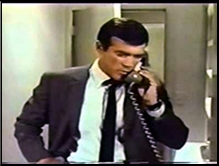
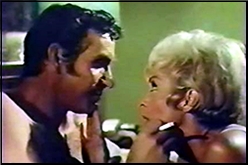
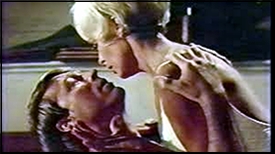
PICTURE SNATCHER. Warner Brothers, 1933. James Cagney, Ralph Bellamy, Patricia Ellis, Alice White, Ralf Harolde, Robert Emmett O’Connor. Director: Lloyd Bacon.

   What this above average little semi-crime drama has going for it most of all can be summed up in two words: James Cagney. An an ex-con looking for a new life, he’s on the screen for most of the movie and in none of those scenes is he sitting or standing still. He’s on the go every minute. Although short in stature, he can make you tired just watching him, as he kids and connives his way around his new career as a news photographer for a sleazy bottom-of-the-barrel newspaper.

   Aiding him in his new life, after he’s dumped the mob he was once the leader of, is Ralph Bellamy as the paper’s sympathetic city editor. Lusting for him — no other word will do — is Alice White, the paper’s “sob sister” writer who — surprisingly enough really is a damned good rewrite person in her own right.

   But Danny Kean (Cagney) has eyes only for the daughter of the cop who ran him in three years ago, and all kinds of complications ensure from this one small remarkable coincidence, the kind that oculd happen only in movies like this.

   Being a pre-Code movie, there some fairly explicit innuendos between Cagney and Miss White, plus some revealing shots of the latter in her lingerie. All the more bonus, you’d have to say, to Cagney’s bold, bravura performance in this one.


REVIEWED BY JONATHAN LEWIS:


THE CONSPIRATORS. Warner Brothers, 1944. Hedy Lamarr, Paul Henreid, Sydney Greenstreet, Peter Lorre, Victor Francen, Joseph Calleia. Based on the novel by Fredric Prokosch (Harper, 1943). Director: Jean Negulesco.

   Marketed on DVD as part of Warner Brothers’s Film Noir Archive Collection, The Conspirators isn’t really what most cinephiles would consider to be film noir. This film doesn’t take us down Eddie Muller’s “Noir Alley” in the way that the grittier Columbia and RKO releases of the late 1940s do. Yes, there’s a protagonist who is caught up in a web of deception and is falsely accused of murder. And there are cinematic shades and shadows thanks to director Jean Negulesco. But the overall flavor of this espionage thriller is more “romance in wartime” than an unforgivably capricious world spiraling out of control.

   Paul Henreid, who in real life was an avowed anti-Nazi, portrays Vincent Van Der Lyn, a member of the Dutch resistance who flees to Lisbon, Portgual. The Gestapo on his trail, Van Der Lyn is set to sail from Lisbon to England where he will rendezvous with the Dutch Air Force. By a sheer happenstance, he ends up getting mixed up with the personal and political affairs of one Irene Von Mohr, a beautiful and mysterious French woman (Hedy Lamarr) married to a Nazi official.

   Throughout the film, both Van Der Lyn and the audience are forced to wonder where Irene’s loyalties lie. It is clear that Van Der Lyn is quite smitten with her. Unfortunately, these romantic scenes are by far the weakest part of the picture, a fatal flaw when the characters’ romance is supposed the core of the film. There’s something so dated, so artificially tender about them. And the dialogue between the two would-be lovers is noticeably forgettable. Casablanca (1942), with its famously quotable lines, this is not.

   If Henreid and Lamarr, the two top-billed stars of the movie, don’t captivate one’s attention, it doesn’t necessitate that The Conspirators isn’t worth watching. Far from it. The supporting cast is, in a word, outstanding. There are some great character actors showcasing their work here. Even though they don’t get nearly as much screen time as Henreid and Lamarr, Peter Lorre and Sydney Greenstreet simply steal the show. Lorre, too short and too “ethnic” to be a leading man in a Hollywood romance, takes the role of Jan Bernazsky, a Polish resistance fighter who discovered an ingenious method to kill Nazis.

   Sydney Greenstreet, reunited once again with Lorre, portrays Ricardo Quintanilla, the ringleader of an anti-Nazi conspiracy. Flamboyant and determined, Quintanilla ends up being a far more compelling character than Van Der Lyn (Henreid). Joseph Calleia, the Maltese born actor who had notable roles in The Glass Key (1942), Gilda (1946), and (later on) A Touch of Evil (1959), likewise overshadows Henreid. He portrays a Lisbon police inspector who is alternatively convinced and skeptical that Van Der Lyn is a murderer.

   These three fine actors, when they are on screen, lend the film a world weariness that serves as a most welcome counterpart to the film’s maudlin romantic elements.


DAN AUGUST “The Murder of a Small Town.” 30 September 1970. Season 1, Episode 2. Burt Reynolds, Norman Fell, Richard Anderson, Ned Romero, Ena Hartman. Guest cast: Ricardo Montalban, John Marley, Anna Navarro. Writer: Robert Dozier. Director: Harvey Hart.

   As a follow up to my review of The House on Greenapple Road, the made-for-TV movie that became the pilot film for the Dan August television series, I have now watched the first two episodes of the series itself.

   The first episode, “Murder by Proxy,” had its moments, but overall was no better than the average cop or PI series of the time. Burt Reynolds acquitted himself well, and perhaps if I hadn’t been looking for them, I might have missed the occasional screen shots in which they asked him to look pensive about the case while at the same time looking a bit like Marlon Brando. (I believe someone pointed this possibility out in the comments to the earlier review.)

   The overall gimmick to the episode and hence (I assume) to the series being that Dan August was now a cop in his own medium-sized home town, a fact which causes him some difficulty, dealing as he must with people he’s known all his life. Now of course it is under totally different circumstances. He, in fact, happens to have had a personal altercation with the murder victim the week before, suggesting to some that he might even be a suspect.

   The story in episode two is very different, and I thought even a bit daring. A strike by the Hispanic orange grove workers in town has gotten ugly, and when an accident to a school bus injures several children, with one small girl killed, all Mexician-Americans, tempers threaten to burst out of control. Anglos vs. Spics, the signs say.

   At opposite poles are John Marley, the owner of the town’s orange groves, and labor organizer Ricardo Montalban, with Dan August right in the middle, especially when it looks as though someone deliberately tampered with the bus’s brake lines. A small plot thread involving a romance between Marley’s daughter and Montalban seems forced and unnecessary, and is thankfully dropped.

   A lot of anger that’s been simmering in the town pf Santa Luisa is shown. This is definitely not your usual TV cop show. While the incident with the bus is resolved, the writers and producers of the show could not solve the larger problem, not even in the hour’s time they were given.

JOHN SPAIN – The Evil Star. E. P. Dutton, hardcover, 1944. Detective Novel Classics #44, digest-sized paperback, no date stated [1940s]. Popular Library #239, paperback, 1950.

   John Spain was an alias for a hard-boiled pulp writer named Cleve F. Adams, who wrote mostly tough PI stories, of which this is not one. Instead its the only book appearance pf homicide detective Steve McCord, who gets mixed up with triplets in this one.

   Their names? Faith, Hope and Charity. Yes. Hope seems to be the bad one. Charity is the one McCord falls for, but the ending is why you should read this one. The twist I spotted on page 125 is pointed out by Faith’s lawyer on page 137, but I never saw the second one coming.


  PostScript:   The Golden Age of Mysteries was really Golden if even a rather ordinary book such as this has an ending that will make your head swivel as much as this one does. Plotting a decent puzzle type mystery is something too many of today’s wriyers seem to think is old hat and old-fashioned.

   If what you’ve been reading lately seems to be missing something, ask yourself if the ending knocked your socks off or not. (Sometimes you can even ask yourself if it made sense.) Too many of today’s mystery writers just don’t have it, in comparison to Agatha, Ellery or the master of them all, Mr. John Dickson Carr, and nobody can tell me they do.

   What’s worse, too many of them don’t have it in comparison to John Spain, who — there’s no two ways about it — was hardly one of the biggest names that the world of mystery fiction ever produced.

–Reprinted in slightly revised form from Mystery*File #16, October 1989.


REVIEWED BY BARRY GARDNER:


WILLIAM MURRAY – Now You See Her, Now You Don’t. Shifty Lou Anderson #8. Henry Holt, hardcover, 1994. No paperback edition.

   This is a series that doesn’t seem to get a huge amount of ink, but nevertheless has made to the eighth book and is still in both hard and soft covers. Murray is a New Yorker staff writer, and has written a number of other fiction and non-fiction books.

   It’s just another season at Hollywood Park and Del Mar for Shifty and his buddy Jay — or at least it starts out that way. Then he meets a girl, a very pretty and elusive girl. She’s involved in PR work for a movie star who owns a racehorse and has political aspirations, but she’s non-committal about just what she does, and she’s gone a lot, and she won’t give Shifty her phone number.

   The movie star is a right-winger involved with a group that has had several prominent members murdered in the past year, and the whole thing worries Shifty more than somewhat. Not as much as it worries him after someone shoots him, though.

   Murray is one of those writers whose books don’t seem to stick in my mind, and I’m pleasantly surprised each time I read a new one by how well he writes. His dialogue is crisp and witty, both on and off-track, and his characters are vividly drawn.

   Shifty is a likable first-person narrator, but I found the plot a bit fuzzy in this one. Some of it was deliberate, but still… It’s a different sort of ending.

— Reprinted from Ah Sweet Mysteries #17, January 1995.


The Shifty Lou Anderson series —

1. Tip on a Dead Crab (1984)
2. The Hard Knocker’s Luck (1985)
3. When the Fat Man Sings (1987)
4. The King of the Nightcap (1989)
5. Getaway Blues (1990)
6. I’m Getting Killed Right Here (1991)
7. We’re Off to See the Killer (1993)
8. Now You See Her, Now You Don’t (1994)
9. A Fine Italian Hand (1996)

Bibliographic Update:   Barry spoke a little too soon there in his first paragraph. This may have been the first book in the series that didn’t have both a hard and soft cover release. In general, that’s a sign that interest in a series is starting to tail off, and sure enough, there was only the one more.

   For those not familiar with the leading character, most sources describe him as a “part-time magician and lifelong horseracing addict.”

REVIEWED BY JONATHAN LEWIS:


FOXFIRE. Universal International Pictures, 1955. Jane Russell, Jeff Chandler, Dan Duryea, Mara Corday, Barton MacLane. Director: Joseph Pevney.

   Is there ever a movie about a mining town that somehow doesn’t involve a mining disaster? I ask because I’m not sure that there is. Or at least there doesn’t seem to be. It’s almost a rule. If you’re going to have a drama, particularly a melodrama, set in a mining town, you’re going to have to have a final act in which there’s a cave-in, an accident, a death, or a horrible something else transpiring in a mineshaft. (For supernatural tales, there’s always going to be a creature lurking in a mineshaft).

   Foxfire, a slightly lurid, slightly campy melodrama, is about as far away from the horror genre as you can get. But it’s set in a mining town – a dying little spot on the map in Arizona to be exact – and sure enough, it involves a whirlwind romance between two mismatched lovers. Jane Russell portrays Amanda Lawrence, a New York socialite vacationing in Arizona. She immediately falls for the tall and hunky Jonathan Dartland (Jeff Chandler), a local engineer consumed with the idea of rehabilitating an abandoned gold mine out in the hills.

   They are divided not only by class, but also by race. Dartland is half-Apache and believes strongly in many of their customs, particularly pertaining to the role of women. He’s also a little bit mean. But then again Amanda isn’t exactly the nicest person either.

   The movie’s view on race relations and the smugness and insular nature of small town 1950s America reminded me very much of Douglas Sirk’s films from the same era. Foxfire, with a strong supporting cast that includes Dan Duryea, Mara Corday, and Barton MacLane, is indeed both a melodrama and a penchant critique of bourgeois societal expectations regarding romance and marriage.

   But it plays in 2019 more like pure camp than like anything one would take remotely seriously. Still, with a particularly effective use of color, it’s a beautiful movie to look at. As Foxfire was the very last American commercial film filmed in three-strip Technicolor, it’s worth a look for the deep saturation alone.


REVIEWED BY DAN STUMPF:         


FRIEDRICH DÜRRENMATT – The Judge and His Hangman. Originally published in 1950 in German as Der Richter und sein Henker. First published in English by Jenkins (UK, hardcover, 1954). First US edition: Harper & Brothers, hardcover, 1955. Also published as End of the Game. Warner, 1976.

END OF THE GAME. Germany, 1975. Original title: Der Richter und sein Henker. Also released as Murder on the Bridge, Deception, Getting Away with Murder and The Monster That Devoured Cleveland. Jon Voight, Jacqueline Bisset, Robert Shaw, Lil Dagover, Friedrich Durrenmatt, Donald Sutherland and Pinchas Zuckerman. Screenplay by Friedrich Durrenmatt and Maximilian Schell. Directed by Maximilian Schell.

   I read Friedrich Durrenmatt’s The Judge and His Hangman back in the mid-1970s and again about 20 years ago, but early this year an attack of severe and prolonged acid reflux recalled it to mind and I thought I’d have another look and maybe check out the film made from it.

   Well, it’s pretty good. Ably constructed, well-translated (see Francis Nevins’ comments on the translation here ) with memorable characters and a tricky plot, plus that little something extra one always looks for in a mystery, and so seldom finds: the quirky element that makes a book stay in the memory and tug at the sleeve of your thoughts every now and again.

   As Judge starts, Police Inspector Barlach has been on the trail of a Master Criminal named Gastmann for 40 years. Barlach is prematurely old, in pain, and dying of gastritis. He’s also a slow, methodical cop, considered old-fashioned by his subordinates, superiors, and especially by the object of his pursuit, Gastmann.

   Barlach has set his best officer on the job of catching Gastmann, and that officer is found dead on the first page. Frustrated, in more pain than ever, Barlach puts his second-best man on the job, only to have Gastmann run circles around him. As the book progresses, Barlach becomes little more than a pathetic stooge for his brilliant nemesis, as the master thief plunders his files, disrupts his work, invades his home and even spirits him away at one point, all with the suave nonchalance and impudent ease of…

   That’s when it hit me that this relationship was eerily like that of The Saint and his frequent foil, Inspector Teal. Gastmann describes himself as “an adventurer roaming the world… driven to taste life to the very last drop….” and he sums things up to Barlach, “…I was always one step ahead of you. Time and again I turned up in your career as a gray spectre. Time and again I was tempted to commit, under your very nose, the boldest, wildest crimes, and time and again you were unable to prove them.”

   Yeah, that’s the Saint and Mr. Teal, all right, and as I remember, Teal used to complain of indigestion a lot.

   But this is a darker, more sardonic view of the relationship, and late in the book, when Barlach finds himself outsmarted once again, there’s a stunning moment when he turns to Gastmann and says, “I have judged you and condemned you to death. You will not survive the day. The hangman I have chosen for you will come for you today. You will recognize him. And he will kill you.”

   And from that point, it moves to a truly chilling climax, capped off by a scene so quirky and unsettling, I found myself re-reading it with genuine pleasure. This is one I mean to come back to, even if it takes another quarter-century. If my tattered paperback lasts that long. Or I do.

   Any movie that features Donald Sutherland as a corpse is bound to be idiosyncratic, and End of the Game is rewardingly so. Stylishly directed, with off-beat casting and a cinematic script courtesy of author Durrenmatt (who plays himself in the film) and director Schell.

   The U.S. release is dubbed, not always well, but has been capably translated — they persist in referring to small semi-automatic handguns as “revolvers” but that’s in the book too, and for all I know may be in the original German text. At least they stick to Durrenmatt’s dialogue. Also, for some reason, Ennio Morricone’s original score was replaced by some of his older compositions.

   Despite this, Durrenmatt & Schell capture that “something extra” perfectly, with images that evoke the author’s word-paintings in colors delicate but vivid. The pacing is fast, and the twists and turns of the plot conveyed visually where it suits best. The scene where the executioner calls on Gastmann crackles with tension and explodes in violence with the kind of flair one sees in Don Siegel and Gordon Douglas at their best.

   As for the actors, Friedrich Durrenmatt seems miscast, but Robert Shaw is dashingly sinister as the master criminal, Jon Voight sharp-eyed and ruthless, and Jacqueline Bisset gives her all to a complex and well-written part. But the big surprise is Martin Ritt as Barlach.

   Ritt did some acting in the early days of television, but only rarely thereafter, and as far as I know, this was his only leading part. And he’s perfect. He plods around looking like a plump Percy Dovetonsils, pot-bellied, phlegmatic and bespectacled, but radiating an innate intelligence that lets us know immediately that this is no Dumb Cop.

   This is not an easy film to find. It took me a month to get a copy in English from a dealer in the Czech Republic, but I have to say it was well worth the effort.


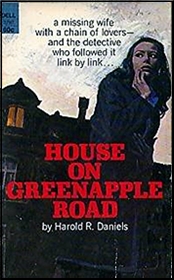
THE HOUSE ON GREENAPPLE ROAD. Made-for-TV movie. ABC-TV, 11 January 1970. Pilot film for the Dan August TV series. Christopher George (Lt. Dan August), Keenan Wynn, Janet Leigh, Julie Harris, Tim O’Connor, Walter Pidgeon, Barry Sullivan, [Peter] Mark Richman, William Windom. Based on the novel by Harold R. Daniels. A Quinn Martin Production. Director: Robert Day.

   I don’t know the background behind the making of this far better than average TV movie, whether it was considered a “pilot” film for a possible series from the very start, or or if after did well in the ratings, and only then, they (the people at the network) decided to see what they could do to take advantage of its success.

   Which I believe it was. For one thing, just look at that cast. Some standard TV stalwarts, to be sure, but some actors whose names were big enough to catch anyone’s attention. True, the production was TV level, not big budget movie level, but it wasn’t running in pinch-penny mode, either.

   Of course when it came time to cast the part of Dan August for the series, they chose Burt Reynolds. I have never seen any episodes of the series, but Reynolds’ usual cheeky if not cocky screen presence is to my mind quite the opposite of Christopher George’s calm and sedate portrayal of the role. (He reminded me at times of Jack Lord in that other series you may know about.)

   Lots of people will remember this one for its opening scene. A young blonde girl, maybe 10 or so, comes skipping home from school, calls out for her mother. No answer. She goes into the kitchen, sees broken dishes all over the floor, and a huge amount of blood smeared on the walls and the refrigerator. No one home, she realizes, and off she goes next door to stay with her aunt.

   Suspicion falls immediately on the woman’s husband, even though there is no body to be found. August’s leisurely investigation, in spite of hurry-up pleas from the mayor himself, turns up the fact that the lady was pretty much a tramp. Flashbacks show in detail the missing woman’s various affairs, giving August plenty of other suspects.

   There is a twist in the story, which is a good one — which includes the possibility that there is no twist, so I’m not giving anything away — and the acting is top notch all around. It’s pretty much a routine investigation, but it’s also one that builds in tension as it goes, and it’s told well.
   

REVIEWED BY JONATHAN LEWIS:


THE RED DANUBE. MGM, 1949. Walter Pidgeon, Ethel Barrymore, Peter Lawford, Angela Lansbury, Janet Leigh, Louis Calhern, Melville Cooper. Based on the novel Vespers in Vienna, by Bruce Marshall. Director: George Sidney.

   For a movie that’s ostensibly about the power of faith to brighten one’s life even in the darkest of times, there’s a surprisingly dark side to MGM’s The Red Danube. Adapted for the big screen from Scottish Catholic novelist Bruce Marshall’s Vespers in Vienna (1947), the movie is fundamentally a character study of one man’s struggle with, and journey toward, Christian faith. But in the midst of that journey there is collateral damage inflicted on another character, and it’s the film’s treatment of that tragic character that left a bitter taste in my mouth.

   Let me explain. Walter Pidgeon portrays a British Army Colonel by the name of Nicobar. Stationed in Rome at the close of the Second World War, Nicobar works closely with three other staff members. There’s the dashing and womanizing Major Twingo (Peter Lawford), the highly efficient, but insecure Junior Commander Audrey Quail (Angela Lansbury), and the goofy Private David Moonlight (Melville Cooper).

   They’re so close that they’ve developed their own rendition of the English nursery rhyme “Row, Row, Row Your Boat,” a song they sing while in the car to Vienna where they are about to begin their next posting. Their task in that city is to liaison with the Soviet occupiers and help them repatriate Soviet citizens back to Russia. A problem arises when Twingo (Lawford) falls in love with Maria (Janet Leigh), a beautiful and mysterious Austrian ballet dancer. As it turns out, she’s not an Austrian at all. Rather, she’s a Volga German, a Soviet citizen of German descent who the Soviets want back.

   As the film is based on a Bruce Marshall work, it’s no surprise that Catholic themes would play a predominant role in the plot. Nicobar may be a good officer, but he’s not a good Christian. In fact, he’s bordering on atheism. It’s quite a shock to his system when he and his team are billeted in Vienna at a convent. Soon enough, he’s butting heads with the outspoken Mother Superior (Ethel Barrymore), whose anti-communism is never once in doubt. She hates the godless Reds and isn’t afraid of offending anyone, particularly those Soviet officers who want to repatriate Maria Buhlen back to the Soviet Union.

   The movie soon devolves from what might have become a Cold War thriller into a religious melodrama. Nicobar is forced to choose between his duty to the Army and his conscience. Should he forcibly repatriate Maria back to Russia against her will, or should he listen to his nascent Christian conscience and find a way to allow her to stay in Austria? Mother Superior, to no one’s great surprise, wants him to answer to a power higher than that of His Majesty’s Government; namely, Pope Pius XII.

   So what of the ugliness that I spoke of at the very beginning? (PLOT ALERT) Well, it’s in how the film ultimately treats Janet Leigh’s character. By far, she’s the most innocent and the least political. Furthermore, we have no idea what her religious beliefs – if any – are. When a bureaucratic nightmare lands her back in Vienna and almost in the hands of the Soviets, she attempts suicide by defenestration.

   Although she doesn’t die immediately, she ultimately succumbs to her wounds. Mother Superior seems more concerned than anything that Maria committed a mortal sin in her suicide attempt and only has moments to plead for forgiveness before passing away. Twingo decides that he will be able to go on living despite her death.

   And because the United Nations ultimately ends the forced repatriation of Soviet nationals, Nicobar’s faith is ultimately restored, pleasing Mother Superior to no end. As the movie ends, Nicobar and his crew are singing “Row, Row, Row Your Boat” as they begin their journey to their next assignment in England. Maria, I imagine, was not on their minds.

   Don’t get me wrong. There are some good moments in The Red Danube. The acting and cast are top notch. But there’s not much in George Sidney’s direction to distinguish the movie from so many other forgettable dramas from the period, and the plot is too overtly political for its own good. Other films dealing with Soviet tyranny such as Night People (1954) (reviewed here) stand the test of time far better than this dated feature.


« Previous PageNext Page »