Reviews


RICHARD STARNES – Another Mug for the Bier. J. P. Lippincott, hardcover, 1950. Pocket #858, paperback; 1st printing, January 1952.

   This is a real peachy detective story. No, really. It is ace newspaperman Barney Forge who tells the story, but it is actually Dr. St. George Peachy, assistant medical examiner in Alexandria, Virginia, who solved this case of the murdered gossip columnist.

   As you could probably deduce from the title, this is a tale told in a breezy, fast-moving style, in a wacky sort of way, but with more than a hint of the grotesque. (And with all of that, it still turns out to be a solidly constructed detective story.)

— Reprinted from Mystery*File #22, June 1990.

       
The Dr. St. George Peachy / Barney Forge series —

And When She Was Bad She Was Murdered. Lippincott, 1950. Pocket #779, 1951.

Another Mug for the Bier. Lippincott, 1950. Pocket #858, 1952.
The Other Body in Grant’s Tomb. Lippincott, 1951. Pocket #917, 1953.

REVIEWED BY JONATHAN LEWIS:


THE V.I.P.S MGM, 1963. Elizabeth Taylor, Richard Burton, Louis Jourdan, Elsa Martinelli, Margaret Rutherford, Maggie Smith, Rod Taylor, Orson Welles, Linda Christian. Director: Anthony Asquith.

   When he’s at his best, Richard Burton is the type of actor that I can just watch and wonder in amazement: how does he do it? How does he convey such raw energy and emotion merely by the cadence of his voice, by his posture, and by the fire in his eyes?

   There are some quiet moments in MGM’s The V.I.P.s in which Burton gets to showcase his talent, scenes in which for all practical purposes he overshadows his co-stars Elizabeth Taylor and Louis Jourdan. But unfortunately, the overall script of this drama/romantic comedy hybrid never allows for Burton’s character to develop naturally. Indeed, the film’s halfheartedly optimistic ending – one I won’t give away in this review – ends up wasting Burton’s investment in developing a character who never gets to complete his story arc in a compellingly realistic manner.

   Burton portrays British millionaire Paul Andros, a man who believes that he can obtain whatever he wishes with his checkbook. And for a while at least, it seems that he has gotten what he wanted, including a beautiful actress as a wife. But Frances Andros (Elizabeth Taylor) has her own agenda. After over a decade of marriage, she is ready to leave him for the wastrel playboy Marc Champ drops Frances off at Heathrow, unaware that she is about to travel to New York to elope with Champselle.

   The film follows the conflict between the couple, as well as between Andros and Champselle, while they wait at the airport as a fog delays all flights out. Also stuck on the ground: an Australian-British businessman (Rod Taylor) and his love struck secretary (Maggie Smith); a tax dodging film producer (an oddly cast Orson Welles) and his newest star (Elsa Martinelli); and the The Duchess of Brighton (Margaret Rutherford), the latter a character introduced solely for the purpose of comic relief.

   There are some very good moments in the film. Most of them are in dialogue or in snippets of conversation when the uber schmaltzy Miklós Rózsa ceases to overwhelm what’s on screen.

   Burton and Taylor would later appear in numerous films together, but The V.I.P.s was their first. The movie apparently did quite well at the box office, largely helped by the hype generated for the forthcoming Cleopatra (1963). From the vantage point of 2017, however, The V.I.P.s has an Old World charm, a sense of cinematic innocence that would be shattered later in the decade with the arrival of the New Hollywood auteurs.

   The best moments in the film are those played with pathos and raw emotion (watch for the brief, but incredibly well constructed dialogue between Burton and Maggie Smith), but my sense is that the audiences who flocked to this one may have been more enthralled by the spectacle and the unforgivably maudlin ending than by the anger and fury projected by Burton’s character in the far better first hour of the movie.

REVIEWED BY DAVID VINEYARD:


E. PHILLIPS OPPENHEIM – Matorini’s Vineyard. Hodder and Stoughton, UK hardcover, 1929. Little Brown & Co, US, hardcover, 1928.

    “Mr. Amory,” the Princess continued, “is the English tennis player who has been the subject of so much discussion between us all — the young man, you know, who had the ill fortune to have been placed at the same dining table as the man Uguello, the night he was murdered in the Blue Train. Signor Torrita’s official position at Rome is well known, Mr. Amory, although perhaps in your absorbed life you may not have heard it. He is the Chief of the Italian Secret Police.”

   And there is a fairly succinct summary of the chief problem facing Mervyn Amory, the young tennis player mentioned, in this typical novel of high level intrigue and low down skullduggery from the pen of the Prince of Storytellers, E. (Edward) Phillips Oppenheim, whose bestselling works influenced John Buchan, Dennis Wheatley, and Ian Fleming, and at least in a backhanded way Eric Amber and Graham Greene.

   Signor Uguello, the victim was a member of the Red Shirts, an anti- Fascist group opposed to the dictator of Italy, Matorini and his Black Shirts (Matorini is Oppenheim’s stand in for Benito Mussolini, here, and in The Evil Envoy), who passed on vital information to the young Englishman as dying men are wont to do in spy fiction.

   At stake, another world war as the ambitious Marorini poses troops on the French border to retake territory seized almost a century earlier and the French are having none of it. Complicating things for young Amory is la Comtessa, a beautiful young companion of the Princess mentioned above who would seem to be a supporter of Matorini and his Black Shirts.

   I suppose Oppenheim is rather stilted and old hat by modern standards, but I still find him entertaining to read, and this is one of his better spy stories much of it played out on the Riviera where Oppenheim kept his yacht and its constant supply of attractive young men. In the end, common sense prevails, though it takes the combined forces of the British and American fleets to see that it does.

   Granted the view of Matorini is romanticized, something not uncommon for the era before Hitler entered the picture as the other Fascist leader, but this isn’t history however much Oppenheim strived to give that impression, the background merely the excuse for the intrigue.

   You can’t be too hard on a writer for not being prescient. Ted Bell made much the same mistake not too long ago about Vladimir Putin in Tzar.

   Spy novels were actually a fairly small part of Oppenheim’s output which ran from detective and crime fiction to romance and embraced no small number of amateur sleuths and amateur criminals from his start in the Victorian Era to his last book in 1940 (The Last Train Out). He managed to stay on bestseller lists for a goodly portion of that output, his works appearing in the best magazines, often with handsome illustrations by the best illustrators, and much admired.

   If his elegant ladies and gentleman, diplomatic and ministerial level intrigue, and old world gentility is out of fashion today, it laid the foundations for the modern spy story, born in the middle of Piccadilly Circus in 1910 in John Buchan’s The Power House. In the right mood, and with a little forgiveness he is still worth reading today, still a prince of if not the prince of storytellers.

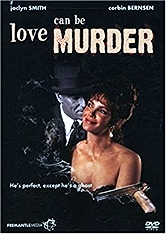
LOVE CAN BE MURDER. Made-for-TV. NBC, 14 December 1992. Jaclyn Smith, Corbin Bernsen, Cliff De Young, Tom Bower, Anne Francis. Director: Jack Bender.

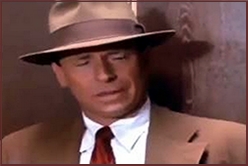
   Some viewers may rate this as the cinematic equivalent of cotton candy, but I enjoyed it, and I make no apologies about it! That it has to do with Los Angeles and private eyes may have something to do it, with a wink and a nod to the late 1940s when PI’s had to wear fedoras and be swift with the wisecracking repartee. In fact, I’m sure it does.

   In this film Jacklyn Smith, always to my mind the most beautiful member of Charlie’s Angels, plays Elizabeth Bentley, a lady lawyer who has a problem. She’s bored with both her job and her earnest but very dull fiancé. What does she do? She quits her job and decides to become a private investigator.

   Her first case? The ghost of the PI (Corbin Bernsen) who haunts her new office. It seems that he was killed in a phony automobile accident back in 1948 when he was on a case, one that was never solved. By some sort of rule or regulation that governs such matters in the hereafter, he cannot move on until the case is solved. And all of sudden Ms Bentley has a new partner, one that only she can see.

   I have to admit that the case is not all that interesting, though there is at least one decent twist to it before it is solved, and maybe two. No — and of course we are moving into present day Hallmark territory here — the fun of this film is watching a romance grow, complete with lots of humor, witty patter and a huge wardrobe for Ms Smith. A romance, mind you, that unless there is some fine print at the bottom of the page of rules and regulations that govern such matters, does not have much of a future to it.

   The TV reviewer for the Los Angeles Times liked it, saying that “The production is loaded with charming nostalgic touches…” with a “kind of Nick-and-Nora flavor,” but an anonymous reviewer for People magazine gave it a D plus. I lean far more toward the former than the latter.

IT IS PURELY MY OPINION
Reviews by L. J. Roberts


M. J. TROW – The Island. Grand & Batchelor #4. Crème de la Crimem hardcover, January 2018. First published in the UK, 2017. Setting: Maine, 1873.

First Sentence:   The quarter-moon did little to light Summer Street that night in Boston.

   Investigators Matthew Grand and James Batchelor have travelled from England to Grand’s extensive family home on the coast of Maine for the wedding of Grand’s sister, Martha. Friends and family gather, including the surprise appearance of a cousin who hasn’t been seen for fourteen years. A greater surprise is the dead body found in an upstairs bedroom which leads to the question of what the tie is to the family.

   An interesting beginning informs one as to where the story is going; or does it? What is does, however, is provide introductions to the protagonists and their profession. One thing which is a bit rare, but is refreshing, is to show the vulnerable side of one of the men. The transition from Batchelor and Grand to their housekeeper, Mrs. Rackstraw, is also nicely done. She is such a delightful character.

   Trow’s style is subtle and often humorous. He slides in information, from location descriptions— “The docks at Southampton had not been conducive to chatting and Batchelor didn’t get a change to share something the Grand until they were in their laughingly called stateroom, in which a cat would be totally safe from being swung.” —to family structures— “My mother comes from a family of eight girls, thought I doubt they’ll all come to the wedding. Four of them are dead anyway, and one is in Wisconsin, so as good as. Auntie Mimi is as mad as a rattler and doesn’t travel.” The inclusion of Samuel Clemens (aka Mark Twain) as a character is a wonderful touch.

   It’s also a nice touch that, despite having been introduced to a myriad of characters, the murder victim is unexpected. Which also means the motive is as much a mystery as is the killer

   The truest sign of an author with an exceptional voice is that one has a desire to quote nearly every page. Trow is one of the few authors who can write parallel conversations—conversation held by two sets of characters at the same time in different places, without any confusion as to the speakers — and get away with it.

   He has a wonderful way of evoking the senses— “He had never known it before, not in London, but it really was possible, he realized to smell the spring. There was a green smell in the air, the smell of sap on the rise, alongside the sound of buds creaking with the effort of bursting. He felt he could almost smell the warmth of the sun …”

The Island is filled with humor, and excellent characters, plus there are murders; violent ones. It is a rare instance when one can call a mystery a delightful read.

— For more of LJ’s reviews, check out her blog at : https://booksaremagic.blogspot.com/.


       The Grand & Batchelor series —

1. The Blue and the Grey (2014)

2. The Circle (2016)
3. The Angel (2016)
4. The Island (2017)

REVIEWED BY BARRY GARDNER:


ED McBAIN – There Was a Little Girl. Matthew Hope #11. Warner, hardcover, 1994; paperback, 1995.

   I thought the last Matthew Hope book — Mary, Mary — was poor in just about every respect. I’d enjoyed the series in the past, though, and thought I’d try another. Anybody’s entitled to an off day.

   As the book opens, Matthew Hope is shot twice by an unknown assailant as he emerges from a bar in the Newtown section of Calusa, Florida. He’s rushed to the hospital in critical condition and is stabilized, but in a semi-comatose condition.

   The police and his friends and associates begin to try to backtrack him to find what could have led to the shooting, and find only a real estate deal. Hope was acting as agent for a circus owner to try to buy some privately owned fairgrounds as a permanent home for the circus. Can this seemingly innocuous transaction be the rationale for an attempted murder? Yep. Sure can.

   This is an interesting departure from the norm in terms of structure. The story is told by a combination of flashbacks via the semi-comatose Hope and the actions of his friends and associates as they investigate his shooting.

   The narration segues from one into the other and back, and it works well. McBain does his usual competent job of writing smooth, readable prose, and a good degree of tension is maintained both as to Hope’s condition and finding the killer.

   The circus background was interesting, too. Little Girl goes a long way toward recapturing the form McBain showed in the early Hope stories.

— Reprinted from Ah Sweet Mysteries #15, September 1994.

JAMES E. MARTIN – The Flip Side of Life. G. P. Putnam’s Sons, hardcover, 1990. Avon, paperback, 1991.

   Cleveland-based PI Gil Disbro’s second case involves a missing college professor and his son, who may be the victim of grandparental kidnapping. There are also three murders before the book is finished, so all in all, in spite of the price tag [$21.95], you do get your money’s worth.

   Martin writes with nice clean prose, nothing too elegant, but he keeps the story moving. Some introspective passages, mostly with his live-in lady, add a bit to his character. It’s pretty good as a detective story too, even without a big surprise at the end.

— Reprinted from Mystery*File #22, June 1990.

      The Gil Disbro series —

The Mercy Trap (1989)
The Flip Side of Life (1990)
And Then You Die (1992)
A Fine and Private Place (1994)

DECOY. Monogram, 1946. (Miss) Jean Gillie, Edward Norris, Robert Armstrong, Herbert Rudley, Sheldon Leonard, Marjorie Woodworth, William Self. Screenplay by Ned Young, based on a story by Stanley Rubin, adapted from a radio play broadcast as an episode of The Whistler. Director: Jack Bernhard.

   This rather bizarre excursion into sci-fi noir is, according to some critics, the best movie that Monogram ever made. I wouldn’t go that far, but it has its moments. Based on an actual fact, though, stretched to its limit and quite a way beyond, it has to do with reviving a hardened criminal after being successfully put to death in the state of California’s notorious gas chamber. (There is a drug that is an antidote to cyanide poisoning, but no, it doesn’t work once the victim is already dead.)

   That’s the extent of the sci-fi content, and again no, that’s not why this movie has become to many a cult classic. Unavailable for many years, except as a scattering of film conventions, the real reason this movie has so many fans is its starring lady, British-born Jean Gillie, whose American debut this was. As far as femme fatales in noir film go, she is the fatalest. There is $400,000 of stolen money at stake, and she is absolutely determined to get her hands on it, no matter how many men she has to seduce and betray along the way.

   For a film made in 1946, there is a lot of violence in this film, but thinking back, most of it is not shown on camera. You may think so as you’re watching, but not so. Even so, when Monogram released the movie to TV, one scene of Margot Shelby (Gillie’s character) backing up and driving over her erstwhile boyfriend two or three times was cut so that it happens only once. Or so I’m told. This latter version is the one, alas, that’s now available on DVD, perhaps the only one in existence.

   The acting is mostly fine, the sets are solid and often extremely effective (such as the opening scene as the doctor who had previously succumbed to Gillie’s character’s charms looks in a mirror at his battered and disheveled self in a ratty gas station restroom). And the final scene, one in which Margot stays true to herself to the end, is one you will long remember.

   Trouble is, Margot is such a one-dimensional character you have to do a science-fictional “suspension of disbelief” to swallow the fact that such an amoral person could exist. Given that, as well as the cornerstone sfnal concept at the core of the film, and I think you’ll enjoy this movie as much as I did.

REVIEWED BY DAN STUMPF:


GARY JENNINGS – The Terrible Teague Bunch. W. W. Norton & Co., hardcover, 1975; trade paperback, 1980. Avon, paperback, 1982.

   Drop what you’re doing and go out and get this. I mean it. Waste no time. Don’t read another word here, don’t touch that mouse, just put down the piano and get this book. I’ll wait here till you get back.

   Okay, while everyone else is gone, I’ll fill you in on the back-story of how I came to read this. It’s long and not very interesting, but I’ll tell it anyway.

   Back in 1975 when we were a young married couple, my wife worked at a public library (and aren’t you glad we already have public libraries? Can you imagine trying to get an idea like that through Congress now?). Whenever I picked her up for lunch or dinner, I used to browse through the books a bit. Or more than a bit, which is how I saw this book, 43 years ago, but for some reason I never checked it out.

   Okay, so fast-forward four decades and odd-change, to last week, when my favorite used-book store went out of business and I went in to scarf up some bargains. At one point I sat down to take a break on the only chair they had there for public use, tucked into the section on Railroad books. I have no interest in Railroad books, but as I sat there, my eyes lighted on the easy-to-read spine of The Terrible Teague Bunch. I didn’t recognize the title, but I figured I might as well look at it till my legs quit hurting, and as soon as I read the jacket-flap, I recognized it as that book from long ago I never got around to.

   â€œYes, fate or some mysterious force can put the finger on you or me for no good reason at all.”                       — Detour, 1945

   So if everybody’s back now, I’ll go on to talk about The Terrible Teague Bunch. It’s a magnificent shaggy-dog-story of a Western about two cowboys, an oil well rigger and a Cajun swamp logger who decide to rob a train and spend most of the book just trying to get to the railroad with a meager herd of mangy cows.

   Along the way they have to deal with swindlers, swollen rivers, bellicose Baptists and a tornado, but that’s only part of the story. There’s also a thread about a woman who was captured by Comanches twenty years ago, trying to make her way in the world with a mixed-race daughter, and ….

    … and I’m not going to tell much about the rest, because it would spoil a good story. I will say that the tale is told with a wry, sharp sense of humor that had me laughing out loud in places, and it quickly becomes apparent that these guys are just too damn nice to rob a train. At which point I thought I could see the ending coming, but I was wrong.

   The last third of Teague turns grim, all the more so because the jokes keep coming, and from characters we really care about. This is writing of a high order, and more than that, it’s fun to read — a LOT of fun! Check it out now and thank me later.

REVIEWED BY DAVID VINEYARD:


THE ADVENTURERS. Gravity Pictures, China, 2017. Original title Xia dao lian meng. Andy Lao, Jean Reno, Zhang Jingchu, Qui Shu, Tony Yo-ning Yang, Eric Trang, Yi Sha. Co-Written and directed by Stephen Fung.

   The setup for this exciting heist film is the oldest of cops and robbers cliches, the tough obsessed cop vs the clever thief. A thousand variations of the story have been told from Les Miserables to Arsene Lupin, but this one wisely relies on action, high tech, gorgeous locales (Paris, Cannes, Prague, Kiev — the latter not so gorgeous), and a bit of character development rather than try to ring any changes on the standard tropes.

   Dan Zhang (Andy Lao) is just out of prison. He was captured while stealing a rare jewel, one part of a fabulous set known as Gaea, when he stopped to rescue Inspector Pierre Bissette (Jean Reno) from a burning police car, and a mysterious motorcyclist ambushed him, knocked him unconscious, and stole the jewel.

   In short order Dan eludes Bissette and is off to Cannes where the second part of the Gaea set is up for auction. Reunited with his friend and computer geek partner Po (Tony Yo-ning Yang) for the heist they are also joined by a third new team member, Red (Qui Shu) a kick ass young woman of invaluable skills.

   The heist goes off without a hitch despite Bissette’s presence, and Dan and Po are off to see the fence who befriended and taught Dan all he knows, Kong (Eric Trang), who presents Dan with the tongue of the thief who hijacked the jewel five years earlier, and informs Dan that his fiance, art appraiser Amber, was the one who turned him into the cops. Dan still loves her though, and can’t really blame her.

   The cost of retirement is high, and with the money Kong spent on revenge taken out of his payment, Dan agrees to one last heist, the third and final part of the Gaea set the Rope of Life, owned by wealthy Charlie Lo (Yi Sha) who keeps it in his castle outside Prague.

   Meanwhile Bissette, under pressure to capture Dan, and with his own demonsdriving his pursuit (his father was a thief) is joined by Dan’s fiance Amber (Zhang Jingchu) to try and track Dan’s next heist down.

   â€œHe’s the worst kind of thief,” Bissette tells Amber, “one with ethics and integrity. If I don’t get him now I never will.”

   It will be a surprise to no one that there is more going on than this, crosses and double crosses, betrayal, and subtle reminders that Dan and Bissette are more alike than different spice up the heist and its aftermath. Finally, with Amber taken hostage Dan must team with Bissette, and he and Po travel to Kiev in Russia where Gaea is to be sold, and all the scores settled in a clever finale.

   A clever metaphor for the plot and action are the Russian style dolls Kong makes for a hobby, revealed layer beneath layer until the truth is uncovered. No new ground is broken here, but it is great fun, better acted than usual, and with enough car chases, narrow escapes, neat gadgets, and reversals of fortune for two or three Bond movies enhanced by a solid script (co-credited with Lao as Andy Lo and others) and direction.

   Reno doesn’t have a lot to do in the mostly Chinese cast, but he adds weight to the story, and wears the cliches of his character like a bespoken suit. His Inspector Bissette is a lonely man who talks to the bugs in his apartment and has been passed over for promotion because of his failure to capture Zhang, but he is human and capable rather than the usual cartoon policeman of the cliché.

   Of course as usual there are some things you just have to take on faith they are so outside the realm of possibility, but if you are willing to give an inch, The Adventurers will brighten any evening.
« Previous PageNext Page »