Reviews


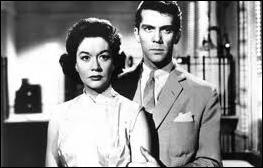
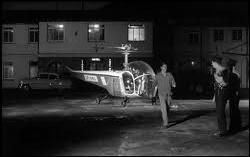
CRY DANGER. RKO Radio Pictures, 1951. Dick Powell, Rhonda Fleming, Richard Erdman, William Conrad, Regis Toomey, Jean Porter, Joan Banks, Jay Adler. Director: Robert Parrish.

   This was the next to last of the black-and-white crime movies that Dick Powell made, and it’s the last if you don’t count The Tall Target, released later the same year. I wouldn’t call Cry Danger a noir film, unless you define a noir film by style rather than content. It’s a crime film, but with the lighting and semi-sleazy setting of a film noir, with characters to match, but without the sense of inevitable doom that some viewers feel that a true noir requires.

   But why quibble? It’s a crime movie that’s a lot of fun to watch, and if you do, be sure to obtain a copy of print recently restored by the UCLA Film & Television Archive. The picture quality is sharp and clear, showing us once again that the people who made black-and-white movies back before color took over completely knew exactly what they were doing.

   Dick Powell plays Rocky Mulloy, a guy who’s just been released from prison after five years. A witness has surprisingly shown up and given him an alibi for the time of the robbery and murder.

   Not as lucky is his friend Danny Morgan, who’s still in jail for the same crime. Richard Erdman plays Delong, the fellow who supposedly cleared Rocky, but in reality has given himself an opportunity to obtain a share of the missing loot, just as he’d planned.

   While Rocky, who really was innocent, tries to clear his pal still in jail, the two of them hole up in a rundown trailer court in an even more rundown trailer. Danny’s wife (Rhonda Fleming) lives in the same court, as does Darlene (Jean Porter), a blonde bimbo who also has the nimble fingers of a skilled pickpocket. She and Delong get along just fine, sort of, in a serio-humorous kind of way.

   I should also mention Castro, the bookie who Rocky is sure planned the robbery. He’s played in super sleazy fashion by William Conrad, who like Raymond Burr made an early career for himself playing characters just like this.

   The dialogue between Rocky and Delong is sharp and witty, and very nearly worth the price of admission in itself. Add the two ladies to the mix, along with Castro and a cop (Regis Toomey) who doesn’t believe a word of Rocky’s alibi, and you have a story that can easily suck you in without letting go.

   Of the players, I think Rhonda Fleming is the least believable She’s simply too good-looking to be the wife of anyone in a movie like this. As for Dick Powell, he certainly knew what he was doing when he made a such a sharp turnaround in his career, and started making movies like this.

Reviewed by JONATHAN LEWIS:         


COWBOY FROM BROOKLYN. Warner Brothers, 1938. Dick Powell, Pat O’Brien, Priscilla Lane, Dick Foran, Ann Sheridan, Ronald Reagan. Director: Lloyd Bacon.

   Dick Powell is at his comedic best in this predictable, yet light and amusing musical comedy about a guy from Flatbush, Brooklyn pretending to be a singing cowboy. Directed by Lloyd Bacon, Cowboy From Brooklyn has an innocent charm to it, allowing us to see Powell as a gifted physical comic, rather than as a hard-nosed film noir man with a gun.

   Powell portrays Elly Jordan, an aspiring singer and a man deathly afraid of animals, big and small. On his way to California with his band, Jordan takes a detour in Wyoming and ends up spending time at a local ranch where he befriends the lovely cowgirl, Jane Hardy (Priscilla Lane) who teaches him how to talk like a cowboy.

   Pretty soon, Jordan’s dressed up like Roy Rogers and singing ballads. Then, out of the clear blue sky, talent agent Roy Chadwick (Pat O’Brien) and his assistant, Pat Dunn (Ronald Reagan) show up and pretty soon Elly Jordan is transformed into singing cowboy star Wyoming Steve Gibson!

   At a running time of an economical seventy-seven minutes, Cowboy from Brooklyn doesn’t have all that much depth to it. There are some hilarious moments, however, with nearly perfect comedic timing. This is the type of comedy that makes you like comedies — fast-talking, wisecracking characters running amok. It’s a timeless story about a fish out of water, a man pretending to be someone he’s not for money and fame, and a rather innocent love story all lassoed together.

SILVERFOX. ABC, 6 July 1991. 60min. James Coburn (Robert Fox), Julia Nickson-Soul, M. Emmet Walsh, Jillie Mack, Leigh Taylor-Young. Story: Chris Abbott, Tom Selleck & Chas. Floyd Johnson. Director: Rod Holcomb.

   This is one busted TV series pilot that had some potential, or at least the basis for some. The idea and the leading player were fine. In terms of what made it onto the air, one time only, it’s the story and the execution that misfires, and badly. It was billed as The ABC Saturday Night Movie, but according to the review in Variety, it ran only from 10 to 11 pm, which matches the length of the copy I have.

   Which was long enough to tell that the series wasn’t going to be going anywhere. James Coburn is the star, obviously, and he’s definitely not the problem. The concept is not bad, either. He plays a spy who’s been number one in the game all his life, but now that he’s getting older, does he want the comfort of a desk job, or does he want to put off retirement for just one more job?

   And frankly, I didn’t really understand what the job was. Something to do with a murdered gangster and some plates for counterfeiting Japanese yen, but other than the young Asian agent named Shimoi Chen he teams up with (Julia Nickson-Soul), I really didn’t put any other names and faces together. A story that’s strictly by the numbers tends to do that to you.

   As a younger actor, James Coburn I often found a little too smug and cocky to enjoy his performances, although to be honest, I may have changed too. As Silverfox in this film and at the age of 63, he had mellowed a lot, and I found him relaxed and easy-going and playing a role he was meant to play, at least at that time of his career.

THE BACKWARD REVIEWER
William F. Deeck


MAX MURRAY – The Doctor And The Corpse. Michael Joseph Ltd, UK, hardcover, 1953. Farrar Straus & Young, US, hardcover, 1951. Detective Book Club, US, hardcover reprint, 3-in-1 edition. Penguin Books, UK, paperback, 1957.

   If you should know rich, nasty, and hateful old men or women, suggest to them that the reading of mystery stories might be salubrious. With the wisdom gained from that reading, they might reconsider plans to surround themselves with people who have reason to despise, loathe, and hate them, and maybe desire their money.

   They may even pause in their attempts to make additional enemies. No one gave that advice to the unpleasant wealthy man in this novel, and he blithely creates more enemies. What is worse, he does it in a closed environment — that is, aboard a cruise ship.

   The corpse in this novel, before he becomes a corpse, of course, sends a note to the Singapore police, where the ship is temporarily anchored, telling them he has reason to believe there is a murderer aboard. Indeed there is — his.

   The police arrive in the person of Inspector Michael West to interview the note writer, who just a bit earlier had taken poison, unwittingly. West is thus limited to interviewing the living, which he does rather desultorily, in my opinion, and mildly. Interrogation is not for him, for he is a gentleman. Conversation has to suffice.

   The case is admittedly a difficult one, with so many suspects, but West really never seems to buckle down to a thorough investigation. His conscience says let the ship sail, as the man’s death was fully justified. His sense of duty says carry on and capture the culprit. It’s a dilemma he never satisfactorily resolves, though the person responsible ultimately confesses.

   For those who worry about such things, West gets the girl in the end. I was not aware he was interested in her. Nor was I aware that she was interested in him. I was tempted to go back and see what I had missed, but I resisted the temptation, which was not that strong anyhow.

   The novel is competently written, and there are a couple of interesting characters.

— Reprinted from CADS 20, 1993. Email Geoff Bradley for subscription information.


Reviewed by DAVID VINEYARD:          


TIME LOCK. British Lion Film Corporation, UK, 1957; Robert Beatty, Lee Patterson, Betty McDowall, Robert Ayres. Screenplay by Peter Rogers, based on the play by Arthur Hailey. Directed by Gerald Thomas.

   Mediocre acting, claustrophobic sets, no production values, trite dialogue, short running time, this film is little more than a television episode with an attitude, all of which begs the question, why is it so damn suspenseful

   Based on a play by Arthur Hailey (Runway Zero Eight aka Zero Hour , Airport, Hotel) the entire story takes play just before the weekend as accountant Lee Patterson’s little boy wanders in and gets locked in the vault of a small Canadian branch bank on his birthday. The time locks are set for 63 hours and can’t be opened. The boy can’t possibly survive that long with only 500 square feet of oxygen. The vault cannot be broken into or forced , and the only man who can open the safe just left on a fishing trip.

   With a little money, a better cast, and production values higher than a high school play the team responsible for some of the “Carry On” films could have done better, but none of those things are present, and the acting is uniformly one note, and a sour one at that.

   But this film gets under your skin. Despite the bad acting and trite script, despite the lack of production values, despite the by rote suspense, the damn film gets under your skin and keeps egging you on until there is real relief in the final moments of the film.

   It may be the best amateur bad professional movie ever made.

   No one comes off looking too good here, but there is a young Sean Connery, who at least can act more than anyone else in the film, as a welder battling to cut into the vault in time to save the boy and knowing it is an impossible job. You might not predict a great career for him based on this, but he does show screen presence, which no one else in this film has.

   Robert Beatty could act, and Lee Paterson has some charm, neither of which shows here, but as you sit cursing the production values and acting you will still be wracking your nerves waiting to get the kid out of that damn vault. How a really inept bad movie generates that much suspense is a mystery someone else will have to solve.

A FORGOTTEN TV SERIES REVIEW
by Michael Shonk
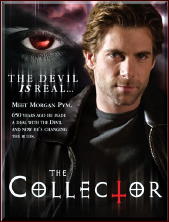
   

THE COLLECTOR. Syndicated: Canada, A No Equal Entertainment Inc Production, 2004-2006. 40 episodes, 60 minutes each. Cast: Chris Kramer as Morgan Pym, Carly Pope (Season One and one episode of Season Two) Sonya Salomaa (Season Two and Three), Aidan Drummond as Gabe, Christine Chatelain as Taylor Slate, Ellen Dubin as Jeri Slate, Andrew Jackson as Danny Hullstrom and Ona Grauer as Katrina. Creators and Executive Producers: Jon Cooksey and Ali Marie Matheson. Executive Producer: Larry Sugar.

   After several centuries of collecting souls for the Devil, Morgan Pym convinces The Devil to let him have 48 hours to help the client redeem their soul before the Devil takes them.

   Most forgotten series are forgotten for a reason, but The Collector is one of those few that deserved a better fate. Apparently it did not make a deal with the Devil since the series lasted a too short three years instead of the standard Devil deal for ten years.

   Morgan Pym was originally a 14th century monk who breaks his vows when he falls in love with Katrina, a woman in the village. When Katrina dies of the plague, Morgan sells his soul for her to return to life, only to see her die a second time ten years later. This time the Devil offers Morgan the chance to be his first collector of souls.

   When Morgan would get a new client from the Devil, he would have forty-eight hours to help the client redeem his or her soul. Time limits are a good device to increase suspense and tension in a drama, but The Collector went further.

   Morgan did not always win, some times he did not want to save the soul but to hurry the client to Hell for the sake of others, some times the Devil would distract him or trick him from his goal. All of this made for something rare in a weekly TV series — the viewers never knew how each episode would end.

   Not only were the endings uncertain, the episodes varied from comedic to theological to tragic to mystic to historic to almost any type of drama. The Collector was less interested in religion and more about the human condition. The series focused on questions such as why the client sold his or her soul, how the Devil used the request to increase the suffering of others, and how can the client with Morgan’s help redeem themselves in less than 48 hours.

   The acting and production values were generally average, with star Chris Kramer one of the weakest parts of the series. But the characters and the depth of each backstory were a major strength of The Collector.

   For the most part, each episode told a separate and complete story featuring the client of the week. However, some stories took time out from the main story to explore a subplot involving a young, apparently autistic boy named Gabe.

   The series takes place in modern day Vancouver. Morgan lives in a rundown apartment building and has a time traveling motorcycle in his room. Now a servant of the Devil, he has a very human like love/hate relationship with a God who let the love of his life die (twice).
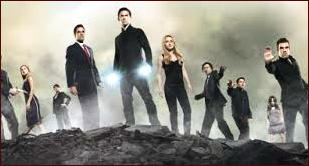
   His neighbor neurotic Maya is a junkie who falls for Morgan in Season One. Morgan tries to help her get her life together but still mourns for Katrina and resists a romantic relationship with Maya. In the first episode of Season Two there is a surprise dramatic twist that results in a new actress taking over the role. Maya and Morgan’s relationship would continue to grow more serious during the rest of the series.

   Local reporter Jeri Slate becomes obsessed with discovering the true identity of Morgan to the point of neglecting her son Gabe. Despite the efforts of her sister Taylor who takes care of Gabe, Jeri falls deeper and deeper into her obsession until it consumes her.

   Gabe is a sullen young boy (who turned ten in season three) with unknown powers. Withdrawn and refusing to talk Gabe can draw crude pictures of events before they happen, perhaps even causing them.

   When we finally learn the fate of Gabe’s father Danny Hullstrom, it deepens the mystery of Gabe. Gabe begins to search for his role, his place in life. Gabe is the only one besides Morgan who can see through the Devil’s disguises. The Devil tries to influence Gabe as his pictures often ruin the Devil’s plans. The scenes with Gabe are separate from the main story. Gabe may control the events but Morgan and the clients are not aware of it.

   The Devil is the series’ most fun character, especially when played by Colin Cunningham who does the opening narration in every episode and the actor to appear as The Devil the most. A variety of actors and actress would play the part as the series had fun with the ability of The Devil to appear anywhere and as anyone including characters from past episodes.

   The series ended after Season Three and left many lose ends. Why was The Devil willing to let Morgan try to help redeem his clients just at the moment he could claim them? Who is Gabe and what was his role? What would happen to those Morgan saved, how would they handle the truth about The Devil and the World?

   Whether you are religious or not (I’m not) I recommend you check out this series.

   Our YouTube examples (for as long as they last) include one episode from each season. First is episode six, the first time we see Gabe in action.

“The Actuary.” Written by Frank Borg. Directed by Holly Dale. Guess Cast: Rob Labelle, Alex Diakun, David Ward and Ben Ayres as the Devil. *** Client of the week is Barrett Gimbel, an Actuary who works for the local mob. Barrett had sold his soul for a machine that tells how and when anyone dies. In this funny episode the mob boss learns that the machine has said he will die tomorrow and Barrett will kill him. In a mysterious sad counterpoint we meet reporter Jill’s neglected son Gabe.

https://www.youtube.com/watch?v=8LqCG2T4V0g

   In Season Two “The Mother” is an important episode in the Gabe storyline, but our example is the last episode of Season Two. This is one of the best episodes of the series as we watch Morgan learn on the job as the Devil assists him on his first collection.

“The Beginnings.” Written by Jon Cooksey and Ali Marie Matheson. Directed by J.B. Sugar. Guest Cast: Gabriel Hogan, Alan Peterson, Ona Grauer, and Colin Cunningham as the Devil. *** It is the 14th century and things look dark for humanity as the plague sweeps over the known world. Morgan and Katrina live and love. Katrina is burdened with guilt for having survived the plague while so many others have died. Morgan never tell her that he had sold his soul to save her. The ten years pass quickly and Katrina dies again. The Devil arrives and instead of Hell offers Morgan the chance to become his first collector of souls.

https://www.youtube.com/watch?v=sxWcGb2VDwk

   Finally, an example of the diversity of clients and type of stories this series told. Season Three, Episode Eleven is a good spy thriller. It is also a more typical episode as it is without the Gabe subplot. For those seeking the last episode of the Gabe subplot check out “The Media Baron.”

“The Spy.” Written by Jon Cooksey and Ali Marie Matheson. Directed by J.B. Sugar. Guest Cast: Joely Collins, Martin Cummins, Wanda Cannon and Alisen Down as the Devil. *** Kandyse Crown time ends in two days and she is still trying to finish the mission she sold her soul to complete. The Devil is a female Eastern European filmmaker who is famous for her films inspiring despair and depression — a nice jab at the era’s typical Eastern Europe film style.

https://www.youtube.com/watch?v=LrF0A9I1g3g

   The third season of The Collector third season has never been released on DVD, and the DVDs of the first two seasons are out of print.

   YouTube offers (at this time) all fourteen episodes of Season One, and the thirteen episodes each of Season Two and Three.

UPDATE [02-06-25]: All of the videos Michael linked to when he wrote this review appear now to be defunct.
Reviewed by JONATHAN LEWIS:         


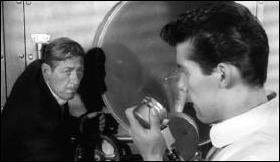
FLIGHT TO MARS. Monogram Pictures, 1951. Marguerite Chapman, Cameron Mitchell, Arthur Franz, Virginia Huston, John Litel, Morris Ankrum. Director: Lesley Selander.

   It’s difficult for me not to like movies with Cameron Mitchell in them. Sure, he did more than his fair share of lousy films, but the man’s got a unique presence and a wry, world-weary manner of speaking that’s difficult to explain: a sort of you-know—it-when-you-hear-it.

   So when I learned of this science fiction B-film that stars not only Mitchell, but also Arthur Franz (another favorite of mine from that era and that genre), I had to check out Flight to Mars. The result: well, let’s just say that’s a clumsy, superficial film without much to recommend it except that the movie has these two actors in it and that it makes great use of Cinecolor.

   The plot, evidently borrowed from the silent Soviet film, Aelita (1924), follows a group of American scientists, as well as newspaperman Steve Abbott (Mitchell), as they make their way to the red planet. When they arrive, they discover a highly advanced civilization led by a quasi-fascist regime led by the authoritarian Ikron (Morris Ankrum).

   So everyone runs around a bit through the hallways of the Martians’ underground city, all wearing similar cheap looking uniforms (apparently the costume budget for this movie wasn’t all that elaborate), and then our friendly group of earthlings finally discover a means by which they can fix their rocket ship and head back home.

   That’s really about it. It’s a shame, for merely adding a little green man or two to the mix would have really spiced things up a bit.

   Still, I imagine that if you were a kid in the early 1950s and you saw this at a matinee, you would have thought it was all super neat. And you may not have been half wrong, either.

REVIEWED BY BARRY GARDNER:


MARGARET MARON – Bootlegger’s Daughter. Deborah Knott #1, Mysterious Press, hardcover, 1992; paperback, June 1993.

   Margaret Maron is the author of seven novels featuring Sigrid Harald, as well as one non-series mystery. I understand that we’ve seen the last of Harald for a while, and that Maron will concentrate on Deborah Knott.

   Fine with me; I liked the Harald stories well enough to read and acquire them, but I think Bootlegger’s Daughter clearly represents a move up in the craft.

   Deborah Knott is a 34 year old attorney who has entered the Democratic Primary for the position of District Judge. Her father is (was?) the best known bootlegger in that part of North Carolina, and they are currently somewhat estranged due to his opposition to her political ambitions.

   Just prior to election day, an old (unrequited) love comes to her for help The story of course deals with her journey into the past in search of answers, but it is much more than just a mystery to be solved. It is the story of a woman trying to enter a man’s world in the old south, and indeed an evocative depiction of the people and culture of a piece of that part of our country.

   I know North Carolina only slightly, but know the rural south well, and found the milieu to be finely and accurately drawn. Deborah herself is an appealing character, a strong and determined woman who I believe will find favor with most readers. I look forward to meeting her again. A very good book, recommended highly.

   A final note: on the back of the dust jacket are no less than seven favorable and well deserved advance comments by fellow mystery writers, and I was struck by the fact that they were all by female authors. Hmmm. One isn’t quite sure what to infer. Do Maron/Mysterious Press consider this primarily a “woman’s” book? Surely not, though that’s the most obvious implication. I would think it almost has to be a marketing decision of some kind. Oh, well.

— Reprinted from Fireman, Fireman, Save My Books #3, September 1992.


      The Deborah Knott Series

Bootlegger’s Daughter, 1992
Southern Discomfort, 1993

Shooting at Loons, 1994
Up Jumps the Devil, 1996

Killer Market, 1997
Home Fires, 1998
Storm Track, 2000
Uncommon Clay, 2001
Slow Dollar, 2002
High Country Fall, 2004
Rituals of the Season, 2005
Winter’s Child, 2006

Hard Row, 2007
Death’s Half-Acre, 2008
Sand Sharks, 2009

Christmas Mourning, 2010
Three-Day Town, 2011 (cross-over with Sigrid Harald)
The Buzzard Table, 2012

Designated Daughters, 2014
Long Upon the Land, 2015

Note: Sigrid Harald made two additional appearances after the Deborak Knott series began: Fugitive Colors (1995) and the crossover novel noted above. Bootlegger’s Daughter won the 1992 Agatha and the Anthony, Edgar and Macavity awards for “Best Novel” the following year.

Reviewed by JONATHAN LEWIS:         


THE HOWARDS OF VIRGINIA. Columbia Pictures, 1940. Cary Grant, Martha Scott, Sir Cedric Hardwicke, Alan Marshal, Richard Carlson, Paul Kelly. Director: Frank Lloyd.

   During his long and storied film career, Cary Grant appeared in films of different genres and portrayed a wide array of characters. It’s very easy to close one’s eyes and picture Grant in a screwball comedy or as a soldier and spy. What about as a backwoods Virginian adorned in Daniel Boone attire? That’s more difficult, wouldn’t you say?

   But somehow, kind of, sort of, Grant manages to pull it off.

   That’s a statement that could be applied in general to The Howards of Virginia, a slightly above average historical melodrama set in Virginia during the colonial era and the American Revolution. Based on Elizabeth Page’s novel, The Tree of Liberty, the movie features Grant in a starring role. He portrays Matt Howard, a man of western Virginia who falls in love with and marries Jane Payton (Martha Stewart), a woman from the Tidewater aristocracy.

   The movie traces the couple’s relationship from its tumultuous beginnings through their settlement in a western Virginia tobacco plantation, Howard’s election to the Virginia House of Burgesses, and the Revolutionary War. Although the film is unevenly paced, it ends up all coming together by the end. The last half hour of the film, in which Grant’s character really comes into his own, makes sitting through a rather sluggish first hour worth it.

   All told, while The Howards of Virginia is no forgotten classic begging to be rediscovered, it’s nevertheless a significant entry in Grant’s early film career and a surprisingly gritty portrayal of soldiering during the campaign for American independence.

DAVID HILTBRAND – Deader Than Disco. Avon, paperback original, April 2005.

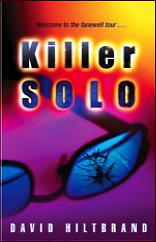
   Here’s the first paragraph of my review of Hiltbrand’s first mystery, Killer Solo, which came out in January, 2004:

   I was going to start this review by stating that this is the best rock music detective novel I have ever read. It then occurred to me that this may be the only rock music detective novel I have ever read. I know there are others. Unless there are some that aren’t coming to mind right now, though, I just haven’t read them.

   Deader Than Disco, Hiltbrand’s second novel, also marks the second appearance of rock ’n roll detective Jim McNamara. I may as well say, up front and for the record, that Killer Solo is the better of the two, but with no other contender in sight, that leaves the first book still in the top position.

   Although other real life people in the world of show business (Gwenyth Paltrow, Sheryl Crow) are mentioned in passing, McNamara’s client is only an excellent clone (and reasonable facsimile) of singer superstar Madonna, a lady named Angel (last name Chiavone), who’s deeply involved with the murder of a superstar pro basketball player in her home, after a party, and she is strictly not talking about it, not to any one, and certainly not to McNamara, who was actually hired by Angel’s publicist, a lady named Lani.

   McNamara’s own demons, the ones that forced him out of active show business himself, drinking and a bad drug problem, are past him, and yet not entirely. He finds AA meetings to attend wherever he goes, which in this book includes a long stint in Hollywood, followed by a shorter one in Manhattan, and all the while keeping in touch with his sponsor back in New England. The latter being, by the way, a very good way of having someone around to bounce ideas off of.

   As a writer, Hiltbrand has a neat way of characterizing his characters quickly and sharply, even the ones who are only passing through. About 80% of McNamara’s investigation goes down well, but once he decides that the decamped diva has disappeared off to Detroit (well, Michigan, but it doesn’t match the alliteration) – and how’d he know, I do not know – all of the well-characterized characters fade into the background. With at that point only three players to play around with (Angel, MacNamara, and the killer) the well-honed tale (up to then) fritters itself away into a badly rehearsed made-for-cable late night thriller.

   Chapter 40 begins with “It took a while to sort things out.” But unlike some complicated detective stories with lots of twists and turns in the plot, three more pages and it’s over.

— May 2005


Bibliographic Note: The third and final Jim McNamara novel was Dying to Be Famous (Harper, 2006).

« Previous PageNext Page »