Reviews


THE BACKWARD REVIEWER
William F. Deeck


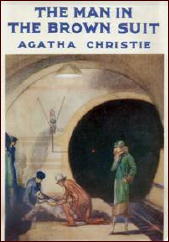
AGATHA CHRISTIE The Man in the Brown Suit

AGATHA CHRISTIE – The Man in the Brown Suit. Dodd Mead, US, hardcover, 1924. First published by John Lane/The Bodley Head, UK, hardcover, 1924. Reprinted many times since, in both hardcover and soft. First serialised in the London Evening News under the title Anne the Adventurous, 29 November 1923 to 28 January 1924 (50 installments). TV Movie: CBS, 1988, with Stephanie Zimbalist (Anne Beddingfeld), Rue McClanahan, Tony Randall, Edward Woodward (Sir Eustace Pedler), Ken Howard (Gordon Race).

   While I am tempted to say that this is something of a departure by Christie, that would merely demonstrate my ignorance, as this is one of her earlier works.

   Here she has written a thriller featuring an intelligent, on all but a few occasions, young lady who is seeking adventure. When Anne Beddingfield observes a supposed accidental death at a tube station and suspicious behavior by an alleged doctor, she connects this with a murder the same day. Soon she is spending her meager inheritance for a berth on the Kilmorden Castle, en route to South Africa, in pursuit of the alleged murderer, the Man in the Brown Suit.

   Developments are revealed through the viewpoints of Beddingfield and Sir Eustace Pedler, M.P., both drolly and sillily, if there is such a word. Good fun and, incidentally, a forerunner to…

   But you don’t want to know that, do you? I had that knowledge when I started the novel, and it didn’t spoil the pleasure. Other people may be less complaisant.

— From The MYSTERY FANcier, Vol. 13, No. 2, Spring 1991.

REVIEWED BY DAN STUMPF:         


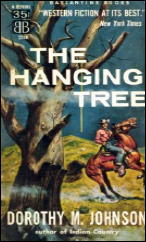
DOROTHY M. JOHNSON The Hanging Tree

DOROTHY M. JOHNSON – The Hanging Tree and Other Stories. University of Nebraska Press, softcover, 1995, with ten stories. Ballantine 274K, paperback original, 1957, with seven stories. Several later Ballantine printings.

   The Hanging Tree is a collection of ten tales by Dorothy M. Johnson written from 1942-57 and some of the best western fiction I’ve ever read. Johnson could pack movement, character and setting into a very few words without sounding packed, and she knew how to develop a tale with a feel for its implications as well as its actions.

   The result is ten memorable vignettes of which “The Hanging Tree” — a great story by itself — is perhaps the least. I got a lot of pleasure from “Lost Sister,” a cryptic tale of a “rescued” captive, and “The Last Boast,” in which a condemned cowboy looks back on the best-and-worst thing he ever did, and there’s some laugh-out-loud prose in “I Woke Up Wicked.”

   In all, a book to treasure and a writer to seek out again.

Editorial Comment:   For more on the author of this collection, Dorothy M. Johnson, her Wikipedia entry is a good place to start.

Reviewed by JONATHAN LEWIS:         


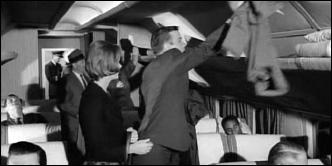
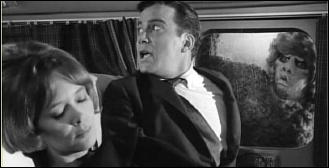
“NIGHTMARE AT 20,000 FEET.” Episode 123 of The Twilight Zone (CBS TV). Original air date: October 11, 1963. Starring William Shatner. Written by Richard Matheson. Directed by Richard Donner.

TWILIGHT ZONE Nightare at 20000 Feet

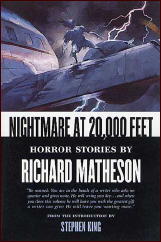
   Much has undoubtedly been written about “Nightmare at 20,000 Feet,” an iconic Twilight Zone episode. The show, however, is well worth revisiting, particularly in light of writer Richard Matheson’s passing last year and of director Richard Donner’s recent announcement that he hopes to film a sequel to his 1985 cult classic, The Goonies.

   This 25-minute black & white episode is not merely a vivid small screen representation of psychological torment. It also serves as an excellent reference point for those seeking to connect seemingly disparate elements of twentieth-century science fiction, horror, and popular culture, from airplanes to zombies.

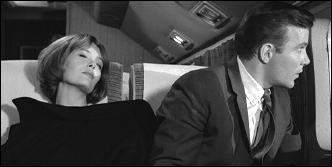
   The plot of “Nightmare at 20,000 Feet,” based on a 1961 Richard Matheson short story of the same name, unfolds as follows. A salesman named Robert Wilson, portrayed with great dramatic effect by a youthful William Shatner in his pre-Star Trek days, spots a bizarre creature — a gremlin — tampering an aircraft’s engine while the plane is in flight.

TWILIGHT ZONE Nightmare at 20000 Feet

   It’s a Twilight Zone episode, so of course there’s a twist. Months earlier, Wilson had experienced a “nervous breakdown” while on an airplane. Now, he is back on a plane for the first time since his stay in a sanitarium. Accompanying him is his wife, played by Christine White. But who is going to believe a man who has suffered from mental illness, especially when he’s the only one who sees the gremlin (Nick Cravat in furry suit that now looks more silly than scary) out on the wing, attempting to tamper with the plane?

   Gremlins, of course, have not been the most prominent of monsters in twentieth-century popular culture. Unlike vampires and demons, which have a long pedigree, the notion of creatures called gremlins likely originated in the 1920s as the figment of British pilots’ collective imaginations. They were prone to mechanical mischief and blamed for tampering with aircraft.

   The best-known literary work about these modernist monsters is Roald Dahl’s children’s book, The Gremlins (1943). Dahl, of course, would go on to write numerous children’s books, screenplays, and short stories.

TWILIGHT ZONE Nightare at 20000 Feet

   Gremlins, of course, had their moment in the sun (pun intended), in the 1984 film, Gremlins. Written by Chris Columbus and directed by Joe Dante, with Steven Spielberg as the film’s executive producer, Gremlins went on to become an American cult classic.

   In the Twilight Zone episode, the character of Wilson mentions gremlins during the flight and alludes to their role in tinkering with aircraft “during the War.” But the gremlin in “Nightmare at 20,000 Feet” is, in many ways, peripheral to the episode. It’s a human story, one that remains compelling to this day. It touches on the deep-seated human fear of being, or feeling, completely alone in the midst of chaos.

TWILIGHT ZONE Nightare at 20000 Feet

   Sure, Wilson is with his wife, the pilot, and other passengers. But no one believes him. That’s when, of course, he decides to take matters on his own hands. Without giving away how the story ends, I’ll just mention that there’s an easily accessible gun on the airplane and the emergency window gets opened. Matheson’s story is still incredibly fresh. Optimists take note: there’s a redemptive aspect for Shatner’s character at the very end.

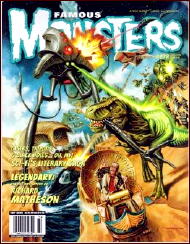
   This leads me to the March/April 2014 issue of Famous Monsters, which includes an extensive tribute to the episode’s writer, Richard Matheson. In a compelling passage, Richard Christian Matheson, the author’s son, wrote as follows:

   â€œMy father could almost see to the core of others in a blink, undistracted by their presented selves. With a sleuth’s calm, he listened, and asked polite questions, until they wandered into the light, often relieved to finally be seen. That genuine curiosity didn’t judge, his empathy for human drama boundless. As a writer, his respect for mazes of human psyche deepened his characters, made them real.” (Page 7)

TWILIGHT ZONE Nightare at 20000 Feet

   Although Richard Christian Matheson doesn’t specifically allude to any particular characters, I can see how this characterization of Matheson’s thinking could apply to the aforementioned Robert Wilson. Indeed, one can hardly watch Shatner’s performance without feeling for his character.

   In conclusion, “Nightmare at 20,000 Feet” is more than just a singular episode in the Twilight Zone corpus. It is a cultural artifact in its own right. Aside from Rod Sterling, a legend all his own, the three main men involved in this particular episode’s creation — Shatner, Donner, and Matheson — collectively went on to create a vast body of work that includes some of the best late twentieth-century works in science fiction and popular culture.

   And even though the episode is over fifty years old and the gremlin looks a bit goofy, “Nightmare at 20,000 Feet” is an extremely well-written story and an episode worth watching again, if you haven’t done so recently.

Reference: Famous Monsters #272, March/April 2014.

Reviewed by DAVID VINEYARD:         


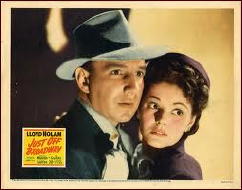
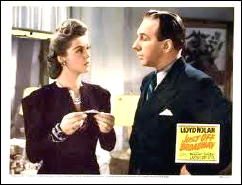
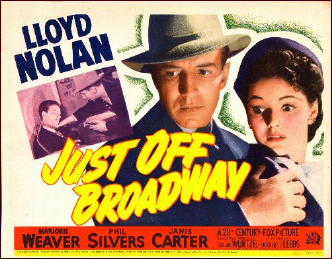
JUST OFF BROADWAY. 20th Century Fox, 1942. Lloyd Nolan, Marjorie Weaver, Phil Silvers, Janis Carter, Richard Derr, Joan Valerie, Don Costello. Screenplay by Arnaud d’Usseau, based on the character created by Brett Halliday and an idea by Jo Eisinger; photography by Lucien Andriot. Director: Herbert J. Leeds.

JUST OFF BROADWAY Lloyd Nolan

   Lillian Hubbard (Janis Carter) is on trial for the murder of her fiancee Harley Forsythe, and despite defense attorney John Logan (Richard Derr) it doesn’t look good for her. Luckily for her newswoman Judy Taylor (Marjorie Weaver) and news photog Sam Higgins (Phil Silvers) are looking for a story, and private detective Michael Shayne (Lloyd Nolan) is on the jury.

   It all opens with a bang, a witness, the English butler of a neighbor of Lillian Hubbard who can support her alibi, is murdered in the courtroom by a bearded man with a throwing knife. In the confusion Shayne hides the weapon under the prosecutor’s table. Merely being sequestered isn’t going to stop him from solving a case his own way — especially after he slips his sneezing roommate sleeping pills.

   Though not based on a Brett Halliday novel, that high-handed way with clues is a trademark of Michael Shayne, who never met a piece of evidence he couldn’t improve, suborn, or otherwise play fast and loose with.

   When Shayne goes to retrieve the knife he finds Judy spotted him hiding it and they are teamed in the investigation. They’ve been through this before. Shayne once proposed to her — just to get her out of his hair in another case.

   The only thing he hasn’t figured out is how he is going to get paid.

   Among the suspects are a leggy nightclub singer Rita Darling (Joan Valerie), the owner of the club where she works George Dolphin (Don Costello), and Count Telmachio, a professional knife thrower — not to mention the defense attorney who has long been in love with Lillian Hubbard.

   Judy: Why are you always taking advantage of me?

   Shayne: ’Cause you make it so easy.

   Shayne gets knocked out searching the knife-thrower’s dressing room, then Judy and he follow the phony count where they find him murdered too.

   Shayne: I was stickin’ my nose into something that don’t concern me and almost got it cut off.

JUST OFF BROADWAY Lloyd Nolan

   Historically the Shayne films helped establish many of the tropes of the Hollywood private eye as much as any film or film series, and if only the first one was actually based on a Halliday novel, the others were taken from books by Clayton Rawson, Fred Nebel, Richard Burke, and Raymond Chandler’s The High Window (and a better version than John Brahm’s The Brasher Doubloon).

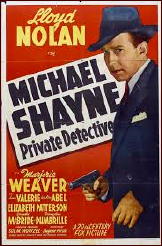
   So far one collection of Shayne films has been issued by Fox on DVD containing Michael Shayne, Private Detective; Blue White and Perfect; Sleepers West (based on Fred Nebel’s Sleepers East; and The Man Who Wouldn’t Die (based on a Clayton Rawson Great Merlini novel).

   As yet uncollected (and sadly unlikely to be) are Dressed to Kill (based on a Richard Burke Quinny Hite novel), Just Off Broadway, and A Time To Kill (based on Raymond Chandler’s The High Window). Dressed to Kill has shown up on at least one cable channel, but Just Off Broadway and A Time To Kill can only be found on the gray market.

   Judy: John K. Smith? What does the K. stand for, Kluck?

   Shayne: You know I used to be quite a dancer.

   Stepping on Judy’s toe: When was that?

   Shayne: Well, they changed the rules since the Charleston.

   A dolphin brooch found near Telmachio’s body plays a key role in the case, especially when it turns out the jeweler (Francis Pierlot) who made it was once the father-in-law of the murdered man, whose daughter committed suicide over Forsythe’s cheating.

   Meanwhile Shayne is busy ducking Sam Higgins who wants a photo of him to sell proving Shayne has snuck out on the jury giving Silvers plenty of excuses for quick patter and smart talk and Shayne a chance for some quick footwork.

   Sheriff: Were you out of this room tonight?

   Shayne: Who do ya think I am, Superman?

   Shayne manages to outwit Silvers, but he still has to solve the case.

JUST OFF BROADWAY Lloyd Nolan

   This is the least of the Shayne series, which isn’t that much of a knock. It’s rapidly paced and written and if the mystery isn’t exactly a headscratcher, it’s still fun to watch Nolan’s Shayne playing his usual games with the law and even getting a shot at playing Perry Mason when he acts as friend of the court from the jury box and questions the suspects before solving the case.

   Richard Derr is best known for his role in George Pal’s film of the Philip Wylie-Edwin Balmer novel When Worlds Collide and also appeared in the Charlie Chan film Castle in the Desert. (Someone will have to confirm this, but I believe he was actually related to Charlie Chan author Earl Derr Biggers.) Late in his career he played Lamont Cranston, the Shadow, in The Invisible Avenger, minus the slouch hat and cloak, but with the power of invisibility and clouding men’s minds.

   Marjorie Weaver appeared in most of the Shayne films though not always in the same role. She had good rapport with Nolan and their scenes have real zip.

   Shayne does catch the killer and solve the case and ends up in jail for contempt of court for ten days — until Judy talks to the judge — getting him sixty days …

   Better known for his villains (serious as in The Texas Rangers or comic as in The Lemon Drop Kid) and character parts (the doctor in Peyton Place, the father in Susan Slade) and for good cops (G-Men, Somewhere in the Night, Two Smart People, The House on 92nd Street) than as a leading man, Nolan was ideally suited to play Michael Shayne, and his Brooklyn accent mixed with an Irish brogue (throughout the series he’s accompanied by a jaunty Irish tune), mobile face, and well timed double-takes make his version of Michael Shayne the definitive one on screen even if he is nowhere near as dark or tough (or smart) as Halliday’s creation.

   That may be, but for many of us Nolan will always be our Michael Shayne — even if he isn’t quite Brett Halliday’s.

JUST OFF BROADWAY Lloyd Nolan


Note:   Shayne was played by Wally Maher and Jeff Chandler on radio; Hugh Beaumont in a poverty row series following Nolan; and Richard Denning (Mr. and Mrs. North) in a short lived series Michael Shayne, Private Detective that adapted many of the Brett Halliday novels to the small screen as Perry Mason had adapted many of Erle Stanley Gardner’s books. There is supposed to be a pilot film with Mark Stevens as Shayne that is tougher minded and closer to Halliday’s creation, but I’ve never been able to confirm if it was ever aired. Though without Shayne, the Robert Downey/Val Kilmer film Kiss Kiss Bang Bang was based on a Halliday novel and one of the episodes of the trilogy film Three Cases of Murder is based on a non-Shayne short by Halliday.

Reviewed by JONATHAN LEWIS:         


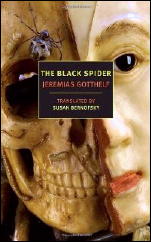
JEREMIAS GOTTHELF – The Black Spider. New York Review of Books, paperback, 2013. Translated by Susan Bernofsky. First published as in German as “Die schwarze Spinne” in 1842.

JEREMIAS GOTTELF Black Spider

   When I first spotted a new copy of Jeremias Gotthelf’s The Black Spider in the science fiction/fantasy section of my favorite Washington D.C. bookstore, I confess that I wasn’t familiar with either the author or the book.

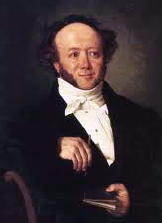
   My curiosity was piqued, so I decided to purchase the novella. I’m glad I did. I read it over the course of several days, scribbling notes to myself on the margins, and I found myself eager to learn more about the life and times of Albert Bitzius (1797-1854), the Swiss pastor and novelist who, under the pen name of Jeremias Gotthelf, wrote one incredibly vivid and didactic horror tale.

   The Black Spider begins with a serene pastoral Swiss setting. A family and their friends have gathered for a child’s baptism. All seems well in the world. Then one member of the baptismal party notices something odd. There’s a black piece of wood in the old house’s window post that’s noticeably short and out of place. People are curious. What is this piece of wood doing there? As the old advertisement used to say, inquiring minds want to know.

   That’s when the action really takes off. The grandfather (unlike in Jack London’s The Scarlet Plague, we never learn his proper name) uses the piece of black wood as a jumping off point to tell a haunting tale about a castle, a brutal knight named Hans von Stoffeln of Swabia, oppressed peasants, and woman named Christine of Lindau who tries to outsmart the Devil. As if that weren’t enough, there’s also a sinister quasi-sentient demonic arthropod that wreaks all sorts of havoc and mayhem.

   The basics of the story are as follows. Some six hundred years ago, a cruel knight forces his peasants to relocate some beech trees in order to create a shady walk by his castle. They have no idea how they are going to complete such a physically demanding task.

JEREMIAS GOTTELF Black Spider

   Enter a strange character, a huntsman dressed in green, with a red feather in his cap, and a red beard. It’s not too long before the reader learns that this huntsman has the stench of sulfur about him. Soon after, we learn that he’s the Devil. The aforementioned Christine makes an unholy bargain with him, one that would allow the villagers to be freed from the nearly insurmountable burden of planting the trees. The deal is sealed with a kiss on the cheek. But, as with all deals with the Devil, it comes at a steep price. In this case, the Devil wants the villagers to turn over a newborn child before it is baptized.

   Without giving too much of the plot away, suffice it to say that Christine’s choice isn’t the wisest one. Soon, there’s a strange black dot on her face. Sooner still, it morphs into something far more grotesque and spine chilling:

   â€œBut Christine was not lighthearted. The closer the day of the birth approached, the more terrible the burning in her cheek became, and the more the black spot swelled, stretching distinct legs out from its center and sprouting tiny little hairs; shiny points and stripes appeared on its back, the bump became a head, and from it flashed glinting, venomous glances, as if two eyes. Everyone shrieked at the sight of this venomous spider upon Christine’s face, rooted in her face, growing there, and they fled in fear and horror.” (pp. 53-54)

   After that, things get even weirder. The black spider comes to life and brings death. Eventually, a woman captures the spider and plugs it in a hole. There it rests for many years. Then, in an age of impiety and frivolity, the spider gets loose again. Only this time, there’s a man named Christen who, with divine assistance, is able to “thrust the spider into the ancient hole.” (p. 102).

JEREMIAS GOTTELF Black Spider

   Here, the religious message of the work becomes increasingly apparent. Faith and honesty are good; “pride and vainglory” are bad (p. 105). And as far as the aforementioned piece of black wood, it gets incorporated into the frame of a newer house and keeps the black spider imprisoned, where it supposedly remains on the day when the grandfather tells the baptismal party this very creepy story.

   Early nineteenth-century Switzerland doesn’t immediately come to mind when one thinks of either Gothic fiction or what is best described as weird fiction. Lord Dunsany, Clark Ashton Smith, and H.P. Lovecraft were all twentieth-century writers and wrote their works in an increasingly secular world. Jeremias Gotthelf, by contrast, was a more devout man who wrote in an age more steeped in faith than the aforementioned purveyors of cosmic horror. His ultimate villain was the Devil, not some strange creature from beyond space and time.

   But then again, there’s the bizarrely sentient black spider. If one reads the work critically, one sees that the author’s description of the spider at times reads less like something out of a fairy tale or a religious novella than it does out of an early twentieth-century pulp magazine:

   â€œThe crowd flew apart, all eyes drawn to the foot to which the hand of the screaming man was pointing. On this foot sat the spider, black and huge, glowering balefully, maliciously all around. The blood froze in their veins, the breath in their breasts, and the sight in their eyes, while the spider calmly, maliciously peered about, and then the man’s foot turned black, and in his body it felt as if fire were hissingly, furiously doing battle with water; fear burst the bonds of horror, and the crowds scattered.” (p. 72)

   The Black Spider may very well be one of the first works of weird fiction ever written. For this reason, it’s well worth reading. But it’s also a good scary tale to read on an overcast day when it’s windy outside, the rain is hitting your windows, and you have some cabin fever. That’s what I did. And I loved every minute of it.

THE BACKWARD REVIEWER
William F. Deeck


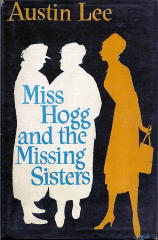
AUSTIN LEE – Miss Hogg and the Missing Sisters. Jonathan Cape, UK, hardcover, 1961. No US edition.

AUSTIN LEE Miss Hogg

   The elderly ladies who live next door to Alan Johnston, middle-aged author of historical novels, have written a book about the old days in Ireland and are worried about parts of it perhaps being libelous. Thus they seek Johnston’s advice. Before he can read much of the book, his neighbors disappear and the manuscript is the only item taken from his house during a burglary.

   In addition, in the same neighborhood a death, possibly murder, with seemingly no connection to the disappearance or the burglary, has taken place. Johnston consults Miss Hogg, B.A., Private Investigator, and he, she, and Miss Hogg’s friend, Millie, travel to the elderly ladies’ childhood home, with both good and bad results.

   This novel takes place near the end of Miss Hogg’s career as a private investigator — it is the penultimate; the final one is fittingly titled Miss Hogg’s Last Case — and contains little about her as an individual. Her first name is an aberration on her mother’s part, she says, and she prefers to be known as ‘Hogg, tout conn. ” Her given name is revealed, though not by her, as Flora, about which someone remarks, I must say that Miss Hogg did not immediately suggest to one the goddess of the spring.”

   Whether Miss Hogg can be placed in the little-old-lady-detective category, I cannot say since her age is not provided. She is a former schoolteacher, but not as far as I could tell a retired one. Johnston, whose views are more elderly than he, makes for a somewhat amusing narrator.

   On the other hand, Miss Hogg really doesn’t come alive, the plot is minimal, and the murderer and the motive are patent. Nonetheless, while Austin Lee’s name is not going on my list of authors to look for, should I come across another of his Miss Hogg novels serendipitously, I would not hesitate to read it.

   Since Hubin’s bibliography does not mention it and there might be those who would like to know, I’ll note that Austin Lee was a clergyman.

— From The MYSTERY FANcier, Vol. 13, No. 2, Spring 1991.


      The Miss Flora Hogg series

Sheep’s Clothing. Cape, 1955.
Call in Miss Hogg. Cape, 1956.
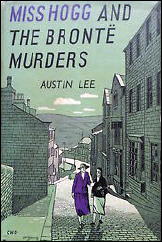
Miss Hogg and the Bronte Murders. Cape, 1956.

AUSTIN LEE Miss Hogg

Miss Hogg and the Squash Club Murder. Cape, 1957.
Miss Hogg and the Dead Dean. Cape, 1958.
Miss Hogg Flies High. Cape, 1958.
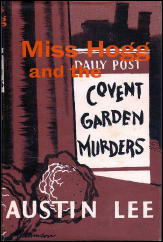
Miss Hogg and the Covent Garden Murders. Cape, 1960.

AUSTIN LEE Miss Hogg

Miss Hogg and the Missing Sisters. Cape, 1961.
Miss Hogg’s Last Case. Cape, 1963.

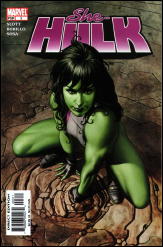
DAN SLOTT (writer) and JUAN BOBILLO & MERCELO SOSA (artists) – “Dead Certain.” She-Hulk: Marvel Comics, Number 3, July 2004.

   You may or may not keep up with comic books, but no, they’re not 10 cents any more. (The price of this one is $2.99, but as a back issue, which by the time you read this, as late as it will surely be, I am sure you will be able to find a copy for far less than that.)

SHE HULK #3

   And the vast majority of most comic books run in long continued stories (“arcs”), which means that if you pick one up a random, it will be part two of six, and you won’t have a clue about what’s going on.

   This particular issue, though, is a rarity – a story told all in one issue (but with lots of personal interplay going on, adding to the characterization, but not harmful to the plot to any discernible degree if you skip over it).

   I’ll assume that everyone is familiar, to some degree or another, with The Incredible Hulk – the much longer-running comic book series which was the basis of a television series some years ago and then, much more recently, a semi-disaster of a full treatment movie overladen with special effects.

   This latest version of the She-Hulk book series comic bis but another in Marvel Comics’ long line of efforts to siphon off some of the male Hulk’s popularity by creating a successful female counterpart – and no, I’m not going to get into all of the other attempts.

   Suffice it to say, perhaps that I believe that She-Hulk’s alter ego has always been Jen Walters, who may or may not has always been a top-notch lawyer in her real life, but who has the ability to transform herself into a seven foot tall green-skinned amazonian super-hero. Unlike the Hulk, whose intelligence (and skin color) seems to vary at the whim of the writer at the time, She-Hulk seems to be as intelligent as Jen Walters, but (naturally) much more powerful.

SHE HULK #3

   Um, I seem to have lost some readers who have gone on the next review. If you’re still with me, I’ll speed things up a little, but a little background would seem to be useful in the context of why I’m even telling you about this particular issue.

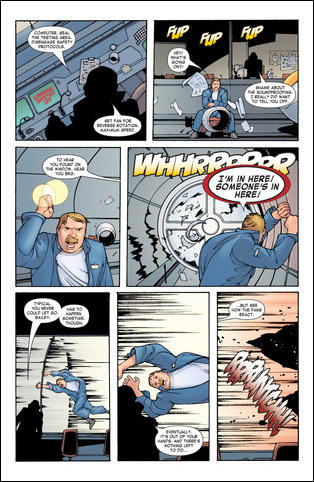
   After aircraft engineer Bailey Briggs is brutally murdered – by trapping him in a wind tunnel with one of his test engines still running – the chief witness against the defendant at the subsequent trail is – the ghost of Bailey Briggs. I’ll repeat that. His ghost. I believe this may be a first – one for the books, you might say – but if you can say otherwise and prove me wrong, I’d certainly like to know about it.

   An interesting twist is that Jen Walters, working for the defense, does not believe Bailey Briggs’ ghost – and yes, the judge rules that precedent has been established for such a turn of events, at least in the Marvel Universe – but why would a dead man lie?

   With She-Hulk’s assistance in carrying out the investigation, a most satisfactory answer to that question is obtained, and you’ll have to read the story for yourself to discover what it is. Neatly done, it is.

PostScript:   In terms of the artwork, Jen Walters and She-Hulk are drawn more baby-faced in appearance than appeals to me, but in their own stylish way, the pair of artists responsible for this issue (pencils and inks) carry off their half of the story-telling with nearly as much aplomb as the gentleman who wrote the words.

— May 2004

Reviewed by DAVID VINEYARD:         


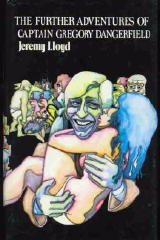
JEREMY LLOYD – The Further Adventures of Captain Gregory Dangerfield. Michael Joseph, UK, hardcover, 1973. St. Martin’s Press, US, hardcover, 1974. No paperback edition.

    Tock, tock, tick, tack, tock went the keys of the ancient Remington typewriter, and on the crisp white foolscap paper, marked only slightly by the tea stain on the top right hand corner, appeared in bold black type the startling information, THE GAME IS UP, MR. GATES, A NEW DETECTIVE NOVEL BY HENRY POTTS.

Captain Gregory Dangerfield JEREMY LLOYD

   Henry Wordsworth Potts writes detective stories, and none too successfully, that is until he borrows a typewriter, an old Imperial, to finish his latest opus, and discovers the machine is haunted.

   Much to his surprise his fingers leap across the keys and type out The Further Adventures of Captain Gregory Dangerfield, and a voice, strikingly like that of George Sanders, informs him that he is now under the control of the late P.W. Arnold, author of the Dangerfield series, and will not only write the book, but live them.

   And with that his everyday life at the boarding house at Ranliegh Road in Streatham becomes rife with international adventure, beautiful scantily clad women, and dastardly villains with Potts now dashing about in Dangerfield’s Bugatti Royale — the one given him by King Zog of Roumania…

   By turns increasingly funny, and increasingly mad, the book follows our poor Mr. Potts as he is plunged into Dangerfield’s world replete with super-villains, femme fatales, deadly traps, and increasingly embarrassing situations — like when he washes ashore on a tropical beach:

    “It was Zola,” penned the Author, “the girl whose message for help he had answered, and now her beautiful tear filled eyes shone with relief, and making the sign of the cross over her magnificent bosom, which strained for release beneath the thin material of her shirt, she waded into the surf to help the one man in the world who could save her…”

    “But Captain Gregory Dangerfield,” said P.W. Arnold admiringly, “with his incredible powers of recovery had already got his strength back, and holding Zola with his arms of steel, while she rained kisses on his handsome salty lips, he carried her to shore.”

    In any other circumstances Mr. Potts would have enjoyed Miss Martin’s attentions, but her hot kisses, some of them on his spectacles, made it hard to see.

    The Author, ignoring his plight, continued, ‘And so, looking like a Greek god, bearing Aphrodite in his arms, Dangerfield’s magnificent bronzed naked body emerged from the sea.”

    Mr. Potts spluttered and his heart missed a beat. He’d been pleased to hear he was bronzed; but naked! He clutched tightly to Miss Martin, he mustn’t put her down. But he certainly was naked … this was already an extremely dangerous situation.

   And in the true tradition of thrillers and spoofs things go from bad to worse for Mr. Potts, but at the same time he begins to rather enjoy being Captain Gregory Dangerfield.

    Sitting down in front of the old Imperial, and fighting the feeling of vertigo that assailed him as he remembered Mrs. Harris’ cleavage, he held out his hands and resigned himself to his fate.

   The Further Adventures of Captain Gregory Dangerfield is a pleasant romp through the fields of thriller fiction with Mr. Potts and his more pneumatic neighbors, a fine collection of super villains, and the ever inventive P. W. Arnold keeping the pot and Mr. Potts boiling.

   Jeremy Lloyd may be more familiar to you as the blonde Englishman who appeared on Laugh In and worked on the show as a writer.

   I don’t know that this one will be for all taste, but in the right mood and for anyone who has read enough of these, you may actually be sorry to see the last of Captain Dangerfield. I’d certainly rather spend an evening in his company (and that of Mr. Potts, P.W. Arnold, and the beautiful Zola and Mrs. Harris) than many of the tiresome lot of special forces louts who stumble through today’s thriller fiction.

    “Dangerfield,” said P.W. Arnold. “Caught by surprise, recovered and applied the Kemelmann Nerve Hold, known as I have mentioned before, to only one other person.”

They don’t write ’em like that anymore. Maybe they never did, but at least they wrote this one, one of those small treasures that you find in the rummage sale, and never forget.

REVIEWED BY WALTER ALBERT:         


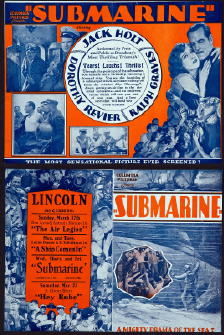
SUBMARINE Jack Holt

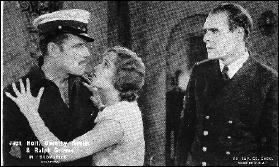
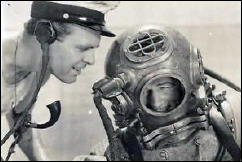
SUBMARINE. Columbia, 1928. Silent film with sound effects. Jack Holt, Dorothy Revier, Ralph Graves, Clarence Burton, Arthur Rankin. Director: Frank Capra. Shown at Cinefest 26, Syracuse NY, March 2006.

   Ace deep-sea diver Jack Dorgan (Jack Holt) marries a woman he meets at a dancehall (Bessie, played by Dorothy Revier). When he’s called to work, Bessie, bored, goes out and meets Bob Mason (Ralph Graves), who, unknown to her, is Jack’s best friend.

   Jack returns unexpectedly, finds the two together and throws Bob out of the house. When Bob is trapped in a sunken submarine, Jack, the only diver who might be able to reach the sub, sulks at home, unwilling to help the man who betrayed his friendship. A chance discovery reveals Bessie’s duplicity and Jack races to the rescue of the crew.

SUBMARINE Jack Holt

   According to the program notes, this was Columbia’s first “A” picture, and Capra was brought on after Harry Cohn fired the original director. Capra obtains the assistance of the Navy, shooting on location in San Pedro with 100 Navy seamen as extras.

   The last third of the film keeps cutting from the trapped seamen to the rescue attempt, with the tension building until the final minutes of the film. Capra’s skill with actors makes the shopworn triangle believable and Holt, one of my two favorite actors when I was a kid (the other was Buck Jones), is every boy’s idea of a resourceful hero.

   Graves, hardly remembered today, is almost as good as Holt, and Revier is perfect as the girl you love to hate.

SUBMARINE Jack Holt

FIRST YOU READ, THEN YOU WRITE
by Francis M. Nevins


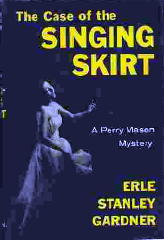
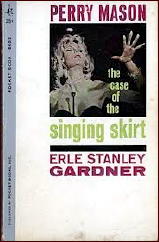
   I could have sworn I’d read all of Erle Stanley Gardner’s Perry Mason novels decades ago, but when I recently pulled out The Case of the Singing Skirt (1959) from my shelves nothing in it struck me as familiar.
MIKE NEVINS

   Club singer Ellen Robb is framed for theft and fired after refusing to help casino owner George Anclitas and his partner Slim Marcus trim wealthy Helman Ellis in a crooked poker game. Mason visits the casino and threatens Anclitas with a recent appellate decision holding that in a community property state like California a gambler’s spouse can recover any money the gambler lost.

   Later Ellen finds a Smith & Wesson .38 in her suitcase and, fearing that Anclitas is out to frame her for something more serious than theft, goes to Mason again. In her presence, Mason happens to have a phone conversation with another lawyer in which he cites several cases holding that if a person is shot by two different people and could have died from either wound, only the one who fired the second shot is guilty of murder.

   Without telling Ellen, Mason switches the gun she found in her bag for another of the same make and model that he happens to have in his safe. That evening he and Della Street secretly hide the gun he took from Ellen in the casino. Then Ellis’s wife Nadine is found shot to death — twice — aboard the couple’s yacht.

   The police find the switched gun in Ellen’s possession and arrest her. Ballistics tests prove what seems impossible on its face: that the switched gun fired at least one of the fatal shots. In the courtroom scene, which takes up almost half the book, a third gun enters the picture and Mason eventually exposes some stupendous weapon-juggling.
MIKE NEVINS

   Anthony Boucher in his review for the New York Times (September 27, 1959) called Singing Skirt “one of the most elaborate problems of Perry Mason’s career, with switchings and counterswitchings of guns that baffle even the maestro… This is as chastely classic a detective story as you’re apt to find in these degenerate days.”

   True enough. After finishing the book I whipped up a document which traces the wanderings of all three .38s and, unless I messed up somewhere, seems to establish that all the weapon-switching rhymes. (This document gives away so much of the plot that I won’t include it here, but if you’re interested, follow this link to a separate webpage.)

   But if Ellen had told Mason all she knew, the truth would have been obvious before the preliminary hearing even began. Why didn’t she? She had promised the real murderer she wouldn’t! Gardner’s need to camouflage this silliness explains why he jumps into court almost immediately after Ellen’s arrest, leaving out any subsequent conversations between Mason and his client.

   And if that aspect of the plot isn’t silly enough, how about the woman, never seen before, who marches unbidden into the courtroom at the end of Chapter Fourteen and confirms Mason’s solution?

   Gardner once said: “[E]very mystery story ever written has some loose threads… After all, on a trotting horse who is going to see the difference? The main thing is to keep the horse trotting and the pace fast and furious.”

   Well, I’m not sure that every mystery ever written has plot holes, but far too many of Gardner’s do. Nevertheless he remains a giant of the genre and one of the most important lawyer storytellers of the 20th century. Which is why he gets a chapter to himself in my next book.

***

   It’s called Judges & Justice & Lawyers & Law: Essays on Jurisfiction and Juriscinema and will be published later this year by Perfect Crime Books. At least six of its ten chapters deal with matters that should interest readers of this column: three on major American lawyer fiction writers (Melville Davisson Post, Arthur Train and, of course, Gardner) and another three on a trio of notable law-related movies (Cape Fear, Man in the Middle, The Penalty Phase).

   The longest chapter in the book is called “When Celluloid Lawyers Started to Speak” and covers law-related movies from the first years of talking pictures, many of which have a crime or mystery element.

   If you happen to groove on Westerns as well as whodunits, there are also chapters on law-related shoot-em-ups from the 1930s but after Hollywood began strictly enforcing its Motion Picture Production Code (July 1, 1934) and on what I like to call Telejuriscinema, which means law-related episodes of TV Western series from the Fifties and Sixties.

   I expect this gargantua to run close to 600 pages, the sort of book Harry Stephen Keeler once described as perfectly designed to jack up a truck with. As more information becomes available I’ll report it in future columns.

***

   Since one of the dozens of movies I discuss in the Celluloid Lawyers chapter may have played a role in Gardner’s work, I may as well close this column with a page or so from my book, as a sort of sneak preview of things to come.
MIKE NEVINS

   In the early Perry Mason novels, which were heavily influenced by Hammett and especially by The Maltese Falcon, we are allowed to see only what happens in Mason’s presence. But soon after the Saturday Evening Post began serializing the Masons prior to their book publication, scenes with other characters taking place before Perry enters the picture became commonplace.

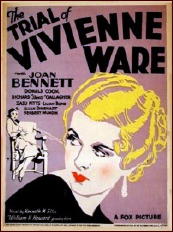
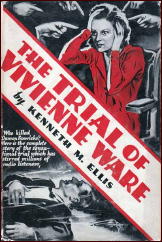
   Where did Gardner get this notion? Quite possibly from a fascinating but little-known movie dating from the early years of talkies. The Trial of Vivienne Ware (Fox, 1932) was directed by William K. Howard from a screenplay based on Kenneth M. Ellis’ 1931 novel of the same name.

   It opens with the title character (Joan Bennett) and her fiancé, architect Damon Fenwick (Jameson Thomas) going to the Silver Bowl nightclub where Vivienne is insulted by Fenwick’s former lover, singer Dolores Divine (Lilian Bond).

   After taking Vivienne home, Fenwick returns to the club to pick up Dolores. The next day Vivienne sends Fenwick a letter she comes to regret. Several hours later the police arrest her for his murder. Representing her is attorney John Sutherland (Donald Cook), who is also in love with her — an element we never find in a Perry Mason novel.

   The trial, perhaps the most swift-paced in any movie, begins with a mountain of evidence against Vivienne. One: On the morning after the nightclub scene she visited Fenwick’s house, walked in on Dolores in sexy pajamas eating breakfast with him, and stalked out furious. Two: Immediately afterwards she sent Fenwick a letter which might be construed as threatening.

   Three: Her handkerchief was found near Fenwick’s body. Four: A neighbor claims to have seen her entering Fenwick’s house that night. Vivienne denies being anywhere near the house at the time of the murder but Sutherland doesn’t believe her. Nevertheless he puts her on the stand and she testifies as follows.
MIKE NEVINS

   One: Her letter to Fenwick was meant to break their engagement, not to threaten him. Two: She must have dropped her handkerchief during her breakfast visit to Fenwick’s house. Three: At the time of the murder she was at a hockey game which she left early because she felt ill.

   The district attorney (Alan Dinehart) cross-examines her so ruthlessly that she breaks down and sobs that even her own lawyer doesn’t believe her. At this point we find ourselves in the juristic Cloud Cuckoo Land that most Hollywood law films sooner or later enter: the prosecutor calls the defense lawyer as a witness! (How many times has Hamilton Burger pulled the same stunt with Mason?)

   Changing Vivienne’s plea from not guilty to self-defense, Sutherland testifies that he attended the hockey match with her and, when she left early, followed her to Fenwick’s house. On the next day of trial Sutherland proceeds as if he were still pleading his client not guilty. First he calls witnesses who put Dolores Divine at Fenwick’s house at the time of the murder.

   Then he calls Dolores herself, who testifies — as dozens of characters in Mason novels would do after her — that she found the body and said nothing about it but isn’t the murderer. (The film isn’t clear about this but apparently Vivienne, like so many of Mason’s clients, had done the same.)

   I won’t delve any further into the plot but at the end of the picture spectators are roaring, flashbulbs blazing, lawyer and client embracing, and the jury returning a verdict of — well, can’t you guess? All this in less than 60 minutes!

   We’ll never know if Gardner saw this movie, or perhaps read the novel it was based on, but the resemblance between the pattern here and that of so many middle-period Masons is remarkable.
« Previous PageNext Page »