Collecting


   When I went looking for cover images to include with Bill Deeck’s recent review of Death Paints the Picture, by Lawrence Lariar, the first thing I discovered was that there wasn’t a single copy of the Phoenix Press hardcover up for sale on Abebooks.com, not one. There were five copies of the paperback edition up for grabs, which isn’t too surprising, but the lack of hardcover copies reinforced a small realization that is obvious in many ways, but one which I’ve been slow in coming to and putting into words.

   And that is, there is only a small finite number of hardcover mysteries from the 1940s that still exist, and the number that are in the hands of dealers and not already in collections is rapidly decreasing. Endangered species, is what they are.

   Deciding to investigate further, I decided to look into the availability of all of Lariar’s mysteries published under his own name, the hardcover first editions only, thus excluding paperback reprints, British editions and the occasional hardcover reprint from the Detective Book Club.

   I don’t know what the following data tells us, if anything. The numbers depend too greatly on a lot of different factors, none of which were controlled. I’ll have some comments after the following list. If you find any of this interesting, you can leave any insight you have as well, as usual.

      Death Paints a Picture, Phoenix Press, 1943. No copies available.

      He Died Laughing. Phoenix Press, 1943. Four copies, two in jacket.

      The Man with the Lumpy Nose. Dodd Mead, 1944. Twelve copies, seven in jacket.

      The Girl with the Frightened Eyes. Dodd Mead, 1945. Four copies, two in jacket.

      Friday for Death. Crown, 1949. Two copies, two in jacket.

      You Can’t Catch Me. Crown, 1951. Six copies, five in jacket.

      The Day I Died. Appleton, 1952. Seven copies, five in jacket.

      Win Place and Die! Appleton, 1953. Six copies, four in jacket.

   I kept a record of the stated conditions, but I decided not to clutter up the presentation by including them here. Suffice it to say that they ranged from Good to Very Good, with only two (Lumpy Nose) being described as Near Fine. If you wished a complete set, price generally shouldn’t be a problem. Lariar is not a mystery writer in high demand, so even though the supply is low, the asking prices (with a few exceptions) were pretty much $20 or less.

   But if the Internet did not exist (and you were not even reading this) think of the difficulty you’d have in putting a set of Lariar mystery novels together. How many bookstores would you have to travel to with want list in hand, from one end of the country to the other, to obtain them? Of course there’s slow mail, and I remember pre-Internet days of scouring fanzines for ads of various dealers who specialized in mysteries and asking for catalogs.

   With a maximum of 12 copies available for any one book (Lumpy Nose), getting a set together would be a long slow process. The 1940s were 60 to 70 years ago – a lifetime in fact. The number of survivors is getting fewer and fewer.

ADVENTURES IN COLLECTING:
My Favorite Magazines
by Walker Martin


   I collect and read quite a few other types of magazines besides the pulps. A couple of members of FictionMags, an online Yahoo discussion group, asked me about my favorite magazines, so I thought I’d take this opportunity to discuss the subject.

       Slicks —
WALKER MARTIN

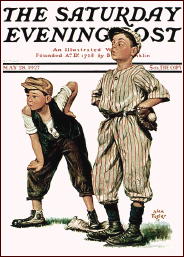
   This is easy for me to answer. My favorite slick magazine without a doubt is The Saturday Evening Post. They used the best authors and the best artists. It was weekly and some issues in the 1920’s were 200 pages.

   Usually collectors of the Post concentrate on certain authors or artists. Since thousands of issues were published you do not find many people trying to collect the entire run. However, I was one of the completists and at one point I had over 3,000 issues during the 1900-1970 period.

   The last time I moved not only could I not pick up the yearly boxes of the magazine (each box had 52 issues), but the movers had trouble also because of the weight. Eventually I sold much of the collection but I still have a complete run of 1940-1970.

   Another slick I liked a lot was American Magazine, mainly because of the mystery short novels they published. Jon Breen edited a collection of these novellas called American Murders.

       Digests —

   This is a far more difficult category for me to choose a favorite but I’ll go with Galaxy for the SF genre and Manhunt for the crime genre.

WALKER MARTIN

   Galaxy was the first magazine I bought off the newsstand in 1956 and it led to my present collection of many different titles. But my reason for picking Galaxy is not just nostalgic. I really feel that it was the best of the SF digests especially under the editorship of H.L. Gold and Fred Pohl.

   Pohl was smart enough to offer Robert Silverberg a deal to buy all of his stories submitted to Galaxy in the 1965-1972 period or thereabouts. Some of the best SF ever written appeared during this period and I’ve read many of Silverberg’s stories and serials more than once.

   Has there ever been a greater or higher quality number of novels in any SF magazine? I mean, think of it: The World Inside, Tower of Glass, Downward to Earth, Dying Inside, all in about two years.

   Alfred Bester wrote two great novels but they were in 1952 and 1956. J.G. Ballard wrote some great novels but they all did not appear in the SF magazines. Maybe Philip K. Dick comes closest but again, he did not write all of them for the SF magazines. Sturgeon had some great work in Galaxy but it was all novelette length.

   Can anyone show me a comparable run of novels in the SF magazines?

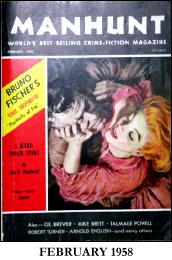
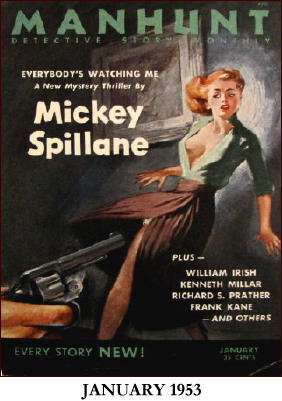
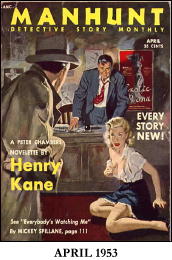
   Manhunt lasted 114 issues during 1953-1967 and during the fifties started the hardboiled crime digest craze. At one time there seemed to be dozens of Manhunt imitators but none of them could match the quality of the magazine that started it all.

   Unfortunately by the sixties it was all downhill and the hardboiled crime era was just about over. Two crime digest still exist, though they are not really hardboiled like Manhunt: Ellery Queen Mystery Magazine and Alfred Hitchcock Mystery Magazine.

   Circulations are dropping fast and in these days of the e-book revolution, we will probably see the end of the digest magazines.

       Literary Magazines —
WALKER MARTIN

   By literary I mean such magazines as the Hudson Review, T. S. Eliot’s Criterion, Scrutiny, Kenyon Review, and so on.

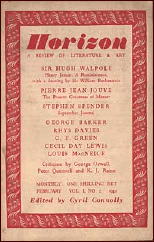
   I have just about all the back issues of many of the quarterlies and I love the Hudson Review, but my favorite is Horizon, not the hardbound art magazine but the monthly British magazine edited by Cyril Connolly during 1940-1949. It lasted 120 issues and I like it so much that I have two sets, one of loose issues and one bound set.

   There are other magazines that I have in two sets, loose and bound and you know you have to love a magazine to have it in bound and loose sets! Let’s face it, collecting books and magazines can be an addiction like alcohol, smoking, gambling, and drugs. But at least we get something to read and sometimes the books are even worth money. Not to mention that collecting old magazines won’t harm your health.

       Men’s Adventure Magazines

   This is a sore point with me and maybe some of you can help me out. I have hundreds of issues from the 1950’s and 1960’s, most showing sensationalistic covers like Nazis partying with half nude girls, while GI’s wait to gun them down. I have yet to find a title that ran decent fiction other than maybe Cavalier in the fifties.

WALKER MARTIN

   I’m not talking about Playboy which actually ran high quality fiction, but the titles like Men’s Adventure, True Men and so on. The only redeeming value to these magazines are the crazy covers but I’m hoping someone here can convince me otherwise.

   Phil Stephensen-Payne has a great link to many titles of men’s adventure magazines published in the 1950’s and 1960’s http://www.philsp.com/mfi2.html

   Please someone show me something else about these magazine that is readable! I’ve just about given up. The covers are stunning and very eye catching but that’s all I see about these magazines. I guess the WW II vets loved these things but I can’t see anything other than the covers worth collecting.

   Check out the link to menspulpmags.com. It’s a real laugh.

   At one time I had a great cover painting from one of the men’s adventure magazines. It show Nazis turning girls into gold ingots. No wonder they lost the war.

          PULP MAGAZINES:

   I haven’t even touched the pulps which are such a big subject they deserve their own section separated by genre:

       General Fiction Pulps —

WALKER MARTIN

   These pulps are often called adventure pulps by collectors but I prefer the label General Fiction. The best ones lasted for very long periods and were very popular with male readers. All Story, Argosy, Short Stories, Blue Book, Adventure, and Popular Magazine were the main titles and I’ve collected them all:

   Adventure Magazine is my favorite and the pulp years lasted from 1910-1953, for 753 issues. The best period was during the 1920’s when editor Arthur Sullivant Hoffman managed to obtain the very best action and adventure fiction. Richard Bleiler wrote the standard history of the magazine in his Adventure Index. Also Blood n Thunder Magazine devoted a special issue to Adventure a couple issues ago. I had an article picking my favorite stories.

   All Story lasted for over 400 issues, 1905-1920, when it was absorbed by Argosy. Famous for providing Edgar Rice Burroughs with a market for his Tarzan and Mars novels. Sam Moskowitz wrote an interesting history of the magazine in Under the Moons of Mars.

   Argosy became the first pulp in 1896 and lasted into the 1940’s when it became a man’s adventure magazine.

WALKER MARTIN

   Short Stories began in 1890 and lasted into the 1960’s. For much of that period it came out every two weeks like clockwork and printed the best action adventure. Blood n Thunder had a long two part article covering the 1920’s and 1930’s.

   Blue Book was known for quality fiction and Mike Ashley wrote a long history of the magazine which appears in Pulp Vault 14. This is the best single issue of a pulp fanzine and can be ordered on Amazon.

   Popular Magazine lasted over 600 issues, 1903-1931 and was called the training ground for the Saturday Evening Post. Another high quality pulp that had a two part article in Blood n Thunder.

       Detective and Mystery Pulps —

   This is easy because of what collectors call “The Big Three”: Black Mask, Dime Detective, and Detective Fiction Weekly. Hammett started in Black Mask and Chandler wrote for all three.

       Western Pulps —

   Western Story lasted over 1200 issues and is my favorite. But West during the Doubleday years of 1926-1935 was also quite good. So was Star Western and Dime Western, both published by Popular Publications.

       Hero Pulps —
WALKER MARTIN

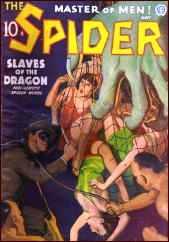
   Most were aimed at the teenage boy market but at least two stand out: The Spider because of the crazy, fast moving plots and weird menace elements and Secret Agent X because it was not as childish as the others.

   I have to admit that I have a problem with many of the hero pulps because of the silly and sometimes stupid sidekicks. I know they were in there because someone figured the teenage boys would like them. Sort of like the childish sidekick humor in the B-westerns of the 1940’s.

   Some of the pulp sidekicks make the western sidekicks look brilliant. In Doc Savage we have Monk and Ham, for instance and their dialog and attempts at humor are enough to make me stop reading. Same thing with G-8 and His Battle Aces. Nippy and Bull have made me consider ripping up a $100 G-8 pulp.

       SF and Supernatural Pulps —

WALKER MARTIN

   Astounding definitely was the best SF pulp. Weird Tales and Unknown Worlds, the best supernatural. Strange Tales, if it had lasted longer than seven issues, it would have been as good or better than the other two.

   Famous Fantastic Mysteries and the companion magazine, Fantastic Novels, are beautiful pulps. It is still possible to get a set without breaking the bank, and these magazines are another example of sets that I have in two formats: bound and unbound. I admit it’s crazy to have two sets, but who said love is logical?

       Sport Pulps —

   Street and Smith’s Sport Story was by far the best sport pulp.

       Love Pulps —

   These were the best sellers of the pulps because teenage girls and young women bought them. Love Story was the best with a circulation that reached 500,000 a week. Edited by the great Daisy Bacon.

   I’d appreciate any feedback on the above that you would care to provide. Do you disagree or have other favorites?

ADDED LATER:

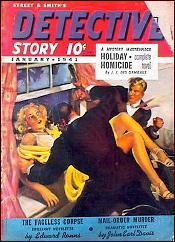
   Todd Mason mentioned that the Daisy Bacon years where she edited Detective Story are underrated. This is certainly true especially the digest period in the 1940’s.
WALKER MARTIN

   In 1943 Street & Smith changed the format of their entire pulp line of magazines from the standard pulp size of 7×10 inches to the smaller digest size. The paper shortages during WW II probably drove this decision. Then the publishers saw that the future looked bleak for pulps and killed every digest title except for Astounding.

   But to get back to Daisy Bacon, she was the guiding force behind Love Story for two decades and then she took over Detective Story and actually introduced a more hardboiled story to the sedate magazine.

   Detective Story had started in 1915 and for most of the next 25 years steered clear of the hardboiled type of story. But Daisy managed to get some of the Black Mask writers to write for her, for instance Roger Torrey and William Campbell Gault. Fred Brown also. I cover the history and many of the authors of Detective Story in an article which can be seen here on the Mystery*File blog.

   When I say Love Story was the best of the love pulps, I’m speaking compared to each other. Since I try to collect every fiction magazine under the sun, I made an attempt, more than once, to read Love Story and some of the competition.

WALKER MARTIN

   I would not advise anyone to try this experiment. Despite being the best sellers among all the pulps, the love genre was very restrictive to say the least. The young ladies and teenage girls of the 20’s, 30’s, and 40’s, only wanted to read the same formula over and over, and the love pulps gave it to them, over and over.

   I’m speaking of the girl meets boy, they have some problems, and everything is resolved at the end. Ranch Romances was different from the others, but I see it as mainly a western title with some romance elements.

   The love genre may have been the big sellers among pulps (and even slicks since the readership was mostly women), but nowadays collectors mainly ignore them and copies can be had very cheaply. I can count very few people who collect them.

   When I bid on some copies at a recent pulp convention, several of my collector friends burst out laughing or were just stunned speechless. I could only explain my seemingly insane actions as an attempt to collect something new, since I’ve collected everything else.

Previously in this series:   The FRANK M. ROBINSON Collection Auction.
ADVENTURES IN COLLECTING:
The FRANK M. ROBINSON Collection Auction
by Walker Martin


   Recently I was disturbed to notice that a pulp discussion group that I contribute to seemed to be ignoring or unaware of the fact that a major pulp collecting event had just occurred. In fact, I call it The Pulp Auction of the Century.

   I am of course referring to the auction of the collection of Frank M. Robinson, science fiction author, Hollywood screen writer, movie actor (he appears in Milk), and world class collector of high condition pulp magazines. I stress the “high condition” part of the last statement. Frank has been written up many times because of his famous “wall of pulps,” all in fine or very fine condition.

   First, what qualifies me to be making such a claim that this was The Pulp Auction of the Century? I’ve been a collector of magazines since February 1956, when as a child, I bought my first issue of Galaxy, a science fiction digest magazine.

   I still have that very same issue that seemed to be on every newsstand and in every drugstore in the Trenton, NJ area. Not only does Galaxy no longer exist but most newsstands and drugstores no longer carry SF or crime fiction magazines. There are only five digest fiction magazines left and they all have decreasing circulations in this era of the electronic gadget and the e-book. We might soon live to see the end of an era, the death of the digest fiction magazines.

   As the years progressed, I started to collect not only back issues of the SF and crime digests, but I also started to collect the pulp magazines, which ruled the newsstands during the 1900-1955 period.

   First I collected complete runs of the SF and fantasy pulps and then I went on to collect all the major detective and adventure titles. Some of my articles concerning these activities have appeared on Mystery*File under the headings of “Memoirs of a Pulp Collector” and “Adventures in Collecting.” I am frankly a lover of old magazines and my collection includes not only pulp and digest, but also slick, men’s adventure, literary magazines and film journals.

   So though I live in a house full of thousands of magazines and books, I never really became a “condition collector” like Frank Robinson. I wanted to compile complete runs of magazines and read them but this would be very difficult if I limited myself to only fine condition copies, not to mention the fact that readers are often very reluctant to read high quality magazines for fear of downgrading the nice condition.

   This is not to say that I never obtained magazines in beautiful shape; I just did not limit myself to collecting them.

   During this 55 year period of collecting I was witness to many pulp sales and auctions. I attended just about every Pulpcon since the first one in 1972. I bought pulps by the thousands and consider myself a serious collector.

   So when the rumors started to circulate that Frank Robinson was going to sell his collection of 10,000 magazines, most of which were in beautiful condition, this was major news. No one had a collection of such fine condition magazines that could compare to the Robinson collection. Recently John Gunnison, who runs Adventure House, published a full color, 500 page book showing the complete collection in all its glory.

   I first became aware of Frank Robinson when I was a kid and read one of his early stories in a 1951 back issue of Galaxy. Several years later I read his novel, The Power and then saw the movie that supplied him with the funds to amass such an astounding collection, The Towering Inferno.

   In the 1980’s Frank and I started trading pulps back and forth and I noticed he was extremely fussy about condition. Later in the 1980’s, he started to attend Pulpcon on a regular basis and I got to actually meet and talk to Frank. He would actually sit at his table in the dealer’s room with two stacks of pulps, carefully comparing copies and choosing the better condition.

   Condition was everything and like most such collectors, I don’t believe Frank actually read the magazines. At one time in his younger days he did read them, but now they were like beautiful works of art, to be admired and looked at. I know many collectors who love the covers and the condition but they don’t read the magazines.

   Frank has a long article in the 500 page book titled “On Collecting”, where he explains his love of SF and how he got started collecting.

   You might wonder why he decided to sell his collection. He says, “The collecting bug waned…” but I’ve seen many collectors who when they reach a certain age decide to find a younger home for their collection. Also, I think he reached the point that all collectors fear, the time when they realize that they have achieved all their major wants and goals.

   So on February 25, 2012, at 7:00 pm began the first of 12 scheduled auctions which Adventure House will run the next few months. This first one I considered the most important because it would put complete sets of pulps and digest up for bids. Some major pulp titles were sold and I’ll list some of the results, though these figures may not be final since the dust has not settled yet.

   I watched the entire auction online, minute by minute, and lot by lot. I also bid on some items but most of the sets I either have or at one time had and then disposed of after reading all that I wanted:

       Doc Savage (complete set) — $50,000

       Astounding SF (these are the pulps, bedsheets, and digests) — $30,000

       Startling Stories (complete set in fine condition) — almost $5,000

       Adventure Magazine (complete set of over 700 issues)— $40,000

       Blue Book (not complete but an extensive run) — $48,000

       Weird Tales (the crown jewel of Frank’s collection and the best condition set in existence) — $250,000

       Planet Stories (all 71 issues in very fine condition, also probably the best set in the world) — $14,000

   Also up for bids were such sets as Wu Fang, Thrilling Wonder, Golden Fleece, Magic Carpet, Oriental Stories, etc. In addition to the above prices there was also a 10% buyer’s premium.

   According to John Gunnison who ran the auction, sales almost hit the $500,000 mark and he considers this to be the most successful sale he has ever been involved in.

   Now looking at the above prices you might consider them high. But you have to remember, these are not your usual good condition pulps with the usual browned paper, spine and cover flaws. These mainly are fine to very fine condition and thus bring much higher prices than the standard condition magazine.

   Think of it this way, most of us have bought cars, sometimes paying over $25,000 and ten years later we have nothing to show for our hard earned money. To a collector, it is just as important to have a nice collection, so the prices may not be as out of line as you think.

   In addition, where else are you going to find such important and significant titles as Adventure and Blue Book? During the period of around 1910-1950 these magazine carried the best adventure fiction written by the best authors.

   And of course Weird Tales is in a class by itself. Can anyone really argue that it was not the best fantasy and supernatural magazine ever published? Well maybe Unknown Worlds, but it only lasted 39 issues.

   So I would like to thank Frank Robinson and John Gunnison for providing a great and noteworthy pulp auction. After all these years, I thought I’d seen it all but this auction proved once again to me that collecting books and pulps is the grandest game in the world.

Previously in this series:   Is Completism Fatal?.

PulpFest 2012:
Thursday, August 9, 2012 – Sunday, August 12, 2012


   PulpFest 2012 continues the proud tradition of a summer pulp con, now entering its 41st year. PulpFest is the summertime destination for fans and collectors of vintage popular fiction and related materials. It will be held at a new venue, the Hyatt Regency in downtown Columbus, Ohio. It will begin on Thursday evening, August 9th and continue until Sunday afternoon, August 12th.

   PulpFest continued to grow in 2011 with more than 430 registrants. It was the largest crowd ever for a summertime pulp con. Reviews were generally very positive, from Walker Martin’s “…when the dealer’s room opened officially, it was obvious that this was another rousing success,” to Ron Fortiers’ “…a truly fun and exciting program with a little of something for all pulp enthusiasts,” and newcomer Sean Levins’ “This was, without a doubt, the best convention I’ve ever been to!”

   Sellers of pulp magazines, vintage paperbacks, and other paper collectibles and related items are already filling up our exhibit space. There will be more than 100 tables of pulps, books, vintage comics, original art, B-movies and serials, and similar items available for sale, daily from 9 AM until 5 PM. The evening hours, from 7 PM until midnight, will see a variety of programming.

   2012 marks the 100th anniversary of the publication of Edgar Rice Burroughs’ “Under the Moons of Mars,” better known by its book title A Princess of Mars and, more recently, John Carter, a major motion picture from Disney. Robert E. Howard’s Conan the barbarian will also be 80 years old in 2012. PulpFest will be celebrating both of these occasions during their highly regarded evening programming. The award-winning science-fiction writer and noted Burroughs authority, Mike Resnick, will also be appearing as the convention’s guest of honor. Author readings and an art show featuring work by illustrators Jim and Ruth Keegan and, possibly, Mark Schultz, are also planned.

   For further information, please visit the convention’s website at https://www.pulpfest.com/ or write to David J. Cullers, 1272 Cheatham Way, Bellbrook, OH 45305 or via email at jack@pulpfest.com.

   The contact phone number for the hotel is 1-614-463-1234. Be sure to mention PulpFest 2012 when booking a room to get the convention rate. Hotel reservations can also be through the convention’s website through a dedicated link to the Hyatt Regency Columbus.

Price: $15.00 – $35.00

Member Discount: A three-day prepaid membership will cost $30. Send payment to David J. Cullers, 1272 Cheatham Way, Bellbrook, OH 45305. Payment at the door will be $35 for a three-day membership. Daily memberships will cost $15.

ADVENTURES IN COLLECTING:
Is Completism Fatal?
by Walker Martin


Dear Walker:

   My own collection is all but complete — meaning that I’ve almost acquired all of the items on my want list. Of course I’ll always be out there keeping my eye open for serendipitous books and magazines, but I only have a very few more such items that I’m actually looking for. Once I find those I’m essentially done. Then I’ll just give them all away to the Salvation Army thrift store and start over… Your advice, please!

— C.P.


Dear C.P.

   You have touched on a dangerous subject that all serious collectors must beware. I’ve seen many collectors fall into the dreaded trap of completing their collection. Usually once the collection is completed then many collectors lose interest and start thinking what next?

   This results in the selling off of many collections because the enthusiasm of the chase and the drive to collect is now finished. Collectors that limit themselves to a favorite author or magazine are prone to losing interest once their goal of completion has been achieved.

   Since collecting can be so much fun, how do we avoid falling into the abyss and losing interest in our collections after completion? The answer I have found is very simple, you do not allow yourself to complete your collection. You have to keep expanding your interests.

   For instance, in your case, if you are close to completing your SF wants, then you have to develop an interest in another genre, another subject, other magazines. Maybe detective fiction or adventure pulps or original art to go along with your SF collection. Something else!

   For instance in my own case, I started off in 1956, at the age of 13 collecting SF. This continued for around 10 years until I discovered detective pulps thanks to Ron Goulart’s Hardboiled Dicks anthology. This led me to collecting all sorts of mystery fiction like Raymond Chandler, Dashiell Hammett, Ross Macdonald. It led me to completing sets of such great magazines like Black Mask and Dime Detective.

   But then around 1980, I was faced again with the horrifying realization that I was nearing completion of the detective and mystery wants. I quickly expanded to adventure and western fiction and started to work on extensive sets of Western Story, West, Short Stories, Adventure, All Story, Argosy, Blue Book, Popular, Sea Stories and many others.

   As I started to complete these magazines and run out of reading matter, I decided my job was taking up too much of my time and interfering with my reading and collecting activities. So in 2000 I retired to concentrate on building up what may be the world’s largest collection of literary magazines.

   I’ve yet to meet another collector that is interested in these artifacts, but I love them, and I can fall into a trance looking and smelling the scent of rows and rows of literary quarterlies like the Hudson Review, The Criterion, Scrutiny, The London Magazine, Kenyon Review, Paris Review, and The Virginia Quarterly. I could go on and on forever but I’m sure you are all disgusted and fatigued reading about someone else’s collecting addictions. Hell, I actually read these things.

   But the end may be near, even for me. I’ve mentioned before about almost being crushed by the collapsing of one of my basement bookcases due to overloading. Then a year or so later several bookcases fell on top of me and my son. Then last month a bookcase of literary magazines showered me with more than a hundred issues of the Sewanee Review.

   It was heavenly. I just stood there as the magazines rained down on me and I felt at peace. Then I had to go to work picking them up off the floor and stacking them before my wife came to investigate the noise. She’s heard the sound of collapsing shelves and stacks falling, so she never asked me until a couple days later about the crashing noise that she chose to ignore.

   Probably, she was hoping that I had tempted fate once too often and had been pounded flat as a pancake by the old magazines that she now hates with a passion. But no, I survived once again, just like some pulp super hero!

   So I say to you, C.P., don’t stop collecting. There are unknown fields still to conquer. Don’t spend all your salary on your bills, your family, college fees for your children. You work hard for your money; spend some of it on collecting!

   Now I have to go back to a discussion I’ve been having with myself for 50 years. What is the greatest fiction magazine ever? Is it Adventure in the 1920’s, All Story in the teens, Black Mask and Weird Tales in the 1930’s, Astounding and Unknown in the 1940’s, Galaxy in the 1950’s and 1960’s?

   How about The Magazine of Fantasy and Science Fiction, which has to fit somewhere. How about the SF fiction in Playboy and Omni, or the mystery fiction in Manhunt or EQMM?

   Maybe I better fix up these bookcases so they don’t collapse; I need answers to the above questions!

Previously in this series:   Collecting Manhunt.

ADVENTURES IN COLLECTING:
MANHUNT MAGAZINE
by Walker Martin


   Recently, I was walking through my house trying to find a set of magazines on the bookshelves. I wasn’t having too much luck because I must have double stacked another set of magazines in front of them. Then I started wondering, how did I get to the point that I have so many books and magazines that I can’t find them? It’s not as if I have them hidden in boxes or storage units, they are mostly on bookshelves, though I do see some stacks on the floors.

MANHUNT

   I started collecting magazines in 1956 and I still have the very first one that I bought off the newsstand: the February 1956 issue of Galaxy. I keep intending to frame it and hang it on the wall. So I’ve been at it now for 55 years and I guess that is how I now have so many magazines that I cannot find some of them. Each year I pick up more or start collecting another title that I’ve been thinking about reading. It all adds up as the years march on.

   When I bought the Galaxy I was hooked for life on science fiction. I was 13 and my allowance was $1.50 each week. Doesn’t sound like much but that’s $6.00 a month which enabled me to buy all the SF digests and paperbacks. I also had a job on Saturdays which paid me another $1.50 per week, cleaning a barbershop (sweeping floors, dusting bottles, cleaning the mirrors).

   Since the SF digests only cost 25 cents I was within my budget. But then in the summer of 1956 I discovered Manhunt and all of a sudden I had a cash flow problem. Manhunt had a lot of hardboiled crime competition from such titles as Pursuit, Hunted, Two Fisted, Offbeat, etc.

MANHUNT

   This was the age of the digest revolution and the newsstands were full of the small fiction magazines. If you try and find the digests nowadays, you will realize we are at the end of the digest era and perhaps entering the days of the electronic magazine or e-book.

   As a lover of the physical books and magazines, this makes me very unhappy. The e-book looks pretty sorry next to the beautiful artifacts that I have been collecting for so many years. The feel of the physical book, the dust jacket, the smell of the pulp paper or digest, might soon disappear and be replaced by the humming of a electronic gadget.

   No e-book could have ever made me fall in love like I did when I saw my first Galaxy or Manhunt. We all know about the attractions of the SF covers but the Manhunt covers struck a deep sexual chord within my body. The brassy blondes, the shameless hussies, the girls about to be beaten, or something worse.

MANHUNT

   Unfortunately, I didn’t have enough money to buy SF and crime digests, so after reading a few Manhunt’s, I had to reluctantly stop buying them. Fast forward about 20 years and now I have a job with more money to spend on collecting. But I also have the usual things like a wife, kids, mortgage, etc.

   Somehow I managed to squeeze out enough to put together a complete set of Manhunt, all 114 issues. By the way, the magazine is well known as just about the best of the hardboiled crime digests, lasting from 1953 to 1967, so this fact makes collecting the title a prime objective.

   For about 25 years I read many of the stories by Ed McBain, William Campbell Gault, Richard Prather, Ross Macdonald, etc. But then around the year 2000, I started to get annoyed by the amount of hours I was spending each day working at my job. I figured if I took early retirement, I could read and watch film noir movies all day long! I must have been wasting 10 hours a day working.

MANHUNT

   So in order to make all this happen, I did some downsizing and made the mistake of selling my set of Manhunt’s. To make matters even worse, I sold it for only $500, which included the 12 very rare large sized issues.

   Now I began to question my sanity and judgment as a serious collector. I missed the magazine terribly and spend many years whining and complaining about my stupid decision to sell.

   A few years ago at Pulpcon I stumbled across an art dealer who had two of the 1956 original cover paintings used on Manhunt. I immediately bought both and hung them in my living room, despite the nervous complaints from my wife about the scenes showing women being strangled.

   The copies of the magazine came along with the paintings and I rapidly reread both, meanwhile muttering under my breath about mentally defective collectors who sell favorite magazines.

MANHUNT

   So for over 10 years, I felt this regret eating away at me until finally this year at the Windy City pulp convention, my desire to rebuild the set burst forth. In a mere two hours, I had gone through 140 dealer’s tables like a buzzsaw and found 39 issues of Manhunt, or about 1/3 of the run.

   The price averaged about $11 or $12 each, some higher, some lower. Now, you would think that this would make me feel relieved and happy. No, not at all. I wanted the complete set of 114 issues. 39 issues were not enough, a mere drop in the bucket.

   Another blog that I follow, hosted by a collector like Steve Lewis who also loves books and magazines, was having to downsize his collection because he was selling his house. Normally he would never consider selling what he also thought was the greatest hardboiled crime digest.

MANHUNT

   I made a good offer and he quickly accepted. Also included were the Manhunt companion digests such as Verdict, Murder, Menace, and Mantrap. He also threw in several Giant Manhunt’s, which rebound leftover issues, and the British version titled, Bloodhound.

   The condition was nice, especially the 12 large sized issues which are so rare. One problem was how to smuggle three large boxes into the house without my wife detecting the arrival of over 100 more magazines. The house is already sinking under the weight of thousands of books and magazines(I won’t even go into the subject of the thousands of DVDs).

   When the mailman delivered the boxes I quickly put them into the trunk of my car, giggling insanely at my clever actions. Then I slowly introduced them into the house and no one noticed because I’m always walking around with stacks of books or magazines.

   So ends another successful Adventure in Collecting. Welcome home Manhunt!

MANHUNT

CONVENTION REPORT: PulpFest 2011
by Walker Martin

   Over the past 40 years I guess I’ve attended 40 pulp conventions and I’ve always traveled by car either alone or with another collector. This is the first year that five of us rented a van and it was quite an experience. Between the five collectors there must of been at least 200 years of collecting books, pulps, digests, and vintage paperbacks. Three of us even collect original pulp cover paintings, not to mention slicks and other old magazines such as literary magazines, men’s adventure magazines, etc.

   We kept each other amused by recalling strange book adventures and bizarre topics like The Craziest Pulp Collector I Have Known. Needless to say, some of the people in the van qualify for this title! I might as well mention the names of these demented souls who spend their lives dreaming of pulps and books. In addition to myself, the collectors cooped up in this van were Nick Certo, Steve Kennedy, Digges La Touche, and last and not least, Ed Hulse, who was our driver.

   Somehow, this overloaded van arrived safely a little over eight hours later. Even more surprising was the fact that we had not killed each other and were still on speaking terms. After checking into the Ramada Plaza, we all headed for the dealer’s room to set up our tables.

   It was the same large room as last year and held over 100 tables. Because the large unloading doors were open to the 95 degree heat, there appeared to be very little air conditioning in effect.

   We were not amused to find out at dinner that the restaurant was also very warm. Not only that but they were out of certain items on the menu, including hamburger at one meal. When I ordered beer, practically every brand I tried to get was not available. Frankly, the restaurant did not seem set up to handle a convention weekend.

   Next day when the dealer’s room opened officially, it was obvious that this was another rousing success due to the hard work of the PulpFest committee: Mike Chomko, Jack Cullers, Ed Hulse, and Barry Traylor. Jack Cullers also seemed to have an army of support from his family and friends.

   I really must say these people deserve the thanks of pulp collectors for putting on such an excellent show. The attendance was the highest yet of any Pulpcon or PulpFest, over 425 attendees, which is a nice 10% increase over last year’s figure.

   At my table, I sold far more than I thought I would, selling DVDs, cancelled checks from the files of Popular Publications and Munsey, and all 39 duplicate Manhunt’s.

   The biggest sale I noticed involved a 1929 Black Mask with white paper, in fine condition. The seller asked me what I thought it was worth and I said over $500, perhaps closer to a $1000. The first collector I told ran over and paid $900 for the issue. The unusual thing is that the reason the magazine sold was not because of the fine condition or because it was a 1929 Black Mask with a Hammett story. It sold because the collector was a rabid collector of Erle Stanley Gardner.

   Another big sale I witnessed was the Ace Double original cover painting for Mrs. Homicide by Norman Saunders. After much haggling, this went for over $8,000.

   Several pulp reprints made their debut including Ed Hulse’s new issue of Blood n Thunder; Savages by Gordon Young; and The Best of Blood n Thunder. I bought all three publications and Ed said he sold just about all the copies that he brought to the convention.

   Laurie Powers also had good sales on her new book, a collection of Paul Power’s stories, titled Riding the Pulp Trail. Tom Roberts of Black Dog Books also had several new books for sale, including Pulp Vault 14, the best single issue of a pulp fanzine ever published.

   Matt Moring of Altus Press has an ambitious reprint schedule, including collections of Fred Nebel’s Tough Dick Donahue, Kennedy and McBride, and Cardigan. These are major publications and well worth buying because the original Black Mask and Dime Detective pulps are so expensive.

   The 20th issue of The Pulpster also made its debut and looked like one of the best issues yet. The editor is Tony Davis and he included 10 articles, including an unpublished story by H. Russell Wakefield. There were articles on William Cox and H. Bedford Jones and Don Hutchison’s memories John Fleming Gould. He appeared at Pulpcon 19 in Wayne, NJ and I remember his visit vividly. I was high bidder on one of his sketches showing G-8’s Herr Doktor Krueger. John Locke is also present with an interesting piece on “Hunting Pulpsters In Graveyards”

   I heard later that John Locke and John Wooley visited the gravesite of D.L. Champion, who wrote such crazy series starring Inspector Allhoff for Dime Detective, and Rex Sackler for Black Mask. The grave is evidently near the convention hotel and I would have liked to visit it but then again I get very emotional about pulp writers and probably would have made a fool of myself, not to mention getting arrested for trying to sell the remains at PulpFest.

   One of the big surprises of the convention was the visit of former Pulpcon chairman and organizer, Rusty Hevelin. In the early years, Rusty single handedly kept Pulpcon going and deserves our thanks for his efforts, without which there might not be a convention all these years later.

   He received a round of applause as he entered the dealer’s room and because he is in his late 80’s, I figured he would just visit for a short time and then leave. However, he evidently enjoyed himself and stayed all three days. He even attended the evening programming with his friend, Gay Haldeman. Welcome back Rusty.

   Another collector I was glad to see, was Gordon Huber, the only person to actually attend every Pulpcon and Pulpfest since the first one in 1972. Unfortunately there were several collectors who could not attend this year, including such long time attendees as Al Tonik, Steve Lewis, and Dave Kurzman.

   The evening programming was some of the best I’ve ever seen. Some of the highlights were the three “Shadow” shorts from 1931-1932; the speech given by David Saunders on three pulp artists; the grandaughters of the pulps panel featuring Laurie Powers, Karen Cunningham, and Nicky Wheeler-Nicholson; Stephen Haffner’s talk on C. L. Moore; Garyn Roberts discussion of steampunk in the pulps and dime novels: and the panel on Walter Gibson and The Shadow.

   The auction was disappointing to me but I imagine some collectors found some good items. Tony Tollin won the Munsey Award for his extensive project which reprints the pulp novels featuring The Shadow and Doc Savage.

   The daytime programming consisted of readings and panels featuring contemporary authors discussing the new pulp fiction. The Pulpster also had an article about this recent movement and I have to admit I like the old pulp fiction from the original magazines. But evidently there are some fans of this new pulp fiction.

   Finally, I would like to thank the people responsible for stocking the Hospitality Room with beer, soda, and snacks. I also noticed a couple pizzas floating around and whoever ordered them let me have a piece. Each year, I notice Rusty Burke in the room and he is one of the collectors responsible for the beer and locking up the room. Thank you Rusty.

   I hope to see even more collectors in attendance next year because it is so important to support this convention.

   After all, book and pulp collectors are my favorite people…

THE FRONT COVER:

ERLE STANLEY GARDNER TCOT Velvet Claws


THE INSIDE FRONT JACKET FLAP:

A MORROW MYSTERY


To Readers of Detective Stories:

   One day last December our editorial and sales departments agreed that too many mystery stories are being published in America and decided to accept no more such novels for at least six months. The next day two manuscripts were received. They were both by the same author. They were both detective stories. They were both accepted at once for publication.

   The Case of the Velvet Claws is one of those manuscripts. The second will be published in the fall. (*) And both sales and editorial departments claim the credit for being the first to prophecy that Erle Stanley Gardner will find a place immediately as one of the most popular authors of detective fiction.

   We hope that after reading this book you will agree we were justified in changing our minds.

(signed)   The Publishers.

* The Case of the Sulky Girl.

The Story

   Perry Mason, criminal lawyer, is retained by a much-too-beautiful woman who obviously is concealing more than she is telling. She has heard that Perry Mason not only a law unto himself, but that he never lets a client down. She has been indiscreet, and is involved in blackmail.

   The case is immediately complicated by murder, and Perry Mason finds himself as busy keeping clear of the law himself as he is in saving his client. The action is swift, dramatic, convincing. The handling and solution of the case are well developed and logical — perhaps because the author is a practicing lawyer with a trained legal mind.

   Mr. Gardner’s writing has a style and personality of its own. His characters are colorful and vital. The lawyer, Perry Mason, and his charming secretary, Della Street, we believe, will become famous characters to all detective story enthusiasts.

WILLIAM MORROW & COMPANY
386 Fourth Avenue        New York


THE INSIDE BACK JACKET FLAP:   A detailed synopsis of –In Time for Murder, by R. A. J. Walling, a mystery novel also published by Morrow.

THE BACK COVER:   A statement of the philosophy of the publisher relative to detective fiction, and a list of the titles they had recently published:

R. A. WALLING
   Stroke of One
   –In Time for Murder
CHARLES G. BOOTH
    Those Seven Alibis
    Gold Bullets
CHRISTOPHER BUSH
    The Case of the April Fools
    Cut Throat
WALTER F. EBERHARDT
    A Dagger in the Dark
ROGER DENBIE (upcoming)
    Death on the Limited (April 1933)

COVER PRICE:   $2.00.

NOTE: Thanks to Bill Pronzini and Mark Terry for the cover images used to provide the information above.

… this made me very sad.

http://thegoglog.blogspot.com/2011/03/remains.html

COLLECTING PULPS: A MEMOIR
PART SEVEN — PULPS, DIGESTS AND E-READERS.
by Walker Martin


   A question came up on the Yahoo PulpMags group earlier this week. Why, it was asked, didn’t Thrilling/Popular Library convert their pulp magazines to the smaller digest size in the mid-1950s?

   As a magazine collector I’ve often thought about this topic. I also like Startling Stories and Thrilling Wonder Stories and I guess one reason as to why they did not make the change to digest was that they simply did not see that the digest era was upon them.

   The pulp format had been very successful for 50 years and maybe they figured they could continue somehow. But the digest format swept everything aside (excepting Ranch Romances).

   Maybe they figured even the digest format would not survive. They had seen Street & Smith convert all their pulps to digest in 1943 and then finally give up on the digests in 1949 (except for Astounding).

   Same thing with Popular Publications. They changed most of their pulps to a slightly larger digest format but it was a failure also They then switched back to pulp size but within a couple years killed all their SF, detective, western, sport, love pulps.

   Look what we are going through now. Newspapers and magazines are all suffering from declining circulations. The digital, online format may be next since they cannot continue to lose massive amounts of money with the hardcopy, print format.

   My hometown paper, The Trenton Times, has made so many editorial and staff cuts, that the paper is a shadow of its former self. This is happening across the country to many newspapers and magazines.

   The digest era now appears to be just about over. Very few outlets bother to carry the magazines at all. In the the Trenton area, the only place left for me to buy the SF or mystery digests is Barnes & Noble. My Borders superstore bit the dust recently and that chain appears doomed.

   I checked the circulation figures in the January or February issues of the SF digests:

       ANALOG SF — 30,000 average
       ASIMOV’S — 23,000 average
       F&SF — 15,000 average

   The above figures are a fraction of what these magazines used to announce. The downward decline has been going on now for years and in the future people may say how come the SF digests did not see that the digest era was over. Is digital the answer? Asimov’s I believe has already started. Maybe the others are also available on Kindles, etc.

   But I have no interest in e-readers or reading fiction online. I have a houseful of pulps, digests, slicks, literary magazines. Like Startling and Thrilling Wonder I’m in for the duration and like them I’ll be holding out until I die.

   So as collectors and readers, our battle cry has always been “Remember the pulps!” Soon we will add another cry which will be “Remember the digests!” Will the book format be next?

   Not for me, and my final words will be “To hell with the e-readers!”

Previously on Mystery*File:   Part Six — Are Pulp Collectors Crazy?.

« Previous PageNext Page »