Characters


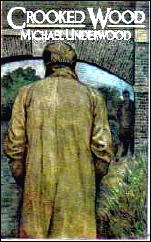
MICHAEL UNDERWOOD – Crooked Wood.

St. Martin’s, US, hardcover, 1978. Hardcover reprint: Detective Book Club, 3-in-1 edition, July 1978. Previously published in the UK by Macmillan, hc, 1978.

MICHAEL UNDERWOOD Crooked Wood

   Mystery stories usually end where this one begins, with the murderer safely behind bars and about to stand trial. Underwood’s forte is the courtroom drama, British style, and here the problem is twofold: who hired the contract killer who actually did the job, and, who’s trying to buy off one of the jurors?

   Sergeant Atwell’s work is clearly not done, and it requires the timely assistance of his ex-policewoman wife Clare and the gathering of an overabundant supply of red herrings before a surprise Mr. X is named. A deftly woven detective tale it is, and an interesting variation from the norm.

– From The MYSTERY FANcier, Vol. 3, No. 3, May-June 1979, very slightly revised.


       Bibliographic data:

Michael Underwood was the pen name of John Michael Evelyn, 1916-1992, and the author of nearly 50 works of crime and detective fiction, many of them dealing with cases taking place in British courtrooms in one way or another.

   His series characters include (often in overlapping cases) Inspector (later Superintendent) Simon Manton, Martin Ainsworth, Rosa Epton, Richard Monk and Sergeant Nick Atwell. One bookseller describes Rosa Epton as “England’s answer to Perry Mason.”

   Richard Monk is also a lawyer, but the books with Martin Ainsworth appear to be spy fiction (e.g. The Unprofessional Spy, 1964). Many of the cases for Nick Atwell, a police sergeant at Scotland Yard, are shared with detective constable Clare Reynolds, although according to my review, she seems to have been off the force at the time Crooked Wood takes place.

REVIEWED BY WALTER ALBERT:         


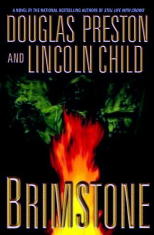
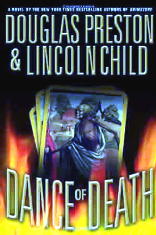
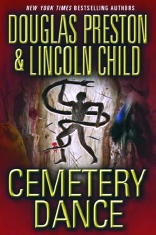
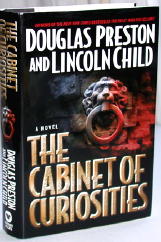
DOUGLAS PRESTON & LINCOLN CHILD – The Cabinet of Curiosities. Grand Central Publishing, hardcover, June 2002; paperback: June 2003.

Cabinet of Curiosities

   One in a series of novels by the co-authors, this features Pendergast, an enigmatic FBI agent, who is investigating old crimes that are suddenly made current by a series of murders in NYC that are either copycat killings or improbable crimes by the still surviving killer.

   A newspaper reporter plays the role of the HIBK heroine (although he’s male), walking into situations that any sensible character would stay away from.

   The bizarre nature of the crimes and the gradual unfolding of the killer’s identity and his rationale kept me reading but I ended the read with a feeling of dissatisfaction about the length of the book (629 pages) and lapses in narrative interest.

From Wikipedia: “Aloysius X. L. Pendergast, PhD is a fictional character appearing in novels by Douglas Preston and Lincoln Child. He first appeared as a supporting character in their first novel, Relic, and in its sequel Reliquary, before assuming the protagonist role in The Cabinet of Curiosities.”

Later novels:

      Still Life with Crows (2003)

     “The Diogenes Trilogy” —

           Brimstone (2004) (Book One)

Cabinet of Curiosities

           Dance of Death (2005) (Book Two)

Cabinet of Curiosities

          The Book of the Dead (2006) (Book Three)

      The Wheel of Darkness (2007)

      Cemetery Dance (May 2009)

Cabinet of Curiosities

THE BACKWARD REVIEWER
William F. Deeck

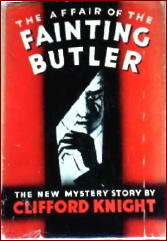
CLIFFORD KNIGHT – The Affair of the Fainting Butler.

Dodd Mead, hardcover, 1943. Hardcover reprint, Detective Book Club, 3-in-1 edition, November 1943.

CLIFFORD KNIGHT Affair of Fainting Butler

   There are those, and I am among them, who read mysteries primarily to find out if the butler did indeed do it. Unfortunately, these days there are few novels in which you can suspect the butler, a breed that has been an endangered and even vanishing species for years.

   This is one of the old-fashioned novels that still affords us that pleasure. And, yes, the butler does faint. In fact, he faints three times. Did he do it? That would be telling.

   Larry Weeks, agent — or flesh peddler, if you prefer — for Jenifer Janeway, who wrote magazine serials “that made worrying wives, whose husbands had young sophisticated secretaries, think of Reno,” goes to Janeway’s home to try to keep her from carrying out her threat to commit suicide. She is about to start writing screenplays, and she is his meal ticket.

   While Janeway and Weeks are in her garden, Sloan Hinckley, Shakespearean actor and Weeks’s other but lesser client, appears on the wall. He is Janeway’s neighbor — ah, coincidence, where would mystery writers be without you? — and has come to report that he has discovered a corpse on her grounds.

   No corpse, however, is to be found. When Janeway is visited shortly thereafter by an old friend, Hinckley claims that the old friend was the corpse.

   There are several murders of varying unlikelihood for equally unlikely reasons. The amateur detective, Prof. Huntoon Rogers, is a veritable nonentity. Though he is present throughout the novel and solves the crimes, if his name isn’t before you at all times, you tend to forget his existence.

– From The MYSTERY FANcier, Vol. 10, No. 3, Summer 1988.


[EDITORIAL COMMENT.] You can google Huntoon Rogers, Clifford Knight’s detective character, all you want, but you won’t find much out about him. He’s about as anonymous as Bill Deeck suggests, especially considering he was the leading character in 18 of Knight’s detective novels in an 11-year period between 1937 and 1947, all of which began with The Affair of

   But think about it. Eighteen books in eleven years. That’s a pretty good track record for an author and a series character both of whom are all but forgotten now. (I read one once, and I can’t even tell you now which one of them it was.)

        Bibliographic data:

   Taken from the Revised Crime Fiction IV, by Allen J. Hubin:

ROGERS, PROF. HUNTOON.    Series character created by Clifford Knight, 1886-1963.
      The Affair of the Heavenly Voice (n.) Dodd 1937 [California]
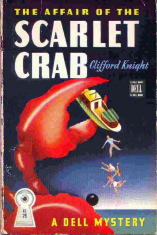
      The Affair of the Scarlet Crab (n.) Dodd 1937 [Ship]

CLIFFORD KNIGHT

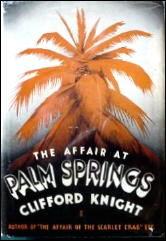
      The Affair at Palm Springs (n.) Dodd 1938 [California]

CLIFFORD KNIGHT

      The Affair of the Ginger Lei (n.) Dodd 1938 [Hawaii]
      The Affair of the Black Sombrero (n.) Dodd 1939 [Mexico]
      The Affair on the Painted Desert (n.) Dodd 1939 [Arizona]
      The Affair in Death Valley (n.) Dodd 1940 [California]
      The Affair of the Circus Queen (n.) Dodd 1940 [Manila]
      The Affair of the Crimson Gull (n.) Dodd 1941 [California]
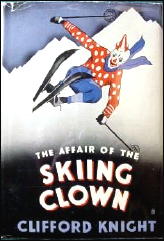
      The Affair of the Skiing Clown (n.) Dodd 1941 [California]

CLIFFORD KNIGHT

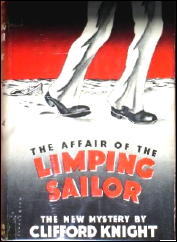
      The Affair of the Limping Sailor (n.) Dodd 1942 [California]

CLIFFORD KNIGHT

      The Affair of the Splintered Heart (n.) Dodd 1942 [Hawaii]
      The Affair of the Fainting Butler (n.) Dodd 1943 [Los Angeles, CA]
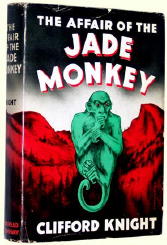
      The Affair of the Jade Monkey (n.) Dodd 1943 [California]

CLIFFORD KNIGHT

      The Affair of the Dead Stranger (n.) Dodd 1944 [California]
      The Affair of the Corpse Escort (n.) McKay 1946 [Los Angeles, CA]
      The Affair of the Golden Buzzard (n.) McKay 1946 [California]
      The Affair of the Sixth Button (n.) McKay 1947 [California]

PostScript: You probably do not want to know how much those books in dust jacket would set you back, but I’ll tell you anyway. Excluding the Dell mapback (approximately $15) perhaps mid-three figures each, on the average.

A REVIEW BY DAVID L. VINEYARD:         
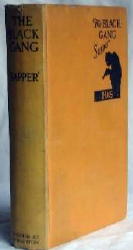

BULLDOG DRUMMOND

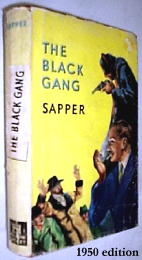
H. C. McNEILE [SAPPER] – The Black Gang.

Hodder & Stoughton, UK, hardcover, 1922, as by “Sapper.” Doubleday Doran & Co., US, hardcover, 1922. Reprinted many times in both hardcover and soft. Filmed as The Return of Bulldog Drummond: BIP, 1934, screenwriter/director: Walter Summers.

   Readers should be warned that I am going to write a positive review of one of the most excoriated books in the thriller genre, and I should know since I have been among those excoriating it. That said, I think someone needs to point out why Sapper (Herman Cyril McNeile) and Bulldog Drummond have lingered so long in the public imagination and are still read today by some — myself included.

   The reasons aren’t just historical nor the relative low state of the public taste, and there are reasons Drummond inspired writers like Ian Fleming and Clive Cussler, not to mention Lester Dent and Doc Savage, Mickey Spillane and Mike Hammer, Leslie Charteris and the Saint, and John Creasey and Patrick Dawlish.

   There is more going on here than just a brief popular phenomena. Today the name still has a certain evocation, a fact expressed by it’s use by a well known design firm and it’s presence in the rock lyrics of the band the Coasters in their 1957 song “Searchin!”

No matter where she’s a-hidin’, she’s gonna hear me a-comin’
Gonna walk right down that street like Bulldog Drummond!

   Sapper was one of the writers critic and journalist Richard Usborne defined as “The Clubland Heroes,” in his book of that name, a study of Dornford Yates, Sapper, and John Buchan’s novels about West End club men heroes of a particular brand of thriller (or shocker as Buchan preferred) that was popular in the period between WWI and WWII. (Buchan, it should be noted, began as early as 1910).

   Sapper began his career writing in the Kipling mode (which he never fully escaped) in short stories set in the trenches of WWI France. His popular collections of short fiction exemplified the British soldier and particularly the upper middle class Englishman, a sportsman who for some tragic reason might be an ordinary ranker or perhaps an officer, and become involved in some dramatic wartime incident (and following Kipling’s lead from the Soldier’s Three stories, a fair number of comic ones). At the site devoted to the artwork on the dust jackets of books about the Great War (I) an entire page is devoted to Sapper.
BULLDOG DRUMMOND

   At the war’s end McNeile returned to England, and like many men in his position he was dissatisfied and found it difficult to readjust. He probably didn’t feel the general malaise and depression many veterans did, he just wasn’t the type, but it was a result of his war experience and disillusion with civilian life that he wrote his 1920 novel Bulldog Drummond: the Story of a Demobilized Officer Who Found Peacetime Dull.

   Captain Hugh “Bulldog” Drummond is a large cheerfully ugly type (with beautiful eyes and a charming smile) who indeed finds peacetime dull, so from his flat in Half Moon Street in London’s fashionable West End he takes out an ad advertising his services.

… “Demobilized officer,” she read slowly, “finding peace incredibly tedious, would welcome diversion. Legitimate, if possible; but crime, if of a comparatively humorous description, no objection. Excitement essential. Would be prepared to consider permanent job if suitably impressed by applicant for his services. Reply at once Box X10.”

   The ad brings one Phyllis Benton (of the golden brown curls), a lady in distress whose father is being held by mysterious men. And we’re off. Soon Drummond is joined by his friends Peter Darrell (second in command), Algy Longworth (silly ass), Ted Jerringham (�a good amateur actor”) and Toby Sinclair (V.C. no less).

   As Usborne points out it is the world of the public school scrum with beer and martinis. (Sapper had obviously read his Baroness Orczy, for the lads sound an awful lot like the League of the Scarlet Pimpernel and much of Drummond’s drawling and babbling is drawn from the Pimpernel himself, Sir Percy Blakeney.) An entire generation of young Englishmen had died in the trenches of the Great War, and in the adventures of Drummond and his friends they were reborn in the popular imagination.
BULLDOG DRUMMOND

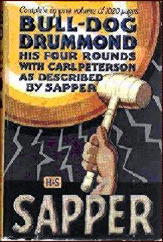
   But as in the public school scrum there is the ‘enemy’, and here Sapper outdoes himself, for in his first four adventures Drummond is opposed by one of the great villains in popular literature, a figure of cunning and cold intellect who could give Moriarity and Fu Manchu a run for their money and was the inspiration for Ian Fleming’s James Bond’s ultimate rival Ernst Stavro Blofield of Spectre, namely Carl Peterson.

   Indeed Peterson is such a good villain Usborne gives him his own chapter in The Clubland Heroes, the only villain to earn such an honor, or deserve it.

   And if Peterson isn’t enough Sapper outdoes himself by giving him an adoring and worshipful black widow of a mistress, Irma Peterson, the slinkiest deadliest and most evil companion in the literature. If Peterson didn’t consistently overestimate Drummond’s intelligence and always fail to plan for the most obvious action it is pretty clear our hero would never have had a chance. He’s outmatched by a mile.

   There’s a plot in progress to bring ruin not just to Phyllis’s father, but the entire British economic system. Before it’s over Drummond will have strangled a full grown ape in a pitched battle in the dark, played commando assaulting Peterson’s stronghold, and tossed Peterson’s second in command Henry Lakington into a much deserved acid bath. (�The retribution is just.”)

   England is saved, Peterson and Irma escape, and Drummond marries Phyllis, who has already begun her notable career of being the most kidnapped wife in literature. (The Spider’s companion Nita Van Sloan may have outdone Phyllis, but then she wasn’t a wife.)
BULLDOG DRUMMOND

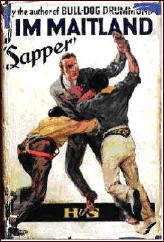
   Sapper may not have been subtle, but he had a fine eye for melodrama. Bulldog Drummond was an immediate success and there was little doubt he would be back, although between the first and second books Sapper produced a series of connected stories about another hero, monocled Jim Maitland.

   Jim Maitland (1921) is probably Sapper’s best book and best character, but in this article slash review we are involved with Drummond, and his second adventure, The Black Gang, the latter referring to Drummond’s black-hooded and black leather clad team of self-styled vigilantes who have been terrorizing the criminal element in England in the period before the novel begins.

   The focus of the book is another plot against England that’s afoot at Carl Peterson’s hands. (He’s now disguised as “a splendid example of the right sort of clergyman, tall, broad shouldered, with a pair of shrewd, kindly eyes.”)

   This time Carl is behind a phony peace movement and in league with actual Bolsheviks, including the murderous Yulowski who has brought to England with him the very rifle with which he clubbed the Romanov royals to death. (Before it’s over Drummond and Phyllis will only just escape the same fate with the royally blooded rifle.) Nothing less than a Communist Revolution in England is at hand.
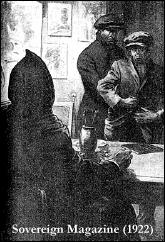
BULLDOG DRUMMOND

   Meanwhile Sir Bryan Johnstone, the Yard’s Director of Criminal Investigation and Chief Inspector MacIver are getting nowhere with a mysterious group of ruffians in black leather and hoods who have been making hay with London’s less social class of criminals.

   White slavers, pimps (though implied, never mentioned obviously), usurers, and the like have been disappearing, and when they do show up again keeping silence after some decidedly rough treatment that has shown them the error of their ways, while the Reds are up to something.

   In the meantime, if things aren’t bad enough for Hugh Drummond, the boy who had been Johnstone’s fag at school (and no, it doesn’t have the same meaning in England) shows up on his door burbling nonsense.

   Before it’s over Drummond will just miss being blown up by a grenade (the fellow beside him gets blown to gory bits — it hardly puts Drummond off his beer or his feed though), and just misses being poisoned by a Borgia poison in a doyley at the Ritz, not to mention that Russian rifle butt that once graced royal skulls. Drummond and Phyllis are captured, Carl takes the time to gloat:

    “Eminently satisfactory, my friend, eminently. And when your dear wife returns from the country–if she does — well, Captain Drummond, it will be a very astute member of Scotland Yard who will associate her little adventure with that benevolent old clergyman, the Reverend Theodosius Longmoor, who recently spent two or three days at the Ritz. Especially in view of your kindly telephone message to Mr. — what’s his name? — Mr. Peter Darrell?”
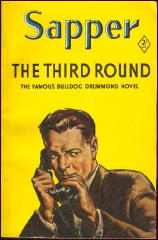
BULLDOG DRUMMOND

   He glanced at his watch and rose to his feet. “I fear that that is all the spiritual consolation that I can give you this evening, my dear fellow,” he remarked benignly. “You will understand, I’m sure, that there are many calls on my time. Janet (Irma), my love” — he raised his voice — “our young friend is leaving us now. I feel sure you’d like to say good-bye to him.”

   She came into the room, walking a little slowly and for a while she stared in silence at Hugh. And it seemed to him that in her eyes there was a gleam of genuine pity. Once again he made a frantic effort to speak–to beg, beseech, and implore them not to hurt Phyllis — but it was useless. And then he saw her turn to Peterson.

    “I suppose,” she said regretfully, “that it is absolutely necessary.”

    “Absolutely,” he answered curtly. “He knows too much, and he worries us too much.”

    She shrugged her shoulders and came over to Drummond. “Well, good-bye, mon ami,” she remarked gently. “I really am sorry that I shan’t see you again. You are one of the few people that make this atrocious country bearable.”

   Of course Drummond does escape, foils Peterson’s plot, and rescues Phyllis, he even convinces Scotland Yard that the Black Gang has played an important role in the deadly doings. He also spares Peterson’s life at Phyllis insistence:

    And then she saw her husband bending Carl Peterson’s neck farther and farther back, till at any moment it seemed as if it must crack. For a second she stared at Hugh’s face, and saw on it a look which she had never seen before–a look so terrible, that she gave a sharp, convulsive cry.

    “Let him go, Hugh: let him go. Don’t do it.”
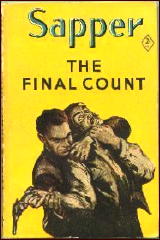
BULLDOG DRUMMOND

   To be fair, Phyllis is less concerned about Peterson than the inhuman rage her husband is in, having moments before pinned the murderous Yulowski to the wall with his own bayonet like a giant butterfly on cardboard. Carl won’t be quite so lucky two books later in The Final Count, when he meets his end at Drummond’s hands in an airship (the Megalithic) over London.

    “If you won’t drink � have it the other way, Carl Peterson. But the score is paid.”

   His grip relaxed on Peterson’s throat: he stood back, arms folded, watching the criminal. And whether it was the justice of fate, or whether it was that previous applications of the antidote had given Peterson a certain measure of immunity, I know not. But for full five seconds did he stand there before the end came. And in that five seconds the mask slipped from his face, and he stood revealed for what he was. And of that revelation no man can write…

   Richard Usborne thinks Sapper blows this moment, which he humorously attributes to the narrator of the story, but I agree with Kingsley Amis in his book on James Bond, The James Bond Dossier. It is Sapper at his most powerful.

   The plot is averted, and the Black Gang retired, but they wait, they wait. Irma comes back in the fifth book, The Female of the Species, for revenge (Phyllis gets kidnapped again, and kills her first man with a spanner) and then off and on for the rest of the series, well into the ones written by Sapper’s successor Gerard Fairlie (who was a better writer overall, and the actual model for Drummond as well as an actual secret agent who operated behind enemy lines in WWII). The latter even brought the Black Gang back in the last Drummond novel, The Return of the Black Gang (1952), but in a much more politically correct fashion.
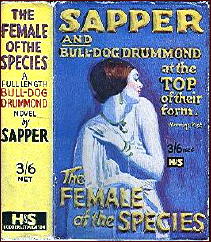
BULLDOG DRUMMOND

   Now, what was so objectionable? Well, in The Black Gang maybe it’s the constant harping on the clique of murderous Russian Jews who killed the Tsar, or the flashy types who are in the white slavery business, or maybe it’s the little island the Black Gang have set up where an ex-sergeant major and some demobilized officers have set up a concentration camp for these low types — Jews and foreigners and other less attractive sorts — where they have been taught the error of their ways with a bullwhip and the boot.

   Fortunately this happens offstage, but it is difficult for a modern reader to read this passage without visions of jackboots and SS uniforms. But the fault is history’s and not Sapper’s. If we apply the same standards, Mickey Spillane only fares a little better.

   And look at it this way. In England where there was the outlet of popular literature this only happened in a book, and only to actual criminals, not ordinary people, and no women or children or innocents. In Germany where there was no real tradition of this kind of thriller literature to speak of; it happened in the streets and people looked away or pretended it wasn’t happening.

   Some, there, and here, still pretend it didn’t happen today, but while the attitudes of the Drummond books and others may not be enlightened, it isn’t fair to brand them as would-be storm troopers either.

   By the standards of the day Sapper is only a minor offender. It takes Sydney Horler or M.P. Shiel to really be offensive. Sapper was at worst only aping popular sentiments and opinions that, however despicable, need to be viewed in historical perspective. This is not an apologia for him or others, only a perspective.

   If you can’t overlook or understand the limits of older popular fiction then you probably would do best to avoid it.
BULLDOG DRUMMOND

   By its very nature popular fiction reflects popular views, and luckily as time passes we progress, slowly, in our recognition of our prejudices and failures. Popular fiction is at worst a bellwether, not a clarion call to action.

   No apology, it’s nasty stuff, but it isn’t quite as bad as it sounds. The Black Gang was written in 1922, long before the horrors of the Holocaust and at a time when ‘concentration camp’ only referred to the prisons where Boers had been held in the Boer War.

   The casual Anti-Semitism of the book was fairly standard in popular fiction of the day. (It even shows up a little in Buchan, who was not the least anti-Semitic and indeed an early voice to warn of Fascism.) This is before Mussolini and his Blackshirts, well before Hitler and the Brownshirts, and still several years out from Sir Oswald Mosely and his own Black Gang of would be traitors.

   Sapper’s overgrown bully boys aren’t that far off from Sherlock Holmes taking the law into his own hands, the Scarlet Pimpernel’s League, or even the Saint’s war on boredom, just a bit less smooth and suave about it. There is no excuse, but you can’t judge the book or Sapper based on what happened over a decade later. No one really understood, not even the victims, until if was too late.

   But judge The Black Gang on its own merits and it is one of the best of the Drummond books. The incidents are exciting, Drummond is probably at his most attractive (and least annoying), and as a thriller it is first rate entertainment. There are some splendid set pieces such as when Peterson’s men are hunting Drummond who picks them off one by one in the dark, and the final confrontation with Yulowski and Peterson, and in Drummond’s defense Peterson’s victims number in the hundreds.

   Carl may be a charming monster, but he’s a monster none the less, who plots to overthrow England for nothing more than his own financial improvement and a distaste for England and the English. Carl believes in nothing but Carl and is loyal to no cause but his own.

   The Black Gang came to the screen as The Return of Bulldog Drummond (not based on the book of that name) with Ralph Richardson as Drummond and Francis L. Sullivan a fine Peterson.
BULLDOG DRUMMOND

   The Black Gang was present in black leather and on motorbikes, but some of the less appealing aspects of the book were left off. It’s not a bad little movie, and Richardson is quite good (ironically he plays the villain in the spoof Bulldog Jack penned by Sapper and Gerard Fairlie) looking forward to the role in Q Planes (Clouds Over Europe) where his suave British agent would inspire the creation of John Steed of the Avengers.

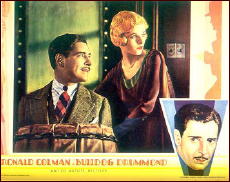
    Drummond found his way to the screen as early as the silents, but it was 1929’s talkie Bulldog Drummond with Ronald Colman as Drummond, Joan Bennett as Phyllis, and Montagu Love as Peterson that really put the character in the public eye. It seems strange today when we note Colman was nominated for an Academy Award playing Drummond (stranger still that he was beaten by Warner Baxter in In Old Arizona playing the Cisco Kid).

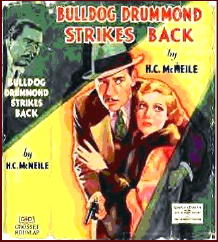
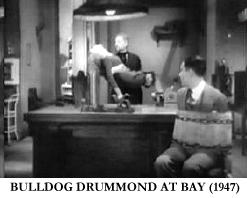
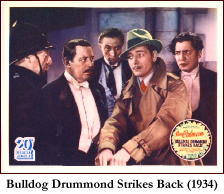
   Temple Tower (a lost film), The Return of …, and Bulldog Drummond At Bay (with American John Lodge coming physically closest to Sapper’s interpretation of Drummond) followed, but it’s 1934’s Bulldog Drummond Strikes Back that inspired the series that followed.

   Ronald Colman was again Drummond, Charles Butterworth a droll Algy (and Ona Munson his long suffering bride), Loretta Young the lady in danger, Sir C. Aubrey Smith Colonel Neilson Drummond’s friend at the Yard, and no less than Charlie Chan and Fu Manchu Warner Oland as an Egyptian prince involved in dastardly doings.
BULLDOG DRUMMOND

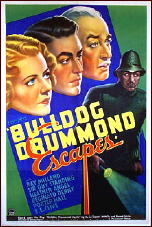
   It is one of the brightest mystery comedies of an age when the form was at its peak and still holds up today thanks to fine performances, direction, and script. It was also a big hit and inspired a series of B films. The first was Bulldog Drummond Escapes with Ray Milland as Drummond, but the series proper featured John Howard (who played Colman’s younger brother in Frank Capra’s Lost Horizon), Reginald Denny as Algy, E. E. Clive as Drummond’s servant Tenny (changed from Denny in the novels for obvious reasons), and John Barrymore as Neilson (eventually replaced by veteran H.B. Warner).

   A running gag had Drummond’s pending marriage to Phyllis (Louise Campbell and later Heather Angel) always being put off by his latest adventure. The series was well produced and written, and had a fine array of villains including George Zucco, Porter Hall, Leo G. Carroll, Anthony Quinn, and Eduardo Cianelli.

   When the Howard series ended Tom Conway and Ron Randell each did two Drummond films, and in 1951, Victor Saville did an A picture, Calling Bulldog Drummond, based on one of Fairlie’s books (and written by him) with Walter Pidgeon as Drummond and a supporting cast that included David Tomlinson (Father in Mary Poppins) as Algy, Margaret Leighton as an undercover policewoman, Robert Beatty (who would play Drummond in a television pilot aired on the Douglas Fairbanks Jr,. Show) as a gangster, and James Bond’s future M, Bernard Lee in a key role.
BULLDOG DRUMMOND

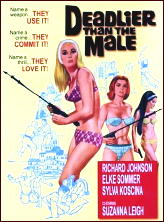
   Save for the television pilot Drummond lay in doggo until 1966 when he was revived for two Bondish outings starring Richard Johnson as an updated Drummond, Deadlier Than the Male and Some Girls Do. Both films are fun, with a deadly game of chess on a giant board an excellent set piece in the first one, and Nigel Green outstanding as Peterson. (James Villiers is only a little less perfect in the second film.) Elke Summer and Sylvia Koscina in the first and Daliah Lavi in the second are Peterson’s murderous cohorts.

   Drummond also had a long and successful career on radio (�Out of the fog, out of the night …”) in a series starring Santos Ortega and Sir Cedric Hardwicke. In 2006 Moonstone Comics brought Drummond back in a comic book written by William Messner Loebs in which Drummond becomes a sort of private detective and we discover Phyllis and Irma are one and the same.

It’s a terrific little adventure that remains true to Sapper’s Drummond while updating many aspect of the story. Drummond also features in Kim Newman’s second book in his Anno Dracula trilogy, The Bloody Red Baron, as a nasty vampire, and a psychotic violent old prig in the third volume of Alan Moore’s graphic novel series The League of Extraordinary Gentleman.

   Seems you can’t keep a good — or bad — man down. There is even a play and movie by Alan Shearman, Bullshot Crummond, that is a dead on send up of all things Drummond.
BULLDOG DRUMMOND

   Drummond has been around close to ninety years now, and is still going fairly strong. The name still evokes foggy roads, low slung speeding sports cars, dastardly villains, and dangerous adventure with pitched battles in which the fate of nations is at stake.

   Leslie Charteris modeled the early Saint on Drummond (but he was a much better writer) and Doc Savage and his crew owe more than at little to Drummond and his.

   Mickey Spillane was a fan, as was Ian Fleming. (British traitor Guy Burgess supposedly observed that James Bond was Bulldog Drummond to the waist and Mike Hammer from the waist down.) More recently Clive Cussler has mentioned Drummond as a major influence on Dirk Pitt. When Paul Gallico reviewed Casino Royale he called James Bond “Bulldog Drummond with brains.”

   The first seven books in the Drummond series (Bulldog Drummond, The Black Gang, The Third Round, The Final Count, Female of the Species, The Return of Bulldog Drummond, and Temple Tower can be found online in free ebook editions with a little searching.

   Jim Maitland, and at least three of the short story collections are available too. The Howard films are easy (and inexpensive) to find on DVD, Deadlier Than the Male and Some Girls Do are a bit more expensive but also available in handsome DVD packages.

   The pilot film with Robert Beatty can be found on some sets of old television detective series. Calling Bulldog Drummond often shows up on TCM as it was an MGM film. Most of the others can be found on the gray market with the exception of Temple Tower and the silent Drummonds.
BULLDOG DRUMMOND

   The first Colman film is in public domain and can be downloaded direct to your PC. Several old-time radio sites offer free episodes of the radio series you can listen to or download, and cassettes and CDs of many episodes are available as well.

   The Fairlie books, some of which were not published in the United States, are a bit harder to find than the original Sapper books, but none of them are really all that difficult with a little effort. There are also five Drummond short stories (the best known being “The Thirteen Lead Soldiers” basis for one of the Conway films) collected for the first time in The Best Short Stories By Sapper.

   Bulldog Drummond is still with us. He can be a bit noisy, and he has a tendency to blather in the way of heroes of his era, but he’s good company on an adventure where the stakes are high and the odds are dicey.

   Before you dismiss him you might keep in mind that half the books on the shelves of the mystery and thriller genre owe something to him. He’s a bit like one of those uncles that you love, but sometimes hate to admit you are related to. But bless him or damn him, he’s one of the family, and the resemblance can’t be denied.
A REVIEW BY DAVID L. VINEYARD:         


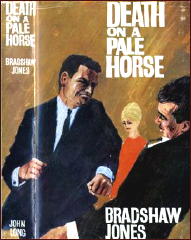
BRADSHAW JONES – Death on a Pale Horse.

John Long, UK, hardcover, 1964. Paperback reprint: Bridbooks, Israel, no date.

   Malcolm Bradshaw Jones was an oil executive who retired to the Channel Islands off of Great Britain, and wrote eleven mysteries featuring tough special agent Claude Ravel and his wife Monique, an Anglo-French couple who first work for Cabinet Security under that “terrible old man James Keen” and later work for Interpol and their Home Office liaison, Peter Calvert.

BRADSHAW JONES The Deadly Trade

   Ravel is something of a rogue agent with a nose for trouble: “He’s about the most ruthless hell-bender I’ve ever met. And he’s got a wife, Monique, who works with him, who is almost as bad. She looks like something out of the fashion magazines and fights like a tiger. She’s French and Ravel is half French and completely bilingual. Between them they used to break just about every law we’ve got, all in the name of justice.”

   Of course in real life Interpol (*) never had agents, and was in fact a front organization for Nazi sympathizers well into the 1960’s, but here we are dealing with the Interpol of fiction not fact, and anyway Ravel and his wide Monique behave like no police you have ever encountered.

   Ruthless, blood thirsty, and deadly are the kindest thing you can say about them. That said, Jones writes this stuff with some small flare and obviously knows his locales. The scenes in Paris may not be Simenon, but they are authentic and redolent of the real place and not just the tourist trap version most fiction gives us.

   In Death on a Pale Horse a naked man is found off the southwest coast of England, a small time thief, who died of some mysterious intestinal disorder. Interpol, and through them the Ravels are called in.

   Soon they are on the trail of a defecting British chemist who has left behind a nasty bug that starts killing people, all leading to a remote private lab in San Stefano, and a trail of bodies and violence. The idealistic Dr. Porter’s trail takes them to Italy and into the hands of the ruthless drug smuggler Pavesi as the epidemic in England spreads. Now all they have to do is find Porter alive and “unseat death from his pale horse.”

   There is nothing special here, but the writing is good, the plot moves well, and Ravel and Monique are an engaging pair of homicidal heroes, believably tough and ruthless. You could do a lot worse than Jones books about the Ravels and in some cases not a lot better.

   I’ll be keeping an eye out for more books about them. It’s not often you encounter a husband and wife team who both carry concealed switchblades and have few compunctions about using them. It’s a bit as if James Bond had married Modesty Blaise, or a continental John Steed and Mrs. Peel after a session of SAS training.

   Death On a Pale Horse is a short book, around 60,000 words, and a well done thriller with some interests and attractive, if ruthless, protagonists in the Ravels.

CLAUDE RAVEL. Series character created by (Malcolm Henry) BRADSHAW JONES, 1904- .   Data taken from the Revised Crime Fiction IV, by Allen J. Hubin:

      The Hamlet Problem (n.) Long 1962.
      The Crooked Phoenix (n.) Long 1963.
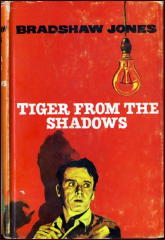
      Tiger from the Shadows (n.) Long 1963.

BRADSHAW JONES The Deadly Trade

      Death on a Pale Horse (n.) Long 1964.
      Private Vendetta (n.) Long 1964.
      The Embers of Hate (n.) Long 1966.
      Testament of Evil (n.) Long 1966.
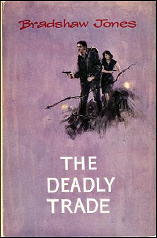
      The Deadly Trade (n.) Long 1967.

BRADSHAW JONES The Deadly Trade

      A Den of Savage Men (n.) Long 1967.

      ______________________________________________________

   (*) Interpol is a private organization founded in the mid 1930’s to gather information on criminal activities and provide it to subscribing police agencies around the world (for instance the FBI has never subscribed and does not receive Interpol bulletins despite what you see in movies and books).

   It was infiltrated by the Nazis from the first and their influence continued into the 1960’s when it was finally purged. (Interpol refused to help in the hunt for Nazi war criminals on the grounds they were “political” crimes.)

   Interpol is primarily a counting house for information and sends out bulletins on persons of interest; yellow sheets for those who do not have an active criminal record and are not wanted for a crime, and red sheets for wanted felons.

   In the 1990’s Interpol began to employ investigators for the first time in its history. It has no enforcement duties, and the liaison to Interpol at most police departments are just some unlucky communications officer who receives no extra pay for his service. The Interpol agent of countless novels, movies, and television series is a myth that never existed, but has taken on a life of its own.

      ______________________________________________________

[UPDATE] 06-14-09.   A tip of the hat to British mystery bookseller Jamie Sturgeon, who provided the cover images for both Death on a Pale Horse and Tiger from the Shadows. He also sent Al Hubin and I a long list of additional information about the settings and additional series characters in Jones’ books, all of which will appear in the next installment of the online Addenda for the Revised Crime Fiction IV.

   In case you’ve missed it, a long series of comments (17 so far) has followed Mike Nevins’ most recent column for this blog.

   In that column, among other things, Mike suggested Jim Garner as an ideal choice for playing Archie Goodwin (with Orson Welles as Wolfe). It never happened, but in the course of discussing the possibility, Mike Doran brought up an example of a TV pilot film that could have had Rex Stout’s two famous characters in mind when it was made — sort of, maybe? — although it was ostensibly about another character altogether, one who’s very well known to collectors of Old Time Radio shows.

   This made-for-TV movie is unaccountably not listed on IMDB, but it’s been circulating among collectors for some time now.

   Have I intrigued you? Follow the link in the first paragraph above, and then to the comments that follow.

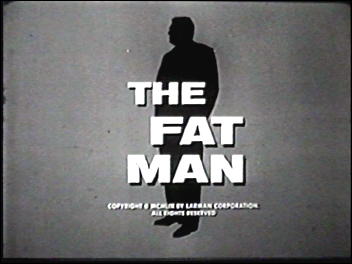
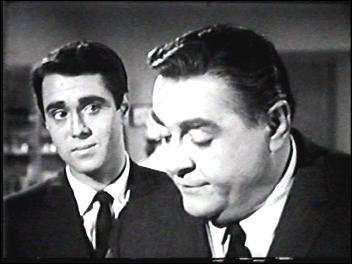
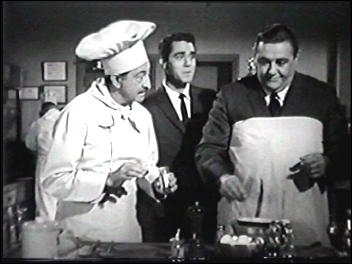
[UPDATE] Later the same day.   Mike Grost has just sent me some images captured from the movie, the title of which is The Fat Man: The Thirty-Two Friends of Gina Lardelli, starring Robert Middleton. Presumably “The Fat Man” is the name of the proposed series, with the remainder being the title of the given episode.

   Without knowing more about it than these two scenes, I’d say that if Rex Stout ever saw this film, he should have called his lawyers right then and there.

THE FAT MAN Robert Middleton

THE FAT MAN Robert Middleton

THE FAT MAN Robert Middleton

   Anyone who fits my mental picture of Nero Wolfe more than this I can hardly imagine.

A REVIEW BY FRANCIS M. NEVINS, JR.         


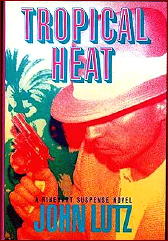
JOHN LUTZ – Tropical Heat.

Henry Holt & Co., hardcover, 1986; paperback reprint: Avon, 1987.

   The setting is central Florida and the private detective is Fred Carver, a fortyish balding ex-cop whose police career abruptly ended when he was kneecapped by a Latino street punk.

JOHN LUTZ Tropical Heat

   A new protagonist and a new scene, but the world caught on the pages of Tropical Heat is unmistakably the world of John Lutz, the St. Louis area’s foremost suspense novelist, and the superficially tough and cynical Carver clearly belongs in the post-Ross Macdonald fraternity (or is the word siblinghood?) of concerned and compassionate PIs, right alongside Lutz’s earlier detective character, the timid and soft-hearted Alo Nudger.

   Vegetating in the beachfront bungalow he bought with his disability pay, Carver is visited by upscale real-estate salesperson Edwina Talbot and in effect challenged to stop pitying himself and do something with the rest of his life.

   The particular something she wants him to do is to find her lover, Willis Davis, who in the middle of a solitary continental breakfast on her terrace either walked out on her for no reason, or jumped off a cliff into the ocean, or was pushed off.

   The search leads Carver to a condominium time-sharing scam, a drug deal (in Florida, what else?), an assortment of close calls, and an emotional entanglement with his lovely and much-abused client which neither he nor she is well equipped to handle.

   The plot of Tropical Heat is the bare-bones variety, but the meat on those bones is prime Florida noir. Lutz does a blazingly vivid job not only with the sun-soaked atmosphere and the wild action scenes (including Carver’s underwater duel with a Marielito knife killer and an airboat chase through the midnight Everglades) but also with the anguished relationship of a man and a woman each struggling against a personal darkness.

   This novel makes great summer reading — provided the reading is done in an air-conditioned room to counteract Lutz’s descriptions of the oppressive Florida heat.

– Reprinted from The MYSTERY FANcier, Vol. 9, No. 2, March/April 1987.


FRED CARVER. Private eye series character created by John Lutz. For a complete profile of Fred Carver, check out his page on the Thrilling Detective website. The following complete list of recorded cases is expanded from the Revised Crime Fiction IV, by Allen J. Hubin:

      Tropical Heat. Holt 1986; Avon 1987.
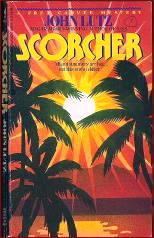
      Scorcher. Holt 1987; Avon 1988.

JOHN LUTZ Tropical Heat

      Kiss. Holt 1988; Avon 1990.
      Flame. Holt 1990; Avon 1991.
      Blood Fire. Holt 1991; Avon 1992.
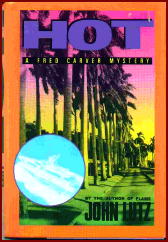
      Hot. Holt 1992; Avon 1993.

JOHN LUTZ Tropical Heat

      Spark. Holt 1993; no ppbk edition.
      Torch. Holt 1994; no ppbk edition.
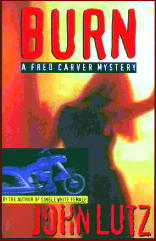
      Burn. Holt 1995; no ppbk edition.

JOHN LUTZ Tropical Heat

      Lightning. Holt 1996; no ppbk edition.

Short stories —

       “Someone Else” (Justice for Hire, 1990)
       “Night Crawlers” ( EQMM, April 1997)

IT’S ABOUT CRIME
by Marvin Lachman

JOHN GREENWOOD
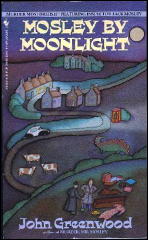
        ● Mosley by Moonlight. Quartet, UK, hardcover, 1984. Walker, US, hc, 1985; Bantam, US, pb, April 1986.
        ● Mists Over Mosley. Quartet, UK, 1986; Walker, US, 1986; Bantam, US, pb, September 1987.

JOHN GREENWOOD

   The best work on mysteries in the British village is the chapter by Mary Jean De Marr in Comic Crime (1987), edited by Earl Bargainnler and published by Bowling Green’s Popular Press.

   Although Ms. De Marr covered some recent examples, I suspect that she hadn’t caught up with John Greenwood’s series of six books about Inspector John Mosley, whose territory covers the small towns on the very flexible border between the counties of York and Lancaster.

   British-village mysteries, contrasted with the generally unsophisticated examples of rural-American detective stories, are told in a sophisticated style and permit the reader to have fun at the expense of the local characters.

   Greenwood, the pseudonym of the late John Buxton Hilton, was excellent on atmosphere, if a bit weak on plotting. Prime examples are the second and fourth books in the series, Mosley by Moonlight, in which a British television crew invades the town of Hadley Dale when extraterrestrial sightings are reported, and Mists over Mosley, about a coven of witches and municipal corruption.

   Mosley is an unusually enigmatic sleuth, one who likes to “keep himself to himself” as the British say. He has a knack of disappearing but then turning up under strange circumstances, properly surprising Greenwood readers.

– From The MYSTERY FANcier, Vol. 10, No. 3, Summer 1988          (slightly revised).


INSP. JACK MOSLEY.    Series character created by John Greenwood, pseudonym of John Buxton Hilton, 1921-1986.    [Data expanded from that found in Revised Crime Fiction IV, by Allen J. Hubin.]

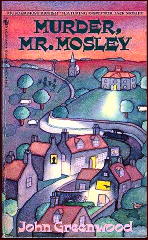
       Murder, Mr. Mosley. Quartet, UK, 1983. Walker, US, 1983; Bantam, US, pb, Feb 1986.

JOHN GREENWOOD

       Mosley by Moonlight. Quartet, UK, 1984. Walker, US, 1985; also Bantam, US, pb, April 1986.
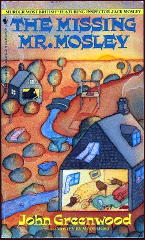
       Mosley Went to Mow. Quartet, UK,1985. Walker, US, hc, as The Missing Mr. Mosley, 1985; also Bantam, pb, Dec 1986.

JOHN GREENWOOD

       Mists Over Mosley. Quartet, UK, 1986. Walker, US, 1986; Bantam, US, pb, Sept 1987.
       The Mind of Mr. Mosley. Quartet, UK, 1987. Walker, US, 1987; Bantam, US, pb, July 1988.
       What, Me, Mr. Mosley? Quartet, UK, 1987. Walker, US, 1988; Bantam, US, pb, 1989.

FIRST YOU READ, THEN YOU WRITE
by Francis M. Nevins


   A few weeks ago Turner Classic Movies presented yet another film of the Thirties which, had it been made in the Forties, would have been accepted by everyone as film noir.

   I refer to Crime and Punishment (Columbia, 1935), based on Dostoevski’s classic novel. For obvious budgetary reasons director Josef von Sternberg makes no attempt to recreate mid-19th-century St. Petersburg, and we are told in an opening title that the story could take place at any time and anywhere.

   This is why the protagonist’s name morphs from Rodion to Roderick Raskolnikov, and also why we never see any automobiles or horse-drawn vehicles or any other form of transportation that might give us a clue to whether we are in the 19th or the 20th century.

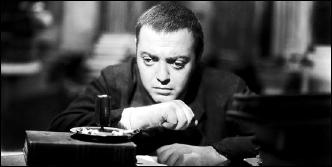
   Amid grotesque shadows and bizarre camera angles, Peter Lorre in his first role after escaping from Hitler’s Europe played Raskolnikov — how could that whiny, sweaty, pop-eyed little toad have ever imagined himself to be an Ubermensch above the law? — while the police detective Porfiry Petrovich was played by Edward Arnold, who the following year would be cast, for one film only, as Nero Wolfe.

   If you missed the TCM debut of this version of Crime and Punishment, watch for it when next it’s shown.

***

   Speaking of Nero, it was my good fortune that I began reading Rex Stout in the late 1950s, when I was in my middle teens and also pigging out on a dozen or more TV Western series a week.

   Why was this a lucky break for me? Because one of those Western series saved me from misunderstanding Archie Goodwin.

   If you were following the Wolfe saga during the Hammett-Chandler era when the novels and novellas were first coming out, you might easily have tried to assimilate Archie to the legion of wisecracking PI/first person narrators of the time, and then rejected the character when you sensed what a poor fit that was.

   Even so astute a critic as John Dickson Carr, writing in 1946, referred to Archie as “insufferable” and a “latter-day Buster Brown.”

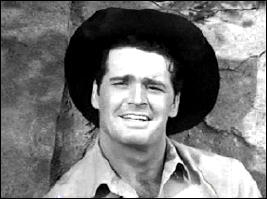
   But if you were fortunate enough to discover Stout in the late Fifties, at a time when millions of Americans including myself were watching Maverick every Sunday evening, you might have recognized Archie Goodwin and Bret Maverick as soul brothers.

   You might have credited Rex Stout with having created in prose the Great American Wiseass prototype which James Garner brought to perfection on film. You might have longed to see one of Stout’s novels filmed with Orson Welles as Wolfe and Garner as Archie. At least I did. What a shame that it never happened!

***

   When did TV movies begin? The first films that networks called by that name were broadcast in the fall of 1964. But if a TV movie is a feature-length film that tells a continuous story and was first seen in a single installment, the genre dates back at least to the suspense thrillers and Westerns that were aired one week out of four, beginning in the fall of 1956, as part of the prestigious CBS anthology series Playhouse 90 (1956-61).

   As a young teen I watched some of those films. Until recently the only one I had revisited as an adult was So Soon to Die (January 17, 1957), starring Richard Basehart and Anne Bancroft and based on the novel of the same name by Jeremy York, one of the many bylines of the hyper-prolific John Creasey (1908-1973).

   A few weeks ago I came upon another, one that I hadn’t seen in more than half a century. The Dungeon (April 10, 1958), written and directed by David Swift, starred Dennis Weaver as a man who, after being acquitted of murder, is kidnapped by a psychotic ex-judge and locked up in a cell in the attic of his isolated mansion, along with several other acquitted defendants.

   A great noir premise and a great cast to boot — Paul Douglas, Julie Adams, Agnes Moorehead, Patty McCormack, Patrick McVey, Thomas Gomez, Werner Klemperer, the list goes on and on. And the tension is heightened by the magnificently ominous music of a never credited Bernard Herrmann.

   I wish Swift had provided a backstory to explain what turned the judge into a sociopath, and my mind, not to say my nose, boggles when I start wondering how his prisoners (one of whom has been held for more than a year!) ever showered or kept clean-shaven or changed clothes. But if you have the good fortune to find this film on DVD as I did, it’s well worth seeing and, thanks to Herrmann, hearing.

***

   The Poetry Corner has been on sabbatical lately but I need to bring it back in order to tout perhaps the finest detective novel to deal centrally with the subject.

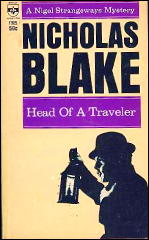
   The author was Nicholas Blake, known outside our genre as C. Day Lewis (1904-1972), poet laureate of England and the father of actor Daniel Day-Lewis. The detective, as always except in Blake’s non-series crime novels, is Nigel Strangeways.

   The title is Head of a Traveler (1949). Thomas Leitch in his essay on Blake in Mystery and Suspense Writers, Volume 1 (Scribner, 1998), describes the novel as “one of his most tormentedly introverted. The central figure is the distinguished poet Robert Seaton, whose household is destroyed by the unexpected discovery of his vanished brother Oswald’s decapitated corpse. The events of the fatal night remain obscure even after Strangeways’ final explanation; the real interest of the novel is in its impassioned examination of the costs of poetry — the lengths to which poets and those who love them will go in pursuit of their craft.”

   Anthony Boucher in his short-lived “Speaking of Crime” column in Ellery Queen’s Mystery Magazine (August 1949) was a bit less enthusiastic: “Blake knows so much about his theme, the nature of poetic creation, that he never quite conveys it convincingly to the reader.”

   Whichever critic is right, when it comes to the intersection of crime fiction and poetry, Head of a Traveler remains the “locus classicus.”

Introduction: The following is an email that David Vineyard sent me following my request for a photo of mystery writer Philip MacDonald. A photo’s since been found, but I thought the rest of David’s comments were worth sharing.

— Steve

   I know a lot of classical detective fans don’t care for MacDonald because he tends toward suspense and even melodrama, but I’ve always thought his best books a sort of antidote to the driest and most formal of the golden age.

R. AUSTIN FREEMAN

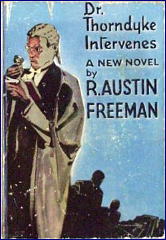
   I love a good puzzler, but some of the practitioners sometimes forgot that one of the essential parts of the definition of mystery involves some sort of emotional response, not merely intellectual stimulation. Only Freeman ever managed to be dull and interesting, and Dr. Thorndyke is a hard act to follow and most got the dull part right, but not the interesting part.

   Thorndyke is unique among fictional detectives in that he came first, and then the real life model, Sir Bernard Spilsbury. Most people don’t realise how much impact Thorndyke had on actual forensic investigation. I don’t know if it still is that way, but the box the forensic kit used to be carried in was always green after Thorndyke’s green forensics kit.

   Much of the actual procedure of evidence collection used by the Yard and then by police around the world was taken from Freeman’s descriptions, and the actual forensics box based on his.

   I ran across a terrific article in a 1914 issue of the New York Times on their archive site. Seems when Thomas Hanshew, author of the “Cleek, Man of Forty Faces” books (John Dickson Carr was a huge fan), was suspected to have been Bertha M. Clay when he died.

   Hanshew, an actor who was one of Ellen Terry’s stock company, and died in England where he was living (and where the Cleek books are set), was a hugely prolific writer who wrote some 150 novels.

BERTHA CLAY

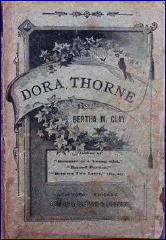
   Clay, who was Charlotte M. Brame, was a popular writer of books for women (notably young women) whose work was issued in paperbound editions similar to the Nick Carter Nickel Library.

   When she died in 1884 Street and Smith were unwilling to give up the golden goose, and apparently Hanshew, John Corryell (Nick Carter), and others took over, sometime writing from her notes, other times probably writing their own books.

   The article is particularly kind to both Hanshew and Clay, and not the least snobbish (well, a little when it refers to her young female readers with mint on their breath — waiting in vain, we assume, for that first kiss), and even gives a few examples of how Hanshew changed Clay’s originals to his own style.

   The article comes complete with a very nice drawing of Hanshew, who was a handsome fellow. If you have never read the Hanshew books, many of them can be downloaded from Google Books On-Line library, and while they are full of melodrama and over the top writing, you will begin to see what Carr liked about them. I freely admit I sometimes get my fill of the literary and want something bad but fun. Hanshew made the cut in Bill Pronzini’s Gun in Cheek books, and deserves it. He is a true alternative classic.

THOMAS HANSHEW

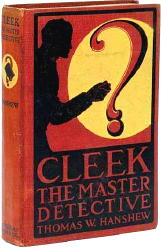
   Hanshew doesn’t play fair as a detective novelist, but Cleek is an interesting character. The heir of a royal throne, he is the finest cracksman in London (The Vanishing Cracksman), but as usual true love turns his hand and he reforms, being hired by Maverick Narkom (great name) Superintendent of Scotland Yard as a consulting detective.

   High handed and theatrical (as you might expect from an actor) the books are bad writing at its best. One of the stories seems to me may have been the source for one of Dorothy Sayers Wimsey shorts, the one where Lord Peter finds the sculptor is hiding real bodies in his bronzes.

   Impossible crimes and locked rooms are common stuff, but the solutions are often of the poison unknown to science type. The Google edition available of Cleek of Scotland Yard includes the photos from either a silent film or play (I’m not sure which).

   Little as either Clay or Hanshew is known now, it seem strange that they should have merited a New York Times article in 1914. Anyway, sometime you might treat yourself to a taste of Cleek, his true love Alicia, his servant Dollops, Mr. Maverick Narkom, and Margot, Queen of the Apaches (French Apaches, not American ones). Readers once read this breathlessly, and truth be told even today they can take your breath away, though not perhaps as they intended to.

« Previous PageNext Page »