JESSICA JONES “AKA Ladies Night.” Marvel/Netflix. 10 October 2015 (Season 1, Episode 1). Krysten Ritter (Jessica Jones), Mike Colter (Luke Cage), Rachael Taylor (Trish Walker), Erin Moriarty, Eka Darville, Carrie-Anne Moss, David Tennant (Kilgrave). Created and written by Melssa Rosenberg. Based on the Marvel comic book character created by Brian Michael Bendis and Michael Gaydos. Director: SJ Clarkson.

   To tell you the truth, I’ve already watched the first three episodes of this series, mostly since it took me a while to be sure I had a solid grip on the story line. The goal of a first episode of a TV series is to get viewers interested enough to be sure come back for the next one, but not necessarily to reveal all of their secrete at once, especially if there is a long connected story line, and not just a bunch of one-off episodes.

   Maybe it’s me, and I haven’t adjusted to a new type of storytelling, but I think the producers of this series may have erred in not telling enough, or (perhaps) telling it too subtly. It could also be that they expected viewers to be more familiar with the characters from their background in comic books than I think they are. (It’s certainly not one of Marvel’s best known titles.)
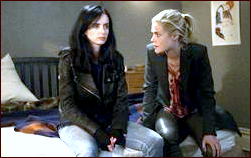
   Jessica Jones, currently a private eye working on her own, is a flawed character, there’s no doubt about that. Something has happened in her past that makes it difficult for her to sleep at night, and worse, requires her to have a bottle or a flask of whiskey within arm’s reach whenever she’s awake. The first episode is designed to get us intrigued into learning more about what’s tormenting her, but it did take me all three episodes before I decided that, yes, I finally was sure was the overall story is about and the possible ways it could be going.

   I’ll get back to that. In this first episode she’s hired by a man and woman from Omaha, Nebraska, to find their daughter, who has dropped out of school and has gone missing. I don’t want to spoil anything to anyone who would like to see the show and hasn’t yet, but I will have to leave some hints, such as saying the same thing has happened to the missing girl that happened to Jessica, only in Jessica’s case, the consequences were so bad that that is the reason she is in the severe funk she is in.

   Another hint. The ending of this first episode makes it emphatically clear how bad the situation is for the missing girl — in a word, horrific — and if so, how bad was the experience for Jessica?

   Other characters in the story are brought in, including a sexual dalliance between Jessica and the black owner of a bar. I don’t believe his name comes up, but he will be important in episodes to come. The female lawyer who often hires Jessica to do jobs other PI’s can’t do is having a lesbian affair with one of her staff while she already has a full-time relationship with another. A talk show host named Trish seems to be (or have been) very close to Jessica, but if it was stated what the relationship is, I still didn’t catch it after three episodes.

   The other thing that is shown is that Jessica has superpowers. Super strength at least; perhaps super speed and/or agility. She doesn’t hide her powers, but she doesn’t go out of her way to show them off, either. Superpowers are, of course, only to be expected with a Marvel Comics heroine.

   The whole episode is filmed in what I call “comic book noir.” Brightly colored, with lots of off-kilter angles in what are some of the toughest areas of Manhattan, and they mean to show you exactly that every time they can.

   There is a lot of potential here. I have not gone into several other threads of the plot, many of which come to light only in the second and third episodes.. I’m sorry for rambling on the way I have, but if my objective to help you decide whether to watch this series or not, if you haven’t already, have I succeeded?

REVIEWED BY JONATHAN LEWIS:


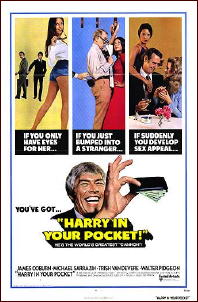
HARRY IN YOUR POCKET. United Artists, 1973. James Coburn, Michael Sarrazin, Trish Van Devere, Walter Pidgeon. Music by Lalo Schifrin. Producer-Director: Bruce Geller.

   Bruce Geller is best known for his work on the television series Mannix and Mission: Impossible. He also directed one feature film: Harry in Your Pocket, an offbeat study of the lives and times of a coterie of high-end pickpockets as they make their way from Seattle to Victoria, British Columbia, and eventually to Salt Lake City. Filmed on location, the movie defies easy categorization.

   With a prominent score by Lalo Shifrin, one that occasionally overwhelms what’s happening on screen, the film at times seems to be as much a musical as a crime drama. At the end of the day, the movie is best understood as a drama, even a tragedy. It’s a study of human frailty and character flaws, wrapped up in a package with the words “quirky crime film” written in black marker.

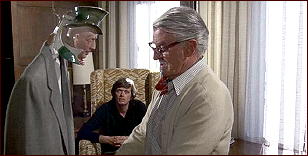
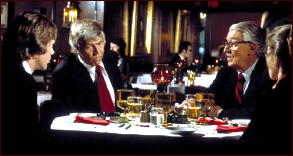
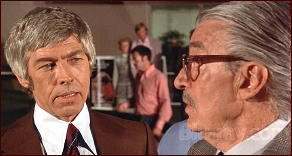
   The plot. Harry (James Coburn) is a pickpocket, living a luxuriously itinerant life on other people’s money and credit cards. Joining him for the proverbial ride is Casey (Walter Pidgeon), an aging pickpocket with a cocaine habit.

   They eventually join forces with Ray (Michael Sarrazin), an ambitious young pickpocket, and his girlfriend Sandy (Trish Van Devere). Soon, however, each of the gang’s personal flaws begins to take a toll on the group’s cohesion. Harry’s too rigid and is a womanizer. Casey has a drug habit and is ashamed that he is no longer as steady on his feet as he used to be. Ray is too ambitious for his own good and becomes increasingly jealous of Harry’s infatuation with Sandy. And Sandy. She’s the linchpin in all this. Even Harry says that he thinks she’s going to be trouble.

   While it’s not what I would call an excellent film, Harry in Your Pocket is a quite captivating work. It’s subtle and Coburn puts in a solid performance. It’s Pidgeon, however, in one of his last leading roles, that made the most memorable impression on me. Look for the scene in which he is instructing Ray on the “art” of being a pickpocket. He reminisces about the good old days before mugging, when pickpockets took their craft seriously and there was a code and honor in the “profession.”

   It’s that sense of melancholy and nostalgia that stayed with me. A product of the 1970s, Harry in Your Pocket could be easily interpreted as an extended cinematic metaphor for the generational divide in early 1970s American society.

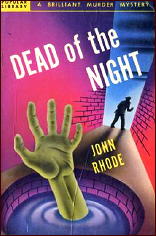
  JOHN RHODE – Dead of the Night. Dodd Mead, hardcover, 1942. Popular Library #99, no date stated [1946]. First published in the UK as Night Exercise, Collins, 1942.

   There are not many detective novels written during wartime, and World War II in particular, in which the war effort at home (England, in this case) is such an integral part of the story as it is in Dead of the Night.

   The first 60 pages are taken up with a detailed description of a night drill conducted by the local company of the Home Guard set up for the small fictitious town of Wealdhurst. In charge of the mock operation is Major Ledbury, who has his finger on everything, except for the “invading force,” who have orders to act totally by surprise and on their own. Even the women in the town have their jobs to do, manning water pumps and tending to the fallen.

   This is fascinating. If scenarios such as this were covered in my high school history classes, I wouldn’t have slept through them.

   At the close of the simulated invasion, it turns out that a much disliked Group Commander named Colonel Chalgrove has gone missing. The next 70 pages are spent in wondering where he may have gotten to, with suspicion falling largely on Major Ledbury, especially by the men under his command. Not so much so by Inspector Kilby, who has been put in charge of the case, although he does has to keep an open mind about the matter.

   The investigation that follows, as much as I hate to say it, is as dull as dirt, consisting mostly of conversations about reports that have come in to headquarters. It’s talk, talk and more talk, the same limited ground trampled over, over and over. If the reader can’t pinpoint the killer on his or her own 30 pages before the end of the book, he or she simply wasn’t paying attention. Or had snoozed off long before.

   Not every relic of the Golden Age is a gem. Not a keeper.

IT IS PURELY MY OPINION
Reviews by L. J. Roberts


JEFF ABBOTT – Adrenaline. Sam Capra #1. Grand Central, hardcover, July 2011; paperback, 2012. First published in the UK: Sphere, trade paperback, 2010.

First Sentence:   Once my wife asked me: if you knew this was our final day together, what would you say to me?

   CIA agent Sam Capra is deeply in love with his pregnant wife. However, his life turns into a nightmare when his office is blown up, killing everyone but him, thanks to a call from Lucy telling him to leave the building, and she then disappears. The CIA accuses Sam of treason and murder, yet he remains determined to prove both his, and Lucy’s innocence. But first he needs to finds her and their child.

   It is sometimes hard to start a book with a rather sad opening. It requires the author to have a strong voice and the making of an interesting character. Abbott has both.

   To have a protagonist who does Parkour, aka extreme running, is not something we’ve seen before. What is even better is that the author truly gives one a sense of it, of the movement. But then, Abbott is a very visceral writer. He doesn’t just make one see, he makes on feel. While this is a very good trait, it can also be painful for the reader. The descriptions of the interrogation are real, uncomfortable, and disturbing as you know they are utilized.

   The information on nanotechnology — the study of the control of matter on an atoms at the molecular level—is fascinating and frightening. The inclusion of Patty Hearst and the techniques of the Symbionese Liberation Army brings one back to a terrible period in time.

   Abbott has a very good voice and uses humor in a subtle, wry manner to offset the darkness of the plot:

      â€” “Then he flicked open a switchblade. A switchblade? The eighties want their weapon back.”

      â€” And shades of the television show Sherlock Holmes: “She’s not a traitor.” “I should get you a T-shirt with that on it,” Mila said. “And then my Christmas Shopping is done.”

      — The sense of place is always apparent: “The Grijs Gander wasn’t just a dump bar. It was a karaoke bar. That made it about a thousand times more evil.”

   Sam Capra is an interesting character whose background is very neatly provided as he finds himself in various situations. He is neither an amateur, nor a professional at dealing with his situation. Although he has some actual experience in what he must do, he is not a fully-trained field agent. This heightens the suspense.

  &nbusp;The plot is definitely one of high action and suspense. However, it is unfortunately that there needs be the stereotypical bad guy. The story is filled with very effective plot twists, yet it is still fairly predictable. Even so, Abbott statement about mankind is true and quite pitiable

      — “God or nature of biological accident gives us these awesome brains and this is what we do with them. We think of better ways to kill. Ways that make murder as easy as taking a breath.”

   Adrenaline is an exciting, sometimes painful, read with an ending that’s a perfect set up for the next book, and the series.

Rating:   Good.

      The Sam Capra series —

1. Adrenaline (2010)
2. Last Minute (2011)
2.5. Sam Capra’s Last Chance (novella, 2012)
3. Downfall (2013)
4. The Inside Man (2014)
5. The First Order (2016)

Editorial Comment:   This is LJ’s first review to be posted on this blog in quite a while. There will be more to come. You can also read many more of her reviews on her own blog: https://booksaremagic.blogspot.com/. Do check it out!

REVIEWED BY DAN STUMPF:


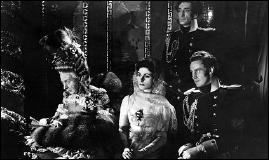
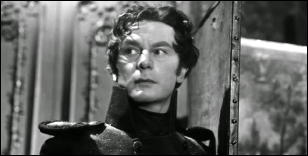
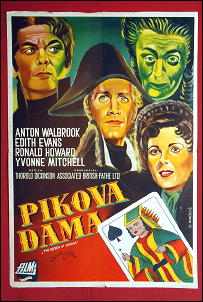
THE QUEEN OF SPADES Associated British-Pathé, UK, 1949; Monogram Pictures, US, 1949. Anton Walbrook, Edith Evans, Yvonne Mitchell, Ronald Howard, Anthony Dawson, Miles Malleson and Ivor Barnard. Written by Rodney Ackland and Arthuir Boys, from a story by Alexander Puskin (first published in the literary magazine Biblioteka dlya chteniya, March 1834). Directed by Thorold Dickenson.

   Probably the most splendid ghost story ever filmed: lavishly produced, directed with moody elegance, intelligently written, and acted to a fare-thee-well, this is a film I can recommend to anyone who loves a fine, gothic chiller, with ghosts, obsession and satanic bargains. And it also has a used book store.

   Anton Walbrook stars as Suvorin, a frugal Russian Army Captain absorbed by a passion for money and how to get it. It’s a one-dimensional part, but Walbrook plays it with a fruity obsession worthy of George Zucco, which fits perfectly into Director Dickenson’s gothic milieu. Ronald Howard is the less interesting Decent Sort one usually sees played in horror films by John Boles or David Manners.

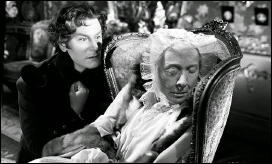
   Be that as it may, both men are pursuing Yvonne Mitchell, the ward/companion/indentured servant of Edith Evans, a lady of advanced years who looks more like Kharis than anybody’s guardian — she even drags a foot as she walks. Of course Ronnie is in love with the lady, but Anton has his own uses for the niece.

   Did I call Evans a “Lady of advanced years?” In this movie she’s so old, Suvorin finds her mentioned in an old book (found of course in a creepy used book store run by Ivor Barnard, who looks like a cross between Satan and a Pulpfest dealer) and learns that in her youth — sometime in the last century — she was rumored to have sold her soul to the Devil for the secret of wining at cards.

   Consumed with a desire to worm his way into the household and learn the dowager’s secret, Suvorin romances the niece from afar, arranges an assignation, and once inside breaks into Evans’ bedroom and wheedles, cajoles, bargains and threatens her until …

   I won’t give anything else away, but I will say that what follows resonates with surprising emotion, as we explore the feelings of the characters involved. It’s also elaborately creepy, a ghost tale set in magnificent surroundings that somehow add to the macabre atmosphere of the story, and leads to the strangest ending I have ever seen in a scary movie.

   Try this one; you won’t regret it.
   

IT CAME FROM OUTER SPACE. Universal International, 1953. Richard Carlson, Barbara Rush, Charles Drake, Joe Sawyer, Russell Johnson, Kathleen Hughes. Screenplay by Harry Essex, based on a story treatment by Ray Bradbury. Director: Jack Arnold.

   When an amateur astronomer named John Putnam (Richard Carlson) and his girl friend (Barbara Rush) see a giant fireball fall from the sky and land nearby, they rush to investigate. As one of the first two on the scene, Putnam goes down into the hole alone and so is the only one to see a huge metallic spaceship that has crashed deep into the earth. He then escapes before the ground crumbles around it and covers it up.

   Is he believed when he tells his story to the first responders, including the local sheriff (Charles Drake)? In a word, no. Not until a series of strange events begins to occur, including people disappearing only to return walking around as if in a daze.

   Originally filmed in 3-D, the first such for Universal, not even the unusual camera work (designed to show off the medium and no other reason), makes this movie anything more than slow-moving. It may have been extremely innovative at the time — including the fact that the aliens turn out not to be hostile — but I’m sorry to say that I found it a yawner today.

REVIEWED BY DAVID VINEYARD:


MIKE RIPLEY – Kiss Kiss, Bang Bang: The Boom in British Thrillers from Casino Royale to The Eagle Has Landed. HarperCollins, UK, hardcover, May 2017. US edition: September 2017. Foreword by Lee Child.

   Just as there are novels that appear that seemingly had to be written, and characters whose time has come to emerge, there are books about books, even in the genres, that appear and the proper reaction to them is why wasn’t this book always here?

   We can all name texts in the broad genre covered on this blog that were like that going back to ur-texts like Howard Haycraft’s Murder for Pleasure and Vincent Starrett’s The Private Life of Sherlock Holmes. Ellery Queen’s Queen’s Quorum; Richard Usborne’s The Clubland Heroes, about the between the war works of Buchan, Yates, Sapper McNeile; Julian Symons’ first critical study of the genre; Ron Goulart’s essays in the anthology The Hard-Boiled Dicks; Kingsley Amis’s A James Bond Dossier; Barzun and Taylor’s A Catalog of Crime; the oft quoted, in these pages, 1001 Midnights by Pronzini and Mueller et al — these are just a few examples.

   Now added to that list is Mike Ripley’s Kiss Kiss, Bang Bang (the title taken from a dismissive remark by Ian Fleming about his own work) a work which wisely narrows its focus to the Golden Age of the modern British Men’s thriller, roughly 1950 to 1980.

   Though Ripley wisely chooses to mark his territory with two hallmarks of that era, 1953’s publication of Casino Royale, the first James Bond novel by Ian Fleming, and the 1970’s publication of prolific Jack Higgins first mega-hit The Eagle Has Landed, the book begins before Fleming and ends with the rise of the American spy novelists such as Robert Ludlum and Charles McCarry.

   Mike Ripley, for anyone who doesn’t know, is the leading historian of the British thriller — I wouldn’t limit him like that, but since that is the subject of this work I will– an astute critic who not only writes about the genre, but who went to the trouble in the recent past of hunting down many of these writers, often thought dead, and bringing some of their work back in print.

   Here he concentrates on writers who came of age as thriller writers in the era covered, so Eric Ambler, Graham Greene, Dennis Wheatley, and Peter Cheyney though active in the period, are assigned to an earlier pre-war era, but writers like Hammond Innes and Victor Canning who began writing, but reached their first great success in the 1950’s, are well within the self-imposed limits.

   Along the way Ripley regales the reader with personal anecdotes on writers as diverse as Fleming, Innes, Household, Alistair MacLean, Desmond Bagley, Gavin Lyall, John Le Carré, Len Deighton, Dick Francis, and many lesser known figures.

   He also manages to discuss their important works, the traditions they arise from, and in some cases created or recreated, as did Fleming, Deighton, Le Carré, Wilbur Smith, and Dick Francis. He is frank in his assessment of their successes and their creative downturns, and the societal and political trends and events surrounding them.

   He is particularly good on writers like MacLean, who while a major figure had always remained a bit of a cypher to me as a person. He also briefly discusses the impact of film on the success of some writers for good and ill.

   At close to 500 pages there is still much that there simply isn’t time to discuss. There is nothing greatly original about the revelation that these writers represent a reaction against, and in some cases a celebration of, the fall of Imperial England and the post war mental rebellion by the British male against post war hardship and Little England mindset.

   What is original and invaluable here is Ripley’s encyclopedic knowledge of and critical evaluation of these writers and works, his style which is at once scholarly and colloquial, and a fine appendix that covers brief biographical and bibliographical material about most of the best-known names to come out of England’s thriller writing stables in that period.

   He even includes multiple covers of books and where needed discusses the importance they played in the books success. It is telling that both Ian Fleming and Len Deighton paid out of their own pocket to assure they got the covers they wanted for hardcover editions of their work.

   Aside from how well it is written and how accessible it is, there are a handful of ways to properly judge books such as this, A: Does the work in question give the informed reader information he did not previously know? B: Does the work lead the reader to discover new writers or old he has missed or rediscover older writers he has forgotten or neglected? C: Is the volume likely to become dogeared and worn from frequent reading and reference?

   Kiss Kiss, Bang Bang does all those things. It is the perfect gift for anyone interested in the too often underappreciated Thriller genre, it offers simple and easily definable definitions for the types of thrillers it discusses, and while there are one or two minor caveats on my part, personal hobby horses unridden, it is for the most part the book I always hoped would be written on the genre, by that rarity, a man who is fully qualified to write it both in terms of knowledge and literary gifts.

LIZA CODY – Stalker. Anna Lee #3. Charles Scribner’s Sons, US, hardcover, 1984. Warner, US, paperback; 1st printing,March 1986. First published in the UK by Collins, hardcover, 1984. Televised as an episode of Anna Lee, ITV, UK, 6 March 1994 (Season 1, Episode 2) with Imogen Stubbs as Anna Lee.

   I watched Anna Lee: Headcase, the pilot film for the TV series, back in 2011, and you can find my review of it here. I mentioned at the time that I had not yet watched any of the five episodes that comprised the series itself, and here I am now admitting to you that I still haven’t gotten to them.

   While I enjoyed that pilot movie, I also pointed out that as the author of the books, Liza Cody did not like the way the series was going, and worse, as I understand it, she somehow lost her rights of Anna Lee as a character. She was upset enough that she even decided to stop writing novels about her.

   How accurate everything in the paragraph is, I do not know, and you should take it with a grain of salt. As for the printed version of the character, Stalker is now the first of the books I’ve read. The review itself starts here.

   It’s a short book, less than 200 pages of larger than average print, and as I was reaching the halfway point, I was saying to myself that this may be the best book about a female PI that I’ve ever read. But by the time I finished the book, all I could was wonder what it was that went wrong.

   Anna Lee does not work on her own. She’s a member of a Private Investigation agency, and the newest one to boot, subject to having to follow orders from the head of the firm, Commander Brierly, promptly and precisely, and properly submitting all the receipts she receives to the agency’s secretary, who runs a very tight ship, indeed.

   Her assignment? To track down a missing carpenter to whose business their client had given financial backing, but who has since seemed to have disappeared. Anna, a good woman for details and possessing the tenacity and determination needed to track people down, is the perfect person for the job.

   She soon discovers the missing man was also interested in antiques, was into deer hunting as a sport, and has a wife who does not seem to know where he is either. The mystery deepens as the woman also seems to have two men quietly acting as bodyguards, and Anna is unable to learn more from her.

   Not to be deterred, Anna follows the deer hunting lead into the wilderness of quiet English village life, where Anna is like a fish out of water — far from helpless but definitely out of her natural element.

   So far, very satisfactory indeed, but it is downhill from here. Much of the second half is taken up with a romantic encounter between Anna and a man of some wealth and distinction that one would think would have some bearing on the case, but alas it does not. The question is instead, will the liaison last? — and I will not tell you the outcome of that.

   The solution to the case she was assigned is eventually solved, but Anna (and the reader) learn the full story only offstage and via second hand reports. Half a book is better than none, you might say, but not when it comes to mystery fiction.

A 1001 MIDNIGHTS Review
by Art Scott


MICHAEL BRETT – Slit My Throat, Gently. Pocket Books, paperback original; 1st printing, April 1968.

   Michael Brett’s series of paperback originals about private eye Pete McGrath were likely intended to provide Pocket Books with a series character to rival Fawcett’s Shell Scott, Dell’s Mike Shayne, and Signet’s various Carter Brown series. McGrath appeared a bit late in the game and apparently failed to find a loyal readership, since only one of the books made it past a single printing. (Sales were probably not helped by the unattractive photo covers.)

   Nevertheless, the McGrath novels are entertaining and adroitly written — satisfying, off-the-rack private eye yarns that should please most unfussy readers of this sort of thing. One odd note about the seriesL Brett seems to have been unsure as to what sort of private-eye novel to produce. Some titles, like this one, are straightforward hard-boiled actioners. Others. like The Flight of the Stiff (1967), have a strong farcical element, in the manner of Richard S. Prather. Pete McGrath never quite came into his own as an identifiable character, though in one respect — his penchant for talking to himself — he probably leads the field.

   Here McGrath is hired to find a missing heiress who has run off with a small-time crook and drug addict. Also looking for her — or maybe just for her boyfriend — is a big-time mob boss, who takes drastic measures to get McGrath out of the picture.

   Corpses with their throats cut start turning up, and McGrath has quite a time with it. Two excellent scenes stand out: McGrath adroitly pumping a shady Atlantic City motel owner by posing as a sleazy divorce detective, and McGrath playing hardball with a junkie prostitute to turn up a lead.

   One of the Pete McGrath novels, Lie a Little, Die a Little (1968), much changed, was filmed as a moderately pornographic detective spoof, Cry Uncle, which attained a modest cult status. Other enjoyable books in the series: Kill Him Quickly, It’s Raining (1966), Dead Upstairs in the Tub (1967), Turn Blue, You Murderer (1967).

         ———
   Reprinted with permission from 1001 Midnights, edited by Bill Pronzini & Marcia Muller and published by The Battered Silicon Dispatch Box, 2007.   Copyright © 1986, 2007 by the Pronzini-Muller Family Trust.

Editorial Comment:   My review of Kill Him Quickly, It’s Raining also included a complete list of the Pete McGrath books, all of ten of them, with covers shown for about half. (You will be able to see for yourself how unattractive they are, just as Art says.)

A live performance of a song that’s also the lead track on Brazilian jazz vocalist and pianist Tania Maria’s 1997 CD, Europe.

« Previous PageNext Page »