REVIEWED BY WALTER ALBERT:         


JASPER FFORDE

JASPER FFORDE – The Well of Lost Plots. Viking, hardcover, February 2004. Penguin, trade paperback, July 2004.

   —, Something Rotten. Viking, hardcover, August 2004. Penguin, trade paperback, July 2005.

   —, Thursday Next: First Among Sequels. Viking, hardcover, July 2007. Penguin, trade paperback, July 2008.

   In the third and fourth of the Thursday Next alternate world fantasy detective series, Thursday first escapes into an inner world, a maelstrom where classic texts are in a constant flux, threatened from without and within (Lost Plots), then in Something Rotten returns to her native English town of Swinton, accompanied by her two year old son Friday, Shakespeare’s Hamlet, and Pickwick, her pet dodo, in search of her eradicated husband, Lamden.

JASPER FFORDE

   She also has to deal with the possible end of the world, a rather full plate for the resourceful Thursday.

   First Among Sequels, number five, begins fourteen years after number four. Thursday, her husband and two children, are living what appears to be something of a normal life in Swindon. Her SpecOps Division closed down in 1992 and she’s now working for Acme Carpets, or so her husband is meant to think.

JASPER FFORDE

   SpecOps has gone underground/undercover and Thursday is still traveling to the Book World, which is, as usual, in some turmoil and threatened with extinction if the nefarious plans of the Goliath Corporation are successful.

   In addition, Thursday is threatened with her most challenging enemy yet, her fictional self. And then there’s a continuing problem with her sixteen-year-old son Friday who refuses to accept his “ordained” role as a member of the time-traveling ChronoGuard.

   I found numbers three and four to be less fresh, and funny, than the first two entries, but First Among Sequels immediately captured my interest and convinced me that these are the most engaging comic novels currently being published.

ELIZABETH GUNN – Crazy Eights.

Worldwide, paperback reprint; March 2006. Hardcover edition: Forge, February 2005.

   This isn’t the first appearance of Jake Hines, whose case this is, by any means — and I’ll get back to that in a minute — but this is the first one that he’s has been involved in that I’ve happened to read. So before starting the review itself, I’ll begin with some small bits (or bytes) of information.

ELIZABETH GUNN

   Hines, who tells the story, is the chief of detectives in Rutherford, Minnesota, and the woman who’s living with him is Trudy Hanson, a forensic scientist at the Bureau of Criminal Apprehension in St. Paul, about eighty miles away. They must have gotten together earlier in the series, since the story begins with them well-ensconced on their farm, located halfway between their two jobs.

   They get along well, and as you probably have realized without my telling you, a certain amount of shop talk takes place at home – or in other words, all the crime news in the area seemingly filters one way or another through one of them.     FOOTNOTE 1.

   Here’s a long quote to help further this introduction along, from page 10, which is about where the story itself begins, as the reader finds Jake being woken up at four in the morning:

   Coming out of the shower five minutes later, I stood by the bed, looking down at the sweet curve of her shoulder while I buttoned my shirt, thinking how it would feel to wake up and find her gone from there. I never quite get over the luck of it; I was rescued as a foundling from a Dumpster, an ugly duckling that grew into an ugly duck, with indeterminate brown skin and a mixed-race face that looks like it was made by a committee. But this smart, beautiful blonde likes me. Go figure.


   And as I promised, here are the earlier entries in the series:

      Triple Play. Walker, hc, September 1997. Dell, pb, November 1998.

ELIZABETH GUNN

      Par Four. Walker, hc, December 1998. Dell, pb, December 2000.

      Five Card Stud. Walker, hc, May 2000. Worldwide, pb, July 2001.

      Six-Pound Walleye. Walker, hc, June 2001. Worldwide, pb, July 2002.

ELIZABETH GUNN

      Seventh-Inning Stretch. Walker, hc, June 2002. Worldwide, pb, June 2003.

      “Too Many Santas” A short novel (or long novella) contained in How Still We See Thee Lie, no editor stated, Worldwide, November 2002.

      Crazy Eights. Forge, hc, February 2005. Worldwide, pb, March 2006.

   Some questions remain to be answered. For example, what happened to the “first two” books in the series? Will they ever be told?

   Also notice the short gap in continuity and the save by Forge Books when Walker canceled all of their genre fiction categories, I believe, including mysteries, or is there more of a story there? Gunn’s paperback publisher at the time, Worldwide, an imprint of Harlequin, must have helped the cause in the interim, publishing a non-numerical shorter entry in the series as they did.

   But in any case, there is some history behind the characters, and when you come in late, you have to get used to dealing with it really quickly. But the author does it right, and the paragraph quoted above is a good part of what does it.

ELIZABETH GUNN

   What is unusual –- I can’t think of another instance –- is that the story that follows –- the one about the case that Jake is called out on (at four in the morning) –- jumps right from Chapter One and into Chapter Two, which begins with the courtroom trial of the second of two small-time hoodlums who kidnapped and killed Shelley Gleason in Chapter One. Time elapsed: a year and a half later.

   What happened in the meantime? In a very interesting way of telling the story, Gunn lets the reader sort it all out through the ensuing testimony. This is not all that is unique. When the trial is over and the defendant is found –- well, no, I can’t tell you that, but what I can tell you that there is a confrontation between the accused Benny Niemeyer and one of the prosecuting attorneys that has never happened in a work of fiction before, ever.     FOOTNOTE 2.

   This is on page 102, and *whew* there are over 160 pages to go. Perhaps it suffices to say that medium-sized towns like Rutherford MN have a lot of secrets on both sides of the track, and on occasion there are oodles of opportunity for crossover. Most of the rest of the book plays itself out with relatively straight-forward plotting and story-telling. Unless, of course, you consider a relatively innocent skateboard as (also) being a relatively uncommon clue in the annals of detective fiction, as I do.

FOOTNOTE 1. I was curious about Rutherford, so I looked up the town on Google. No such place. The first two references to Rutherford MN were directly related to Elizabeth Gunn’s series of books, which may give Ms. Gunn her own two moments of fame right then and there (or here and now).

FOOTNOTE 2. What I said I couldn’t tell you is the first thing out of the mouth of the blurb-writer who’s responsible for describing the book on the back cover. Do I feel dumb, or what?

— March 2006


[UPDATE] 03-20-09. Since this review was written, there has been one more book in the Jake Hines series, perhaps the last?

      McCafferty’s Nine. Severn House, hc, 2007; trade pb, 2008.

ELIZABETH GUNN

   And the author has started a new series, one with Tucson police detective Sarah Burke as the primary protagonist:

      Cool in Tucson. Severn House, hc & trade pb, 2008.

ELIZABETH GUNN

      New River Blues. Severn House, hc & trade pb, 2009.

   David first posted this as Comment #36 of a recent post he wrote called What Is Noir? – Part 2. Toward the end of the discussion, a conversation between Juri Nummelin and David took a turn toward the movie Kiss Me Deadly. The following is the latter’s most recent statement on the film.        — Steve


KISS ME DEADLY

   My copy of Kiss Me Deadly (and every copy I’ve ever seen) clearly shows Hammer and Velda escaping into the surf and then the beach house being consumed in a mushroom cloud, so you can read it either way.

   The scene doesn’t show anything but the beach house consumed by the explosion, nor a mushroom cloud as big as the Trinity or Hiroshima ones we have seen on film. It seems to show a small contained explosion that only blows up the beach house. If Aldrich intended Mike and Velda to be killed, I assume they wouldn’t be shown reaching the surf, unless he intended ambiguity.

KISS ME DEADLY

   Of course, if you want to get realistic they likely both got a lethal dose of radiation when the box was opened while they were in the house, much less when the house went up. But the film seems to show the explosion only consuming the beach house, and Mike and Velda are shown before that in the surf, not the house.

   I still think the death of Mike and Velda is like the ending of 2001: A Space Odyssey where viewers wrote their own ending. The only thing supporting the death of Hammer and Velda is that Aldrich and screenwriter A.I. Bezzerides really disliked Spillane and loathed Hammer.

KISS ME DEADLY

   I have heard there is supposedly a cut where Mike and Velda do not reach the surf (and even that the scene where they do was imposed by the studio), but then again that may be fans reading their own interpretation into the film or even a bad copy edited poorly for showing on television. Again, if the intent of the film is Mike and Velda die, why show them reach the supposed safety of the surf?

   I’m reminded of taking my cousin’s five year old son to see Butch Cassidy and the Sundance Kid. At the end when Newman and Redford are surrounded by the army and decide to go out in a blaze of glory they run outside firing their weapons wildly, the frame freezes on that image. With perfect five year old logic my cousin’s son turned to me and asked: “Did they kill all those guys?”

KISS ME DEADLY

   The mind is a terrible waste — or whatever Dan Quayle said. Or maybe this is one of those glass half empty, half full things. At least Aldrich doesn’t have Mike and Velda climbing in a lead lined refrigerator like Harrison Ford in Indiana Jones and the Kingdom of the Crystal Skull.

   Or like the argument between Sam Jackson and Keven Spacey in The Negotiator — is Alan Ladd dead or alive in the last scene of Shane? In the case of Kiss Me Deadly and Shane, I think the pessimists are writing their own movie, but you never know, maybe my cousin’s five year old was right and Butch and Sundance wiped out the entire Bolivian army.

B. J. OLIPHANT – A Ceremonial Death.   Fawcett Gold Medal; paperback original; first printing, January 1996.

AJ ORDE

   It was common knowledge, even while the books were being published, that science fiction writer Sheri S. Tepper was also the author of two series of mystery stories, each under a different pen name. The ones she wrote as A. J. Orde featured a Denver CO interior designer and antique dealer named Jason Lynx. There were six of those, starting with A Little Neighborhood Murder in 1989, and ending with A Death of Innocents in 1997.

   In between the Orde books, Tepper was also busily writing six Shirley McClintock mysteries. For these she used the name B. J. Oliphant. This is the fifth of these, with one more to follow, Here’s to the Newly Dead, which came out in 1997. Now in her 70s, Tepper is still actively writing science fiction and fantasy. All of her books in that genre appear to be highly regarded, but I think she’s left the mystery field behind her.

   In Ceremonial Death Shirley McClintock is living in New Mexico, but references to previous adventures suggest that the earlier mysteries under her belt occurred while making her home in Colorado. She’s tall, in her 60s, has a live-in male friend named J.Q. — I have no other details on what their domestic arrangement is precisely — and together they’re the guardian of a very pretty high school girl named Allison. Shirley seems to have been a rancher lady in her past , but they have only a few animals now and accommodations for tourists.

BK OLIPHANT

   First to die in this book is a naive sort of woman who’d made a living as a New Age mystic, complete with Native American trimmings. When Shirley finds the body, she discovered that the dead woman had been mutilated in much the same way as some recent slaughtered cattle.

   Being close to Santa Fe — and the nest of ultra-believers living there — the all-but-brain-dead (elected) sheriff is convinced that men (if not creatures) from outer space are responsible. Obviously too many people have been watching too many episodes of The X Files.

   The next girl to die is a classmate of Allison’s, but she was certainly no friend — rich family, too precocious by far — but with Allison in the mix, Shirley has even more reason to get involved, and involved she gets.

   If using this book as a sample of size one can be acceptable practice, Tepper’s prose (as a mystery writer) seems more than a little uneven. Long stretches of strong storytelling are interrupted every so often by a page or two of bad (stilted) dialogue, but then it continues on with looks (much more convincing) into Shirley’s relationships with J.Q. and her surrogate daughter — all combined with a heady brew of western-style philosophies and opinions on popularity, politics, creationists and everything else in the world, and what’s right in it, and what’s not.

   That the mystery seems to get short-shrifted should not seem too remarkable. Whatever a shrift is. But when, say, something like someone’s brake lines are found cut on page 120, shouldn’t warning flares go off right then and there, and not over 100 pages later?

   In spite of the gory opening, categorize this one as a cozy, an agreeable one, and read it for the good parts, of which there are many — especially if you agree with Shirley.

— March 2003


         Bibliographic data:   [Taken from the Revised Crime Fiction IV, by Allen J. Hubin.]

OLIPHANT, B. J. Pseudonym of Sheri S. Tepper, 1929- ; other pseudonym A. J. Orde. Series character: Shirley McClintock, in all.

      Dead in the Scrub (n.) Gold Medal, 1990.
      The Unexpected Corpse (n.) Gold Medal, 1990.
      Deservedly Dead (n.) Gold Medal, 1992.
      Death and the Delinquent (n.) Gold Medal, 1993.

bj oliphant

      Death Served Up Cold (n.) Gold Medal, 1994.

bj oliphant

      A Ceremonial Death (n.) Gold Medal, 1996.
      Here’s to the Newly Dead (n.) Gold Medal, 1997.

REVIEWED BY WALTER ALBERT:         


DAVID & AIMEE THURLO

DAVID & AIMÉE THURLO. Blood Retribution. Forge, hardcover, September 2004. Paperback reprint: Tor, August 2005.

    — Pale Death. Forge, September 2005. Paperback reprint: Tor, August 2007.

   Lee Nez, a New Mexico state trooper and a vampire, returns in two follow-ups to Second Sunrise (Forge, 2002). In both these novels, he’s still working with F.B.I. Agent Diane Lopez, who knows his “true nature,” but is happy to live with it and her obvious attraction (unrequited) to him.

DAVID & AIMEE THURLO

   In Blood Retribution Lee is still tracked by a vampire assassin from his past even as he and Diane are deeply involved in a case of silver smugglers who are also Navajo skinwalkers.

   In Pale Death a vampire escapes from confinement where the government has been conducting experiments on him, and, maddened by his ordeal, goes on a killing spree.

   I’ve not found any vampire series that gets my whole-hearted endorsement since the early entries in the Anita Blake series. I’ve stayed with this series so far, but its modest virtues are wearing thin and if the publisher doesn’t pull the plug, I may.

    [UPDATE] 09-08.   I did.

THE CURMUDGEON IN THE CORNER
by William R. Loeser


L. A. G. STRONG – All Fall Down. Collins Crime Club, UK, hc, 1944. Doubleday Crime Club, US, hc, 1944 (shown). Canadian paperback: White Circle #221, 1945.

L. A. G. STRONG

    All Fall Down is much the same kind of book [as Death and the Night Watches, by Vicars Bell, reviewed here earlier] and even better.

    [That book was described, in part, as “another of that enjoyable sub-genre, the English village murder, chock-a-block with well-distinguished local characters.”]

    Inspector Ellis McKay has just finished a difficult case, so his friend, used-bookseller Paul Gilkison, takes him with him to appraise the library of Matthew Baildon, bibliophile and domestic tyrant.

    Unfortunately, before they are well-started, someone assists Baildon’s overloaded bookshelves in collapsing on his head. McKay takes over the investigation and proves himself to be, in addition to a bookworm, a trencherman, happy napper, and composer, as well as a shrewd judge of human nature.

    Here the brow-beaten woman is the wife and the daughter’s hope for escape the university, not marriage. But these two have a wonderful auntie to comfort them, and the girl has two tutors competing for the chance to improve her mind — an excessively-healthy male with an invalid wife and a female with the need to dramatize her humdrum life. Turns out [deleted] did it, but the unlikeliness of this after years of abjection did not spoil my pleasure in what went before.

    In this case, McKay becomes friends with his local counterpart, Inspector Broadstreet, with whom he has later adventures that I’m looking forward to reading.

– From The MYSTERY FANcier, Vol. 3, No. 4, July-Aug 1979       (slightly bowdlerized).


   Bibliographic data. Strong’s entry in the Revised Crime Fiction IV, by Allen J. Hubin, includes five novels and five short story collections. Inspector McKay appears in four of the novels. Of these, the ones in which Inspector Broadstreet also appears, as Bill suggests, is unfortunately not noted. Of the author himself, L. A. G. Strong was born in 1896, and he passed away in 1958. Al Hubin also says: “Born in Plympton; educated at Brighton College and Oxford; author, editor, journalist, and reviewer; Assistant Master at Oxford.”

McKAY, INSP. (Chief Insp.) ELLIS     [L. A. G. Strong]
      All Fall Down (n.) Collins, 1944.
      Othello’s Occupation (n.) Collins, 1945. US title: Murder Plays an Ugly Scene. Doubleday, 1945.
      Which I Never (n.) Collins, 1950.

L. A. G. STRONG

      Treason in the Egg (n.) Collins, 1958.

L. A. G. STRONG

A Movie Review by MIKE TOONEY:


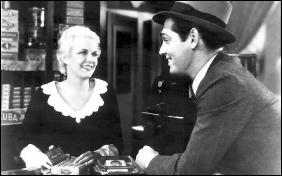
THE MIDNIGHT WARNING. Mayfair Pictures, 1932. Also released as Eyes of Mystery. William [Stage] Boyd, Claudia Dell, Huntley Gordon, Johnny Harron, Hooper Atchley. Director: Spencer Gordon Bennet.

MIDNIGHT WARNING William Stage Boyd

    An oddball detective film that may have been inspired by an actual event, The Midnight Warning stars William “Stage” Boyd as detective Bill Cornish investigating a disappearance: an ailing young man who had just recently checked into a hotel with his sister.

    She has to travel to Utah on urgent business, but when she returns her brother has vanished and absolutely everyone claims not to remember him (even though we, the audience, know better).

    So obviously there’s a cover-up — but why? The solution for me (which I will not reveal) was not very satisfactory, when one considers all the nicely-wrought mystification that precedes the denouement.

    Even odder, at this late remove from historical events, are the reasons given — an economic upturn in the Depression being chief among them. (The recent election of FDR seems to have led people, among them Hollywood writers, to believe mistakenly that happy times were here again — and yes, that is germane to the film’s plot.)

    Not only is this an oddball movie but also the detective himself is slightly off kilter: Instead of the usual hardboiled, self-assertive personality type, Cornish is more than willing to push others into compromising and even potentially dangerous situations, at one point getting a friend to act as a cats-paw. Despite all that, however, he still comes across as something of an amiable antihero.

MIDNIGHT WARNING William Stage Boyd

    There is a nod to Sherlock Holmes when, early in the film, someone takes long range shots at a character through a window — indeed, he is wounded without realizing how it happened. Detective Cornish then sets a trap using a mannequin to pin down the shooter’s location.

    Later films took up the theme of someone vanishing from crowded areas: So Long at the Fair (1950) and Dangerous Crossing (1953). (The latter is based on a radio play, “Cabin B-13,” by John Dickson Carr.)

    The Midnight Warning is an engrossing little mystery with a great buildup but a disappointing reveal. It’s available on DVD from Amazon.com for about eight dollars.

CAROLYN HAINES – Splintered Bones. Dell, paperback reprint: February 2003. Hardcover edition: Delacorte, February 2002.

   There’s a huge difference between mysteries like the recent pair of “Golden Age” novels by G. D. H. and Margaret Cole I reviewed recently, especially the latter, and this one, and that’s the amount of personal life of the detective we get to become a part of.

CAROLYN HAINES

   Sarah Booth Delaney is trying to make a go of it as a private investigator, and as a former pampered Daddy’s Girl, southern-belle Mississippi-Delta style, she hasn’t quite succeeded in getting her own life on track — and she has a ghost in her house who keeps telling her that. (Sarah Booth is on the wrong side of thirty, not married, and she has no viable prospects in sight.)

   This, her third major case, seems to come straight from a Dixie Chicks’ country song. You may know the one. The dead man was a wife abuser, a lousy father, and has been compulsively piling up gambling debts. He’s all-around No Good. No one has a decent word to say about him. His wife Lee has confessed. Her only defense is that Kemper Fuquar deserved to die, and she hires Sarah Booth to help her prove it.

   Part of the deal is taking in Lee’s sullen 14-year-old daughter Kip, who proves to be the heart of the matter, in more ways than one. A teenager in her home? It proves to be just what Sarah Booth’s heritage and home, Dahlia House, needs.

   Kip may also be the reason for her mother’s confession, which serves to complicate matters, and she’s just one of the fine characters Carolyn Haines gives us a sharp, keen insight into. But the over 350 pages of small print are also filled with a meandering investigation, and the facts seem awfully mushy. (If the right questions were asked at the right time, and of the right people, the book could easily have been 100 pages shorter.)

   And when tragedy strikes again, Sarah Booth’s reactions are surprisingly flat, along with everyone else’s. Are they suddenly all on Prozac? For all but these few pages, the inhabitants of the small southern town of Zinnia are filled with a zingy zest for life, and the singular lack of a more emotional response to this remarkable night of misadventure just doesn’t ring true.

   The book’s well worth reading, in other words, but the recommendation comes with some small little warning flags as well. Adjust to your own tastes and preferences.

— February 2003


Bibliographic Data: The Sarah Booth Delaney Mysteries. For full coverage of all of Carolyn Haines’ work, both fiction and non-fiction, visit both her website and a very good external one, located here.

Them Bones. Bantam, pb, Nov 1999.

CAROLYN HAINES

Buried Bones. Bantam, pb, Oct 2000.
Splintered Bones. Delacorte, hc, Feb 2002; Dell, pb, Feb 2003.
Crossed Bones. Delacorte, hc, April 2003; Dell, pb, Feb 2004.
Hallowed Bones. Delacorte, hc, March 2004; Dell, pb, Jan 2005.

CAROLYN HAINES

Bones to Pick. Kensington, hc, July 2006; pb, June 2007.
Ham Bones. Kensington, hc, July 2007; pb, June 2008.
Wishbones. St. Martin’s, hc, June 2008; pb, June 2009.
Greedy Bones. St. Martin’s, hc, July 2009.

CAROLYN HAINES
A Review by MIKE TOONEY:


CHRISTIANNA BRAND – Heads You Lose. John Lane/The Bodley Head, UK, hc, 1941. US hardcover: Dodd Mead, 1942. Hardcover reprint: Ian Henry (UK), 1981. Paperback reprints include: Penguin (UK), several printings, 1950s; Bantam, June 1988 (shown).

CHRISTIANNA BRAND Heads You Lose

    Christianna Brand’s mystery output seems paltry compared to, say, Agatha Christie.

    In the 1950s, Brand produced progressively less in the crime fiction field, focusing more on her children’s writing. According to the IMDb, a handful of her children’s stories were adapted for British TV and one was the subject of a full-length motion picture a few years ago.

    Film makers gave her mystery fiction brief attention in the mid-to-late 1940s, and then she was promptly forgotten. Only Green for Danger (1946), based on her 1944 novel, seems to have been given a proper treatment. Film critic William K. Everson and yours truly agree that this movie is THE classic detective film, with The Kennel Murder Case vying with it for first place.

    Thomas Godfrey, in his English Country House Murders (1989), characterizes our author and her writing thus: “Christianna Brand (Mary Christianna Milne Lewis), the last of the grandes dames of traditional English writing, was, like Josephine Tey, a connoisseur’s writer. Her plots are intelligently premeditated, rich in atmosphere, keenly observed, and subtly set forth.” (page 423)

    Heads You Lose memorably introduces her series sleuth, Inspector Cockrill, like this:

    “[He] was a little brown man who seemed much older than he actually was, with deep-set eyes beneath a fine broad brow, an aquiline nose and a mop of fluffy white hair fringing a magnificent head. He wore his soft felt hat set sideways, as though he would at any moment break out into an amateur rendering of ‘Napoleon’s Farewell to his Troops’; and he was known to Torrington and in all its surrounding villages as Cockie. He was widely advertised as having a heart of gold beneath his irascible exterior; but there were those who said bitterly that the heart was so infinitesimal and you had to dig so deep down to get to it, that it was hardly worth the trouble. The fingers of his right hand were so stained with nicotine as to appear to be tipped with wood.” (page 22)

    Heads You Lose was, according to the bibliographies, Christianna Brand’s second book; and there are some rough places in the narrative that seem to show she isn’t quite as accomplished as she would later become. Nonetheless, compared to some other Golden Age writers of the same period, she often reads like Shakespeare.

    Chapter 6, the coroner’s inquest, is a marvelous set piece filled with low comedy and not a little misdirection.

    It isn’t revealing too much to say that Inspector Cockrill doesn’t really solve this case; he lets the other characters eliminate false trails on their own. It’s fun to watch one indolent character exerting himself trying to prove the guilt of another character — but what’s his motivation, to protect a woman or to shift suspicion from himself?

    Cockie also spends a large part of the first half of the book off-stage and gradually assumes a greater presence later; also, we are allowed into his thoughts only intermittently — in fact we spend much of the book inside various other characters’ minds, including, believe it or not, the murderer’s (but without being conscious of it).

    The story has a historical setting, a cosy English village not long after the Dunkirk evacuation, but the war is alluded to only in several places and never intrudes much into the narrative.

    It’s annoying when Brand introduces an impossible crime but doesn’t do much with it — the impossibility is later dismissed in one sentence. But all the characters, major and minor, are well imagined.

    Once she had hit her stride, Christianna Brand could play “The Grandest Game” with the best of them. Heads You Lose shows her warming up for her later, more solidly plotted novels in which she could often out-Christie Christie.

A REVIEW BY MARY REED:
   

LOUIS TRACY – The Strange Case of Mortimer Fenley. Edward J. Clode, US, hardcover, 1919. Serialized in the Boston Sunday Globe Magazine, May 30 to July 25, 1920. Previously published in the UK as The Case of Mortimer Fenley: Cassell & Co., hardcover, 1915.

LOUIS TRACY

   Artist John Trenholme is staying in the Hertfordshire village of Roxton, having gone there at the request of a magazine to do paintings of the local area before the railway arrives and ruins everything.

   His request to thus immortalise a nearby Elizabethan mansion is rebuffed by its owner, Mortimer Fenley, private banker and father of two half-brothers.

   Trenholme finds out there’s a public right of way across Fenley’s parkland and on a lovely June morning he avails himself of it to paint the view — which includes a young woman in a bathing suit taking a morning dip in the lake. He is thus on the spot to hear the shot that kills Fenley on his own doorstep.

   At this point one of my favourite sleuthing teams, Superintendent James Leander Winter and Detective Inspector Charles Francois Furneaux, arrive on stage when Scotland Yard is called in by oldest son Hilton Fenley. To add to the family’s troubles, both siblings wish to marry their father’s beautiful ward Sylvia Manning — she of the bathing suit — which worsens the already bad blood between them.

   The younger son Robert is a ne’er-do-well who was in London when his father died, or was he? Could the murder be connected to a bond robbery at the Fenley Bank? How was the seemingly impossible crime committed when a prime suspect was known to be in the house when the murderous shot was fired from a wood some 400 yards away?

My verdict: Much as I have enjoyed the Winter & Furneaux stories, I must mark this one as a B. The Fenleys are curiously thin as characters, and I felt the lesser players in the drama were more rounded out, probably because Tracy provides a different angle for the traditional supporting cast.

   Thus for example we have the oft bibulous butler depicted instead as a wine connoisseur and the village bobby as intelligent and quick thinking. On the other hand, the touch of melodrama towards the end of the novel seems somewhat out of place, and prospective readers should be aware there are a few comments of an un-PC nature.

Etext: http://www.munseys.com/diskseven/mofendex.htm

         Mary R

http://home.epix.net/~maywrite/


Bibliographic data:  John D. Squires’ long chronological checklist for Louis Tracy (1863-1928), aka Gordon Holmes and Robert Fraser, is online here here.

« Previous PageNext Page »