Pulp Fiction


REVIEWED BY DAVID VINEYARD:


JUDSON P. PHILIPS “Men About to Die.” Novella. Park Avenue Hunt Club #11. First published in Detective Fiction Weekly, February 2, 1935. Never reprinted. See comments #’s 1 and 2 for reprint information.

   Running in the pages of Detective Fiction Weekly, where it vied for readers’ attention with the likes of Erle Stanley Gardner’s Lester Leith, Richard Sale’s Daffy Dill, and Carroll John Daly’s Satan Hall, the popular Park Avenue Hunt Club was an American version of Edgar Wallace’s Just Men, a team of vigilantes battling crime in the age of the Depression, gangsters. John Dillinger, and Bonny and Clyde.

   Product of a lawless age, this secret organization had sprung up suddenly to stand squarely in the path of the criminal. Gangsters and racketeers found themselves confronted by a foe who dealt out death for death, brutality for brutality. The underworld … found themselves prey to the Hunt Club which moved swiftly, secretly, and relentlessly.

   The Club members were handsome former secret agent Geoffrey Saville; big game hunter and red haired giant John Jericho; and chess master and medical student Arthur Hallam, who, their identities known only to Inspector James Emory Doane NYPD, wage a violent and bloody war on the underworld of New York.

   Pretty standard pulp stuff it sounds and it was, but behind the name Judson P. Philips was Hugh Pentecost, one of the longest lived writers to emerge from the pulps and who, like relatively few others, had a healthy critically successful career as a mid-list author under his own name and as Philips, and whose many series included the popular hotel manager Pierre Chambrun and freelance journalist Peter Styles series as well as one featuring John Jericho, an artist who shares with the Hunt Club Jericho mostly only his size and red hair.

   Like most of the writers who survived the pulps and thrived, Pentecost not only outgrew his origins, he expanded his horizons so that the Peter Styles books had a serious social conscience tackling major issues of the day, while Jericho’s adventures featured a deeply humanitarian sleuth often rescuing victims of society. Save for retaining a gift for plot, suspense, and action they and Chambrun are a far cry from the bloodthirsty Park Avenue Hunt Club.

   The dangerous Dzamba brothers, Leonardo, Salvatore, and Vincente (no, they aren’t mutant ninja turtles) are on trial in a case brought by none other than Inspector Doane and prosecutor John Crowther, and a witness has warned Doane that the Dzambas plan a spectacular escape during the trial, so he calls on Saville, Jericho, and Hallam to be present when the bloodshed begins. The Club has a history with the Dzambas, Jericho himself having killed brother Angelo with his bare hands.

   And sure enough something goes wrong, the judge is murdered in chambers, four policeman are killed in a bloody shootoutmand the Dzambas are on the loose. The Park Avenue Hunt Club is on the prowl, turning to a crooked former cop who helped the Dzamba brothers in the past but Salvatore gets to him before the boys can.

   With the Dzambas out for revenge, and even their own lawyer murdered by them, the one target left is prosecutor Crowther, who lives in the country with his young wife. Local yokels can hardly be expected to protect him, so it looks like a job for the boys.

   No detection here, it’s mostly an action piece closer to the hero pulps and they’re figures of justice than sleuths, but it is satisfyingly fast paced, and despite a plethora of characters in a relatively short piece. it works well enough.

   This is a single contained story, though some of the Park Avenue tales were serials and likely a bit less rushed, if still as plot and action heavy. You can see why this series was popular and featured so often on covers of the magazine. It’s pure pulp, full of movement, setbacks, and a big finale with the three heroes once again emerging triumphant in their secret war against crime, and in a relatively few years Pentecost would be moving on to a long successful career.

  LOU SAHADI, Editor – An Argosy Special: Science Fiction. One-shot reprint magazine. Popular Publications, 1977.

    #1. ROGER DEE – First Life. Short story. First published in Super Science Stories, July 1950. Not reprinted elsewhere.

   This late 70s Argosy Special consists (at first glance) of nine random stories selected from a group of second-rank SF magazines published by Popular Publications in the early 1950s. Assuming you’ll allow me, I’m going to go through the magazine story by story over the next few weeks, and write up my comments on them in a series of individual posts.

   First up is “First Life” by Roger Dee, the working byline of Roger Dee Aycock, born in Georgia in 1914. You may never have heard of him unless you’re a collector-reader of SF magazines from the 50s, even those not in the top three (Astounding, Galaxy, F&SF). He was the author of several dozen short stories in that era, but only one novel, An Earth Gone Mad, half of an Ace Double in 1954.

   In this story a young boy has been in touch with far advanced beings from the stars, and on the fateful night that the story takes place, a small individual spaceship has come to pick him up to meet his future. Unfortunately he also has to say goodbye to his parents and dog, and it isn’t easy.

   The story isn’t told in the most elegant of prose, but it caught my attention anyway. It reminded me of seeing each of my children off to school for the first time, knowing that they wouldn’t ever be the same, once the bus brought them home again. The poignancy is even higher in “First Life,” though, as young Donnie will never be coming home again. You will have to read the story yourself to learn why.

C. S. MONTAYNE “The Perfect Crime.” Short story. Rider Lott #1. First appeared in Black Mask, July 1920 (Vol.1, No.4). Reprinted in The Black Lizard Big Book of Pulps, edited by Otto Penzler (Vintage Crime, softcover, November 2007).

   Unless I’m very much mistaken, not only was this Rider Lott’s first appearance, it was also his last. Which is as it should be, since doesn’t the old saying go, “Crime Does Not Pay”? The story is included in “The Villains” section of Otto Penzler’s book, but to tell you the truth, Rider Lott is one very minor villain indeed.

   His modus operandi in “The Perfect Crime” is to recruit two others, one male and one female, to commit the crime of burglary for him, while he takes a third of the loot for being the mastermind behind the plot. But even though he warns his two underlings to be extra cautious in leaving no clues behind them, it goes without saying that if you want to commit the perfect crime, you’d be better off doing it yourself.

   As I suggested earlier, this is not a major piece of work. To me it’s historically significant because I’m fairly sure this is the earliest story in the long run of Black Mask I’ve ever read. Otherwise I think I’d rather have read one of Montayne’s stories about one of his other villains, namely a certain jewel thief by the name of Captain Valentine, a gentleman who appeared in a total of ten Black Mask stories, as Otto tells us in his introduction to this tale, plus one novel, Moons in Gold (1936).

THE WINDY CITY PULP & PAPER CONVENTION, 2019
by Doug Ellis


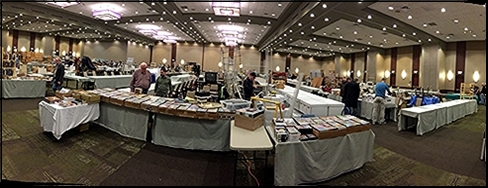
   The 19th annual Windy City Pulp and Paper Convention is now just over a month away! The convention will take place on April 12-14, 2019 at the Westin Lombard Yorktown Center in Lombard, Illinois. As usual, we will have auctions on both Friday (April 12) and Saturday (April 13) nights, and this year’s auctions promise to be our best ever.

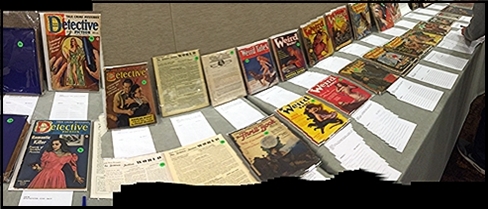
   The Friday night auction consists of 230 lots of material from the estate of famed collector Robert Weinberg, while the Saturday night auction begins with 100 lots from the estate of Glenn Lord, literary executor for the Robert E. Howard estate, followed by 56 lots from a few other consignors. And more lots will be added to the Saturday night auction at the convention, to include material consigned there by convention attendees.

   Among the highlights in this year’s auctions are:

● The first issue of the legendary pulp, Weird Tales
● A fine copy of the December 1932 issue of Weird Tales, featuring the first appearance of Robert E. Howard’s immortal barbarian, Conan
● Numerous other issues of Weird Tales, including several of the rare bedsheet issues, many in gorgeous condition

● “Not At Night” edited by Herbert Asbury; the 1928 American edition of this British horror anthology series, signed by contributors H.P. Lovecraft and August Derleth as well as by editor Asbury
● Several very scarce issues of the pulp, The All-Story, with serial installments of Edgar Rice Burroughs’ first two John Carter of Mars novels, “Under the Moons of Mars” (in book form as “A Princess of Mars”) and “The Gods of Mars”
● A complete run of the rare pulp, Excitement
● The first edition of Frank Herbert’s landmark SF novel, “Dune”
● Nearly a complete bound run of the pulp Double Detective, including all of the Green Lama issues
● “The Case Against the Comics” by Gabriel Lynn, an extremely scarce 32 page pamphlet published in 1944 by The Catechetical Guild, advocating the censorship of comics, predating Wertham’s “Seduction of the Innocent” (note that an 8 page version was also published, but this is the full version)
● H.P. Lovecraft’s “The Shunned House”, printed in 1928 by The Recluse Press but never bound by them, which Glenn Lord later had professionally bound
● Two of famed SF editor Ray Palmer’s bound copies of the legendary fanzines, Science Fiction Digest and Fantasy Magazine, later signed and inscribed by Julius Schwartz to Bob Weinberg
● 30 copies of the pulp Dime Detective Magazine, many in beautiful condition

● An original Kane manuscript by noted fantasy and horror author Karl Edward Wagner
● 20 of the 21 issues of the scarce Canadian fantasy pulp, Uncanny Tales
● Other rare Canadian pulps and books, including many issues of the Canadian edition of Weird Tales and the only issue of Eerie Tales
● Numerous Robert E. Howard and H.P. Lovecraft items
● Correspondence from SF author Philip K. Dick, signed by him, with great content regarding his “The Man in the High Castle”
● The 1935 Dragon-Fly Press edition of “The Goblin Tower” by Frank Belknap Long, printed in an edition of 100
● Rare U.K. and Australian books and magazines, including the only issue of The Weird Story Magazine, and many publications from Gerald G. Swan and Utopian Publications
● Rare items by Clark Ashton Smith, including “Odes and Sonnets,” “Sandalwood and Other Poems” and “The Hill of Dionysus: A Selection”
● The complete run of the bedsheet pulp Scientific Detective Monthly/Amazing Detective Tales, including the extremely scarce ashcan issue
● “The Dream Weaver: An Edgar Rice Burroughs Chapbook”
● Other rare pulps, including issues of Mind Magic, Flash Gordon Strange Adventure Magazine and People’s Favorite Magazine

● Many early Arkham House books, including Robert E. Howard’s “Always Comes Evening”, Clark Ashton Smith’s “Out of Space and Time” and “Spells and Philtres”, Donald Wandrei’s “The Web of Easter Island” and “August Derleth: Twenty Years of Writing, 1926-1946”
● Signed items by H.P. Lovecraft, A. Merritt, August Derleth, Clark Ashton Smith, Edmond Hamilton, Mary Elizabeth Counselman, Greye La Spina, Daisy Bacon and others
● A complete bound set of the legendary fanzine, The Fantasy Fan, edited by Charles D. Hornig
● Numerous issues of the pulps Action Stories, Fight Stories, Fantastic Novels, The Magic Carpet Magazine, The All-Story and Private Detective Stories
● The complete run of the pulp, Oriental Stories, attractively bound, in slipcase
● The 1938 edition of “The Sign of the Burning Hart: A Tale of Arcadia” by David H. Keller, published in France in an edition of 100 copies; it’s been noted that few of these survived WWII

   The complete auction catalog is now available on our website, and can be downloaded at this link:

       http://tinyurl.com/yxezoqgf

   Images will shortly be posted on our website (www.windycitypulpandpaper.com) and are now also available in the Photos section on our Facebook page — search FB for Windy City Pulp and Paper or go to:

       https://www.facebook.com/windycitypulp/

   The website will also soon have details on absentee bidding, for those who can’t make it to the convention.

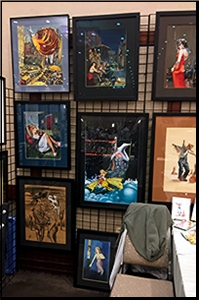
   But the auctions aren’t our only highlight! Friday through Sunday, our expanded dealer room will be buzzing, bursting with 180 six foot long tables, with roughly 100 dealers from the U.S., Canada and the U.K. displaying pulps, vintage paperbacks, science fiction, fantasy & mystery hardcovers, golden and silver age comics, original illustration art, movie memorabilia and more!

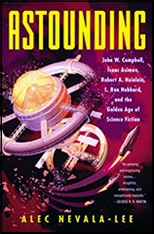
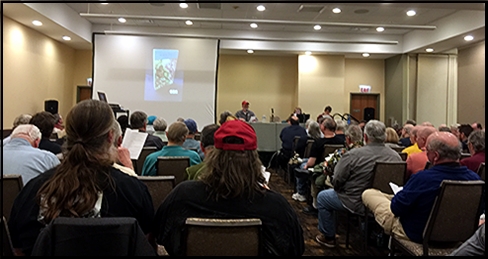
   Our art show will feature a great display of the Burroughs’ art of Mark Wheatley, as well as art from the pulp Planet Stories, pulp and paperback art with a Chicago connection, and a unique display of original photographs featuring pulp authors, artists and publishers. As usual, our film programming, curated by Ed Hulse, will run Friday and Saturday, showing movies and serials based on pulp stories. Our evening programming will include a presentation on John Campbell and Astounding Stories by Alec Nevala-Lee (author of the recent “Astounding: John W. Campbell, Isaac Asimov, Robert A. Heinlein, L. Ron Hubbard, and the Golden Age of Science Fiction”), as well as a panel of pulp experts discussing Fiction House’s beloved SF pulp, Planet Stories.

   And Sunday morning will see the new Director of Publishing for Edgar Rice Burroughs, Inc., Christopher Paul Carey, leading a panel on the exciting things planned from ERB, Inc., followed by New Pulp Sunday, programming devoted to the vibrant and colorful world of New Pulp organized by Ron Fortier of Airship 27 Productions. And all attendees will get a copy of our fabulous convention book, put out by Tom Roberts of Black Dog Books.

   We hope you’ll join us for the fun and excitement at this year’s Windy City Pulp and Paper Convention! For more info, contact me, Doug Ellis, at pulpvault@msn.com.

RICHARD SALE “The House of Kaa.” The Cobra #2. Short story. First published in Ten Detective Aces, February 1934. Reprinted in The Black Lizard Big Book of Pulps, edited by Otto Penzler (Vintage Crime, softcover, November 2007). Collected in The Cobra: The King of Detectives (Altus Press, 2009).

   The pulp magazines were filled with all kinds of detective heroes, from cops to PIs and pure amateurs, but in their midst were numerous self-appointed vigilantes, long before Don Pendleton and Mack Bolan came along. Such a one is Dean Bradley, a common enough name, but in his guise as “The Cobra,” his penchant for killing the villains he meets is enough to instill the fear of sudden death into the minds of countless others.

   His favorite method of disposing of the various criminals he tracks down? Cobra venom, administered by poisoned darts propelled from a blowgun disguised as a cigarette holder. The miscreants in “The House of Kaa,” busily smuggling priceless jewels from India to England in the stomachs of royal pythons, are no different, and they are hardly a match for The Cobra.

   As for Richard Sale, the author, he later became well known as both a novelist (Lazarus #7) and screenwriter (Suddenly). Everyone has to start somewhere!


        The Dean Bradley aka “The Cobra” series —

Terror Towers (ss) Ten Detective Aces Jan 1934
The House of Kaa (ss) Ten Detective Aces Feb 1934
The Grinning Ghoul (ss) Ten Detective Aces Mar 1934


SELECTED BY DAVID VINEYARD:


CLEVE F. ADAMS “Flowers for Violet.” Violet McDade #6. Novelette. Published in Clues Detective Stories, May 1936. Cover by Norman Saunders. Never reprinted. Included in Hard-Boiled Dames, edited by Bernard Drew (St. Martin’s Press, 1986). See Comment #1.

   Violet McDade in a night-club was as conspicuous as an elephant in an aquarium.

   With the exception of some tough newspaper women working alongside the likes of Daffy Dill or a female op helping Cardigan, there weren’t a lot of female driven series in the hard-boiled pulps so, like Theodore A. Tinsley’s Carrie Cashin, Violet McDade is a bit different than the usual pulp fare.

   I really don’t know if Violet came before or after Erle Stanley Gardner’s Bertha Cool, but she certainly owes more to Bertha than Rex Stout’s tough smart and attractive Dol Bonner. Violet is fat, rude, and tough as nails, and as “Flowers for Violet” opens she is being rude and pushy in a nice night club called the Green Kitten, where she is trying to dredge up clients for her and her chief operative, Nevada Alvarado, a slim, attractive girl who is getting sore feet dancing with all the stiffs Violet steers toward her.

   â€œ…trouble with you, Nevada, is you don’t appreciate what contacts mean to a couple of female dicks like you and me.” Violet chides her junior partner.

   When Violet spies Assistant D. A. Stephen Wright in the Green Kitten, she smells trouble. Mike Donelli, who runs the club runs illegal gambling upstairs and has a backer in state Senator Hymes, and D.,A. Alvin Foss is no fan of either. Violet smells trouble and maybe money, and she is seldom wrong about either. Donelli is married to Rose, who does a routine clad “mostly in brilliants”, and Violet chides Mike for staying in the rackets.

   â€œYou think a lot of Rose don’t you, Violet?”

   â€œNo, you ape, I don’t. I think she’s an empty headed little tramp. I think she was a sap for marrying a guy like you. But,” … Violet’s greenish little eyes got a far away looks that somehow always brought a lump to my throat … “but Rose’s mother was damn white to me back when she was on top and I was the fat lady in the same circus. I … I kind of owe Rose something for that.”

   And with that, you know the stage is set for fists and bullets to fly as Violet and Nevada find Rose on their doorstep still clad in “mostly brilliants” and the news Mike Donelli just shot someone and is gunning for Rose and then their apartment gets fire bombed.

   True to the breed, Violet plays fast and loose with the law letting the fire department think she and Nevada (sometimes called Mex — political correctness was not one of Adams’ strengths) are trapped in the rubble while they get a head start on the case as she and Nevada and Violet’s little chauffeur Sweeny go gunning for Mike Donelli with a protesting Rose in tow.

   District Attorney Foss has been shot, and it adds up that Donelli probably did it, but nothing is ever that straight up in these things. A Violet and Nevada bull into the case, things and people prove to be more complicated than they expect, especially when Violet’s favorite cop, Lt. Belarski gets his skull clipped by a bullet and Sweeny ends up in jail.

   The detective work is pretty good, although it is less in the classic tradition than the hard-boiled one where every violent encounter leads to another step toward the truth, which involves high level shenanigans, political corruption and ambition, and not so honest fall guys.

   The Violet McDade stories are fun, a bit out of the screwball school as Adams’ Rex McBride stories also were: violent, fast moving, and reminiscent of what many of us started reading hard-boiled pulp fiction for in the first place.

   Adams was in the second rank of the classic hard-boiled school, and that isn’t a shot at his often entertaining tales, just a recognition that he perhaps didn’t work as hard at originality as he might have, and for all his word savagery, he just missed the first rank. That “elephant in the aquarium” is no “tarantula on a piece of angel food cake.”

   But second rank in that particular school wasn’t a bit shabby, and if you are looking for a fat lady to sing this particular aria, you could do worse than to accompany Adams and Violet McDade.


      The Violet McDade series —

Page Violet McDade! (nv) Clues Detective Stories Jan 1935
Shrinking Violet (nv) Clues Detective Stories Jul 1935
Mexican Bargain (ss) Clues Detective Stories Aug 1935
Framing the Picture (nv) Clues Detective Stories Nov 1935
Vision of Violet (nv) Clues Detective Stories Feb 1936
Flowers for Violet (nv) Clues Detective Stories May 1936
The Voice (nv) Clues Detective Stories Sep 1936
Compromising Violet (nv) Clues Detective Stories Oct 1936
Important Money (nv) Clues Detective Stories Dec 1936
Violet to Orchid (nv) Clues Detective Stories Feb 1937
Murder City (nv) Clues Detective Stories Apr 1937
The Black Door (ss) Clues Detective Stories Sep 1937
Bloody Bullets (nv) Clues Detective Stories Nov 1937

SELECTED BY DAVID VINEYARD:


NORMAN DANIELS “The Great Ego.” Novella. First appeared in Startling Stories, Spring 1944. Never reprinted.

   The first story by Norman Daniels I ever read was one of his John Keith, Man from A.P.E. spy stories from Pyramid. I didn’t know who Daniels was at the time and knew nothing of his pulp connection, but I knew I liked the book enough to look for more by him, which proved fairly easy to do as he was an extremely prolific writer for most of his entire career, from his early days in the pulps to the Gothic romances written with his wife as Dorothy Daniels. The only trick with his work was discovering which pseudonyms he was writing under other than his own name, and which genre he was writing in.

   But I confess I never really thought of him much in terms of the Science Fiction genre, which is why I was a bit surprised to see his name on the cover of Startling Stories with the lead novella illustrated by no less than the great Virgil Finlay, the work in question, “The Great Ego.”

   The story, as you might expect from Daniels and Startling, opens with a hook designed to keep you turning pages. The extremely meek and retiring Mr. Rodney St. George (…in manner of dress he might be almost dainty) is a clerk at a bank, and his superior, young and handsome Jim Downing, has asked Miss Pam Brooke, an attractive clerk at a rare book store, to identify St. George as a man who buys rare volumes at her store.

   Two marked notes, part of a large sum embezzled by a recently caught clerk named Foster, one who definitely would not be found in a rare book store, showed up at her store. To make things even more mysterious, it turns out the meek Mr. St. George has spent some $8,000 on rare books in recent months. This is certainly not a sum he earned at the bank no matter how carefully he lived.

   Like any pulp hero worth his name, Jim Downing is determined to investigate more deeply, something he soon finds he wishes he kept his nose out of. But before he can follow up, Mr. St. George foils a bank robbery, apparently by accident. Asked to identify the captured bank robber, St. George visits his cell, where magically a cute kitten appears just as the bank robber who had pleaded with St. George to free him drops dead, much the same way the embezzling clerk Foster did, from no apparent cause.

   There is much more to Mr. St. George than meets the eye, and he is ready for Jim Downing’s nosing around.

   Meanwhile Pam Brooke has been doing a little detective work on her own. She has discovered St. George has spent thousands of dollars in rare bookstores around the city. So when Downing goes to visit St. George he suspects there is more to the story than he’s been told and willing to confront the man. At which point St. George turns him into a kitten and himself into a large black cat.

   Of course Daniels manages to give the whole thing a thin patina of science since this was Startling Stories and not Weird Tales, but basically this is the sort of thing you would find in John Campbell’s Unknown, though told here with a straighter face and without the more literary efforts of a Heinlein, Leiber, De Camp, or Williamson.

   St. George can turn anyone into any animal, but he prefers cats, and his house full of cats, all former humans (including Foster and the bank robber), but he needs Downing because it turns out St. George isn’t the only one with this power. He has a rival, a deadly one, Dr. Michael Jamison.

   Downing manages to become human and escape, but no one will believe him but Pam, so he tries to enlist Jamison only to find himself ironically allied with St. George against an even madder scientist/sorcerer, the two men vying for an ancient scroll that will make one of them a virtual god.

   This fast-moving tale has a momentum of its own, despite the absurdities and proves to be a fun story as Downing and Pam find they are mankind’s last hope as the two self proclaimed gods feud with man’s fate in the balance.

   Daniels manages a nice bit of jiggery-pokery here, keeping the tale moving despite the built-in absurdity, and even allowing the hero to outwit the two madmen with a clever bit of observation about the nature of their abilities, bringing the thing to a fine apocalyptic head.

   â€œThe Great Ego” is a well-written and playful tale, one that doesn’t take itself too seriously, but still seriously enough to involve the reader in the fate of the attractive hero and heroine, if you are willing to give into the spirit of the thing.

   Startling may not have been in a class with Astounding, but over the years it was the home to some of the more gifted writers in the field, including Leigh Brackett, Stanley Weinbaum, Manly Wade Wellman, Ray Bradbury, Edmund Hamilton, Henry Kuttner, (Captain Future, too) and other major names, and in “The Great Ego” an unquestioned pulp — if not SF — master pulls off an entertaining tale as wild and furry as the cats that populate it.

GEORGE HARMON COXE “Murder Picture.” Novelette. “Flash” Casey #8. First appeared in Black Mask, January 1935. Reprinted in The Black Lizard Big Book of Pulps, edited by Otto Penzler (Vintage Crime, softcover, November 2007).

   The count above is of Casey’s story appearances in Black Mask. The first novel he appeared in didn’t come out until 1942 when Silent Are the Dead was published by Knopf in hardcover.

   I imagine quite a few of you already know that Casey was a news photographer and that he was sometimes also known as “Flashgun.” He was a rough-edged kind of guy, though. He may have been the only news photographer who carried a gun — not all the time, mind you. Only when the occasion called for it, and that it definitely does in this story when his assistant named Wade is kidnapped by a gang of thugs as a means of getting their hands on a photograph Casey has taken.

   There are too many people in the story, both good and bad, and not many who are in-between. We don’t get to meet the girl Wade is soft on, however, one who Casey thinks is up to her neck in the criminal activities the people she works for are involved with, and that’s too bad, as she’s the only whiff of a feminine presence anywhere in the story.

   I confess that I didn’t (couldn’t) follow the plot all that well, but I didn’t have to in order to enjoy all of Casey’s fast-thinking maneuvers he uses to learn where Wade is being held, and from there on, it’s fast-paced action all the way.

Hi Steve

   Can you tell me about the two Thursday short stories/novelettes?

   â€œMurder Has Girl Trouble” Mystery Book Magazine, Spring 1950


   “The Corpse Walked Away” Two Complete Detective Books, January 1951


   Are these stories different from the stories in the six novels? Or were they later expanded into two of the six novels?

           Thank you,

                   Joe

ERLE STANLEY GARDNER “Lost, Strayed and Stolen.” Lester Leith #44. Novelette. Detective Fiction Weekly, 24 February 1934. Never reprinted, though I’d welcome being corrected on this.

   It might be possible to characterize Lester Leith as a private eye, except for one small detail, or maybe two. He never had a PI license, and as far as I know, his only client was himself. What he realty is is difficult to describe. What he does is scour the newspapers for details on crimes that have been committed and tries to find a way to cut himself in on the proceeds.

   He is so successful at this that there is no “tries” about it. The police do not take his activities lightly. They think he is a crook himself, although they have never been able to prove it.

   To this end, however, they have inserted one of their men, a chap named Beaver, into Lester Leith’s household in the guise of his personal man servant. Leith calls him Scuttle, and of course Leith is fully aware that Scuttle is a easily fooled spy for the equally inept Sgt. Ackley of the police department.

   Which is where half the fun of reading the Leith stories comes in. He simply delights in teasing both Scuttle and Ackley along, giving them just enough information to get them going in one direction while off he goes in the other. The other half of the fun is watching Leith do exactly that, which in this case involves setting up a totally bogus Citizens’ Committee on Civics Efficiency, complete with stationery, buttons and badges, although Leith himself is the only member.

   Goal: to obtain a valuable diamond necklace that the husband of a well-known society woman claims was stolen from him. With the use of an exact but worthless replica and the hiring of a young woman living down the hall from him who is low on funds, Leith manages to get both the police and the couple whose necklace was stolen both totally confused and bamboozled, and badly, to the total delight of the reader.

   I thoroughly enjoyed this one, from beginning to end.

« Previous PageNext Page »