Pulp Fiction


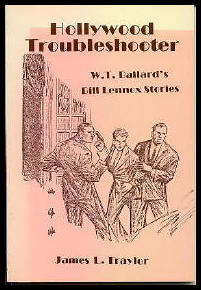
W. T. BALLARD – Hollywood Troubleshooter. Edited by JAMES L. TRAYLOR. Popular Press, Bowling Green University; trade paperback; 1985. Also published in hardcover.
W. T. Ballard

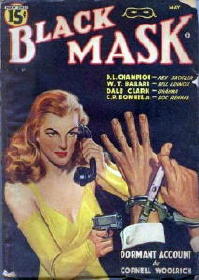
   Subtitled “W. T. Ballard’s Bill Lennox Stories,” not only does this book contain five of the twenty-seven of them that appeared in Black Mask during that magazine’s heyday, probably the best-known detective pulp of them all, but all of the following are included as well: an overview of Ballard’s career by Traylor and a short biographical sketch by Ballard himself, both extremely informative; an introduction to the Lennox stories and novels; and last but not least, a complete bibliography for all of Ballard’s long and prolific writing career.

   It’s a cliché, I suppose, but this is a book that should be on the shelf of every pulp detective fan, no ifs, ands or buts. After a lengthy career for the pulp magazines — even before he started writing for Black Mask in 1933, he had already been published in the October 1927 issue of Brief Stories — Ballard switched with the times to writing novels, some in hardcover, but most of them paperback originals.

   When he found the market for his mystery fiction was drying up, Ballard switched to writing westerns, most of these coming out under the pen names of either Todhunter Ballard or John Hunter. In the 1950s and 60s he wrote a number of television plays as well, for such series as Death Valley Days, Wild Bill Hickok and Shotgun Slade.

   While the Lennox stories in Black Mask appeared only from 1933 to 1942, he was apparently fond enough of Lennox as a character to continue writing about his adventures in hardcover form: Say Yes to Murder (Putnam, 1942), Murder Can’t Stop (McKay, 1946), and Dealing Out Death (McKay, 1947). Much later on, a fourth book, Lights, Camera, Murder (Belmont, pb, 1960), finally appeared, published for some reason under the name of John Shepherd.

   Here’s a suggestion from me. Lennox may have been the first Hollywood troubleshooter to have appeared in fictional form, the right-hand man for Consolidated Studio’s production chief, Sol Spurck. Having no specific title, according to the last of the five stories in this book, Lennox’s assignment was “to iron out whatever bottlenecks developed in the production schedule.” Murder is often one of those bottlenecks, as well as any other kind of behavior that might affect the studio’s star and starlets — including blackmail, crooked horse racing, gambling debts or the like. (Hollywood, crime and cover-ups somehow seem to go together naturally, at least in days gone by, if not today.)

   Whenever a pulp writer got a hot series going, there was often of crew of regulars that began to appear in the same stories the main character did, and Ballard was no different. (He may even have been one of the forerunners of the idea.) Given only self-contained glimpses here and there, and spread over the run, you won’t get the full flavor of this in the same way that a long-time regular reader of Black Mask might have been able to, but Nancy Hobbs, for example, who writes about movies, has short but very striking roles in the first two of them. Later on, it comes as no surprise to learn, she appears in his adventures as a long term girl friend and lover, although marriage does not seem to be in the cards for either of them.

   The earlier stories are told in the more terse hard-boiled style popularized by Dashiell Hammett, but by the end of the run some personal background had been built up around Lennox, making him a bit more human — but without losing any of the sheer sensationalism of the pulps. Lennox’s final Black Mask appearance, for example, is a case in which a killer sends his victim through the buzzsaw at a still very much functioning lumber mill.

   Although the tales contained in the book are, in all honesty, not among the finest the pages of vintage pulp magazine fiction can offer, they’re certainly right up there in the second level from the top. And if you’re like me, when you’ve finished reading the five in the book, you’re going to wish that somebody would publish them all of the Lennox stories, and then the “Red Drake” ones, then all of the Ace G-Man Stories, and on and on and on.

   Stories contained in this volume, all from Black Mask:

“A Little Different” September 1933 [Lennox’s first appearance]
“A Million-Dollar Tramp” October 1933
“Gamblers Don’t Win” April 1935
“Scars of Murder” November 1939
“Lights, Action — Killer!” May 1942 [his last magazine appearance]

Postscript: Looking back at this review several days later, all I can think of is that I didn’t provide you with an excerpt from any of the stories. This one’s from early in the very last one, “Lights, Action — Killer!” I don’t think it needs any more introduction from me, other than to say that Lennox is talking to Sol Spurck about the latter’s latest movie, which is in trouble, as usual:
    “The script,” said Lennox, “stinks.” When he had first come west, he had been surprised at the language which served the film colony, but after six years he spoke no other. He was too busy to think about himself, his likes or dislikes.

Ballard - Black Mask

    At first he had dreamed of writing a book, a lot of books, but as the weeks drifted into years, he still spoke of quitting pictures, of going east and settling down to write.

    That time never seemed to come. Through experience, he had learned to make his interest, his enthusiasms, and his softer feelings under a shell of hardness which was the only phoney thing about him. He had become flippant, since the town understood nothing else. He had ceased to admit that he could read, or that he liked good books. He gambled when he could, needing the false excitement of the game as a safety valve for his nerves.

    But although he refused to admit it, even to himself, he was still moved by enthusiasm for each new picture, still hoped that some day someone would cut loose and make, not the old formula story, but something really new, something different. All the bitterness and boredom of his job was in his voice when he said, “They dipped the barrel dry for hokum on this, Sol. If we had Pearl White, we could make the greatest serial out of this that was ever made.”

    “Funny,” said Spurck. “Mama and I was just talking at dinner. Them old days was different. Pictures was fun then, and not always the headache which we have now got.”

— August 2004


UPDATE [06-23-07]. Here, for the sake of completeness, is a complete list of Lennox short fiction:

“A Little Different” (September 1933, Black Mask)
“A Million Dollar Tramp” (October 1933, Black Mask)
“Positively the Best Liar” (November 1933, Black Mask)
“Trouble-Hunted” (January 1934, Black Mask)
“Tears Don’t Help” (April 1934, Black Mask)
“That’s Hollywood” (May 1934, Black Mask)
“Whatta Guy” (July 1934, Black Mask)
“Crime’s Web” (September 1934, Black Mask)
“Snatching is Dynamite” (October 1934, Black Mask)
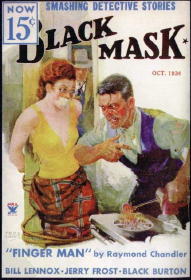
Black Mask

“In Dead Man’s Alley” (November 1934, Black Mask)
“Murder Isn’t Legal” (December 1934, Black Mask)
“Gambler’s Don’t Win” (April 1935, Black Mask)
“Numbers With Lead” (January 1936, Black Mask)
“Blackmailers Die Hard” (May 1936, Black Mask)
“Whipsawed” (December 1936, Black Mask)
“There’s No Excuse for Murder” (September 1936, Black Mask)
“This is Murder” (March 1937, Black Mask)
“Fortune Deals Death” (July 1937, Black Mask)
“Mobster Guns” (November 1938, Black Mask)
“No Parole from Death” (February 1939, Black Mask)
“Scars of Murder” (November 1939, Black Mask)
“Pictures for Murder” (September 1940, Black Mask)
“The Lady with the Light Blue Hair” (January 1941, Black Mask)
“Not in the Script” (July 1941, Black Mask)
“Murder is a Sweet Idea” (November 1941, Black Mask)
“The Colt and the Killer” (February 1942, Black Mask)
“Lights, Action — Killer!” (May 1942, Black Mask)

   Now don’t you wish that someone would publish them all?
   As part of the ongoing, online project to supplement Bill Deeck’s reference work about lending-library mysteries, Murder at 3c a Day, I’ve just uploaded scans of the covers of those that Hillman-Curl published between 1936 and 1937. Authors included in this grouping include Bram Stoker, Steve Fisher, E. R. Punshon, Sydney Horler and others.

   You may also be interested in reading Hillman-Curl’s “Bill of Rights for Detective Story Readers,” in which they set out the standards they intended their new line of “Clue Club” mysteries to live up to.

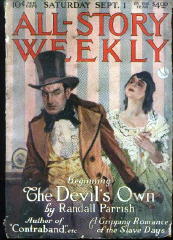
   Not much is known about Randall Parrish, author of The Case and the Girl. A brief Wikipedia entry calls him an American author of dime novels, and nothing more. Following Mary’s review, you’ll find a partial bibliography that I’ve quickly put together.

   And if after reading the review you’re prompted to look for a copy of the book itself, as I think you very well may, you’ll be glad to know that the book is online, or in print in POD format, since you aren’t going to find a copy of the Knopf edition anywhere for less than $250. In fact, there was only one that I could find, and that’s the asking price.          – Steve


RANDALL PARRISH – The Case and the Girl

Alfred A. Knopf, hardcover, 1922. A. L. Burt, hc reprint, n.d. Paul (UK), hc, 1923.

   Captain Matthew West has just been honourably discharged after twice being wounded during World War I. Feeling restless and not yet ready to return to civilian work, while browsing the newspaper at his club he decides to answer a personal ad running thus

   “Wanted: Young man of education and daring for service involving some personal peril. Good pay, and unusual reward if successful. May have to leave city. Purpose disclosed only in personal interview.”

   Instructed to bring his evening clothes — and a good job he has them! — he is soon off to a rendezvous with orphaned heiress Natalie Coolidge. She does not explain what task she requires him to undertake but Captain West agrees to help her even so, and is whirled off to the family mansion, where he is astonished to be introduced to the house party as her fiance. One of the guests is Natalie’s uncle and guardian Percival Coolidge. The two men dislike each other on sight – in fact, Uncle Percy accuses West of being a fortune hunter, the cad.

   Next morning the gallant captain has a private chat with Natalie and learns someone is impersonating her. However, nobody believes her because the responsible party looks so like her she fools even Natalie’s friends, not to mention the servants and bank clerks who know her well.

   Is Natalie telling the truth, mistaken, or demented? Despite doubts at times, West agrees to try to solve the mystery. There are a couple of odd happenings, statements made don’t quite check out, and then a death occurs and West is plunged into an adventure with enough twists and turns to make a scriptwriter swoon. The detective work is partly deductive and partly wearing out shoe leather and when it comes to action, West usually wipes the floor with his opponents, yet in a manner showing he is not a super hero.

   My verdict: Apart from the occasionally annoying fact that Captain West is a bit slow on the uptake at times, this was a rollicking read and keeps the interest to the end. I particularly admired a sequence in which West and Natalie are trapped in…but no, I will not ruin the suspense, although I will say it gave me the creeping heeby jeebies.

      Etext: http://www.gutenberg.org

              Mary R

http://home.epix.net/~maywrite/


RANDALL PARRISH (1858-1923) – A Partial Bibliography

● Crime Fiction  (Thanks to Crime Fiction IV, by Allen J. Hubin.)

* Gordon Craig, Soldier of Fortune (n.) McClurg 1912 [Alabama]
* -The Air Pilot (n.) McClurg 1913 [Air]
* -“Contraband” (n.) McClurg 1916 [Ship]
* The Strange Case of Cavendish (n.) Doran 1918 [Colorado]
* -Comrades of Peril (n.) McClurg 1919
* The Mystery of the Silver Dagger (n.) Doran 1920
* The Case and the Girl (n.) Knopf 1922 [Chicago, IL]
* Gift of the Desert (n.) McClurg 1922

● Titles available online, including non-mystery fiction:

* Beth Norvell: A Romance of the West

Beth

* Bob Hampton of Placer
* The Case and the Girl
* The Devil’s Own: A Romance of the Black Hawk War
* Gordon Craig: Soldier of Fortune
* Keith of the Border
* Love under Fire
* Molly McDonald: A Tale of the Old Frontier
* My Lady of Doubt
* My Lady of the North
* Prisoners of Chance: The Story of What Befell Geoffrey Benteen, Borderman, through His Love for a Lady of France
* The Strange Case of Cavendish
* When Wilderness Was King: A Tale of the Illinois Country

Wilderness

* Wolves of the Sea: Being a Tale of the Colonies from the Manuscript of One Geoffry Carlyle, Seaman, Narrating Certain Strange Adventures Which Befell Him Aboard the Pirate Craft “Namur”

● Shorter fiction:   (Thanks to The FictionMags Index.)

* A Moment’s Madness (sl) The All-Story Aug, Sep, Oct, Nov 1911
* The Devil’s Own (sl) All-Story Weekly Sep 1, Sep 8, Sep 15, Sep 22, Oct 6 1917
* The Strange Case of Cavendish (sl) All-Story Weekly Apr 20, Apr 27 1918
* The Pathway of Adventure (sl) Railroad Man’s Magazine Nov 9, Nov 16, Nov 23 1918
* Comrades of Peril (sl) All-Story Weekly Oct 4 1919
* Wolves of the Sea (sl) Chicago Ledger Feb 25 1922

Devil's Own

● Three of his novels and stories have been adapted into film:   (Thanks to IMBD.)

Bob Hampton of Placer (1921) (novel)
Keith of the Border (1918) (novel)
The Shielding Shadow (1916) (story)

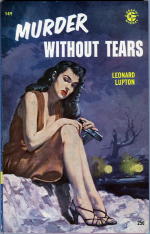
   In Crime Fiction IV, by Allen J. Hubin, there is presently no biographical information of any kind for Leonard Lupton, an author known perhaps only to collectors of Graphic paperbacks in the 1950s. I’m referring here to books produced by the Graphic Publishing Company of 240 W. 40th Street, New York, NY, but admittedly the covers could often be graphic, too.

Murder Without Tears

   But more about the books (and their covers) in a minute. A couple of recent emails between Al Hubin and Victor Berch have done much to remove some of the anonymity in which Mr. Lupton has been residing all these years.

   Al wrote to Victor first, saying,

    “[My records] have shown him as born ca. 1907. Peoplefinders.com has me wondering if possibly he was (William) Leonard Lupton, living in Newburgh, NY, who was probably married to Mary Lupton (a byline Leonard Lupton also wrote under). Social security death benefits has a William L. Lupton of that city, born 5/27/1907, died 4/26/2000. Also a Mary Lupton of that city, born 12/5/1906, died 6/22/1997. Can you track any confirming/contradicting information?”

   Victor’s reply, in part:

    “I’d say that you are right. I spotted the same as you concerning the Social Security Death notices on the Luptons of Newburgh.

    “[Also] the books Doomsday Ghost, Summer Camp Nurse, and Perilous Kisses are authored by Mary Lupton, which the Copyright Office says is a pseudonym of W. L. Lupton. I found a book of poetry called Poetry at the Angel, edited by Kenneth H. Baldwin, Mary Jane Lupton, Susan Moore and William L. Lupton. It’s possible that Mary Jane Lupton was the daughter of William L. Lupton, since the Copyright Office gives a 1938, birth date for her. Hope that helps.”

   There being a complete consensus at this time that the Leonard Lupton found in Social Security records being Leonard Lupton, the author, it’s about time for a list of the books he authored. Adapted from, and updating his entry in CFIV are the following:

LUPTON, (WILLIAM) LEONARD (1907-2000); see pseudonyms Mary Lupton & Chester Warwick

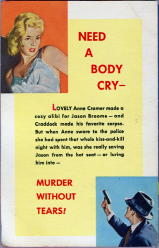
   * Murder Without Tears (Graphic 149, 1957, pb) [New York] Hard-boiled mystery. “Lovely Anne Cramer made a cozy alibi for Jason Broome — and Craddock made his favorite corpse. But when Anne swore to the police she had spent that whole kiss-and-kill night with him, was she really saving Jason from the hot seat — or luring him into murder without tears!”

Lupton: Back Cover

   * -The Night of the Owl (Lenox Hill, 1971, hc) Gothic Romance. Mrs. Moreland’s lively daughter could not keep from wishing to go to the pseudo-Swiss chalet known as Alpenstock, reputed to be haunted…

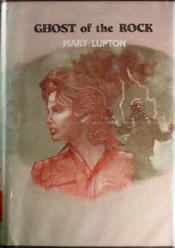
LUPTON, MARY; pseudonym of Leonard Lupton; other pseudonym Chester Warwick

* –Dangerous Kisses (Avalon, 1983, hc)

* –The Doomsday Ghost (Avalon, 1984, hc) [Alabama] [A tutor comes to an Alabama estate nicknamed Doomsday Plantation and faces both anger and love.]

Doomsday Ghost

* –Fantasy at Midnight (Avalon, 1982, hc)

* –Fear to Love (Avalon, 1983, hc) [A woman takes time off from her journalism job to visit her ill grandfather and finds herself falling for a potentially dangerous man.]

* Ghost of the Rock (Avalon, 1986, hc)

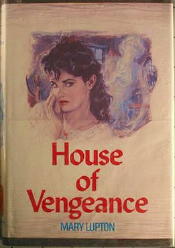
* House of Vengeance (Avalon, 1984, hc) [A woman inherits a reportedly haunted house and, when she arrives, she can’t understand why someone would want to harm her.]

House of Vengeance

* –Night Glow (Avalon, 1982, hc)

* Perilous Kisses [Avalon, 1986] [Included in the online Addenda #9 to the Revised CFIV.]

      [NON-MYSTERY]

* Summer Camp Nurse [Avalon, 1985] Nurse romance novel.

WARWICK, CHESTER; pseudonym of Leonard Lupton; other pseudonym Mary Lupton

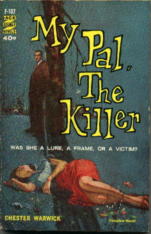
* My Pal, the Killer (Ace F-107, 1961, pb) [New York]

Warwick: My Pal

Other fiction as LEONARD LUPTON:

* River Man (Dial Press, hc, 1930) Novel. Story of Hudson River shanty-boat and its owner.
* Empire West (Lennox Hill, hc, 1972)
* Canyon Killer (Lennox Hill, 1973; Manor, pb, n.d.)

   The latter two books, while not seen, are almost assuredly westerns.

   One last search on the Internet led to the following discovery. From The FictionMags Index is the following (partial) list of pulp magazine stories written by Leonard Lupton, almost all of them tales of valor on the sports fields and arenas.

   Mr. Lupton, if the author were the same man, and we are 99% sure that he is, would have been 20 when he started writing, and 35 when the last story appeared. That was in 1942, just in time to serve (as a guess) in World War II.

LUPTON, LEONARD

* He Could Take It (ss) The Popular Stories Nov 19 1927
* He Just Dropped In (ss) The Popular Magazine Sep 7 1928
* The Shakes (ss) The Popular Magazine Nov 20 1928
* Captain of the Night Boat (ss) The Popular Magazine Feb 20 1929
* Mrs. Murphy’s Chowder (ss) The Popular Magazine Mar 7 1929
* A Minute with— (ms) The Popular Magazine Jul 20 1929
* The Beautiful Ballyhoo (ss) The Popular Magazine Aug 20 1929
* River Life (pm) The Popular Magazine Sep #2 1930
* Mr. Rooney Horns In (ss) Street & Smith’s Sport Story Magazine Sep 25 1932
* Steel Grappler (ss) Street & Smith’s Sport Story Magazine May 25 1933
* One Hundred Per Cent Maloney (ss) Street & Smith’s Sport Story Magazine Aug 10 1933
* The Great Gootch (ss) Street & Smith’s Sport Story Magazine Dec 10 1933
* Goal Posts on Thunder Mountain (ss) Street & Smith’s Sport Story Magazine Mar 10 1934
* The Fence-Buster (ss) Street & Smith’s Sport Story Magazine Sep 10 1934
* The Carny Kid (ss) Street & Smith’s Sport Story Magazine Oct 25 1934
* Big Top Touchdown (ss) Street & Smith’s Sport Story Magazine Jan 25 1935
* Write It on Ice (ss) The All-America Sports Magazine Feb 1935
* Road Test (ss) Street & Smith’s Sport Story Magazine Jun 10 1935
* The Wrestling Tramp (nv) Street & Smith’s Sport Story Magazine Jun 25 1935
* Publicity’s Pal (ss) Street & Smith’s Sport Story Magazine Nov #1 1935
* Sucker Trap (ss) Street & Smith’s Sport Story Magazine Dec #1 1935
* Tough on Tenors (ss) Street & Smith’s Sport Story Magazine Jan #2 1936
* No Help Wanted (ss) Street & Smith’s Sport Story Magazine May #1 1936
* Only One Champ (ss) Street & Smith’s Sport Story Magazine Nov #1 1936
* The Champion Chump (ss) Street & Smith’s Sport Story Magazine Dec #2 1936
* P.S. – He Got the Gob (ss) The All-America Sports Magazine Feb 1937
* North to the Ski Trails (ss) The All-America Sports Magazine Mar 1937
* Get Brannigan (ss) Street & Smith’s Sport Story Magazine Apr #1 1937
* Pan Rassler (nv) Street & Smith’s Sport Story Magazine Apr #2 1937
* False Alarm (ss) Street & Smith’s Sport Story Magazine Oct #1 1937
* The Wrestling Dummy (nv) Street & Smith’s Sport Story Magazine Sep #1 1938
* When Geek Meets Geek (ss) Street & Smith’s Sport Story Magazine Sep #2 1938
* Fall Guy (ss) Street & Smith’s Sport Story Magazine Nov #2 1938
* Circuit Clown (ss) Thrilling Sports Jan 1939
* Telemark Tension (ss) Street & Smith’s Sport Story Magazine Mar #1 1939
* Mud Show Mangler (nv) Street & Smith’s Sport Story Magazine May #1 1939
* Health for Sale (ss) Street & Smith’s Sport Story Magazine Sep #1 1939
* Take ’em to the Cleaners (ss) Street & Smith’s Sport Story Magazine Jan 1940
* Suicide Saucer (ss) Popular Sports Magazine Fall 1940
* Jumpin’ Jiminy (ss) Street & Smith’s Sport Story Magazine Feb 1941
* Kangaroo Kid (ss) Street & Smith’s Sport Story Magazine Mar 1941
* Money in Midgets (ss) Thrilling Sports Jan 1942

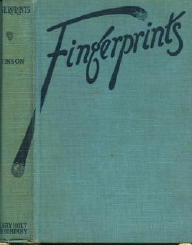
HUNTER STINSON – Fingerprints

Henry Holt & Co.; First Edition, March 1925.

   After a short investigation on my part, I believe that I can safely say that this is the only edition that was published of this book, nor were there any other books that appear under this author’s name. (The asking price for the only copy found on the Internet at the time I am writing this is $50, but that is certainly explainable by the fact that that particular copy is inscribed by the author; otherwise it is in about the same condition as mine.)       FOOTNOTE.

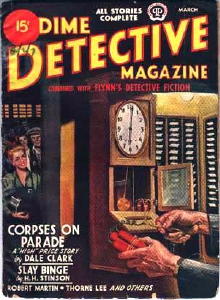
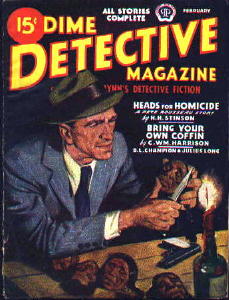
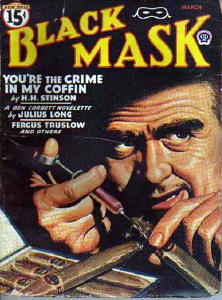
   Long time readers of the pulp magazines may, however, suspect that they know the author by a slightly different name, and they would be correct, if they happen to be thinking of H. H. Stinson. An incomplete list of his short fiction at Bill Contento’s Fiction Mag website begins with a western story published in Top Notch in 1928 and ends with a mystery yarn in Black Mask in 1948. In the latter magazine he had a series character by the name of Kenny O’Hara.

   To discover more, I put out a call for help, first from Victor Berch, whose name has been mentioned on these pages before, then from the various members of the Pulp Mags yahoo list:

[From Victor:] I think I found your man. He’s Herbert H. Stinson. In the 1930 Census he’s listed as a police reporter. In the 1920 Census, he’s listed as a journalist. Have his birth and death dates: Born 27 Apr 1896, Died 09 Oct 1969. Mother’s maiden name was Hunter, so that would fit right in. Wrote some plays as well out in California.

Black Mask


[From John Locke:] He’s mentioned in The Black Mask Boys [edited by William F. Nolan]:

   The following year [1933] proved to be Shaw’s finest as he brought five powerful new writers into the Mask: Thomas Walsh, Roger Torrey, H. H. Stinson, W. T. Ballard, and (at the close of 1933) Raymond Chandler.

   H.H. Stinson’s series hero was quick-fisted Ken O’Hara, of the Los Angeles Tribune. Again, a very tough cookie.

   From the AFG Bulletin, July 1, 1936:

      Joseph T. Shaw, Black Mask:

   Your request to select a “model” story in the July Black Mask, or in almost any issue, for that matter, cannot be fairly done without a word of explanation. You see, we follow the principle of “no dud in any issue;” therefore it is rarely that any one story stands out markedly from any other or all of the balance, although we hope that the magazine itself, as a whole, does.

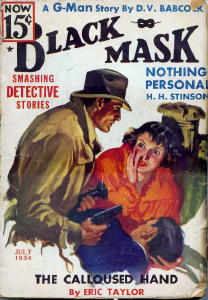
   So far as the writers permit, we select for an issue the best of as many types as are available; in consequence, readers naturally have preference for one over another in accordance with their individual tastes, and all may be equally good as to workmanship quality. There is a story in the July issue, however, which can be pointed to for a specific reason. It is “Nothing Personal,” by H. H. Stinson.

Nothing Personal

   If a new writer should ask me to suggest what might be interesting to our readers, I would probably mention anything but what Mr. Stinson has in his story, in the way of characters, by name or position – that is, a reporter, an editor, a tough police official, and so on. They have been used so many, many times.

   Yet Mr. Stinson has done something with these familiar identities, with the ordinary action, which, to many readers, will make this an outstanding, a “model” story, in any company. The one word to describe it is “treatment.” He has brought every one of his characters vitally alive. The fact that they are this, that or the other is less important than that they are “real” personages; not once do they speak, act or react out of character – with a more or less commonplace setup, his handling of story detail, of constant menace, of action, is masterly. One careful reader refers to one of his scenes as the most vivid, the best of its type since Hammett told about Ned Beaumont in The Glass Key.

   The fact that Mr. Stinson is himself a newspaper man, a police reporter on one of the big Los Angeles papers, may have contributed to the sense of reality which he has infused into the story. But it isn’t every newspaperman who can make a story live and throb like this one. If it were, editors would have an easier time.

   A “model” story. No – except for treatment. A marvelously entertaining and vital one? Yes – decidedly yes.

Dime Detective


[From Ed Hulse:] Besides O’Hara in Black Mask, Stinson in the post-WWII years wrote a series about a dick named Pete Rousseau for Dime Detective.

   He stopped writing for both Mask and Detective in 1948. He wrote for other detective pulps, too; Cook-Miller credits him with 60-odd stories altogether.

Dime Detective


[From Will Murray:] I just went through my copy of the manuscript of the Joe Shaw bio written by his son, Milton. I find no mention of HHS.

   However, Shaw did pick one Stinson story for possible inclusion in his Hard-Boiled Omnibus, “Give a Man Rope.” His editor thought it weak in comparison to other selections and it was dropped along with several others.

   So we know what Shaw thought was his best BM story.

Black Mask


    Me again. I’m back, and I’m assuming that after all of this talking, as interesting as I hope you found it, you’d like to hear about the book itself. Truth be told, it’s not very good, but for most of an evening or two, the entertainment value is still high enough that I did. Read it in an evening or two, that is.

    As the story begins, the primary protagonist has discovered that as of that very same morning, he is a pauper. The estate he believed that had been left to him by his overly generous father, he learned, had been badly (and sadly) overtaken by various notes, mortgages, liens and debts. Which therefore means, as of that very same evening, his marriage to Maryse Douglas is off.

   Not by any wishes of the young lady herself, far from it, but by Owen Kenrick, her guardian until she comes of age. Here is how the author describes the young lady, on page 5:

    …Though Maryse Douglas had only the standard equipment of eyes, mouth, hair and other features with which any member of the race goes through life, the component parts seemed to have been arranged in such wise that most young men upon seeing her went away mumbling to themselves of resolves to lead better lives and some day be worthy of her.

   The next morning Christopher is consoled by a gent by the name of Bosworth, who lives in the apartment upstairs from him. From page 13:

    “Cheerio, lad. Into every life a couple of showers have to fall, as some ass of a poet remarked. No doubt in the least that you’ll get on.” He proceeded cautiously as became a venture on delicate ground. “And if I can help, old onion, you’ll make me thoroughly irritable by not letting me come to the fore.”

   This is not the sort of dialogue that would make any kind of headway in the pages of either Black Mask or Dime Detective, nor would the mystery itself. When Kenrick is found dead, young Christopher is, of course, the obvious suspect. The only others in the running are the butler or Miss Douglas herself, and when Christopher’s fingerprints are found on the murder weapon, that just about clinches the case right then and here.

Fingerprints

    Except for one undeniable fact, and that is that Christopher did not do it, and in the remaining 200 pages, it is up to him, Maryse, and Bosworth (who has secrets of his own) to prove it.

   Also on Blake’s trail are a gang of jewel thieves (jewelry being a primary item of trade for the dead man) who kidnap Maryse as part of their nefarious doings, but she escapes and makes her way back to the city just as Blake and Bosworth discover the hideout where she had been kept a captive, and mystery upon mystery ensues. By page 209 Maryse has been captured again, by yet a third party to the drama, and rest of the book is devoted to her rescue, nothing more, and quite a lot less.

    A lot happens in this book, as you can tell, but when it comes down to it, as I’ve already implied, nothing really happens, if you know what I mean. And what about the phony fingerprints? You might ask, and rightly so. In 1925, they were still a novelty to mystery readers, and so in 1925 they must have been amazed as to what could be done with them, by both the investigators and (in this case) the villains. I checked online with Google, and guess what, what the chaps on the wrong side of the law did back then could really be done. Of course Mr. Stinson makes it sound easy, but in terms of the technology of 1925, I’m still not quite convinced it would have been as easy as he made it sound.

— September 2006


FOOTNOTE: I seem to have spoken somewhat ahead of myself. After some further investigation I have discovered that the novel was previously published as a three-part serial in the mystery fiction magazine Real Detective Tales and Mystery Stories, concluding in the February 1925 issue. Mostly, I think but am not sure, the stories that appeared in RDT&MS were either of the mansion house variety or out-and-out thrillers, and thusly not hard-boiled fare at all.

    Or am I making a judgment on a sample of size only one? Other authors who appeared in the magazine in 1925 include Seabury Quinn, Arthur J. Burks, Raoul Whitfield, Otis Adelbert Kline and Vincent Starrett. You tell me.

   The following correspondence came about after Mike Braham saw that I had one of his father’s books for sale and bought it from me. Seeing the name of the purchaser, I asked the obvious question. I was right.   – Steve


   Hal Braham was my father. I stumbled onto the list of his books still out there by mistake the other night, and saw there are a few I don’t have, so I’ve been rounding them up.

   My father wrote extensively in the 1950s, and published a great deal in the old pulp detective magazines (of which I have a collection). He supported us by working as a technical writer by day. The rhythmic sound of his typing on his old Underwood upright lulled me to sleep many a night during my childhood. He also worked as a private investigator and took police science courses. He captures the color and character of Los Angeles and San Pedro of the post-war years extremely well in Call Me Deadly. He also co-wrote a screenplay, Tramp, Tramp, Tramp, which starred Jackie Gleason. It was one of Gleason’s earliest films.

   He belonged to a group of L.A. writers called the Fictioneers. Among them were Ray Bradbury, Richard Matheson (Duel and other screenplays), Charles Beaumont (Twilight Zone), William Campbell Gault (murder mysteries and juveniles), Les Savage (westerns) and Bill Cox. I remember some of their parties at our house with great affection.

   I have followed my father into the writing profession. I am a journalist, currently working at The Fresno Bee. I’ve not published any books as all my work has been newspaper related. Writing seems to be in the family genes. Nelson Algren (Walk on the Wild Side, Man With the Golden Arm) was a cousin and grew up with my father in Chicago.

      From a later email:

   You might add that my father had a passion for writing, and it was a passion of joy. He never agonized; he wrote with pure enjoyment and when he talked about the process of writing there was a twinkle in his eyes. I’ve never been comfortable writing fiction because I can’t be as good as he was. I feel he is looking over my shoulder. He never did, of course. He always encouraged and supported me, and was never critical. But I held him in such high esteem that all my efforts seemed to fall short.

   I’ve always been intrigued by the cover illustrations. They stood out all right, but they never really had anything to do with the novel, and I always tried to imagine a plot based on the drawings. But if they sold more books, who can complain?

   One of my father’s best friends, the author William Campbell Gault (now deceased, sadly), told the story of how his juveniles used to be stolen from the libraries in Santa Barbara, where he lived. The librarians were livid, with the appropriate priggish indignation of how bad the youth of our day have become. Bill thought it was great. “It just meant they had to replace my books, which meant more money for me,” he said.


BIBLIOGRAPHY. Expanded from an updated entry for Hal Braham in the Revised Crime Fiction IV, by Allen J. Hubin:

BRAHAM, HAL [i.e., Harold Braham] (1910-1993); see pseudonyms Mel Colton & Merrill Trask

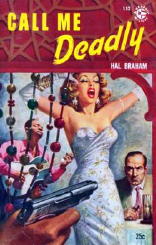
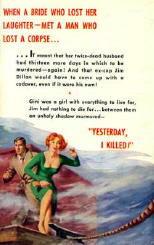
* Call Me Deadly (n.) Graphic #152, pbo, 1957. [Los Angeles, CA] “When a bride who lost her laughter – met a man who lost a corpse …”

Braham


Back Cover

COLTON, MEL; pseudonym of Hal Braham, (1910-1993); other pseudonym Merrill Trask

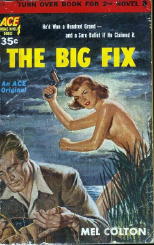
* The Big Fix (n.) Ace Double D-3, pbo, 1952. “He’d won a hundred grand – and a sure bullet if he claimed it.”

Big Fix

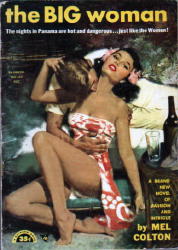
* Big Woman (n.) Rainbow 1953 [Panama] “The nights in Panama are hot and dangerous — just like the women!”

Big Woman

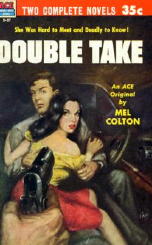
* Double Take (n.) Ace Double D-27, pbo, 1953 [Los Angeles, CA]. “She was hard to meet and deadly to know.”

Double Take

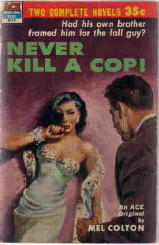
* Never Kill a Cop! (n.) Ace Double D-19, pbo, 1953. “Had his own brother framed him for the fall guy?”

Never Kill a Cop

* Point of No Escape (n.) Ace Double D-101, pbo, 1955

TRASK, MERRILL; pseudonym of Hal Braham, (1910-1993); other pseudonym Mel Colton

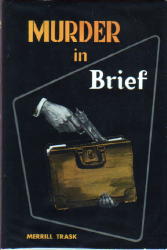
* Murder in Brief (n.) Mystery House 1956 [Los Angeles, CA]

Trask

SHORT FICTION: All stories as by Mel Colton.

“Dead Men Can’t Welsh” — Black Mask, November 1948
“No Time to Burn” — Dime Detective, July 1949
“Dreamer with a Gun” — Dime Detective, December 1949
“Death Insurance” — F.B.I. Detective Stories, April 1950
“Corpse-Gathering Cutie” — Dime Detective, June 1950
“Hot-Scotch Polka” — F.B.I. Detective Stories, October 1950
“Kill and Make Up” — Dime Detective, October 1950
“Her Perfect Frame” — Dime Detective, December 1950
“Win, Lose–or Kill” — Black Mask Detective, March 1951
“Something to Shoot About” — Dime Detective, October 1952
“Murder Pays Double” — Pursuit, July 1954
“Ring Around a Murder” — Hunted, April 1955
“Murder on Account” — Pursuit, May 1955
“The Vicious Ones” — Hunted, August 1955
“Don’t Wait for Me” — Pursuit, September 1955
“Justice on the Death Prowl” — Short Stories, November 1956
“Second Guess” — ­Pursuit, November 1956
“Red Death” — Short Stories, June 1957

FILMS:

Hal Braham wrote the story which was the basis for Tramp, Tramp, Tramp (Columbia, 1942), starring Jackie Gleason, Jack Durant and Florence Rice.

Synopsis: A pair of barbers are driven out of business because most of the men in their small town are being drafted into the army. When they attempt to enlist and are turned down, they decide to form a Home Defense Force, getting them involved with a gang of crooks.

Thanks to Bill Pronzini for providing several of the cover images and the big assist in putting together the list of Hal Braham’s short fiction.

   — Continuing our conversation posted not too long ago, I said, “What I found extremely interesting is something that has always been at the back of my brain. With all of the interest in the hero pulps, I’ve always wondered why I found them childish if not boring. Your comments answer the question I must have had and never knew enough to ask. They WERE designed for kids. It’s obvious, but I never really realized that.”


  Hi Steve,

   Another funny thing about my visit that I just remembered: I had an attache case full of Dime Detective and Black Mask pulps to have him autograph but I completely forgot to get his [Morton Wolson’s] signature! I’ve never been much of a collector of signed first editions and this incident proves that I have no interest in autographs. I just want to read the stories.

   Concerning the hero pulps, in 1969 I saw my first large group of hero pulps at Jack Irwin’s house. I had visited him to buy Black Mask, Dime Detective, Detective Fiction Weekly and Weird Tales. I read and looked through a few pages of G-8, Doc Savage, The Shadow, etc. I still remember my puzzled reaction and question to Jack along the lines of: “But why are you reading and collecting children’s magazines?” I found the stories clearly unreadable and silly.

   He defended them along the lines of nostalgia which is OK, but to this day, I do not understand how adults can read these stories. That’s why I often engaged Harry Noble and my wife’s father in long conversations about the pulps that they and their friends read back in the 1930’s and 1940’s. I was curious as to pulps the adult working man really read. Because to read some of these recent articles, you would think that a lot of men read these poorly written, silly hero pulps. I guess some did read them, but according to my verbal research, the main readership of the hero pulps was definitely teenage boys.

   The teenage girls made the love pulps the biggest seller of all. If you really want to turn your brain into mush, try reading a love pulp. Talk about formula fiction! I read a few issues, and I still have not recovered from the experience. Every story had the same plot with a happy ending of course because that’s what the girls wanted in their romance fiction back in the 20’s, 30’s and 40’s. Boy meets girl, girl and boy have some troubles, things look bad for the romance, boy and girl resolve their problems, and live happily ever after.

   I only know of one collector that seriously collects the love pulps and I have to withhold his name to protect the innocent plus it would ruin his life and reputation if the news ever got out.

Best,

   Walker

   Before breaking up part of it a few years ago, Walker Martin had one of the largest collections of pulp magazines in the world. It’s still large, and he’s in the process of building some of it back up again. Two of his favorite pulp magazines have always been Black Mask and Dime Detective. After he commented on my recent review of the Charlie Chan movie, The Scarlet Clue, I asked him if he’d seen the blog entries on Morton Wolson, aka Peter Paige:


  Hi Steve –

   Yes I read the Morton Wolson post but somehow missed the letter from his son. I think I mentioned to you a couple years ago how I had tracked Morton Wolson down and visited him in his furniture store in Manhattan.

   It was in the 1980’s and my wife was with me. We spent a couple hours talking about his pulp career, Ken White, who was the editor of Dime Detective, and Joe Shaw. I got the impression he was the owner of the store, which was quite large but empty of any customers while I was there.

   Wolson was amazed that anyone was interested in talking about the pulp days. He said he was paid quite well for the Peter Paige novelettes, most of which starred Cash Wale and his sidekick Sailor Duffy. He received around $500 per novelette which in the 1940’s was a big sum of money. His agent was Joe Shaw (which he referred to as Cap Shaw) and when the pulps died off in the early 50’s, an attempt was made to break into the paperback market but nothing came of it.

   He remembered all the Dime Detective and Black Mask authors and had nothing but good things to say about his pulp days. When nothing came of his attempts to write mainstream literature, he somehow got into the furniture business and was successful.

   I asked him about the other pulps that Popular Publications published but he said he had no interest in them because except for Black Mask, Dime Detective, Detective Tales, New Detective, Adventure, the other pulp titles were slanted for the teenage boy market. Adults did not really read the hero pulps like Spider, G-8, Operator 5, etc.

   This is an interesting comment that I have heard from other old timers that actually bought the pulps off the newsstand. Harry Noble, who I was friends with for almost 40 years, used to laugh to see the adult collectors of today making such a fuss over The Shadow, Doc Savage, etc. When these hero pulps were on the newstands, the main audience was kids, teenagers, mainly boys. The girls were interested in the love pulps.

   My wife’s father who died recently at age 93, often told me that he and the other blue collar working men bought the adult pulps like Blue Book, Adventure, Black Mask, Western Story, etc. It never crossed his mind to save the issues. They were read to pass the time and then thrown away.

   Anyway these were the things that Morton Wolson talked about. We kept in touch for a while, and then I guess he retired and eventually I mislaid his new address. One funny thing, a year or so later I came across some cancelled checks from the files of Popular Publications. I still have some showing payment of several hundred dollars to Morton Wolson for the Peter Paige novelettes. I sent Morton some copies of these checks and he was astonished to see such things still in existence.

   I’m sorry to learn he is no longer with us. I always enjoyed the Cash Wale stories.

Texas Wind

   Prompted by a review by Ed Gorman of one of his early private eye stories for Mike Shayne Mystery Magazine, author James Reasoner recently did some reminiscing on his own blog about the private eye characters he created back then, some 25 to 30 years ago.

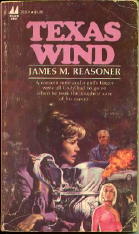
   There were four “Markham” stories, he says, calling Markham “sort of a dry run for my private eye character Cody, who appeared in the novel Texas Wind and several short stories of his own.”

   James goes on to say that Markham “was the second private eye character I created for MSMM. The first was called Delaney … who appeared in a handful of short, very minor stories. Cody came along after Markham and I used both of them in stories for a while, but Cody last appeared in 1988, nearly twenty years ago.”

   If you hadn’t missed it, yes, all three detectives have only a single name.

   It’s a long post, and besides talking about his own characters, James also discusses the other authors who appeared in some of the same issues of MSMM as he did, writers such as Joe R. Lansdale, Edward D. Hoch, William L. Fieldhouse and others. Not only that, but he remembers the pair of editors who bought the stories as well: Sam Merwin, Jr., and Charles E. Fritch.

Texas Wind

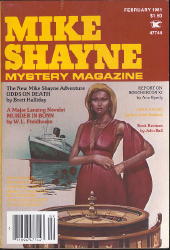
   I’ll have to dig out some of the back issues of MSMM I have in my own collection. James also did many of the “Mike Shayne” short novels or novelettes that appeared in every issue during this same era, including the one pictured here.

   It made the magazine one of the few places where you could be guaranteed being able to read a PI story anytime you picked one up. (The link above will take you to a list of many of the Mike Shayne stories that appeared in the magazine and who wrote them.)

   James concludes by saying, “I’ve thought at times that a volume collecting all the Cody, Markham, and Delaney stories would make a nice little book. Maybe one of these days.”

   If at all possible, make it sooner rather than later, James.

[UPDATE] 03-06-07. At the request of myself and a number of others, James has posted a complete list of all of his non- “Mike Shayne” private eye short fiction.

   He goes on to talk about a few of the stories, including some additional details about his various PI characters. James concludes by saying:

    “I believe that’s all of my private eye stories, eighteen in all. I would have guessed that there were more than that. Of course, if you include the novel Texas Wind and the 36 Mike Shayne stories I wrote, the total is a little more impressive. Sometime in the mid-Eighties I started a second Cody novel but didn’t get very far with it before setting it aside to do something else. I never got back to it and have no idea where the manuscript is now.”


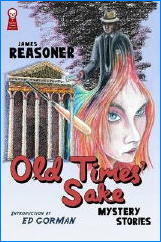
[UPDATE] 09-08-08. It’s a little late to be considered breaking news, but a collection of 17 of James’s 18 private eye stories was published earlier this year by Ramble House. The title is For Old Times’ Sake, and you can order it here.

Texas Wind

   After I posted my review of The Nightmare Blonde, by Morton Wolson, in which I included all I knew about the author, his son, Peter Wolson, left a comment, which because of some HTML peculiarities, was truncated after only the first few lines. The Nightmare Blonde was Morton Wolson’s only mystery novel, but to pulp readers and collectors, he’s far better known as Peter Paige, author of the Cash Wale stories for Dime Detective, plus many other short stories for the pulp magazines throughout the 1940s.

   Here now is the complete version of what Peter Wolson had to say about his father, as he sent it to me later via email.   –Steve


   I am Mort Wolson’s son, a psychoanalyst in Beverly Hills, and can tell you a lot about him. But first some corrections. He was living in Leisure World in Laguna Hills, with his wife Gaye when he died of congestive heart failure. He was 89.

   The William Bendix episode, “Prime Suspect,” was based on his story, “The Attacker.”

   His first published ‘pulp’ narrative was “I Guard Nudes,” when he was a bouncer at the Cuban Village in the 1939 World Fair in which he described his job protecting the strippers from overly enthusiastic men and putting wraps on their bodies as they left the stage. It was printed in the pulp magazine Black Mask in September, 1939.

   The Nightmare Blonde was based on a previous novella, “Softly Creep, Softly Kill,” which anticipated The Bad Seed. “Softly Creep, Softly Kill” was published in Detective Tales, August, 1947. Mort always felt that this work was plagiarized by the author of The Bad Seed.

   Mort always regarded his detective stories as puzzles in which he would constantly try to fool the reader, while the clues for the denouement would be embedded in the material. But they came easily to him and, unfortunately, he did not regard them as valuable as writing the great American novel. So he spent the bulk of his time and energy during the fifties and beyond writing what he regarded as “serious fiction.”

   One such attempt was about a dual personality. In in one internal world, the assumption prevailed that Hannibal had successfully crossed the alps and defeated the Romans, with civilization developing in North Africa, in which blacks became the majority population and whites, the minority. In the other split-off personality, the world was as it is today, with the clash between the worlds occurring in the individual’s mind.

   Another novel was entitled Nightmare Bullet, in which a scientist had discovered how to insert a nuclear device in a bullet, and this involved foreign espionage. Mort also wrote a book about his experiences in the Spanish Civil War, called The Dragon Lady and I. He also wrote over a hundred sonnets to Gaye, his third wife, in the literary form of true Shakespearean sonnets.

   Clearly, he did best at writing pulp detective stories, and most of his stories published in Black Mask and Dime Detective, were the main feature, with the magazine covers representing their themes. He respected Raymond Chandler, Cornell Woolrich and Dashiell Hammet, but had contempt for Mickey Spillane, feeling that he cheated to earn his fame by exaggerating blood and gore.

   The lapse in his writing was due to his efforts to earn a living as a furniture store owner, which occupied most of his time. In retirement, he was able to write The Nightmare Blonde and his memoirs.

   Mort was a very good-looking, manly, powerfully built, blond-haired individual, who smoked a pipe and loved to argue. He prided himself on being a divergent thinker, and loved to take the most oppositional point of view in any discussion, to the delight of some, and to the dismay of others.

   Thanks for your interest in him.

Peter Wolson

« Previous PageNext Page »