Bibliographies, Lists & Checklists


JOHN WHITLATCH – Stunt Man’s Holiday

Pocket 77660; paperback original; 1st printing, May 1973.

    I don’t know very much about John Whitlatch, and I don’t know anyone who does. In many, many ways he was the last of the true pulp fiction writers, even though his first book was published in 1969. Between then and 1976 he wrote 11 novels in a wide range of categories for Pocket, ten of them in one four years period.

   All of them paperback originals – crime, adventure, westerns, war, motorcycle gangs, the whole gamut. The titles were not all that remarkable, but the covers – the covers were lurid and eye-catching, and the books were reprinted over and over again. One presumes that they sold well.
Morgan's Rebellion

    Only three of them were listed in Crime Fiction IV, by Allen J. Hubin, but in Addenda #10 a complete revision of his entry now includes all of the books he wrote, as follows:

WHITLATCH, JOHN. No biographical information is known about this author of eleven popular pulp fiction paperbacks in the 1960s and 70s. While specific genres, settings and time periods vary widely, there is a criminous element in each of them. With Tom Power, one of the survivors of the event, John Whitlatch later co-authored Shoot-Out At Dawn (Phoenix Books, pb, 1981), an account of what took place at a remote Southern Arizona cabin in 1918. SC: John Gannon = JG; Captain Jamey Morgan = JM.

Gannon’s Vendetta. Pocket 75383, pbo, 1969. JG “Do not forget, gentlemen – violence is the only thing they understand. If in doubt, kill.”

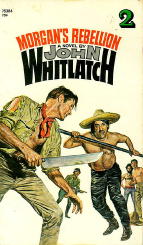
Morgan’s Rebellion. Pocket 75384, pbo, 1969. “Prison made a man of Morgan. And the man became a legend.”

Tanner’s Lemming. Pocket 75616, pbo, Sept 1970. “Tanner – the man who single-fistedly quashed a student takeover and tongue-lashed its leaders into silence at a turbulent school-board showdown. Tanner – the man who had never flown a plane, yet took the stick when a pilot died in midair and landed safely. Tanner – the man whose blunt business sense had won him a place in a Senator’s inner circle. Tanner – had he blown a hole in the heart of the man millions of Americans revered? Had he killed Senator Stanton? Could he have been the assassin?”

The Iron Shirt. Pocket 75642, pbo, 1970. [West] “Jonathan Fontaine swore it … in the smoking remains of his homestead, over the charred, mutilated body of his young daughter. He had gone East but now was back in Arizona with a specially equipped rifle. And he had a fresh lead on the Indian – the one who had worn a necklace of human fingers and The Iron Shirt.” [Marginal: primarily a Western.]

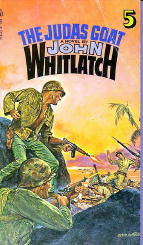
The Judas Goat. Pocket 75643, pbo, 1970. “Hand-picked from the entire US World War II army, they were a unique company. Twelve men led by a lieutenant, as able as he was arrogant, and a sharp, seasoned sergeant who was militantly silent about his past. Twelve fighters, among them an ugly man, a black man, on old World War I scout, a southern redneck, and a mountain climber. They were a strange assortment, but tough and tenacious – and they didn’t care too much about living. To the General they were the army’s answer to the marines. To the Colonel they were a crack team … the best he could assemble. To the Lieutenant they were ‘animals.’ And by the time their brutal training had ended they were Killers!”
Judas Goat

Lafitte’s Legacy. Pocket 75670, pbo, Sept 1971. [Louisiana] “The last of the Lafittes had come back from Arizona to visit his dying grandfather. But enemies lay in wait, blcoking his way with fallen trees, terrorizing his wife with poisonous snakes, signalling their malice with voodoo dolls. Someone wanted the old treasure map that was his legacy. But his adversaries had not reckoned with the pirate blood that was also part of Lafitte’s legacy. He would fight with all the guile and guts, tenacity and ingenuity that had made his legendary ancestor the terror of the bayou.”

Frank T.’s Plan. Pocket 77587, pbo, Oct 1972. “To avenge his daughter’s death, an old man pits himself against the most violent forces of evil.”

Stunt Man’s Holiday. Pocket 77660, pbo, May 1973. [Arizona] “He made his living getting shot in the movies. But this time the bullets were real.”

Cory’s Losers. Pocket 77661, pbo, May 1973. “The little western town was full of crooked operators – and Cory wanted revenge on every one of them.”

Morgan’s Assassin. Pocket 77659, pbo, Aug 1973. “A squad of mean, smart killers was out to bring the nation to its knees. Only one man was tough enough to stop them –El Arquito!”

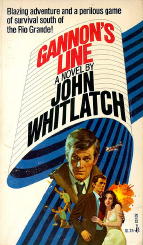
Gannon’s Line. Pocket 80743, pbo, Oct 1976. [Mexico] JG “Blazing adventure and a perilous game of survival south of the Rio Grande!”
Gannon's Line

    Victor Berch has checked the copyright records for the earlier books, and from the evidence found he says, “John Whitlach seems to be a real name. There was no indication in the records that this was a pseudonym.” Also interesting is the fact that, he goes on to say, “Nor are there any renewal records for any of his 1969 books.”

   Stunt Man’s Holiday is a crime novel, and in a more than minor way, it’s even a “fair play” detective story. Max Besh is the stunt man that the title advertises, not to mention a full-blooded Apache who needs all of his heritage, as it turns out, to follow a gang of bank robbers on a long, exhausting chase through the Arizona desert after they kidnap the girl he’s traveling with, along with the wife of a Don Rickles look- (and act-) alike Jewish comedian named Les Rick.

    And that’s the entire plot right there, summed up in only one sentence, even allowing for the fact that it’s a long one, which I grant you. Les Rick starts out being deliberately unlikable, but he gradually shows his worth (if not his innate cowboy ability) by accompanying Max the entire distance, by which I mean the entire book. Here’s an example of Max’s tracking skills, taken from page 132, where Rick asks if they’re getting closer:

    “I don’t think so. But in this heat it’s hard to tell; the tracks are just plain old dry and the manure dries within minutes …”

    “Huh!” Rick said with amazement. “But what’s this about the manure?”

    “Well,” Besh said, with his first grin in several hours, “it’s not exactly like reading tea leaves, but you can tell this much from examining the droppings. Fresh manure is moist and dries as it ages. So in seventy- to eighty-degree weather you can make a rough guess as to two, three days. But what I’ve seen today is too dry already to make a guess.”

    “I’ll be damned!” Rick said …
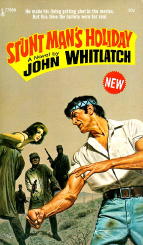
Stunt Man's Holiday

   The writing is competent enough, but as the excerpt shows, it may also be straightforward to a fault. And in all honesty, if you haven’t gathered where I’m headed already, as opposed to the opening scenes that take place in Las Vegas, the rest of the tale is rather skimpy in plot. Take the long trek in the desert, for example, in which (in retrospect) nothing really happens, except to allow the reader to watch as Besh and Rick, natural-born opposites, react against the other and get to know (if not understand) each other more.

   Nonetheless, what Whitlatch is rather adept and clever at, in this book at least, is in making the reader think something is happening – a hint here, building an anticipation there, adding to the puzzle now and again – when perhaps the something that is happening is a whole lot less. The ending, which is rather violent – all of a sudden, you see, things really do start to happen – is what the reader has been eagerly waiting for, he suddenly realizes, and he is finally rewarded. (Not many women will read John Whitlatch’s books, I suspect, but as always, I may be wrong.)

   What was unexpected, on the other hand, is that – as I mentioned earlier – this is a detective story of sorts. Not everything is what it seems, and since it is fairly obvious that it is not, I do not believe I am revealing anything I should not be. There are clues as to what is going on, in other words, if one reads slowly enough. But because they are not emphasized, it is easy to lose track of them as the story heads off in another direction, which it does.

   Or to be more specific, the crux of whole affair depends upon what was discovered way back on page 86. If you’re paying attention, and make yourself notes of what’s happening when it happens, you’ll have it figured out at the same time that Besh does, guaranteed – but he’s not talking. And Rick– as early into his education of the way of the west as it is when it happens – don’t count on him. He’s simply not swift enough.

   All in all, though? Not entirely what I expected. Whether that’s good or bad, I leave for you to decide.

— February 2007


PostScript: For a Gallery of all the Whitlatch covers, check out this page on the primary Mystery*File website.
   For a version with many more cover images, please see the main M*F website.

[UPDATE] 05-18-07. The link above is now the location of the “official” bibliography. It contains the additions made today and not found below. Any additional corrections will also be made to only the one found on the main M*F website.

      As Charles Runyon:

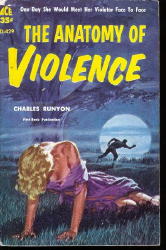
# The Anatomy of Violence (n.) Ace D-429, pbo, 1960 “One day she would meet her violator face to face.”

Anatomy of Violence

# The Death Cycle (n.) Gold Medal s1268, pbo, January 1963. “Behind them a murdered man. Ahead of them a lot of loving, lying, speeding and spending.

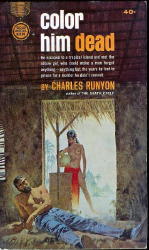
# Color Him Dead (n.) Gold Medal k1320, pbo, July 1963 [Caribbean] “He escaped to a tropical island and met the native girl who could make a man forget anything – anything but the years he lost in prison for a murder he didn’t commit.”

Color Him Dead

= Reprinted as The Incarnate, Manor Books 15235, pb, 1977. “There was nothing she would not do to make him forget.”

# The Prettiest Girl I Ever Killed (n.) Gold Medal k1507, pbo, 1965. “A strange novel of suspense.”

# -Bloody Jungle (n.) Ace G-594, pbo, 1966 [Viet Nam], as by Charles W. Runyon. “A powerful novel of the Green Berets in Vietnam.”

# The Black Moth (n.) Fawcett Gold Medal d1873; 1967 [Illinois] “They were spoiled, over-ripe little girls too wise for their years and some of them had to die, those who wore … The Black Moth.”

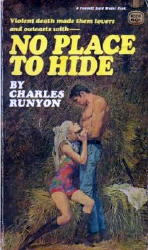
# No Place to Hide (n.) Gold Medal R2218, pbo, 1970. “Violent death made them lovers and outcasts with – No Place to Hide.” [Robert McGinnis cover]

No Place to Hide

# Power Kill (n.) Gold Medal T2560, pbo, May 1972. “First-rate suspense … compellingly readable.” — Mario Puzo.

# Something Wicked (n.) Lancer 1973.

   — UPDATE from Charles: Something Wicked was apparently the title put on Dorian-7 by the inheritors (if that is the right word) of the Lancer properties. [This makes this the book that Lancer paid for but never published before they went out of business. For more on the “curse” on this book, Charles has much more to say here.]

# To Kill a Dead Man (n.) Major 3061, pbo, 1976 [Caribbean] “He was an assassin for hire – no assignment was too large!”

    — UPDATE from Charles: A Killer is a Lonely Man was my title for this novel. [The latter title appears in some bibliographies as an unpublished book that Charles wrote.]

# Kiss the Girls and Make Them Die (n.) Pyramid 03963, pbo, 1977, as by Charles W. Runyon. [Hospital] “In the sterile white corridors of a mental ward – and the unexplored passages of the mind – unfolds a novel of heart-clutching terror, with a cast of characters caught inextricably in its lurking mystery.”

      As Ellery Queen

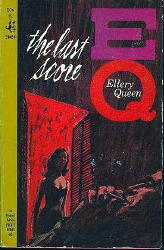
# The Last Score (n.) Pocket Books 50486, pbo, November 1964. Signet Q6102; pb, Oct 1974 [Mexico] (Rich couple’s daughter is kidnapped under the nose of her travel agent chaperone Reid Rance while on vacation in Mexico, and he’s got to get her back.)

The Last Score

# The Killer Touch (n.) Pocket Books 50494, pbo, October 1965. Signet Q6514, pb, 1975. [Caribbean] “There are many ways to die, sometimes nature holds the most special ones.”

# Kiss and Kill (n.) Dell 4567, pbo, April 1969. [Mexico] “The lady was luscious, and death followed everywhere she went.”

      As Charles Runyon, Jr.

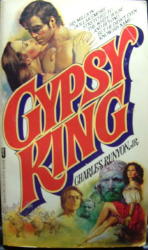
Gypsy King (n.) Jove 04041, pbo, 1979. Historical Romance. “His million dollar empire stretched to the White House and beyond, but he didn’t even know his name.”

Gypsy King

      As Charles W. Runyon

Pig World (n.) Doubleday, hc, 1971. SF.

= Lancer 75446, pb, n.d. “Charles W. Runyon’s harrowing new novel of the near future – when millions of captive minds will have but one master!”

Pig World

Ames Holbrook, Deity (n.) Curtis 07202, pbo, 1972. SF.

Soulmate (n.) Avon 18028, pbo, March 1974. Horror. Expanded from the story “Soulmate” Magazine of Fantasy & Science Fiction, April 1970. “A contemporary horror tale & a strong one, not recommended for the squeamish.”

I, Weapon (n.) Doubleday, hc, July 1974. SF.

= Popular Library 04127, pb, December 1977. “He was the ultimate man – and humankind’s last hope for survival.”

      As Mark West

Office Affair (n.) Beacon B-421Y, pbo, 1961. “She learned her tricks at the bottom of the heap – and he was her ticket to the top!”

Office Affair

His Boss’ Wife (n.) Beacon B-466F, pbo, 1962. “He was a man on the make and this time he wanted – his boss’ wife.”

Object of Lust (n.) Beacon B-468F, pbo, 1962. “She was beautiful, lonely and an … object of lust.”

●● Asked about the criminous content of the Mark West books, here’s what Charles had to say:

   “Crime in the Beacon books? In Object of Lust, Lewis stalked the woman and then kidnapped her and held her prisoner in a cave. (The setting is Branson, Mo, famous for caves and country music.)

   “His Boss’ Wife involves a traveling maggie crew run by a dominant male who intimidates his females into doing his will, and controls the young males by parceling out the favors of his harem. Crimes abound, since these maggies are always on the line between fraud, larceny, breaking and entering, flirting daily with accusations of rape and assault.

   “I still have these kids coming to my door and delivering the same sales pitch I used to hand out back in ’50 when I did my tour as a maggie. Sex predominates, because the editor had a feeling that readers wouldn’t stick past page 38 unless they read at least one explicitly graphic sex act. For me the important element was the tribal conflict between The Old Man and the brash upstart who joined the crew one morning in Minneapolis.

   “In Office Affair, the crime was Insider Trading, which landed Milliken and several others in the slammer. Involves the aggressive young CEO of Wolverine Pipeline Co and his lovely Chief Stockholder, who fight off a hostile takeover while enjoying a sex-romp around the executive suite.”


      Mystery and Suspense Stories

“Hangover Manhunt” Manhunt, December 1960

“The Last Kill” Manhunt, April 1961.

    — UPDATE from Charles: “Rum and Chaser” was the title put on this story by Scott Meredith (or somebody working there at the time; perhaps Terry Carr) but that didn’t go down with the editor of Manhunt, who replaced it with my original title, “The Last Kill.”

“The Possessive Female” Manhunt, June 1961

“Sales Pitch” (by Mark Starr) Manhunt, June 1961

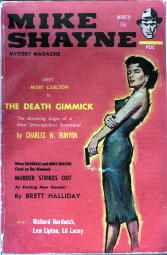
“The Death Gimmick” Mike Shayne Mystery, March 1962

Death Gimmick

“The Waiting Room” Alfred Hitchcock Mystery, October 1969

“Cycle Death Run.” Men, April 1970 (**)

“The Dead Survive” Mike Shane Mystery, September 1974

“A Good Head for Murder” Alfred Hitchcock Mystery, November 1974

“The Company of Brave, Rich Men” Alfred Hitchcock Mystery, April 1975

“An Act of Simple Kindness” Mike Shane Mystery, November 1975

“Death Is My Passenger” Mike Shayne Mystery, June 1976

(**) Since this magazine is probably the most difficult of Charles’ appearances in print to come by, here courtesy of the Internet, is a summary of the story line:

    “Cycle Death Run” concerns two bikers on the lam who trade wives in an effort to preserve the peace. Jeanne slowly falls in love with Carl for unexplained reasons. It may be because he does not beat her, or it may be because he awakens her as a women. More likely the motivation is not important to the story. Carl is a man, self–confident and self–reliant. He does not have to beat his women, though Jeanne wishes he would: “She almost hoped he would knock her down and beat her, for it would help assuage her own guilt. ‘I won’t be this foolish again,’ she said.” That she would love him is natural. “Cycle Death Run” ends with the unlikely image of Carl and Jeanne in paradise.

      Science Fiction and Fantasy

“First Man in a Satellite” Super Science Fiction, December 1958

“Solution Tomorrow” Fantastic, September 1959

“Remember Me, Peter Shepley” Fantastic, December 1960

“Happiness Squad” Fantastic, March 1967

“The Youth Addicts” Worlds of IF, May 1967

“Sweet Helen” Magazine of Fantasy & Science Fiction [F&SF], September 1969

“Dream Patrol” F&SF, February 1970

“Soulmate” F&SF, April 1970. Expanded into the novel Soulmate (Avon, pbo, 1974)

“Once There Were Cows” F&SF, July 1974

“Noomyenoh” F&SF, January 1975

“Terminal” F&SF, August 1975

“In Case of Danger, Prsp the Ntxivbw” F&SF, December 1975

“Brain Diver” F&SF, March 1976

“The Sitter” F&SF, July 1976

“Daughter of the Vine” F&SF, April 1977

“Metafusion” Stellar 3: Science Fiction Stories, Judy-Lynn Del Rey, ed. (Ballantine/Del Rey, pbo, October 1977)

“The Liberation of Josephine” F&SF, September 1978

      – The basis for this bibliography was Crime Fiction IV, by Allen J. Hubin, and the records of Charles Runyon. Thanks also to Bill Crider and Charles Runyon for providing many of the cover images seen on this page.

      —

Ed Gorman interviews Charles Runyon

The Curse of Dorian-7

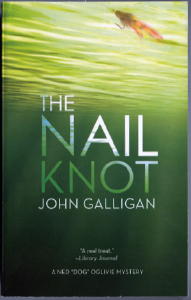
JOHN GALLIGAN – The Nail Knot

Worldwide; paperback reprint, October 2006. Trade paperback: Bleak House, May 2005.

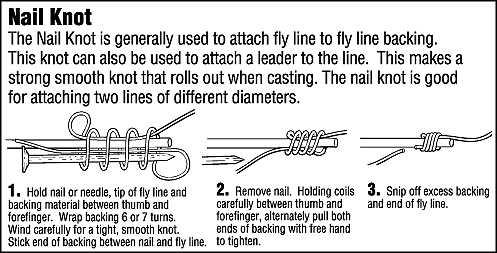
   A “nail knot” is one of those clever devices that are used most often by fly fishermen, and as such it is something I knew nothing about before reading this book. (The last time I went fishing was with my grandfather when I was ten or so, when all we did was to drop our lines into water off a long pier jutting out into Lake Michigan. No casting abilities of any kind required. Nor did we catch anything, but why do I still remember the day, now well over fifty years ago?)

Knot

   The primary protagonist of The Nail Knot, a laid back sort of fellow who calls himself the Dog, is a fly fisherman, however, and I’ll get back to him in a minute.

   In the meantime, here is a short list of other mystery novels or series which I’ve just come up with in which fly fishing is a substantial component, in no particular order.

  Firehole River Murder, by Raymond Kieft, first book in the “Yellowstone Fly-Fishing Mystery Series.” Series character: name not known.
  Blood Atonement, by Jim Tenuto. Series character [SC]: fly-fishing guide Dahlgren Wallace.
  Bitch Creek, by William Tapply. SC: Stoney Calhoun, amnesiac worker in a bait and tackle shop in rural Maine.
  Pale Morning Done, by Jeff Hull. SC: Montana fly-fishing guide Marshall Tate.
  Dead Boogie: A Loon Lake Fishing Mystery, by Victoria Houston. SC: Chief Ferris, Doc Osborne and Ray Pradt. [There are several in this series.]

   There are probably others that I am not thinking of now. Please add others, if you can. This is the first of at least three books in John Galligan’s “Dog” series, but some research shows that he wais the author of one earlier mystery novel, Red Sky, Red Dragonfly, also published by Bleak House (in 2001), in which a hockey player from Wisconsin travels to Japan to teach English for a year and ends up being implicated in his predecessor’s disappearance.

   Subsequent and/or reportedly forthcoming follow-ups in John Galligan’s fly fishing series are:

  The Blood Knot. Bleak House, hardcover, October 2005. [UPDATE: Bleak House, trade paperback, March 2007.]
  The Clinch Knot. Bleak House. Spring, 2007. [UPDATE: Unpublished as of April 2007.]
  The Surgeon’s Knot.
  The Wind Knot.
  The Hex.

   This is a long-range projection, and I suspect that some of these titles may turn out to be totally hypothetical. But assuming that you’re still with me, let’s take a look at the book in hand. As mentioned above, “the Dog” is how the leading character refers to himself — he tells the story, and on a strictly personal basis, it’s quite a story that has to tell.

   The Dog’s real name is Ned Oglivie, and he is what you might call a dropout from the human race, wandering across the country and checking out fishing spots as he goes. A nomadic fly fisherman without parallel, you might say. Until he reaches Black Earth, Wisconsin, that is, where it is that he finds a body along the edge of the creek that leading into (or out of) local Lake Bud. (You can see that even though it may be an important plot point, it didn’t make much of an impression on me.)

Cover

    He also finds The Woman, but not until she removes from the crime scene all of the evidence that (Dog later learns) points to her semi-senile father. But let the Dog describe the lady, from page 13:

    … and it was impossible for me to take my eyes off her.

    You expect me, I suppose, to tell you that she was a gorgeous creature, or lay out for you some other such cunning nonsense. But it wasn’t like that. The last thing the Dog wanted in those days was attraction to a woman. Plus that was far from the mood, and this woman was anything but gorgeous. She was more like confusing. She had already shown me the clod-hopping ability of a teen-aged boy. She was dressed like that too — dirty jeans and work boots, a t-short that had once been white, a dirty-green John Deere cap with a pair of cheap sunglasses up on the brim. Her thighs and arms and shoulders were thick, and her posture atop the stream mud was on the dark side of dainty. But there was a frazzled spark of red-blond ponytail sticking out the back of the cap. There were breasts strapped down by a sports bra beneath the t-shirt. There were tears in her eyes. Earth to Dog: woman.

   You can tell at once that the Dog is hooked. Her name is Melvina Racheletta O’Malley, or Junior for short, and the Dog discovers to his dismay that he cannot walk away when she asks him to help her in what she insists is a frame-up of her father, Mel.

    The dead man has only lately been a local, which first of all is not a good thing in rural Wisconsin, and secondly he had been an activist in trying to revive and save the fish in Lake Bud, which is also definitely not a good thing — activism, that is.

   The solution to the mystery depends greatly on who was able to tie a nail knot, and at what time. It wouldn’t have been a terribly difficult case to solve, if one had a protagonist who was a little more, shall we say, pro-active on the case — you soon get the feeling that if the Dog were any more low key than he is, he wouldn’t be able to get up in the morning — but then again meeting all of the local folk, some more local and inbred than others, and some not, would have been not nearly so much fun as this.

— October 2006


UPDATE. Quite coincidentally there has been a discussion of fly-fishing mysteries on DorothyL this past week (early November), in relation to a slightly different topic of “male cozies.” Here are a couple more mystery series that have been pointed out as belonging to the category, still small but obviously growing:

  Fly Fishing Can Be Fatal, by David Leitz. SC: Max Addams, owner of a northern Vermont fishing lodge. [There are several other books in this series.]
  Catch and Keep, by Ronald Weber. SC: Northern Michigan conservation officer Mercy Virdon and her boyfriend, newspaperman Donald Fitzgerald. [There is at least one other book in this series.]
  Death on a Cold, Wild River, by Bartholomew Gill. SC: Dublin police Chief Superintendent Peter McGarr, who is the detective in several other books by Gill. In this one, though, it’s the victim who is the fly fisherman, along with at least one of the suspects.

K    There are events in the real world that you, I am sure, would find hard to believe if someone would take them simply as they happened and write them up as part of a work of fiction. Noted comic book writer Arnold Drake died in mid-March at the age of 83. Spy fiction author Leslie Waller died on March 29th, four days before his 84th birthday.
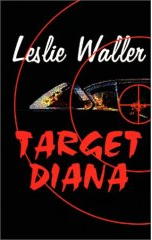
   The connection? In 1950 as “Drake Waller” the two men collaborated as the author of It Rhymes with Lust, considered to be the first graphic novel, a digest-sized work in comic book form. Of marginal interest as a crime novel, it nonetheless was recently added as a marginal entry to Crime Fiction IV, by Allen J. Hubin. See the online Addenda, Part 12.

   Two men, born within a year of each other, worked on one key book together in their 20s, went their own professional ways, and then died within weeks of each other. Destiny sometimes moves in mysterious ways.

Diana

   Not all of Mr. Waller’s bibliography consists of crime-related fiction, but a large portion of it is, with espionage, crooked bankers and Mafia elements predominant.

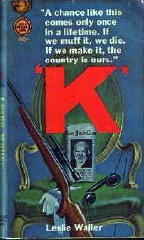
   He was in fact a Gold Medal writer, as a book simply titled “K” (Gold Medal, 1963) was a plot to assassinate Khrushchev during a visit to the US.

   His final work of fiction was Target Diana, a trade paperback with low distribution in which Princess Diana was murdered by a rogue agent, with the secret approval of the Royal Family.

   Excluding It Rhymes with Lust, but expanded to included Target Diana, Leslie Waller’s output as recorded in CFIV looks like this:

WALLER, LESLIE (1923-2007); see pseudonyms C. S. Cody & Patrick Mann.
      * “K” (n.) Gold Medal, pbo, 1963 [Chicago, IL]
      * A Change in the Wind (n.) Geis 1969
      * The American (n.) Putnam 1970 [Europe]
      * The Coast of Fear (n.) Doubleday 1974 [Italy; WWII]
      * The Swiss Account (n.) Doubleday 1976 [Switzerland]

Leslie Waller

      * Trocadero (n.) Delacorte 1978 [Paris]
      * Gameplan (n.) Bantam 1984
      * Embassy (n.) McGraw 1987 [London]
      * Amazing Faith (n.) McGraw 1988 [Europe]
      * Deadly Sins (n.) Heinemann. UK, 1992
      * Mafia Wars (n.) Onyx 1993
      * Tango Havana (n.) Heinemann, UK, 1993 [Havana, Cuba]
      * Manhattan Transfer (n.) Heinemann. UK, 1994 [New York City, NY]
      * Eden (n.) Severn, UK, 1997
      * Target Diana (n.) Transatlantic Publishers, pb, 2001.

CODY, C(harles) S.; pseudonym of Leslie Waller.
      * The Witching Night (n.) World 1952 [Indiana]
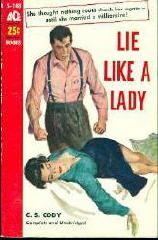
      * Lie Like a Lady (n.) Ace, pbo, 1955 [Chicago, IL]

Cody

MANN, PATRICK; pseudonym of Leslie Waller.
      * Dog Day Afternoon (n.) Delacorte 1973 [New York City, NY]
      * -The Vacancy (n.) Putnam 1973
      * Steal Big (n.) St. Martin’s 1981 [England]

   I haven’t happened to have found a cover image for Tango Havana (1993), but I did come across a description of the plot. Hoping to provide an idea of the kind of stories Mr. Waller wrote, I’ll include it here:

    “Cuba in the days when Meyer Lansky called the shots and General Batista ruled. An island where no man was what he seemed. A Mafia boss, a missile crisis, and a mess that went all the way to the White House. But while history turns on its axis, a conspiracy threatens to blow the Caribbean apart. It takes two to tango. Victor Sanchez and Midge Boardman just have to decide who leads.”

   And taken from the same book, here’s a short “About the Author” biography:

    “Born in Chicago, IL, Waller attended the University of Chicago and earned his M.A. from Columbia University. A crime reporter, he joined the United States Army Air Force intelligence in World War II. He published his first novel [Three Day Pass] in 1944, followed by some 50 more over the years.

    “From his first marriage he has two daughters and four granddaughters. He married Patricia Mahen in 1967, moving to Italy and eventually England. After 15 years abroad they now live in Naples, Florida where he writes, lectures and contributes to Florida’s leading cultural magazine, the Naples Review.”

Falcon

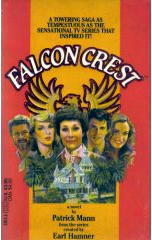
   Although some sources say Mr. Waller wrote several screenplays, IMDB mentions only his work as a writer for the TV show Falcon Crest, and that a non-fiction book he wrote, Hide in Plain Sight was made into a 1980 film starring James Caan. Not stated on IMDB, as Patrick Mann he also wrote the book which novelized the film Dog Day Afternoon. Either of these may be where the confusion arises.

   Even though it’s not included in CFIV, some of the behavior displayed on Falcon Crest was definitely criminous in behavior. Below you’ll find a image of the cover of the book, a novelization of the TV series written by Patrick Mann, a.k.a. Leslie Waller, once again the man behind the pen name.

[UPDATE] 12-02-08.   Based on a suggestion included in an email I received from Dan Bara today, Al Hubin agrees that the following two titles by Leslie Waller are crime-related and should appear in CFIV. The brief descriptions of each were found by me and helped Al make the call:

At 01:44 AM 12/2/2008, you wrote:

 Mr Lewis,

   I believe books that have crime/mystery tones that are not listed in your blog post are: The Banker (1963) and The Family (1968).

   Hope that helps!

        Good Day, Dan


Descriptions from various sources:

K

The Family.

FROM THE FRONT COVER: Slashes deeper than the Godfather, “sex, sadism, violence, money, power, evil.”

“An explosive story that bares the link between the big-time bankers and big-time crime.”

The Banker.

The money man: He owned villas in France, Italy, Switzerland, England, Germany & the Caribbean–each outfitted with emperor-sized round beds …. He was a juggler of power & people, keeping an uneasy balance between the broads he bought, the men he bled, the Swiss bankers & mafia musclemen he did business with. He was one step ahead of the SEC, the IRS, & the Justice Department. He was the wheeler-dealer king of international finance.

Woods Palmer moves into the field of intrigue and counter-intrigue in the big business world of banking in America.

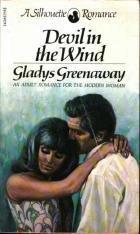
   Every one of author Gladys Greenaway’s 11 books listed in CFIV are indicated as having marginal crime content.

GREENAWAY, GLADYS (1901- )
   * -Shadows in the Sand (n.) Hurst 1958
   * -View of the Mountain (n.) Hurst 1959
   * -Follow a Shadow (n.) Hale 1961
   * -Spring Came Late (n.) Hale 1961
   * -Week of Suspense (n.) Hurst 1962
   * -No Looking Back (n.) Hurst 1963
   * -Sing Softly, Stranger (n.) Hurst 1963
   * -The Affair at Little Todsham (n.) Hurst 1964 [England]
   ** -Devil in the Wind (n.) Hurst 1966
   * -Follow My Leader (n.) Hurst 1966
   ** -Feather Your Nest (n.) Hurst 1967

Greenaway

   Those with double asterisks were reprinted in the US by Ace in paperback form, suggesting that they were published as “gothics” at a time when gothics ruled the paperback book business. Gladys Greenaway has a number of other titles to her credit, continuing on to 1982, if not longer. Presumably these are straight romances, with no criminal content to speak of.

   It was John Herrington again who has confirmed her year of death as 1991. Other than her books being offered for sale on the Internet, a Google search brings up no additional information about her.

[UPDATE] 03-31-07. To demonstrate that research into the writing careers of mystery authors never ends, John Herrington has pointed out that Gladys Greenaway’s middle name and initial are “Ivy M.”

   Also, while looking for copies of her books online, or other information about her, I discovered that Girl on the Heights, a title not listed above, was described by one bookseller as a “Inspector Henry Mason novel.” Even with only this one line, it was immediately obvious that this is a book that should be included.

Height

   I sent the information on to Al Hubin, and he immediately agreed. Not only that, well, read his reply:

  Steve,

   You’re right, and I can’t discount most of her other novels either. They may be straight romances (at least one of them is), but I guess these additions/changes should be made to her entry in the CFIV Addenda #8:

-Cousin Alison. Hurst, 1969
-Girl on a Ladder. Hurst, 1972
Girl on the Heights. Hurst, 1968
-The Late Summer of Christine Hargreave. Hurst, 1970
-My Mother’s Daughter. Hale, 1983
-No Looking Back. Correct publication date to: 1960
-The Past Is the Prelude. Hurst, 1971
-The Small Circle. Hale, 1979
-Trial Run. Hale, 1982
-View of the Mountains. (title correction)
-Where the Wind Whistles. Hurst, 1964

   And I wonder about her novels as Julia Manners, but I can’t find any definite information.

Best,

   Al

   The hunt for new facts and data never ends!

   It was John Herrington who came up with some data on Andrew Spiller, a prolific British author essentially unknown in the US. Not one of his books was ever published in this country. To demonstrate what I meant by “prolific,” here’s his complete bibliography, thanks to CFIV:

SPILLER, ANDREW
   * If Murder Interferes with Business (n.) Archer 1945 [England]
   * Rope for Breakfast (n.) Archer 1945 [England]
   * Whom Nobody Owns (n.) Archer 1945 [England]
   * Queue Up to Listen (n.) Archer 1946 [Det. Insp. Arthur “Duck” Mallard; England]
   * Crooked Highway (n.) Archer 1947 [Det. Insp. Arthur “Duck” Mallard; England]
   * What’s in a Name? (n.) Archer 1947 [Det. Insp. Arthur “Duck” Mallard; England]
   * When Crook Meets Crook (n.) Archer 1947 [Det. Insp. Arthur “Duck” Mallard; England]
   * And Thereby Hangs- (n.) Paul 1948 [Det. Insp. Arthur “Duck” Mallard; England]
   * Murder Has Three Dimensions (n.) Archer 1948 [Det. Insp. Arthur “Duck” Mallard; England]
   * You Can’t Get Away with Murder! (n.) Archer 1948 [Det. Insp. Arthur “Duck” Mallard; England]
   * Brief Candle (n.) Paul 1949 [Det. Insp. Arthur “Duck” Mallard; England]
   * Birds of a Feather (n.) Paul 1950 [Det. Insp. Arthur “Duck” Mallard; England]
   * The Man Who Caught the 4:15 (n.) Paul 1950 [Det. Insp. Arthur “Duck” Mallard; England]
   * Phantom Circus (n.) Paul 1950 [Det. Insp. Arthur “Duck” Mallard; England]

Spiller

   * Alias Mr. Orson (n.) Paul 1951 [Det. Insp. Arthur “Duck” Mallard; England]
   * Who Plays with Sin (n.) Paul 1951 [Det. Insp. Arthur “Duck” Mallard; England]
   * As They Shall Sow (n.) Paul 1952 [Det. Insp. Arthur “Duck” Mallard; England]
   * Kiss the Book (n.) Paul 1952 [Det. Insp. Arthur “Duck” Mallard; England]
   * The Evil That Men Do (n.) Paul 1953 [Det. Insp. Arthur “Duck” Mallard; England]
   * They Tell No Tales (n.) Paul 1953 [Det. Insp. Arthur “Duck” Mallard; Ship]
   * Murder Is a Shady Business (n.) Paul 1954 [Det. Insp. Arthur “Duck” Mallard; England]
   * Murder Without Malice (n.) Paul 1954 [Det. Insp. Arthur “Duck” Mallard; England]
   * It’s in the Bag (n.) Paul 1955 [Det. Insp. Arthur “Duck” Mallard; England]
   * Ring Twice for Murder (n.) Paul 1955 [Det. Insp. Arthur “Duck” Mallard; England]
   * Black Cap for Murder (n.) Paul 1956 [Det. Insp. Arthur “Duck” Mallard; England]
   * Brains Trust for Murder (n.) Paul 1956 [Det. Insp. Arthur “Duck” Mallard; England]
   * Curtain Call for Murder (n.) Long 1957 [Det. Insp. Arthur “Duck” Mallard; England]
   * Murder on a Shoestring (n.) Long 1958 [Det. Insp. Arthur “Duck” Mallard; England]
   * Sing a Song of Murder (n.) Long 1959 [Det. Insp. Arthur “Duck” Mallard; England]
   * The Man Who Dressed to Kill (n.) Long 1960 [Det. Insp. Arthur “Duck” Mallard; England]

   What John recently discovered is that Spiller was born in Bridport, 20 June 1891, and he died in Ealing, London 11 February 1976. Neither his year of birth or the year he died had been known before. And surprisingly enough, what you see here on this page, right now, is all that is known about the author.

[UPDATE] 04-09-07. It hasn’t taken long before some additional information about Andrew Spiller has come to light. Look for that, plus a few more cover images, in this later blog entry, posted today.

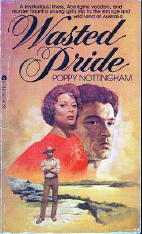
   Until a couple of weeks ago, all that was known about Poppy Nottingham, author of four gothic romantic suspense novels included in Crime Fiction IV, except her real name:

NOTTINGHAM, POPPY; pseudonym of Patti Dunaway
   * Hatred’s Web (n.) Ace 1974 [Louisiana]
   * Shadow of a Cat (n.) Ace 1974 [Canada]
   * Without a Grave (n.) Ace 1975
   * Wasted Pride (n.) Ace 1978 [Australia]

Nottingham

DUNAWAY, PATTI; see pseudonym Poppy Nottingham
   * Surrender by the Sea (n.) Jeremy 1979

   What happened a couple of weeks ago was that a woman in California purchased from me one of these gothic paperbacks written as by Poppy Nottingham, explaining that the author was the wife of her former pastor and she remembered both of them well. That was enough information to help Al Hubin locate her husband, Jack Dunaway, still alive and well in Oregon. In a letter Al received from him recently, Mr. Dunaway said his wife was born October 9, 1936 and died September 12, 1988. He also added that “she always wanted to be a writer; she wrote gothic novels because they were clean and she knew what they wanted.”

   The first syllable of Rosemary Gatenby’s last name rhymes with “late,” which means I’ve been pronouncing incorrectly to myself all this time. According to Social Security records, this author of nine suspense thrillers listed in CFIV died January 3, 2007, but her writing career ended with her final mystery in 1979, when she was still a youthful 61.

   Below is a semi-annotated list of the mysteries she wrote, using CFIV as the basis. One gauge of an author’s popularity, perhaps, is how many of their books are picked up by one or the other of the book clubs which were in operation during their career. In Mrs. Gatenby’s case, this would have been either the Mystery Guild or the Detective Book Club. I’ve indicated those of her books which were published by either of the two with a double asterisk (**).

GATENBY, ROSEMARY (1918-2007)

   * Evil Is As Evil Does (n.) M. S. Mill–William Morrow 1967. No paperback edition. “Betty Graham, formerly Liz Melinder, returns to Rockton, NY, to attend a round of parties for herself and her new husband. Little did people know that she had escaped the worst train wreck in history and her former life as wife and mother.”

   * Aim to Kill (n.) William Morrow, 1968. Pyramid X-2094, pb, October 1969.

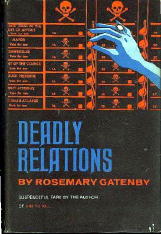
   ** Deadly Relations (n.) William Morrow, 1970. Pyramid T2528, pb, 1971.

Deadly

   ** Hanged for a Sheep (n.) Dodd Mead, 1973. Jove 04418, pb, 1977. “Taut dramatic story of a successful, solidly married man who is unable to convince the law and even his friends of his innocence [in his wife’s murder].”

   ** The Season of Danger (n.) Dodd Mead, 1974. Jove 04429, pb, 1977. “How could America’s most famous novelist be held a prisoner by his own guards on his own estate?”

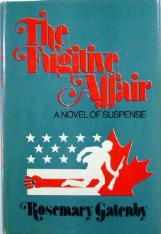
   ** The Fugitive Affair (n.) Dodd Mead, 1976. Jove 04428, pb,1978.

Fugitive

   * The Nightmare Chrysalis (n.) Dodd Mead, 1977. Jove 04805, pb, 1979. “Even before the half nude body of the strangled girl was found in the woods in back of his house, Ferguson Brady’s live had begun to change.”

   * Whisper of Evil (n.) Dodd Mead, 1978. Berkley 04673, pb, March 1982. “The young red-haired woman on the plane to Mexico City did not know that someone urgently wanted her death … that it had already been discussed …”

   ** The Third Identity (n.) Dodd Mead, 1979. No paperback edition.

   As part of the review that Mary Reed just did of Mary Roberts Rinehart’s When a Man Marries, it was noted that a free online edition exists. Here’s a complete list of all of MRR’s books which can be found on the Project Gutenberg website.

   * = title in Crime Fiction IV, by Allan J. Hubin.

   ** = title listed as having marginal crime content in CFIV.


Project Gutenberg Titles by

Mary Roberts Rinehart


* The After House (1914)

The Amazing Interlude

Bab: A Sub-Deb

* The Bat: A Novel From the Play by Mary Roberts Rinehart & Avery Hopwood (1926)

** The Breaking Point (1922)

* The Case of Jennie Brice (1913)

* The Circular Staircase (1908)

* The Confession, a short novel co-published with Sight Unseen (1921)

** Dangerous Days (1919)

K

Kings, Queens, and Pawns: An American Woman at the Front

Long Live the King

** Love Stories (1919; short story collection)

* The Man in Lower Ten (1909)

A Poor Wise Man

* Sight Unseen, a short novel co-published with The Confession (1921)

The Street of Seven Stars

* Tish: The Chronicle of Her Escapades and Excursions (1916; short story collection, some criminous)

The Truce of God

* When There’s a Will (1912)

** When a Man Marries (1909)

MYSTERY SERIES CHARACTERS: FROM THE PRINTED PAGE TO TELEVISION
         – Addenda and Corrections, by Marvin Lachman.

The primary list appeared on the original Mystery*File website in five parts:

Part One: A through C.

Part Two: D through E.

Part Three: F through K.

Part Four: L through O.

Part Five: P through Z.

CORRECTION– Ashdown, Clifford (joint pseudonym of R. Austin Freeman and John James Pitcairn).

NEW– Ashe, Gordon (pseudonym of John Creasey).   On April 30, 1962 on the American series Thriller, there was an episode, “The Specialists,” that was based on the Ashe series about PATRICK DAWLISH, though the lead character, played by Lin McCarthy, had his name changed to Peter Duncan.

CORRECTION– Biggers, Earl Derr.   The name of the series was The New Adventures of Charlie Chan.

NEW– Buchan, John.   Hannay was a 1988 British series, with Robert Powell as RICHARD HANNAY. Powell had previously played Hannay in a 1978 film remake of The 39 Steps.

ADDITION– Chandler, Raymond.   Danny Glover played Marlowe in the adaptation of the short story “Red Wind” in the Fallen Angels series on November 26, 1995. In the 1998 TV movie Poodle Springs, based on the novel which Robert B. Parker completed from material left by Chandler, James Caan was Marlowe.

ADDITION– Charteris, Leslie.   Ivor Dean was INSPECTOR TEAL to Moore’s Templar. Simon Dutton was Simon Templar in a British series of six TV movies under the umbrella heading of Mystery Wheel of Adventure in 1989.

CORRECTION AND ADDITION– Christie, Agatha.   Regarding the series with Joan Hickson as Jane Marple, eliminate the word “Mystery!” and change the title of the first show to The Body in the Library. David Horovitch played DETECTIVE INSPECTOR SLACK on that show. Harry Andrews was SUPT. BATTLE in The Seven Dials Mystery which aired in Britain on Mobil Showcase on April 16, 1981. Philip Jackson was CHIEF INSPECTOR JAPP during the series in which David Suchet played Poirot.

NEW– Cody, Liza.   ANNA LEE was played by Imogen Stubbs in a 1995 series aired in the U.S. on the A & E network.

NEW– Deighton, Len.   Ian Holm was BERNARD SAMSON in Game, Set, and Match, a 1988 TV series based on Deighton’s trilogy.

ADDITION– Dexter, Colin.   Kevin Whateley continued his role from the Inspector Morse series, albeit with a promotion, as INSPECTOR LEWIS in the 2006 TV movie of that title.

ADDITION– Fair, A.A. (Pseudonym of Erle Stanley Gardner).   In 1959 a U.S. TV pilot film starred Billy Pearson as DONALD LAM and Benay Venuta as BERTHA COOL.

NEW– Gould, Chester.   His DICK TRACY was played by Ralph Byrd (who had played him in the movies) in a 1950-1951 American series.

NEW– Hamilton, Nan.   ISAMU (“SAM”) OHARA was played by Pat Morita in a 13-episode American series in 1987-1988.

NEW– Holton, Leonard (pseudonym of Leonard Patrick O’Connor Wibberly).   George Kennedy was Father Samuel Cavanaugh in the 1971-1972 American series Sarge. According to William L. De Andrea because of similarities to Holton’s books about FATHER JOSEPH BREDDER, a royalty was paid to the writer while Sarge was aired.

NEW– Hornung, E.W.   His RAFFLES was played by Anthony Valentine in a 1977 series for Yorkshire TV in England.

ADDITION– James, P.D.   CORDELIA GRAY was played by Helen Baxendale in An Unsuitable Job for a Woman on Mystery! in 2000.

ADDITION– McBain, Ed.   There was also a 1995 TV movie, Lightning, about the 87th Precinct, with Randy Quaid as Steve Carella, Alex MacArthur as Bert Kling, Ving Rhames as Artie Brown, Alan Blumenfeld as Ollie Weeks, and Ron Perkins as Meyer Meyer.

CORRECTION– Murphy, Warren and Sapir, Richard.   The name of the actor who played Remo Williams was Jeffrey Meek, not Jeffrey Weeks.

ADDITION– O’Donnell, Peter.   In 1982 ABC in the U.S. made an hour-long pilot film with Ann Turkel as MODESTY BLAISE and Lewis Van Bergen as WILLIE GARVIN.

ADDITION– Orczy, Baroness.   Anthony Andrews was SIR PERCY BLAKENEY, aka THE SCARLET PIMPERNEL in a 1982 British TV movie The Scarlet Pimpernel.

ADDITION– Parker, Robert B.   Robert Urich starred in several Spenser for Hire TV movies after the series ended, and then he was replaced by Joe Mantegna. Avery Brooks starred in his own TV series, A Man Called Hawk, on ABC in 1988-1989. One of Parker’s more recent character, POLICE CHIEF JESSE STONE has been played by Tom Selleck in two TV movies, Night Passage and Stone Cold. Polly Shannon played attorney ABBY TAYLOR.

ADDITION– Peters, Ellis (pseudonym of Edith Pargeter).   Tom Lowell played DOMINIC FELSE in the adaptation of her Edgar-winning novel Death and the Joyful Woman on the Alfred Hitchcock Hour, April 12, 1963.

ADDITION– Quarry, Nick (pseudonym of Marvin H. Albert).   Though NICK QUARRY was not a series character in the books Albert wrote as “Quarry,” there was a 1968 TV pilot film, based on Albert’s work, starring Tony Scotti as Nick Quarry.

ADDITION– Rankin, Ian.   Ken Stott replaced Hannah as Rebus.

NEW– Reichs, Kathy.   Emily Deschanel is DR. TEMPERANCE BRENNAN in the current (2005-   ) TV series Bones.

NEW– Rogers, Samuel.   Ralph Roberts was PAUL HATFIELD in “Don’t Look Behind You,” an episode on the Alfred Hitchcock Hour Sept. 27, 1962.

ADDITION– Sayers, Dorothy L.   Richard Morant played Bunter during the 1980s.

ADDITION
– Simenon, Georges.   Jean Richard played Maigret in a French TV series c.1970.

ADDITION– Smith, Martin (Cruz).   Ron Leibman was ROMAN GREY in The Art of Crime, a 1975 TV movie based on his novel Gypsy in Amber.

ADDITION– Spillane, Mickey.   Rob Estes was Mike Hammer in the TV movie Deader Than Ever (1996).

NEW– Stevenson, Richard.   Chad Allen played his DONALD STRACHEY in two TV movies Third Man Out (2005) and Shock to the System (2006) aired on the Here! Network.

ADDITION– Stout, Rex.   Also on the 2001 series, Colin Fox was FRITZ BRENNER; Kari Matchett was LILY ROWAN; Conrad Dunn was SAUL PANZER; Saul Rubinek was LON COHEN; Trent McMullen was ORRIE CATHER; R.D. Reid was SGT. PURLEY STEBBINS; Ken Kramer was DR. VOLLMER; and Fulvio Cecere was FRED DURKIN.

NEW– Thomas, Leslie.   Peter Davison, who also had played Albert Campion, was “DANGEROUS” DAVIES in the British series The Last Detective, based on Thomas’s book.

NEW– Valin, Jonathan.   Gil Gerard played HARRY STONER in the 1989 TV movie Final Notice, based on Valin’s novel.

NEW– Vickers, Roy.   His main series is THE DEPARTMENT OF DEAD ENDS. There are several detectives in this branch, most often Inspector Rason. However, in “The Crocodile Case,” which appeared on Alfred Hitchcock Presents on May 25, 1958, the detective is INSPECTOR KARSLAKE, played by John Alderson. In “The Impromptu Murder,” on the same show on June 22, 1958, it is Robert Douglas as INSPECTOR TARRANT.

ADDITION– Wallace, Edgar.   Hugh Burden played the title role of J.G. REEDER in The Mind of Mr. J.G. Reeder, a series for Thames Television in England 1969-1971. He also was one of the writers.

NEW– Willis, Ted.   Jack Warner played P.C. GEORGE DIXON in Dixon of Dock Street, a popular British series that ran from 1955 through 1976. Dixon first appeared in Willis’s 1950 novel The Blue Lamp.

NEW– Yates, Dornford.   In She Fell Among Thieves, originally on BBC2’s “Play of the Week” in 1978, Malcolm McDowell was RICHARD CHANDOS SMITH and Michael Jayston was MANSEL.

« Previous PageNext Page »