Reviews


THE LAWBREAKERS. MGM, 1961. Jack Warden, Vera Miles, Ken Lynch, Arch Johnson, Robert H. Harris, Robert Douglas, Jay Adler, Robert Bailey. Theme & background music: Duke Ellington. Screenwriters: Paul Monash & W.R. Burnett. Director: Joseph M. Newman.
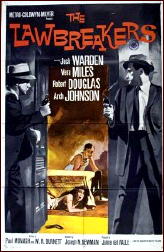
THE LAWBREAKERS Asphalt Jungle

   Among several other sources, IMDB says that this film was cobbled together from two episodes of The Asphalt Jungle, a tough, hardboiled crime series shown on ABC in 1961 as a summer fill-in. Combing through the list of episodes and their descriptions, however, the only matchup that fits is that of a single episode, “The Lady and the Lawyer,” the second in the series (9 April 1961).

   Some material may have come from the previous episode, to help establish the characters, but there’s only one real story line, that of a big name attorney who works for the local syndicate on the side. He also has money problems. Trying to support a wife and family as well as a mistress (Vera Miles) extends his resources too far – the lady has expensive tastes – and when desperation sets in, well, that’s where the story begins.

   Jack Warden plays the guy on the other side, a cop, and an honest one. Promoted to Commissioner when his predecessor can’t stand the heat, he proves to be formidable force against crime. He succeeds easily enough in this film, but I’ll have to come up with the rest of the series on DVD before I can tell you how he fares from here on out.
THE LAWBREAKERS Asphalt Jungle

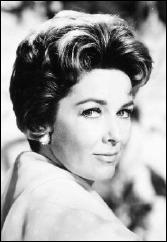
   As a femme fatale, Vera Miles is beautiful and alluring enough, but (to my mind) rather too icy cold to compare with the more sultry ladies who often appeared in the noir films of the 50s and 60s – more of a Grace Kelly type than an Audrey Totter or Marie Windsor. Not that she’s a pushover, by any means, not at all. You have to keep a close eye on women like this.

   There are several killings in the movie, served well by the black-and-white camera work, with one of the dead men being that of Bob Bailey’s character, the latter being one of the better players of Johnny Dollar on Old-Time Radio – he had one of the toughest voices to ever come from a man so slim. His part in The Lawbreakers may have been his longest roles in the movies, even though (sad to say) his character’s part ends so quickly.

   Overall, then, even though concocted somehow from a TV series, the film works well as a film, especially if you like your movies hardboiled and tough, which this movie is, except when Jack Warden breaks down a delivers a sort of sappy soliloquy to the press in a plea for some cooperation. He meant well, but I wish he hadn’t done it.

Note:   For more about The Lawbreakers, check out Mike Grost’s website, and the usual detailed analysis he does of all the movies he covers.
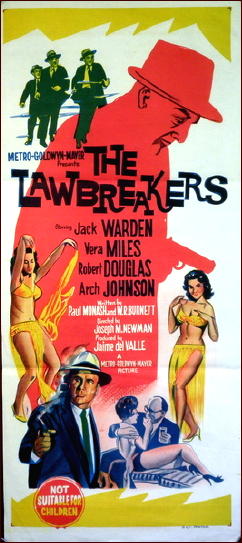
THE LAWBREAKERS Asphalt Jungle

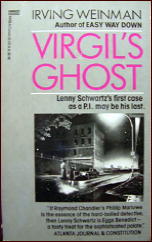
IRVING WEINMAN – Virgil’s Ghost. Fawcett Gold Medal, reprint paperback, January 1991. First published by Columbine, hardcover, 1990.

IRVING WEINMAN Lenny Schwartz

   Lenny Schwartz, the hero of Weinman’s two previous mystery novels, turns PI in this one. Years of guilt as a homicide policeman have taken their toll. (I haven’t read the first two, so that is all I know, but as you will see, if you read on, neither am I about to.)

   Lenny’s wife is upset by this decision for some reason, but maybe mostly because he didn’t tell her. Not, that is, until the night before he is to move into his new office. She kicks him out, saying that he is welcome home only on weekends, the next few of which they spend making love and feeling guilty afterward.

   So Lenny’s first case is important to him, more important than he knows. The parents of a mathematician whose mutilated body was recently found in the East River want him to prove that the coroner’s report was wrong, that their son did not die of AIDS. They feel guilty about this, but they are determined to pursue this course of action.

   Mixed in with all this guilt is a load of ethic humor (mostly Jewish), and fifty pages was as far as I went. Lenny’s new assistant is named Abrasha Addison (formerly Yarmolinksy), but at one time his real name was Abraham Resnick, and he can get a deal for you. When Lenny’s office/apartment is trashed by a firebomb, Abrasha is on the spot with a suitcase of clothes for Lenny. “What you think? Just your sizes, Lenny. No? Look, is first drawer quality. Bloomie’s Abe Strauss, good stuff, Huh?”

   The murder is serious, however. Pornography is hinted at. Snuff films. According to the back cover, perversion, conspiracy, and cover-ups are involved. Seamy sex clubs and drugs. Government agencies. Russkies. The Nuclear Regulatory Agency. Heaven help us. Can’t anyone write a plain old PI story any more?

   Anyway, I didn’t read most of this, but eight different newspapers and review services are liberally quoted on both covers, and they all read it and liked it, and you may, too. One of them even suggests that thus “great new literate sleuth” is “the American version of Adam Dalgleish.” I wouldn’t go that far, based on what I read, but I’d have to admit that I no longer read P. D. James either, and a lot of people do.

— Reprinted from Mystery*File 28,
       February 1991 (slightly revised).


       The Lenny Schwartz series

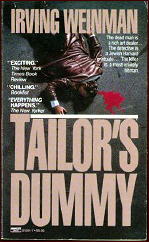
Tailor’s Dummy. Atheneum, 1986.

IRVING WEINMAN Lenny Schwartz

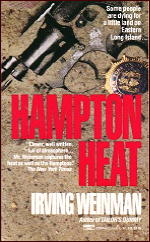
Hampton Heat. Atheneum, 1988.

IRVING WEINMAN Lenny Schwartz

Virgil’s Ghost. Columbine, 1990.
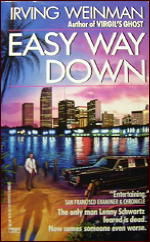
Easy Way Down. Columbine, 1991.

IRVING WEINMAN Lenny Schwartz


[UPDATE] 04-09-12.   One never knows for sure, but there’s a good possibility I would find something to reverse my opinion of this book, were I to read it now. Something as simple as my mood at the time may be different, or some eleven years later, certain overall ways I view things may have changed. On the other hand, I have not read P. D. James since I wrote this review, so perhaps not.

REVIEWED BY DAN STUMPF:         


WHISTLING IN THE DARK. MGM, 1933. Ernest Truex, Una Merkel, Edward Arnold, John Miljan, C. Henry Gordon, Johnny Hines, Joseph Cawthorn, Nat Pendleton. Screenwriter/director: Elliott Nugent.

WHISTLING IN THE DARK Ernest Truex

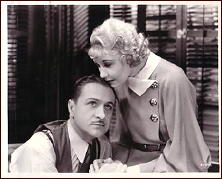
   If you have seen His Girl Friday with Rosalind Russell, you might remember the pretentious little pipsqueak poet whose desk Cary Grant tries to steal. That part was played by Ernest Truex, a busy character actor specializing in milquetoast roles, who once actually starred in a film, Whistling in the Dark, a second feature served up in lavish MGM style, with Edward Arnold (who starred with Truex on Broadway in this), Una Merkel and a host of gangster-types.

   The plot has Truex as a mystery writer eloping with heiress Merkel when they blunder into a house full of crooks — who are plotting to murder somebody. Truex is quickly drafted into service as plotter-in–chief, and his efforts to devise a scheme, foil the scheme, and escape with Merkel form the basis of a mostly fast-moving hour or so.

   Truex plays off his typecast meekness to good effect against menacing actors like Nat Pendleton and C. Henry Gordon, Una Merkel is charmingly simple and sexy in her underclothes, and Edward Arnold radiates ruthless geniality with his usual aplomb.

   I just wish they hadn’t tried to open this out by tacking on fifteen minutes of rather lackluster gangster-movie stuff at the start. It slows things down considerably.

THE BACKWARD REVIEWER
William F. Deeck


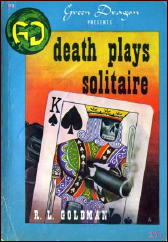
R. L. GOLDMAN – Death Plays Solitaire. Coward-McCann, hardcover, 1939. Green Dragon #10, digest-sized paperback, no date stated [1944], condensed.

R. L. GOLDMAN Rufus Reed

   While it will not endear me to the doubtless many fans of Asaph Clume and Rufus Reed, “impulsive redheaded reporter,” I must confess I am glad I read the “condensed” version of this novel since its tediousness is staggering even in the abbreviated version.

   For example: “I’m supposed to be a political commentator, and I do a daily column, ‘Round-Up,’ which I sign ‘Rufus Reed’ because that’s my name.”

   A former police reporter, Reed has been assigned by Clume, his boss, to cover the execution of Dan Hillyard for murder during a bank robbery from which the money has never been recovered. On his last night Hillyard gives the deck of cards with which he has been playing solitaire to his wife.

   In turn, she gives the cards to Hillyard’s lawyer, who is murdered shortly afterwards. He, too, had been playing solitaire, something he had never done before, and the deck of cards has been taken by the murderer. Other deaths follow, and Reed himself faces torture and death. As Reed does the leg work, Clume does the thinking, such as it is.

   Not well written even for the times, a very thin plot, an evident but clueless murderer. Still, one waits, not breathlessly, to read The Snatch, in which, according to Green Dragon, “A slipping male movie idol is the victim-and there are more than enough suspects with motives. Irrepressible Rufus Reed, red-haired reporter figures out whodunit just in time for a smashing, surprise ending that’ll leave you worrying about ethics for quite a while.”

— From The MYSTERY FANcier, Vol. 11, No. 1, Winter 1989.


       The Asaph Clume & Rufus Reed series —

The Murder of Harvey Blake. Skeffington, 1931.
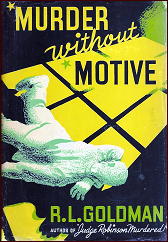
Murder Without Motive. Coward, 1938.

R. L. GOLDMAN Rufus Reed

Death Plays Solitaire. Coward, 1939.
The Snatch. Coward, 1940.
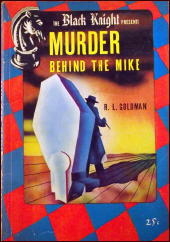
Murder Behind the Mike. Coward, 1942.

R. L. GOLDMAN Rufus Reed

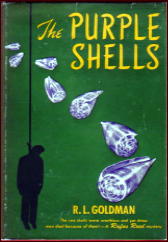
The Purple Shells. Ziff-Davis, 1947.

R. L. GOLDMAN Rufus Reed


Editorial Comment:   R. L. Goldman also wrote three non-series mysteries not included in the list above. Some biographical information about him can be found in the Ziff-Davis “Fingerprint Mystery” checklist compiled by Victor Berch, Bill Pronzini and myself.

IT’S ABOUT CRIME, by Marvin Lachman

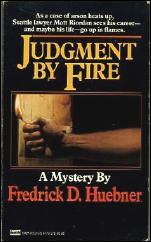
FREDRICK D. HUEBNER Judgment by Fire

FREDRICK D. HUEBNER – Judgment by Fire. Fawcett Gold Medal, paperback original, 1988.

   I was not surprised after reading Fredrick D. Huebner’s Judgment by Fire, a paperback original from Gold Medal, to learn that the author is an attorney.

   Even if my son weren’t a lawyer, I would disagree with the character in Shakespeare who said, “First, kill all the lawyers.” Writers in that profession, e.g., Huebner, Healey, Nevins, and Hensley are too good at integrating the law into their mystery plots.

   At times, Huebner’s well-described courtroom scenes (even the motions made are suspenseful) threaten to overwhelm his rather meager plot. The book reaches its peak midway with a murder-arson trial and then is anticlimactic.

   Still, on balance, this is a worthwhile mystery with a good description of the Seattle area, especially its perennial rain.

— Reprinted from The MYSTERY FANcier,
Vol. 11, No. 1, Winter 1989.


       The Matt Riordan mystery series —

1. The Joshua Sequence (1986)
2. The Black Rose (1987)
3. Judgement By Fire (1988)
4. Picture Postcard (1990)
5. Methods of Execution (1994)

FREDRICK D. HUEBNER Judgment by Fire

THE ARMCHAIR REVIEWER
Allen J. Hubin


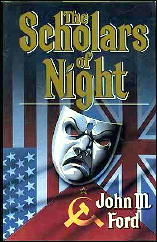
JOHN M. FORD The Scholars of Night

JOHN M. FORD – The Scholars of Night. Tor, hardcover, 1988; paperback, 1989.

   John M. Ford, author of an award-winning fantasy novel, enters the espionage lists with The Scholars of Night. Nicholas Hansard is hardly anything like a spy. He’s an academic, a historian, a man of no violent urges and no particular physical prowess.

    He’s also a member of Raphael’s Washington think tank, and his best friend is Allan Berenson, master of board games of politics and war. And dead. And, apparently, a traitor.

   A recently uncovered four-hundred-year-old play, possibly by Christopher Marlowe, has something to do with all this. Hansard, in sorrow and rage, resigns from the tank. But Raphael asks him first to go to England, have a look at the play, give his opinion on historicity.

   He agrees. So easy to get lured into the world of death and double-dealing. Quite an artistic job we have here by Ford, crafty and complex … and perhaps a bit too fuzzy around the edges.

— Reprinted from The MYSTERY FANcier,
       Vol. 11, No. 1, Winter 1989.


Bio-Bibliographic Notes:   This is the only work of crime or espionage fiction by the witty and multi-talented John M. Ford included in Al Hubin’s Crime Fiction IV, but he had a long list of science fiction and fantasy novels to his credit when he died in 2006. He left us far too early; he was only 49 at the time of his passing. For more information, check out his Wikipedia page here.

REVIEWED BY WALTER ALBERT:         


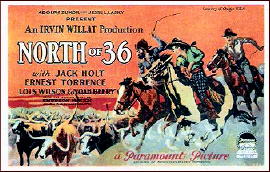
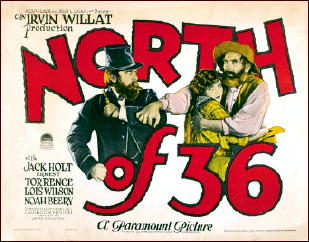
NORTH OF 36. Paramount Pictures, 1924. Jack Holt, Ernest Torrance, Lois Wilson, Noah Beery, David Dunbar, Stephen Carr. Based on the novel by Emerson Hough. Director: Irvin Willat. Shown at Cinevent 35, Columbus OH, May 2003.

NORTH OF 36 Jack Holt

   Lois Wilson plays Taisie Lockheart, a Texas rancher who needs to get her herd of cattle to Abilene and across “a thousand miles of Indian territory.” Noah Berry, the villainous Texas State Treasurer (some things never change, I guess) Sim Rudabaugh, scheming to take control of her land by any means necessary, tracks the cattle drive with a crew of ruffians among whom is good guy Jack Holt aiming to thwart Rudabaugh’s plan.

   This was conceived as a sequel to The Covered Wagon and was to be directed by James Cruze, but a cut in the budget lost the company the director and its grandiose plans for another epic of the West.

   However, they were able to engage the last remaining herd of longhorn cattle for the drive and the excitement of the drive and the work of an excellent cast more than makes up for any budget deficiencies.

   The punishment meted out to Rudabaugh by the Indians he’s wronged is a truly horrific moment in film vengeance, and the audience responded with cheers and applause. They don’t make ’em like this anymore. And they should.

NORTH OF 36 Jack Holt

A TV Series Review by Michael Shonk


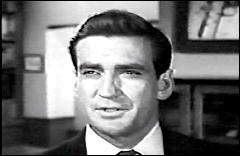
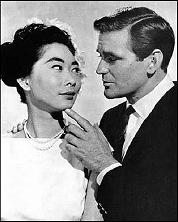
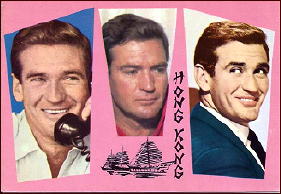
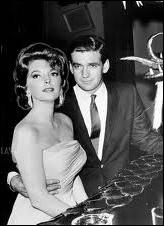
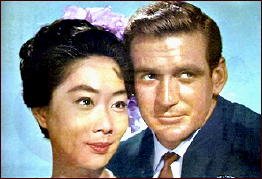
HONG KONG. ABC / 20th Century Fox. 1960-61, 26 episodes at 60 minutes each. Cast: Rod Taylor as Glenn Evans, Lloyd Bochner as Chief Inspector Neil Campbell, Gerald Jann as Ling. Created by Robert Buckner. Executive Producer: William Self.

HONG KONG Rod Taylor

   The series currently is not available on DVD. I have viewed six episodes of the series. More are available in the collector-to-collector market.

   Hong Kong is another unjustly forgotten treasure from television’s past. The series, with its black and white film and quality talent behind the camera, created an atmosphere reminiscent of film noir.

   Among the writers were Jonathan Latimer (novel: Headed for a Hearse; film: The Glass Key, 1942; TV’s Perry Mason) and Sam Ross (Naked City). Herbert Hirschman (Perry Mason) produced many of the episodes.

HONG KONG Rod Taylor

   But it is the list of directors that is truly impressive, Walter Doniger (Bat Masterson), Paul Henreid (Alfred Hitchcock Presents), Ida Lupino (Have Gun Will Travel; The Hitch-Hiker, 1953), Fletcher Markle (Jigsaw, 1949), and Stuart Rosenberg (Cool Hand Luke, 1967).

   The cast performed well, with Rod Taylor (Time Machine, 1960) starring in his first TV series as Glenn Davis, hardboiled reporter and ladies man. Lloyd Bochner (Twilight Zone) was perfect in his breakout role as the very British Neil Campbell.

   A hidden treasure, all by itself, was the movie quality soundtrack done by future Oscar winner Lionel Newman. Take a listen.

   Sadly, ABC was determined to waste the quality series on a suicide mission against NBC’s ratings hit Wagon Train. The Indians had a better chance. However, ABC, 20th Century Fox and powerful sponsor Kaiser Industries (who also sponsored Maverick) strongly supported this series.

HONG KONG Rod Taylor

   In Broadcasting (4/11/60) ABC President Treyz claimed Hong Kong was the “most expensive weekly one-hour series in the history of ABC, and I believe, in the history of the television medium.”

   Hong Kong was about the adventures of World Wide News’ foreign correspondent, Glenn Davis. Glenn drove a great car, a white convertible. He was a close friend of British Chief Inspector Neil Campbell. In early episodes Glenn hung out at Tully’s, a restaurant run by Tully, a shady character with helpful contacts (Jack Kruschen).

   The ratings for the series were disappointing from the very beginning. Hong Kong‘s premiere episode (9/28/60) finished third in its time slot to NBC’S Wagon Train and CBS’ second place Aquanauts (later called Malibu Run). (Broadcasting, 10/3/60)

HONG KONG Rod Taylor

   Despite rumors Hong Kong was to be cancelled at mid-season, sponsor Kaiser Industries continued to support the series after some changes were made by the 20th Century Fox’s new Vice President in charge of TV Production, Roy Huggins (Maverick). (Broadcasting, 12/12/60)

   Glenn found a new place to hangout. Tully’s was replaced by the Golden Dagger, a supper club run by Ching Mei (Mai Tai Sing). The Golden Dagger featured popular singers (including Julie London, Anne Francis) for the occasional love interest of the week and added more music to the series.

   What didn’t change were the fistfights, mysteries, and romance to appeal to all types of viewers, but who continued to watch Wagon Train.

   ABC tried Hong Kong at 10pm (preempting Naked City) on January 25, 1961. The ratings were a success with a 42.1 share but lower than Naked City‘s usual 43 share. And the episodes at 7:30pm continued to fail in the ratings against the competition. (Broadcasting 1/30/61)

HONG KONG Rod Taylor

   Thousands protested when the series was cancelled. Hong Kong was a success in syndication. There is a fan site for Rod Taylor that has some more about the series and its cancellation.

   For those not wanting to bother with the link, the website’s highlight is a copy of a January 1962 gossipy styled article from newspaper syndicate NEA. It claimed the studio cancelled the series when “a big talent agency” that had brought the series to Fox raised their fees beyond what Fox was willing to pay. The “sponsor” was upset so Fox offered Rod Taylor a role in Follow the Sun. Taylor by then was in Italy shooting a movie for MGM.

   The article also mentions the plans for a sequel called Dateline: San Francisco. In the pilot, Glenn Davis relocates from Hong Kong to San Francisco. To get Rod Taylor to agree to star, the NEA article claimed, 20th Century Fox gave Taylor a contract for three theatrical films.

HONG KONG Rod Taylor

   The website also states that the archives of the University of Iowa Libraries has a copy “of the story for the pilot,” entitled “The Castle” that was written by Robert Blees and Dorothy Robinson (Hong Kong episode “With Deadly Sorrow”).

   In Broadcasting (2/19/62), Dateline: San Francisco was listed as a pilot for 20th Century Fox to be produced by Jules Bricken (Riverboat) and written by Ivan Goff and Ben Roberts (Mannix). Filming began February 12, 1962.

A 1001 MIDNIGHTS Review
by Bill Pronzini


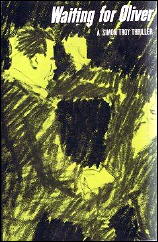
SIMON TROY – Waiting for Oliver. Macmillan, US, hardcover, 1963. Originally published in the UK by Gollancz, hardcover, 1962.

   The work of Simon Troy (a pseudonym of Thurman Warriner) is distinguished for the eccentricity of its plotting, characters, and construction. Most people in a Troy novel aren’t “normal”; they are obsessed, perverse, secretive, profoundly different.

SIMON TROY Waiting for Oliver.

   So, too, the situations in which they find themselves. This is true whether Troy is writing tales of psychological suspense and horror, like Waiting for Oliver, or what might be termed “psychological procedurals” featuring his sensitive Cornish policeman, Inspector Smith. All of Troy’s novels — even the few that don’t quite work — are quietly disquieting and absorbing from start to finish.

   Waiting for Oliver is probably his oddest book. It is the story of a frightening, almost symbiotic relationship between two men who have known each other since boyhood: Oliver Townside and the narrator, Alex Monro.

   Oliver is the dominant personality, a personification of evil, a kind of modern vampire who, spongelike, absorbs the personas of those around him, corrupting or destroying them. Alex has always been terrified of Oliver, has always hated and pitied him, and yet has always responded to Oliver’s hypnotic power and done his bidding. When they were children, he could not bring himself to expose his friend/enemy as the perpetrator of unspeakable acts of violence.

   Nor could he bring himself to seek personal vengeance as an adult, when Oliver maliciously seduced Alex’s sweetheart, Margery, married her, and later cold-bloodedly murdered her.

   When the book opens, two years have passed since Margery’s “accidental” fall from a cliff near Petit Sant, Oliver’s home in the Channel Islands. Alex, a teacher in a small secondary school in England, has had no contact with Oliver since then and prefers to keep it that way. But when he receives a telegram announcing Oliver’s intention to take a second wife — Frances, another woman Alex knows — he is drawn back to the islands.

   It is then, while once more waiting for Oliver, that he realizes he cannot let the man marry Frances, for surely he will murder her too. He sets out to do what the local police have not been able to do — prove that Oliver killed Margery — and also to free himself from Oliver’s thrall, if necessary to destroy the evil before it destroys him.

   The suspense here builds slowly, inexorably, to a terrifying climax on one of the smaller islands. And as a bonus, Troy portrays the Channel Islands (as he does all his settings) with a sharp eye for detail.

   The novel does have its flaws: its eccentric construction makes things seem confusing at times, especially in the early pages; Troy withholds vital information about Oliver’s and Alex’s boyhood until much too late in the book; and there are minor points that seem a bit too quirky, that don’t quite ring true. Still, this is a powerful and unsettling work.

   Also well-worth investigating is Troy’s only other nonseries psychological suspense novel, Drunkard’s Walk (1961), and his ten mysteries featuring Inspector Smith. Among the best of the Smith novels are Second Cousin Removed (1961), Don’t Play with the Rough Boys (1963), and Cease Upon the Midnight (1964). The last-named title also has a Channel Islands setting.

   Under his own name, Troy/Warriner also published a series of novels featuring an outspoken private detective named Mr. Scotter, none of which has been published in this country.

         ———
   Reprinted with permission from 1001 Midnights, edited by Bill Pronzini & Marcia Muller and published by The Battered Silicon Dispatch Box, 2007.   Copyright © 1986, 2007 by the Pronzini-Muller Family Trust.

      Previously on this blog:

THURMAN WARRINER: Method in His Murder, reviewed by Bill Deeck.

A 1001 MIDNIGHTS Review
by Bill Crider


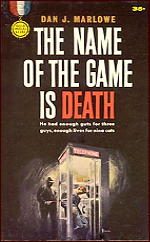
DAN J. MARLOWE – The Name of the Game Is Death. Gold Medal s1184, paperback original, January 1962. Fawcett Gold Medal T2663, paperback, revised edition, January 1973.

   The Name of the Game Is Death is Dan J. Marlowe’s best book, which means that it’s just about as good as original paperback writing can get. It’s hard, fast, tough, and terse, with an opening scene so strong that you’ll wonder if Marlowe can possibly come up with an ending to top it. But he does, and it’s good enough to jolt you out of your chair.

DAN J. MARLOWE The Name of the Game Is Death

   Marlowe’s narrator, Earl Drake, is a bank robber and a cold-blooded killer — they don’t come any colder — who works part-time as a tree surgeon. He hates most people and loves animals.

   When he’s wounded in a robbery in Phoenix, he sends his partner on ahead with the money and instructions to mail some of it to him each week. At first the money arrives on schedule; then it doesn’t. Recovered, Drake starts for Florida to find out why. Not everyone between Arizona and Florida lives until Drake finishes his trip.

   In Florida, Drake gets work as a tree surgeon, makes friends with several of the locals, and even appears to be falling in love. But always in the back of his mind is his desire to find his money and his partner. He does, shortly before the (literally) explosive climax.

   Drake’s story is strong stuff, and it moves with the speed of a bullet from his Colt Woodsman. Take a deep breath when you plunge into the story; you might not have time for another before it’s finished.

    Warning:   Earl Drake was eventually turned into a series character, a sort of secret agent. As a result, in 1972 Fawcett issued a revised edition of The Name of the Game Is Death in which Drake was made a bit more socially acceptable. Find and read the original if possible.

   Equally exciting books by Marlowe are The Vengeance Man (1966) and Four for the Money (1966).

         ———
   Reprinted with permission from 1001 Midnights, edited by Bill Pronzini & Marcia Muller and published by The Battered Silicon Dispatch Box, 2007.   Copyright © 1986, 2007 by the Pronzini-Muller Family Trust.

          Earlier on this blog:

   The Vengeance Man, reviewed by Noel Nickol.

   And a long look at the differences between the two editions of The Name of the Game Is Death can be found here.

« Previous PageNext Page »