Reviews


BARBARA ALLAN Antique Roadkill

REVIEWED BY WALTER ALBERT:         


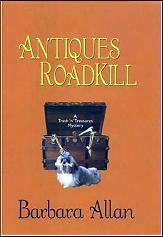
BARBARA ALLAN – Antiques Roadkill. “A Trash ‘n’ Treasures Mystery.” Kensington Books, hardcover, August 2006. Paperback reprint: July 2007.

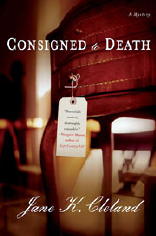
JANE K. CLELAND – Consigned to Death. St. Martin’s, hardcover, April 2006. Paperback reprint: April 2007.

   I was bored with the pseudonymous Barbara Allan novel, apparently produced by the husband-and-wife team of Max Allan and Barbara Collins. The characters were pasteboard and the plot was so vaporous that even reading the copy on the back jacket didn’t bring any of it back to me. But what do I know?

JANE CLELANDConsigned to Death, Cleland’s debut for antiques dealer Josie Prescott.

   Cleland has a background in both antiques and rare books, and her New Hampshire coastal setting, with well-drawn characters and an intriguing mystery plot, have me looking forward to a second outing, Deadly Appraisal, previewed in a supplement to Consigned.

A Review by MIKE TOONEY:


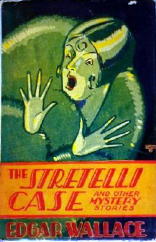
EDGAR WALLACE – The Stretelli Case and Other Mystery Stories. International Fiction Library / World Syndicate, hardcover, 1930.

EDGAR WALLACE Stretelli Case

   Edgar Wallace (1875-1932) was a publishing phenomenon in his day, his name being synonymous with the word “thriller,” a genre some would credit him with inventing.

   Wallace was incredibly prolific; he belongs to that group of logorrheic authors — Erle Stanley Gardner, John Creasey, Charles Dickens, and a few others — who wrote books like their hair was on fire. One would naturally expect a lowering in quality with an increase in quantity (it seems to be a natural law), but we’ll leave that judgment to others who have waded through most, if not all, of Wallace’s output.

   The Stretelli Case seems to be a brief sampling of his work taken from other collections, consisting of eleven short stories loosely classified as “mysteries.” While thriller elements are certainly present in most of them, the stories, with one exception, are indeed mysteries of one sort or another (the exception being “The Know-How”).

   Several stories feature detectives per se; most of them have people under pressure who must decipher baffling situations in order to correct deformations in the social fabric — or just to save their imperiled lives or reputations.

   The dates and places of first publication for these stories are nowhere in the book. (Sources for some are included in Hubin and will be noted here.)

         CONTENTS:

EDGAR WALLACE Stretelli Case

   ● 1. “The Stretelli Case.” [Reprinted in The Thriller #286, 28, July 1934.] Detective-Inspector Mackenzie’s last case provokes in him that “unquenchable antagonism between his sense of duty, his sense of justice, and his grim sense of humor.” Dr. Mona Stretelli of Madrid comes to him, convinced that Margaret, her sister, has been murdered by her husband, Mr. Morstels.

   Margaret, however, had a bad reputation with the authorities, since she “belonged to the bobbed-hair set that had its meeting place in a Soho restaurant. She was known to be an associate of questionable people; there was talk of cocaine traffic in which she played an exciting but unprofitable part,” and so on. Imagine Mackenzie’s surprise, then, when Mona does a complete about face and announces her intention to marry Morstels; and of what significance is it when Mona purchases a paste ring once owned by Marie Antoinette?

   Be prepared for a plot twist near the end.

   ● 2. “The Looker and the Leaper.” Is it always true “that the ultra-clever father has a fool for a son”? Dick Magnus and Steven Martingale, both scions of wealthy business magnates, wooed Thelma — “cold and sweet, independent and helpless, clever and vapid”–and “To everybody’s surprise, she married Dick.”

   Perhaps one could write it off to hormones, those “little X’s in your circulatory system which inflict upon an unsuspecting and innocent baby such calamities as his uncle’s nose, his father’s temper, and Cousin Minnie’s unwholesome craving for Chopin and bobbed hair.”

   By story’s end, we are left with a conundrum: Did the leaper fail to look before the looker made his leap, or was it all just a horrible accident?

   ● 3. “The Man Who Never Lost.” [Town Topics, 27 December 1919; reprinted in The Thriller #290, 25 August 1934.] Aubrey Twyford, The Man Who Could Not Lose, has won over 700,000 pounds in ten years at Monte Carlo’s gambling casinos; but when Bobby Gardner decides to go for broke and try to win enough to marry Madge Brane, will Twyford divulge his unbeatable system and thus guarantee his own loss?

EDGAR WALLACE Stretelli Case

   ● 4. “The Clue of Monday’s Settling.” Five million pounds’ worth of British, French, and Italian notes go missing from a strong-room on a trans-Atlantic ocean liner, and John Antrim and his daughter May face certain financial ruin; also missing are six towels, a fact of consuming interest to Bennett Audain, who “certainly understood the psychology of the criminal mind better than any police officer that ever came from Scotland Yard–an institution which has produced a thousand capable men, but never a genius.”

   For him, a word association test clinches it: If you heard the word “key,” would you think “wind”; and if the word was “Monday,” would you think “unpleasant”?

   ● 5. “Code No. 2.” [The Strand, April 1916.] It’s spy-versus-spy on the eve of World War One: Sir John Grandor, Chief of Intelligence, has his doubts about one of his own people; even though the one he suspects is killed, it still remains for a smart female agent to thwart a plan to transmit the stolen code to the Central Powers.

   (The code-stealing gadget, by the way, is remarkably high-tech and seems straight out of a James Bond movie.)

   ● 6. “The Mediaeval Mind.” [Reprinted in The Thriller #291, 1 September 1934.] Jean D’Orton, half-sister to the D’Orton brothers, is very, very rich and anxious to marry Jack Mortimer; the fact is, however, she doesn’t come into her fortune until she is twenty-five or gets married. In the meantime, her half-brothers have been, shall we say, improvident with her money, and the prospect of Jean’s wedding has dire implications for them: “It means,” says one, “penal servitude for all of us.”

   What to do. Well, how about shanghaiing Jack and forcing Jean to marry an escaped convict; that always works, doesn’t it? The biters get very decisively bit in this one.

EDGAR WALLACE Stretelli Case

   ● 7. “The Know-How.” Storm and stress in the production of a musical play, one in which no one, not even the producer, has any confidence. A Cinderella story for the understudy, but a mystery story this is not.

   ● 8. “Christmas Eve at the China Dog.” The paths of old war buddies intersect when Walter Merrick approaches air taxi pilot Tam M’Tavish, offering him five hundred pounds to help him perform a despicable act vis-a-vis another man’s wife; then comes that fateful evening in Paris at the “Chien de Chine,” and Tam quite unwittingly lays the foundation for a perfect alibi.

   ● 9. “The Undisclosed Client.” [Hearst’s Magazine, July 1926.] Lester Cheyne is a lawyer whose success lies, shall we say, outside the normal channels of the law; putting pressure on wealthy people for their indiscretions is his stock in trade, and everything is humming along nicely until he encounters the Girl in the Brown Coat….

   ● 10. “Red Beard.” [Colliers 24 May 1919.] A spy is murdered in his flat, yet he is clearly overheard telling his assailant that he’s glad his own gun jammed; Brinkhorn and Templey investigate on behalf of the Department.

   By the time they’re finished, Templey will have connected the disparate dots of the spy executed in the Tower of London, a disappearing index card, a ship sinking in the Irish Sea, a colored birth-mark on a child’s leg, bread passed and wine poured with the left hand, and his partner’s resignation from the Department.

   ● 11. “The Man Who Killed Himself.” [The Royal Magazine, February 1920.] For seventeen years Preston Somerville has been blackmailed by a nonentity named Templar; but when the latter drags Somerville’s daughter into the glare of hostile publicity, Preston is moved to desperation, his actions taking him through the valley of the shadow…..

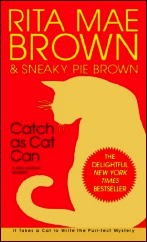
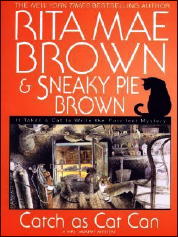
RITA MAE BROWN & SNEAKY PIE BROWN – Catch As Cat Can.

Bantam; paperback reprint, Feb 2003. Hardcover edition: March 2002.

RITA MAE BROWN Catch As Catch Can

   Yes, Virginia, there really is a Crozet. In Virginia, that is, a small town of about 2000 inhabitants (not including cats), snugly nestled into the foothills of the Blue Ridge Montains. And the home of Mary Minor Haristeen, known to her friends as Harry, the postmistress of Crozet, and the Mom to Mrs. Murphy and Pewter (both cats) and Tee Tucker (a corgi).

   That the Mrs. Murphy mysteries are popular almost goes without saying, as this is the 10th in the series, but on the other hand, I am also positive that there are many many mystery readers who would never never read a mystery that has talking animals in them.

   To each other, that is, not to humans, who are ever a source of humor and resignation to them. Not to mention food.

   From page 3: “‘I’m standing vigil at the food bowl.’ Pewter zipped to the kitchen.” And here’s a typical cat way of expressing herself, from page 35: “Mrs. Murphy strode into the room, sat down on the coffee table, and yelled, ‘Everybody is horrible! Only I am perfect!'” Animals — and I never knew this before — are very blunt observers of the humans around them. Read page 144 and be convinced.

   And Harry’s three companions — Harry once was married, but her ex is still friendly, and wants to be friendlier again, but she is not sure — do their best to assist in solving the mysteries involved in their books, but being unable to communicate with Harry in any useful manner, they are forced, alas, to allow her to muddle along without them.

RITA MAE BROWN Catch As Catch Can

   In Catch As Cat Can, it takes 80 pages for the first death to occur — before that the only crime that occurs is a case of the stolen hupcaps — and the atmosphere is so low key that even then no one’s aware that murder has actually happened.

   Rita Mae Brown is a well-known writer of Southern fiction, and she has the details of life in small town Crozet delineated perfectly, social structure and all, down to the finest details, but as a mystery writer, she’s a long way from being this generation’s Agatha Christie.

   The investigation carried out by the local sheriff’s office is certainly up to any large city’s standard, but it’s still largely underwhelming and uninspired. There are heaps and heaps of speculation, most of it wrong, and no one asks the right question at the right time. And although there’s a great big huge Wrecker’s Ball of a finale, the solution is both (a) strictly from left field, and (b) simply too easy.

   Harry, the two cats, the corgi, and all of her friends (and ex-husband) are certainly great people to sit down and visit with vicariously, though, and if you find yourself hooked, you’ll probably want to come back again and again.

— March 2003


[UPDATE] 05-17-09.   I wouldn’t mind reading another in the series, but while I’ve had the chance, several times over, so far I haven’t. Others have taken up the slack, though. Since I wrote this review, only six years ago, another seven Mrs. Murphy books have been published.

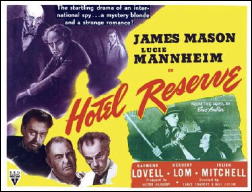
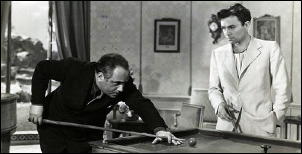
HOTEL RESERVE. RKO Radio Pictures-UK, 1944. James Mason, Lucie Mannheim, Julien Mitchell, Herbert Lom, Clare Hamilton, Frederick Valk, Raymond Lovell, Patricia Medina. Based on the novel Epitaph for a Spy by Eric Ambler. Directors: Lance Comfort, Max Greene (Mutz Greenbaum), Victor Hanbury.

HOTEL RESERVE James Mason

    There must be a well-known rule of thumb, something like Murphy’s Law except that I don’t know the name, that when a movie has three directors, it’s not very good. While there are some good moments in Hotel Reserve, it’s no exception to prove the rule.

    I don’t think it was the author’s fault. Back in the 1950s when I first started reading “grown-up” mysteries, Eric Ambler was one of my favorite authors. His spy novels written in the 1940s were wonderfully descriptive and intense, filled with ordinary citizens getting into the most intricate plots — and all the better, finding their way out.

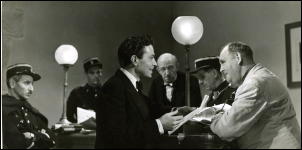
    I’ll have to re-read them sometime. Perhaps they won’t hold up or match my memories, but I think they will. In Hotel Reserve it is a man named Peter Vadassy (James Mason), an intense medical student who’s half-Austrian and half-French and anxiously awaiting his French naturalization papers, who gets into trouble during a short vacation at a French seaside resort, circa 1939.

HOTEL RESERVE James Mason

    It seems that someone accidentally used his camera to take some photographs of a defense installation, and the police, particularly intelligence chief Michel Beghin (Julien Mitchell) are not amused. Although he knows Vadassy to be innocent, he sends him back to the hotel to find the real culprit, under the threat of deportation if he fails.

    The set-up is fine. This had all the signs of a pretty good amateur detective story, but what follows instead is a mish-mash of comedy and inept B-movie clunks on the head and angry confrontations.

    The other vacationers are difficult to keep track of — who’s who and why they’re there — even Vadassy’s would-be girl friend, Mary Skelton (Clare Hamilton).

HOTEL RESERVE James Mason

   That the latter is surprisingly wooden in both attitude and delivery is explained by the fact that this is the only movie she ever made. (It is claimed by several sources that Clare Hamilton was the sister of Maureen O’Hara; at least one person leaving comments on IMDB is not so sure.)

    If you read through the list of the cast that I provided above — I didn’t list them all, as most of them have very small parts — and assuming that you recognize some of the names, you may pick out the true culprit(s) rather easily.

    James Mason, alas, didn’t have that luxury. He does well in the part, frightfully earnest to the end, but he’s undone by an indifferent script, a ludicrous ending, and three directors, none of whom can be compared to, say, a certain Mr Hitchcock, except badly.

REVIEWED BY WALTER ALBERT:         


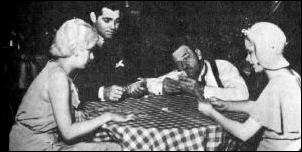
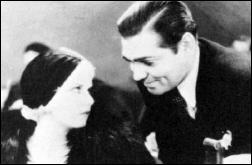
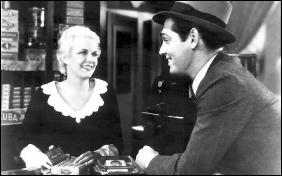
THE SECRET SIX. MGM, 1931. Wallace Beery, Clark Gable, Lewis Stone, Jean Harlow, Ralph Bellamy, Marjorie Rambeau, Johnny Mack Brown. Screenwriter: Frances Marion (later the author of a novelized edition). Director: George W. Hill.

THE SECRET SIX Clark Gable, Jean Harlow

    I stumbled onto the last half of this crime film in Paris, while I was checking channels to find something other than the French-dubbed American TV series that seem to dominate French television.

    The film was shown in the original English-language version and featured an impressive cast, as enumerated above, including Johnny Mack Brown in a non-Western role.

THE SECRET SIX Clark Gable, Jean Harlow

    Beery and Stone form an unlikely pair as a crime Syndicate ganglord and a crooked lawyer opposed by a masked group of concerned citizens. Harlow is the good/bad girl, and Gable the undercover agent working to dethrone Beery and expose Stone.

    Pre-classic-period MGM films don’t turn up on American TV these days, and it was a pleasure to see even part of this skillful thriller by another director previously unknown to me.

– From The MYSTERY FANcier, Vol. 10, No. 3, Summer 1988, slightly revised.


[EDITORIAL COMMENT.]   This was written, of course, before Turner Classic Movies came along. The Dark Ages are over, and movies of the same era as The Secret Six can be seen on TV several times a week. Nor are films with stars such as this one obscure any longer, even if the stars weren’t stars at the time. With both Gable and Harlow in the film, it’s easy to find stills taken from it to go along with reviews like this one.

    Here’s another:

THE SECRET SIX Clark Gable, Jean Harlow

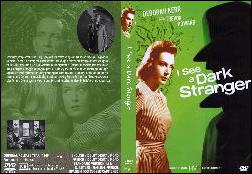
I SEE A DARK STRANGER. Individual Pictures/General Films, 1946. US title: The Adventuress. Deborah Kerr, Trevor Howard, Raymond Huntley, Norman Shelley, Garry Marsh, Tom Macaulay. Director: Frank Launder.

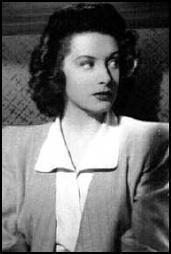
   This one was an eye-opener, I’ll tell you that first. In spite of From Here to Eternity, I’d always thought of Deborah Kerr as being the epitome of the pleasant matronly type, even when she was too young to be a matronly type. But when she herself was young, she was a shy but determined spitfire, or at least she could play one, as her role in I See a Dark Stranger most definitely shows.

I SEE A DARK STRANGER Deborah Kerr

   And in spite of being Scottish by birth, she could also play a young unsophisticated Irish lass so filled with hatred toward the British that when she was 21, she could travel alone to Dublin from her small village and ask to be signed up to fight them — not realizing that during World War II, Ireland was not exactly fighting the British.

   You noticed the qualification in that last sentence, I’m sure. To appreciate this movie more, you’d have to know that in World War II Ireland was officially neutral, and the Nazis had somewhat realistic hopes of using the enmity between the two countries to their own ends. (See my review of The Private Wound by Nicholas Blake for a mystery novel that also uses this small but hardly insignificant bit of history as its backdrop.)

   Turned down by an old comrade of her father’s in the continuance of her cause, Bridie Quilty turns to a German spy named Miller, played by Raymond Huntley with much worldly panache and aplomb, the cigarette in his mouth bobbing up and down in his mouth as he speaks as if it were alive and trying to escape.

   Fatally attracted to her, however, is Lt. David Baynes (Trevor Howard), who follows her clear across England and back to Ireland, hoping to (first of all) discover why she is acting so strangely — having to dispose of a dead body in the middle of the night will do that for a girl — and then try to extricate her from the troubles she finds herself up to her pretty neck in.

   Back when there was a long discussion on this blog about the definition of noir when it comes to films or books, a question was asked whether there was a satisfactory combination of noir with screwball comedy in the same movie. The Big Clock comes close (reviewed here), but here is another one.

I SEE A DARK STRANGER Deborah Kerr

   Or at least it is if two conditions are satisfied. First of all, that there are sufficient dark and sinister elements in this film that it could be actually be called noir. It’s currently described that way on many blogs, including Steve-O’s Noir of the Week blog, but I’m not so sure. It’s borderline at best — nor do I think the comedy is of the screwball variety.

   And this is where the movie went off the tracks, as far as I was concerned. The ending is pure slapstick, with pratfalls into a bathtub the highlight of all of the happy hijinks of the final reel. Till then, though, up to the point where both Bridie and Lt. Baynes are captured by German agents, it’s an exciting tale of espionage laced with humor, with the latter emphasized by Bridie’s complete wide-eyed seriousness. She’s determined to fight the British, and nothing will stop her.

   Strangely enough, she doesn’t have red hair. It’s brown, and she’s young and naive, and she has blue eyes, and if nothing else, she’s a sight for sore eyes, that is for sure. The large ensemble of British movie actors and actresses behind her, a stalwart group indeed, only adds in making this a very entertaining film, noir or no. (And make that whether the ending matches the rest of the film, or not.)

WILLIAM G. TAPPLY – The Vulgar Boatman. Ballantine, paperback reprint; 1st printing, September 1989. Hardcover edition: Charles Scribner’s Sons, 1987.

WILLIAM G. TAPPLY The Vulgar Boatman

   This is the sixth of William Tapply’s series of Brady Coyne adventures, a series that last year reached 24 in number, which is a fairly spectacular record, nor do I think he (or either of them) is going to being retiring soon. Reviewed previously on this blog have been Cutter’s Run (1998) by me, and The Dutch Blue Error (1984), a 1001 Midnights review by Kate Mattes.

   Part of Tapply’s success as an author is a smooth writing style that’s just as adept in descriptive passages – sights and sounds in and around the Boston area – as it is in dialogue, which as real as it gets without having a tape recorder in your pocket.

   People come to life immediately in Tapply’s hands, in other words, in just a few broad strokes at first, then some much more finely drawn ones. The way they talk and act is a great part of what makes the Brady Coyne books so entertaining and read so quickly.

   In The Vulgar Boatman, Coyne is hired by a good friend who happens to be running for governor, and whose son is missing after the son’s girl friend has been found murdered. This is not good news for Tom Baron’s gubernatorial aspirations, of course. Coyne, not wishing to get drawn into politics, agrees to help, but only on a personal basis.

WILLIAM G. TAPPLY The Vulgar Boatman

   Both Tom’s son and the girl friend were high school students, and the easy availability of drugs, even in a small suburban town, and crack in particular, soon becomes part of the case.

   I do not use the latter word to suggest that this is a detective novel, however. This is a crime novel, it’s a thriller, but a work of detective fiction, it’s not. While there are clues to follow up on, detective work is not in Brady Coyne’s arsenal of expertise.

   He blunders along and stirs things up, gets into trouble himself (from several quarters) and before you know it, the book is over, more or less happily. There are, however, three separate points in the story where Coyne fails as a detective. Well, let’s call the first instance a D Minus, but the other two are F’s for sure.

   I’d enumerate them in detail, but I’d have to reveal too much for the purposes of a mere review. I’d also be criticizing the book for what I’d want it to be, and not necessarily for the author’s failed intentions. Nor am I suggesting that you not read the book, as I enjoyed it anyway, and I think you might very well do so too.

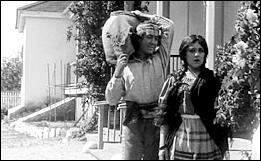
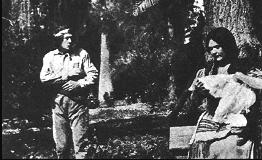
RAMONA. Biograph, 1910. Mary Pickford, Henry B. Walthall, Francis J. Grandon, Kate Bruce, W. Chrystie Miller. Based on the novel by Helen Hunt Jackson. Director: D.W. Griffith.

RAMONA Mary Pickford

   If cutting Crime and Punishment down to a 90 minute movie was a considerable feat, as discussed briefly here, a few posts back, then how about a 200 to 300 page novel that’s trimmed down to a very quick 17 minutes?

    It can’t be done, but it was, and the result is about as good (or bad) as you might expect.

   Starting with the positive, the photography is quite remarkable. But there are no dialogue cards, only brief statements of what the next scene is to display, and in the two reels, there’s only enough time to get the gist of things, no more.

RAMONA Mary Pickford

   Subtitled “The Story of the White Man’s Injustice to the Indian,” a Spanish girl in California (Mary Pickford) marries an Indian (Henry B. Walthall), they have a child, and as the subtitle suggests, they do not live happily ever after. The gun-toting white settlers who keep moving the small family on do not come off at all well in this movie.

   This movie is to be watched for its historical significance, and — unless you tell me otherwise — for little other reason. Thankfully it still exists to be watched today, nearly 100 years later.

THE GOLDEN AGE OF BRITISH MYSTERY FICTION, PART VI
Reviews by Allen J. Hubin.


   British author John Arnold perpetrated five mystery novels during the golden age of the detective story, but The London Bridge Mystery (Jenkins, 1932) is not detection at all. It’s a thriller, almost from end to end a chase story – on foot, by car, by motorcycle, in the water, instalment after instalment.

   There’s very little credibility in any of it, but it is possible to get caught up in the continuous action. David Royle, an innocent accountant, is taking the underground home one evening when a girl, pursued by “toughs,” gives him a cloakroom ticket, whispers an assignation, and bolts. The toughs turn their malevolent attentions on our hero, who also takes to his heels.

   Various comic and perilous episodes ensue as several groups seek the booty (fabulously valuable Chinese statuettes stolen from the British Museum). At length Royle finds someone who believes his story (an attractive and unattached young woman, would you believe?), and together they scramble for a way out of the maze, with Scotland Yard also at their heels.

***

   Elliot Bailey, a 1930s British author never published here, wrote several novels featuring Detective Inspector Geoffrey Fraser of New Scotland Yard.

   The second of these, following Death in Quiet Places, is No Crime So Great (Eldon, 1936). Here we find him wedded to Mary, whom he rescued from a killer’s clutches in the first book, and attending to a curious series of murders. Someone is taking deadly offense to England’s athletic heroes: one by one they are shot, just as the light of public acclamation shines most brightly.

   They all seem without personal enemies; what twisted motive could be at work? Fraser fastens his eye on a lame newsman who seems always nearby when bodies are produced, but there are other possibilities… No Crime is typical stuff of its day, satisfactorily readable but not outstanding in narrative style or plot or unexpectedness of denouement.

***

   They don’t come much more obscure than The Glory Box Mystery (Angus & Robertson, 1937) by G. W. Wicking. Aside from the obscurity of the author (apparently an Australian, who did indeed write other books), what’s a glory box?

   It proves to be a dower chest. I gather a dower is a widow’s life portion of her husband’s lands and tenements. There’s some irony in this, for when a clerk shows the box to a prospective purchaser in Melbourne’s Home Furnishers Emporium, it contains the corpse of one of the owners.

   Enter detective Dick Greenwood of the Criminal Investigation Branch. What follows is a fairly routine affair, with gradual revelation of the murderer and a final resolution that’s a bit surprising for the 1930s.

FRANK G. PRESNELL – No Mourners Present.

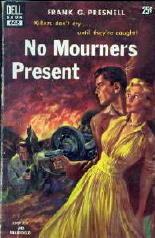
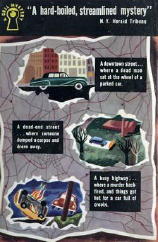
Dell 646, paperback reprint; no date stated, but circa 1953. (Cover by Robert Stanley.) Hardcover edition: William Morrow & Co., 1940.
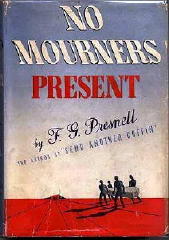
FRANK G. PRESNELL No Mourners Present

   The jacket of the hardcover edition suggests that the book may have been published as by “F. G. Presnell,” but any final judgment on that would have to wait until the title page has been examined, the final and only arbitrator on matters of bibliographic importance such as this.

   Looking for more information about Mr. Presnell (1906-1967), I’ve not found anything on the Internet that either discusses him or his three mysteries in any way that’s significant. At the moment, all I can tell you about him personally is what Al Hubin says in Crime Fiction IV:

    “Born in Mexico; educated at Antioch College and Ohio State Univ.; designer and engineer; lived in Ohio for 40 years, then in Los Angeles.”

   Which is a start, but what it doesn’t say is why Mr. Presnell wrote two good books in 1939 and 1940, both with high-powered (and hard-boiled) practicing attorney John Webb, but then not another novel until 1951, and alas, Webb is not in it.

   For the record, here is a list of Presnell’s only contributions to the world of crime fiction:

      Send Another Coffin. Morrow, hc, 1939. Detective Book Magazine, Winter 1939-40. Handi-Book #39, pb, 1945.

      No Mourners Present. Morrow, hc, 1940. Dell 646, pb, 1953.

      Too Hot to Handle. M. S. Mill / Morrow, hc, 1951. Dell 593, pb, 1952.

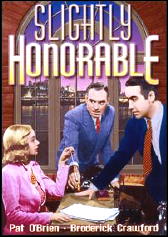
   I had not known until I looked it up, but a movie was made of Send Another Coffin, one I’ve never seen, but I believe I shall have to purchase it. The title of the movie is Slightly Dishonorable (United Artists, 1940), and besides Pat O’Brien and Ruth Terry, whom you see below, as the two leading characters – I’ll get to that in the next paragraph – Edward Arnold and Broderick Crawford are also in the film, big names both.
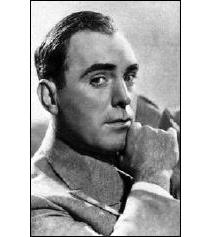

FRANK G. PRESNELL No Mourners Present              
FRANK G. PRESNELL No Mourners Present

   These photos were taken at different times, and neither time may coincide with the movie, but they will give you an idea at least of what Hollywood thought the characters looked like. (Since I was reading the Dell paperback, you can tell what I thought they looked like, when I was reading it. The scene on the cover, which you’ll see somewhere below, is in the book.)

   In the movie, Ruth Terry is credited only as “Night Club Singer,” but in the book she has a name: Anne Seymour. In the followup book, the one at hand, she has a brand new name, that of Anne Webb. A substantial part of No Mourners Present is the mystery novel, of course – and I’ll get to that in moment too – but another significant portion of it, one mixed up one with the other, concerns the domestic life of the two newlyweds.

   As it happens, the tough attorney John Webb is deeply in love with his wife. That much is apparent right away. He also seems to wonder how it is that he is so lucky to have her in love with him. Her background as a singer seems to be a concern to him as well: how well will she fit in with the wealthy set that he sometimes hangs around with?
FRANK G. PRESNELL No Mourners Present

   Without revealing too much, I think Anne Webb is smarter in many ways than he thinks she is, and that she can hold her own in his world very well indeed, and maybe even better. John has nothing to worry about in that regard.

   Of course there is no way of knowing. Two books with the Webbs, and that was all there were. As for Mr. Presnell, perhaps we must assume that the war intervened, and life and a family and earning a living.

   The town in which John Webb as an attorney also has considerable political clout is not named, I don’t believe, and since Hubin doesn’t suggest a setting (I just checked) neither do I believe it is a matter of my missing it.

   With very few preliminaries, the mystery gets into action right away, with Jake Barman’s murder taking place on page 15, one page after Webb very nearly slugs a radio news commentator for a remark he makes about Anne. Anne takes him to task reproachfully afterward. “Listen,” she says. “You’ve got to stop hitting people.”
FRANK G. PRESNELL No Mourners Present

   This fellow Barman is a partner in a building firm, or he was, and he also had ambitions of being elected governor. He is on the outs with his wife, however, which is a liability, especially since everyone knows that Julie Gilson, his secretary, is also his mistress. She’s also the leading suspect as well, especially after she disappears completely from sight after Barman’s death.

   Without a client, Webb is only incidentally involved until Julie’s brother comes to town are hires him to help protect her name. Once hired, Webb goes immediately into Perry Mason mode. See page 40, and you will see exactly what I mean.

   If you’re only in your 30s or 40s, it may not realize it – it’s probably too long ago – but in 1940 if your company bucked either the gangs or the unions, people were maimed for life. This is the sort of thing that gets Webb’s blood boiling as well. Here’s a long quote from page 45. He’s talking to the man he’s working for in charge of operations at a chain of cleaning establishments.

    “… In the second place, even if I didn’t give a good Goddamn whether Acme ever makes another nickel or not, I’ve got a front to keep up. Why do you think people pay me fancy prices to do things for them? Because they think I’m going to lie down and let myself be walked on? Like hell they do! They hire me because they know they’ll get grade-A effort, anyhow. And how come I usually give them results besides? Because the other side knows they’ll sweat for anything they get. […] If anybody from this damn cleaning-and-dyeing-trades racket comes around here, you tell ’em to talk to me.”
FRANK G. PRESNELL No Mourners Present

   I mentioned Perry Mason a short while back. Perry was tough in his early days, but not as tough as John Webb. Here is a portions of his thoughts, his philosophy of action, you might say, taken from page 61:

   Cabash was tough and vicious, but he wasn’t smart. He’d start trying to bluff us, and when he did, it was up to me to give him a chance to do nothing but wonder what hit him. I didn’t know how I was going to work it, but you can always figure out ways if you’re willing to use them.

   As a word of warning, the book is a little too talky to be this tough all the way through, but when it is, it is. It earns high points as a detective novel as well, or at least it did with me, with plenty of twists and turns in the plot to keep Webb’s brain (and mine) working in as finely-tuned a fashion as his brawn.

   The solution is not nearly as finely worked out as one of Perry Mason’s, though, containing as it does one small gap I haven’t quite yet figured out.

   Nonetheless, even if the mystery itself is not a classic that anyone will remember for very long, if there’s any in mourning at the moment, it’s me, wishing that there were a next one to read, and as much for the characters, I would advise you, as for anything else. Sadly to say, one more time, there wasn’t a next one to read at the time, and there isn’t now.
— March 2006

« Previous PageNext Page »