Characters


THE BACKWARD REVIEWER
William F. Deeck


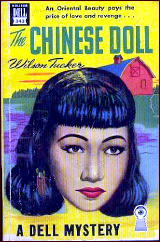
WILSON TUCKER – The Chinese Doll. Rinehart, hardcover, 1946. Detective Book Club, hardcover, 3-in-1 edition, May 1947. Dell #343, mapback edition, 1949.

WILSON TUCKER The Chinese Doll

   While you might think that a private detective in Boone, Illinois, would be underemployed, you would be right. In this documentary novel — in the form of letters from Charles Horne to Louise, the woman he is in love with — Horne is in his office trying to keep warm and working on his book, Lost Atlantis, of which seven chapters have been completed.

   Into the office comes Harry W. Evans, who gives Horne $500 to bail him out of jail since he claims he will inevitably be arrested for spitting on the sidewalk, or jaywalking, or shoplifting, or whatever.

   Naturally, Home is somewhat nonplussed, for the authorities in Boone are not noted for monkey business. To coin a phrase — or is it a clause? — little does he know. Evans leaves Home’s office, and as Horne is watching, a Studebaker sedan with supercharger strikes Evans, killing him, and then speeds off. Later Horne is invited into another Studebaker with supercharger, this time a coupe, driven by a beautiful Chinese girl, and ends up at an illegal gambling club.

   All of this and another “accidental” death tie in with Evans. Horne doggedly and intelligently — though not brilliantly — investigates, getting some idea of who Evans was through Evans’s membership in an amateur publishing association and discovering another beautiful Chinese girl.

   Even after he’d metaphorically rubbed my nose in it, Tucker fooled me on the villain, for which I give him great credit. The novel is well-written, amusing, and believable, up to the point of revealing the villain.

   While I probably won’t make myself clear here, I accept that the villain was who Tucker says it was — the facts, once Horne pointed them out, prove it — but I don’t accept that the villain was who Tucker says it was. You’ll have to read the book to see what I mean, and you ought to read it anyhow, for it’s an excellent private-eye novel.

— From The MYSTERY FANcier, Vol. 13, No. 4, Fall 1992.

   
NOTE:   Wilson “Bob” Tucker, was much more well known as a Science Fiction fan and author than he was a mystery writer. His entry on Wikipedia can be found here.

       The Charles Horne series:

The Chinese Doll.Rinehart, 1946.
To Keep or Kill. Rinehart, 1947.
The Dove. Rinehart, 1948.
The Stalking Man. Rinehart, 1949.
Red Herring. Rinehart, 1951.

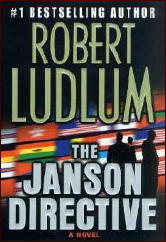
ROBERT LUDLUM – The Janson Directive. St. Martin’s, hardcover, October 2002; paperback, October 2003.

ROBERT LUDLUM The Janson Directive

   I don’t know about you, but the few of Robert Ludlum’s books I’ve read have always kept me reading. And with this particular one checking in at 680 pages in paperback, reading and reading and reading. I can’t do that in one night any longer, no matter what, and I don’t think anybody can.

   Plot: An ex-Vietnamese War prisoner named Alex Janson, now a super-whiz corporate security consultant, is hired to free a wealthy philanthropist Peter Novak from a group of terrorists. Novak’s billions of dollars have been used many times over to promote democracy and peace around the world, and Janson is the only one who can save him.

   Which, after several nerve-shattering incidents, including a free-fall parachute drop from four miles up, he does. This is on page 140. With 540 pages to go. What next? You should only ask.

   Janson finds that he only a pawn, if you’ll forgive the cliché, in an even greater conspiracy, one designed to simply knock your socks off. Ludlum demonstrates such a worldliness in his characters, and leans so heavily on a world of esoteric knowledge that seemingly comes natural to him, that an everyday, ordinary sort of person such as you and I can only sit back in awe.

   Well, I can vouch for me.

   There are flaws, though. Janson is all but perfect, but his shield of invincibility only goes so far. It just isn’t large enough to include all of the people who give him aid and assistance, to put it mildly. They’re on their own. Given a chance to second guess themselves, they might well opt out of this book, given the opportunity. Nor is Ludlum averse to dragging out the clichés himself, as the occasion arises.

   All in all, at $7.99 list price for the paperback, you certainly get your money’s worth. If in the end you start to reflect on the fact that the tale that’s told is no deeper than your standard super-hero comic book, that’s the only drawback that might trigger some regret, and it will quickly pass.

— October 2003


[UPDATE] 10-13-12.   According to at least one online source, following the success of the Bourne movie, The Janson Directive is also being converted to the big screen. It ought to be a good one.

       The Paul Janson series —

The Janson Directive (2002)
The Janson Command (2011) (with Paul Garrison)
The Janson Dilemma (2014)

THE SERIES CHARACTERS FROM
DETECTIVE FICTION WEEKLY
by Monte Herridge


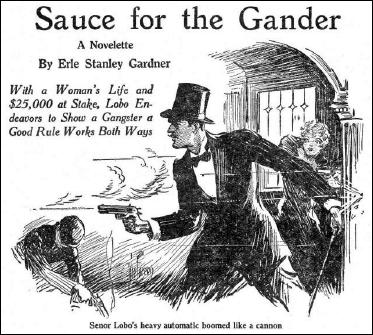
        #15. Senor Arnaz de Lobo, Soldier of Fortune, by Erle Stanley Gardner.
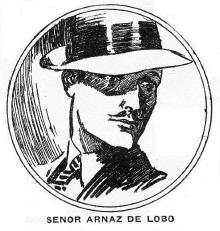
SENOR ARNAZ DE LOBO

    Senor Arnaz de Lobo … announces himself bored with life… But Senor Lobo makes no secret of his dissatisfaction. The world, he claims, has become too civilized to offer adventure. (The Choice of Weapons)

   Erle Stanley Gardner (1889-1970) is probably best known for his long-running series about the always victorious lawyer, Perry Mason, but he also had hundreds of exciting stories in the pulps. Many of these appeared in Detective Fiction Weekly, where he had multiple series running: Senor Arnaz de Lobo, Sidney Zoom, Lester Leith, the Patent Leather Kid, The Man in the Silver Mask, and other standalone stories that could have been turned into series. The Lester Leith series seems to have been the most popular in the magazine, but the other series were popular as well.

   The Senor Lobo stories are fun, action-packed stories that were nothing like the other detective and mystery stories in the magazine. Senor Lobo and his friend, El Mono Viejo, are basically soldiers of fortune thrown into the midst of a city where they continually find adventure and danger.

   Lobo is like a knight errant, always ready to jump to the defense of a lady in danger or to right a wrong. Of course, the adventurers don’t turn down any money that comes their way, and many a criminal finds himself divested of his cash after running into them. Here is a paragraph from the beginning of one their adventures that describes Lobo:
SENOR ARNAZ DE LOBO

   To appreciate the character of Senor Arnaz de Lobo, revolutionist, soldier of fortune, and gang buster, it must be remembered that he was hard. Governments are not overthrown, even in South and Central America, save by courage, valor, and a certain ability to capitalize circumstances. (A Matter of Impulse)

   His physical description is given early in the series:

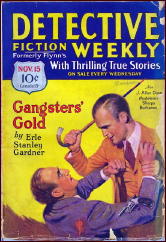
   Standing in the doorway was six feet of lean, whip-corded strength, bronzed by tropic suns. Dark eyes surveyed them in scornful appraisal. He was attired in a natty spring suit. In his right hand he carried a light cane. The left hand held the hat… (Gangsters’ Gold)

   He reveals that he is only part Spanish — his mother was Spanish and his father American, and he himself is an American citizen. This brings the question as to whether his name had been changed or was originally Lobo. He can speak not only English and Spanish but also French and Chinese. He fought in Central and South America and also in China and Africa.

   Events from the past are often alluded to in the course of their American adventures. El Mono Viejo’s real name is not given in the series, just his nickname and description: “which means ‘The Boss Ape,’ short, abnormally broad of shoulder and long of arm, his eyes round and brown.” (Costs of Collection)

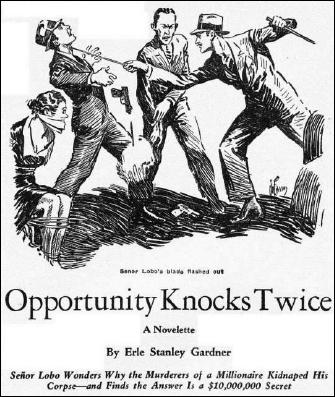
   Although Senor Lobo often uses guns in the course of his adventures, his favorite weapon is his sword cane. It has a retractable blade, and Lobo often uses it in confrontations with criminals. Lobo kept weapons of various kinds in his car that would be of use in close quarter fighting, including hand grenades.

   One story describes an outing against gangsters thusly: “And now as they swept into this gangster hide-out, each man carried two hand grenades, two guns, extra clips of shells, and a tear gas bomb.” (The Sirens of War)

   So they were well prepared for any fighting to be done, which is more than most of the criminals up against them could claim. Senor Lobo also had a special car for his adventures – a roadster “specially constructed for power, acceleration, and an ability to take right angle turns at high speed.” (Broken Eggs)

   Unfortunately, Lobo’s adventures were rough on equipment, and the car was shot to pieces by a machine gun in “Broken Eggs.” However, doubtless he had it repaired or acquired another because cars were indispensable in his work.

   Another requirement for his work was a safe place to live. He had to constantly change his apartments whenever their location was revealed, often abandoning his belongings at the same time. “To maintain safety it was necessary that he keep himself well under cover. The place where he had his apartment was known to but two people, El Mono Viejo and himself.” (Carved in Jade)

   Lobo also tried to keep his whereabouts secret from the police. As El Mono Viejo stated about the police viewpoint: “They are angry now at our methods. They say we are as much of a menace to law enforcement as are the gangsters upon whom we war.” (Carved in Jade)

   In virtually every story the soldierly professionalism of Lobo and his lieutenant are stressed, and the lack of such qualities in their gangster opponents is also stressed. In fact, the gangsters’ lack of ability to handle the tactics of the two soldiers of fortune is shown to best effect in the story “Barking Dogs.” Here the two soldiers raid a gangster headquarters in order to rescue a woman, and defeat a gangster mob many times their size. Afterwards, the gangsters claimed to the police and newspapers that twenty rival gangsters had raided their stronghold, and asked for a police investigation. Clearly, they never knew what hit them.

   The series, which ran for 23 stories, starts out with basically a two-part beginning, though each can be read separately and were published four months apart. In “The Choice of Weapons” and “Gangsters’ Gold”, the two parts of the opening story, Lobo is up against a hard fight with Butch Pender and his gang. These early stories are full of action, with Lobo out-maneuvering the gangsters twice in their attempt to rob gold from a bank. Lobo originally came to the U. S. in response to a strange situation. It seems that a dying American gangster named High Test Barker, wanting revenge on his enemies, makes a will leaving $70,000 in gold to Senor Lobo.

   The will makes the condition that Lobo can have the money only if he avenges Barker’s death. So Lobo comes up to take care of the situation and steps into what might be termed a hornet’s nest of trouble. The first stories are based upon this plot. After it runs its course, Lobo becomes involved in one adventure after another in the city.

SENOR ARNAZ DE LOBO

   The series seems to have quite a lot of the influence of Leslie Charteris’ series about The Saint (who appeared in DFW itself in 1938-39 and 1943). However, there was nothing like it in the magazine during the series run from 1930-34.

   Detective Fiction Weekly boasted many series, and none of them were remotely similar to Senor Lobo. Plenty of professional detectives, both private and government, ran through the pages. Also plenty of amateur detectives of all kinds appeared in stories. Senor Lobo fell into none of these categories. He was a professional who enjoyed what he did as a mercenary and revolutionary, as well as his new work as a gangbuster.

   Lobo was at his happiest when engaged in a conflict. He states to a woman: “sometimes I feel the lust for adventure in my blood… Perhaps I’ll pull out one of these days and start another revolution.” (Gangsters’ Gold)

   He does eventually leave for another revolution — in the last story, “Opportunity Knocks Twice”, he and his assistant leave the city for Latin America for this purpose.

   In an example of Lobo’s predilection for getting into trouble, see the story “The Sirens of War”. In this story, Lobo is bored with inaction and soft living. He is pacing the late night sidewalks of the city looking for action. As his assistant, El Mono Viejo, says, “it has been a week, and we have had no action.”

   So they wander the streets until, finally they find some trouble to get involved in. Trouble in the form of a kidnapping of a wealthy woman. Lobo involves himself in the matter to the extent that he goes after the kidnappers and in a couple of violent shootouts wipes them out. He returns the ransom money, minus what he takes for expenses.

   The expenses are what Lobo refers to in other stories as “the costs of collection”, and usually run ten per cent of the money returned. (Costs of Collection)

   Lobo gets involved in more conflicts with criminals by investigating any strange occurrence that strikes his interest. After things quieted down too much, he got the idea of paying taxicab drivers to report unusual occurrences to him. This helped keep Lobo busier, even if only part of the drivers’ reports led to action against criminals.

   Another example of Lobo’s penchant for getting into trouble occurs in “Carved in Jade”, an early story. This one starts in Chinatown, a popular setting for Gardner. Lobo wants to eat Chinese food, but his visit to a Chinese restaurant involves him with a group of gangsters who try to kill him in a trap. Lobo is up against both American and Chinese criminals in this story.

   One of the funnier stories is “Costs of Collection”, where Lobo and his friend are almost broke, thanks to their bank going under with all of their money in it. Far from finding it to be a bad situation, the two adventurers laugh about the situation and decide they have to make more money.

   â€œCaramba!” said El Mono Viejo, “but we need guardians, we two. We put money in a bank, and presto! We cannot take it out!” So Senor Lobo needs to find some gangsters to fight and money to appropriate. He uses almost the last of his money to pay for information from a cabdriver, and as a result finds some crooks to fight and a young woman to rescue. Coincidentally, Senor Lobo takes $10,000 in cash from some crooks as what he calls the “spoils of warfare”. So he is back in the money again.

   By the time of the story “A Hundred to One”, many of the local gangsters were fed up with Lobo’s interference in their affairs and made attempts to eliminate him by setting traps. In the words of one newspaper that Lobo saw, they intended “to rid the city of a “disturbing influence” in the shape of an independent adventurer, who seemed to enjoy interfering with gang activities for the sheer pleasure of the ensuing conflict.”(A Hundred to One)

   Lobo smiled at the article; all he wanted was some excitement and conflicts with the gangsters were one way to do this. In fact, he tells El Mono Viejo: “We can ask but three things of life, beautiful women, hard fighting—and a clean getaway.” (A Clean Getaway)

   So we can assume this is the philosophy of Senor Lobo. But he has another philosophical comment in another story: “Senor Arnaz de Lobo snapped out his philosophy of life in a single sentence: “I am not afraid to die,” he said, “nor do I want to be afraid to live.” (The Spoils of War)

   El Mono Viejo is constantly warning Senor Lobo to beware of beautiful women, because their enemies may use them as bait for traps for him. Nevertheless, Lobo continues to enter the traps. As he says: “Trap or no trap, I like the bait. There is beauty and adventure, a woman and danger, a mystery and a threat. I know of no better combination.” (A Clean Getaway)

   El Mono Viejo is much more serious-minded than Lobo, and more cautious. Lobo occasionally calls him “Sobersides” to poke fun at his serious attitude. El Mono Viejo enjoys the action and adventure, but he sees matters differently: “life is a stern reality.” (Leaden Honeymoon)

   The Senor Lobo series was undoubtedly more fantasy than reality based, but it was the kind of crime-fighting stories that appealed to readers, as shown by the fact that it lasted for 23 stories and probably could have run longer.

   Each story features Senor Lobo and El Mono Viejo becoming involved in gangster activities, and usually culminates in a violent gun battle (sometimes with explosives used).

   Naturally, Senor Lobo always comes out on top and wins the girl when one is part of the conflict. El Mono Viejo told Senor Lobo “it was a wonderful idea of yours — this business of coming to the city and antagonizing organized crime.” (Opportunity Knocks Twice). He only complained when there was insufficient action.

SENOR ARNAZ DE LOBO

   The last story, “Opportunity Knocks Twice,” is a fast-moving tale of action, started when a taxicab driver’s report of a very unusual occurrence puts Lobo on the trail of a $10 million secret and murder.

   At the same time, Lobo and El Mono Viejo are getting ready to offer their services to a revolutionary, who is in the city buying arms for a revolution in Latin America. If he doesn’t want their services, then they will offer them to the opposing side.

   By this time, El Mono Viejo is tired of the “guerilla warfare” with the city’s gangsters, and wants nothing more than to leave so they can get involved in a war or revolution. So the story is of the two mercenaries running around trying to resolve the murder and at the same time keep an eye out for when the time is ripe to leave for Latin America.

   The title refers to the two opportunities that Senor Lobo has in the story: firstly the murder and secondly the revolution. As Senor Lobo says at the end of the story: “In our profession,” he said, “one does not overlook opportunity’s second knock.”

   So the series has a conclusion of a sort, as the two prepare to leave the city they have lived in for over four years. It is certain that the criminals will not miss them.

   This is an excellent series that deserves reprinting. As this series was finishing its run in 1934, another series was beginning that seems to show some influence of Senor Lobo: the Park Avenue Hunt Club series of Judson P. Philips. This was a small group of men who were devoted to fighting gangsters, and enjoyed their work. Though it is doubted if they ever enjoyed it to the extent that Senor Lobo did.

        The Senor Arnaz de Lobo series by Erle Stanley Gardner:

The Choice of Weapons     July 12, 1930
Gangsters’ Gold     November 15, 1930
Red Hands     December 6, 1930
A Matter of Impulse     February 7, 1931
Killed and Cured     February 21, 1931
Carved in Jade     May 9, 1931
Coffins for Killers     July 25, 1931
No Rough Stuff     December 5, 1931
Sauce for the Gander     December 12, 1931
Barking Dogs     March 26, 1932
A Hundred to One     April 30, 1932
A Private Affair     June 25, 1932
Trumps     November 12, 1932
A Clean Getaway     December 3, 1932
Tickets for Two     December 31, 1932
The Spoils of War     January 14, 1933
Leaden Honeymoon     March 11, 1933
Results     May 6, 1933
The Sirens of War     September 16, 1933
Costs of Collection     November 18, 1933
The Code of a Fighter     January 27, 1934
Broken Eggs     May 5, 1934
Opportunity Knocks Twice     October 27, 1934

Note:   An earlier version of this article appeared in Blood ‘n’ Thunder magazine (#16, Fall 2006).

    Previously in this series:

1. SHAMUS MAGUIRE, by Stanley Day.
2. HAPPY McGONIGLE, by Paul Allenby.
3. ARTY BEELE, by Ruth & Alexander Wilson.
4. COLIN HAIG, by H. Bedford-Jones.
5. SECRET AGENT GEORGE DEVRITE, by Tom Curry.
6. BATTLE McKIM, by Edward Parrish Ware.
7. TUG NORTON by Edward Parrish Ware.
8. CANDID JONES by Richard Sale.
9. THE PATENT LEATHER KID, by Erle Stanley Gardner.
10. OSCAR VAN DUYVEN & PIERRE LEMASSE, by Robert Brennan.
11. INSPECTOR FRAYNE, by Harold de Polo.
12. INDIAN JOHN SEATTLE, by Charles Alexander.
13. HUGO OAKES, LAWYER-DETECTIVE, by J. Lane Linklater.
14. HANIGAN & IRVING, by Roger Torrey.
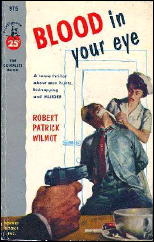
ROBERT PATRICK WILMOT – Blood in Your Eye. J. B. Lippincott, hardcover, 1952. Pocket 975; paperback, October 1953. Cover illustration by James Meese.

   Blood in Your Eye is the first of three cases cracked by New York City private eye Steve Considine, and for the record, here’s a list of all three:

      Blood in Your Eye. Lippincott, 1952; Pocket 975, Oct 1953.
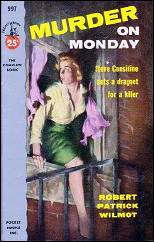
      Murder on Monday. Lippincott, 1953; Pocket 997, March 1954.

ROBERT PATRICK WILMOT

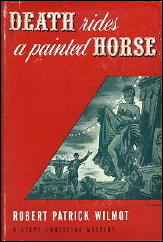
      Death Rides a Painted Horse: Lippincott, 1954; Jonathan Press #80, abridged, no date.

ROBERT PATRICK WILMOT

   You’re much more likely to like this one if you’re a fan of hard-boiled tough guy detective fiction; it really isn’t one that’s going to convert you. The cover of the paperback is (um) an eye-catcher, and the first 100 or so pages are terrific. By that time, though, while the pace hasn’t let up, the air has started to leak out of the tires, and by the time the book is over, you may have cause to wonder from where solution came, far left field?

   To start at the beginning, though, Considine is hired to wet-nurse an actively practicing but generally amiable alcoholic on a plane trip to England, where a doctor is waiting for him. On the night before their departure, Charlie Gillespie, given in the past to hallucinatory and (hence) quite invalid misinterpretations of everyday events, claims to have seen a murder committed, and soon after, goes underground and disappears completely.

   Considine’s job: find him, and thus we have a story. What I think I’ll do is give you two long quotes, both of which caught my attention in no uncertain terms, but in not exactly the same way. First, from pages 36-37, where Considine is alone in a bedroom with a girl who’s involved — and of course there is:

ROBERT PATRICK WILMOT

   Her handbag was on the chair, and she had to turn her back to me, bending to pick up the bag. I moved fast. I wrapped my left hand around her, breast high, and I clapped the palm of my right hand across her mouth, pressing hard. I picked her up bodily and carried her into the bathroom and set her on her feet and shifted my left hand to her mouth while I reached out with my right and turned on the shower taps, full blast. You could hardly hear her yell at all, or me, either, when she sunk her teeth into my hand.

   She bit hard and it hurt like hell and I went crazy mad, for a moment. I got my right hand into her hair and gripped it and spun her around and slapped her across the mouth with the flat of my bloody left hand. Then we were locked in tearing, panting embrace, me trying to hold her hands while she clawed at my face and jerked her knees up into my body, until I got both her arms pinned and pulled her so close that she couldn’t use her hands or knees, and I could feel her breasts swelling firm and big against my chest, and her curved long thighs against my thighs.

   Desire and rage were so completely mingled within me that I twisted her wrist even as I kissed her lips — and I kissed her lips hard. Her head went back and she gave a long, sighing, panting breath, and for an instant her lips met mine wide and warm, and her body seemed to melt in a yielding movement that made it part of my own… Then she butted me solidly on the cheek with her head and twisted loose from my hands.

   It’s quite a first date, even for a kindergarten teacher, which in fact she is, although Considine doesn’t know that yet. He continues:

   And isn’t this all just simply wonderful, I thought, leaning against the door. Gillespie’s out somewhere maybe waxing up a million dollars’ worth of trouble, and you’re supposed to be looking after Gillespie, and what do you do, Considine, what do you do? You don’t take a babe’s word for it that she’s a whore when she says she’s a whore; you’ve got a lousy false pride that’s piqued because you can’t figure out what sort of petty racket she and her pimp and the other guy are mixed up in, and you’re a sorehead who can’t take it when the girl pulls some of the same stuff on you. So you make with the muscles, and now you’ve got her, and what do you really want of her, except the one thing you can’t have unless you take it by force.

   The girl’s name is Carla Paul, and later on — here’s the other quote coming up now — Considine is talking the case over with the cop on the case. From pages 65-66:

    “One more thing,” Christie said to me. He looked about him as though to be sure there was no one else in the room, lowered his voice and squinted at me. “You ever read detective stories, Considine?”

    “Sometimes,” I said, wondering what-the-hell.

    “You know how it is in those stories,” Christie said. “They got a regular formula. The hero is always a bright gum-shoe, with ideas, and he’s always getting fouled up with a lot of stupid, sadistic city cops who do everything they can to prevent him from solving the crime.”

    “I bet you could write yourself,” I said. “How do you know, if you haven’t ever tried?”

    Christie ignored my remark. “So, because of the dumb cops, our Shamus hero has to more or less take the law into his own hands. In order to bring the villain to book, it’s necessary for our hero to break every law in the book, himself.”

    “Tell me more,” I said.

    “Take a case like this,” Christie went on. “The cops might wanna case Carla Paul’s room, just to see what they could see. But they’d need a warrant, because if Carla or the landlady came in while they were shaking down the place, there’d be hell to pay. If it did happen to be a case of mixed identity, I’d hate to be the cop who happened to be caught with a handful of her unmentionables.”

    “Time presses,” I said, “so suppose I just take the story from here. The Shamus in your story isn’t inhibited by legal red tape or bothered by stupid principles against the search. Right?”

    “Oh, so right,” Christie cooed.

    “So he waits until Paul isn’t home,” I said, “and he opens her door with a skeleton key, or maybe a strip of celluloid because that makes it sound harder. He goes into the room and combs it good, and maybe he finds something — a letter or something — that gives him a line on Mr. Blair? Okay so far?”

    “Perfect,” Christie answered, avoiding my eyes. “I doubt if Raymond Chandler himself could do better.”

    “There’s only one thing wrong,” I said, “and that’s the possibility that someone may come in and catch the bold hero in shaking down the apartment. Someone like a big, tough policeman, for instance. Or a two hundred and fifty pound wrestler, who doubles as a janitor.”

    “That ain’t in the script,” Christie said, “but I’ll admit it would be awkward if it happened.”

    “Yes, wouldn’t it? And then our Shamus gets carted off to the nearest police station and placed in a backroom where a lot of uncouth persons ask impertinent questions about him having been in the apartment. And then maybe Shamus gets so indignant that he gives a discourteous answer, and loses some of his teeth.”

    I flipped my cigarette at the cuspidor and grinned at Christie. “I need my teeth, lieutenant. I might be sent out on a job that paid so well I could afford to eat steak.”

    Christie rolled a pencil around on the desk top and looked at me thoughtfully. “Of course,” he said, “the Shamus could always ask to speak to Lieutenant Christie.”

    “No doubt he could,” I said, “and by the time he got to talk to Christie, our hero would have a pocket full of teeth. See you later, Chris.”

    We went out, and as we closed the door, Christie sighed again.

   I don’t know about you, but for me, that was worth the price of admission, right there. I also have to admit that there was a time, about half way through, that I had absolutely no idea where the story was going next, and that’s doesn’t happen, or at least not very often.

    You may take that as a good thing — I do — but what it also means it that it takes a full final chapter that’s ten pages long, after the bad guys have been named and identified, to tie up all of the loose ends, or at least all but one, a huge, massive coincidence that Wilmot dares not even mention, but I will. Possible? Sure, but without it, it all falls apart.

— October 2002


[UPDATE] 10-06-12. I’ve not been able to find any personal information about the author online, but I did come across a reference to one quote that’s interesting. From the cover or jacket flap of a British edition of Death Rides a Paper Horse: “Robert Patrick Wilmot has been compared by Anthony Boucher of the New York Times to the young Dashiell Hammett.” I have not found the quote from the Times itself, but it does suggest that reading the book again may be in order, or even all three of them.

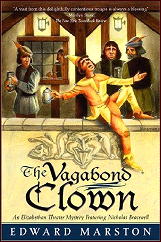
EDWARD MARSTON – The Vagabond Clown. St. Martin’s, hardcover, August 2003.

EDWARD MARSTON The Vagabond Clown

   Marston is a wonderfully prolific writer. Besides two separate series written as by Keith Miles, which as it happens is his real name, he has three additional series under this particular pseudonym, all historical mysteries: (1) with Christopher Redmayne, an architect, and Jonathan Bale, a constable in 1600s London, England; (2) the Domesday series, with Ralph Delchard, soldier and Gervase Bret, lawyer in medieval England; and (3), of which this is the latest, a series featuring Nicholas Bracewell, book holder for Westfield’s Men, an accomplished acting company in Elizabethan times.

   A book holder includes the jobs of both stage manager and road manager, and Nicholas has his work cut out for him in The Vagabond Clown, what with one clown incapacitated with a broken leg, and the second, recruited from a debtor’s cell, subject to serious bouts of wine, women and japery.

   Murder and other calamities also follow the trail of the travelers as they make their way from London to Dover, making adjustments to their plays as they go. The jealousies and acrimony between the two clowns make for fine amusement, and it is hard to imagine how the life of troupers like these on the road could be better described.

   The solution to the mystery is more than a little weak, alas, with motivations hidden until the very end, far too late to be of any help to the reader at home, though the culprits themselves are painfully obvious. An uneven entry in the series, therefore, but one that’s definitely worth reading.

PostScript: For the sake of completeness, the detective novels written under the Keith Miles byline are (1) the Alan Saxon mysteries, in which the current day golfer goes from country to country solving crimes and (2) a rather new series following the adventures of Merlin Richards, a young Welsh architect and a Frank Lloyd Wright protégé, taking place in Phoenix and Chicago in the 1920s and 30s.

   This is embarrassing. Marston/Miles can write faster than I can read.

— October 2003


[UPDATE] 10-03-12. Here it is, nine years later. The Vagabond Clown was the 13th in the Nicholas Bracewell series; there are now 16. Other current totals:

Eleven books in the Domesday series.
Six books in the Christopher Redmayne series.
Ten books in the Inspector Robert Colbeck series (begin in 2004).
Five books in the Captain Rawson series (begun in 2008).
Two books in the Inspector Harvey Marmion and Sergeant Joe Keedy series (begun in 2011).

       As by Keith Miles:

Six books in the Alan Saxon series.
Two books in the Merlin Richards series.

       As by Martin Inigo (not mentioned above):

Two books in the Dan Hawker series

   In the past nine years, if my count is correct, Marston/Miles has written 23 books.

REVIEWED BY BARRY GARDNER:


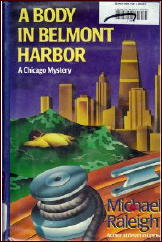
MICHAEL RALEIGH – A Body in Belmont Harbor. Paul Whelan #2. St. Martin’s, hardcover, 1993. iUniverse, paperback, May 2000.

MICHAEL RALEIGH Body in Belmont Harbor

   When I found this in the library last week I vaguely remembered reading the first in the series, Death in Uptown, but couldn’t remember anything about it. Not particularly promising, but it was a lean library day, so I checked it out anyway. Good move.

   PI Paul Whelan is a Chicago native who works the dangerous Uptown neighborhoods. As your basic hardboiled PIs tend to be, he’s somewhat at loose ends when a lady asks him to follow a man she suspects of murdering her husband two years ago. The police ruled it a suicide, but she doesn’t believe that; particularly since a small-time hood called her and said he had evidence against the man, then turned up in Belmont Harbor, murdered.

   Whelan doesn’t see much there, but the money’s good, and he takes the case. This quickly brings him in contact with Al Bauman, a legendary and irascible Chicago cop whom he helped and with whom he clashed in the first book. Bauman is investigating the hood’s murder, and Whelan’s involvement isn’t wanted. We know how that goes, though.

   This is one of the better PI books I’ve read lately. The story is told in a straightforward third-person narrative, from Whelan’s point of view other than the prologue. Whelan is a sympathetic and believable character, more reminiscent of Marlowe than Spenser though without the wisecracks. He manages to be both tpugh and vulnerable, and credibly so.

   The cop, Bauman, is also very well portrayed, seems one of the more realistic ones I’ve come across. There is a wealth of Chicago color, particularly in the area of restaurants and taverns, and although I don’t know from Chicago, it seemed real to me. The plot mechanism was the weakest part of the story, but wasn’t so bad as to cause outrage. All in all, I liked it considerably.

— Reprinted from Ah, Sweet Mysteries #9, September 1993.


       The Paul Whelan series —

Death in Uptown. St. Martin’s 1991
A Body in Belmont Harbor. St. Martin’s 1993
The Maxwell Street Blues. St. Martin’s 1994
Killer on Argyle Street. St. Martin’s 1995
The Riverview Murders. St. Martin’s 1997

Editorial Comments:   For more information about the author, he has a webpage here. I have three of the five Paul Whelan novels, but I’ve never read one. Barry’s review of this one tells me that I may have made a mistake about that.

THE BACKWARD REVIEWER
William F. Deeck


DOROTHY GARDINER The Seventh Mourner

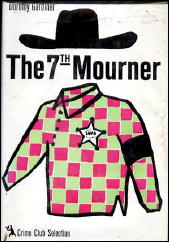
DOROTHY GARDINER – The Seventh Mourner. Doubleday Crime Club, hardcover, October 1958. Popular Library, paperback, 1964, as The 7th Mourner.

   Sheriff Moss Magill, of Notlaw, Colo., population 415 counting two unborn babies and home of the third worst hotel in the country, is left $100,000 in the will of a late citizen of Notlaw — though her death does not seem to deplete the population — if he will escort her ashes to Scotland and bury them on top of a mountain.

   For reasons not made clear, Magill is not interested in the money and does not want to go to Scotland. However, the stipulations in the will lead him to believe, again for reasons not made clear, that one or more of the legatees might be murdered if he doesn’t.

   Magill is an engaging character and worth meeting despite his not preventing murder. In addition, Gardiner presents the Scottish Highlands lovingly. But more should have been done with Magill’s culture shock, and the mystery aspect undoubtedly could have been handled better. For example, the villains are obvious and witless.

   Enjoy Magill and the scenery and try not to pay too much attention to the plot.

— From The MYSTERY FANcier, Vol. 13, No. 4, Fall 1992.

      The Sheriff Moss Magill series —

What Crime Is It? Doubleday 1956.
The Seventh Mourner. Doubleday 1958.
Lion in Wait. Doubleday 1963.

Editorial Comment:   Considerably more about the author and a complete crime fiction bibliography for her may be found following my review of The Trans-Atlantic Ghost, her first book, written in 1933. (Be sure to read the comments, too.)

THE BACKWARD REVIEWER
William F. Deeck


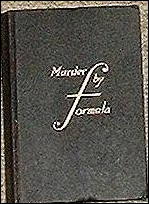
J. H. WALLIS – Murder by Formula. Dutton, hardcover, 1931.

J. H. WALLIS Murder by Formula

   During a meeting of the elite Aristoi Club, the Hanging Committee — art, let me hasten to say — discusses crime novels. Several members urge Andrew Wingdon, best-selling author who writes, according to one character, “readin’ books,” to write his own detective novel, or “trash” book. The formula proposed to Wingdon, as he iterates it:

   Story gripping, distracting, entertaining, but not grief-producing — no reality of death; a murder early in the book — first or second chapter, followed by at least one more to prevent loss of interest; the murdered a person or persons of consequence in the story … continual atmosphere of menace to principal surviving characters … no wholesale murders, no use of madmen, animals or artificially bred humans; the guilty always in full view and prominent; the detective supplied no more information than the reader; London and Scotland Yard or Manhattan and the new York police; and a beautiful girl wooed and won by the end of the story.

   Wingdon begins making notes and the others depart. The next morning Wingdon is found dead in the club, killed more or less in the manner discussed the previous evening.

   At the end of his novel, Wallis claims in verse that he himself followed the formula. For the most part I agree with his contention, particularly since fair play was not a criterion.

   The investigation by Inspector Jacks, in the first of several novels featuring his alleged abilities, is slipshod or negligent. For example, Jacks is unaware that apartments and houses have rear entrances and that a murderer might use them.

   A locked-room murder occurs that is given no thought by Jacks and is explained in one unlikely sentence during a most unlikely denouement. Jacks gives Wingdon’s widow, with whom he is smitten — see the last sentence in the formula — an automatic to protect herself at a meeting she shouldn’t attend but provides no instruction about use of the weapon, though this may be excused, I suppose, because the automatic turns out to be a revolver.

   Maybe in his later novels Wallis either is more careful with his plot or writes more persuasively. Maybe.

— From The MYSTERY FANcier, Vol. 13, No. 4, Fall 1992.


        The Inspector Wilton Jacks series —

Murder by Formula. Dutton 1931.
The Capital City Mystery. Dutton 1932.
The Servant of Death. Dutton 1932.
Cries in the Night.Dutton 1933.
The Mystery of Vaucluse. Dutton 1933.
Murder Mansion. Dutton 1934.

   J. H. Wallis has four other works of crime fiction listed in Hubin, including Once Off Guard, which was the basis of the film The Woman in the Window (1944), directed by Fritz Lang. Dan Stumpf reviewed both the book and the film here earlier on this blog.

MAKE A LIST:
Franchise Players in the Mystery Genre
by Michael Shonk


   What is a franchise character? Let’s adapt the word as used in the film business and apply it to books. So our franchise character is any character that has been featured in three or more books. Good golly, look at them all.

   A franchise character should be special, unique among the rest, so lets narrow it down a bit. The character must appear in three or more original novels. No comic books, short stories, screenplay adaptations, folklore or ballads. And since this is Mystery*File, we will limit our choices to the mystery genre.

Michael Shonk

   Considering there are countless mystery books series released every month, it is shocking how many of fiction’s most beloved and remembered characters don’t have a book series to his or her name.

   Dashiell Hammett’s NICK and NORA CHARLES, the most famous and best of the detective couple appeared in only one novel The Thin Man. There is good news for the two. November 2012, Mysterious Press plans to release Return of the Thin Man, featuring two novellas Hammett wrote to be used as the basis for the movies “After the Thin Man” and “Another Thin Man.” But it is still not enough to make a book series.

Michael Shonk

   Others who failed to make the list due to a lack of a series of original novels include CONTINENTAL OP, BOSTON BLACKIE, BATMAN, SUPERMAN, CISCO KID, DICK TRACY, and ROBIN HOOD.

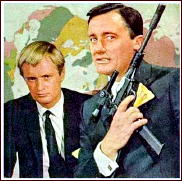
   Still too many characters for a list, so let’s add films. It is only fair since we stole their word, franchise. Of course in the past, a movie franchise was called, oddly enough, a series. So how can we define a movie series, oops, franchise (and limit our number of characters on the list)? Let’s require three or more original theatrical films shown in America featuring the same studio or independent producer, and/or actor. They must be original films for the movie theatre, doing what Thrush never could do and eliminate MAN FROM U.N.C.L.E. with its films made up of TV episodes.

   While there have been several films featuring PHILIP MARLOWE and ZORRO, none were a part of a series of three films featuring the same studio and/or actor. Also off the list are: LEW ARCHER, NERO WOLFE, JOHN J. MALONE, MIKE HAMMER, FLASHGUN CASEY, TRAVIS MCGEE, RAFFLES, FLETCH, and MR AND MRS NORTH.

Michael Shonk

   Still too many characters, so let’s add a weekly TV series, a miniseries of three or more episodes, or three or more TV Movies, but no network pilots or foreign productions that have not aired on American TV. You are welcome to add in the comments any, such as the reported PHILO VANCE Italian series, which would restore the character to the list.

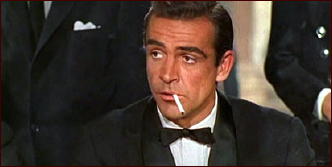
   A surprising number of popular mystery characters have never had a TV series such as SAM SPADE, THE SHADOW, NICK CARTER, MR. MOTO, BULLDOG DRUMMOND, JAMES BOND, JACK RYAN, JASON BOURNE (only a two part TV movie), and HARRY PALMER (who has only two TV Movies so far).

Michael Shonk

   One character will qualify soon, making him lucky number thirteen on our soon to be revealed list. Thomas Harris created HANNIBAL LECTER, the villain with an odd diet, in a series of four books that began with Red Dragon (1981). A famous movie series of four films has followed beginning with Manhunter (1986). Sometime in the upcoming TV season (most likely in 2013) a TV series featuring the serial killer and cannibal will premiere on NBC.

   What should we include in the mystery genre? Should we include the action/adventure series of INDIANA JONES and TARZAN? How about horror and JASON VOORHEES from Friday the 13th? All have a series of original books, series of films, and a weekly TV series. I’m not adding them to our list of mystery characters, but feel free to argue in the comments why I should or suggest others.

   So who survived? Who can be called a franchise character in all three major formats?

         THE LIST OF THE TRIPLE THREAT FRANCHISE CHARACTERS:

Michael Shonk

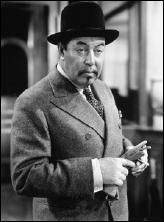
CHARLIE CHAN – Created by Earl Derr Biggers as a minor character in the book House Without a Key (1925) that was serialized in the magazine Saturday Evening Post. Five more books were to follow. CHARLIE has appeared in many films, the first being a ten episode serial from Pathe House, Without a Key (1926), with George Kuwa playing the minor role of CHAN. Fox produced sixteen films between 1931 and 1938 starring Warner Oland. After Oland’s death, Sidney Toler took over the part with eleven for Fox, then eleven more for Monogram Studios. After Toler’s death, Roland Winters took over the Monogram series for six films between 1947 and 1949. J. Carrol Naish played the detective in the syndicated TV series The New Adventures of Charlie Chan (1957 – thirty-nine episode). The character played a minor role in the animated children cartoon featuring Chan’s children solving crimes called The Amazing Chan and the Chan Clan (CBS, 1972). Keye Luke was the voice of CHARLIE CHAN.

         http://charliechanfamily.tripod.com

Michael Shonk

ELLERY QUEEN – Created by “Ellery Queen” (Frederic Dannay and Manfred Lee) in the novel The Roman Hat Mystery (1929), the first in a decades-long book series. Movies have proven unkind to ELLERY, but he was featured in a Columbia film series that lasted seven films, four starring Ralph Bellamy and three with William Gargan. There have been four different TV series featuring the character. The Adventures of Ellery Queen (DuMont, 1950-51; ABC 1951-52) starred Richard Hart then after Hart’s death, Lee Bowman. Adventures of Ellery Queen (Syndication, 1954, thirty-two episodes) starred Hugh Marlowe in the series also called Murder is My Business. The Further Adventures of Ellery Queen (NBC, 1958-59) starred George Nader until the production left New York for Hollywood where Lee Philips took over. Finally (so far), perhaps the best TV adaptation of a traditional mystery detective was Ellery Queen (NBC, 1975-76) starring Jim Hutton.

         http://www.elleryqueen.us

Michael Shonk

DR. FU MANCHU – Created by Sax Rohmer. The character began in short story “Fu-Manchu,” published October 1912 in the magazine The Story-Teller. A long series of books would follow. Harry Agar Lyons was the first in films to portray the evil Doctor in the silent British movie serial The Mystery of Dr. Fu Manchu (1923). Warner Oland starred in three Paramount films starting with Mysterious Dr Fu Manchu (1929). Better remembered is the film series with Christopher Lee that lasted five films beginning with The Face Of Fu Manchu (1965). Glen Gordon played the role in the syndicated TV series “Adventures of Fu Manchu” (1955 – thirteen episodes).

         http://njedge.net/~knapp/FuFrames.htm

Michael Shonk

HERCULE POIROT – Created by Agatha Christie, the Belgian PI first appeared in The Mysterious Affair at Styles (1916) and lasted thirty-three novels before he met his end in Curtain (1975). Austin Trevor (Alibi, 1931) was the first to play the character in film. Peter Ustinov played the private detective in three theatrical films (Death On the Nile, 1976, Evil Under the Sun, 1982 and Appointment With Death, 1988) and three TV-Movies for Warner Brothers (Thirteen at Dinner, 1985, Dead Man’s Folly, 1986, and Murder in Three Acts, 1986). The most popular portrayal of the character has been by David Suchet who has played POIROT since 1989 for various productions usually seen in the United States on PBS series Mystery.

         http://www.poirot.us/poirot.php

Michael Shonk

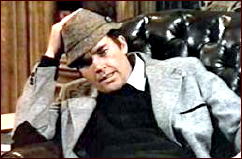
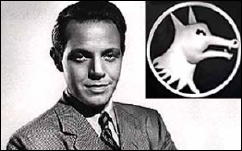
LONE WOLF aka MICHAEL LANYARD – Louis Joseph Vance created the ex-thief turned adventurer that appeared in a series of eight books beginning with The Lone Wolf: A Melodrama (1914). The character first appeared on film in silent movie The Lone Wolf (1917) starring Bert Lytell, who would star in five films, the other four for Columbia. Most of the LONE WOLF films came from Columbia Pictures with Warren William starring in nine and Gerald Mohr in three. The syndicated TV series, The Lone Wolf (also known as Streets of Danger) turned him into a PI. The series starred Louis Hayward and lasted thirty-nine episodes.

         http://thrillingdetective.com/lone_wolf.html

Michael Shonk

MATT HELM – Created by Donald Hamilton, the government agent appeared in over twenty-five books beginning with Death of a Citizen (1960). MATT HELM changed from tough-guy to campy spy in a movie series of four films starring Dean Martin beginning with The Silencers (1966). In 1975 a TV series starring Tony Franciosa as ex-spy turned PI aired for one season on ABC.

         http://thrillingdetective.com/helm_matt.html


Michael Shonk

MICHAEL SHAYNE – Created by “Brett Halliday” (David Dresser). The character first appeared in Dividend on Death (1939) and continued in a series of seventy-seven novels. Lloyd Nolan played the red headed PI in a 20th Century Fox film series of seven movies beginning with Michael Shayne, Private Detective (1940). PRC followed with five movies starring Hugh Beaumont. Richard Denning played the PI in a NBC-TV series (1960-61).

         http://thrillingdetective.com/shaynemike.html


Michael Shonk

MISS JANE MARPLE – Agatha Christie is the only author with two franchise characters. MISS JANE MARPLE first appeared in Murder at the Vicarage (1930) and would last a total of twelve novels, the final one being Sleeping Murder (1976). Arguably the best of the entire “Little Old Lady” turned detective subgenre. Margaret Rutherford played the character in the popular “Murder” film series for MGM that lasted four films beginning with Murder She Said (1961). The character has PBS to thank for showing the British productions of her TV series starring such actresses as Geraldine McEwan and Julie McKenzie.

         http://www.poirot.us/marple.php

Michael Shonk

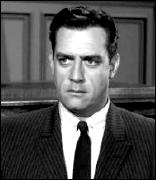
PERRY MASON – Created by Erle Stanley Gardner. The only lawyer on the list, he first appeared in The Case of the Velvet Claws (1933) and continued for eighty-five novels. Warner Brothers film series began with The Case of the Howling Dog (1934) and lasted six films, four starring Warren William. Raymond Burr starred in the CBS TV series that lasted between 1957 through 1966. CBS would bring back the character in New Adventures of Perry Mason (1973-74) with Monte Markham playing the lawyer. In 1985, Raymond Burr would return to star in thirty TV Movies between 1985-1993 (CBS).

         https://www.thrillingdetective.com/mason.html

Michael Shonk

THE SAINT aka SIMON TEMPLAR – Created by Leslie Charteris in Meet–The Tiger! (1928). The former thief turned adventurer Simon Templar has been featured in over ninety books. The character has appeared in many films including an RKO series of eight films with George Sanders starring in five. Two series featuring the character have appeared on America television. The Saint starring Roger Moore began in 1962 on British television and later in syndication to American television stations. In 1966 NBC aired episodes from the series. CBS’s Return Of The Saint starred Ian Ogilvy and ran twenty-four episodes during the 1978-79 season.

         http://www.saint.org

         http://www.lesliecharteris.com

         I have left off one consulting detective and one amateur detective who belong on the list. Can you name who they are? One of the missing is obvious while the other is a surprise. Please use the comments for your answer, as well as other suggestions and comments.

     ADDITIONAL SOURCES:

Wikipedia

IMDb.com

http://mikegrost.com

http://www.pbs.org/wgbh/masterpiece/mystery/index.html

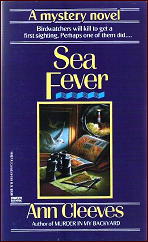
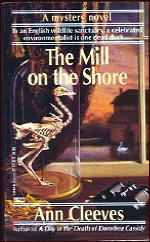
ANN CLEEVES – Sea Fever. Fawcett Gold Medal, paperback original, 1st printing, October 1991. Macmillan, UK, hardcover, 1993.

ANN CLEAVES Palmer-Jones

   This is the fifth mystery novel in which inveterate birdwatcher George Palmer-Jones has become involved with a case of murder. It shouldn’t be too surprising: even though he’s now actually a retired civil servant, he and his wife Molly have become partners in an “enquiry agency” as a means to keeping themselves busy in their declining years.

   George hates the term “private detective,” but there is no escaping it: whether “enquiry agent” or PI, that’s the kind of work they do. (*) George has birds on his mind most of the time, though, and if it weren’t for Molly to push him, I think his investigative business would be nothing at all, in no time flat.

   In Sea Fever they’re hired to trace a wayward son who refuses to come home, or to acknowledge the existence of his worried parents in any way. That he’s also an ardent birdwatcher makes the Palmer-Joneses the ideal couple to track him down. They catch up to him momentarily on a sea cruise/birdwatching expedition, but they lose him again almost as quickly at the hands of a killer.

   Murder at sea means a limited number of suspects, and this is classical detection at very nearly its highest level and its most overwrought, boosted by little annoying hints of what is yet to come and a (female) police inspector who finds her own life close to exploding out of control.

   Don’t get me wrong, though. While this may not be the equivalent of John Dickson Carr in plot complexity, it is a pleasant voyage through waters charted several times or more. Every time I take the trip, I enjoy it just about as much as the time before, and that’s the kind of book this is.

(*)   I’ve just checked John Conquest’s Trouble Is Their Business (Garland, 1990), a superb compendium of just about every other fictional PI you could name, and as it happens, he misses these two. They’re borderline, I’d say, but by Conquest’s own definition, they’re PI’s, and they should be in there.

— Reprinted from Mystery*File 36,
     (slightly revised).


[UPDATE]. 09-05-12. And for what it’s worth, the Palmer-Joneses are not included on Kevin Burton Smith’s Thrilling Detective website either. Kevin doesn’t miss many, but this is one pair of PI’s I think he he has. A lengthy profile of the author by Martin Edwards can be found here, along with a long list of all her mysteries. (She’s done more than just this one series.)

       The George & Molly Palmer-Jones series —

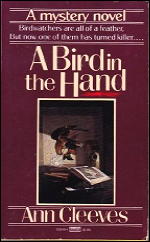
A Bird in the Hand. 1986.

ANN CLEAVES Palmer-Jones

Come Death and High Water. 1987.
Murder in Paradise. 1988.
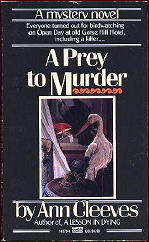
A Prey to Murder. 1989.

ANN CLEAVES Palmer-Jones

Sea Fever. 1991.
Another Man’s Poison, 1992.
The Mill on the Shore. 1994.

ANN CLEAVES Palmer-Jones

High Island Blues. 1996.

« Previous PageNext Page »