Reviewed by DAVID L. VINEYARD:         


SEVEN SINNERS. Gaumont British Pictures, 1936. Released in the US as Doomed Cargo. Edmund Lowe, Constance Cummings, Thomy Bourdelle, Henry Oscar, Joyce Kennedy, Felix Aylmer. Screenplay by Sidney Gilliat & Frank Launder; story by Arthur Ridley & Bernard Merivale based on the play and novelization The Wrecker by Arthur Ridley. Director: Albert de Courville.
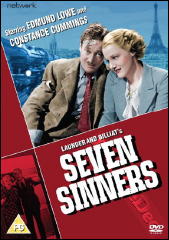
SEVEN SINNERS Edmund Lowe

    Edward Harwood (Edmund Lowe): First I meet a dead man who’s alive and then I meet a living man who’s dead.

   Tankerton Agency detective Edward Harwood stumbles on a body in his hotel room in Nice during Carnival and as quickly loses it, and Caryl Fenton (Constance Cummings) the insurance agent sent to fetch him to Scotland to solve a case of missing jewelry is convinced it’s all part of an alcoholic haze, and hustles him off to Scotland.

   Until they are both victims of a train wreck on the Riviera Express where the corpse Harwood lost shows up as one of the hundreds of victims.

   Learning from M. Turre, the Assistant Prefect of Police, that the wreck was deliberate Harwood and a reluctant Fenton are off to Paris and a trail that leads from an elegant Paris flat to London’s Guild Hall; to a small village in the West of England; to a man who died three years earlier but who they just met in Paris; to another train wreck to silence a doctor who falsified a death certificate; to the Pilgrims of Peace and a phony charity; and to a deadly confrontation on a train to Southampton where the Wrecker is determined to silence anyone who might lead to him — including Harwood and Fenton.
SEVEN SINNERS Edmund Lowe

   It should come as no surprise if this fast paced thriller reminds you of some of Hitchcock’s thrillers of the period, such as The Thirty Nine Steps and The Lady Vanishes, since screenwriters Sidney Gilliat and Frank Launder would go on to write and direct some of the best British films of all time.

   Among them, and rivaling Hitchcock in popularity and skills, are Green for Danger, State Secret (The Great Manhunt), The Lady Vanishes (with Alma Reville, directed by Hitchcock), The Green Man, She Played With Fire, Waterloo Road, and Belles of St. Trinian’s. Their last film was Agatha Christie’s Endless Night with Haley Mills and George Sanders in 1972.

   Seven Sinners, also known as Doomed Cargo when released in the US, is a fast paced, clever, and witty thriller with echoes of The Thin Man and first rate performances by Lowe and Cummngs.
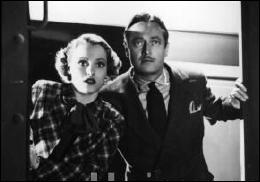
SEVEN SINNERS Edmund Lowe

   The film is based on the story (co-written with Bernard Merrivale), play, and novelization of The Wrecker by Arthur Ridley, a popular “barn burner” as such plays were known. Ridley specialized in these, also writing Ghost Train, another “barn burner” that became a hit film and was also novelized by Ridley (remade as the hilarious Runaway Bus with Margaret Rutherford).

   Edmund Lowe seemed to specialize in detective roles, playing Nick Carter, Philo Vance, Lawrence Blochman’s Inspector Prike (changed to Dyke in Bombay Mail), and Chandu the Magician, starting in films in 1915 and ending with George Cukor’s Heller in Pink Tights in 1960. Along the way he was Captain Quirt in What Price Glory?, his biggest role, and appeared in such films as Dinner at Eight, The Last Hurrah, The Great Impersonation, Dillinger, and Mister Dynamite. He was sleuth/reporter David Case on early television’s Front Page Detective.
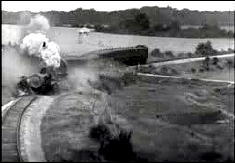
SEVEN SINNERS Edmund Lowe

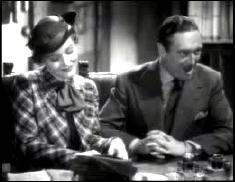
   Constance Cummings played Harriet Vane opposite Robert Montgomery’s Lord Peter in Haunted Honeymoon, but fared much better in this and Blithe Spirit with Rex Harrison and Kay Hammond. Her scenes with Lowe have real crackle and snap to them, with a slight hint of the American screwball school well played by both actors.

   Albert de Courville was a successful director and producer (probably best known on this blog as the producer of The Shanghai Gesture). [Reviewed here. ]

   The train wrecks are well staged, and while there is some obvious model work and rear projection, they were state of the art at the time, and you can imagine the final train wreck with the train boring down head on had audiences jumping in the theaters of the time. It’s still pretty exciting stuff.
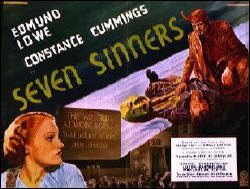
SEVEN SINNERS Edmund Lowe

   The finale, a shoot out in a movie theater during a newsreel about the Wrecker, likely inspired the similar scenes in Hitchcock’s Saboteur and John Huston’s Across the Pacific. If it doesn’t exactly make a lot of sense it’s a well done set piece and a fitting ironic end as the Wrecker meets his fate while the newsreel announcer asks “Where is the Wrecker?”.

   One word of warning. When you are looking for this you are going to encounter the 1940 Tay Garnett John Wayne/Marlene Dietrich film Seven Sinners more often than this one. It’s a good film too, but nothing to do with this.

   The title refers to the conspirators in the scheme and the Wrecker himself, if you come up one short, listen carefully and you’ll discover there was an off screen murder and train wreck they mention that happens before the point where the film starts.

   Highest recommendations for this first rate comedy mystery. This is how it should be done, smart, witty, and moving at a gallop. Luckily the print available is very good despite being on the “gray” market and you can enjoy it in all its glory.

   See it. It’s well worth the effort.
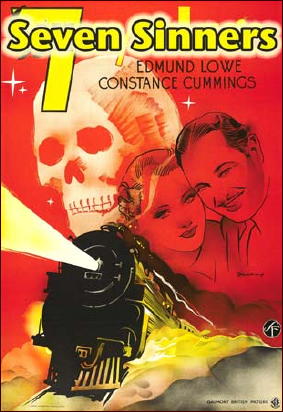
SEVEN SINNERS Edmund Lowe

THIS IS A THRILLER
by Walker Martin


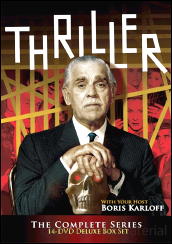
BORIS KARLOFF Thriller

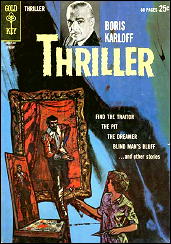
   We all remember the golden age of fantasy, SF, and horror television. Anthology series such as Twilight Zone, Outer Limits, Night Gallery, Alfred Hitchcock Presents, One Step Beyond. One of the very best was Thriller, hosted by Boris Karloff and lasting 67 hourly episodes during 1960-1962.

   I was just a teenager at the time but I still remember skipping dates and not watching Phillies baseball, just in order to not miss the show. A few years ago I managed to track down a bootleg set of all the episodes on DVD, and I relived the joy of watching this great black and white spooky series.

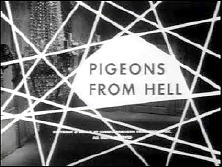
   Somehow I had forgotten just how bland and mediocre some of the crime and mystery episodes were. All I had remembered were the great horror stories like “Pigeons from Hell,” “The Grim Reaper,” “The Cheaters,” “The Hungry Glass,” and others.

   After watching a dozen or so of the early crime episodes I was beginning to think that my memory was playing tricks on me and that the horror shows were from some other show.

BORIS KARLOFF Thriller

   Then I got smart and started skipping around and watching the episodes out of order, especially paying attention to the eighteen episodes adapted from Weird Tales, that great pulp of the supernatural. Yes, you read right, I said eighteen of the stories are from Weird Tales!

   After watching these eighteen shows and other horror adaptations from various sources, I was able to even enjoy some of the crime and mystery plots, though in my opinion they could not begin to compare with the horror episodes.

   Frankly, I never figured the entire series would see an official DVD release but I am glad to say that I was mistaken. Image Entertainment recently released a box set containing all 67 shows and included such extras as over two dozen audio commentaries, mainly on the horror episodes, isolated music scores, episode promos, an so on.

BORIS KARLOFF Thriller

       Since I had viewed all 67 shows just a few years ago, my intent initially was to only watch the horror stories again, and listen to the commentaries. But fate stepped in and I stumbled across an announcement that Pete Enfantino and John Scoleri would be hosting a discussion on Thriller by way of a blog.

   Comments are welcome and each day a different show is covered, starting from the first and continuing to the 67th and last one. There are also breaks for interviews and topics like “The Girls of Thriller”. Each show is rated by a system of “Karloffs” from zero to 4 Karloffs.

   I am happy to say that this discussion has become part of my daily viewing. Each day I watch an episode and then look at the blog to read about what Pete and John have to say.

BORIS KARLOFF Thriller

   They are only on the 17th episode as I write this, and now would be a good time to dive in and join the fun. Especially since the horror episodes are starting to be discussed and you can skip some of the bland, more mundane crime shows. Or you can watch them also and then read what they have to say, and what they say is always done with wit and humor.

   The discussion takes place at www.athrilleraday.blogspot.com and gets my highest recommendation. It’s a lot of fun talking about the old Thriller shows, and comments are encouraged.

   By the way, the Thriller box set has a list price of $150 but is heavily discounted at the online stores. For instance I paid only $97 from Amazon. Even though I already had a bootleg set, I consider this “official” release money well spent.

A 1001 MIDNIGHTS Review
by Bill Pronzini:


ANTHONY WYNNE – The Case of the Gold Coins. J. B. Lippincott, US, hardcover, 1934. Reprint: A. L. Burt, hardcover, no date. UK edition: Hutchinson, hardcover, 1933.

   Anthony Wynne (Robert McNair Wilson) was one of the lesser Golden Age writers — the creator of Dr. Eustace Hailey, a Harley Street specialist in mental disease who once offered the following opinion: “The really interesting crimes are those … in which the method employed, as well as the motive, constitutes a puzzle.”

   Method is indeed the most interesting element in Wynne’s mysteries: No less than sixteen of his twenty-eight novels feature an “impossible crime” of one type or another (most often the use of an “invisible agency” to murder someone in closed or guarded surroundings). Some of his “impossibles” are quite ingenious — The Case of the Gold Coins, for instance.

   In this case Hailey’s assistance is solicited by Captain Jack Ainger of the CID to investigate the strange death of Lord Wallace in a remote section of Northumberland. Wallace’s body was found in the middle of a wide expanse of beach near his home, badly battered and bruised, with a knife driven into his back.

   The location of the wound and bloodstains found under the corpse prove that he died on the spot. Yet there are no footprints in the sand for many yards in any direction and no way either the murderer or the sea could have erased any. A thrown knife is out; that still wouldn’t explain the absence of footprints.

   Also out are the possibilities of the body having been dropped from an airplane or hurled by a catapult or by bodily force.

   Dr. Hailey sets about questioning the suspects: Lady Wallace, the sister-in-law of the murdered man; Ruth Wallace, the lord’s niece; Colonel Bolton, a neighbor and old enemy of Wallace’s; the colonel’s daughter, Pamela; Wallace’s solicitor, Giles; and one of the local squires, Peter Ingram, who was engaged to Ruth but is now in love with Pamela.

   Don’t be misled, though: This is no actionless house-party drama; there is a good deal of skulking around in the night, two more murders, a couple of close shaves for Dr. Hailey (one of which involves sailboats and an unexpected predawn swim), eerie doings on a little offshore island, more intrigue centered on an old flour mill near the Wallace estate, and a hidden treasure of gold sovereigns.

   All the elements are here for a dandy novel. Unfortunately, Wynne’s handling of them results in “rather heavy melodrama,” as Howard Haycraft termed his work. Wynne wrote well, but in a solemn, reserved, curiously detached manner, as if he were unable to involve himself in his narrative.

   And Hailey is something of a colorless and plodding sleuth, whose only distinct character traits are taking snuff and “drawing his hand across his brow,” both of which he does constantly.

   Still, the explanation of how Lord Wallace was murdered is worthy of John Dickson Carr — although one facet of it is a little hard to swallow — and alone makes the novel worth reading.

   The same is true of such other Hailey investigations as The Green Knife (1932), in which there are three locked-room murders by stabbing; The Toll House Mystery (1935), in which a murdered man is found shut up alone in a closed car surrounded by untrodden snow; and Emergency Exit (1941), about a stabbing in an air-raid shelter surrounded by unmarked snow.

   Also interesting is the lone Dr. Hailey short-story collection, Sinners Go Secretly (1927), which contains two “impossibles.” If you enjoy this type of mystery, don’t pass these up. Despite their flaws, Wynne’s puzzles will keep you guessing and absorbed throughout.

         ———
   Reprinted with permission from 1001 Midnights, edited by Bill Pronzini & Marcia Muller and published by The Battered Silicon Dispatch Box, 2007.   Copyright © 1986, 2007 by the Pronzini-Muller Family Trust.

A REVIEW BY CURT J. EVANS:         


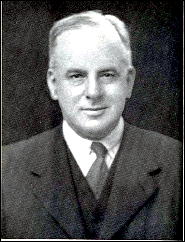
ANTHONY WYNNE

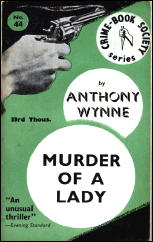
ANTHONY WYNNE – Murder of a Lady. Hutchinson, UK, hardcover, 1931; Crime-Book Society #44, paperback, 1930s. US title: The Silver Scale Mystery, J. B. Lippincott, hardcover, 1931.

   Scottish-born physician Robert McNair Wilson (1882-1963) was a man of many interests. Besides practicing medicine, he wrote about numerous subjects, including European history, economics (his economic thought influenced the famous poet and fascist Ezra Pound and continues to attract interest at certain quarters of the internet).

   More importantly, under the pseudonym Anthony Wynne, he wrote a series of twenty-seven detective novels between the years 1925 and 1950. This is the work, of course, that interests us most here at the Mystery*File blog.

   Anthony Wynne’s detective novels have been out of print for sixty years, but some retain interest today. Along with John Dickson Carr, Wynne was one of the most prominent Golden Age practitioners of the locked room mystery. Unfortunately, his novels often tend to be overly melodramatic, thinly characterized and humorless, no doubt in part explaining their obscurity today.

   One of the best Anthony Wynne detective novels, Murder of a Lady (The Silver Scale Mystery in the United States), deserves reprinting, however. Set in Scotland, where Wynne himself grew into adulthood, Murder of a Lady benefits from strong atmosphere (with supernatural overtones), some compelling characters and emotional entanglements, a baffling and suspenseful problem and a plausible enough solution.

   The “Lady” in question, Mary Gregor, sister of a laird, is found dead by violence in her bedroom in her brother’s Highland Scottish castle. The author offers a classic sealed room situation, with locked doors and windows. More deaths occur, all seemingly impossible.

ANTHONY WYNNE

    “The assassin kills but remains invisible,” announces nerve specialist Dr. Eustace Hailey, Wynne’s snuff-taking but not especially interesting series detective. In each case a herring scale is found on the victims body, a detail leading to suspicions among the superstitious locals (which includes gentry as well as plain folk) that legendary fish creatures from the nearby waters are responsible the mayhem, taking vengeance for past family misdeeds.

   The crimes are truly baffling, and suspense during the investigations of both Dr. Hailey and the professionals is well maintained. The Scottish Highland atmosphere, with its supernatural elements, is very well done. (I couldn’t help but be reminded of John Dickson Carr’s The Case of the Constant Suicides, thought the humor in that book is utterly absent from Wynne’s.)

   The household of the laird and his sister — which includes a son and daughter-in-law and several servants — is strongly drawn as well. Particularly admirable is the author’s delineation of the character of the first murder victim (the lady), who dominates the household even in death, a defunct spider whose victims still struggle in the remains of her web.

   I was kept in suspense until the author sprang his solution, and Dr. Hailey’s explanation maintains interest until the very last paragraph of the novel, when we learn the true meaning of one element of the mystery.

   Murder of a Lady is Golden Age detective fiction at its considerable best. I’m going to talk to Ramble House about getting this one reprinted.

THE ARMCHAIR REVIEWER
Allen J. Hubin


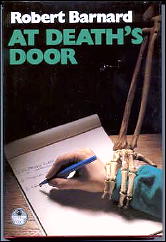
ROBERT BARNARD – At Death’s Door. Scribner’s, US, hardcover, 1988. Paperback reprint: Dell, 1989. British edition: Collins Crime Club, hardcover, 1988.

ROBERT BARNARD At Death's Door

   I do think Robert Barnard goes from strength to strength, though I’m not sure how he does it with his prolificity: At Death’s Door was his second novel published here this past year [1988].

   His character probings are becoming more subtle, but his people, full of all their weaknesses and strengths, their humanities, leap off the pages in sharpest individuality.

   In this one they are the family, legitimate and otherwise, of Benedict Cotterel, famous writer and rake, now octogenarian and senile. His daughter Cordelia, produced by the now renowned actress and once mistress Myra Mason, has decided to write a book about her mother — whom she loathes– and Ben.

   She comes to the home of Roderick and Cordelia Cotterel — Roderick being one of two offsrping by an early Cotterel marriage — where Benedict is vegetating. Myra, hearing of the book project, comes furiously to the little British village with her latest bedmate in tow, determined to stop Cordelia in her tracks.

   Into this comes murder, and Inspector Meredith (whom I’ve a notion Barnard has served us before) does some fancy footwork to identify the guilty. Barnard’s plotting is elegant as well, and he has yet one more surprise at the end for us.

   Magnificent!

— From The MYSTERY FANcier, Vol. 11, No. 2, Spring 1989.


Bibliographic Note:  Inspector Idwal Meredith did indeed appear in another Barnard mystery: Unruly Son (Collins, 1978; US title: Death of a Mystery Writer. Scribner, 1979).

REVIEWED BY GEOFF BRADLEY:         


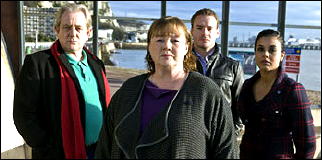
MISSING. BBC-TV. Second series: 15 March through 26 March 2010. Pauline Quirke, Felix Scott, Pooja Shah, Mark Wingett.

MISSING Pauline Quirke

   This is an afternoon programme returning for a second series of ten 45-minute programmes (no adverts). Pauline Quirke plays Detective Sergeant Croft who is in charge of a missing persons unit in Dover.

   She has in her squad a detective constable and a female assistant. Together they chase up all reports of missing persons occasionally using a local radio reporter to broadcast appeals. This series is complicated by a new aggressive Chief Inspector who casts a shadow over the team.

   This is very comfortable day-time viewing with no disastrous outcomes for the missing people. A happyish ending is usually in sight. However, twee as it is, I rather enjoyed this second series as I did the first last year.

IT IS PURELY MY OPINION
Reviews by L. J. Roberts


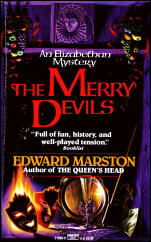
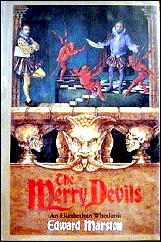
  EDWARD MARSTON – The Merry Devils. St. Martin’s Press, US, hardcover, 1990. Paperback reprint: Fawcett Crest, 1991. Trade paperback: Poisoned Pen Press, 2001. UK edition: Bantam, hardcover 1989.

EDWARD MARSTON The Merry Devils

  Genre:   Historical mystery. Leading character:   Nicholas Bracewell; 2nd in series. Setting:   England-Elizabethan period.

First Sentence: London was the capital city of noise, a vibrant, volatile place, surging with life and clamorous with purpose.

    Lord Westfield’s Men, an Elizabethan acting company, is presenting a new play, “The Merry Devils.” Contrary to the stage direction of book-holder, Nicholas Bracewell, a third “devil” appears when the scene only calls for two.

    Upon the second presentation, Bracewell decides to have there be three devils, but only two appear. The third is found dead under the stage. Threats increase and Nicholas must find who is behind it before anyone else dies.

    Marston is one of the best at crafting time and place. He takes us from the workings of the theater, to the streets, to the properties of nobles to Bethlehem Hospital, otherwise known as Bedlam. This was a time when Christianity and superstition were intertwined and strict Puritanism was on the rise.

EDWARD MARSTON The Merry Devils

    The cadence and syntax of the dialogue reflect the period while delightful metaphors and humor exemplify the characters. The cast of characters is interesting and appealing. Marston has provided enough of Bracewell’s background to bring him to life but has, intentionally to us and the other characters, left much in the shade.

    The members of the company reflect the egos, insecurities and conflicts one would expect without be stereotypes. All the characters have dimension and substance. I did appreciate the character of Dr. John Mordrake, based on Dr. John Dee, mathematician, scientist, occultist and consultant to Queen Elizabeth I. He seems to be the subject of numerous books these days.

    Although there was a very good, twisty plot and a dramatic ending, it did feel overly contrived. However, that did not diminish my enjoyment or my anticipation of Marston’s next Elizabethan Theater book.

Rating:   Good Plus.

    Previously reviewed by LJ:

The Owls of Gloucester   (The “Domesday” series)
The Queen’s Head   (Nicholas Bracewell, 1st in series)

REVIEWED BY DAN STUMPF:         


HENRY JAMES – The Aspern Papers. Macmillan, hardcover, US/UK, 1888. First published in three parts in The Atlantic Monthly, March-May 1888. Reprinted many times since.

HENRY JAMES The Lost Moment

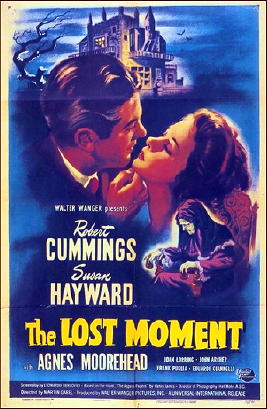
Filmed as The Lost Moment: Universal Pictures, 1947. Robert Cummings, Susan Hayward, Agnes Moorehead, Joan Lorring, Eduardo Ciannelli, John Archer. Screenplay: Leonardo Bercovici. Director: Martin Gabel.

   Well I got around to Henry James again and landed on his 1888 novella The Aspern Papers, probably his most accessible work except for Turn of the Screw. Which ain’t saying a whole hell of a lot, because James never uses one word where he can put twenty, and his notion of objectivity is to invariably leave his characters disappointed.

   Yet there is, withal, an easy grace in his prolix prose and a muted yearning in his plots that keeps me coming back. James’ characters long for the heroism their author denies them, a theme that doesn’t appear this consistently again in American Lit until David Goodis, and maybe it’s this that keeps drawing me back.

   Whatever the case, Aspern, as I say is a bit more engaging than most James, with something like a real plot, about a publisher/literary enthusiast looking for material relating to a romantic poet who died in the last century.

   It seems that a young woman with whom the poet had an affair still lives, incredibly old now, in a decaying mansion in Venice with her niece, and she may have love letters from her legendary paramour. In short order the poetry sleuth inveigles himself into the house, only to find he has entered their lives as well.

HENRY JAMES The Lost Moment

   It’s a fine, romantic premise for a book, and James handles it competently, with a realism in his characters that threatens at times to bleach all the excitement from the idea, but manages to keep it alive somewhere just under the surface of his inhibitions. The conclusion is typical of James as well: disappointing and yet somehow satisfying in its context.

   Universal studios, home of Abbott and Costello and the Wolfman, brought this to the screen in 1947. Or at least they brought the premise; James’ placid plot and wan protagonists are replaced in The Lost Moment by a noirish romanticism the author would hardly have recognized.

HENRY JAMES The Lost Moment

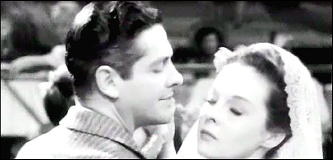
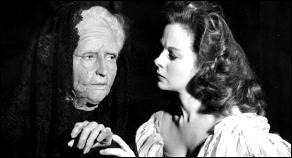
   The pusillanimous publisher is portrayed by an earnest Bob Cummings, and the reticent niece by sultry Susan Hayward, who seethes with pent-up passion even at her most spinsterish. A kindly dowager who sets the plot in motion on the first page becomes a venal painter with plans of his own (played by John Archer in a Melvyn Douglasmode) and the aged muse/lover of the dead poet is portrayed by a rasping Agnes Moorehead — at least they say it’s Agnes Moorehead; under all those veils and wrinkled makeup it could be Lon Chaney Jr for all I know.

   All this could easily have led to a massive betrayal of James’ novel, but it’s saved by a literate script by Leonardo Bercovici (a subsequently-blacklisted author who worked on off-beat romances like Portrait of Jennie and The Bishop’s Wife) and lush, romantic direction by Martin Gabel, of all people.

   Gabel always played it cold and constipated in the movies, and his work here as a smooth, moody auteur in the style of Max Ophuls is one of those minor miracles with which the cinema is occasionally blessed.

HENRY JAMES The Lost Moment

    Back in January of 2009, I posted an article by Nicholas Flower about his role in creating new titles for Charles Williams’ crime novels when they were published in the UK by Cassell.

    The piece was updated in February, and in March cover images of five more dust jackets of books in the Cassell series were added, thanks to Bill Pronzini, along with new commentary about them by Nicholas.

    Cassell published fifteen Charles Williams thrillers, though, and until last week there were only twelve that were included in Nicholas’ article. And there things stood, until now, thanks to some helpful online booksellers who very kindly supplied us with images of the three that were missing. All fifteen covers are now part of that original post.

    I hope you’ll go back and take a look. You can find the post here. I think it’s worth the visit, or even a revisit!

                    — Steve

The 2010 NYC Vintage Paperback and Collectable Book Expo
by WALKER MARTIN


   Just back from attending this long running one day event that Gary Lovisi has managed to organize for over 20 years on an annual basis. Over 50 sellers in a large dealers’ room selling vintage paperbacks, pulps, new books, and original artwork. Prices seemed very reasonable to me and I managed to find several of my Dime Mystery pulp wants.

   Steve and I had discussed the problems in attending this show because we both were limping around due to overexertion. Steve couldn’t make it, but I manage to survive the train ride from Trenton, NJ to NYC with the help of long time collector Digges La Touche.

   We arrived at the show at a little after 9:00 am Sunday and were immediately met with the delicious aroma of old books and pulp paper. The crowd appeared even bigger than last year and consisted mainly of elderly book collectors of the male gender. There were a few females trying to reign in their husbands and boyfriends passionate love of collecting but it was a losing battle.

   You know what I’m referring to: the age-old battle between the non-collector and the collector. These battles have led to the breakup of many a marriage, and many a collection has been ordered sold by the courts in order to split the proceeds. A collector’s worst nightmare!

   There were numerous guests selling and signing their books. Too many to mention but I do want to give special note to someone I consider the most notable writer present: Ron Goulart. Not only has he been a professional writer for over 40 years but he has written some excellent books on the pulps such as Cheap Thrills, The Dime Detectives, The Hardboiled Dicks and others. C. J. Henderson had a table selling his numerous books and driving collectors nuts by yelling at them to come and visit “The Wonderful of Me”. This of course just scares everyone away.

   As we all know, a great part of the fun of collecting involves the many friends that we make over the years. Here are some notes about the collectors I talked to at the show:

   Tom Lesser. One of the great West Coast paperback collectors who organizes the annual LA Paperback Convention each year. He just had a bypass operation, and I’m happy to report he is up and about and looking better than ever.

   Dan Roberts. Another serious paperback and art collector who has one of the largest collections in the world.

   Paul Herman. Pulp and art collector who always has interesting items at his table.

   Ed Hulse. Publishing and editor of Blood n Thunder magazine which deals with the pulp and movie world.

   Nick Certo. A major pulp, paperback and art dealer.

   Mark Halegua. Organizer of the Gotham Pulp meeting every month in NYC.

   David Saunders. Artist and author of many articles in Illustration Magazine. He is the author of the excellent book on Norman Saunders and the new book on Ward, the pulp artist.

   Rich Harvey. Organizer of the annual Pulp Adventure Con in Bordentown, NJ.

   Chris Eckhoff. Dealer and expert in the field of paperback erotic novels.

   The above are just a sample of the crazed and over the top dealers and collectors that you can meet at this convention. The paperback collecting field is wide open, and most paperbacks are very inexpensive. This show and the LA show should not be missed, especially if you live within two or three hours driving distance. Collecting books has been called the grandest game in the world and this show proves it.

« Previous PageNext Page »