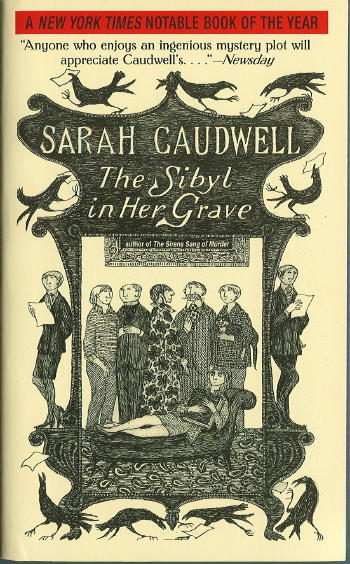
First in a series of cover artwork, mostly paperbacks, and all from my collection. The only criterion for this one and ones to come: These are books that I’ve found pleasures in various ways in having them in hand to look at, up close and personal.

   Artist: Kirwan:

Shoot the Piano Player

BLACK LIZARD. First published as Down There, Gold Medal, 1956. Reprinted as Shoot the Piano Player, Grove Press (Black Cat), 1962. Black Lizard edition, 1987. Introduction by Geoffrey O’Brien. Filmed as Tirez sur le pianiste; adapted and directed by François Truffaut.

      From the front cover (top):

    “David Goodis is the mystery man of hardboiled fiction — the poet of the losers.”

— Geoffrey O’Brien, Mystery Scene

   From the front cover (bottom):

      Eddie was a piano man on the skids, about as far from the top as he could slide. Then he met a girl, the right girl, and she gave it all back to him. He’d kill anyone who came between them.

      From the back cover:

   Eddie had been a big shot one, a concert pianist at the top of his profession, able to fill Carnegie Hall whenever he chose to perform. His brothers were in a different business, however; they were thieves, killers. Until now he’d been able to avoid them, to live his life in his own way. But things were different now; they’d been different since his wife and career went out the window. He hit bottom fast.

   Then this girl came along, and Eddie began the long, slow climb out of the gutter. When his brother Turley showed up Eddie knew it was bad news — he couldn’t say no to Turley, no matter how painful the consequences proved to be.

      “Action and thrills!”           — San Francisco Call Bulletin

      “Goodis’s characters are not just hard-boiled, they’re pickled and then deep frozen … bad-dream Bogarts on the far ledge of existence.”          — Mike Wallington

   Bill Pronzini, author of the long-running “Nameless” PI series, has been chosen by the Mystery Writers of America to receive their 2008 Grand Master Award.

Bill Pronzini- The Snatch

   To make this personal, although he and I have met only once, at a Pulpcon where he was a Guest of Honor several years ago, Bill and I have corresponded since the 1970s. Our common interests have always been detective pulp magazines and collecting obscure mystery fiction, both hardcover and paperback, and facts and information about their authors. Bill’s been a solid supporter of Mystery*File in all of its many shapes and forms, first as a print zine, then the web site, and now the blog.

   We’ve collaborated on several mystery-oriented projects together in recent years, most notably the annotated checklists we did with Victor Berch of the Guilt Edged mystery series from Dutton and the Ziff Davis Fingerprint series. I’m now assisting him in supplementing Bill Deeck’s book Murder at 3 Cents a Day (see the sidebar on the right) by uploading cover images of almost all of the mystery fiction that’s included in it.

   Word of this honor came in a news release from the MWA:

**********************************************************************
And the 2008 Grand Master is…

**********************************************************************

   Author Bill Pronzini has been selected to receive the coveted title of Grand Master, Mystery Writers of America’s (MWA’s) highest honor bestowed on an individual. He will be honored at the 62ndAnnual Edgar ® Awards banquet on Thursday May 1, 2008 at the Grand Hyatt Hotel in New York City. The “Edgars,” as they are commonly known, are named after Mystery Writers of America’s patron saint Edgar Allan Poe and are awarded to authors of distinguished works in more than a dozen categories.

   The Grand Master Award represents the supreme level of achievement in the mystery field and was established to acknowledge important contributions to the genre, as well as significant output of consistently high-quality material.

    “Bill Pronzini is not only a passionate author and reader of crime fiction–he is also one of the most ardent proponents of the genre,” said Daniel J. Hale, Executive Vice President of Mystery Writers of America. “For forty years he has distinguished himself with consistently high-quality writing and editing in all areas of the field, including creating one of the longest lasting detective series ever.”

   Bill Pronzini started down his path toward the Grand Master in 1969, when he embarked upon his professional writing career. Since then, Pronzini has experienced a prolific career, penning more than 70 novels and non-fiction books, including 32 novels in his popular “Nameless Detective” series and three novels written in collaboration with his wife Marcia Muller (MWA’s 2005 Grand Master).

   Pronzini is no stranger to critical acclaim for his achievements. He is a six-time Edgar nominee, including a nomination in 1987 with his wife Marcia Muller for Best Critical Biographical Work, 1001 Midnights: The Aficionado’s Guide to Mystery Fiction. He is also a recipient of three Shamus awards and the Lifetime Achievement Award from the Private Eye Writers of America. Pronzini’s suspense novel, Snowbound, was the recipient of the Grand Prix de la Litterature Policière as the best crime novel published in France in 1988.


Bill Pronzini- Savages

    — Thanks to Ed Lynskey for sending the MWA announcement along. See also The Rap Sheet for the coverage there, the best source for mystery-related news around anywhere on the web.

   The link in the first line above will take you to Kevin Burton Smith’s article about Bill on his Thrilling Detective website, complete with a long, and I think complete bibliography of all of Bill’s mystery-related activities: novels, short stories, anthologies and reference works.

   On DorothyL someone wondered if “Nameless” is the longest-running series character still operating today. I’m not sure, not having researched it completely, but for the record, Nameless first appeared in “It’s a Lousy World” aka “Sometimes There Is Justice,” which appeared in the August 1968 issue of Alfred Hitchcock’s Mystery Magazine). His first novel-length case was The Snatch, hardcover, Random House, 1971. Out earlier this year from Forge was the 31st in the series, Savages.

   Either way, it’s an honor well deserved, and to many of us, one that’s been too long in coming. Now is certainly a fine time, though. Congratulations, Bill!


UPDATE [11-16-07]. It all comes down to a matter of definition, as it almost always does. P. D. James’s Adam Dalgleish first saw the light of print in Cover Her Face, which came out in 1962, and most recently appeared in The Lighthouse, 2005. I’ve not read the latter. Is there anything in it to indicate that this was Dalgleish’s final performance? And even if so, there’s nothing to prevent an encore, is there?

   And there may be other characters with long careers whom I haven’t thought of yet. We may have to qualify “Nameless” as being the longest running PI series character who’s currently active. And it looks as though he’ll be around for a while yet. I sure damn hope so.

   I’m really rather reluctant to do this, but in the last day or so, I’ve had to decide that I have to. I’ve simply run out of time to do this blog the way I want to.

   I don’t know if you’ve noticed, but I’ve in effect been coasting for most of past month — what with my brief vacation trip to Michigan, a video card malfunction when I came back, then the break-in into my storage areas.

   This most recent problem has forced me to start moving massive amount of books around, which is what I’ve been doing all of this past week. But more than ever, it’s also made me realize that I actually do have massive amounts of books to move around. By massive, I mean in the high five figures. And most of them are books I didn’t even know I had.

   Along with moving books out of the garage, it’s time to do something about it. Some I will save, others will go up for sale on Amazon, and others will get donated to the local library. (I was going to say that others will get dumped, but the folks at the library sale can do that as easily as I.)

   I’m also always in the process of adjusting my thyroid medication. If it’s right one week, the next week’s it’s not. Doing the blog has been great fun, but on another level, it’s also stressful, which doesn’t help, and I’m constantly frustrated that I can’t do more.

   Tomorrow will mark the ten-month anniversary of the Mystery*File blog, and as I’ve mentioned before, I’ve been really pleased with some of the posts, and happy with all of them. (Well, I’ve deleted one or two, and you can’t see them, so those don’t count.)

   Hibernation means (for animals) being dormant for the winter months. It’s a little early for winter, and the dormancy here may or may not last longer than that, but even the most grumpy of growly bears arouses himself every once in a while during his siesta, and gets up and prowls around for a while before heading back to his cave again.

   I’ll do the same. In the sidebar on the right are a couple of projects I will be continuing to work on, and when there’s a major page added, I’ll be sure to announce it here. I’m referring first to Al Hubin’s Addenda to his Revised Crime Fiction IV, which I’m always in the process of annotating and embellishing; and secondly, I’m working with Bill Pronzini in adding more cover images to the Murder at 3 Cents a Day website.

   The latter’s been neglected in recent weeks, but I’ll start working on the books from Mystery House soon.

   Victor Berch and I have one or two other projects in progress. It’s extremely easy for us to keep coming up with others, and there’s no doubt that we will.

   Bruce Grossman just sent me another map to be included in the preceding post, and Jamie Sturgeon has said that he’s already come up with others. There’s no reason why I shouldn’t keep posting them here.

   In fact, figuratively speaking, I have drawer here in my desk that’s simply overflowing with reviews, checklists, paperback covers and other material to share with you, but alas, for now, for the reasons above and more, I’m simply not able.

   I wish it were otherwise, but not so.

   While I’ve been tending to other matters and haven’t been able to spend much time with Mystery*File this month, British mystery fan and bookseller Jamie Sturgeon has continued to send me examples of maps in mysteries as he’s come across them. I’ve been collecting some of my own, but where they are at the moment, I don’t know. (I’m a bit unorganized at the moment.)

   Rather than wait for me to add mine to his to create one long entry, I’ve finally decided to run only the four that he’s sent me most recently.

   First, he says, how about this double one from Fatal Friday by Francis Gerard?

Fatal Friday

Fatal Friday (Rich, 1937, hc) [Chief Insp. (Supt.) Sir John Meredith; England] Holt, 1937.


   Next, he went on to say, perhaps a day or so later, there’s this one in Riot Act by R Philmore:

Riot Act

Riot Act (Gollancz, 1935, hc) [C. J. Swan; England]


   Here’s one of the more elaborate maps Jamie says he’s ever seen in a crime novel, one that he sent me while my computer was down. It comes from Angel in the Case by Evelyn Elder (Milward Kennedy), a very scarce book. Some other Methuen books of the period have these maps on the front endpapers as well.

Angel in the Case

Angel in the Case (Methuen, 1932, hc) [England]


   And here’s a map from another Methuen title,The Pressure Gauge Murder, by F.W.B. von Linsingen, his only mystery:

The Pressure Gauge Mystery

The Pressure-Gauge Murder (Methuen, 1929, hc) [South Africa] Dutton, 1930.


— Bibliographic information taken from Crime Fiction IV, by Allen J. Hubin.


[UPDATE] 10-25-07. The British contingent of crime authors didn’t have a monopoly on maps in mysteries, of course. Bruce Grossman sent this one along, taken from Ellery Queen’s The Dutch Shoe Mystery. In particular, it’s from the softcover edition of Otto Penzler’s reprint, so we’re assuming that it’s the same as the one in the original First Edition.

The Dutch Shoe Mystery

The Dutch Shoe Mystery (Stokes, 1931, hc; Gollancz, UK, 1931) [Ellery Queen; New York City, NY]

A couple of my self-storage units were broken into this past weekend, as I discovered yesterday afternoon. The thieves got into about 160 units in all, I was told. They saw the boxes of books in mine, rummaged around for a while, then left. They smashed the door latch on one of the units, though, so it couldn’t be used. I had to move everything out of that one into the other, filling up the “aisle” I’d left, and leaving no room to move around at all. It wasn’t much fun.

Luckily it was a beautiful day.

   I didn’t think anything of it when it posted yesterday’s entry here, but somehow Google picked up on it very quickly, and today’s total number of visitors has surpassed that of any other day so far except (perhaps) the day the passing of Donald Hamilton was posted here first.

   No one’s come up with any of the answers yet, or if they have, they didn’t bother leaving them as comments. I deleted a couple that I thought were facetious, not that I’m against facetie or anything, but neither were the proposed answers particularly relevant either. (Sorry, guys.)

   Maybe some hints are in order? Don’t keep reading if you don’t want any help.

49 ACROSS: Author said to have influenced Hitchcock. [Three letters.] This one should be extremely easy for mystery fans. It’s exactly who should come to mind immediately, but I’d also have to concede that I don’t know how true it is.

   Let’s skip to 57 ACROSS: Holmesian tool. [Eight letters.] You have to watch out for two word phrases in one slot, and that’s the case here. I’ll break it up correctly as

         HA_D    _ _N_

and let me know if that helps. The “Holmes” referred to is Sherlock, by the way, not “Oliver Wendell.”

   I have a confession to make. Before I picked up on the answer, I had some letters going down through 51 ACROSS: Street boss. [Ten letters.] So I was asking you to do something that I didn’t quite do myself, but I was hoping that the primary focus of this blog would compensate for that, at least maybe in part.

   Hint: Two words again. Mystery fiction oriented. And a couple of letters:

         P_ _ _ _ M _ _ _ _

   You’ll know it when you get this one right, it will feel so good.

[UPDATE] 10-22-07. The answers are in this morning’s paper, so I may as well provide them too. See the comment.

   Today’s Tribune crossword puzzle had some interesting challenges, and not only because Saturday’s offering is always the toughest of the week.

   The Tribune puzzles are not quite [41 DOWN] with those in the New York Times, but they often come close. Today’s was especially enjoyable, with just the right degree of cleverness and difficulty.

      53 ACROSS: Series starter. ANS. EpisodeI

      40 DOWN: 1947 signature Cab Calloway musical. ANS. HiDeHo.

   One that would have had me stumped completely unless I hadn’t had all of the words coming down was 38 ACROSS: Rodent yielding the fur nutria.

   Not my particular expertise, I guess. I had to check with Google when I was done to be sure the answer was even a word. It was.

   Here are a few more for which I won’t give answers.

      49 ACROSS: Author said to have influenced Hitchcock. [Three letters.]

      51 ACROSS: Street boss. [Ten letters.]

      57 ACROSS: Holmesian tool. [Eight letters.]

   You probably won’t get this last one unless you have some words coming down. Here’s what I had when it finally came to me:

              HA_D_ _N_

   41 DOWN. At the same level (with). ANS. OnaPar.

   It was just over a month ago — on September 18th, to be precise — that I announced that Part 19 of the Addenda to the Revised Crime Fiction IV, by Allen J. Hubin, was online.

   But new data has continued to flow in — it never seems to even slow down — and Part 20 was uploaded this morning. In WordPerfect format, this installment was a mere 29 pages long.

   Most of the information consists of added (or corrected) years of birth and/or death, but a sizable chunk of what otherwise is new you will already have seen (I hope) in Victor Berch’s checklist of Tip Top Detective Tales. See the previous post on this blog.

Valery Shore

   Also in Part 20, but rather hidden so that you might not notice it without my pointing it out, is that we have recently learned that the mystery novel, Final Payment, by “Valery Shore,” reviewed here several months ago, was not the sole work of Lon Viser, as until now has always been assumed.

   A comment left by Lon Viser’s son, and confirmed by a separate email from the wife of another son, apparently sent independently of each other, says that the book was written by — well, I’ll allow Ed Viser to tell it:

    “I can certainly remember when Yvonne Beltzer, Rhoda Luczon (my mother) and my Dad, Lon Viser wrote this book. The name Valery Shore came from the magazine my parents started Valley & Shore Magazine, later named by the owners Valley Magazine (San Fernando Valley), a sort of Sunset Magazine for the L.A. suburbs. He also wrote several books under other pen names.”

   You’ll have to go to the main Mystery*File website to find the checklist, I’m sorry to say, but on the other hand, it’s only a link away. Just click on the one provided.

   Here’s Victor’s introduction, along with a cover image or two —

   Tip Top Detective Tales was one of the Aldine Publishing Company’s many library series produced to capture the fancy of the youth of Great Britain. This particular one ran from 1910 through 1912 when it morphed into just Tip Top Tales, produced to include stories of adventure, as well as those of criminal content. With one exception, all of the novels included in the series were published anonymously.

   For a short history of the trials and tribulations of the Aldine Publishing Company, which was founded by Charles Perry Brown (1834-1916), see the excellent article by John Springhall, “Disseminating impure literature: the ‘penny dreadful’ publishing business since 1860” in ECONOMIC HISTORY REVIEW, XLVII, 3 (1994), especially pages 578-584.

         Tip Top Detective Tales

      Tip Top Detective Tales

   Last week on his blog, Pulpetti, Juri Nummelin discussed the career of Gold Medal paperback writer Frank Castle, prompted by his (Juri’s) discovery of one of Castle’s books that was published in Finland but never in this country.

   This turns out, as Juri explains, not to have been an uncommon event. Several other American authors apparently had some of their books published in Finnish but never in English, including Dean Owen, Bruce Cassiday and Robert Sidney Bowen. Here’s the cover of the Castle book, the title of which, roughly translated, means “The Sowers of the Doom.”

Frank Castle: Sowers of Doom

   If you’re interested, Juri does the obliging thing and translates the first few paragraphs back into English.

   The post prompted several comments about Castle’s career, and just a few minutes ago, I chipped in with the following:

   Not much seems to be known about Frank Castle. You and the other commenters seem to have covered almost everything he did, unless you count his role as The Punisher for Marvel Comics beginning sometime around 1974. But maybe that was a different Frank Castle. And like the comic book guy, maybe our Frank Castle wasn’t his real name either.

   For his mystery fiction, here’s what appears in Al Hubin’s Crime Fiction IV:

   FRANK CASTLE. Born in New Mexico; graduate of University of Oklahoma; magazine and book writer. Pseudonym: Steve Thurman.
      Move Along, Stranger (n.) Gold Medal 1954
      Dead–and Kicking (n.) Gold Medal 1956 [California]

Dead and Kicking

      The Violent Hours (n.) Gold Medal 1956 [Los Angeles, CA]

The Violent Hours

      Lovely and Lethal (n.) Gold Medal 1957 [California]

Lovely and Lethal

      Murder in Red (n.) Gold Medal 1957 [New Mexico]

Murder in Red

      Vengeance Under Law (n.) Gold Medal 1957 [New Mexico; Past]
      Hawaiian Eye (n.) Dell 1962 [Hawaii]

Murder in Red

   STEVE THURMAN
      Night After Night (n.) Monarch 1959 [Ship]

Steve Thurman

      “Mad Dog” Coll (n.) Monarch 1961 [New York City, NY; 1932] Novelization of film: Columbia, 1961.

      I haven’t put together a list of the westerns Castle wrote under both names, but at a quick glance, he may have written more of those than he did crime novels. (And I’ve only realized this just now, but there’s at least one book overlap between his western novels and the crime fiction that’s already been listed.)

      I’ve read some of his Gold Medals, but since that was when they first came out, I couldn’t tell you anything about them. I do remember a few of the covers, though. (See above.)

« Previous PageNext Page »