MICHAEL GILBERT – The Black Seraphim

Penguin; US paperback reprint; 1st printing, 1985. Hardcover editions: Hodder & Stoughton (UK), 1983; Harper & Row (US), 1984.; Detective Book Club, n.d. [3-in-1]. Other paperbacks: Hamlyn (UK), 1984; Mysterious Press (US), 1987.

The Black Seraphim

   Mr. Gilbert was born in 1912, which would have made him 73 when this book was first published, and by no means was he finished as a writer. By my count there have been 14 more novels and collections that came after this one, including the provocatively titled The Mathematics of Murder, a collection of short stories that was published in England in 2000. No US edition seems to have been forthcoming, and [at the time I write this] no copies of any persuasion show up on ABE at all.

   The series characters in The Mathematics of Murder belong to the London solicitors’ firm of Fearne and Bracknell, with several of the stories being previously published in Ellery Queen’s Mystery Magazine, and that is where perhaps they might be most easily tracked down. There are no series characters in The Black Seraphim, to which I will return to in a moment, but over the years several detectives and other starring characters have made their way in and out of Gilbert’s novels and short stories. These include Inspector Patrick Petrella, Inspector (later Superintendent) Hazlerigg, Commander Elfe, solicitor Henry Bohun, Jonas Pickett, the espionage team of Samuel Behrens and Daniel John Calder (Petrella, Pickett and and Elfe also make various crossover appearance in several of their adventures), and Luke Pagan, about whom I know little, but whose cases seem to all have taken place around the time of World War I.

   Gilbert’s most recent book is a collection of short stories, The Curious Conspiracy and Other Crimes, which was published by Crippen & Landru in 2002. (C&L also did The Man Who Hated Banks And Other Mysteries, which came out in 1997.) The most recent novel that Gilbert has written seems to have been Over and Out (Hale, 1999), a Luke Pagan entry. Going back to the beginning of his career, Gilbert’s first work of crime fiction was Close Quarters (1947), a mystery in which Hazlerigg has the starring role, a work of detective fiction which falls, definitely and definitively, within the so-called “Golden Age” or classical tradition.

   Which gets us circled back around to The Black Seraphim, which – if you’re still with me — is a “Golden Ager” as well, at least in an modernized sense. The romance that’s involved is a little more amorous than it would have been in 1933, for example, and in a few other ways which involve how the story itself is allowed to develop, which I’ll get back to in a moment.

The Black Seraphim

   From the beginning, though, while the year this novel takes place is not stated in any specific fashion, it can easily be assumed to be 1983, the year of its publication. Nothing overtly suggests otherwise. But taking place as it does in a small cathedral town, with much of the action behind the walls of the cathedral grounds and in effect isolated within, the book produces the feeling that a massive slidestep back into time has occurred. Save for a few modern conveniences, the year could have as easily been 1933, a mere fifty years before.

   James Scotland, a young pathologist sent to Melchester for a little R&R (rest and recovery), soon discovers that jealousies and bitter rivalries can exist (nay, thrive!) just as well in a theological college as well as it can in academia, to name another scene of the crime where the stakes are as equally high (or low, depending on your point of view). Town and gown antagonisms are an equally crucial part of the mix.

   Having not read Gilbert recently, if ever, other than one or two short stories, I was surprised a bit at the elements of rowdy schoolboy humor – I’d have thought it was more in Michael Innes’s field of expertise, if you’d asked me ahead of time – but when the murder occurs, it becomes clear that a serious turn has been taken.

   And being a book produced later in Gilbert’s career, it is not too surprising that within its pages he turns philosophical, as age and wisdom come upon him, and it is here where I believe the major deviation from the Golden Age comes in.

   I hope you don’t mind a lengthy sort of quote. This is from page 182, and is a discussion between Scotland and a lady whom he is rapidly becoming fond of. They are discussing how the investigation is proceeding, and Scotland speaks first:

    He said, “Anyway, it proves that I was right and you were wrong.”

    “About what?”

    “Surely you can’t have forgotten. What you said when we were on that walk. About scientists prying into matters they ought to leave alone and coming up with the wrong answers. They came up with the right answer this time.”

    This was rash of him. Amanda said, “You’ve got it all wrong, Buster. What I said was that scientists never know when they’ve reached the place where they ought to stop. Well, you’ve reached it now, haven’t you?”

    “I doubt if there’s much more information to be extracted from those samples.”

    “Right. So you stop.”

    “Your father wouldn’t agree with you. He said, ‘When once you have put your hand to the plow, turn not back.’”

    “Exactly,” said Amanda triumphantly. “But when you’ve reached the end of the last furrow, you’ve got to stop. You don’t want to start plowing up the road.”

The Black Seraphim

   This is not your usual lovers’ tiff, I think you will agree. There are two brief scenes (pages 184 and 191) that puzzlingly do not seem to fit in with any of the explanations that come later, but what at first is the most – let’s say disconcerting – is that the final unraveling takes place totally outside of Scotland’s presence. It’s anti-climactic, one thinks, initially, and then, given some thought, perhaps not.

   Much is made of Scotland’s age. He’s but 24, and he’s young enough to recover from the blows of fate that his stand (see above) has dealt him. In what may be a final twist, not in terms of solving the case, but rather in terms of who –- it is another man, not Scotland but one much older, who, in the final few pages, looks back, and who decides on his own that justice has been done, and on its own merits.

   It took me a while, but I finally came around. This is a fine piece of work.

PostScript: The title is taken from a line in a poem by the French poet Alfred de Musset, concerning the concept of a blessed wound, from which at length Scotland will recover: “une sainte blessure; que les noirs séraphins t’ont faite au fond de coeur.”

— December 2004


UPDATE [07-14-07] Michael Gilbert died in 2006, nearly two years after this review was written. For a comprehensive online overview of his career, including a bibliography of his mystery fiction, this webpage will do very nicely, I think.

A REVIEW BY MARY REED:
   

R. AUSTIN FREEMAN – The Stoneware Monkey.

Hodder & Stoughton, hardcover, 1938. Dodd Mead & Co, hardcover, 1939. Paperback reprints: Popular Library #11, 1943. Dover, with The Penrose Mystery, 1973.

The Stoneware Monkey

   Dr James Oldfield is doing a stint as a locum-tenems in the small country town of Newingstead. Biking back after a professional call, he stops on a country road to smoke a pipe and enjoy the pleasant evening air. Investigating a cry for help from nearby Clay Wood, he discovers Constable Alfred Murray dying from a fatal blow dealt with his own truncheon.

   Constable Murray had been chasing whoever stole a packet of diamonds worth some 10,000 pounds from Arthur Kempster. A dealer in London, Kempster lives locally and carelessly left the gems unattended, allowing the thief to pop in a window, take them, and scarper. Kempster runs after the thief, engaging Constable Murray in the pursuit. Thief and constable outpace Kempster so there is no witness to the murderous assault, and the criminal escapes by stealing Dr Oldfield’s bike.

   The scene then shifts to Dr Oldfield’s practice in Marylebone, London. One of his patients is Peter Gannet, who lives at 12 Jacob Street — a thoroughfare with more than its ration of crime! Gannet shares the studio behind his house with his wife’s second cousin, Frederick Boles, a maker of jewelry. Gannet is a potter, and among creations displayed on his bedroom mantelpiece is the titular statuette. Gannet’s works do not impress Dr Oldfield much, for he describes them as “singularly uncouth and barbaric”, exhibiting “childish crudity of execution”. Be that as it may, Gannet’s illness defies all the treatments prescribed, and so Dr Oldfield, a former pupil of Dr Thorndyke, Freeman’s primary series character, decides to consult his old teacher about the case.

   They make a startling discovery, pointing to an attempt to murder Gannet. Is the culprit Mrs Letitia Gannet, who does not appear to get along with her husband? Or is it Boles, suspected of being over familiar with Mrs Gannet? Might it be the Gannets’ servant, or perhaps even an unknown outside party? Nothing is established and things return to normal in the household but after Mrs Gannet returns from a holiday she finds her husband is missing and Boles has disappeared. Then a startling discovery is made and Thorndyke is called upon to solve the mystery.

The Stoneware Monkey

   My verdict: Although I guessed whodunnit and why before reaching the closing stages of the book, it was more by intuitive leap rather than Dr Thorndyke’s careful step by step building up of a case, so I missed some of the more subtle clues planted along the way. The novel features perhaps one too many coincidences for my taste, although I got a kick from RAF’s nod to The Jacob Street Mystery. There’s a fair bit of interest in the explanation of the procedure to be followed in bringing a capital case, while the portion devoted to pottery technique may make readers’ eyes glaze, no pun intended, but also forms an important part of the narrative.

   All in all, however, I found this one of RAF’s less interesting works, so give it a mark of B minus. Other readers will probably enjoy it more.

   Etext: http://gutenberg.net.au/ebooks07/0700811.txt


      From Publishers Weekly online, 07-13-07:

   Edwin McDowell, whose 26-year career as a reporter with the New York Times included a number of years covering book publishing, died Tuesday at his home in Bronxville, N.Y. He was 72. McDowell joined the Times in 1978 after working at several different newspapers, including the Wall Street Journal. McDowell was also the author of three novels and in 1964 wrote Barry Goldwater: Portrait of an Arizonian.

   From Crime Fiction IV, by Allen J. Hubin:

      McDOWELL, EDWIN (Stewart) (1935-2007)
         * The Lost World (St. Martin’s, 1988, hc) [New York City, NY]

      Book description:

   “The darker side of New York City comes to vivid life in this troubling yet touching story of a relationship between two very unlikely people and how this relationship changes their lives. New York ‘Free Press’ newspaperman Alex Shaw covers Times Square as his beat. And young Leonardo Ruis prowls the streets there trying to survive amid the drugs, danger, and decadence. After a violent first encounter, where Leonardo and his gang mug Alex, they both discover a mutual interest and a way to help each other. As their relationship develops, the reader is confronted with the horrors of street life in New York City.”

      Review excerpts:

New York Times: “Edwin McDowell, who covers publishing for The New York Times, has taken a look at what he calls ‘the lost world’ and has built his fiction upon a stock of horrified observation of the dopers, muggers and losers who scurry among the blank new constructions and such isolated monuments as the Harvard Club. […]

   “In his third novel Mr. McDowell is aiming more for a Frank Norris documentary, sometimes irately sociologizing ‘the whole panoply of pathologies,’ rather than a William S. Burroughs hallucinatory celebration. Though the madness appalls him, occasionally there are flashes of ironic invention, as when he evokes a mugger’s parrot, trained to say on command, ‘Give me all your money!’

   “In the end, the writer ties it all up but doesn’t blink. The lost boy is not found, the wild boy is not saved and Alex Shaw and his Jill are hurtling through Times Square in a cab, sending a jaywalker scrambling. This, of course, is not an invented irony. And come to think of it, probably the mugger’s parrot isn’t, either.”

Publishers Weekly: “Grittily realistic local color adds credibility and interest to this well constructed, suspenseful tale. Alex Shaw, like the author (To Keep Our Honor Clean) a New York journalist, covers the Times Square area, and one day is approached by a young hoodlum nicknamed ‘Dingo,’ teenage son of an aging hooker, who lives on the streets. […] What he learns from Dingo about respectable businessmen who prey on the bodies of young boys and girls may not be news to the reader, nor is McDowell’s theory, promulgated through Alex, of intentional neglect by real-estate moguls eager to make bucks once the area becomes completely desolate. But his mix of scrofulous lowlifes and crusty journalists is authentic, and the novel is suspenseful, funny and sometimes surprisingly tender.”

   Following up on my comments after Steve’s review of Manning Coles’ No Entry:

   In Drink to Yesterday, as Hambledon and Saunders/Kingston are escaping toward Ostend, they stop to requisition gas and oil from a German depot of some sort. There are some British POWs at the depot making pointed remarks, and one of them refers to Hambledon as a “wee fat man.” Now, he’s dressed as a German major and is probably wearing a greatcoat, so he may not be all that portly, but still…

Drink to Yesterday

   Earlier, Saunders describes a non-existent bad guy as someone taller than himself, and says the man was five-eight or five-ten, which would imply that Saunders was of average height; that might make Hambledon sound shorter in the scene described above. But Saunders was impersonating the major’s driver, so he may have been seated the entire time, in which case the POW would not have used him as a reference for Hambledon’s height. Who knows? My guess would be Tommy was about five-seven or five-eight and well-fed; the POWs were pretty skinny, I’d imagine, so anyone who wasn’t in their condition would probably appear heavier than he really was.

   On page 1 of A Toast to Tomorrow Hambledon as Lehman is described as “short and cheerful.” Several pages later, after he’s surfaced to British Intelligence (without identifying his job in Germany) he’s described by the agent he’s put across the Belgian border as “a nondescript little man, grey eyes, rather ginger hair going grey, short but not fat, thin face with duelling scars across his right cheek, quick, energetic walk, rather a pleasant voice, cheerful-looking fellow, looked as though he could see a joke. Short nose, wide mouth, rather thin-lipped, square jaw.” Both those descriptions are in 1933.

Toast to Tomorrow

   When he is recovering from the near-drowning in hospital in 1918 the doctor thought he was in his late twenties.

   I think that’s as much as we’re gonna get.

— Steve Timberlake

Hi Steve,

   Please find below a brief biography (well, the only one I have found) on the writer who, as Armitage Trail, wrote the novel Scarface.

   I wonder if anyone has ever done any research to track down the pseudonymous work mentioned in it. I asked Victor Berch who knows little more — apparently he could not even find him in the census for the years he was alive. (Apparently his brother, also difficult to trace in official records, wrote over 20 episodes for the Addams Family [television show] amongst other work).

   Just wonder if he is worth putting in your blog to see if anyone can add to the bio?

Regards

   John Herrington

   Armitage Trail was a pseudonym for the American author Maurice Coons. The son of a theatrical impresario who managed the road tours of the New Orleans Opera Company, and also manufactured furniture and farm silos, Maurice Coons left school at 16 to devote all his time to writing stories. By 17 or 18, he was already selling stories to magazines. By his early twenties he was writing whole issues of various detective-story magazines under a great assortment of various names. And at 28 — after going to New York to write more stories, and from there to Hollywood to write movies — he dropped dead of a heart attack at the downtown Paramount Theatre in Los Angeles.

   At the time of his death, he weighed 315 pounds, had a flowing brown moustache, and wore Barrymore-brim Borsalina hats. He was survived by his brother, humorous writer Hannibal Coons.

Scarface

   Maurice Coons gathered the elements for Scarface when living in Chicago, where he became acquainted with many local Sicilian gangs. For a couple of years, Coons spent most of his nights prowling Chicago’s gangland with his friend, a lawyer, and spent his days sitting in the sun room of his Oak Park apartment writing Scarface. He never did meet Al Capone, who was the inspiration for his immortal character, though Capone was very much alive when his book was published.

   When Howard Hughes was making plans to produce the movie, Coons wanted Edward G. Robinson to play the leading role because of his resemblance to Capone but being Hollywood, it ended up with Paul [Muni] playing Scarface, a different-looking sort of man altogether. The author did not live to see the picture, but Al Capone did, and screenwriter Ben Hecht had to talk fast to convince his henchmen that Scarface was not based on him. Scarface was also made into a film in 1983, directed by Brian de Palma and starring AI Pacino. Armitage Trail’s only other surviving novel is The Thirteenth Guest ( 1929). Both his novels prefigure the birth of hard-boiled fiction and Black Mask magazine.

***

   From Crime Fiction IV, by Allen J. Hubin:

COONS, MAURICE (1902-1930); see pseudonym Armitage Trail.

TRAIL, ARMITAGE; pseudonym of Maurice Coons.

   * * Scarface (Clode, 1930, hc) [Chicago, IL] Long, 1931. Film: United Artists, 1932 (scw: Fred Palsey, W. R. Burnett, John Lee Mahin, Seton I. Miller, Ben Hecht; dir: Howard Hawks). Also: Universal, 1983 (scw: Oliver Stone; dir: Brian De Palma).

   * * The Thirteenth Guest (Whitman, 1929, hc) Film: Monogram, 1932 (scw: Francis Hyland, Arthur Hoerl, Armitage Trail; dir: Albert Ray). Also: Monogram, 1943, as Mystery of the Thirteenth Guest (scw: Charles Marlon, Tim Ryan, Arthur Hoerl; dir: William Beaudine).

Private Eye Writers of America

      FOR IMMEDIATE RELEASE July 13, 2007

      CONTACT: Ted Fitzgerald – Shamus Awards Chair tedfitz [at] msn.com


PRIVATE EYE WRITERS OF AMERICA ANNOUNCES 2007 SHAMUS AWARDS NOMINEES

The Private Eye Writers of America (PWA) is proud to announce the nominees for the 26th annual Shamus Awards, given annually to recognize outstanding achievement in private eye fiction. The 2007 awards cover works published in the U.S. in 2006. The awards will be presented on September 28, 2007, at the PWA banquet in Anchorage, Alaska, during the weekend of the Bouchercon World Mystery Convention.


2007 Shamus Awards Nominees (for works published in 2006)


Best Hardcover

The Dramatist by Ken Bruen (St. Martins Minotaur), featuring Jack Taylor

The Darkest Place by Daniel Judson (St. Martins Minotaur), featuring Reggie Clay

The Do-Re-Mi by Ken Kuhlken (Poisoned Pen Press), featuring Clifford and Tom Hickey

Vanishing Point by Marcia Muller (Mysterious Press), featuring Sharon McCone

Days of Rage by Kris Nelscott (St. Martins Minotaur), featuring Smokey Dalton


Best Paperback Original

Hallowed Ground by Lori G. Armstrong (Medallion Press), featuring Julie Collins

The Prop by Pete Hautman (Simon and Schuster), featuring Peeky Kane

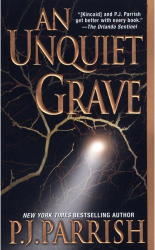
An Unquiet Grave by P.J. Parrish (Pinnacle), featuring Louis Kincaid

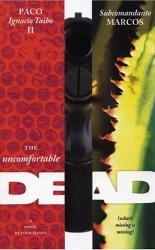
The Uncomfortable Dead by Paco Ignacio Taibo II and Subcomandante Marcos, translated by Carlos Lopez (Akashic Books), featuring Hector Belascoaran Shayne

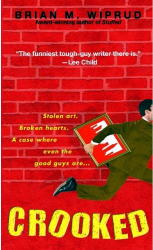
Crooked by Brian M. Wiprud (Dell), featuring Nicholas Palihnic


Best First Novel

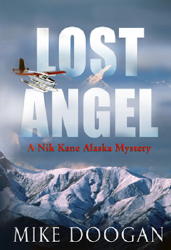
Lost Angel by Mike Doogan (Putnam), featuring Nik Kane

A Safe Place for Dying by Jack Fredrickson. (St. Martin’s Minotaur), featuring Dek Elstrom,

Holmes on the Range by Steve Hockensmith (St. Martin’s Minotaur), featuring Gustav “Old Red” Amlingmeyer

The Wrong Kind of Blood by Declan Hughes. (Wm. Morrow), featuring Ed Loy

18 Seconds by George D. Shuman. (Simon & Schuster), featuring Sherry Moore.


Best Short Story

“Sudden Stop” by Mitch Alderman. Alfred Hitchcock Mystery Magazine, November 2006, featuring Bubba Simms

“The Heart Has Reasons” by O’Neil De Noux. Alfred Hitchcock Mystery Magazine, September 2006, featuring Lucien Kaye

“Square One” by Loren D. Estleman. Alfred Hitchcock Mystery Magazine, November 2006, featuring Amos Walker

“Devil’s Brew” by Bill Pronzini. Ellery Queen Mystery Magazine. December 2006, featuring John Quincannon.

“Smoke Got In My Eyes” by Bruce Rubenstein. TWIN CITIES NOIR (Akashic), featuring Martin McDonough

-30-

PWA was founded in 1981 by Robert J. Randisi to recognize the private eye genre and its writers. Previous Shamus winners include Lawrence Block, Ken Bruen, Harlan Coben, Max Allan Collins, Michael Connelly, Robert Crais, Brendan DuBois, Loren D. Estleman, Carolina Garcia-Aguilera, Sue Grafton, James W. Hall, Steve Hamilton, Jeremiah Healy, Dennis Lehane, Laura Lippman, John Lutz, Bill Pronzini, S.J. Rozan, Sandra Scoppettone and Don Winslow

   Just as the word “noir” means many things to many people, it is not easy to define exactly was is meant by a “cozy” mystery. It’s usually a matter of saying “I can’t define it, but I certainly know one when I see one.” But pointing out examples is always good; also worth doing is a list of the common characteristics that cozies almost always seem to have.

   Danna Beckett does a super job of both on her Cozy Mystery website, which she’s just told me about and which I recommend to you highly. You’ll find a long detailed alphabetical list of authors there, from Jeff Abbott and Alina Adams (*) to Cornell Woolrich and Eric Wright, as well as a smaller section of TV and movie cozies.

   (*) Skipping over Pearl Abraham (not a mystery writer) and Peter Abrahams (not a cozy writer), but there are very good reasons why they’re included. Why make a list of mystery writers and not include your favorites? It works for me.

  Hello Steve,

   I would like to submit a follow-up on the interesting observations about The Dow Hour of Great Mysteries (for which, incidentally, Poe’s “The Murders in the Rue Morgue” and Collins’s “The Moonstone” were also planned, but remained unproduced) and Orson Welles Great Mysteries.

   Orson Welles Great Mysteries, produced by Anglia Television (an independent British TV company serving the commercial network for the east of England), was a syndicated (taped) series of 26 half-hour episodes and was first broadcast in the London area from 6 July to 18 December 1974 (1st series) and then 18 September to 16 December 1975 (2nd series). The suitably haunting title music was by John Barry. Unfortunately, a very-unhaunting Orson Welles was brought in to introduce the stories, garbed in a black, swirling cloak and a slouch hat (suggesting the appearance of an Oliver Hardy as The Shadow).

    The story sources for the individual episodes are as follows:

   Captain Rogers (based on a story by W.W. Jacobs)
   The Leather Funnel (Sir Arthur Conan Doyle)
   A Terribly Strange Bed (Wilkie Collins)
   La Grande Breteche (Honore de Balzac)
   The Dinner Party (James Michael Ullman)
   Money To Burn (Margery Allingham; dramatised by Michael Gilbert)
   In the Confessional (Alice Scanlon Reach; with Milo O’Shea as Father Crumlish.
   Unseen Alibi (Bruce Graeme)
   Battle of Wits (Miriam Sharman)
   A Point of Law (W. Somerset Maugham)
   The Monkey’s Paw (W.W. Jacobs)
   The Ingenious Reporter (Pontsevrez)
   Death of an Old-Fashioned Girl (Stanley Ellin
   Farewell to the Faulkners (Mirian Allen de Ford)
   For Sale — Silence (Don Knowlton)
   Inspiration of Mr. Budd (Dorothy L. Sayers)
   An Affair of Honour (F. Britten Austin)
   The Power of Fear (Lawrence Treat; dramatised by N.J Crisp)
   Where There’s a Will (billed as an original script by Michael Gilbert, but wasn’t there an Agatha Christie story…?) Here, Richard Johnson plays Bruce Sexton.
   A Time to Remember (James Reach)
   Ice Storm (Jerome Barry; dramatised by N.J. Crisp)
   Come Into My Parlour (Gloria Amoury)
   Compliments of the Season (O. Henry)
   Under Suspicion (Norman Edwards)
   Trial for Murder (C.A. Collins and Charles Dickens)
   The Furnished Room (O. Henry)

   The script editor for the above series was John Rosenberg, who later became the producer for Anglia TV’s Roald Dahl’s Tales of the Unexpected (1979) and (now minus Dahl) Tales of the Unexpected (1980-88). The videotaped look and feel, rather disappointingly, was similar to the earlier Welles series.

   Interestingly, during the year of Dow Hour‘s monthly presentations, 1960, a lesser-known genre author also had his works (or at least his characters) produced — as Diagnosis: Unknown (CBS, July-September). Lawrence G. Blochman’s police pathologist Dr Daniel Coffee was played by Patrick O’Neal (with Cal Bellini as Dr Motilal Mookerji and Chester Morris as Captain Max Ritter) in a series of only 10 hour-long episodes. The mystery here is that this fascinating-sounding series, which nobody seems to have seen, either back then or in more recent times, seems to have disappeared entirely. Fortunately, two of the Dr Coffee books (the collection Diagnosis: Homicide, 1950, and novel Recipe for Homicide, 1952) do crop up on AbeBooks.

Regards,

   Tise Vahimagi

  Hi Steve,

   I’m a little late with this. The John Shepherd review reminded me to send you these comments.

   Some 25 years ago, when I was researching the life of Norbert Davis, I came across a couple of little-known facts about W.T. Ballard. Did you know that Rex Stout and Ballard were cousins? That’s why they have the same middle name: Todhunter.

   I also learned that Ballard did not have the use of his right arm. I suppose this means that in each of his most productive years he typed over a million words using one hand. I don’t know when or how he developed the handicap.

Best,

   John Apostolou

Hi —

   I’ve been searching for a mystery I read in about 1974 — it may have been several years old when I read it. Don’t know the author or title. The story takes place in NYC — a young medical student murders his pregnant girlfriend through some ingenious medical means. The friend or roommate of the murdered woman falls in love with the medical student and later figures out the truth about him. Since for some reason she cannot prove it, she marries the (now) doctor as a kind of daily punishment for him, with the truth disclosed in a letter kept with her lawyer “in case anything happens to her.”

   I believe the author was a woman. The book was well written, and I’ve been wracking my brains for years trying to come up with the title and author. Seems the title had something to do with her ironic “punishment” of the murderous doctor. Any idea?

— D. G.

« Previous PageNext Page »