Covers


    It’s almost 90 degrees in Connecticut today, and for September, while it’s not unheard of, it’s certainly unusual. It meant that I didn’t work in the garage today, though. What I did instead is bring in a box of paperback books that I bought while I was in Michigan visiting with my sister and brother last year.

    Of course what this did was to bring back a few memories, of books purchased and being out of sight, the box never unpacked until now, long forgotten. There was a large assortment of westerns, but of the mysteries, most of them were Erle Stanley Gardner books that I’d purchased pretty much because of their covers, Perry Mason adventures all, and not because I didn’t already have them in other, earlier editions, because I do. That doesn’t stop me from collecting them. You do understand, don’t you?

    By chance I also have a small lot of Gardner’s books up for auction on eBay. These aren’t the earliest in the Pocket editions – I think these are all from the 1950s – but the covers are nice. The two on the top are by Robert McGinnis. The one on the lower right is by Mitchell Hooks.

    As the years went on, some of the Perry Mason books were reprinted umpteen times, and over the years the covers changed. In the late 60s, the books all had photos of beautiful women on the covers:

Perry Mason

    In the later 60s, the covers were trimmed in gold with another crew of beautiful models posing (perhaps) as one of the characters of their respective books.

Perry Mason

    I’m not 100% sure that I have the order correct in which these more recent Ballantine reprints came out, but I think I do. They began, I believe, in the early 1980s and were still going as recently as the year 2000. There seems to have been (at least) three different styles and formats for their covers. First this one:

Perry Mason

then this one:

Perry Mason

and finally this one, which of course I like the best – with quite a retro approach. The box from Michigan had about 15 of these in it:
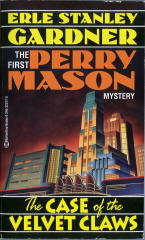
Perry Mason

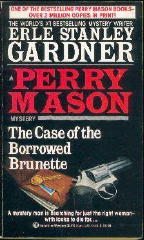
    Getting back to Pocket, though, one of the books from Michigan was this one, a style that I’ve never seen before. It’s numbered #3, but it’s not chronologically correct, since the book was first published in 1955 and hardly was the third Perry Mason adventure. There’s no date on it. All that it says is that it was the 11th printing. How many more there were in this series I have no idea.
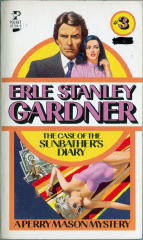
Perry Mason


   The latest batch of covers Bill Pronzini and I have uploaded to Bill Deeck’s Murder at 3 Cents a Day website are those for three of the smallest publishers of lending library mysteries.

   These three are: Alliance Press (one mystery, 1935); Alliance Book Corporation (four mysteries, 1941-1942); and Jonathan Swift Publishers (also four mysteries, 1941-1942).

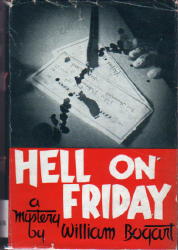
   The books they published were intended almost solely for the lending library market, and copies with dust jackets are quite scarce today. Of the nine mysteries these three companies published between them, we’re pleased to be able to show you six of them. Of these, perhaps the most noteworthy is Hell on Friday by William Bogart, and unless you’re a long-time collector of the detective pulps, maybe not even he’s an author you’ll recognize. The rest are even less known, but in my opinion, at least, the covers still worth a peek.

Hell on Friday

   The latest batch of covers uploaded to Bill Deeck’s Murder at 3 Cents a Day website are those for the William Godwin, Inc., 1933-1936.

   Here’s Bill Pronzini’s introduction to the page containing the publisher’s line of mystery fiction:

   William Godwin, Inc. was best known for the softcore sex novels they published from 1931-38, by such well-known practitioners as Jack Woodford and Fan Nichols; these had provocative cover art and were considered pretty steamy for their time, though they are tame today.

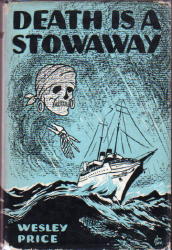
Death Is a Stowaway

   The first mystery to carry the Godwin imprint was Wesley Price’s Death Is a Stowaway (1933), a title inadvertently left out of the Godwin listing in Murder at 3c a Day. The three Timothy Trent (Carl Malmberg) titles are excellent hardboiled tales, as is Alan Williams’ Cainesque Room Service.

   In 1935 Godwin published several British mysteries on a cooperative deal with the king of the U.K. lending library publishers, Wright & Brown; these all used the original W&B dust jacket art, most of it by Micklewright. The Godwin editions had very poor sales, as evidenced by the fact that copies are extremely difficult to find today, and the arrangement with W&B was abandoned after only a single year.

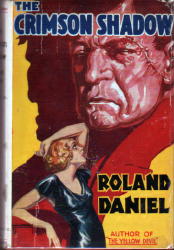
Roland Daniel

   The latest batch of covers uploaded to Bill Deeck’s Murder at 3 Cents a Day website are those for the Dodge Publishing Company, 1935-1938, some of which were designated as “Blue Streak Mysteries.”

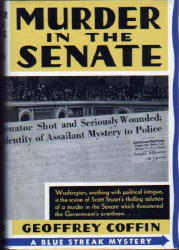
Murder in the Senate

   Here’s Bill Pronzini’s introduction to the page containing the publisher’s line of detective fiction:

   About all I know about Dodge is that they existed from 1935 to 1942, only publishing mysteries between 1935 and 1938. Their specialty seems to have been Westerns, of which about two-score saw print. More than likely, Dodge was yet another publishing casualty of WW II and its paper shortages.

   Besides the one shown, other authors and titles in the short-lived series include Theodore Roscoe with two books, one of which is I’ll Grind Their Bones; Joseph T. Shaw’s Blood on the Curb; George Bruce’s Claim of the Fleshless Corpse; and a small handful of others.

   In case you were wondering, Geoffrey Coffin was the joint byline of Van Wyck Mason and Helen Brawner, whose series character Inspector Scott Stuart of the US Department of Justice made his first appearance (of two) in Murder in the Senate.

   The latest batch of covers uploaded to Bill Deeck’s Murder at 3 Cents a Day website are those for The William Caslon Company, which in 1936 managed to publish only three mysteries.

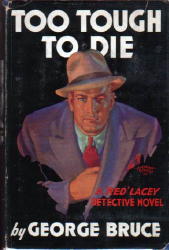
   All three of these novels would be of special interest to pulp fans, though, as one is a collection of four Red Lacey novelettes by George Bruce originally published in Popular Detective, while the other two are “Dan Fowler” G-Men novels which first appeared in that magazine. A connection with Leo Margulies’ Standard Magazines group of pulp titles seems highly likely.

George Bruce

   Even more interesting is the existence of a catalog of forthcoming books from Caslon in 1938, books that were never published, but the titles of which may make you wish they had. These include:

THE DEVIL’S PLAYGROUND, A G-Man Detective Novel, by John Benton.

THE CLAIM OF THE LITTLE RED BUGS, A Dr. Lawson Detective Novel, by George Bruce.

THE MURDER OF A GOOD MAN, A Professor Briarly Detective Novel, by Will Levinrew.

DEATH WALKS ALONE, by G. Wayman Jones.

   And others, including a few westerns, among which are:

PANHANDLE BANDITS, A Texas Rangers Novel, by Tom Curry.

JUSTICE RIDES ALONE, by Jackson Cole.

   Follow the link above for the complete list.

   The latest batch of covers uploaded to Bill Deeck’s Murder at 3 Cents a Day website are those for Gateway Books, 1939-1942.

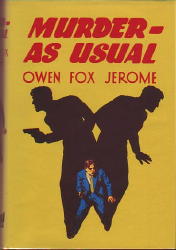
Murder -- As Usual

   Here’s Bill Pronzini’s introduction to the page where you’ll find them:

   The imprint was a subsidiary of the Standard Magazines pulp group edited by Leo Margulies. Most if not all of the Gateway mysteries (and Westerns and light romances) were expansions and/or revisions of works that first appeared in such Standard pulps as Thrilling Detective, Popular Detective, The Ghost Detective, etc. It’s interesting to note that no Gateway titles in any genre were published in 1941. I have no idea of the reason for this, other than a guess that it was financially motivated.

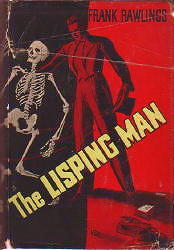
   Authors include Norman Daniels, once under his own name and twice as William Dale; John L. Benton (Tom Curry) with two titles; Will F. Jenkins, aka Murray Leinster; G. T. Fleming-Roberts, as Frank Rawlings, with The Lisping Man, a novel featuring magician George Chance, aka The Ghost.

The Lisping Man

   I don’t know if you know this, but I collect gothic romances. Nobody’s publishing them today. They’re dead in the water as far as today’s publishing world is concerned, as dead as can be, but from the mid-60s on into the later 1970s, they were as hot a category in bookstores and newsstands across the country as anything you can imagine, except for Harry Potter.

   In the later 70s, the so-called bodice-ripper romances began to take over, and the gothics, which themselves on occasion verged into the supernatural, either continued on in that direction into occult fiction of various kinds, eventually becoming the very popular paranormal romances of today, complete with vampires, werewolves and all kinds of sexy shape-changers. Or, to continue on with the “either” in the preceding sentence, they became novels of romantic suspense, still very much a common category today.

   I recently had the opportunity, while striving to “clean out” my basement, to go through a box of gothic romances I have – the ones having covers with a girl in the foreground and a spooky house in the background with a light on in a second story window – in order to add anything I find that’s new to add to Al Hubin’s Addenda for Crime Fiction IV. Most of these additions are in the form of previously unknown settings, but once in a while a brand new previously unknown title comes to fore, as happens once in the ten titles below.

   All of this data is in Part 16 of the ongoing Addenda, which I’ve just uploaded this afternoon. As for Al, he’s still working and Part 17 is well under way. But please take a special look at the covers, if you would. I’m sorry they’re small enough that you can’t make out all of the details, but for variations on a theme, you probably couldn’t ask for much more than this, from a small sample of size ten.

JAN ALEXANDER. The Glass House. Add setting: Cape Breton Island (Nova Scotia)

Jan Alexander

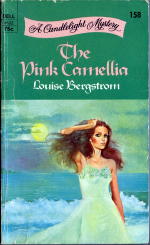
LOUISE BERGSTROM. The Pink Camillia. Add setting: Washington state (San Juan Islands)

Louise Bergstrom

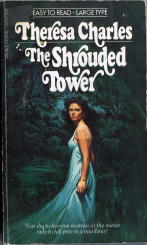
THERESA CHARLES. The Man for Me. U.S. title: The Shrouded Tower. Ace, 1966. Add setting: England.

Theresa Charles

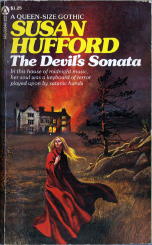
SUSAN HUFFORD. The Devil’s Sonata. Add setting: Massachusetts [South Egremont].

Susan Hufford

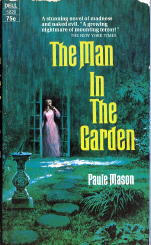
PAULE MASON. The Shadow. US title: The Man in the Garden. Add setting: London (England).

Paule Mason

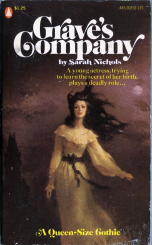
SARAH NICHOLS. ADD: Grave’s Company. Popular Library, pbo, 1975. Setting: Ohio; past.

Sarah Nichols

MARY KAY SIMMONS. Smuggler’s Gate. Add setting: Maine.

Mary Kay Simmons

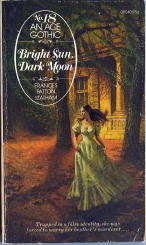
FRANCES PATTON STATHAM. Bright Star, Dark Moon. Note: Author’s full name is used on this book. Add setting: South Carolina (Charleston); 1883.

Frances Patton Statham

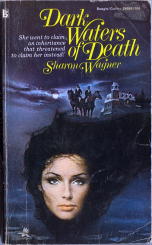
SHARON WAGNER. Dark Waters of Death. Add setting: Montana.

Sharon Wagner

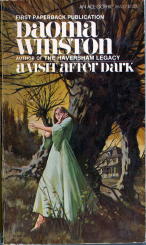
DAOMA WINSTON. A Visit After Dark. Add setting: Texas.

Daoma Winston

   The Hillman-Curl cover scans found at Bill Deeck’s Murder at 3 Cents a Day website are complete now from 1936 to 1939, which marked the end of their “Clue Club” line. I uploaded the covers for 1939 over the weekend, but I haven’t had a chance to let you know till now. (It’s been a busy week, and it promises to get even busier.)

   Included in this last batch are a Bulldog Drummond title by Gerald Fairlie, one by pulp writer Steve Fisher, and two by Barry Perowne, one of them a Raffles adventure. Coming next: perhaps Arcadia House (1939-1967) or Mystery House (1940-1959), but one of the smaller companies like Gateway (1939-1942) may sneak in ahead of both of the two larger ones.

    To supplement Bill Deeck’s reference work about lending-library mysteries, Murder at 3c a Day, I’ve just uploaded scans of the covers of those that Hillman-Curl published in 1938, 24 of them in all. Authors with more than one book from H-C that year were J. S. Fletcher, Norman Forrest [Nigel Morland], Paul Haggard, E. R. Punshon and Edmund Snell.

    I asked Bill Pronzini, who’s been supplying me with the covers to upload, if he could recommend any of the titles from 1938. Are there any unknown gems in the lot? His reply:

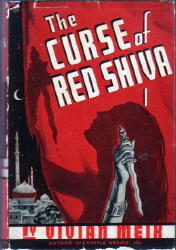
    “The Haggards aren’t bad, particularly Death Talks Shop. Slangy, eccentric, and super fast-paced, reminiscent (to me anyway) of Theodore Roscoe’s two novels for Dodge. Roger Torrey’s 42 Days for Murder is a pretty good pulpish private eye novel. The two John Donavans [one from 1937] are decent fair-play deductive mysteries. The [Vivian] Meik is a Sax Rohmerish adventure mystery with a screwball plot. I haven’t read a lot of the others.”

Curse of Red Shiva

   As part of the ongoing, online project to supplement Bill Deeck’s reference work about lending-library mysteries, Murder at 3c a Day, I’ve just uploaded scans of the covers of those that Hillman-Curl published between 1936 and 1937. Authors included in this grouping include Bram Stoker, Steve Fisher, E. R. Punshon, Sydney Horler and others.

   You may also be interested in reading Hillman-Curl’s “Bill of Rights for Detective Story Readers,” in which they set out the standards they intended their new line of “Clue Club” mysteries to live up to.

« Previous PageNext Page »