TWO REVIEWS BY FRANCIS M. NEVINS:         


GEORGES SIMENON – Maigret and the Black Sheep. Harcourt Brace Jovanovich, hardcover, 1976. Hardcover reprint: Detective Book Club, 3-in-1 edition. Harvest Books, paperback, 1983.

NICOLAS FREELING – The Bugles Blowing. Harper & Row, hardcover, 1975. Vintage Books, paperback, 1980.

   Jules Maigret and Henri Castang both work for France’s Police Judiciaire, but any similarity between the two stops there. Maigret, that great-hearted bear of a man, larger than life, patiently sucking on his pipe or sipping a calvados in the local brasserie while he absorbs the atmosphere, was created by Georges Simenon in 1931 and appeared regularly until the author’s retirement in 1972.

   Castang, an efficient if featureless cog in the investigative bureaucracy of an unnamed provincial city, is the newest creation of Nicolas Freeling, whose better known series character was the late Inspector Van Der Valk of the Amsterdam police. Put together the new Castang novel and a recently translated Maigret, and you have a measure of how the European police novel has evolved over the past few years.

   Maigret and the Black Sheep first appeared in France in 1962, but from internal detail, it might as easily date from 1932 or 1952. The murder of a retired cardboard-box manufacturer in a middle-class Montparnasse apartment building brings Maigret into confrontation with the dead man’s wife, daughter and son-in-law, all three of whom seem to Maigret to be hiding something.

   His efforts to penetrate their common secret take the form of foot-slogging routine rather than the usual near-mystical osmosis by which he blends into his surroundings until he comprehends them. The book as a whole, though smooth to read, lacks the substance and bite of the best Maigrets and seems almost like a work of the 19th cnetury when compared with Freeling.

   The Bugles Blowing opens on a stifling Sunday afternoon with a government official’s phoned conversation with Castang that he has just walked into an orgy involving his wife and teen-age daughter and the artist who was painting the wife’s portrait.

   He has killed all three. The murderer’s high position leads everyone to expect a whitewash, a plea of temporary insanity followed by a brief sentence to a country-club psychiatric institution. But this killer seems obsessively determined to force the government to execute him.

   The movement of the story is ponderous, painfully precise, like the French criminal justice system which is the subject, and Freeling captures both the nobility and nonsense in the ritual behavior of the system’s functionaries. Without suspense or surprise, we are made to march to the gallows with a murderer whose execution becomes more unthinkable and more inevitable with each chapter.

   The strength of this novel lies ints slow accumulation of details — legal, literary, culinary and sheerly human — reflecting countless aspects of French life, including the polarization caused by the Arab-Israeli conflict and the existence of a number of professional terrorists used by the government for political assassinations. One would never find such a wealth of contemporary minutiae in the classically uncluttered policiers of Simenon.

   When a British police officer in The Bugles Blowing speaks of those “awful Maigret books in which the French policemen become exceptionally sharp after about four Pernods,” he may or may not be speaking for Freeling. But there is definitely a new form of European sensibility at work in the police novel, and readers for a taste for it will not want to forget Freeling or Castang.
— Reprinted from The MYSTERY FANcier, Vol. 1, No. 5, September 1977.

      NEW MYSTERY BLOG:

   Few publishers promote their books better than Macmillan’s Tor Books. Tor.com is a must stop for any fan of science fiction or fantasy. Tor has a sister imprint, Forge that is focused on the mystery genre. Finally, Tor.com has a sister.com as well. CriminalElement.com is ready to entertain and inform the mystery fan.

   Posts dating back to Saturday, April 23, 2011 (or a few days ago) already offer mystery fans much to enjoy. Joseph Finder writing about thrillers. Hard Case Crime’s Charles Ardai discussing how he failed to get the rights to republish a few of his pulp favorites. Ho-Ling Wong examining the Japanese detective sub-genre.

   Leslie Gilbert Elman presenting a strong defense for pet cozy books to get some respect. There are reviews, a contest, and even an excerpt from Janice Hamrick’s Death on Tour.

   http://www.criminalelement.com

      HARRY O:

   According to tvshowsondvd.com, Smile Jenny, You’re Dead, aka the second TV-Movie pilot for the TV series Harry O, will be available on DVD in early May.

   Warner Archives Collection will offer it at its site on demand. So it may be exclusive to the WBShop.com in the beginning.

   http://www.tvshowsondvd.com
   
http://www.wbshop.com/Smile-Jenny-Youre-Dead-1974TV/1000205559,default,pd.html?AID=10811526&PID=3821628


— Thanks, and tip of the hat to Michael Shonk.

THE BACKWARD REVIEWER
William F. Deeck


CLIFFORD WITTING – Silence After Dinner. Hodder & Stoughton, UK, hardcover, 1953. No US edition?

   A clergyman committed two murders — one perhaps justified, one definitely not — in China in 1947. That clergyman is now in England and involved with the village of Yateham.

   But there are three, one of them defrocked, who are connected in one way or another with the village. Which one is the killer? And which one murders one of the others? Or was the murderer possibly the young baronet, protecting the reputation of his betrothed?

   Witting is obviously not an admirer of churchmen; none of them, including the retired rector of Yateham, is a wholly admirable character. Despite the solution not being fair play, the novel is entertaining and well worth reading.

— From The MYSTERY FANcier, Vol. 12, No. 3, Summer 1990.

REVIEWED BY BARRY GARDNER:


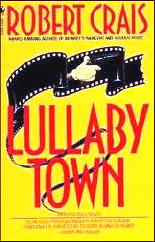
ROBERT CRAIS – Lullaby Town. Elvis Cole #3. Bantam, hardcover, 1992; paperback, 1993. Reprinted several times since.

ROBERT CRAIS Lullaby Town

   Crais is one of those writers who irritate the hell out of me. He is an excellent prose stylist, at least to my ear; witty, glib, adept at characterization, a lot of good things.

   So what’s not to like? Well, in his first two Elvis Cole books it was a pair of plots that made some of Parker’s macho excesses seem restrained. I didn’t buy this one for that reason, but waited until I came across it in the library.

   Peter Alan Nelson, wunderkind Hollywood director, dumped a wife and child early in his career, and now he wants them back. What he wants he’s in the habit of getting, so he hires Elvis Cole to find them for him.

   Our boy is nothing but efficient, so he finds her in short order in a small Connecticut town with a happy family life, a career, and a secret. The secret involves a New York mob family and the psycho son of the Godfather himself. Things get sticky quickly, so Cole calls for his Hawk-clone, Joe Pike, and you know what happens now, and who it happens to.

   The good or bad news, depending on your taste, is that nothing’s changed. Crais is still an excellent wordsmith, Cole is still wisecracking and caring, Pike is still deadly as a wino’s wakeup breath, and the bad guys are still really nasty. And once again, our boys defy reality and take on the mob and win.

   Of all the imitators that Parker has spawned, Crais is probably the most like him; except that he doesn’t even pay lip service to reality. He still pisses me off, and if I read his next, Free Fall, it’ll also be from the library. But if you like the kind of book he writes, nobody but Parker does it better.

— Reprinted from Ah, Sweet Mysteries #7, May 1993.

REVIEWED BY WALTER ALBERT:         


MURDER IN TRINIDAD. Fox, 1934. Nigel Bruce, Heather Angel, Victor Jory, Murray Kinnell, Douglas Walton, J. Carrol Naish, Claude King, Pat Somerset, Francis Ford, John Davidson, Noble Johnson, Paul Panzer, Ivan Simpson. Screenplay by Seton I. Miller, based on the novel by John W. Vandercook. Director: Louis King. Shown at Cinecon 44, Hollywood CA, Aug-Sept 2008.

   It’s always good to see Nigel Bruce in a starring role without his fuddy-duddy mannerisms that came to characterize his on-screen persona, especially in as nifty a crime film as this one is.

   As fond as I am of Peter Lorre’s Mr. Moto character, Fox’s first try at a film version of the Vandercook novel is superior to the later remake, Mr. Moto in Danger Island. The characters (and perhaps the film audience as well) are put off by Bruce’s casual manner on first acquaintance, but there’s a sharp intelligence behind that exterior, as his antagonists will soon learn, to their regret.

   As detective Bertram Lynch, Bruce also has a pet monkey that probably contributes to the off-putting first impression, but the monkey might be seen as a metaphor for the position Lynch ultimately puts the murderer in. One of the highlights of the weekend.

      Previously on this blog:

JOHN W. VANDERCOOK and BERTRAM LYNCH, a double profile by David Vineyard.

FRANCES CRANE – The Cinnamon Murder. Random House, hardcover, 1946. Hardcover reprint: Detective Book Club, 3-in-1 edition. Bantam #130, paperback, 1947.

   I’m fairly sure that part of the reason mystery readers are attracted to Frances Crane’s novels is the colorful set of titles she endowed them with. That, plus the fact that someone who picks one up to read knows that there will be a mystery involved, one that will thoroughly puzzled over before being solved in the end, and that love will find its way.

   This one takes place in New York, just as Pat and Jean Abbott are about to return home to San Francisco. This leaves Jean with just one hat, and believe me, don’t we hear about that, and how inappropriate it is for “sleuthing.”

   Why she is allowed to tag along on Pat’s cases, on one pretext or another, I don’t know. Pat is the detective in the family, and Jean misses most of everything, even those clues that might be considered of a feminine nature — clothes, fingernail polish, that sort of thing.

   Unlike the cases that Mr. and Mrs. North get involved in, there is otherwise no overt comedy in the Abbott novels, but there are more red herrings than you can flail an oar at. Jean tells the story, but Pat tells her nothing, and so after being accustomed to being left in the dark with her, I admit to being caught totally unaware when the lights went on — and this time with the guilty party firmly in Pat’s grasp.

   Feather-headed sort of stuff, but OK.

— Reprinted from The MYSTERY FANcier, Vol. 1, No. 5, September 1977 (slightly revised).


      The Pat and Jean Abbott novels [thanks to Wikipedia]

* The Turquoise Shop – 1941
* The Golden Box – 1942
* The Yellow Violet – 1942
* The Applegreen Cat – 1943
* The Pink Umbrella – 1943 (aka The Pink Umbrella Murder)
* The Amethyst Spectacles – 1944
* The Indigo Necklace – 1945 (aka The Indigo Necklace Murders)
* The Cinnamon Murder – 1946
* The Shocking Pink Hat – 1946
* Murder on the Purple Water – 1947
* Black Cypress – 1948
* The Flying Red Horse – 1949
* The Daffodil Blonde – 1950
* Murder in Blue Street – 1951 (aka Death in the Blue Hour)
* The Polkadot Murder – 1951
* 13 White Tulips – 1953
* Murder in Bright Red – 1953
* The Coral Princess Murders – 1954
* Death in Lilac Time – 1955
* Horror on the Ruby X – 1956
* The Ultraviolet Widow – 1956
* The Man in Gray – 1958 (aka The Gray Stranger)
* The Buttercup Case – 1958
* Death-Wish Green – 1960
* The Amber Eyes – 1962
* Body Beneath A Mandarin Tree – 1965

   For more on Frances Crane’s life and career, see this essay about her by Tom and Enid Schantz on their Rue Morgue Press website.

MIRAGE. Universal Pictures, 1965, Gregory Peck, Diane Baker, Walter Matthau, Kevin McCarthy, Jack Weston, Leif Erickson, Walter Abel, George Kennedy, Robert H. Harris, House B. Jameson, Hari Rhodes. Screenplay by Peter Stone, based on the novel Fallen Angel by Howard Fast, writing under the pen name of Walter Ericson. Director: Edward Dmytryk.

   If you’ll check back nearly a year ago on this blog, you’ll find a list David Vineyard did of films that involve amnesia as a major portion of their plots. Mirage is the 16th film listed, but I don’t believe that David had rankings in mind when he came up with the list. I may be wrong, but I believe the list consists of those movies in order as they came in mind to him.

   The reason for pointing this out is that I’d personally have to put this movie in the top five, if not one of the top three. What Mirage is about, and almost nothing else, is what happens to David Stillwell (Gregory Peck’s character) after the lights go out in the New York City skyscraper he’s in when the lights go out and he has to make his way down the stairs in darkness, accompanied by a woman who recognizes him only when they reach the bottom and he has no idea who she is.

   But no one knows who he is either, nor can he find the fourth subfloor in the building again, the one he followed Diane Baker down after she ran away from him. His office, where’s he worked as a cost accountant for the past two years is no longer there; the tender behind the bar at his favorite watering hole does not recognize him; the refrigerator in his apartment is empty – two years of his life, in fact and as he discovers are Gone.

   Openings like these are never match up with the endings, no matter how clever they are, but Mirage is almost, but not quite, an exception. As Stillwell gradually learns, his predicament is closely tied to the death of a noted peace activist, who fell to his death just about the same time as his memory left him.

   Gregory Peck is stolidly confused and annoyed at himself and the situation he finds himself in, while Diane Baker does her best to care for him (apparently) and at the same time not tell him anything substantial about his past.

   The best performances are reserved to the character actors in the film, beginning with Walter Matthau as PI Ted Caselle, whose first case this is when Stillwell hires him out of sheer desperation and no one else to turn to. Add Robert H. Harris as a psychiatrist who thinks Stillwell is pulling some kind of fraud and throws him out of his office; George Kennedy as a bespectacled man with a gun who’s not afraid to use it; Kevin McCarthy as a sniveling sycophant (he always plays this role well); and House Jameson as a boozy doorway derelict with a purpose.

   Matthau is absolutely marvelous in his role, by the way, witty and far from pretentious; his was a part I remember vividly from the first time I watched this movie some 45 years ago. Over the time that’s passed, though, I discovered I’d pretty much forgotten the ending, which I think makes sense, although I’d have to watch the movie again to be sure.

   Filmed in black and white, Mirage veers close to the film noir category, but never quite makes it. The outdoor scenes are fine, but the indoor ones have the same production values at TV did at the time: cardboardy and dull.

   Overall, if you’ve read this far into the review, this is a film you should not miss. It’s no masterpiece, but as a crime drama with some sparks, it will certainly more than do until one that is comes along. (And who knows how long that will be.)

REVIEWED BY DAN STUMPF:         


DOLORES HITCHENS – Fools Gold. Doubleday Crime Club, hardcover, 1958. Paperback reprint: Pocket #1239, 1959.

Film: BAND OF OUTSIDERS. Columbia Pictures, 1964. French title: Bande à part. Anna Karina, Danièle Girard, Louisa Colpeyn, Chantal Darget, Sami Frey, Claude Brasseur. Director: Jean-Luc Godard.

   Very similar in vein to Rififi in New York [reviewed here ], there’s Fools Gold, by Dolores Hitchens, a nasty piece of work about a nasty piece of work names Skip, barely graduated from juvenile delinquency, sho has enthralled a cute blonde named Karen and a dim ne’er-do-well named Eddie with whom he hopes to pull a major caper.

   But this thing has wheels within wheels, and when a big-time professional crook gets wind of the deal and decides to hijack it, that’s only the beginning of the complications that ensue.

   I never read any Hitchens before, but I found this quite well done. She has a good feel for letting the characters shape the plot, and she isn’t bothered by a bit of clutter and untidiness as things play out in a nicely cluttered and untidy finale.

   Fools Gold was turned into a rather unlikely film called Bande à part (Band of Outsiders) in 1964 by the legendary and quite mad Jean-Luc Godard, who threw out half the plot but stayed surprisingly faithful to the rest.

   Bande stars Sami Frey, Claude Brasseur and the lovely Anna Karina as the aspiring felons, and it’s played out on actual locations rather than sets, giving the thing that rough, seat-of-the-pants look typical of Godard and perfect for a gritty crime movie.

   There’s also a bit more attention to the characters here. Hitchens’ cast was well-drawn and believable, but — how shall put this? — you know how in pornography, the characters think about sex all the time? Of course you do.

   Well in crime novels the characters are pretty well occupied with crime. So it is in Hitchens’ novel, but not so in Godard’s film, Here, they have their secret thoughts, playful moments and private ambitions. And sometimes they break out of the story just to be young.

   The result is a film worth coming back to: mysterious, exciting, and highly satisfying.

REVIEWED BY JEFF MEYERSON:         

HAKE TALBOT – Rim of the Pit. Bantam, 1965. Originally published by Simon and Schuster, hardcover, 1944. Reprinted several times in other editions.

   This book was chosen by Anthony Boucher for Bantam’s “World’s Great Novels of Detection” series, along with such classics as Christianna Brand’s Green for Danger and Ellery Queen’s Cat of Many Tails. Like those two, this is an excellent book that should be far better known than it is (it was not mentioned by Barzun & Taylor).

   The detective in Rim of the Pit is gambler Rogan Kincaid, who tries to determine a rational explanation of seemingly supernaturally caused murders.

   Many years ago Grimaud Desanat froze to death in the North Woods of New England. His wife Irene, a supposed medium, holds a seance to ask him about some trees he owned. During the seance Desanat appears and terrifies Irene, who is later found inside a locked room brutally murdered

   The question is, who murdered her? Was it another member of the house party or the spirit of Desanat himself acting through another’s body?

   More and more inexplicable events pile up that seem to favor the latter theory, including a second murder that seems to clinch it, but Talbot makes it all come clear in a brilliant ending.

   Talbot wrote only two detective novels, the other being Hangman’s Handyman (1942), which may help to explain why he is so little known today, but Rim of the Pit is a classic of the genre that bears out Boucher’s comparison with such more noted masters of impossible crime as John Dickson Carr and Clayton Rawson.

— Reprinted from The MYSTERY FANcier, Vol. 1, No. 5, September 1977 (slightly revised).


Editorial Comments:  Both of Talbot’s detective novels have recently been reprinted by Ramble House. Puzzle Doctor, on his/her blog, suggests that Talbot wrote a third, one that was never published and is now presumed lost.

GEORGE HARMON COXE – The Glass Triangle. Alfred A Knopf, hardcover, 1940. Dell #81, paperback, mapback edition, 1945; Dell #522, [1951], mapback. Jonathon Press Mystery #J23, digest pb, [1947]. Contained in Triple Exposure (with The Jade Venus and The Fifth Key), Knopf, hardcover, 1959.

    This is vintage Coxe, written while he was still fresh from toiling a decade or more for Black Mask and other pulps. I’ve never been sure why he switched to Kent Murdock as the detective in his early novels, rather than continue with Flashgun Casey, as they tend to blur in my mind into the same character, the tough successful news photographer who continually finds himself involved in murder.

    In this one Murdock introduces the sister of an old friend to a Hollywood crowd in town for a movie premiere, then feels it’s his obligation to protect her when the director, unliked by all, is murdered in his hotel room. There’s no moral consideration involved, just a newspaperman’s curiosity and what he owes on a promise to a friend.

    So, OK, call him medium-boiled. Coxe’s heroes are people who stick up for each other, easily inspire trust and confidence, and who are maybe just a little soft at heart.

    A piece of glass is the only tangible evidence Murdock has after the corpse disappears and his photographic plates are stolen, but only the careful reader will spot the additional clues Coxe slips in. I did name the killer, but that’s about all. The only question left unanswered is why the supremely detestable director was along on the junket in the first place.

— Reprinted from The MYSTERY FANcier, Vol. 1, No. 5, September 1977 (very slightly revised).

« Previous PageNext Page »